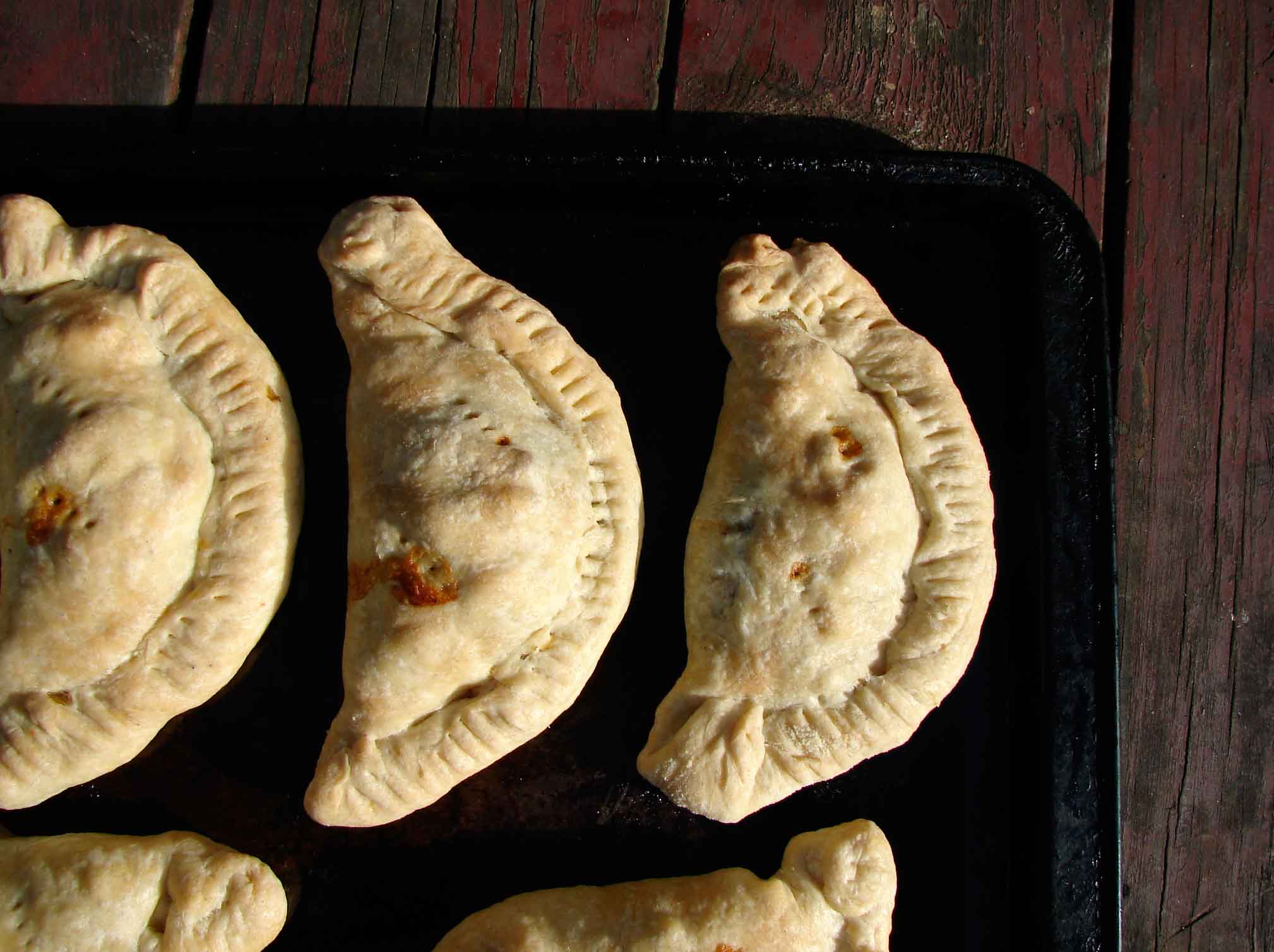
Spring empanadas with spelt flour, asparagus, arugula and white beans

Spring empanadas with asparagus arugula and white beans

Spring empanadas with asparagus arugula and white beans

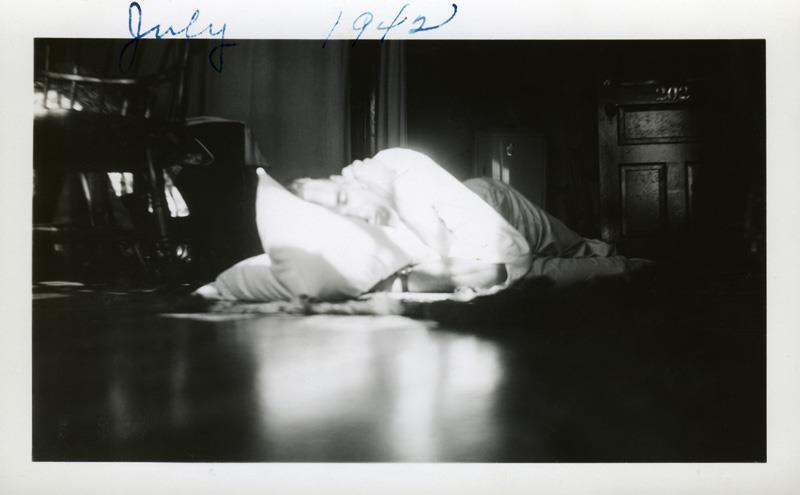
Hey, kids! It’s Saturday storytelling time! As I’m sure you recall, this means that along with your daily recipe and song, you’ll get a story, too! Each week, everybody in our small salon of auteurs (well, generally me and one or two other people) writes a story based on a found photograph. Why is this man sleeping on the floor? Where is he, and what has he been up to? If you’d like to write a story about it, and I hope you do, send me a copy and I’ll post it here, or send me a link if you have somewhere of your own to post it.
430007_10151358718584589_1868399670_n
My friend asked me to make something with spelt flour, and this is what I came up with. They’re not gluten free, but they’re easier to digest for people that have a gluten intolerance. And spelt flour is a pleasure to work with!! These would work easily as well with regular flour. I thought they were nice–fresh and comforting. Perfect for this slow spring we’ve been entertaining.

Here’s Mississippi John Hurt with Make me a Pallet on Your Floor.

Continue reading

Arugula and balsamic tart with a walnut crust

Arugula and balsamic tart

Arugula and balsamic tart

If you’re following along at home, you’ll remember that yesterday I very nearly told you the secrets of the universe. I very nearly had it all figured out. But then housework got in the way. It’s hard to ponder the meaning of life while you’re trying to remember not to forget to buy all the boring non-food items in the grocery store. Especially if you’re feeling slightly saddened to realize that the edgy alternative music of your teenage years is now supermarket soundtrack material. Sigh. I haven’t quite collected myself to return to the BIG QUESTIONS, but I have found myself pondering this medium-sized question. I’ve been wondering if the reason that we have so many great men explaining the inner workings of the human soul and mind is that the great women were off cleaning their houses and raising their children (or managing the people they hired to do those tasks). As any mother will tell you, it’s hard to complete a sentence, let alone a major work of philosophical importance, when you have a child bopping around you saying, “Mom, guess what? That’s what!!” and dissolving into giggles and then doing it again. And again. It’s hard to remember all the brilliant thoughts you might have had, when you can’t sit still and write them down until you’ve mopped a few floors and scrubbed a few toilets. It’s hard to look sufficiently erudite in your author photograph when you can’t grow a flowing white beard. For centuries, women haven’t had a voice, because their thoughts weren’t deemed worth hearing. It’s hard to fight against that sort of prejudice and shout, “This is what I know to be true,” when you’re tired out from all your chores and your children won’t eat or sleep the way they’re supposed to. It’s hard to think beyond the tangled present, the cluttered day-to-day. Which I think is a shame, because I think it’s impossible to really figure anything out, if you haven’t spent some time struggling through the humbling sameness of our days. It’s hard to understand how humanity works if you haven’t spent some time raising or cleaning up after humans. It’s hard to understand our place in the world if you shut yourself off from everything real in that world. Obviously, having children and being around children changes your perception of everything forever. It opens doors inside of you, and gives you a glimpse into the pure heart of our place in the universe. It gives you a real feeling of being an animal, full of elemental needs and wants, but it also teaches you about the transcendent quality of love, which connects you to everything else on some indefinable spiritual level. (I’m sorry if this sounds cheesy, but I swear it’s true.) The jobs that are traditionally considered “women’s jobs,”–teaching, nursing, nannying–are not only arguably the most important jobs, they are also the jobs that give you the clearest insight into all of the complicated ways that our minds and bodies grow and work. It’s all very fine to lock yourself in your study and collect your serious thoughts and your beautiful words, but don’t forget the messy, teeming life outside that door. Don’t forget the children screaming at each other in the kitchen, because they understand a lot of things you’ve forgotten. Don’t forget the world outside your window that’s slowly and inevitably rolling and growing and dying and growing and dying and growing again, whether we understand it or not.

Arugula balsamic tart

Arugula balsamic tart

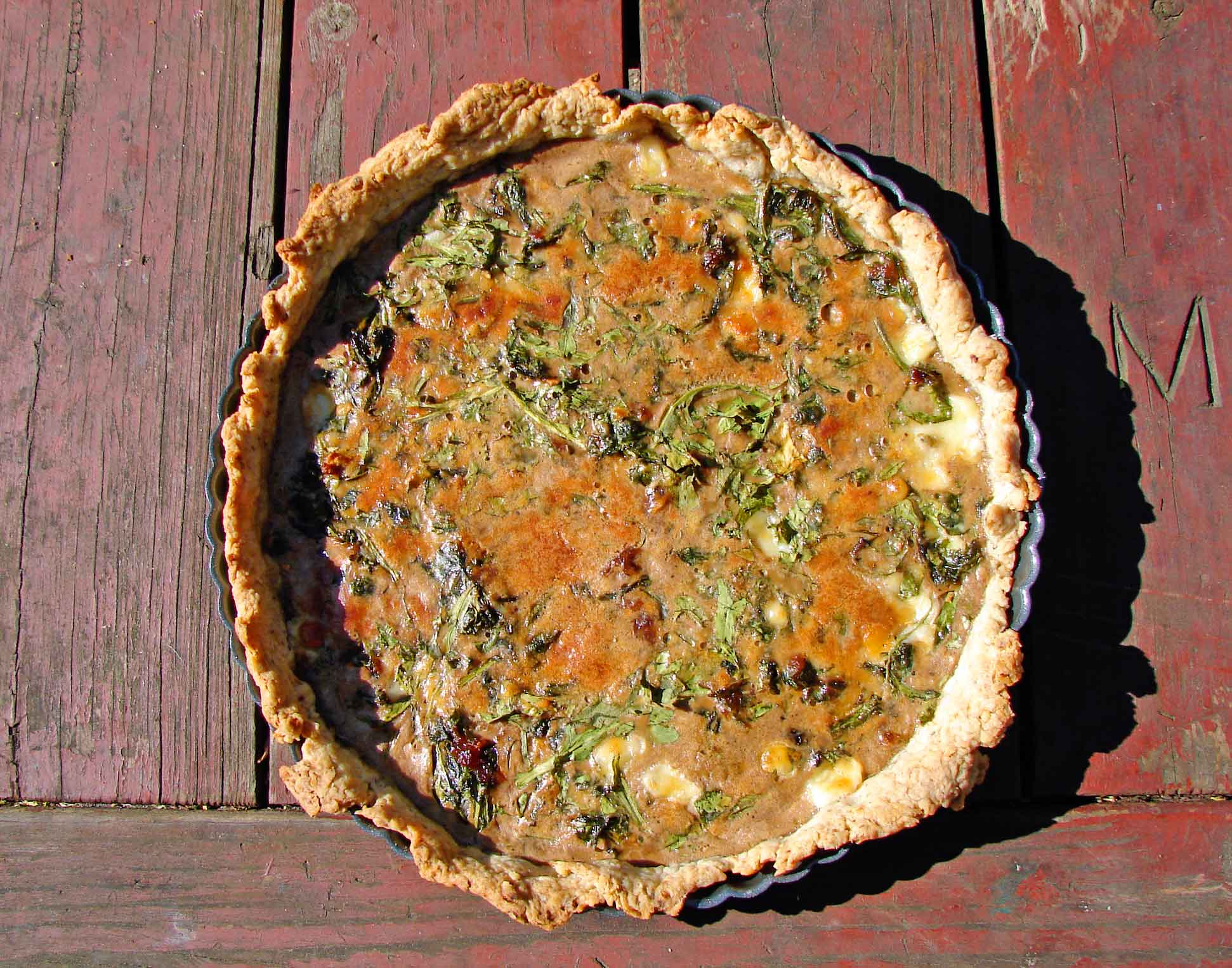
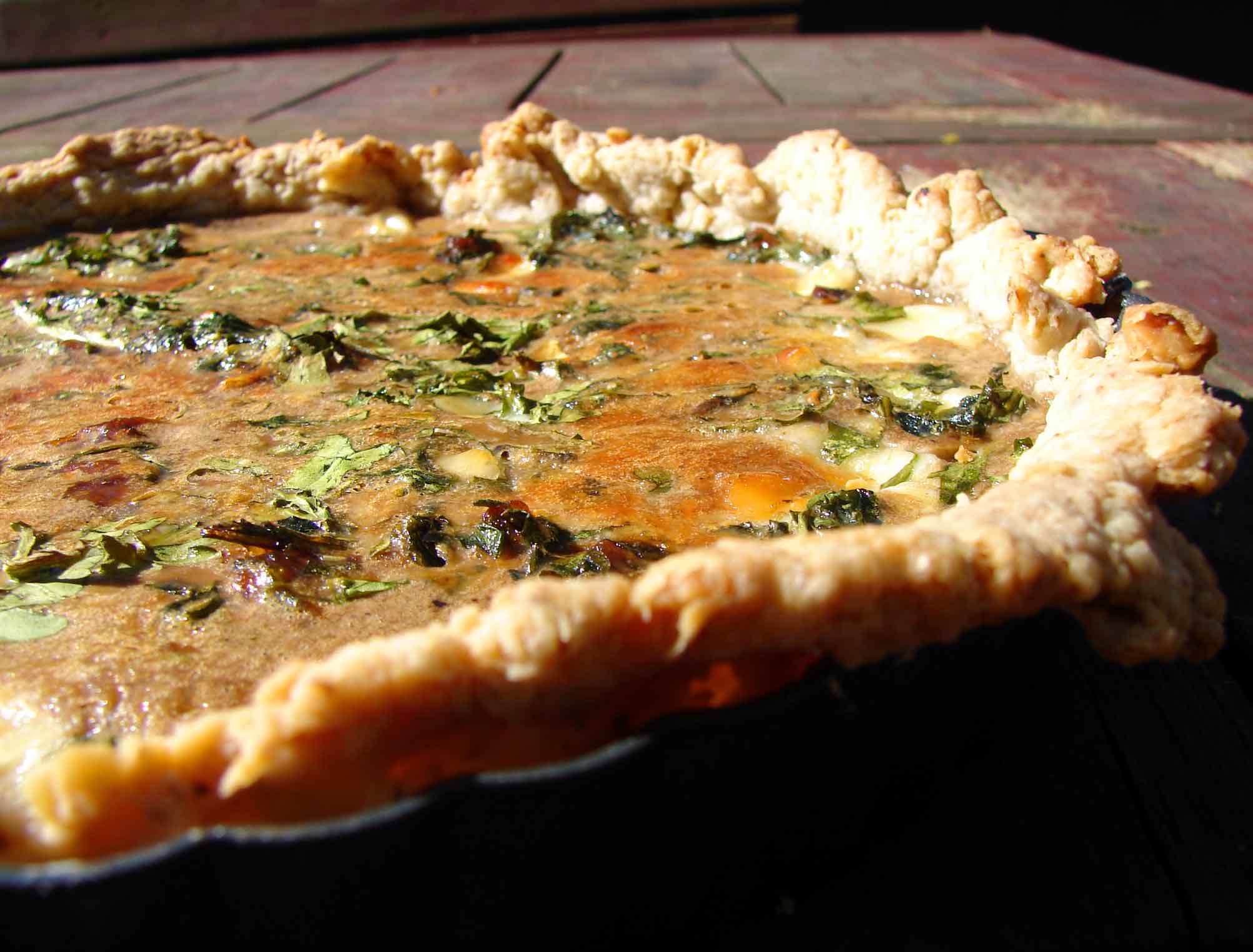
I’ve been craving arugula and balsamic salads lately! Something about the slightly bitter nuttiness with the slightly bitter sweetness is just such a perfect combination. So I decided to combine them in a tart, because that’s what I do. I added a crunchy walnut crust. I reduced the balsamic and mixed it right in with the custard. I added some sharp cheddar and small cubes of mozzarella. And I added some caramelized onions I made last summer and froze. If you don’t have caramelized onions on hand, and don’t have time to make them, you could always mince up a shallot and cook it with the garlic, if you liked.

Here’s Buddy Holly with I’m Changing All Those Changes, because it just came on as I’m typing, and I like it, and I can’t think of a song about female philosophers or arugula tarts.

Continue reading

Ricotta chard tart with roasted peppers, olives, and a yeasted cornmeal crust

Ricotta tart with red peppers, chard and black olives

Ricotta tart with red peppers, chard and black olives

There’s a particular pleasure to watching Temporada de Patos that’s hard to define. As I was thinking about it this morning, it came to me…it’s like making a friend, or maybe even falling in love. Which is fitting because friendship and love and the blurry lines between the two are at the core of the film. From the opening credits you like the look of it–aesthetically it’s just your type. Simple, spare, a little bit rundown, but beautifully so. You watch it for a while, and it seems funny and smart, a little bit off-kilter, but in a way you like. And then you hang out with it, and have conversations, and everything it says is charming but sincere. Not “hey, baby, I’m so sincerious,” sincere, but honest and uncalculated and heartfelt. You get a peep at its music collection and it’s all kind of weird but good. Unexpected, but you feel it’s the absolute perfect thing at the perfect time. You keep waiting for it to let you down and say something off-putting, or start telling a story that’s overly dramatic or just doesn’t make sense, but that never happens. It all just clicks, softly and almost imperceptibly. And then you don’t want your time with it to end, you want to spend more time with it, and you think about it after it’s gone, and realize that it’s much more complicated than you realize. That’s what it was like with Temporada de Patos, the first feature from Mexican director Fernando Eimbcke. It’s one of those rare movies where everything seems to come together perfectly, every aspect is thoughtfully combined and there are no missteps. The plot is very simple. Two fourteen-year-old boys, Moko and Flama, have been friends since childhood. They plan to spend a Sunday together at Flama’s apartment when his mom is away. They have all their supplies, soda, video games, money for pizza…and then the power goes out. The pizza delivery man, Ulises, shows up, and they insist their pizza should be free because he didn’t deliver it on time, but he says the deal is off because the power is out and he couldn’t take the elevator. He won’t leave till they pay, and they won’t pay. Their neighbor, Rita asks to borrow their oven to bake a cake. And that’s pretty much it, that’s the story, the story of one beautifully ordinary but unforgettable day. People grow and change and learn about themselves, and forget and start over. Relationships shift, slowly and quietly, and then shift back again. It’s simple, it’s funny as hell, it’s sad but hopeful, and it’s one of the best new movies I’ve seen in years.

Ricotta tart with chard, roasted red peppers and black olives

Ricotta tart with chard, roasted red peppers and black olives

This tart is a bit like a fancy pizza, and a very delicious one! It has a yeasted cormeal crust, which is very crispy and flavorful. It has a ricotta custard, with mozzarella, and it has sauteed chard, garlic, shallots, and rosemary. Then it’s topped with roasted red peppers and black olives. Salty, sweet, comforting, cheesy, crispy, and flecked with greens. What could be better than that?

Here are a couple of songs from the movie…Puto – Molotov. O Pato by Natalia Lafourcade. And Panorama by Alejandro Rosso.

Continue reading

Strawberry chocolate hazelnut tart -or- failed macaron tart

failed-macaron-tartAndre Bazin once suggested that critics should only write about films they like, and I agree with him. I feel as though I wasted some time earlier in the week talking about aspects of films that I don’t enjoy, and, to borrow Dylan’s phrase, that don’t do no one no good. One of my goals as proprietress of The Ordinary is to share films and music and art that I’ve stumbled upon at some point in my life. I’d like to share things that are often overlooked because they’re small or not-well-hyped or outside the mainstream. I want to share them not just because they deserve to be known, or because their creators have earned praise and recognition, but because your life will be richer for knowing them. Or so I believe. In that spirit, I give you Little Fugitive. I spoke in grand and foolish terms about the death of independent cinema last week, so it’s fitting to talk now about the film that many people have described as the birth of American independent film. Little Fugitive was made in 1953 by novelist Raymond Abrashkin and photographers Morris Engel and Ruth Orkin. It was nominated for an Oscar for best writing, which is somewhat surprising, because the story, though full of drama, is somewhat sparse of plot. Seven-year-old Joey takes a practical joke a little too seriously and believes that he’s killed his older brother. He’s on the lam, and he flees to Coney Island, where he spends a few days eating hot dogs and cotton candy, sleeping under the boardwalk, and collecting the deposit money on glass bottles to pay for food. Richard Andrusco, who played Joey, was a non-professional, as were most of the other actors. Engel hid a camera inside his coat, and he filmed Coney Island, teeming with life. He filmed hundreds of people who had no idea they were on camera. His portrait is joyful and affectionate, he captures every small beautiful gesture. He shows the poetry of two people folding a towel, coming together and moving apart as if in some strange sweet dance, he shows the easy generosity of a boy carrying a younger child through a flooded street. The story is told with the spontaneity and humor of a child–he sees everything because few people notice him, and we’re afforded the same chance. He’s buoyant and resourceful, as most children are. He operates outside the rules of the bustling society around him, darting in and out of crowds, weaving through a sea of towels and sunbathers. During the day this is mostly exhilarating and fun–he’s getting away with something. But as evening falls we feel his wistfulness and loneliness. We’re not told about it, we’re not hammered over the head with it, but we feel it in the off-kilter shots, in shots of him still in the center of a whirl of families, in the lights of the amusement park separated from him by a sea of forbidding darkness, and in the way he falls as the parachute falls, floating slowly down to the dark earth.

In this scene of a sudden summer storm, everybody runs for shelter, and we see Joey by himself, in a desert of lonely empty beachfront, searching for bottles.

The film is so visually beautiful and yet so simple and unplanned–more about observation than manipulation, more about noticing and capturing the beauty of the every day than creating a pretty scene with an expensive budget. The movement of the crowds, the small dramas, the lights and shadows of the boardwalk, the boy’s little triumphs and failures are so beautifully captured and so captivating. Francois Truffaut credits The Little Fugitive with the birth of the French New Wave, “Our New Wave would never have come into being if it hadn’t been for the young American Morris Engel, who showed us the way to independent production with his fine movie The Little Fugitive.” I wish the Americans had noticed this film half as much! I wish it had been like a little pin full of simplicity and honesty to prick the bloated studio system, and let out all of that hot air.

Strawberry hazelnut tart

Strawberry hazelnut tart

The filmmakers of Little Fugitive worked with the materials they had, and that’s what we do here at The Ordinary as well. I had a lot of leftover egg whites from a job I did last week. I tried to make them into hazelnut macarons. All went well, they fluffed up nicely and piped up nicely. But they were soft and sticky when they were done. And they all stuck to the tray. So I scraped them off, mixed them with some butter, liqueur and brown sugar, and made them into a topping for this tart with strawberries and chocolate. Delicious! They crisped up nicely as topping, and added a wonderful crunch to the juicy fruit and the flaky crust. You could use almond macarons, or meringues and chopped hazelnuts. You could probably even combine eggwhites, sugar, coarsely ground hazelnuts and a bit of butter, and it would work just as well.

Here’s One Too Many Mornings by Bob Dylan, because it’s been on my mind, and it seems like such a perfect song right now.

Continue reading

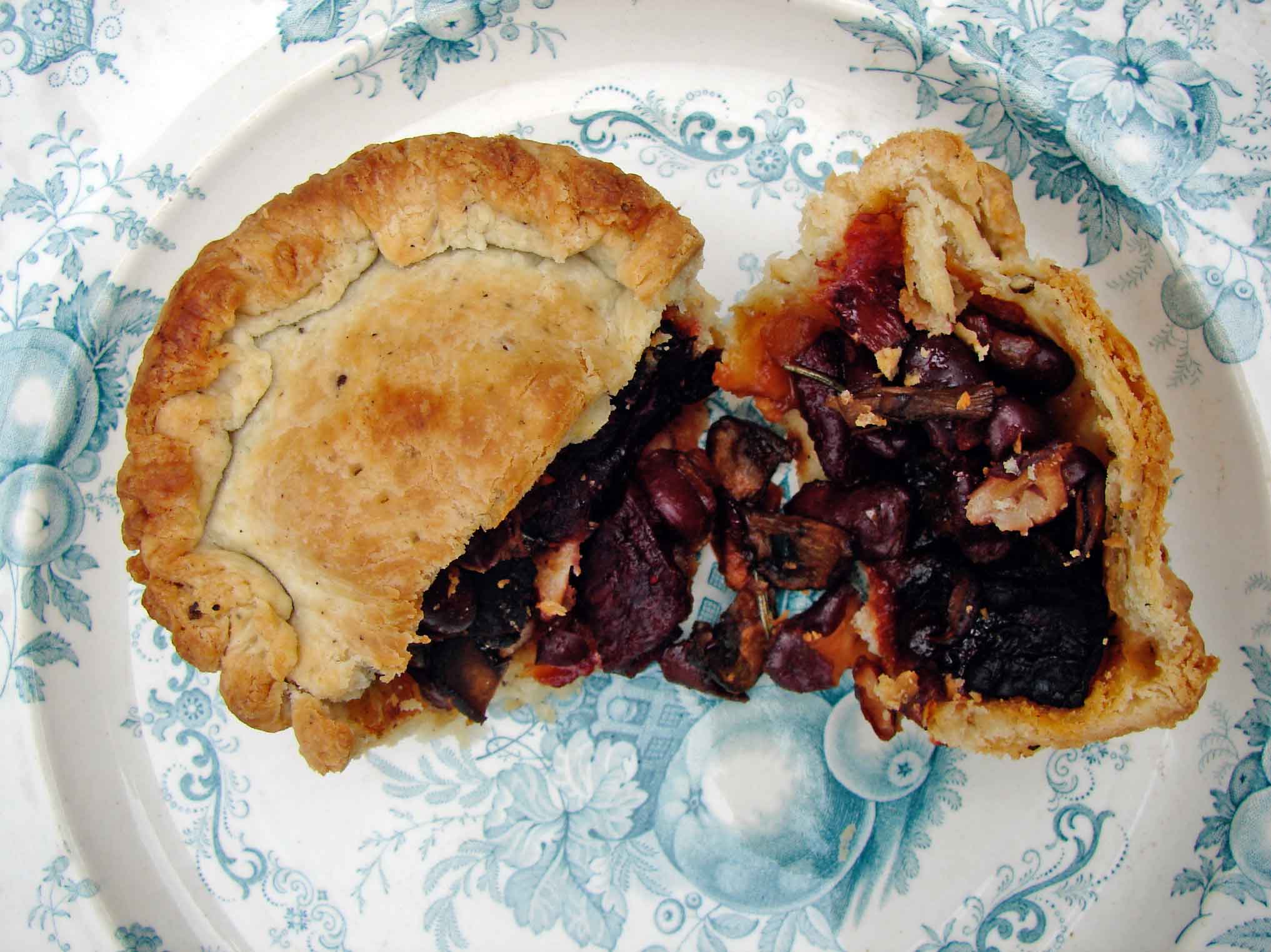
Beet and kidney (bean) pies

Beet and kidney bean pie

Beet and kidney bean pie

It’s take your child to work day. The boys are at the shop with David, hopefully not routering their arms or circular sawing their fingers. Take your child to work day. It’s a little odd, when you stop to think about it, which for better or for worse I’ve just done. It seems to imply a certain neatness and regularity to the world that just doesn’t exist, as I see the world. Does every parent have a safe, child-friendly job? Does every parent have bosses and co-workers that will put up with an infestation of restless children? Does every parent have a job they can work at productively whilst entertaining a bored and or curious tyke? Does every parent have a job during school hours? Maybe they’re chefs or professors or rock stars or stage actors, and they work at night. Does every parent have a job at all? 399919_10200595609406883_2047603223_nI’ve just read that the day was invented by Gloria Steinem as Take Your Daughter to Work Day, and was intended to give girls a sense of possibility and purpose. This makes it seem even odder to me, almost as if it was subversively designed to illustrate the messiness of the world. How many children are bundled off to work with their fathers, because their mothers don’t work during the week because they’re home with children. Maybe they work at night or on the weekend so that they can be there to pick up their children after school. Maybe they have a job but its the kind of job many women have at some point in their lives–cooking or cleaning or caring for someone else’s children, and, strangely, this isn’t the kind of job you’d like to share with your own child. Maybe, like many women, you’re not treated with respect at your job, you’re not treated as an equal. A lot of things have changed, a lot of things have not. Of course, all of this stopping-to-think-about-it has included some thoughts on my own life, my own work, my own ideas of success or failure and how they don’t quite fit into those of the rest of the world. Any thing you do is considered work if somebody pays you to do it. And the more they pay you, the more successful you are at your job. I’ve been doing a bit of pastry cheffing, and yesterday I made a cake for a restaurant. If the boys had stayed home and helped me with that, they would have been at work with me (and we would have had fun!). Today, I don’t have any commissions for cake, so if the boys stayed home from school and baked a cake with me, we’d be goofing off (and we’d still have fun!). If I sit around writing or cooking or conspiring to make a movie, I’m a shiftless slacker who should go out and get a real job (I know, I know…). If somebody pays me to do those things, I’m a person who has followed my dreams to find success (although I probably still can’t afford health insurance.) Everything is a little different looked at through the prism of parenthood. What seems brave and valuable when you’re a single person with only yourself to care for, seems irresponsible once you have children. We have our own small business. We work seven days a week, one way or another, and the truth is that the boys spend all weekend every weekend at work with David, watching him watch the store while I wait tables. This is life as they know it. We don’t have days off or weekends or paid vacations, and we still can’t afford health insurance. And all summer when they knock about the house with me, cleaning and cooking and keeping themselves happy and creative, waiting impatiently while I finish writing some dumb thing so we can go to the creek, they’re at work with me, whether they know it or not. It’s messy, it doesn’t fit into any tidy pattern of employment, but I think they’re okay with it. I think they’re proud of us, and have a sense of possibility and purpose. I think they wouldn’t have it any other way.

Beet and kidney bean pie

Beet and kidney bean pie

Beet and kidney bean pie! It’s ruddy! This was inspired, of course, by beef and kidney pie, or steak and kidney pie. It does have a certain meaty quality to it. It’s roasted beets and mushrooms combined with kidney beans in a saucy sauce of tamari, sage, rosemary, thyme and allspice. If you use vegetable shortening instead of butter in the crust, this would be vegan.

Here’s King Oliver’s Creole Jazz Band with Workingman’s Blues.

Continue reading

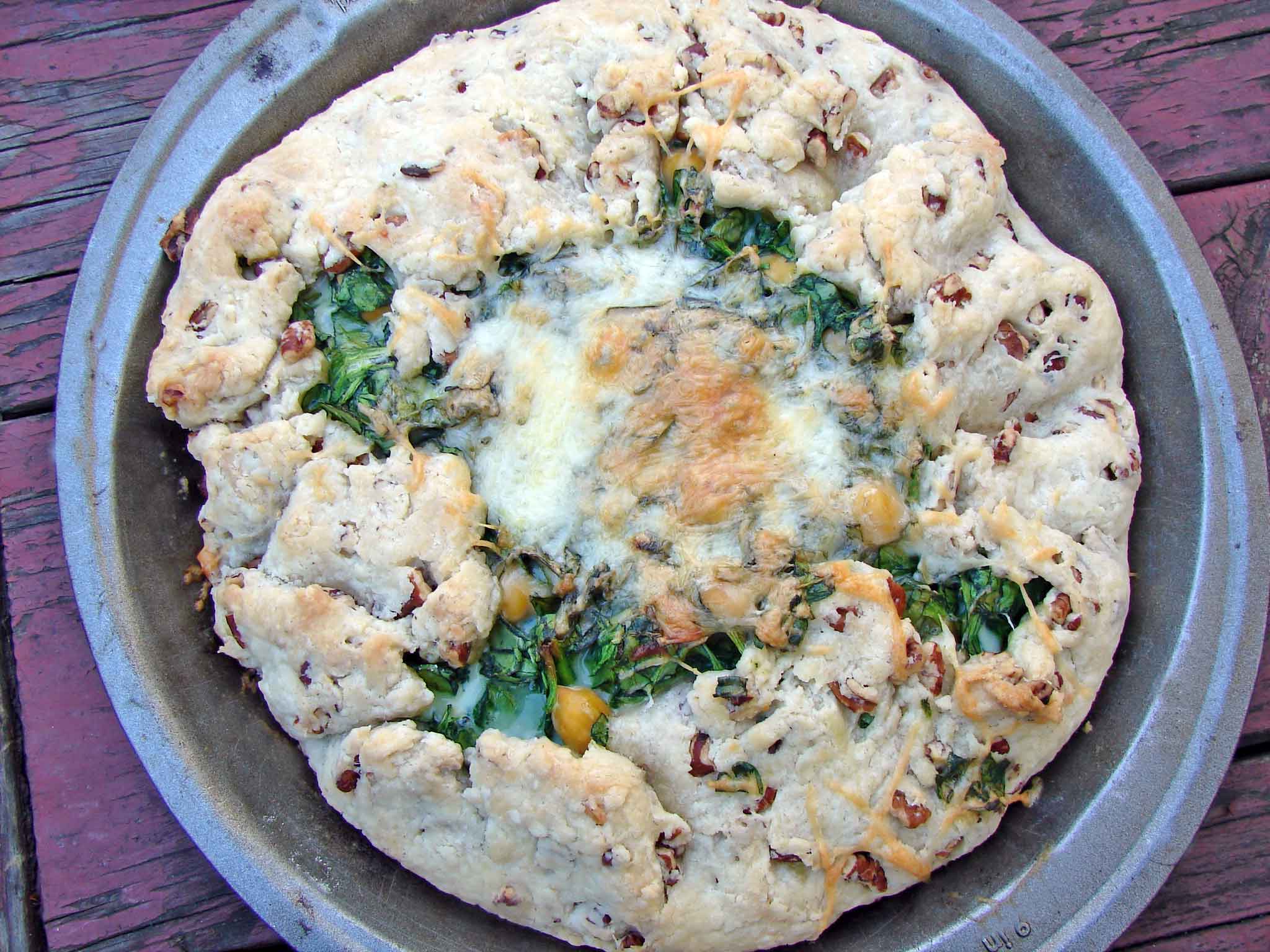
Spinach, chickpea and tarragon galette with a pecan crust

Spinach chickpea and tarragon tart

Spinach chickpea and tarragon tart

I had a discussion about film this weekend with some kids at work. They mentioned Tarantino, and, of course, being the bitter old lady that I am, I launched into a diatribe about how much I despise his films. (They love me at work! I’m a bright ray of sunshine!) The kids I was talking to probably thought I was some lame older person who just didn’t get it, man. That’s the whole point of cool films like Tarantino’s, they piss off the humorless missish squares and the easily offended. Well! Obviously I couldn’t leave it at that, so I calmly explained that I’d made a few films myself, and I’d had a lot of respect and hope for the American independent film movement, when I was the same age as these kids, and that Tarantino SINGLE HANDEDLY KILLED IT DEAD!! And that although I haven’t actually seen any of his films since Pulp Fiction, I HATE THEM ALL!! And I quietly assured them that my films weren’t failures due to any flaws that they (obviously) don’t have, but that it was, in fact, ALL QUENTIN TARANTINO’S FAULT!! Well, not just his fault, there are a couple of other people I blame, too. The kids said, “Well, his films are very violent.” And I replied serenely, “IT’S NOT THE VIOLENCE I OBJECT TO!! IT’S THE CLEVER SOULLESS INSINCERITY!! It’s the violence for no reason other than to shock. And we eat it up!” I’ve been thinking about it a lot, since, wandering through the week in the heavy fog of news of shocking violence. I keep returning to the same place, the place I always come back to. It’s so easy to shock. It’s so easy to make people sad or scared. Combine this with a little cleverness, an exploitative knowledge of some cool films other people have made and a good soundtrack, and you’ve got a hit. Obviously this doesn’t just apply to American independent film. It applies to all art, it applies to life. Acts of shocking violence get attention in a way that acts of kindness and generosity rarely do. We have odd values, here in the USA. We pay more attention to petty dramas and insipid squabbles than to anything with complicated depth of emotion. It’s not just Tarantino or independent film, it’s everything–our news, our (sur)reality shows, our politics. It’s difficult to create something that’s quiet and thoughtful and beautiful. It’s difficult to bare your soul, it’s difficult to make something sincere. It’s difficult to make a film about violence as violence actually is–messy and anguished and disjointed. Without honesty, soul, and love, a film isn’t worth watching, a song isn’t worth listening to, life isn’t worth living. This is my diatribe and I’m sticking to it!

I like a rustic galette in the springtime. It’s a nice transition between the solid, nutty, beany double-crusted pies of winter and the light vegetabley open tarts of summer. You’ve got your greens and your fresh herbs, but they’re sheltered from the cool spring breezes by a touch of crust. A light jacket of crust, a shawl, maybe. This particular crust was nice and crunchy with pecans. And I flavored the filling of spinach and chickpeas with tarragon and fenugreek, because I wanted to do something different. THey’re nice together–they both have mysterious flavors, a little sweet, a little bitter. Don’t use too much fenugreek or it will take over the flavor. A pinch will do it.

Here’s I Know it’s Over, by The Smiths. It’s so easy to laugh, It’s so easy to hate, It takes guts to be gentle and kind.
Continue reading

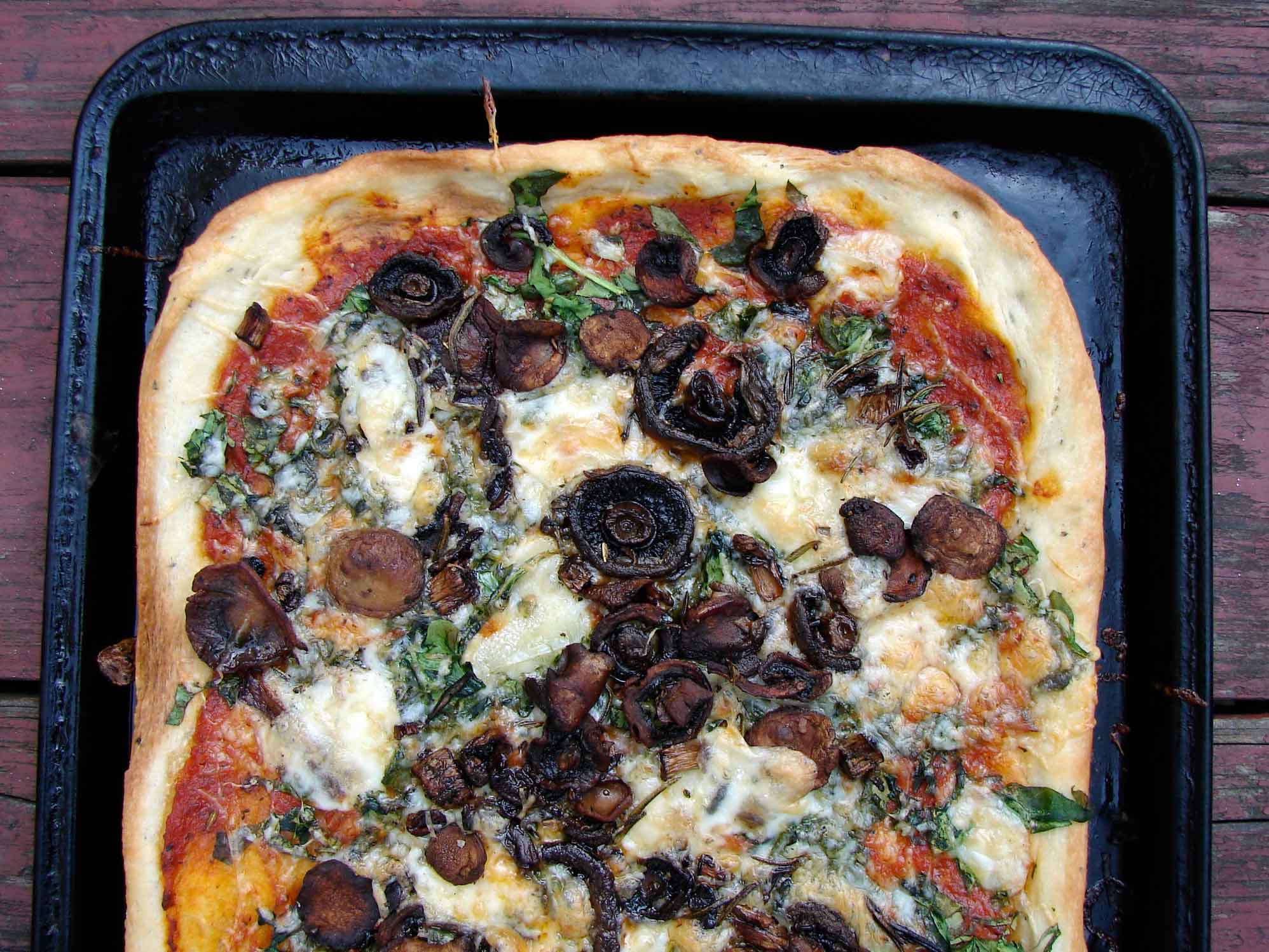
Pizza with baby spinach, rosemary-roasted mushrooms and brie

Roasted mushroom, spinach and brie pizza

Roasted mushroom, spinach and brie pizza

I find it very beautiful and moving that people make connections–not just that we’re able to, but that we need to. We connect little bits of fact to make stories, because it helps us to understand and to share those little bits of fact. When an event occurs that’s hard for us to understand or explain, we find ways to connect ourselves to it, to make sense of it through our experiences. We do this almost without thinking, it’s our first reaction. And our second is to share those connections, to tell others about them, to talk and talk and try to understand. We’ll say, “I’ve lived in that place,” “I knew that person,” “I knew someone that knew that person.” We’ll make connections to other similar events that we’ve lived through, that we’ve survived. It’s tempting, in a less generous or a myopically hypocritical moment, to say, “We only talk about violence when it happens in a place where we love, to people like us!” Or even to shout, “It’s not about you!” But, of course, it is about you, whoever you may be. It’s about all of us. It’s our way to lend our strength to strangers we may never meet, to suffer with the sufferers and explain the inexplicable. It’s our way to give hope for a better time after a strange, sad time. It’s our way to connect ourselves not just to events but to people, our way to extend our sense of family, to create new bonds of responsibility and affection through compassion and empathy. It’s probably facile and foolish to say it, but it seems that if we could expand these connections to reach beyond similarities of geography or experience, if we could make a larger more universal connection–if we could sympathize with somebody not because we lived in the same place but because she, too, has a daughter, or is a daughter, or is human, or, simply, is alive–if we could do this then we would have fewer of these incomprehensible events to explain, and fewer people to mourn.

So this is what I’ve been thinking all morning, as I kneaded dough and rolled out dough and shaped quite a few tarts. Baking as comfort and therapy! Over the weekend we made some pizzas. I wanted to make something the boys liked to eat, that they’d actually look forward to, and pizza never fails. I made the dough before I went to work, and then when I came home we made all the toppings. The dough rose for quite a few hours, this way, but it turned out extra crispy! This makes two big cookie-tray-sized pizzas. I made one plain, with just sauce and cheese, and one fancy, with spinach and musrhooms and brie. I’ve given the toppings in amounts here to make two fancy pizzas, but do as you like! That’s the beauty of pizza!

Here’s Elmore James with It Hurts Me Too. One of the best songs ever ever ever.

Continue reading

Strawberry frangipane tart with balsamic caramel glaze

Stawberry frangipane tart with balsamic glaze

Stawberry frangipane tart with balsamic glaze

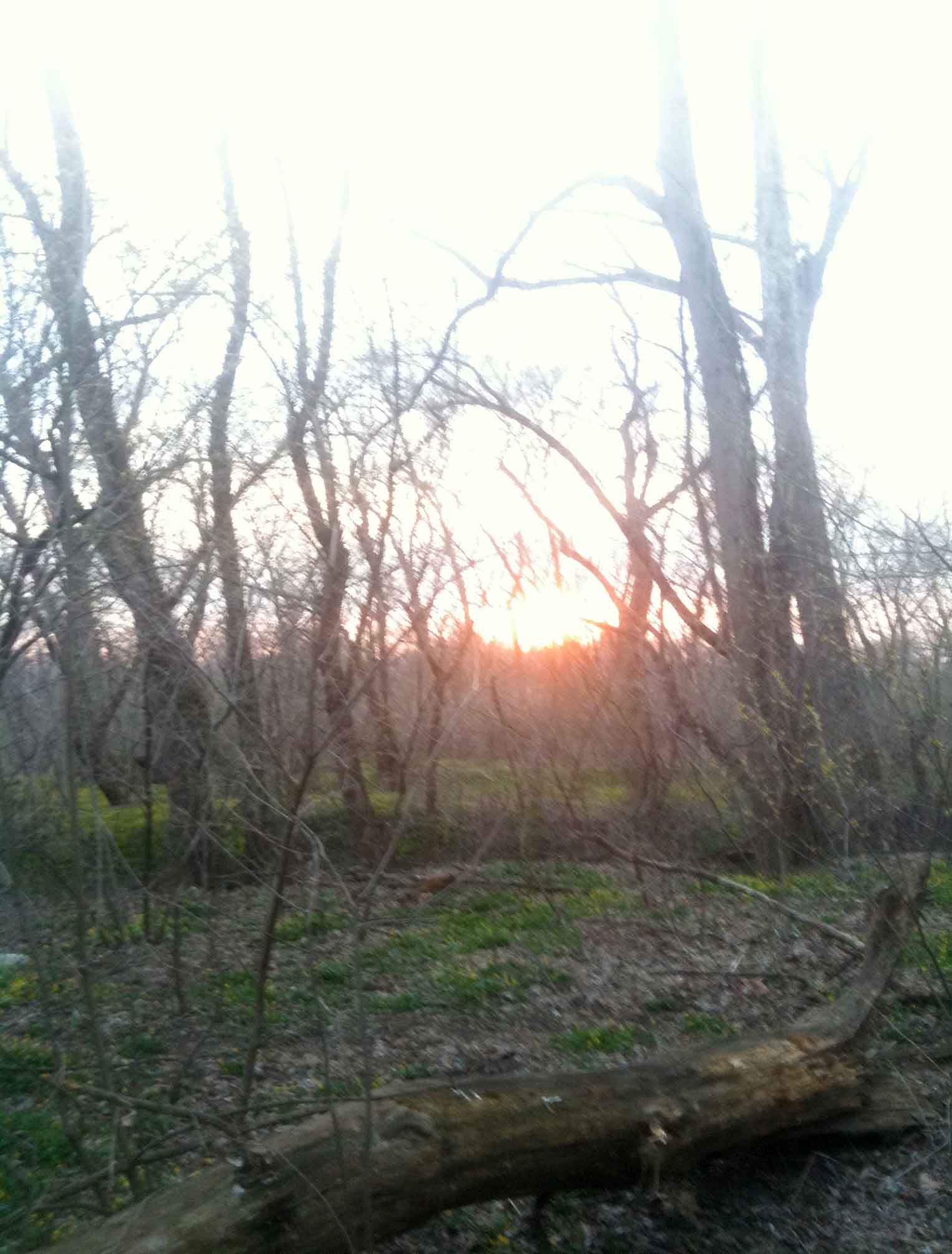
One of the great pleasures of doing the same thing every day is watching for the small changes. This is never more true than in springtime, when the small changes are so glowing and growing and hopeful. We’ve been taking walks after dinner, which is one of my favorite things to do when the days start to stay lighter later. No matter how tired or full I am, or how much my feet and back hurt, I always want to go for a walk after dinner. Clio can be relied upon as a companion, Malcolm is almost always game, David comes if he has time, and Isaac needs to be persuaded, almost every time. We’re lucky to live along a canal with a beautiful towpath, and we’re even luckier that between that canal and the river is an old abandoned train track. It’s got a quiet, secret feeling about it, but it’s a shared secret: you won’t be overrun by people, but you’re likely to meet somebody you know. Last summer, Malcolm and I discovered a beautiful network of paths that wind from the train tracks to the river, through a low woodsy stretch of land crisscrossed by creeks. This is where we go. It’s a beautifully dreamlike landscape, and if you run through it trying to keep up with Malcolm and Clio, it can feel ecstatically like flying. After the storm in the fall, it was difficult to walk here. Fallen trees and debris and networks of crazed brambles changed the course of the path forever. Even now, in spring, everything is coated with a hoary grey vine, dried, dead, and wintery, but still clinging thickly to everything in its path. It’s a solidification of the damage that the storm did…a creeping tangling spirit of everything that got washed up and unrooted and washed under.
storm grasses

storm grasses


Lately beautiful small yellow flowers are taking over the landscape. In the dusky light, they glow like grounded stars, more and more every day. They’re tiny compared to the strangling vine, but they’re alive and growing, and the vine is slowly turning to dust. Each day we see more green, more gold, more leaves and flowers, we hear more birds, and watch as the creeks rise and fall with the spring rains.
the yellow flowers

the yellow flowers


The other night it was just Malcolm and Clio and me. A storm was predicted, and I’m predictably terrified of thunderstorms. I thought we wouldn’t go very far, I said we wouldn’t go very far, but I didn’t want to go back once we’d started out, and we followed almost to the end of the winding path. We walked back to a gathering of dark clouds over the river, and the rumble of thunder. I grabbed Malcolm’s arm. He shone his bright face at me and said, “Don’t worry, mom, it’s a sign of spring.” We tumbled into the house, laughing, as the real rain started to fall.

I think this strawberry tart is one of the best things I’ve made in a long time! And I’ve made a lot of good things!! I’m so proud of the stupid balsamic caramel. I feel as though I may have invented it, and I’m scared to google it and see how many millions of examples of balsamic caramel exist. So…we have a sweetened pastry crust shell, peppered with black pepper. We have a soft almond frangipane layer, topped with thinly-slice fresh strawberries. These are coated with an unbelievably delicious sweet-tart balsamic vanilla caramel glaze that’s perfect with the strawberries and the creamy frangipane. I’m patting myself on the back as I think about it!!

Here’s We Walk, by REM, live in 1983 (!!!!) Actually, the vine-clad terrain of our walks reminds me of the cover of Murmur!

Continue reading

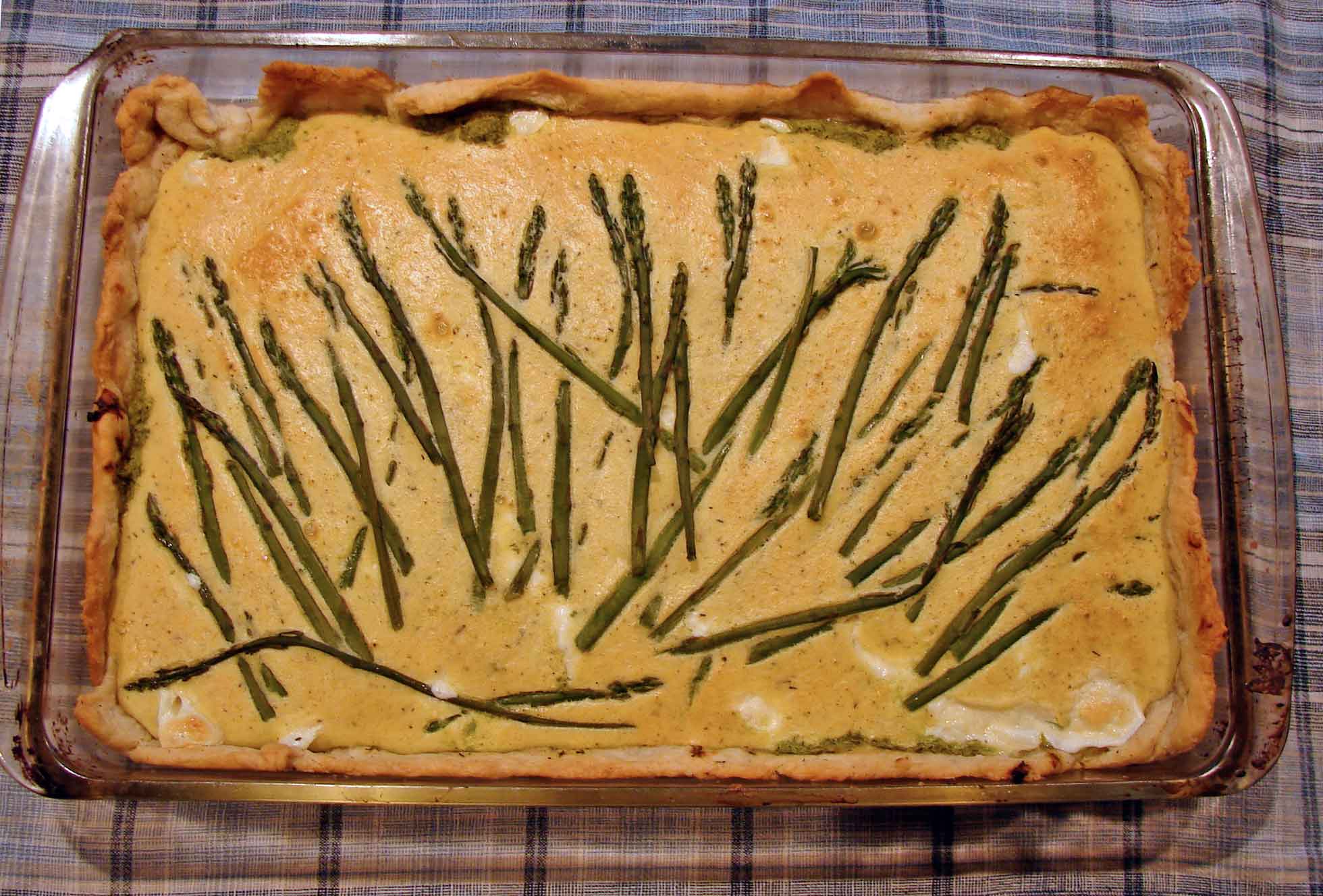
Asparagus and macadamia tart with a lemon-pepper crust

Asparagus and macadamia tart

Asparagus and macadamia tart

I’ve been in a little bit of a blue funk lately, and I couldn’t start to tell you why. It’s inexplicable! The other morning I was lying in bed, trying to think of a good reason to get out of it, and I heard birds singing outside my window. I heard birds whirring and calling and warbling. It wasn’t a particularly nice morning, it was grey and unseasonably cool, but the sun came up a little earlier than it had the day before, as it does this time of year. The birds seemed to recognize that fact and want to sing about it. The birds and bugs and flowers just get on with their work, they go about their business. They wake up and live because that’s what they do in the spring. Maybe they think about time passing. Maybe they’re bewildered by memories and worries, but it doesn’t seem to slow them down any. As the days grow longer and lighter, they work harder and louder, and they seem satisfied with that. They seem happy. It felt like a comfort to me, listening to the birds busy outside my window. It felt like a good reason to get out of bed and get on with my life, and join the cool bright world waking up all around me, at its own irrepressible pace. You can never hold back spring.

This is what we made for easter dinner. It’s modeled on a bakewell tart, so you’ve got your crust, your jammy layer (pureed asparagus and tarragon!), and your baked nut custard layer (with macadamia nuts!). I added lemon zest and pepper to the crust, because both those things go well with asparagus and seemed fresh and springlike. Other than that, we kept it really simple and clean. I thought it was very tasty – bright but comforting.

Here’s Tom Waits with You Can Never Hold Back Spring. Remember everything that spring can bring.
Continue reading

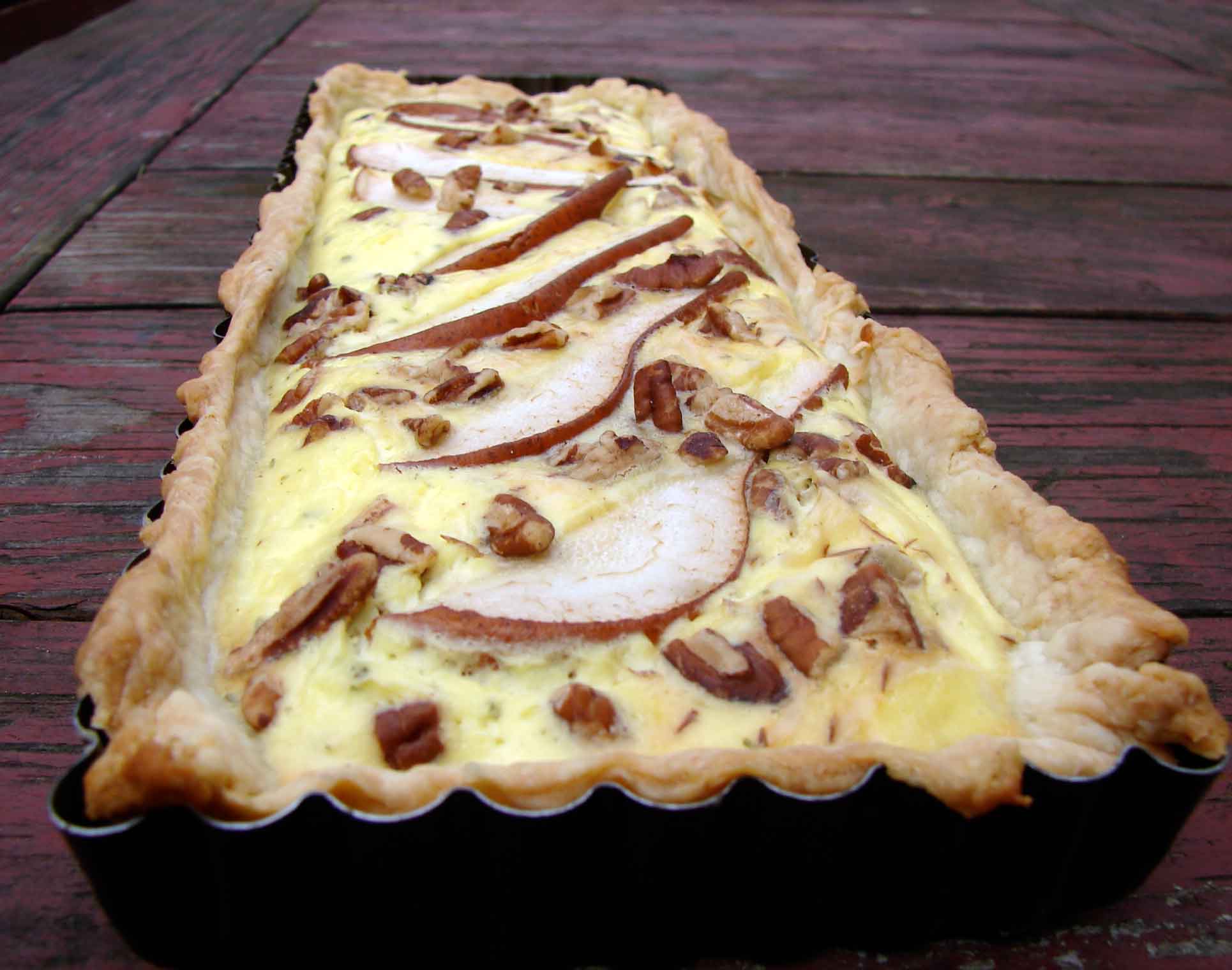
Ricotta rosemary tart with two toppings: smoked gouda, pear and pecan or brie, castelvetrano olive and pine nut

Smoked gouda bosc pear tart

Smoked gouda bosc pear tart

Yesterday, in a characteristically glib and off-handed fashion, I started a discussion about fate and choices, and how they shape our lives and our history. My friend Tony responded with some thoughtful comments, which I thought about as we drove home late at night through fields so bright with full-moonshine they seemed snow-covered. A metaphor slowly developed in my slow brain, and as I mulled it over, the metaphor expanded and evolved, and it started to make more and more sense to me as a way to explain ideas I may have clumsily set out in yesterday’s post. Never one to shy away from stretching an extended metaphor as far is it can possibly go, I’ve decided to share it with you here. Tony brought the specter of Hitler to the discussion. Because nothing makes sense when you think about the scale of Nazi atrocities – neither fate nor free will. Here’s how I responded, and how this giant metaphor was born.

    The way I see it history is like a tapestry, and we’re all madly weaving away at our little portion of it, and making some sort of pattern that makes sense sometimes and makes less sense others. Sometimes we start out in wrong directions, sometimes we make mistakes, sometimes we can fix them and cover it up or make a new pattern, sometimes not. So Hitler is the result of an infinite number of choices that his ancestors made, for centuries and centuries, down to his mother and father. Every single tiny choice they made every day of their lives resulted in Adolph Hitler’s existence, and not one of them could have had any idea how that would turn out. They were weaving a pattern in their portion of the tapestry, and when we look at it from miles above the fabric, and many years on in history, we see the pattern and the tragedy of it, but at the time, even after Hitler’s rise to power and the millions of people that made stupid, scared, even evil choices to follow him or not question him, even after that, they might not have seen the pattern that was forming, so close in it, as they were, so busy making it as time flew by them. And so concerned with the millions of other choices in their day-to-day lives that distracted them from the bigger picture, as we see it so clearly now.

Well, the more I think about it, the more sense it makes to me–this idea of history or fate (depending on which way you look at it) being a sort of tapestry. From the beginning of time people have been weaving their own small portion, aware of people working nearby, but incapable of seeing the larger picture they’re all making together until much later in life. They know from the first that they have a pattern to follow, but there’s no clear plan for it, no diagram, they make it up as they go along, trying one thing or another until it makes sense. They might be following a pattern that their parents taught them, or copying from the people working close by. Various shapes and colors will come into and go out of fashion–some will notice and follow, others will not. My father is a historian, and I once did some work copyediting a textbook he cowrote–an overview of world history. It was remarkable to me the way that these sweeping events would overtake humanity every few hundred years: wars, natural disasters, famine, plagues. These formed huge, horrible changes in the pattern that everybody was weaving, but they couldn’t have known at the time. Most of this was beyond the control of ordinary people, struggling to make their part of the tapestry as beautiful as possible. It made it hard for them to weave, or stopped them weaving at all. Caught up in the struggle of keeping ourself and our family alive, so deeply close to it and inside of it, we’re caught unaware by these waves of change sweeping over the tapestry. And as people make a decision to use a certain color, or continue in a certain direction, they’re thinking what’s best for them at that time, they’re making narrow decisions based on survival and their idea of success. (Hitler is an interesting example of this, I think…the decisions he made might have been considered smart for him at the time, because in terms of his career and his ambition, he might have been considered highly successful, up to a certain point. In the view of people around him…well, I don’t want to go on about Hitler too much. I’m not sure he belongs on a stupid food blog.)
Looking back at my own little piece of the tapestry, it’s funny how it’s worn through in parts, so that I can’t even remember what the pattern was like there, when it was fresh. I just have some memory of the color of my mood at the time. Was I blue? Was I rosy? Was I working in golden thread or gloomy grey? And parts of it are folded up on itself so I see them as clearly as the patches I’m working on now, but it’s never the parts that I’d expect to have nearby. Patches that felt impossibly tangled at the time I worked on them, looked at from here are actually quite pretty. It’s a constant surprise.
Well, dear old extended metaphor, I think I’ve taken you about as far as we could go, in the time I now have.

Brie & castelvetrano tart

Brie & castelvetrano tart

It’s spring break, which means that I took Malcolm and Isaac to the grocery store with me. And they both got to pick out special things. Malcolm picked smoked gouda, Isaac picked brie and pears. I picked castelvetrano olives, and decided to combine everything in two different-but-the same tarts! The crust is simple. I added a little olive oil in a nod to the pizzaness of these tarts. The basic tart base is ricotta, a touch of mozzarella, lots of rosemary and eggs. Simple, but with a versatile flavor to show off the toppings. I think that brie and pears is a fairly classic combination, so I decided to mix it up a little and do pears and smoked gouda. Soooooooo good. Like bacon, somehow, as I remember it. And I combined the creamy tang of brie with the sweet brininess of castelvetrano olives. Nice! These would be good to make for a party of a special meal that lots of people were eating. You could vary the toppings any way you like to appeal to your various guests, and everyone would be happy!
Bosc and smoked gouda tart

Bosc and smoked gouda tart

Here’s Fisher Hendley with Weave Room Blues

Continue reading