Beetaroni pizza

Beetaroni pizza

Beetaroni pizza

I saw a commercial that tried to invoke our nostalgia by showing clips of super-8 films. Well, I wasn’t impressed! I recognized instantly that it was phony– just video manipulated to look like old film footage. I saw through the unconvincing scratch marks and the flares of golden light. I know their tricks and their manners, as Jenny Wren would say. How do I know their tricks? Because I recently downloaded an app for my phone called Super 8, and I’ve spent the last couple of days making a movie with it. I know it’s silly as hell, but I kind of love it. It’s just one more in a long line of oddly compelling visual nostalgia devices available at the touch of a screen, with their washed out seventies colors and their old polaroid shaped shots. It’s funny how super-8 film always feels like a memory, how it can make you nostalgic for a time you might not have lived yourself. We didn’t have a super-8 camera when I was growing up, but I can almost imagine scenes from my childhood as though I’d seen them projected on a screen, silent and dreamy, with the tick tick tick of the equipment marking the passing of time. In super-8-fueled nostalgia, everything seems bright and golden and glowing. It’s always late evening on a perfect summer day, just as the sun slips away and you think about seasons changing and years flying by and children growing, and everything seems unspeakably precious. And now it’s been cheapened as a marketing tool. According to my beloved OED, the term “nostalgia,” was originally used to describe an illness or malady, and I must say it seems very wrong of the people who are selling whatever they’re selling to take advantage of the condition. Of course the beautiful thing about super-8 film, which no phone app can capture, is that it’s limited. Each little reel is three minutes long. You have to think carefully about what you want to capture, about which moments are the important ones. You can’t randomly film until you run out of batteries. And the little reels of film were not cheap or easy to develop, which added even more weight to the decision about what to film, but added immeasurably to the delight in seeing how everything came out. And those golden flares of light, so cynically copied by my phone app and the stupid commercial–those flickering pools of sunshine came at the end of a reel, as it wound itself out…they signalled the limit of your filming…the moment when the film ended and the people in the shot danced off into bright spots of light. The moment you had to put the camera down, and live the hour as it happened, before it got away from you.

beetaroni pizza

beetaroni pizza

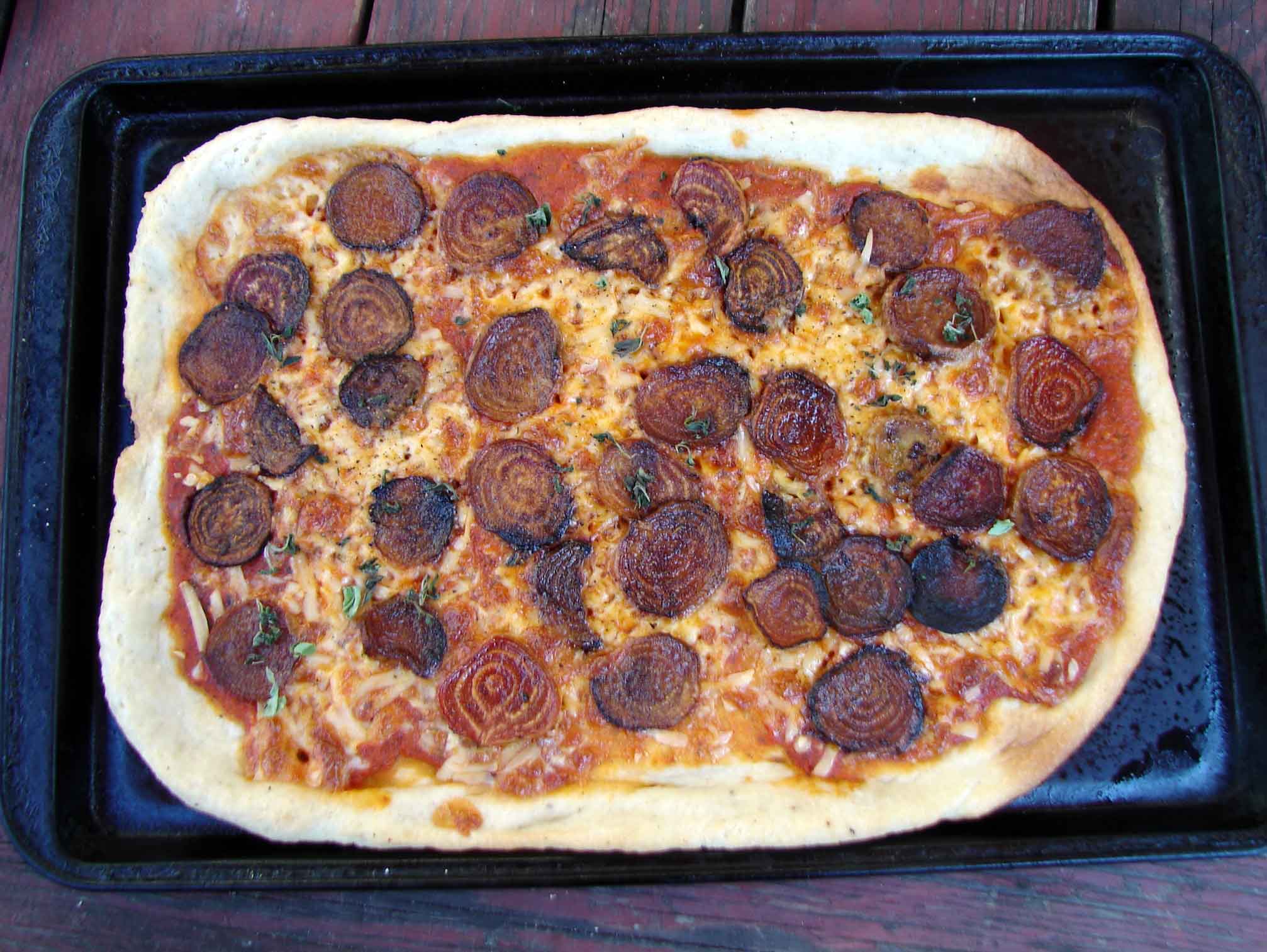
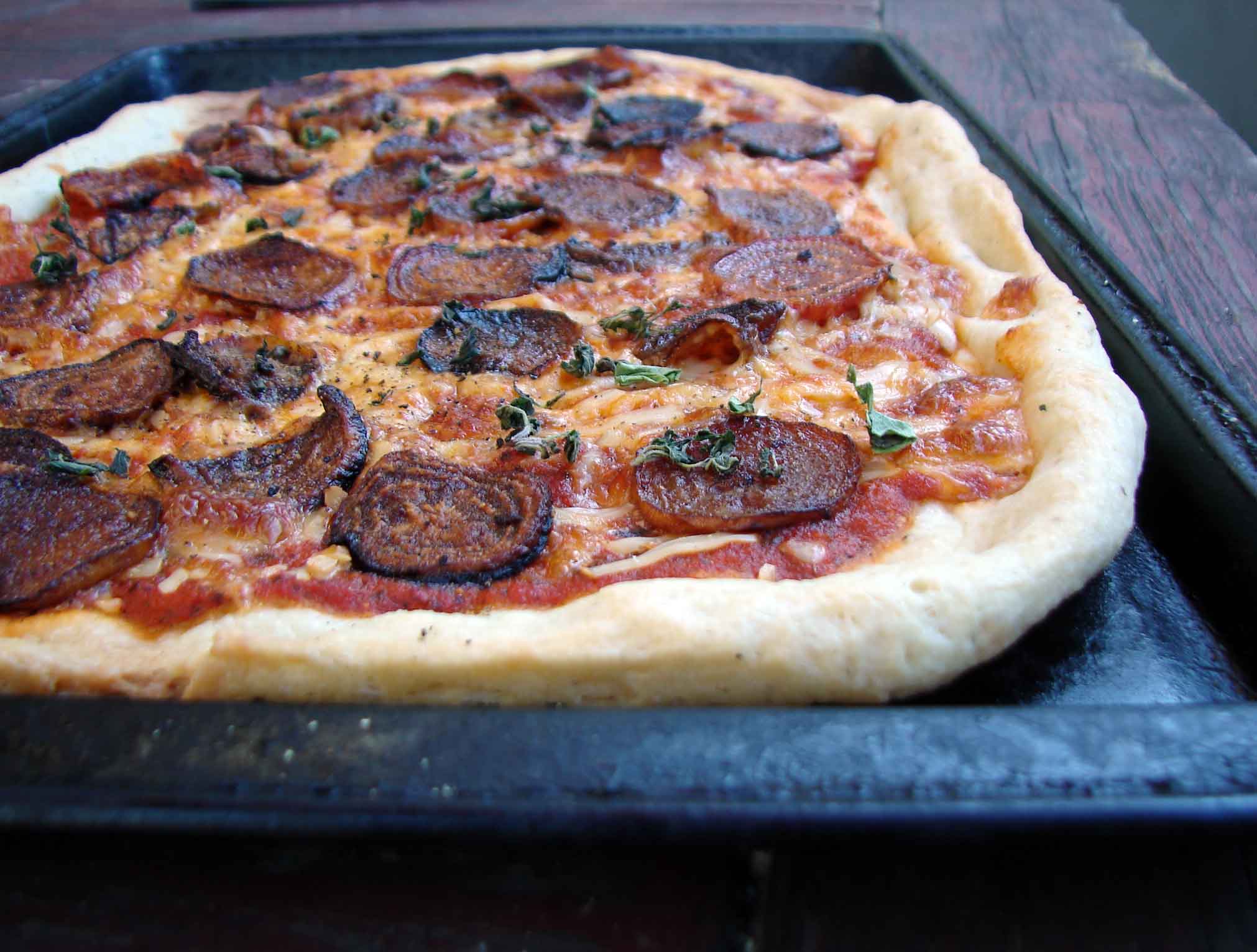
It’s beetaroni pizza, man! I roasted thinly sliced beets with tamari, smoked paprika, balsamic and a little bit of smoked sea salt. I’m not sure I remember exactly how pepperoni tasted, but these little roasted beets were very good! Salty, sweet, smoky, chewy. Of course I used them to top a pizza!! This recipe makes two big cookie-sheet sized pizzas. I used all the beetaroni on one pizza, and put olives on the other.

Well, here it is, my pseudo-super-8 film. I took some footage of the boys walking down to the creek, because everything about going to the creek captures everything about the height of summer nostalgia, to me. The song is Tezeta, by Mulatu Astatqé, I believe that “tezeta” means nostalgia. It certainly sounds as though it should!

Continue reading

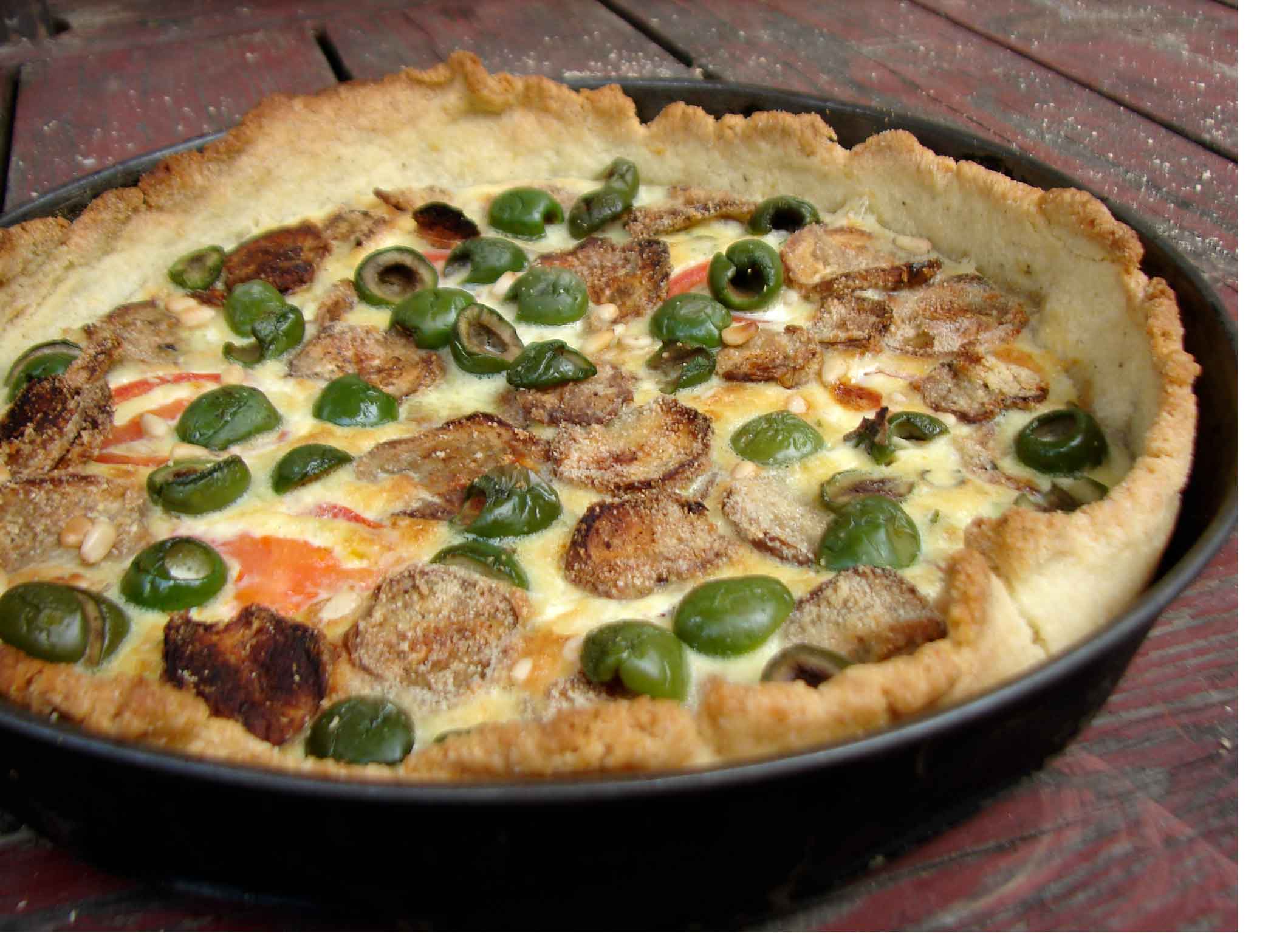
Goat cheese tart with roasted eggplant, olives, and a lemon-semolina crust

Goat cheese tart with eggplant and olives

Goat cheese tart with eggplant and olives

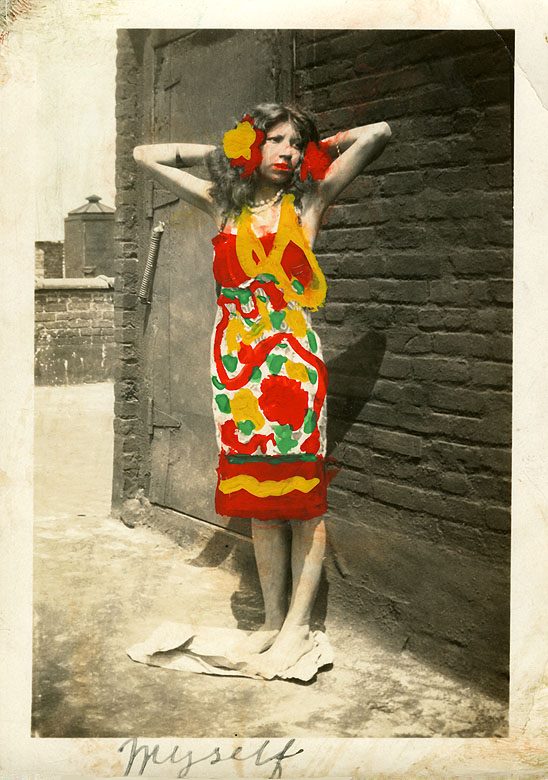
It’s Saturday storytelling time! It’s summer sporadic schedule Saturday storytelling time!! As I’m sure you’ll recall, each Saturday we post a found photograph, a vernacular picture, and we write a story about it, and invite everyone else to write one, too. And then, in theory, we all read each others’ stories and offer wise editorial advice. Today’s picture is lovely, I think. It has layers. And here it is… Send me your story and I’ll print it here, with mine after the jump, or send me a link to share, if you have somewhere of your own to post it.
396693_10151262642494589_839365559_n

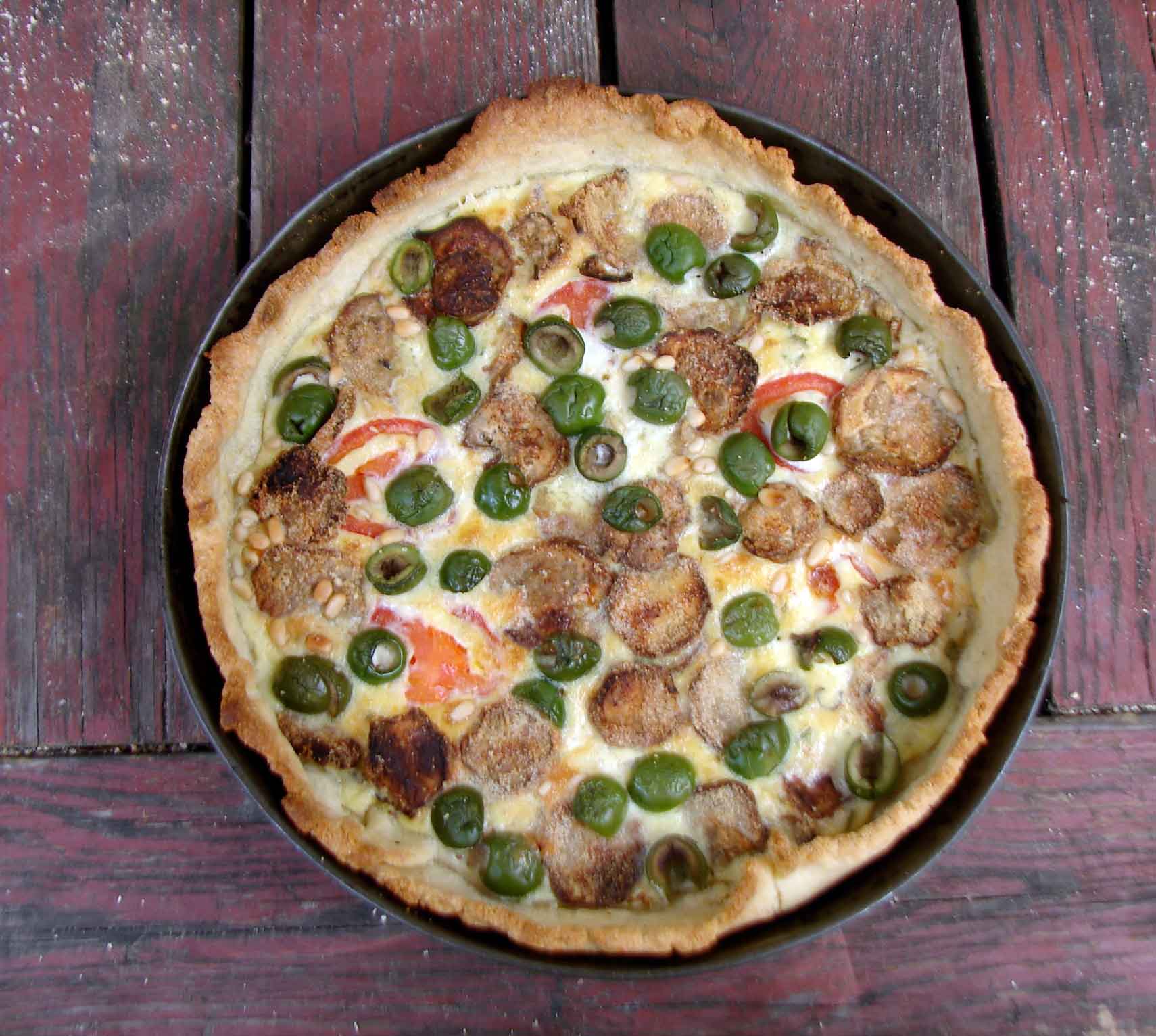
eggplant-olive-tartIt’s a summery tart! The eggplant is from the farm, of course, which means it’s really really the middle of summer. This whole tart is quite light and fresh-flavored, I think. The crust has semolina in it, which makes it extremely crispy, and it has lemon in it, which makes it bright. I think olives, eggplant and goat cheese form a sort of perfect trinity of flavor. So there it is!

Here’s Up on the Roof by the Drifters

Continue reading

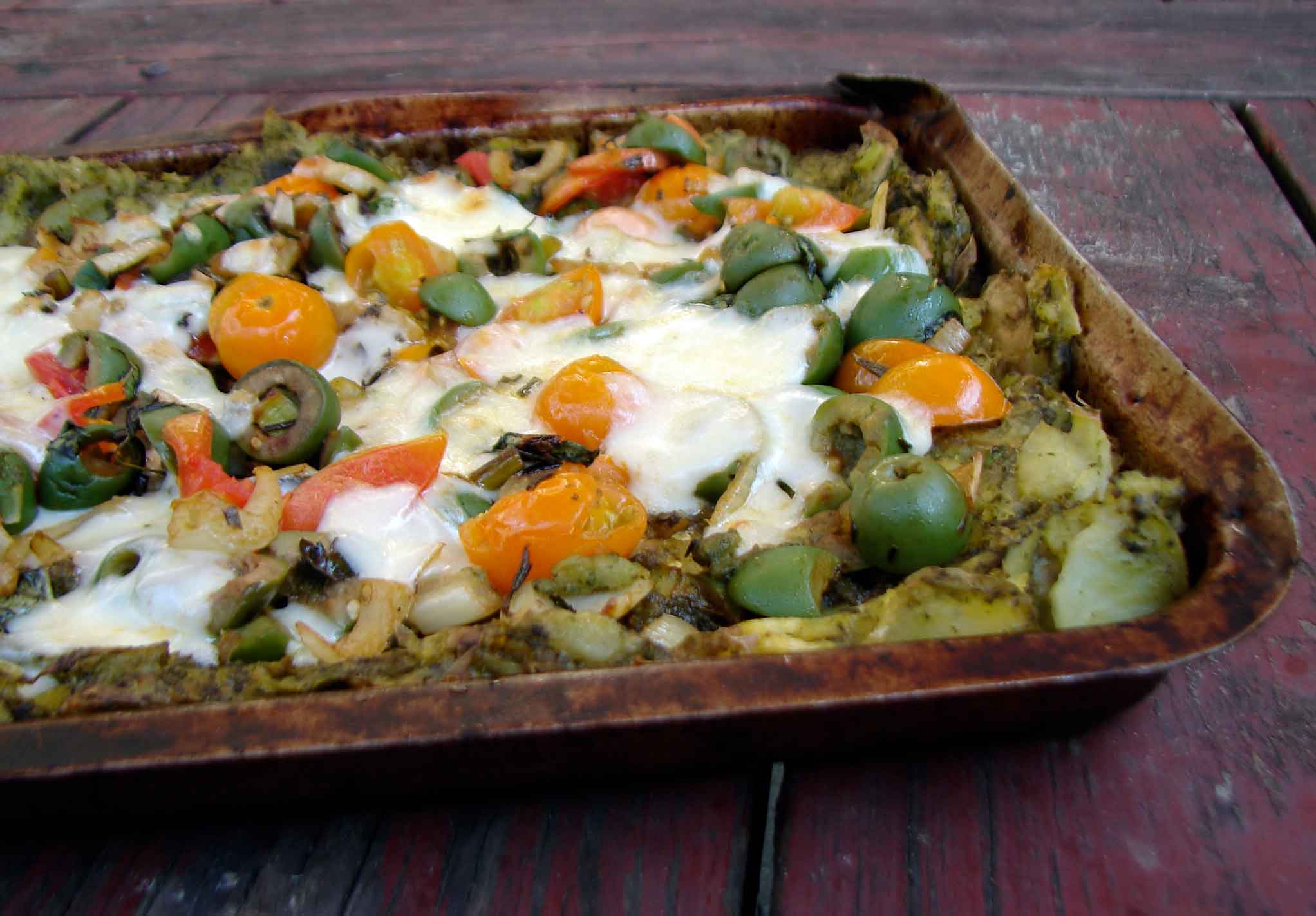
Pesto potato-crusted “pie” with fennel, tomatoes and olives

Pesto potato "pie" with fennel, tomatoes and olives

Pesto potato “pie” with fennel, tomatoes and olives

This is my 700th post! It boggles the mind! I should make it very clever and funny and memorable, but I’m not feeling very organized in my mind at the moment, so none of that is going to happen. Instead you’ll get a ramble from my melty brain, and it will start this way: “I’ve been thinking about this a lot lately…” As you may have noticed, I’ve been reading some Camus, specifically essays he wrote for Combat magazine as the second world war came to a close and the occupation ended. He’s so hopeful and passionate about starting fresh, about creating a new society, and he’s sorting through his ideas about politics, religion, violence, life and death. It’s an inspiring read, and it’s fascinating to see how his convictions change in response to the world around him. He starts one essay, “We are often asked: ‘what do you want?’ We like this question because it is direct. We must answer it with directness…by returning to the question again and again, we will give our answer clarity.” I love this about Camus! His answer is not entirely specific or practical, but it’s about justice and freedom and purity, and how those can probably never be achieved but they’re still worth fighting for. I’m not often asked “What do you want?” and I’m fine with that, because honestly I don’t want all that much, but I’ve been thinking about my defense of the ordinary, lately, and I have a lot of questions I return to again and again. For instance, I recently described the British kitchen sink films as Ordinary. They are about ordinary people, but they’re also about miserable people, who are trapped by an immoveable class system. And this is not something I would champion. I would not tell someone trapped in an unrewarding hopeless job, “Ah, just make the best of it and think interesting thoughts.” I would encourage them to make a change in their life, and I would hope they’d have the freedom and support to do so. But this is how the cycle continues…their new, more interesting job would become ordinary, and that would be a good thing. Because everybody lives day to day. You could have the most fabulous life imaginable, but you still live it one day at a time, you still move through it from meal to meal and sleep to sleep, from season to season: the sun still rises and sets on you. This is something we all share, and which we can’t escape. This passage through time, with it’s oddly variable, inevitable pace should join us in sympathy with everybody around us, because it makes us all equal, it makes us all Ordinary. But it also makes ordinariness unspeakably precious and not something we should feel stuck with, but something we should value and keep. I want to see a change in the world, I want to see a (peaceful) revolution that brings about the sort of justice in which everybody has the freedom to live their everyday life exactly as they would wish, with plenty and safety and inspiration. The tedious jobs should be shared by everybody, so that we all have the time to be creative and joyful. So that as we’re all stuck on this journey together at the same absurd pace, we all have a beautiful view out the window. Well, it’s 100 degrees and I’m probably not making sense, but by returning to the question again and again, we will give our answer clarity.

Pesto potato pie with fennel, tomatoes and olives

Pesto potato pie with fennel, tomatoes and olives

This is all from the farm! Potatoes, herbs, tomatoes, fennel. I wanted to put it all together with the smallest amount of heat possible. So I cut the tomatoes very thin and cooked them quickly. And I sauteed the fennel and herbs. But beyond that it’s all made (quickly) in the toaster oven. You could use the regular oven and broil it, and everything would be cooked in about ten minutes, so it wouldn’t be hot for very long. It’s kind of like a pizza, except that it’s gluten free! The boys liked it, and so did we.

Here’s Our House, by Madness, because somebody was listening to it as I walked down the street earlier, and I remembered how much I like it, and it’s very cheerfully about ordinary life.

Continue reading

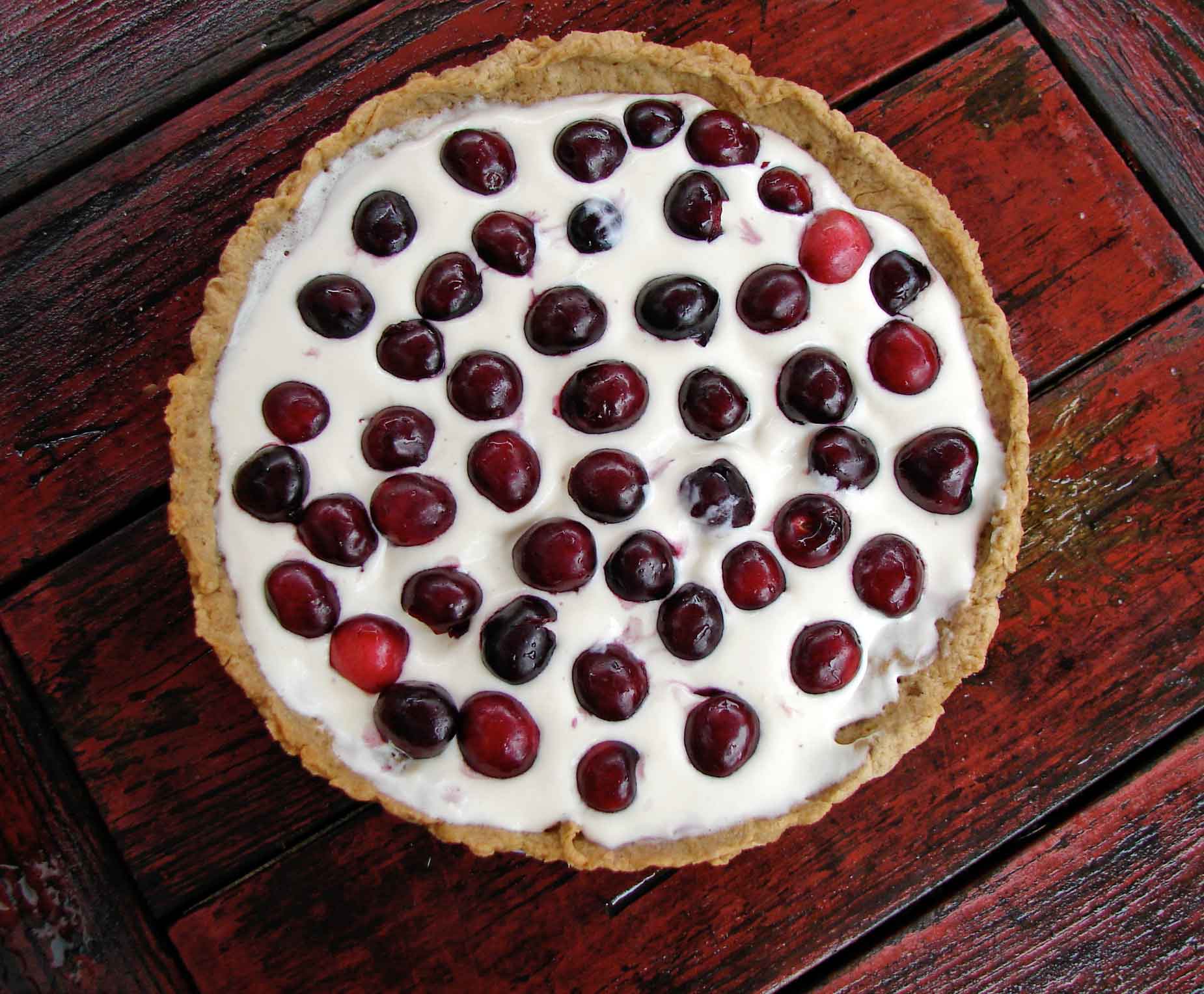
Fresh cherry tart with almond pastry cream

cherry tart with almond pastry cream

cherry tart with almond pastry cream

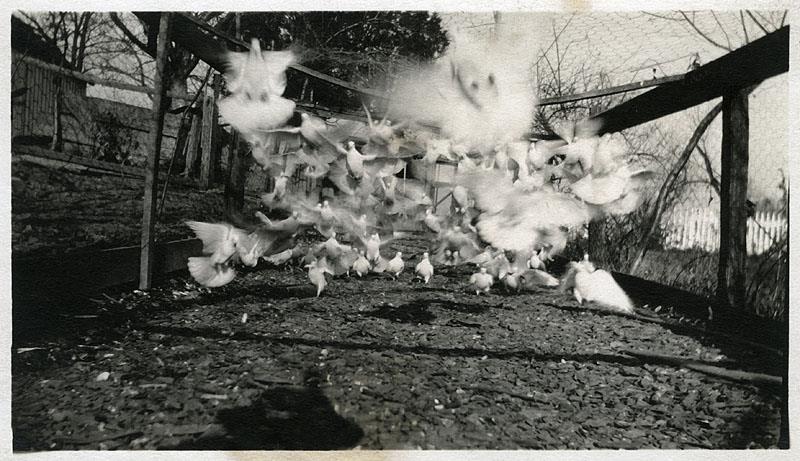
It’s Saturday storytelling time again! As I’m sure you’ll recall, this is the day I post a found picture, and everybody in the world writes a short story about it, and then we all sip chardonnay and discuss each others’ stories. My original idea was to keep them quick and short and not think about it too much, just kind of see what you had in your head that you didn’t know was there until you started writing. I mentioned earlier in the week that I’d started thinking about the stories more and more, but not this week, this week I wrote it all in about half an hour, like a big flurry of birds flying in the air. Here’s your photo for the day:
543976_10151332556239589_153656273_n

If you’d like to write a story, send it to me and I’ll post it with mine after the jump. Or send a link, and I’ll include that here.

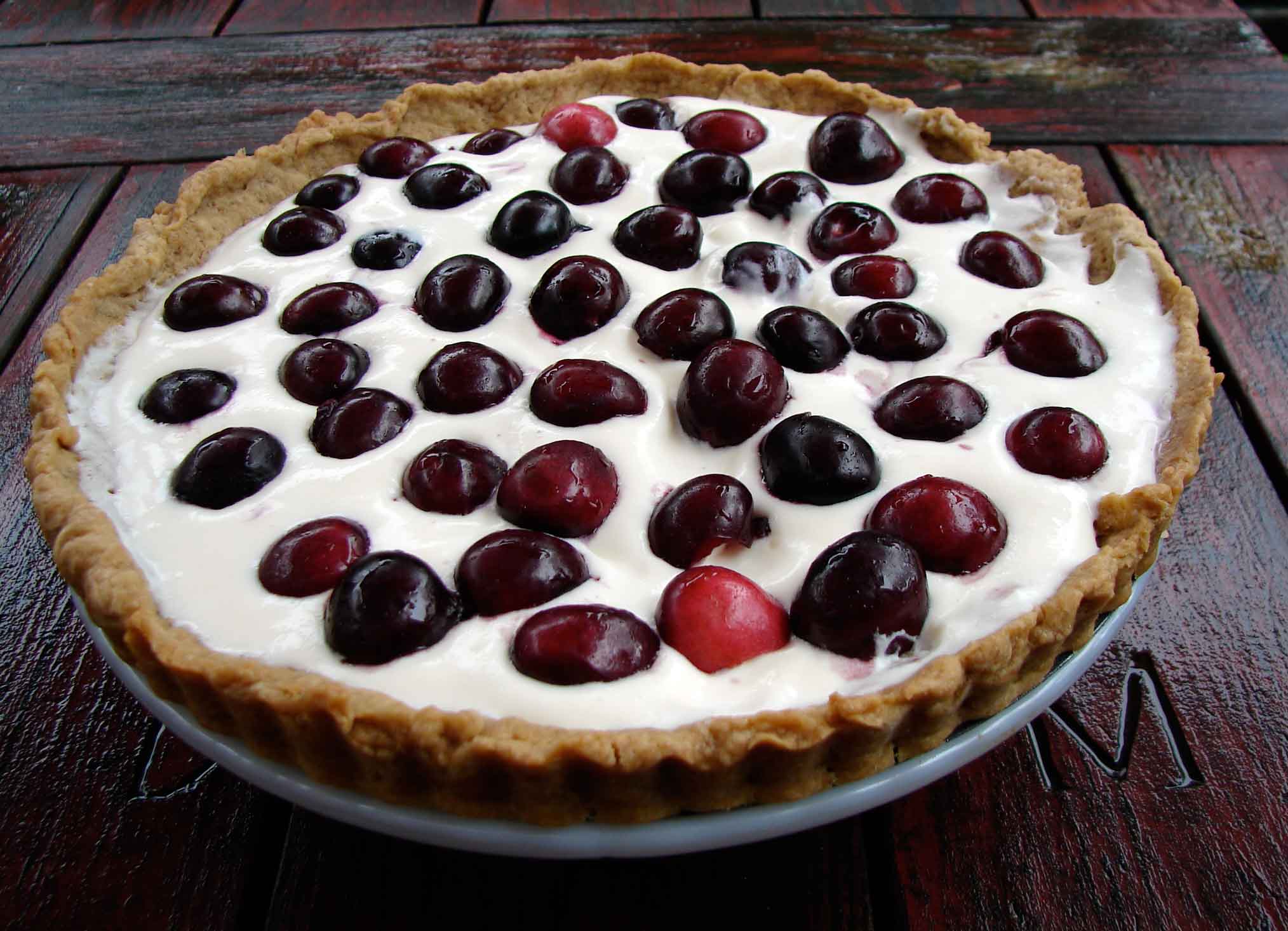
Cherry tart with almond pastry cream

Cherry tart with almond pastry cream

I love a fresh fruit tart! And cherries are ridiculously tasty, especially combined with almond. I wonder why that is? They’re just perfect together. I had some leftover almond pastry cream from another recipe, and this is what I decided to do with it. Simple and easy and delicious.

Here’s John Lee Hooker with Standing by the Wayside, because I borrowed a few lines for my story.

As ever, the story is after the jump.

Continue reading

Pizza with pumpkinseed-tarragon pesto, chickpeas and arugula

Pizza with tarragon pumpkinseed pesto

Pizza with tarragon pumpkinseed pesto

It’s the summer solstice and the first day of summer vacation. After a spring that saw hot humid days alternate with days of freezing rain, the weather is finally perfect. And I found myself in the worst mood. Cranky, anxious, discouraged. I couldn’t tell you why. Well, I could, but then I’d have to think about why, and that won’t do no one no good. I always feel horrible when I’m dejected and sweary around the boys, it feels almost abusive. And some part of me begrudged the time I have alone when they’re in school, when I can be as indulgently miserable as I want. But not today, today it was not okay, I could feel that in the way the boys kept giving me little sidelong glances and gentle pats on the back.

And now I’m going to share the saga of my changing mood. This morning I went for a scamper with Clio, and when we came to the end of our journey we found a dead tree bathed in golden light, stretching upward with branches like the rungs of a ladder. Each branch held small swallows, making grumpy buzzing noises. When bigger swallows flew above them, they flew up and kissed in mid-air and then then swooped away, as in some mad beautiful dance.

And then I was in a foolish rush to get things done, but I was arrested by the sight of a sleek grey dog lying in the sunshine outside the door, golden and blinking, and Malcolm stopped in his backyard racing to cry, “Mom, look!” Black currants! Our bright bramble of currants is laden with fruit. I had so much to do, so much to get done, and I just stopped and picked black currants with the boys, deep in the berries’ odd acrid fragrance, trying to convince myself that this was the most important thing to be doing right now. Then Malcolm had a crazy idea of how to cook the currants, and we worked on that, but I was still in a state and cursed like a madwoman in front of the boys when the semolina flour fell out of the cupboard into our batter. (Why right in there? Why?)

And then we went up to David’s shop to build boats to take to the creek. David’s shop is like an inspiring museum of craft and creativity housed in a small post-apocalyptic compound, surrounded by miles of beautiful countryside. The man that rents him space also rents out construction equipment, and you’ll find oddly beautiful piles of giant rusted metal rings that you could walk into, and drill bits the size of cars. In the back of David’s shop, a door opens onto a long corridor where barn swallows nest. If you stand in the doorway, they’ll fly around your head in dizzying loops, with humbling speed and agility, and it’s so beautiful that you want to make a film of it, but you can’t, you can’t capture it, just like Isaac will never catch a swallow in his hands, even if he calls to them in his high bright voice that is strangely like their call.

And when I went back into the shop, Isaac leapt onto my back like a little monkey, and he said, in his way of talking that makes everything sound like a poem

Do you remember
When we went to the park
And you held my hands
And spun me around
And it felt like flying?

And they made clever boats and now we’re going to the creek, and I will sit on a rock and watch them, and do absolutely nothing, and try to recognize the momentousness of the situation.

Pizza with tarragon-pumpkinseed pesto and chickpeas

Pizza with tarragon-pumpkinseed pesto and chickpeas

I like to make pizza in the summertime. Well, I always like to make pizza, but in the summertime it’s fun to play around with different pesto sauces with which to top it, and to think of ways to add vegetables. So this time I made a pesto of pumpkinseeds, capers, arugula and tarragon. All very strong flavors. The pesto was delicious and unusual, with a slight edge of bitterness from the arugula, but in a pleasant way. Because the pesto was so strong and bright, I added chickpeas, because they’re simple and comforting. Not bland at all, but not overwhelming. The crust is thin and crispy, as ever.

Here’s The Ink Spots with When the Swallows Come Back to Capistrano.

Continue reading

Pistachio & arugula pizza

Pistachio and arugula pizza

Pistachio and arugula pizza

We were in the car for over 28 hours in the last three days, and we got home late last night. Today I feel as though I’d been hit over the head. I’m stupid-tired. I have a lot to do to catch up, of course, but this morning I spent some time sitting on the couch with Clio’s head on my lap, getting all weepy about Nina Simone singing I Wish I Knew How it Would Feel to be Free. I’m in love with this song! I’ve talked about it here at The Ordinary before (twice!), so I’m not going to go on and on telling you why I love it. I’m not going to tell you that the song was written by Billy Taylor for his daughter, that it became an anthem for the civil rights movement. I’m not going to share the fact that when Nina Simone sings it, it sounds to me as though it becomes about a sort of fundamental, elemental freedom. Freedom from anything that binds you by labeling you–freedom from race, nationality, faith–freedom almost from yourself. It’s about freedom to have a voice, and to trust your voice enough to be heard. It’s about the freedom to live with passion and creativity, the freedom to create what you need to create, to do the work you need to do. And to be free not just from the restrictions society puts on you according to the way that it labels you, but also from nagging self-doubts and fears. The song expresses a sort empathetic morality that really appeals to me, and which I’ve been thinking a lot about lately. I won’t tell you that I think the most beautiful part is that she knows! Nina knows how it feels to be free, you can feel it in her voice. And she says, “I sing because I know, I sing because I know.” I love that! Of course she knows and thank god she sings.

Here’s Billy Taylor playing the song.

Here’s Nina Simone’s version, with lyrics

Here’s a live performance by Nina Simone.

And here’s an absolutely remarkable extension of the song, also Nina Simone live.

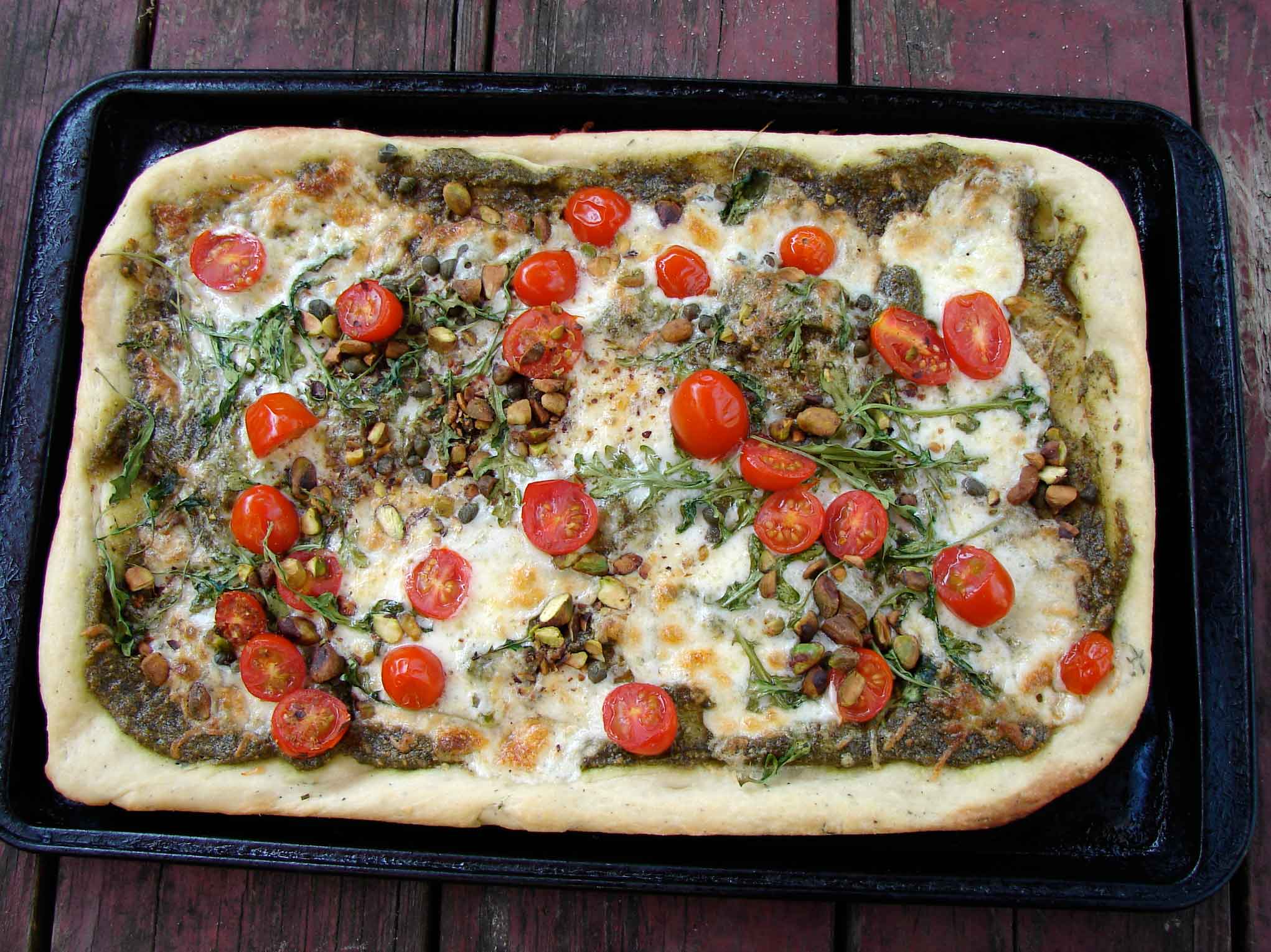
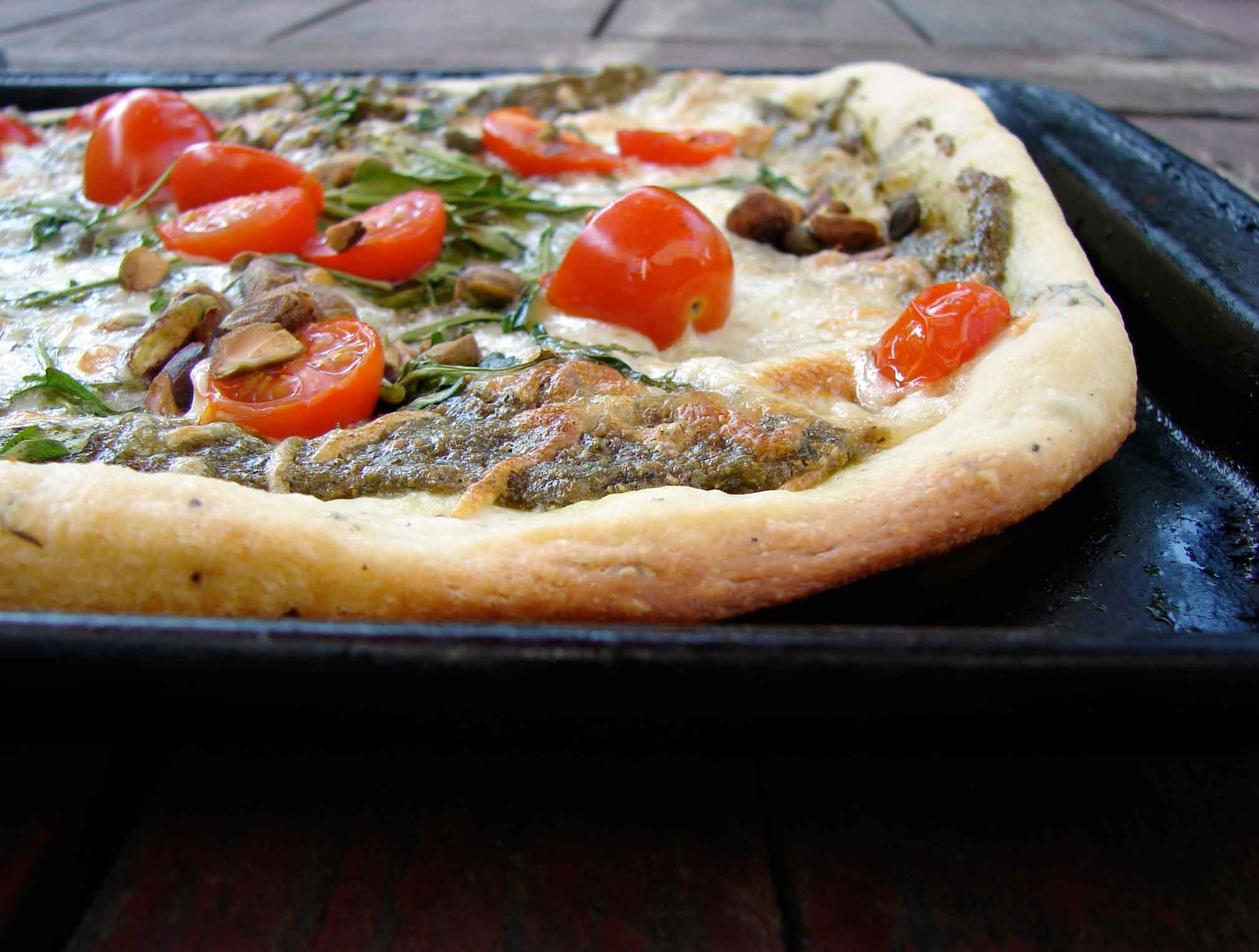
pistachio and arugula pizza

pistachio and arugula pizza

This pizza has arugula pistachio pesto on it, and it has arugula and pistachios! It also has capers, cherry tomatoes and an herbaceous crust. I thought it was deeeeelicious. This recipe is enough to make two large pizzas just like this. If you want the second pizza to have different sort of toppings, you can half the pesto recipe, or make the full amount and eat the pesto in any other way you’d like.

Continue reading

Whole wheat umami scrolls

umami scrolls

umami scrolls

I read yesterday that the Elizabethans categorized five types of wit. Aha! I thought: the self-deprecating aside, the broad bawdy tale, the absurd jest, the clever quip, and the knock knock joke. Of course, this isn’t what they meant at all. They defined five wits to correspond to the five senses. “The five wits were sometimes taken to be synonymous with the five senses, but were otherwise also known and regarded as the five inward wits, distinguishing them from the five senses, which were the five outward wits.” The five inward wits are common wit, imagination, fantasy, estimation (instinct) and memory. I’ve been reading some of Hobbes’ Leviathan, which dates from a similar time, and he explains how this works. When a person senses something physically, it makes waves inside of them as the wind makes waves on water. This decaying sense leaves an impression or an image, and this is the source of imagination or fancy. “And it is found in men, and many other living Creatures, aswell sleeping, as waking” This decaying sense, as it recedes, is called memory, and memory of many things is called experience. The imaginations of them that sleep are called dreams, and such imaginations that we don’t recognize as occurring during sleep, because the sleep is so quick, are called apparitions or visions. Imagination expressed in words or any other voluntary sign is Understanding, and “is common to man and Beast.” Predictably, I love this! I’m not very comfortable defining or deciding things, but I love to watch other people do it in an attempt to explain the strange workings of the world around them and inside of them. I love to think about how carefully Hobbes defined vagaries of sensations and emotions that seem impossible and indeterminate. Apparently, today, even scientists say that the notion that we only have five senses is outdated and limited. Of course we have more than five senses! We sense balance and movement, we sense warmth and cold, we sense time passing. If we close our eyes we know the position of our hand, even though it’s not being detected by any of the five traditional senses. And I identify other senses not defined by Hobbes or science (as far as I know), but possibly the most important of all. Emotional senses, maybe. Sense of empathy, sense of decency, sense of humor–which brings us back to the beginning, when sense and wit collided in all of their shades of meaning. Even in Shakespeare’s time, wit meant not just sense and intelligence, but humor as well–the ability to see the absurdity of all of this confusion of sensations. What complicated creatures we are, moving through the world, taking it into ourselves and making it part of our memory and dreams. And this is true of man and beast, as well sleeping as waking.

We used to break down the sense of taste into four categories: bitter, salty, sweet and sour. And then we identified a fifth! Umami is that flavor. It’s a pleasantly savory, meaty flavor. As a vegetarian, I love the challenge of trying to create an umami flavor whenever I can. These rolls are a companion to the chocolate-covered cake of yesterday’s post. They, too, were meant for a wine tasting of Australian shiraz(es?). They, too, are very loosely based on the recipes of The Guardian UK’s Australian baker, Dan Lepard. Apparently, in Australia, one can find cheese and vegemite scrolls, which are like savory cinnamon buns. So I made these with marmite, tamari, spinach and balsamic. I thought these would be nice with wine.

Here’s Common with The Sixth Sense.

Continue reading

Empanadas with greens, chickpeas and cranberries

Kale, cranberry and chickpea empanadas

Kale, cranberry and chickpea empanadas

I’ve been thinking about the way our world changes, and specifically about the way people bring about that change. Our history as humans is a pattern of progress and change, progress and change. We’ll head blindly in one direction, unable to see quite where we’re going because it’s so close, and then somebody or somebodies will push us in another direction. With a grand gesture, with a slow protest, with a war, with a sit-in, with a newspaper article, with a violent act, with a strike, with a clear bold voice, or in a confused tangle of contradictory words.

I’ve been thinking about certain small acts of rebellion that I love, certain quiet ways that people have changed the rules. They change the world slowly, almost imperceptibly, but the change grows in widening waves. The personal becomes political and art becomes powerful.

I love to read about blues musicians from the last century, growing up in a world of poverty and discrimination and finding a way to make music no matter what the odds. Nobody hired them a music teacher so they’d understand the rules of musical theory. Big Bill Broonzy made a fiddle from a cigar box, Elizabeth Cotten taught herself to play guitar upside-down, they figured it out themselves, with the help of some friends. They sang about their lives, the way they actually were, the trains running by their door, the work they had to do, and they sang about the way they wished their lives could be. The rules they answered to in life were harsh and unjust, but in music they made their own rules, they made music the way they wanted it to sound–that was theirs.

And with books like Catcher in the Rye, Grapes of Wrath and To Kill a Mockingbird, we find a whole new world of writing, with the language people actually use, according to the rules of conversation and not those of grammar. These books are intimate and personal and real, and they describe the lives of normal people as they actually are. This small feat frightened people enough that they were all banned, at one time or another.

And, of course, I love filmmakers who make films the way they think they should be. Hollywood films have quite a rigid set of rules that dictate the way they’re made. These rules are nearly invisible to the viewer, because they’re designed to make a film seem more realistic, and because we’ve grown up with them, we’ve learned them, without even realizing. Well, I love a director like Yasujiro Ozu, who defies these rules. He sets the camera where he thinks it should be, he moves it when it needs to be moved (not very often!) he crosses sight lines, he leaves out plot points. Not to be rebellious, but because he knows how he wants his films to look. His films are mostly about middle-class families going about their lives. They seem placid and uneventful, at least compared to most movies. But in showing us the way we live, in showing us hurtful pettiness and gossip, thoughtlessness and ingratitude, he makes us think about the way we could live, the way we could treat the people around us. It’s subtle and slow, but it seeps into you and makes you notice everything differently and more clearly.

And I believe this small slow change is the most important, and that it extends to all things…not just to art and politics, but to life, which is the very heart of art and politics. We can change the world with the food that we eat, the cars that we drive, the books that we read. We change the world by struggling to understand it, by recognizing the rules that govern us as they are, and by deciding the way we want them to be. We change the world with every kindness to another person, and it’s a shame that this sounds sappy, because it’s true.
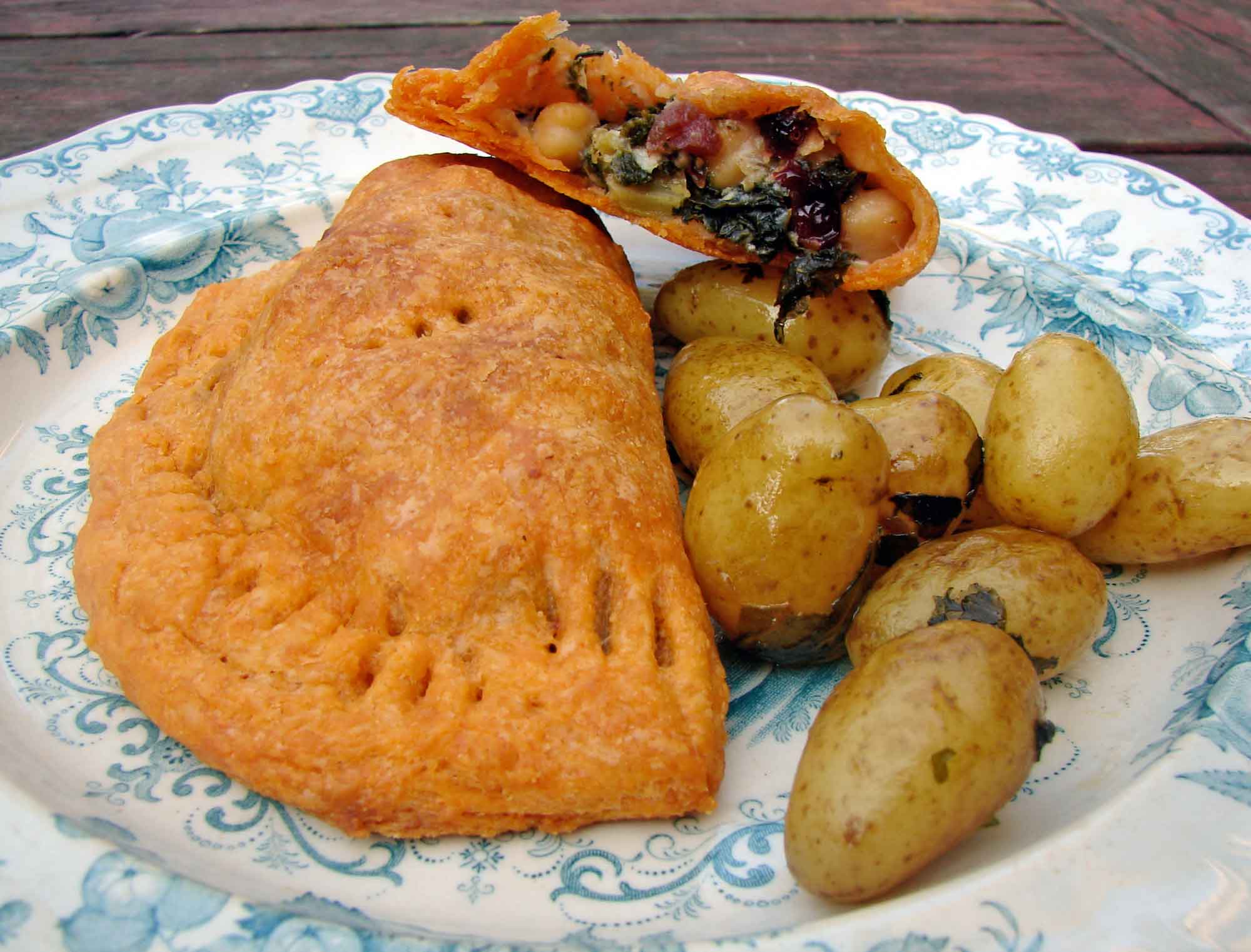
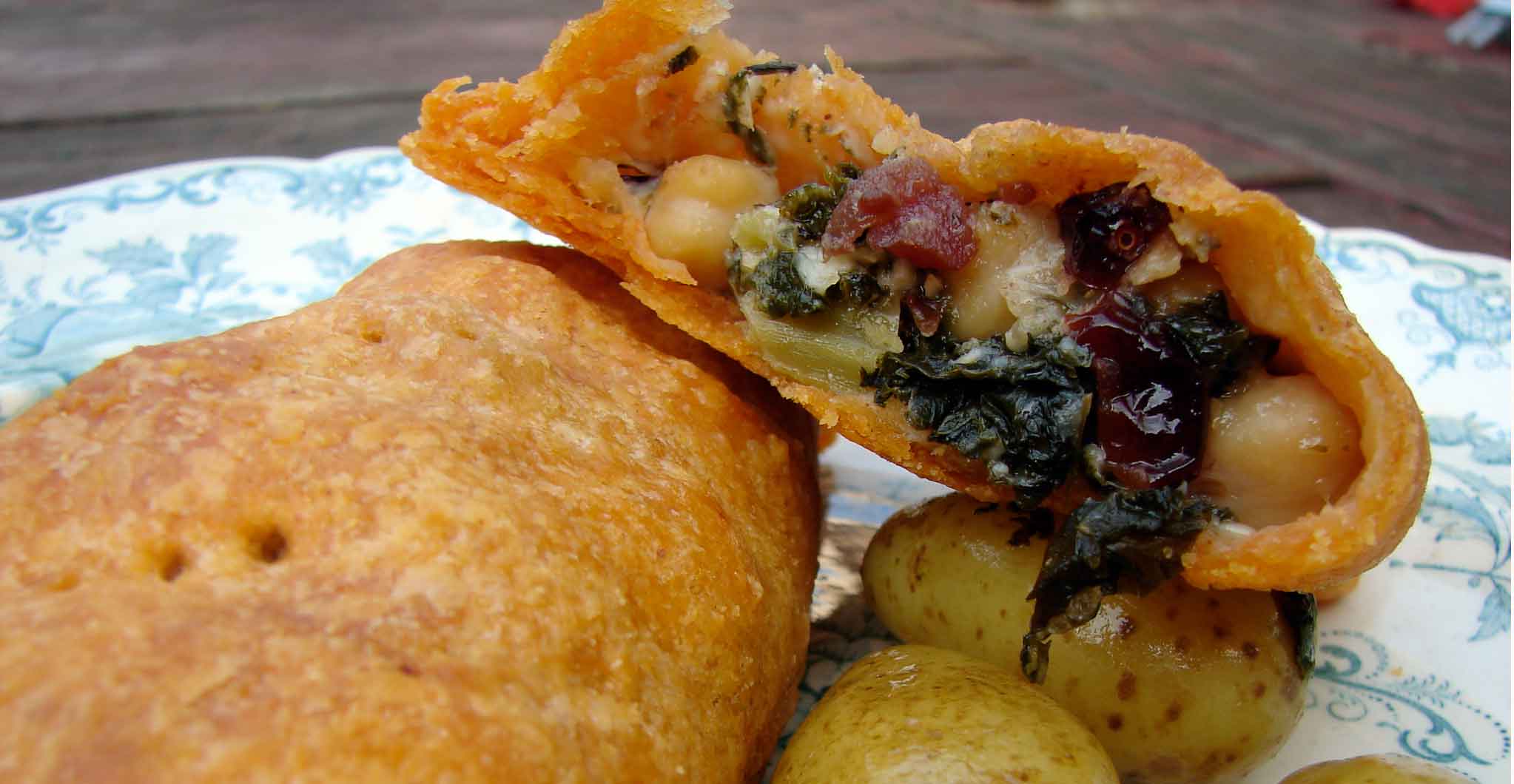
Kale, chickpea and cranberry empanadas

Kale, chickpea and cranberry empanadas

Well, I totally wasn’t going to go on and on about this today! It’s been on my mind, man. I think it’s because David and I just bought some Big Bill Broonzy CDs and they’re phenomenal, and because I’m reading this biography of Jean Vigo. Yeah. So! These are summery sorts of empanadas, I think. I made them for our anniversary picnic dinner. Empanadas make the best picnic food, because you can eat them with your hands and walk around with them, and they combine so many flavors and food groups in one neat package. I also boiled some little potatoes and tossed them with herbs and butter, and they are also a fun, if messy, picnic food. Our picnic was spoiled by dozens and dozens of ticks…a sickening tickening…but we came home and sat in our backyard and finished our empanadas, or lovely smoky, savory sweet empanadas.

Here’s Big Bill Broonzy with Feelin Low Down. Phew, what a song!

Continue reading

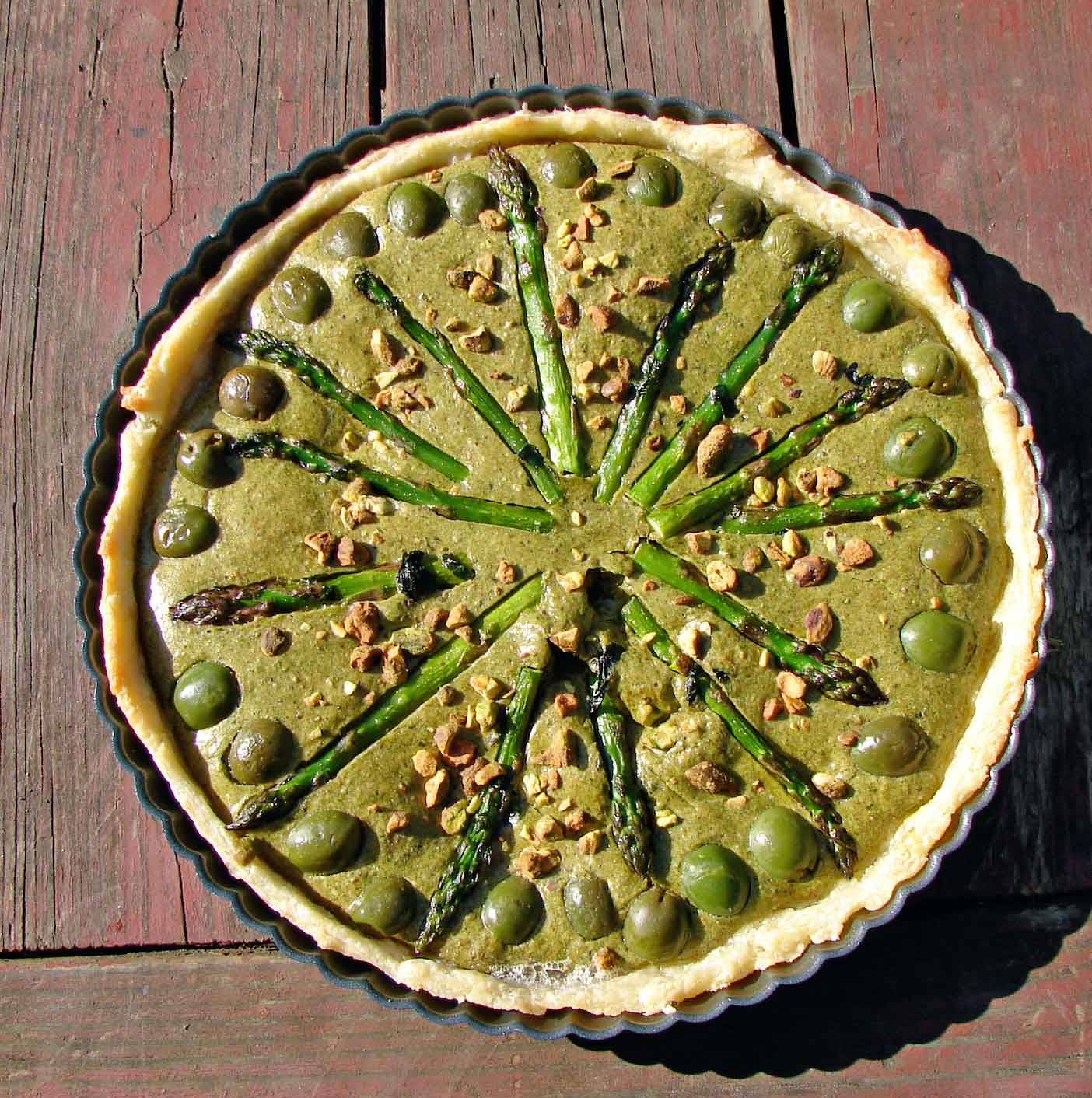
Pistachio and tarragon tart with castelvetrano olives and asparagus

Asparagus, pistachio, castelvetrano tart

Asparagus, pistachio, castelvetrano tart

If The Ordinary was a TV program, (and it’s only a matter of time, really, when you think about it) this would be the moment when we’d saunter, smiling and chatting, over to a book so large it’s printed in dozens of volumes. Everyone in the audience would jump from their seats, screaming, “The OED! Yay! Tell us how some random word was used in the 13th century! And the 15th century and the 18th, and, if possible, give us an example from only a few years ago!! Yay!!” Yes, it’s OED time! Your word for today is “sigh.” Why? Because for some reason I found myself sighing a lot this weekend. And sometimes I would just say, “sigh,” instead of sighing. And then I wrote a story about a ghost who always has a sigh in his voice, and who can shake the whole room with his sigh. Strange, very strange. So on Monday I did the obvious thing and looked the word up in the OED. Turns out its meaning hasn’t changed dramatically over the years. It’s always meant something close to “A sudden, prolonged, deep and more or less audible respiration, following on a deep-drawn breath, and esp. indicating or expressing dejection, weariness, longing, pain, or relief.” It was oft used, ere this, by the supersensitive overwrought poets and lady novelists. And yet, I find it a very fascinating word! Because it’s not a word at all. It’s a space between words. Like the grunts I found so remarkable in Ozu’s Tokyo story, which rise or fall and contain a million different easily readable meanings in one small sound, it’s almost more expressive than any actual word. And a sigh is so full of variations and possibilities! A sigh can indicate exasperation, sadness, fatigue, resignation, comfort, satisfaction. One small sound, barely a sound! Just a breath, quieter than a whisper. And everybody sighs, often without meaning to or even being aware of it. It’s a universal language. My favorite sigher at the moment is Clio. She’ll make herself perfectly comfortable, and then she’ll settle her head on her paws and heave a great sigh, as though she’s just taken care of some very important business and now she can rest for a moment. Even the leaves and the grass and the wind sigh, especially in poems. “Whenever a March-wind sighs He sets the jewel-print of your feet In violets.” A sigh can express longing, you can sigh for something or someone. You can sigh something away…even your life, “Sapores..sighed out his affrighted ghost, at the age..of seventy one,” or your soul, “Hundreds of martyrs sighed away their souls amid the flames.” Maybe your sadnesse is sigh-swolne, your age is sigh-blown, or your tone is sigh-deepened. I love the idea of communicating without words, with something only slightly more audible than a gesture or an expression, with something as vital and intimate as our breath. I love the fact that “Some sighes out their woordes. Some synges their sentences.”

Asparagus pistachio castelvetrano tart

Asparagus pistachio castelvetrano tart

I think of this as my splurge tart. I spent more money than I should on castelvetrano olives and pistachio kernels, (yes, I’m a lazy spendthrift) and asparagus, which doesn’t seem to be getting any cheaper no matter how far into spring we get. So I decided to put them all together in one tart. I made a sort of frangipane of pistachio kernels, but I added asparagus and spinach, too. I wanted it to taste very green. And asparagus and castelvetrano olives are lovely together, juicy and fresh.

Here’s Dolcissimo Sospiro (I think it means “sweet sighs”) sung by the remarkable Montserrat Figueras
Continue reading

Spinach and goat’s cheese tart with roasted peppers and tomatoes

Spinach and goat cheese tart with roasted peppers and tomatoes

Spinach and goat cheese tart with roasted peppers and tomatoes

I have this strange feeling lately, from time-to-time, that I can’t complete a sentence. The words will get stuck somewhere between my brain and my tongue. I’ll wait patiently and powerlessly for somebody to hit me on the side of the head and unjam the process, but whomever I’m addressing will just give me a pitying but bewildered look and go about their business. Why is this happening? I don’t know! It’s senility, probably, but it feels oddly adolescent. I believe I spent my teenage years desperately trying to get my strange thoughts into the world, and then desperately trying to recall them and hide them away once I had, mortified by their strangeness and lack of consequence. And then as I got older I became much chattier, because I simultaneously realized that some of the best thoughts are strange thoughts, and that nobody gives a hoot about what you say, anyway, because they’re not listening half the time and they certainly won’t remember. There’s no point in agonizing regretfully over some stupid thing you said when nobody heard it in the first place. Thus followed a long period of time when I never stopped talking. I turned into a veritable warbling vireo. But with maturity comes increased self-doubt and self-censorship, and the new realization that it doesn’t matter all that much anyway what you say, because nobody is listening half the time so why bother? And you understand that it’s good to listen to other people, and that you have to stop talking for a minute in order to do that. Last night I was lying next to a pukey Isaac as he drifted off to sleep and listening to his odd, sleepy thoughts. He pondered the difference between funny ha ha and funny strange. It bothers him that people use “funny” to mean strange, because it’s not really funny at all. And it suddenly made perfect sense to me that the truth is funny strange, and the best way to express it is with the humorous kind of funny, as comedians and court jesters have known for centuries. And the best way to do this is to be fearless and to plough right on through even if the words come out garbled. And we may both have fallen asleep before I articulated all of this, but that’s okay, because my smart, honest, eloquent Isaac is every kind of funny, and he knows it already. So if I’m talking to you and I seem to get stuck half-way through a sentence, give me a gentle tap on the head, and we’ll see if my nonsense was worth hearing in the first place.

Roasted pepper and tomato tart

Roasted pepper and tomato tart

My friend Diane commissioned a dish for mother’s day. She wanted a vegetable side dish, and somehow I got the impression she wanted it to be substantial enough that any vegetarian guests could call it a meal. So, of course, I made a tart. It’s loaded with vegetables, and with colors and flavors. I had to make it a couple of days early, so I roasted the peppers and tomatoes, and dried them out in the oven a bit, so that they wouldn’t turn the tart too mushy. I think it worked well! (I made one for us, too, to be sure it was tasty, and I’m glad to report that it was!)

Here’s Belle and Sebastian’s Get Me Away from Here I’m Dying because he says, “Oh, that wasn’t what I meant to say at all,” which is such a lovely thing to hear in a pop song!

Continue reading