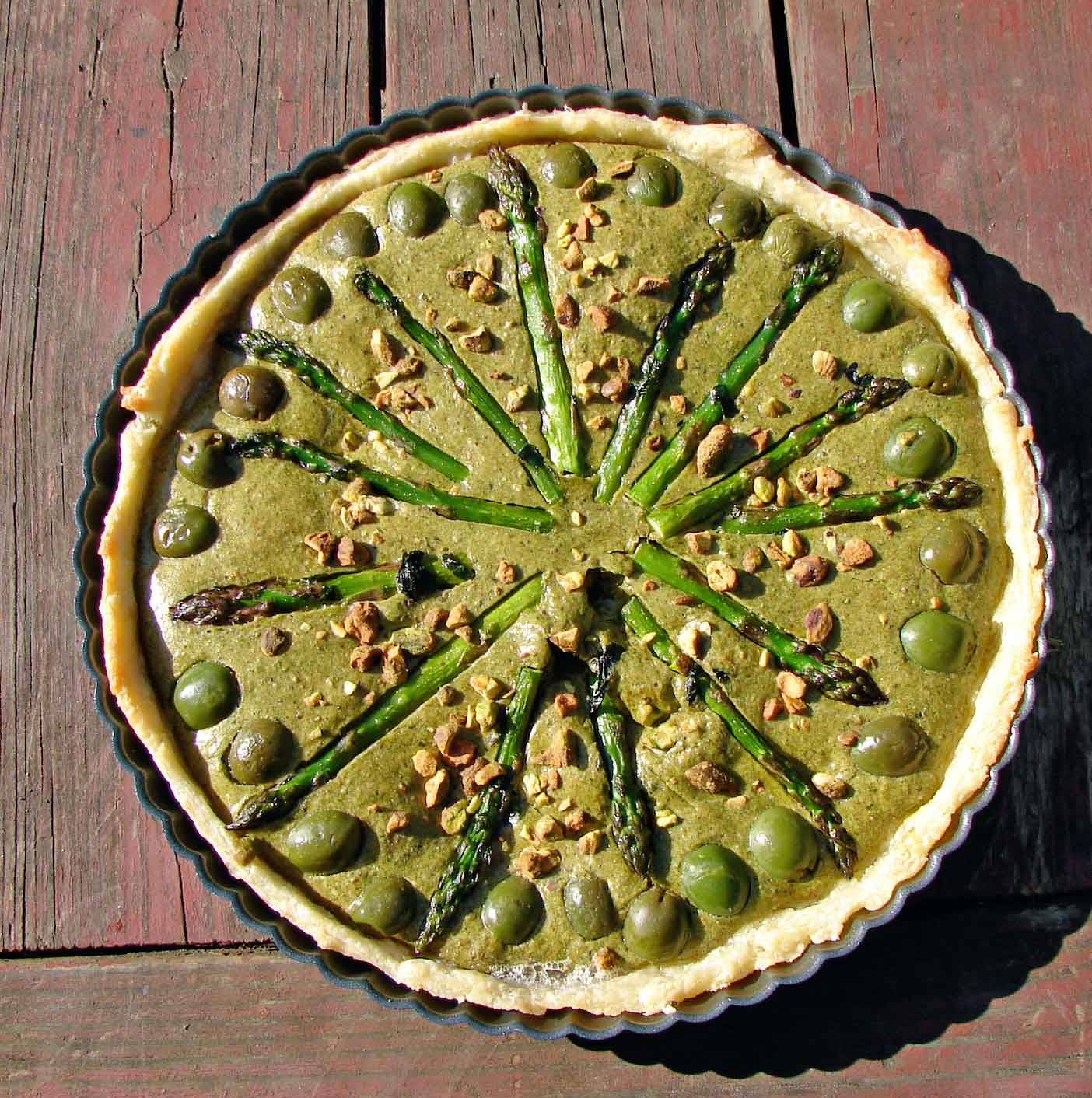
Asparagus, pistachio, castelvetrano tart

Asparagus pistachio castelvetrano tart
Here’s Dolcissimo Sospiro (I think it means “sweet sighs”) sung by the remarkable Montserrat Figueras
Continue reading

Asparagus, pistachio, castelvetrano tart
Asparagus pistachio castelvetrano tart
Here’s Dolcissimo Sospiro (I think it means “sweet sighs”) sung by the remarkable Montserrat Figueras
Continue reading

Spinach and goat cheese tart with roasted peppers and tomatoes

Roasted pepper and tomato tart
Here’s Belle and Sebastian’s Get Me Away from Here I’m Dying because he says, “Oh, that wasn’t what I meant to say at all,” which is such a lovely thing to hear in a pop song!
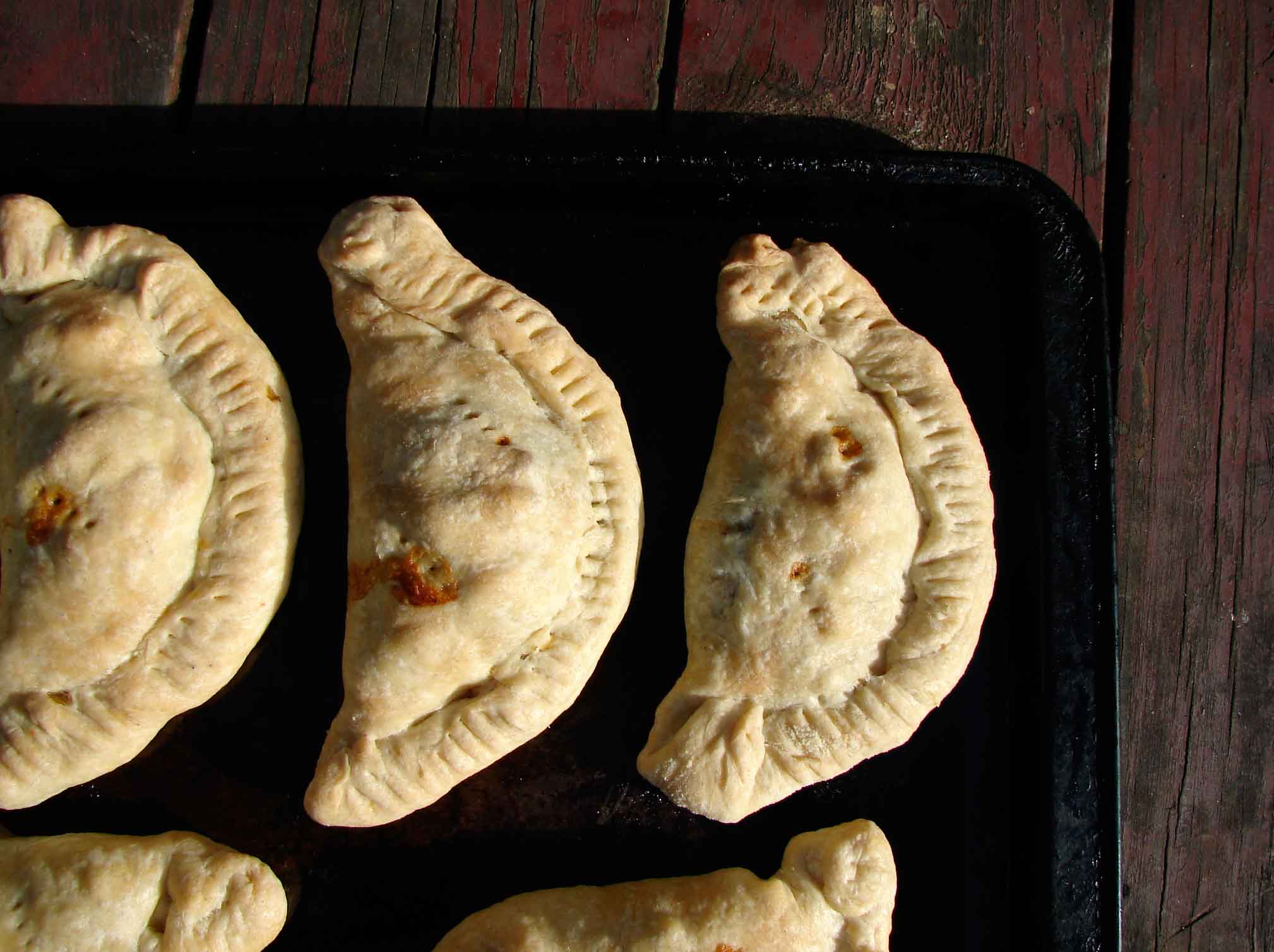
Spring empanadas with asparagus arugula and white beans

Here’s Mississippi John Hurt with Make me a Pallet on Your Floor.
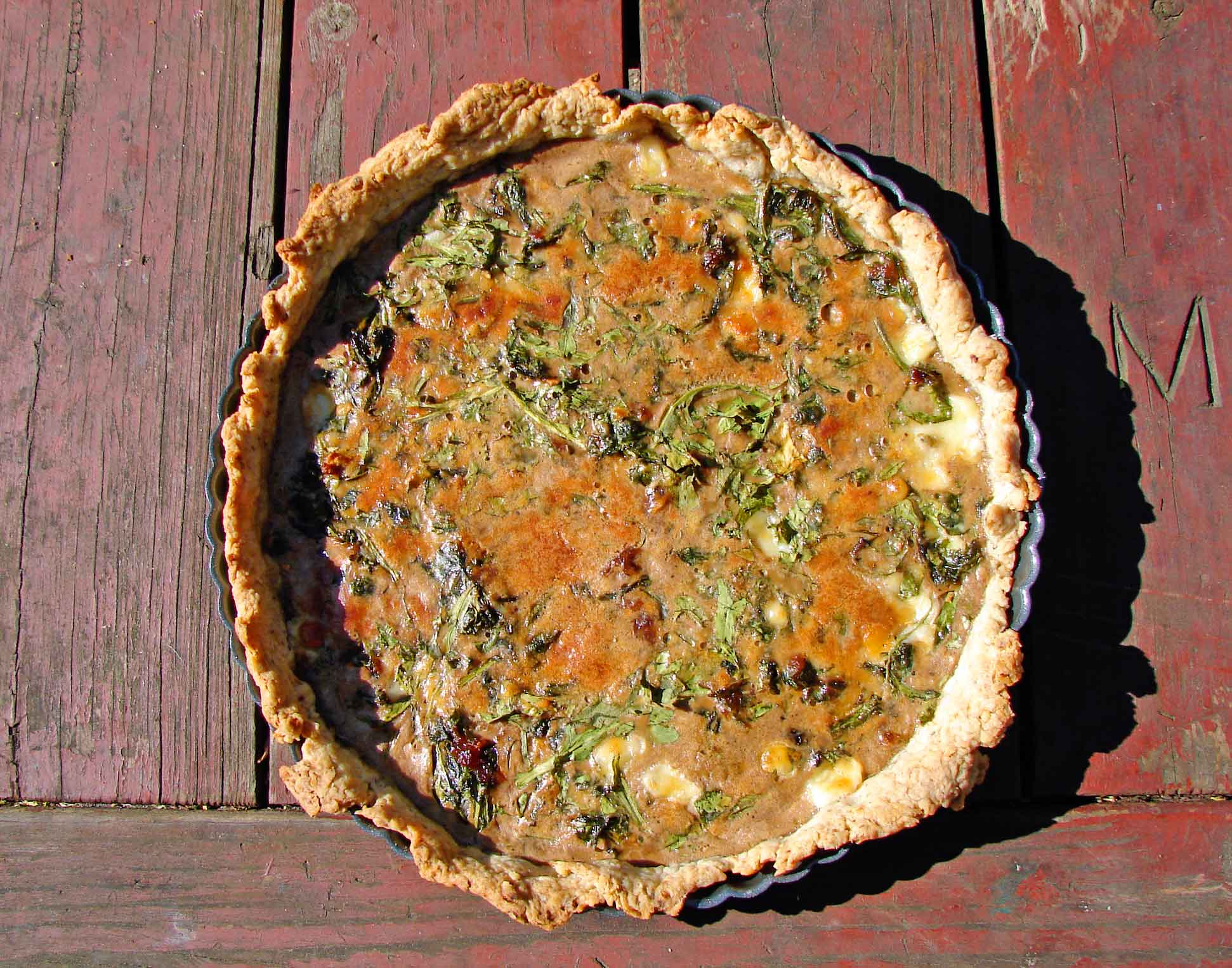
Arugula and balsamic tart
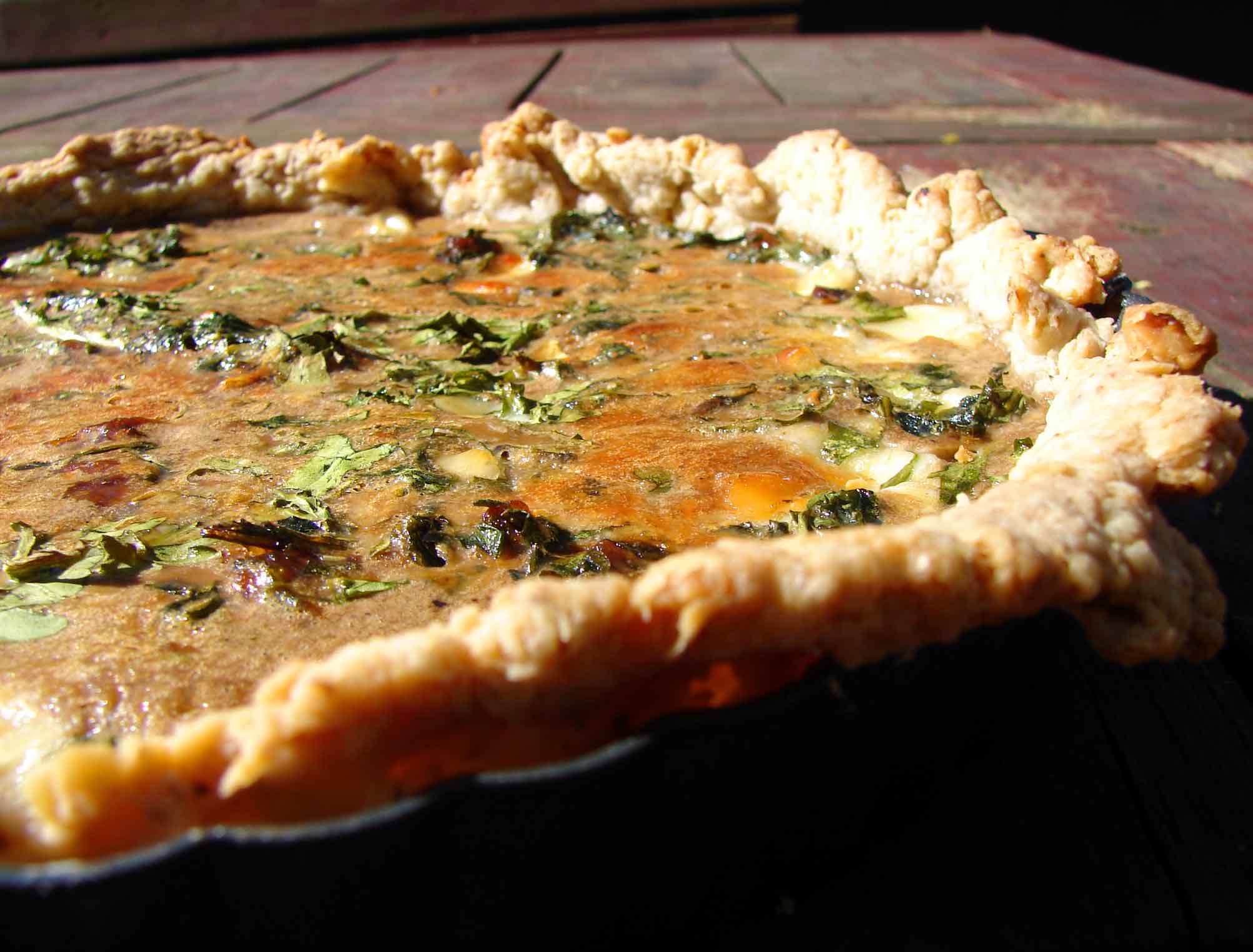
Arugula balsamic tart
Here’s Buddy Holly with I’m Changing All Those Changes, because it just came on as I’m typing, and I like it, and I can’t think of a song about female philosophers or arugula tarts.

Ricotta tart with red peppers, chard and black olives

Ricotta tart with chard, roasted red peppers and black olives
Here are a couple of songs from the movie…Puto – Molotov. O Pato by Natalia Lafourcade. And Panorama by Alejandro Rosso.
 Andre Bazin once suggested that critics should only write about films they like, and I agree with him. I feel as though I wasted some time earlier in the week talking about aspects of films that I don’t enjoy, and, to borrow Dylan’s phrase, that don’t do no one no good. One of my goals as proprietress of The Ordinary is to share films and music and art that I’ve stumbled upon at some point in my life. I’d like to share things that are often overlooked because they’re small or not-well-hyped or outside the mainstream. I want to share them not just because they deserve to be known, or because their creators have earned praise and recognition, but because your life will be richer for knowing them. Or so I believe. In that spirit, I give you Little Fugitive. I spoke in grand and foolish terms about the death of independent cinema last week, so it’s fitting to talk now about the film that many people have described as the birth of American independent film. Little Fugitive was made in 1953 by novelist Raymond Abrashkin and photographers Morris Engel and Ruth Orkin. It was nominated for an Oscar for best writing, which is somewhat surprising, because the story, though full of drama, is somewhat sparse of plot. Seven-year-old Joey takes a practical joke a little too seriously and believes that he’s killed his older brother. He’s on the lam, and he flees to Coney Island, where he spends a few days eating hot dogs and cotton candy, sleeping under the boardwalk, and collecting the deposit money on glass bottles to pay for food. Richard Andrusco, who played Joey, was a non-professional, as were most of the other actors. Engel hid a camera inside his coat, and he filmed Coney Island, teeming with life. He filmed hundreds of people who had no idea they were on camera. His portrait is joyful and affectionate, he captures every small beautiful gesture. He shows the poetry of two people folding a towel, coming together and moving apart as if in some strange sweet dance, he shows the easy generosity of a boy carrying a younger child through a flooded street. The story is told with the spontaneity and humor of a child–he sees everything because few people notice him, and we’re afforded the same chance. He’s buoyant and resourceful, as most children are. He operates outside the rules of the bustling society around him, darting in and out of crowds, weaving through a sea of towels and sunbathers. During the day this is mostly exhilarating and fun–he’s getting away with something. But as evening falls we feel his wistfulness and loneliness. We’re not told about it, we’re not hammered over the head with it, but we feel it in the off-kilter shots, in shots of him still in the center of a whirl of families, in the lights of the amusement park separated from him by a sea of forbidding darkness, and in the way he falls as the parachute falls, floating slowly down to the dark earth.
In this scene of a sudden summer storm, everybody runs for shelter, and we see Joey by himself, in a desert of lonely empty beachfront, searching for bottles.
The film is so visually beautiful and yet so simple and unplanned–more about observation than manipulation, more about noticing and capturing the beauty of the every day than creating a pretty scene with an expensive budget. The movement of the crowds, the small dramas, the lights and shadows of the boardwalk, the boy’s little triumphs and failures are so beautifully captured and so captivating. Francois Truffaut credits The Little Fugitive with the birth of the French New Wave, “Our New Wave would never have come into being if it hadn’t been for the young American Morris Engel, who showed us the way to independent production with his fine movie The Little Fugitive.” I wish the Americans had noticed this film half as much! I wish it had been like a little pin full of simplicity and honesty to prick the bloated studio system, and let out all of that hot air.

Strawberry hazelnut tart
Here’s One Too Many Mornings by Bob Dylan, because it’s been on my mind, and it seems like such a perfect song right now.

Beet and kidney bean pie
 I’ve just read that the day was invented by Gloria Steinem as Take Your Daughter to Work Day, and was intended to give girls a sense of possibility and purpose. This makes it seem even odder to me, almost as if it was subversively designed to illustrate the messiness of the world. How many children are bundled off to work with their fathers, because their mothers don’t work during the week because they’re home with children. Maybe they work at night or on the weekend so that they can be there to pick up their children after school. Maybe they have a job but its the kind of job many women have at some point in their lives–cooking or cleaning or caring for someone else’s children, and, strangely, this isn’t the kind of job you’d like to share with your own child. Maybe, like many women, you’re not treated with respect at your job, you’re not treated as an equal. A lot of things have changed, a lot of things have not. Of course, all of this stopping-to-think-about-it has included some thoughts on my own life, my own work, my own ideas of success or failure and how they don’t quite fit into those of the rest of the world. Any thing you do is considered work if somebody pays you to do it. And the more they pay you, the more successful you are at your job. I’ve been doing a bit of pastry cheffing, and yesterday I made a cake for a restaurant. If the boys had stayed home and helped me with that, they would have been at work with me (and we would have had fun!). Today, I don’t have any commissions for cake, so if the boys stayed home from school and baked a cake with me, we’d be goofing off (and we’d still have fun!). If I sit around writing or cooking or conspiring to make a movie, I’m a shiftless slacker who should go out and get a real job (I know, I know…). If somebody pays me to do those things, I’m a person who has followed my dreams to find success (although I probably still can’t afford health insurance.) Everything is a little different looked at through the prism of parenthood. What seems brave and valuable when you’re a single person with only yourself to care for, seems irresponsible once you have children. We have our own small business. We work seven days a week, one way or another, and the truth is that the boys spend all weekend every weekend at work with David, watching him watch the store while I wait tables. This is life as they know it. We don’t have days off or weekends or paid vacations, and we still can’t afford health insurance. And all summer when they knock about the house with me, cleaning and cooking and keeping themselves happy and creative, waiting impatiently while I finish writing some dumb thing so we can go to the creek, they’re at work with me, whether they know it or not. It’s messy, it doesn’t fit into any tidy pattern of employment, but I think they’re okay with it. I think they’re proud of us, and have a sense of possibility and purpose. I think they wouldn’t have it any other way.
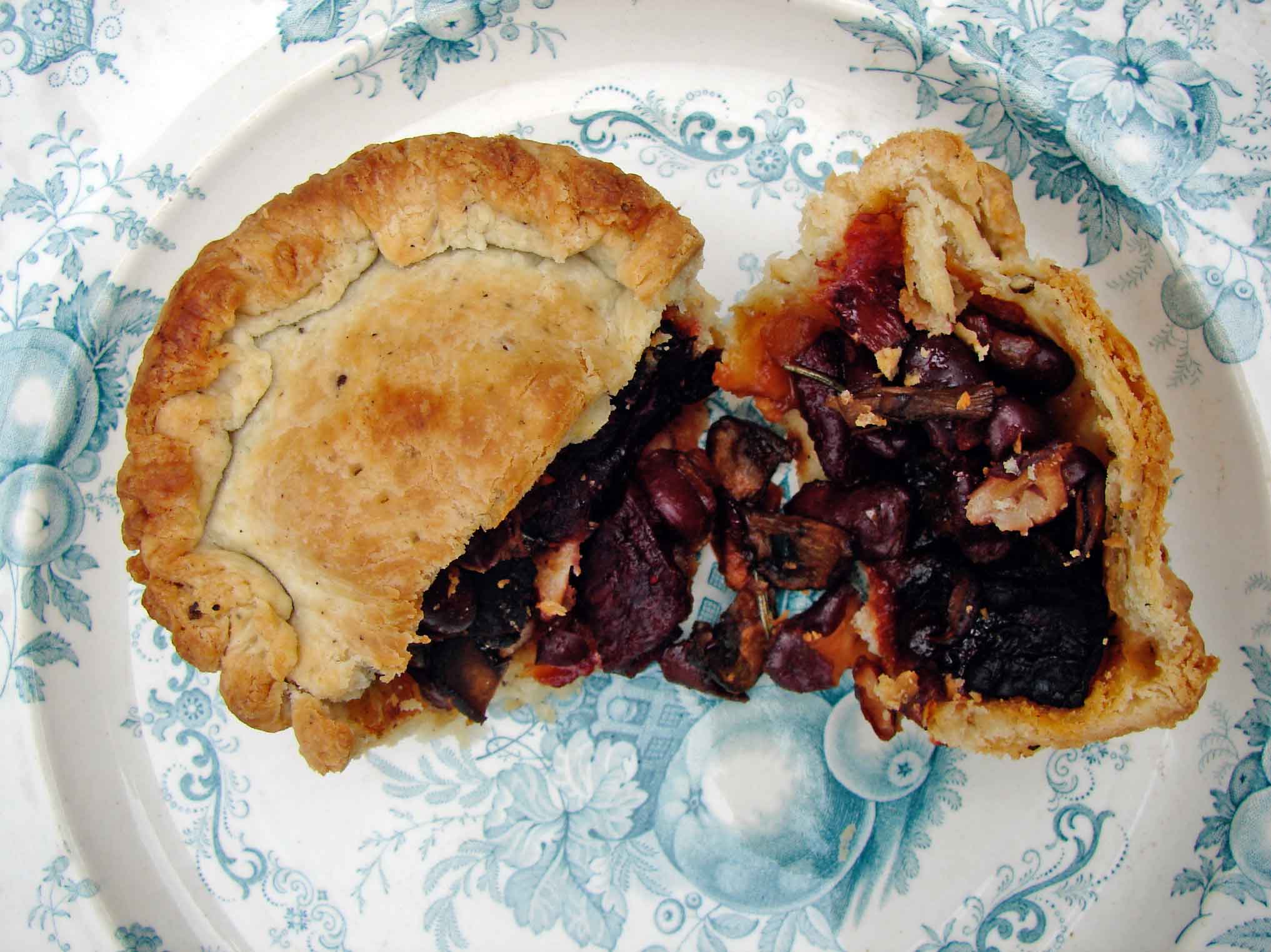
Beet and kidney bean pie
Here’s King Oliver’s Creole Jazz Band with Workingman’s Blues.

Spinach chickpea and tarragon tart
I like a rustic galette in the springtime. It’s a nice transition between the solid, nutty, beany double-crusted pies of winter and the light vegetabley open tarts of summer. You’ve got your greens and your fresh herbs, but they’re sheltered from the cool spring breezes by a touch of crust. A light jacket of crust, a shawl, maybe. This particular crust was nice and crunchy with pecans. And I flavored the filling of spinach and chickpeas with tarragon and fenugreek, because I wanted to do something different. THey’re nice together–they both have mysterious flavors, a little sweet, a little bitter. Don’t use too much fenugreek or it will take over the flavor. A pinch will do it.
Here’s I Know it’s Over, by The Smiths. It’s so easy to laugh, It’s so easy to hate, It takes guts to be gentle and kind.
Continue reading
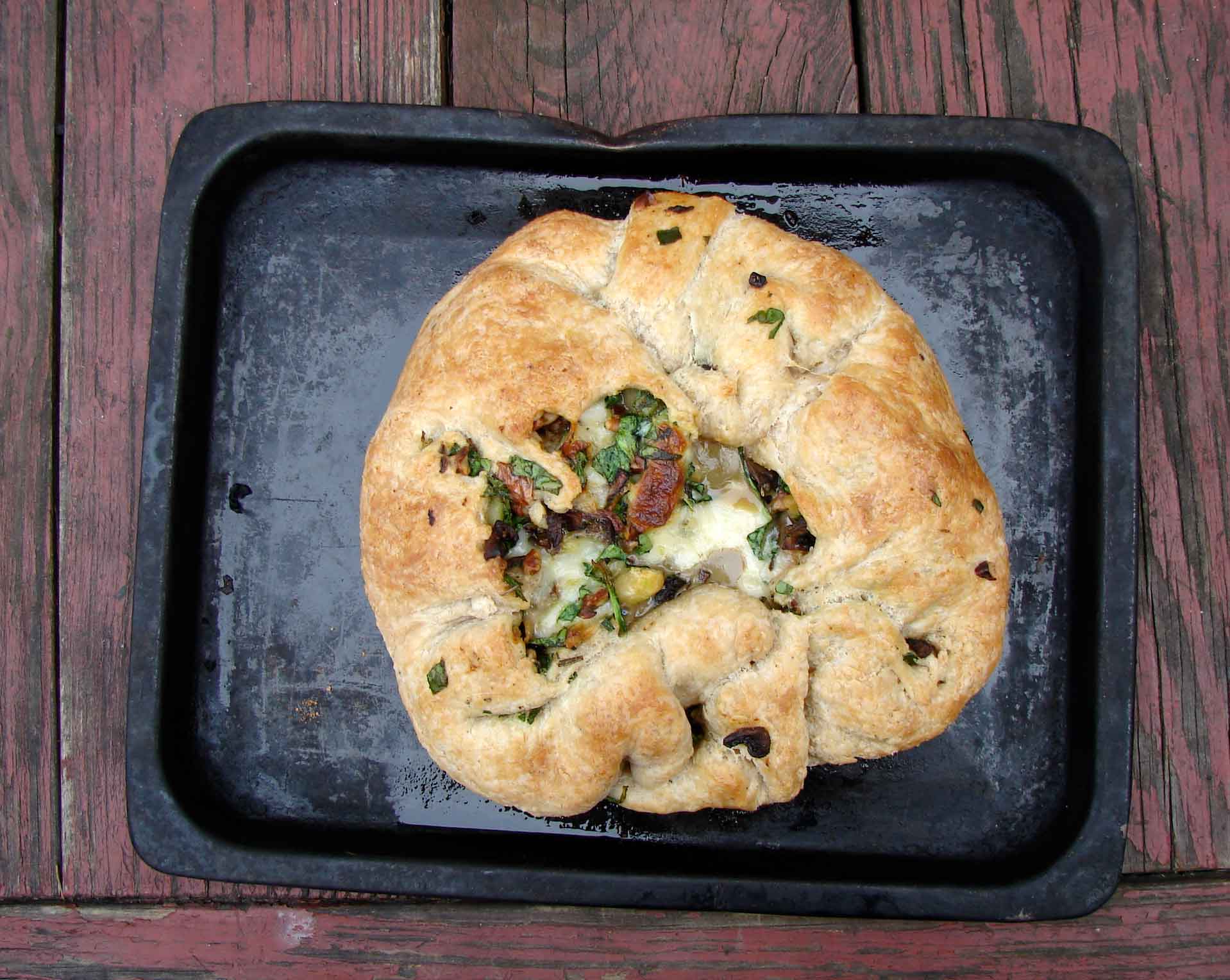
Roasted mushroom and butterbean galette
As ever, my story is after the jump, and yours could be, too. My rules so far have been–make it quick, and don’t over think. But make your rules up as you go along.
I made this galette up as I went along, until it got to a place that I could actually imagine eating it, and then I knew I’d arrived at the right combination! I roasted some mushrooms and some butter beans. Roasted butter beans are one of my new favorite things! I combined these crispy-soft items with some fresh baby spinach and some crunchy toasted pecans, and then threw in some melty mozzarella, and I baked the whole thing up in a free-form pie. Delicious! And quite easy, too.
Here’s a song from one of my favorite storytellers, Mr. Tom Waits. Gun Street Girl.
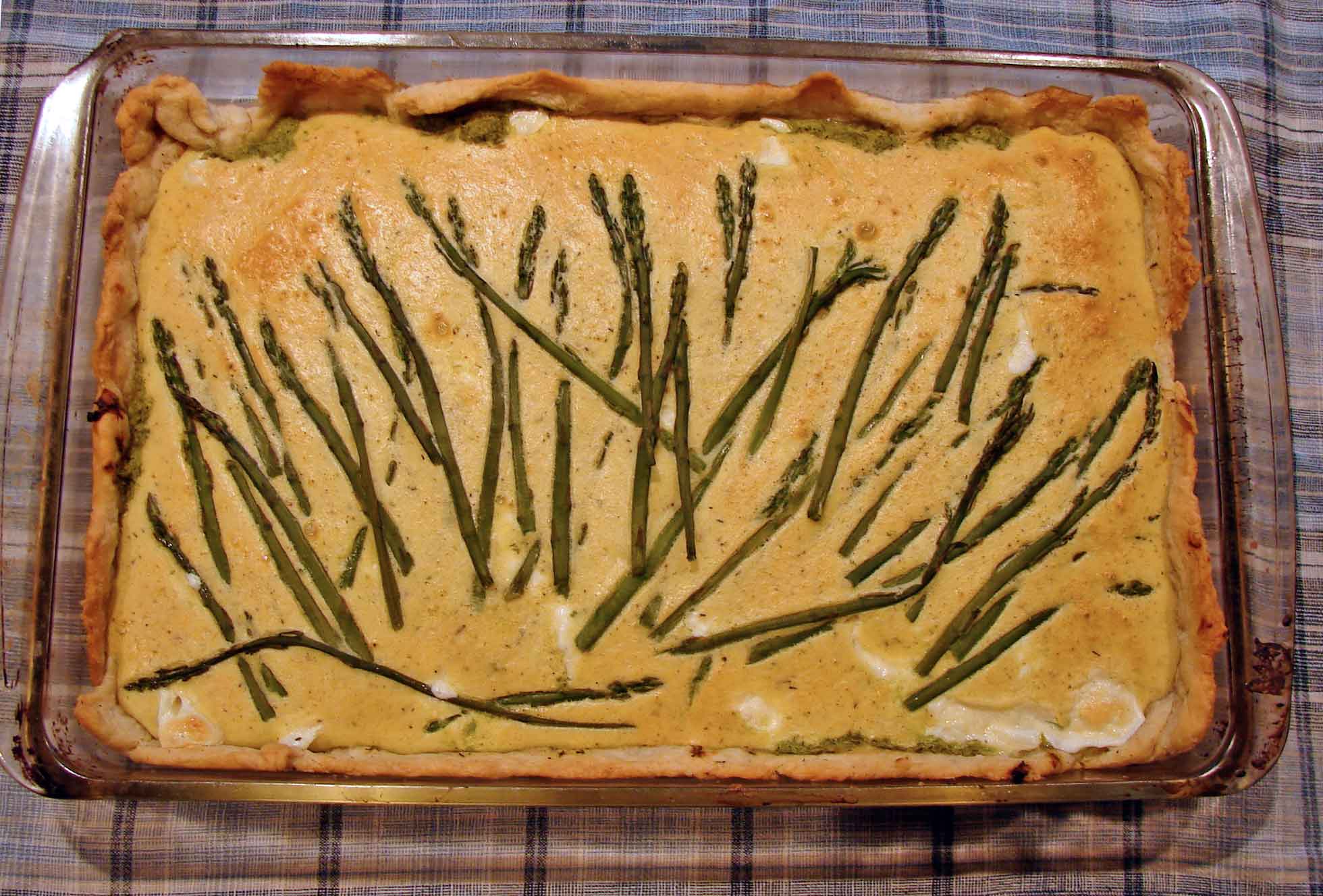
Asparagus and macadamia tart
This is what we made for easter dinner. It’s modeled on a bakewell tart, so you’ve got your crust, your jammy layer (pureed asparagus and tarragon!), and your baked nut custard layer (with macadamia nuts!). I added lemon zest and pepper to the crust, because both those things go well with asparagus and seemed fresh and springlike. Other than that, we kept it really simple and clean. I thought it was very tasty – bright but comforting.
Here’s Tom Waits with You Can Never Hold Back Spring. Remember everything that spring can bring.
Continue reading
 Out of the Ordinary