Butternut ricotta kofta with pistachio-pumpkinseed sauce

Butternut ricotta kofta and pistachio pumpkinseed sauce

Butternut ricotta kofta and pistachio pumpkinseed sauce

Here at The Ordinary we’ve had two snow days and two delayed opening in one week. This means lots of stir-craziness, an increasing amount of crankiness, and a lot of legos. We decided that life is like a box of legos. (I’m not saying it’s not like a box of chocolates, but I’m not a fan of the “You never know what you’re going to get,” part of that statement. I think you’ll find that you have a fairly good idea of what you’re going to get with a box of chocolates. It’s going to be sweet and chocolate covered, you might not know the specific filling, but there are only so many options. Often there’s a diagram, telling you exactly what you’re going to get.) Anyway, life is like a a box of legos. You can never quite find the piece you’re looking for, but you’ll find a similar piece that you’ll throw back into the box, only to realize that it’s exactly what you wanted all along. You can never find the piece you’re looking for, but you might find something totally unexpected, which works even better and sends you off in a new and wonderful direction. Some people need to open the box right away and put it together all in a rush, others take their time, and do it as the mood strikes them. Some people need to follow the directions to the letter, and go carefully to make it look just like the picture. Others throw the rules away, and put together something nobody has ever made before. Some people have a plan, they know what they want it to look like in the end, and others make make it up as they go along. This week Malcolm instructed us all to make “habitats,” and they were trying to make theirs as full of nature as possible. In the end they had a treehouse, the ruins of a castle, and lots of little storm troopers milling about. If life is like a box of legos, I have high hopes for the way theirs will turn out! Full of imagination and creativity. Unexpected but inspired.

As poet R. Lee Sharpe tells us, we’re all give the tools to work with, we’re all given the lego starter set, and what we do with it is up to us…

R. Lee Sharpe
“A Bag of Tools”

Isn’t it strange that princes and kings,
And clowns that caper in sawdust rings,
And common people like you and me,
Are builders for eternity?

Each is given a bag of tools,
A shapeless mass, a book of rules;
And each must make- ere life is flown-
A stumbling block, or a stepping stone.

Butternut ricotta kofta and pistachio pumpkinseed sauce

Butternut ricotta kofta and pistachio pumpkinseed sauce

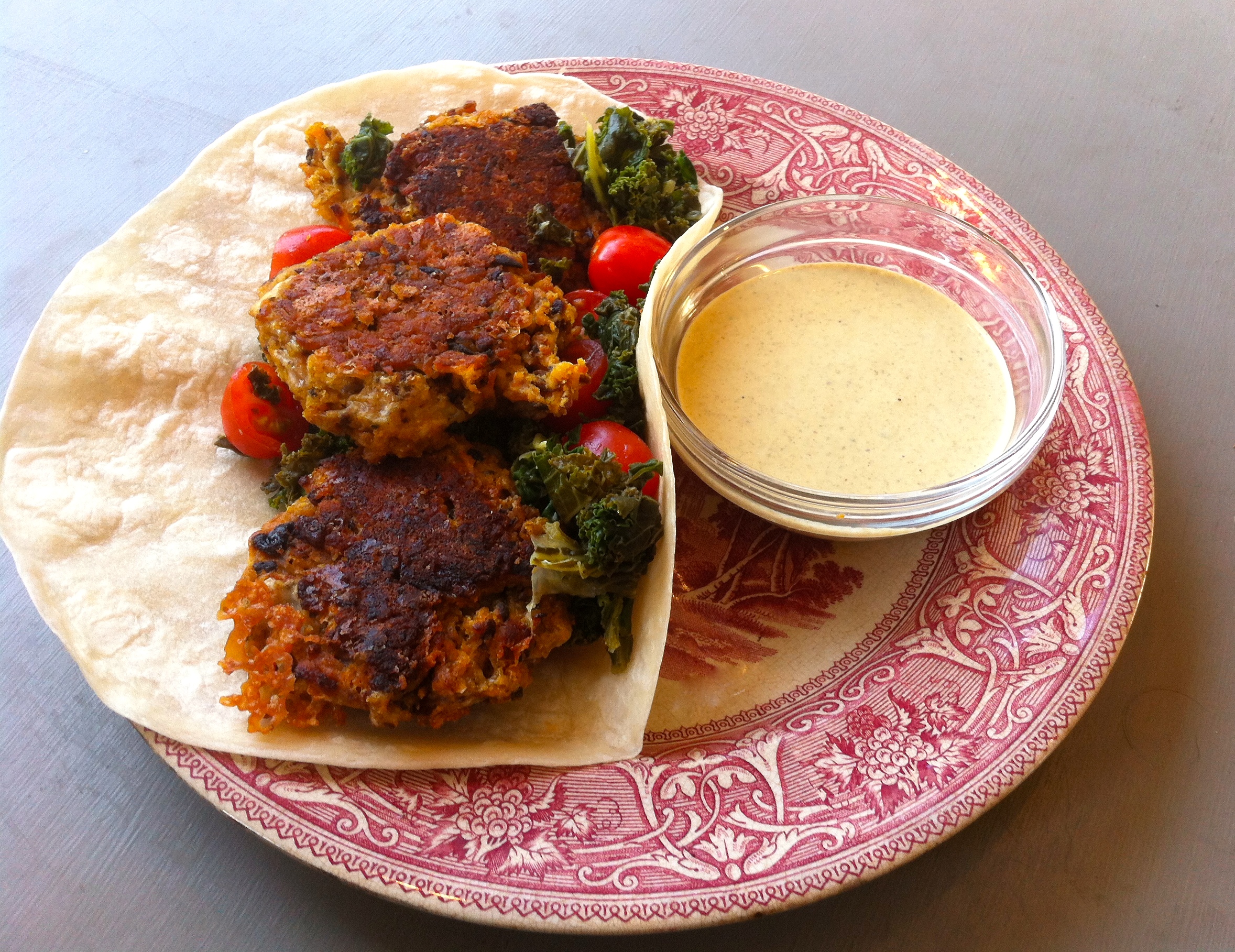
This is my idea of a fun meal! While we were eating I gave myself a little pat on the back, because I don’t think anyone else would think of combining these particular ingredients in this particular way. Grated roasted butternut squash, ricotta cheese, chickpea flour, raisins and sharp cheddar? Delicious! The kofta were plump and pleasant and sweet, and the sauce earthy and a little tart-sweet. We ate these with warm tortillas, lightly cooked kale and spinach and chopped tomatoes and olives. You could eat them with pita bread, or just as they are, dipped in the sauce. They’re gluten-free, too, if you leave out the tortillas.

Here’s The Heptones with Book of Rules, based on R. Lee Sharpe’s poem.

Continue reading

French lentil, roasted potato and smoked gouda pizza

French lentil and roasted potato pizza

French lentil and roasted potato pizza

Like many, many people, I suspect, I spent some time yesterday watching films and videos of Pete Seeger. In particular, we watched clips from his television show Rainbow Quest, which aired from 1965- 1966. It was videotaped in black and white, and although his wife, Toshi, was credited as “Chief Cook and Bottle Washer,” it happens that she actually directed the show. The program was made on a low budget, funded by Seeger and a co-producer, and though it’s humble and understated by today’s slick standards, it’s full of the generosity and joy that seems to pour out of Seeger. He seems so friendly and kind in a way that makes those ordinary qualities the most weighty and important in the world. Watching him, you can feel that he’s brimming over with the desire to share; to share music and knowledge and love. On his guitar he wrote the words “This machine surrounds hate and forces it to surrender,” and the whole rich history of Seeger’s political activism just makes sense in this light. Looking back now it seems so easy to decide to be on the side of the oppressed, the poor, the hated. It couldn’t have been easy at the time, and we have the songs and spirit of Seeger to thank for helping to lead us in the direction of generosity and affection. He touched so many people, with his uncalculating unselfconscious enthusiasm. He was a teacher and a disseminator. It seems that his desire to make music and to perform was never about fame or stardom, it was about the joy of making the music and the need to send that music out into the world so that others could hear it as well. He had a curatorial spirit, which is a quality I greatly admire, because it’s so unselfish and giving. You never see him singing when he doesn’t invite others to sing with him, his friends, his colleagues, his audience. We watched a clip of him on Johnny Cash’s TV show in 1970. He sings Worried Man Blues. Cash sets him up a chair at the edge of the stage, because he knows that Seeger needs to get the audience to sing with him. Seeger talks about the worries that we all share, and then he talks about the hope waiting for all of us, “Well I looked down the track just as far as I could see, little bitty hand was waving back at me.” We watched Johnny Cash and June Carter Cash on Seeger’s show as well. They tell stories, they sing together, they talk about friends they’ve loved and lost, and sing their songs as well. They sing folk songs about living and loving and dying and being remembered. Johnny Cash died four months after June, and Pete Seeger died yesterday, six months after his wife, Toshi. Just watching these clips of them, over the years, makes you thankful for enduring love and friendship in the world, wherever we can find it. Pete Seeger sings a song for June and Johnny, “Little birdy, little birdy, what makes your wings so blue, it’s because I’ve been a dreaming, dreaming after you, Little birdy little birdy come sing to me a song, I’ve a short while to be here, and a long time to be gone. Little birdy, little birdy, what makes you fly so high, it’s because I am a true little bird, and I do not fear to die.”

French lentil, roasted potato and smoked gouda pizza

French lentil, roasted potato and smoked gouda pizza

This is a very comforting wintertime pizza. Warm and smoky, soft and crispy.

Here’s Elizabeth Cotten on Rainbow Quest, telling the heartbreaking and hopeful story of how she met the Seegers because she worked for them as a cleaning lady and cook, and Pete Seeger’s step mother discovered that she played the guitar, though she hadn’t played in years.
Continue reading

Bright stew (with tiny potatoes, white beans, castelvetrano olives and meyer lemon) and 3-wheat medley (with farro, bulgur, and freekeh)

potato, olive, white bean and meyer lemon stew

potato, olive, white bean and meyer lemon stew

It’s a winter storm! It has a name, and I think it’s Janus, which is fitting, I suppose, this being January. Janus was the god of beginnings and change, of gates, doors, passages, journeys, endings, and time, the future and the past. But sitting here, looking out upon snow upon snow upon snow, I don’t feel inspired to start anything new, to embark on any journeys, to open any doors, be they real or metaphorical, and let the icy winds blow into my home. More arctic cold is predicted for the rest of the week. That’s right, it’s winter and we’re experiencing wintery weather. And everybody is talking about it, which is fine by me because I heartily approve of talking about the weather, I think it’s a weighty and important subject. But I also believe that if people have a problem with this weather, it’s because they made the wrong choice in being human. Obviously, they should have been dormice. I’m dormouse-obsessed at the moment. I saw a picture of a hibernating dormouse in Isaac’s magazine, and I’m completely enamored. Listen to this wisdom. They sleep all of winter and a good part of fall and spring. They don’t scurry around hoarding food, they just eat it! And get (relatively) plump! And then they curl up and sleep very soundly for months. Plus, they’re arboreal. They’re mice who live in trees. They have extravagant whiskers. They have bright dark eyes. They eat hazelnuts and berries. I want to eat hazelnuts and berries! They have little hands and feet and fluffy tails. They sleep so soundly that people can pick them up and record the sound of them snoring, which is apparently a thing that people do…


(look at his little hands and feet tremble!)


This is a juvenile dormouse in a torpid state.

If it’s snowing where you are, or raining, or the least bit cold, you should probably just stay inside and watch these BBC dormouse videos.

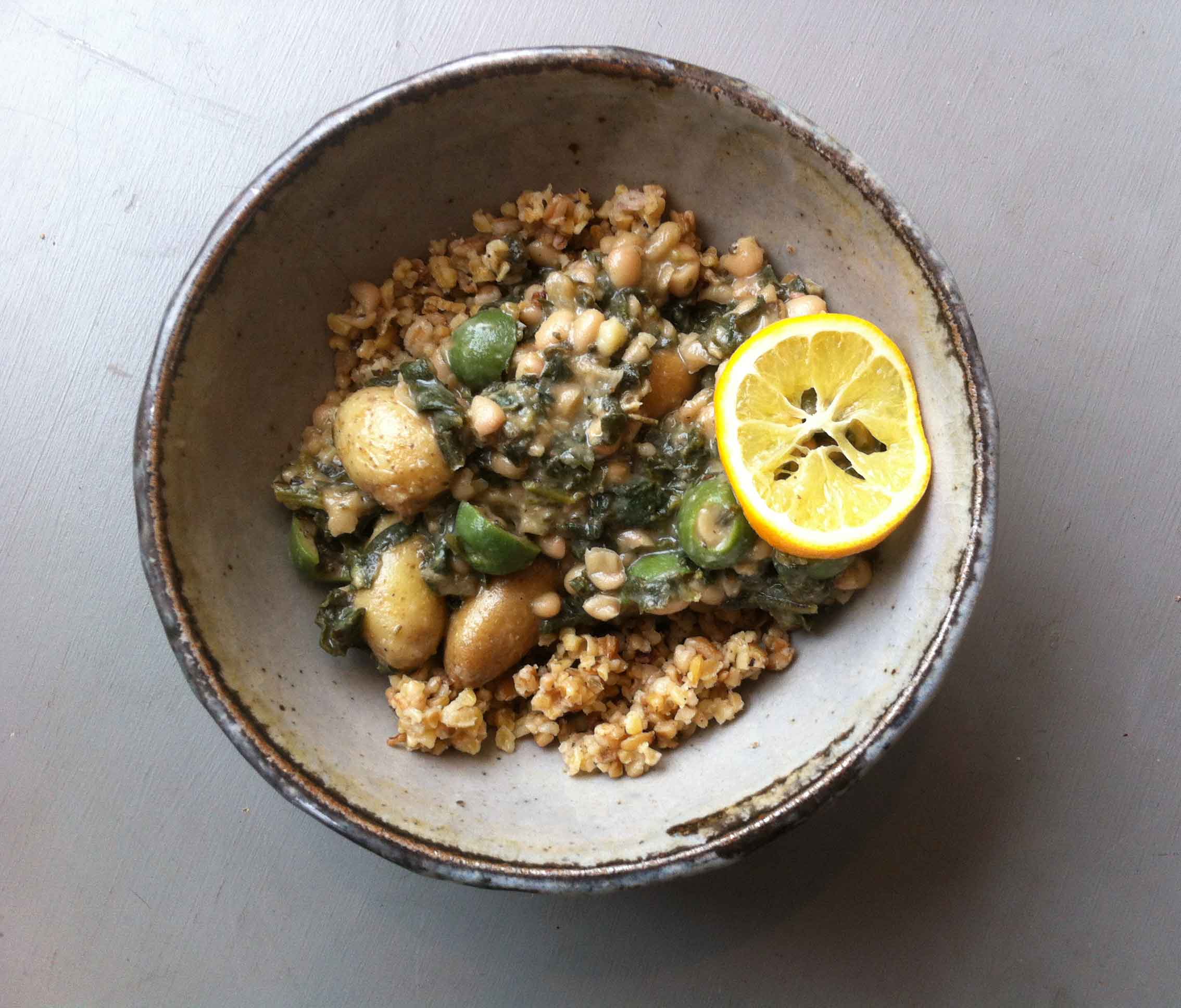
Or you could make this nice bright stew. It has tiny potatoes, but you could use larger potatoes and cut them up. It has small white beans, and white wine, and rosemary, thyme and sage. It has spinach and castelvetrano olives, and the juice of a meyer lemon. It’s nice in winter, because it’s savory and satisfying, but vivid and green and juicy as well. It would be nice in spring or summer with fresh new potatoes and baby spinach. I served it over a medley of wheat grains…bulgur, farro, and freekeh. I thought they were nice together because they each have a different texture. We had some goat cheese caper toasts, too, which I might tell you about another time.

Your song for today is this whistling dormouse.

Continue reading

Thinly sliced potatoes with spinach, tomatoes and olives

Sliced potatoes with spinach, olives and tomatoes

Sliced potatoes with spinach, olives and tomatoes

Machucha is the story of making and losing a friendship. It’s about all of the small and surprising moments of connection, and the surprising differences as well. About discovering that the way your family lives and what they consider normal is not normal for everyone else. Small kindness and revelations add up to form something stronger and warmer. But we understand the fragility of the relationship, too, that feeling of almost holding your breath, hoping and fearing, which is all part of the ordinary and extraordinary occurrence of making a friend when you’re twelve years old. That Machucha is set in Chile during the 1973 Coup d’état adds to the tension and heartbreak, but the real drama is one of friendship. We see the historical events as a child sees them, with confusion, fear, and a horrible sense of powerlessness. Gonzalo Infante is a student at a private Catholic school in Santiago. His family is wealthy but far from perfect, in ways that are also bewildering and unsettling to an uncomprehending boy. A handful of poorer students is introduced to the school, and they’re treated with inevitable mockery and bullying. Gonzalo befriends Machucha, a boy who lives in a shantytown. The story of their friendship is joyful and sad and haunting. The film is quiet and subtle but resonant. We see that all of the cruelty and brutality of our political world starts as suspicion and misunderstanding and fear of people who are different. And any hope for change comes from small moments of connection between ordinary people, and from empathy and friendship.

Thinly sliced potatoes layered with spinach, tomatoes and olives

Thinly sliced potatoes layered with spinach, tomatoes and olives

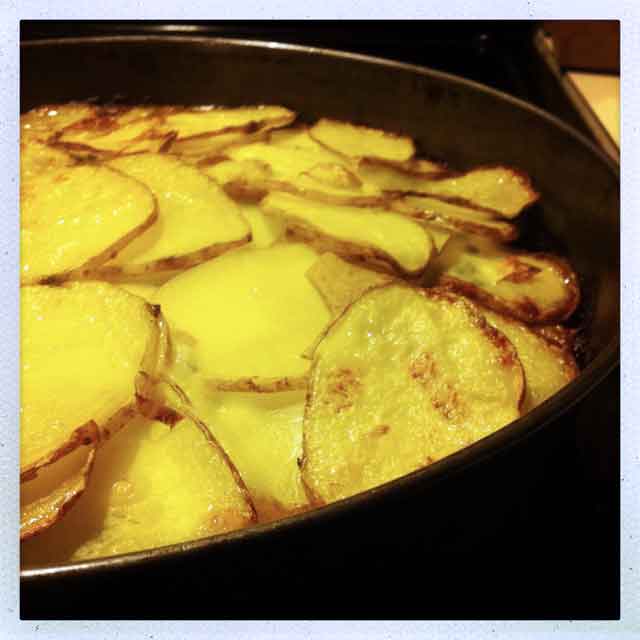
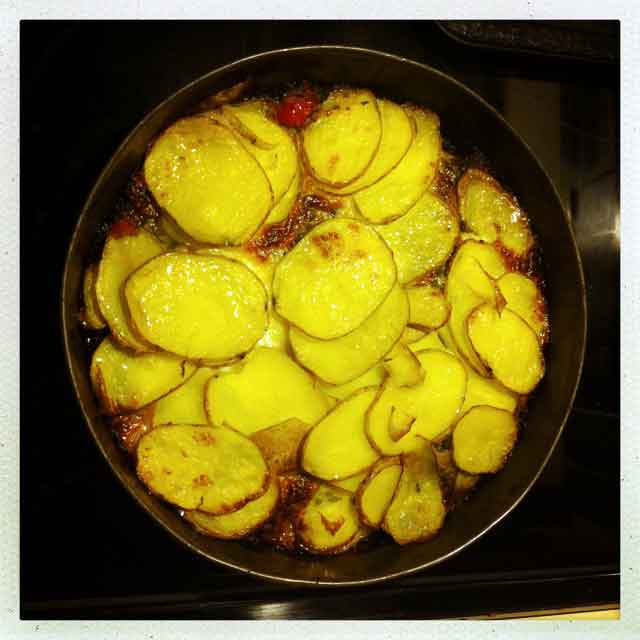
I may have mentioned that I got a new food processor for Christmas. It’s a marvel! It’s so fast and quiet and efficient. I used it to slice these potatoes very thinly, and then I layered them with a sort of sauce of spinach, tomatoes, capers and olives. I also added some grated smoked gouda, but you could use mozzarella or goat cheese or leave the cheese out altogether and this would be vegan. I made mine quite shallow in a big French cake pan, but you could make it with more layers in a deeper pan. You might need to cook it longer, though.

Here’s Bicicleta from the Machucha soundtrack.

Continue reading

Spinach, artichoke and potato torta

Spinach and potato torta

Spinach and potato torta

“How long ago was Halloween?” I do rapid fuzzy calculations in my head and provide a believable answer. “And my birthday, how long ago was my birthday?” Another quick and unreliable response. “And how many days till Christmas?” Isaac is curious about time passing, particularly as it relates to holidays and birthdays. It doesn’t seem all that long ago that he was mastering the complicated concepts of last night and tomorrow, and now he’s trying to put it all in context. Several snowy blocks after the impromptu calendar-math test, he asked, “Why is Clio always so curious?” Well, I said, she doesn’t watch TV or read (at least while we’re looking), so this is how she learns about the world. She sniffs, and she knows who was here before her. She knows about dogs who have walked this way, about cats and squirrels and people. “So this is their way of sharing non-fiction stories?” (I swear to god he said this!) And I said, Yeah, they pee all over the snow and that’s their newspaper. This got a giggle because of the ever-popular word “pee.” (Know your audience!) Then he asked how old of a smell Clio would recognize, how many months or years old a smell could be that Clio would be able to identify, and I obviously didn’t know the answer to that one, but I said I’d always thought of dogs as historians, because they can unearth layers of events. Then he said he wished he could talk to dogs, so he could ask her. And I said that she might have a completely different concept of time passing, so that when she tried to describe how old a smell was, and how much time had passed we might not be able to understand her. It seems like dogs must have a different feeling of time going by, it would be cruel otherwise, but time does seem cruel sometimes. Dogs sleep most of the day, so maybe for them it’s like a dream, with its own strange logic and chronology, with bright spots and flashes of sun and shadow. And meals, of course, she has an uncanny ability to tell when it’s her mealtime. And then Isaac, master chronicler of a little boy’s sense of time passing, said, “I think she’d say, ‘these mammals,’ (I doubt she’d say “people”)’These mammals get it all wrong.'” We probably do. We probably do.

Spinach and potato torta

Spinach and potato torta

So, as I mentioned in yesterday’s bratty confessional, I wasn’t feeling too wonderful. I didn’t even feel like cooking that much, which is odd for me. But around dinner time I started to mull it over. What’s comforting to me? I’ll tell you what is! Potatoes, spinach, eggs, and cheese. Melty cheese. So I decided to combine them all, and then I decided to call it a torta, as if it was a real thing. Maybe it is! I vaguely remember eating an omelette with sliced potatoes in it when we were in Spain. Maybe it was called a tortilla? Who knows? It was all long ago in my dream-like memory.

Here’s Chet Baker singing Time After Time live in Belgium
Continue reading

Purple sweet potato and cauliflower purée

Purple sweet potato and cauliflower purée

Purple sweet potato and cauliflower purée

I decided to try a little game. As I wrote last week, I’m delighted by the random combination of words to make strange phrases, so I decided to combine whole sentences to make a strange story. Most of these sentences come from books on the shelves next to me. For the first I closed my eyes and picked at random. I happened to pick The Sauptikaparavan of The Mahabharata:The Massacre at Night, which is an apocalyptical tale. Not the happiest way to begin! In this story you’ll also find sentences from Faulkner’s Light in August, Sterne’s Tristram Shandy, Dostoevsky’s Brother’s Karamazov and a few other odds and ends. It’s a fun game, try it with the books next to you!

    Then, in a little while, the great tumultuous din–the roaring of men and other, lower moans–faded and died away. And that terrible swirling dust, my king, was in a moment absorbed by the blood drenched earth. We left the town in a panic, in a daze, blinded more by fear than by the dust itself. When we got to the road, as our eyes cleared, we could see what we had left behind. The sun died, too, and fell, gasping off the edge of the world, spreading long grasping crimson arms across the earth. And in this light we saw that the chaos was complete. Whole buildings had fallen, leaving only gaunt, staring, motionless wheels rising from mounds of brick rubble and ragged weeds. And let me tell you that we left with just the clothes we had on our backs. And they were tattered, they were rags, dirty strips of fabric matted to our wounds. We stumbled down the road, broken and bruised, charred and ruined, but always moving, trying to leave this day behind to fester in our nightmares where it belonged. In the distance on the road before us we saw a figure approaching, slouching towards us, with a long, strange stride, singing. He came nearer and we saw that it was a man, a large man with a perfect smile on his face. “Friend,” we said, “You must turn around, you must flee this place.” But he said, “I am done with running. Is it not better to be freed from cares and agues, from love and melancholy, and the other hot and cold fits of life, than like a galled traveler, who comes weary to his inn, to be bound to begin his journey afresh?” Well, we could not argue with that; what could we say to that, after all we had seen? We watched him on his way, and he raised a small rosy cloud of dust with each footfall, and soon we lost him in the sanguine whirl of everything. We turned on our way, and soon night, fresh and quiet, almost unstirring, enveloped the earth.

It’s a purple purée! Isaac was mystified by this dish, but he ate it anyway. It’s a combination of a purple sweet potato, a regular potato and half a head of cauliflower, all boiled till tender and then mashed together till smooth. It was really delicious. I seasoned it very simply with butter, salt and lots of pepper, but you could jazz it up with various herbs and spices, or even with cheese.

Here’s The Smiths with Cemetery Gates, because I’ve had these lines in my head all night…If you must write prose/poems
The words you use should be your own
Don’t plagiarise or take “on loan.”

And of course that’s exactly what I did, I took words on loan.

Continue reading

Purple sweet potato, arugula, and olive pizza

Purple sweet potato pizza with arugula

Purple sweet potato pizza with arugula

While Malcolm is away, Isaac gets to call all the shots. So we watched a show on dinosaurs. He likes these shows with men and women in denim shirts and floppy hats, leaning on their tanned knees and peering out over the desert. They tell us about dinosaur bones, and then we see very realistic animations of the dinosaurs who had those bones, trundling or scuttling around the prehistoric forests. Last night’s show was about the T-rex, who apparently had a bigger brain than anyone gave him credit for, but moved more slowly. Somewhere in the world (I’ll admit I wasn’t paying very close attention) a group of T-rex bones were found close to one another. Four whole dinosaurs! Why? Why exactly did they live and die so close to each other? According to the experts, it was probably a sign that they hunted in packs. “These shows always miss the obvious,” said our Isaac, with a sigh in his voice. “They’re always looking for attacking and fighting. What if the dinosaurs just wanted to be with each other?” They’re not hunting in packs, they’re making dinner together. They’re just sharing their food, and keeping each other warm. And in a second, in the twinkling of an eye, I saw that the whole history of man and beast has been approached from the wrong angle. Our history shouldn’t be told as a succession of wars and disasters and people tearing one another apart! It should be about people just wanting to be with each other. Take note, historians and anthropologists and archeologists. It’s just so obvious.

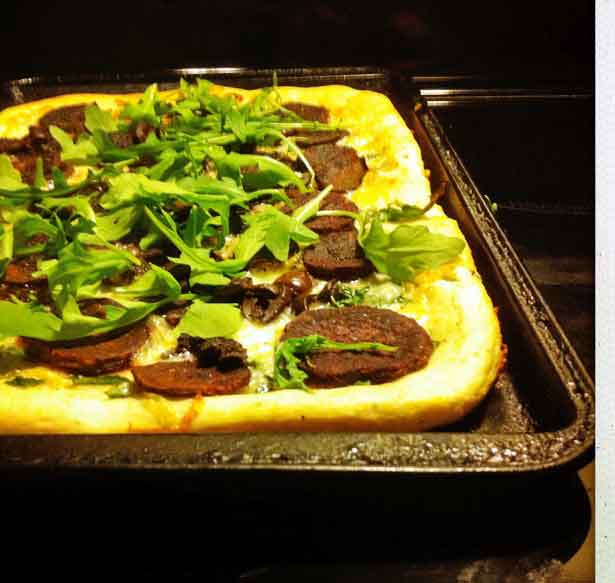
This pizza was very very tasty. I couldn’t resist buying some purple sweet potatoes, they’re just so pretty. So I sliced them thin and roasted them with olive oil, balsamic, rosemary and smoked paprika. Sort of like sweet potato pepperoni!! And then I decided to put them on a pizza with baby arugula and black olives. Sweet meets peppery meets salty. I put some of the arugula under the cheese, and I scattered some on top at the end. I used a mixture of sharp white cheddar and mozzarella, which I think was a good combination, but obviously you can use whatever you like. And that’s that.

Here’s Louis Armstrong singing Get Together (yes, that Get Together!!)
Continue reading

Red lentil, red bean and yellow split pea curry (with sweet potatoes, red peppers and kale)

Red bean, red lentil and yellow split pea curry

Red bean, red lentil and yellow split pea curry

Isaac likes to ask questions he knows the answers to. He’ll ask them again and again, and there must be something reassuring in getting the same answer every time. Of course this is dangerous when you have a mother who earned the name “Miss Snide” in her youth because of her snarky response to every question with an obvious answer, and who can’t give the same answer twice. So frequently our walks to school go a little something like this. “Mom, do you think Clio is cute?” “No, I think she’s a hideous beast.” “Mom, do you think Clio is cute?” “No, I think she’s foulfiendish.” “Mom, do you think Clio is cute?” On and on until I finally break and yell, “Of course I think Clio is cute, I only tell her so ten thousand times a day!” Last night when we were reading before bed it was, “Mom, what’s your favorite color?” “You know the answer, you tell me.” “GREEN! What’s your other favorite color?” “You tell me again,” “Blue!” And then Isaac recalled a time when one friend, who is a girl, said that her favorite colors are pink and red, and another friend, who is a boy, said she couldn’t like red because it’s a boy’s color. And then both Malcolm and Isaac said “There’s no such thing as boy colors and girl colors! Any body can like any color!” Isaac said it’s a made up myth. And Malcolm said that it sucks for girls, though, because they only get two colors, but boys get every other color there is. Well! It seemed like such a wise thing to say. It seemed like such a perfect metaphor for so much else in life, and I’d never thought about it before in that way. Pink and purple. I mean of course I’d realized how ridiculous it was to think of these as girlie colors, or let colors be so defining, and I’d always been proud of my boys for liking pink and purple in defiant solidarity. But I’d never realized how imbalanced it was. I’d never really thought about how every single other color belongs mostly to the boys. I had a funny sort of flash of “What else do we just live with and take for granted that I need my eleven-year-old to state with brilliant matter-of-fact clarity?” This week Isaac had to fill in a big poster about himself, and in the box for favorite color he drew just about every color known to magic markerdom. I love to think about my boys refining the light of the entire spectrum through the perfect prism of their ridiculously lovely combination of imagination and good sense. I love to think about them glowing with all the colors, with every color in the world.

Red lentil, red bean, and yellow split pea curry

Red lentil, red bean, and yellow split pea curry

Speaking of color! This dal had red lentils, yellow split peas and red beans. So it was very warm and autumnal. It also had red peppers and sweet potatoes, to add to the warmth and autumnalness. It was tasty, too, and satisfying. If you cook if for a nice long time, the red lentils will break down into a sort of background creaminess, but the split peas and red beans will retain their texture. We ate this with basmati rice and some Ooto flatbreads.

Here’s Louis Armstrong with What a Wonderful World.
Continue reading

FIrst frost stew

First frost stew

First frost stew

I’d been feeling very discouraged, and I thought I wanted to watch something light-hearted and stupid and funny, to forget about feeling disappointed for a while. But we didn’t have something lighthearted and stupid and funny, we had the exact opposite of that. We had Diary of a Country Priest, by Bresson, and it turned out that this movie was exactly what I needed. The film is long and slow and dreamlike, it’s narrated from the diary of a priest new to a small town–his first parish. “I don’t think I’m doing anything wrong in writing down daily, with absolute frankness, the simplest and most insightful secrets of a life actually lacking any trace of mystery.” But the film is full of mystery! It’s one of the strangest films I’ve ever seen, but in such a gentle, soft-spoken way, it’s quietly bewildering. At times it seems like a suspense film, a noir film, Gaslight or Rebecca. The priest faces antagonism from his parish, and we don’t know why. They suspect him of wrongdoing, he’s accused of terrible things, but we don’t fully know what they are. He’s accused of being a drunk, but it’s also possible that the wine he drinks might be bad in some way, or might even be poisoned. It’s never clear if all if this is in his head or if it’s real, and conversations with others rarely clear up the confusion. In his monologue he hints at events and confrontations that we never actually see. Of course, on an overtly religious level the film is about a man struggling with his faith, which is his job. He despairs of his ability to pray, and he expresses doubt when he should be professing his complete assurance. This childlike frankness extends to all of his actions. And like a child, it seems as though everything that people tell him comes from a different world, all the advice he’s given seems a little doubtful or strange, as it must seem to a child when somebody tells them to do something they don’t understand. He seems frustratingly weak, sometimes, but like a child, he has a strong voice inside that tells him who he is and what he needs. And, like a child, he makes questionable decisions sometimes about his well-being. The priest lives on wine, bread, and fruit, because he has a sensitive stomach, and this strange diet and his constant pain leave him dizzy and faint. The film has a beautiful blurred glow, it’s almost out of focus–apparently the result of a poorly attached filter, a mistake which the director loved despite the cameraman’s protest. The landscape is wintery and soft, and the film is visually beautiful. The priest’s face is luminous with a sad quiet glow, and we only see him smile one time, when he’s given a ride on the back of a motorcycle. He’s as childish in his pleasure as he has been in his pain all along. And when the man who gives him the ride tells him that he imagines they could be friends in different circumstances, he’s endearingly doubtful and glad. Because he’s incredibly alone, he’s completely isolated, and more than anything the film felt to me to be a portrait of loneliness. All of his doubts and fears and bad nights and strange moments of despair and weakness feel so much worse because he has nobody to comfort him. I want somebody to care for him like a child, like the sick child that he is, but despite rare moments of comfort and connection, this doesn’t happen. I’m not religious in any Christian sense of the world, but I find the priest’s search for faith and grace beautiful on a human level, or perhaps on the level of a human searching for something bigger than themselves, whatever name we happen to give to that. I spoke last week about the idea of soul being the seat of a person’s emotions, feelings, or thoughts or the moral or emotional part of a person’s nature or the central or inmost part of a person’s being, and I think that is something this priest would understand. His solemnity and his honesty raise him above the petty bickering of his parishioners. He doesn’t bother to defend himself from their accusations, because his understanding is on a completely different level. When he realizes this he says, beautifully, “I’d discovered with something bordering on joy that I had nothing to say.” I love that. The film is full of unexpectedly beautiful statements like this. His “old master” an odd sort of priest who appears throughout the film, follows a stream of advice with the words, “And now, work. Do little things from day to day while you wait. Little things don’t seem like much, but they bring peace.” I think that’s true in all of our lives, no matter what our circumstance no matter what our faith. As does his further statement, “Keep order all day long, knowing full well disorder will win out tomorrow, because in this sorry world, the night undoes the work of the day.” For the priest, the little thing that brings peace and order is his writing. He writes because he needs to, with a sort of desperate compulsion. At times he scribbles out what he has written, as if the words are too powerful or too doubtful or too strange. And his quiet voice, narrating the action sometimes in concert with the actions we see, sometimes just off, before or after the action, is dreamlike and compelling. Such a strange film, so beautifully full of questions and doubts. In the end the priest is given absolution by a friend who has fallen from his faith, and he says, “”What does it matter? All is grace.”

My friend Diane sent me an e-mail wishing me a “happy first frost,” and asking if I’d make some sort of stew for her. So I made this first frost stew. So-called not just because it’s warm and comforting, but also because it’s four kinds of white, flecked with a little bit of green. Butterbeans, small white beans, potatoes and rutabaga mixed with lemon thyme and kale. Warm but brignt.

Here’s Jesus by the Velvet Underground. “Help me in my weakness because I’m falling out of grace,” could be a line from the movie.
Continue reading

Navy beans with fennel and roasted sweet potatoes, and butter-fried croquettes

Navy beans with fennel and roasted sweet potatoes

Navy beans with fennel and roasted sweet potatoes

“He wouldn’t listen to her, and he clasped her desperately, his heart drowning in an immense sadness. A need for peace and an uncontrollable need for happiness invaded him; and he pictured himself married, in a nice clean little house, with no other ambition than for the two of them to live and die together inside it. They would only need a little bread to eat; and even if there was only enough for one of them, he would give her the whole piece. What was the point of wanting anything else? Was there anything in life worth more than that?” Indeed! Well, I haven’t finished the book yet, but I know how things turn out. I always read ahead, I read a few pages here and there in the middle, and I read the end. I always have, somehow knowing how it will end makes the story more compelling for me, even if it ends sadly, as this one does, I’m sorry to say. They are, of course, Etienne and Catherine from Germinal. They’re sitting on the edge of the bed in icy darkness, preparing to go back down the pit. After a winter of sickness and strife, starvation and deprivation, after months of physical and emotional abuse from her cruel lover, after ages of liking and loving and longing for each other, all unspoken, they’re at a crossroads. “Don’t do it!” You want to yell at them. “Don’t go down the mine. Run away!!” When I was little I used to imagine an island people could go to when things weren’t going well for them in plays or books or movies. An island for star-crossed lovers where everything aligned a little more benevolently, and all of the outside forces that kept them apart were nowhere to be found. It would be a place you could go despite your obstacles–money troubles couldn’t keep you away, and neither could overbearing relatives or jealous lovers or fickle fortune. And once you got there you’d be free to live out your days with your lover, just as you choose. You would grow old together. And maybe this would be hard for some of the couples that wind up on the island, because they hadn’t known each other very long in the old world, but I think they’d be glad to have the chance. After all, we each have to grow old, and it’s nice to have somebody to do it with. Romeo and Juliet were so young when they died. Juliet is thirteen. So maybe on this island they would grow up together, they would become adults together and be good friends. Catherine and Heathcliff–well, I just don’t know. They started as friends, they did grow up together, but weren’t they disappointingly cruel to each other and themselves and everyone around them. I don’t think even a magical island could provide them with a cheery future. Catherine and Etienne, though, I think they’d be okay. They’ve both suffered so much and worked so hard that they’d be glad of the peace and freedom to be kind to one another, to really love each other. They’d delight in any small warmth that they could find, and they’d kindle such a bonfire of pent-up affection they’d be able to light up a whole wintery mining village. And they wouldn’t be ignorant but happy, either. I think about Catherine a lot, about how bright and interested she is, and about how her only hope in life is to earn enough money to survive, and that her cruel man won’t be too cruel to her. I like to think about her writing stories in her head, down in the pit. But Etienne has taken such pleasure in learning, and in educating himself, and you know he’d love to teach her, too, and that he’d take pleasure in doing it, and be proud of all she learned. I like to think about what she might do, if she had some knowledge. I like to imagine them happy. They don’t expect much, and they deserve the world.

Butter-fried vegetarian bean loaf

Butter-fried vegetarian bean loaf

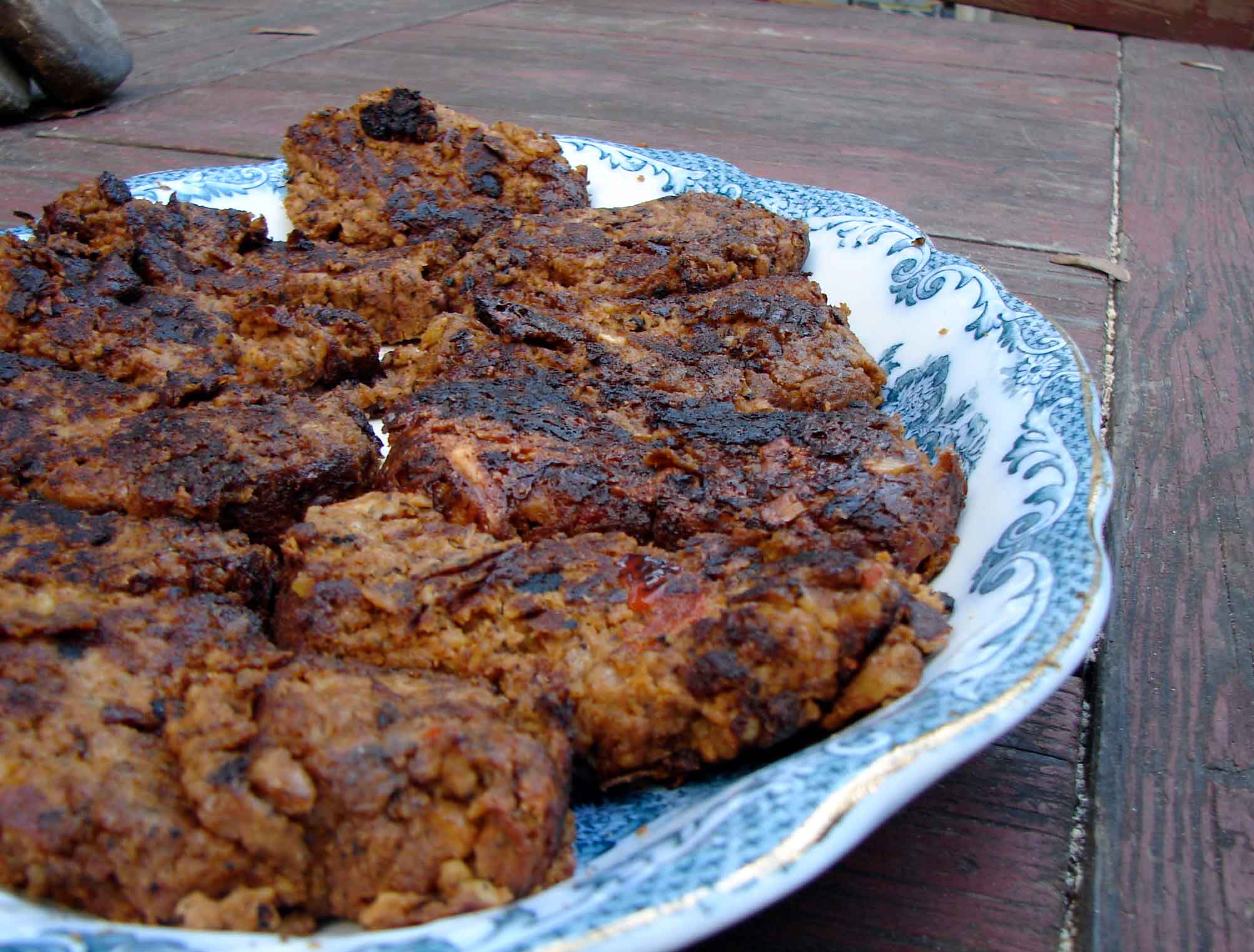
Here we have another meal that started as a bean and vegetable stew and ended up as croquettes. THe first night we had a bright, sweet, tart stew made of navy beans, fennel, and roasted sweet potatoes. It also had lemon thyme, lemon, caper, and a handful of raisins. Very delicious! And we ate it with bulgur. The next night I smashed all the leftovers together with bread crumbs, eggs, cheese, and smoked paprika, and baked it in a loaf pan. Then I sliced it (or tried to, it fell apart a bit) and fried it all in butter. The boys said it was like hotdogs, and it kinda was! Very good, though!

Here’s Louis Armstrong with Song of the Islands

Continue reading