
Pomegranate molasses catsup
This is the photo I’ve chosen for the first story. Beautiful, right? My story is after the jump!


Pomegranate molasses catsup
Here’s A Tribe Called Quest with 8 Millions Stories.
Continue reading

Pomegranate molasses catsup
This is the photo I’ve chosen for the first story. Beautiful, right? My story is after the jump!
Pomegranate molasses catsup
Here’s A Tribe Called Quest with 8 Millions Stories.
Continue reading

Roasted butternut farro balls
APRIL is the cruellest month, breeding
Lilacs out of the dead land, mixing
Memory and desire, stirring
Dull roots with spring rain.
Winter kept us warm, covering
Earth in forgetful snow, feeding
A little life with dried tubers.
Summer surprised us, coming over the Starnbergersee
With a shower of rain; we stopped in the colonnade,
And went on in sunlight, into the Hofgarten,
And drank coffee, and talked for an hour.
I suppose I’ve gotten too comfortable this winter, with dull days that please me so much and go by so fast–just keeping my family warm and feeding them roasted tubers, and then writing about that and starting all over again. It’s hard to do anything very important when you’re too comfortable, but I’m also convinced that the day to day of every day is as important as life gets, so I’m not easily motivated. I’m sure it’s just the chill and the damp that folds me in on myself. Already the slanting hopeful rosy light of morning and evening is rousing me from my wintery dormancy, but gently and kindly. When the weather is warmer on top of that I’ll feel all the old unspecified longings and yearnings, which must visit you no matter what your age. I’ll be ready to go on adventures again. And if the warmth won’t do it, Malcolm will! He’s so full of life and plans, he’s so curious and fearless. I want to be like him when I grow up, so I may as well start now! And maybe summer will surprise us, and we’ll stop in the colonnade, and go on in the sunlight.
In the meantime, we’re still eating winter squash, here at The Ordinary. And I’m still experimenting with the joys of grating and roasting it. It’s so nice and soft and crispy and sweet and savory all at the same time! In this instance, I mixed it with some leftover farro and some walnuts and made it into little balls. I fried them up in olive oil, so they’re crispy outside and soft in. The flavors are sage, smoked paprika and nutmeg – I suppose they’re flavors I associate with a sausage-y taste, so these could pass for vegetarian meatballs, or if you made them long and thin, they could be vegetarian sausage. We ate them with tender whole wheat flatbreads, which I’ll tell you about soon, arugula, which went so nicely with the nuttiness of the walnuts, and a creamy (cream-free) walnut rosemary tarator sauce. The sauce turned out very good, and would be nice with any kind of roasted vegetable – beets, potatoes, parsnips, any of those old dried tubers. In the summer, it would be nice with grilled zucchini and asparagus as well!! If you don’t have leftover farro, I’ve told you how to make it, and you can use the extra to toss on salads, or as a base for sauces and stews.
Here’s Nina Simone with Another Spring.

Nutella ice cream
And I hope they’ll always help me cook! Malcolm doesn’t like chocolate ice cream, but he loved this! I melted a quantity of chocolate chips, and I combined half of them with chopped hazelnuts and a bit of salt, and I combined the rest with some nutella, and made a nice creamy ice cream. When the ice cream was freezing, I broke the chocolate-hazelnut bark into small pieces to mix in. Deeeelicious!
Here’s Sing Your Life from Morrissey. You have a lovely singing voice!
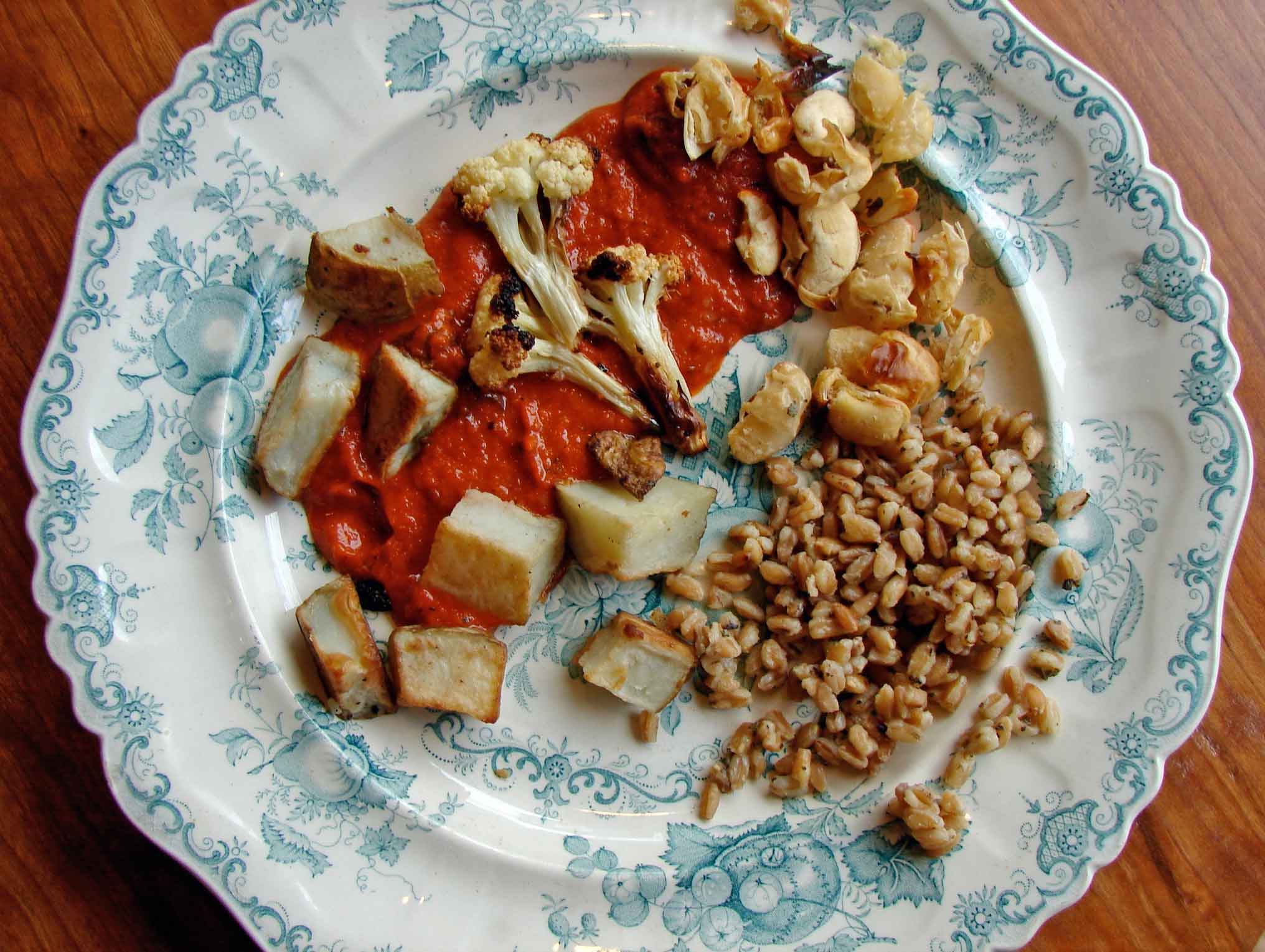
Roasted potatoes, cauliflower and butterbeans with spicy red pepper sauce
It’s funny how recipes can become construed and misconstrued, made up, as they are, of words. The symbols I take as universal are very confusing to some people. And measurements are so changing and mysterious, especially when you’re talking about the size of a vegetable! In recipes such as this one, it’s okay that the measurements are vague. You can adjust the amounts to your taste. We have roasted potatoes, cauliflower and roasted butter beans (yummy!) And we have a sauce to toss them in, and you can roast just as much of each as you like! You can mix everything together, and fry it in a skillet till the sauce is fairly dry and coating each piece, and that’s tasty. Or you can leave the elements separate, and let people take what they like, which is what we did, because not everyone in the family is as enthusiastic about cauliflower. We ate this with simple herbed farro, and some sauteed kale and broccoli rabe tossed with lemon and butter.
Here’s the Tokyo Story Theme, by Saito Kojun
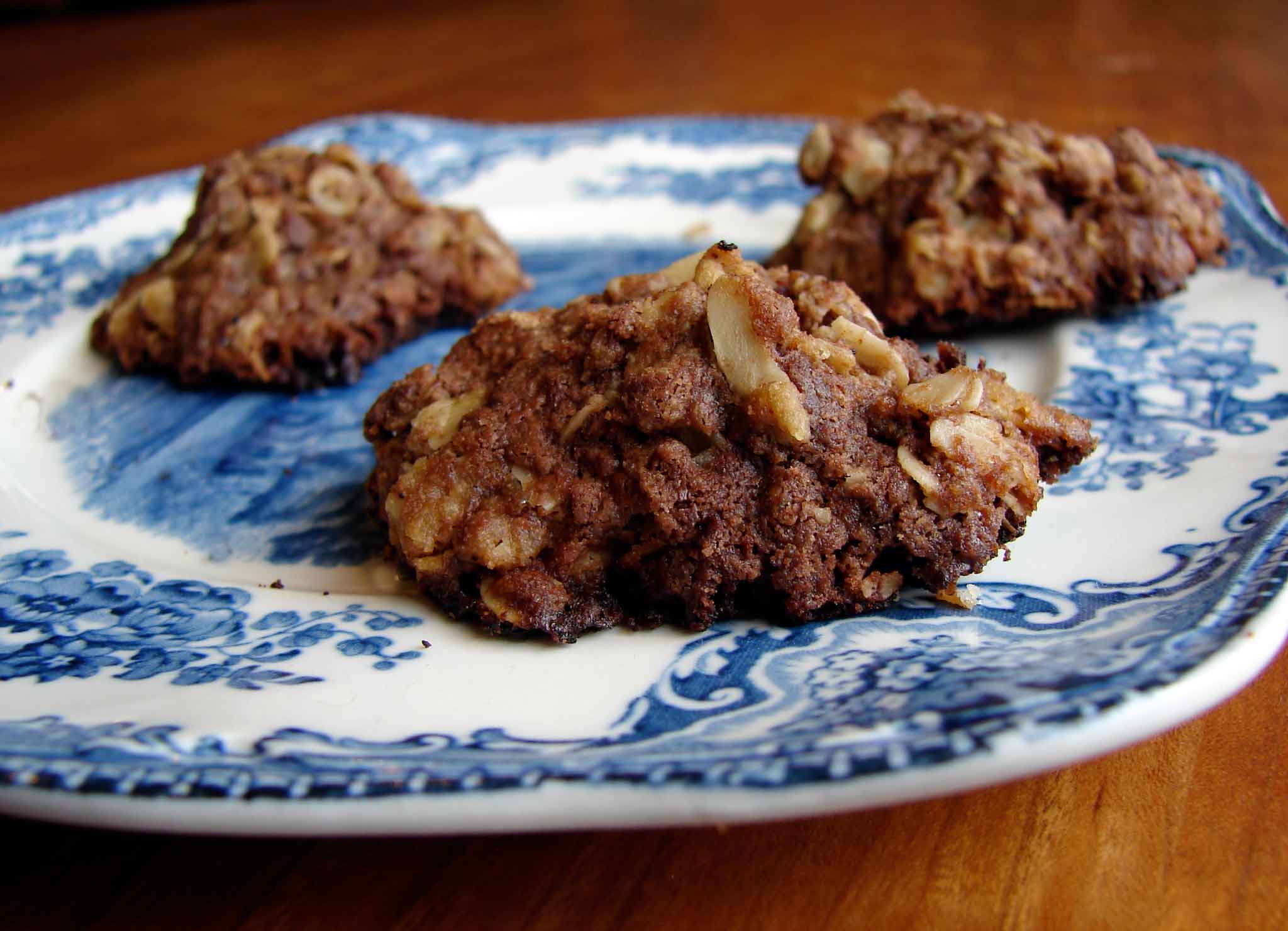
Chocolate oatmeal cookies
This year the last days of winter are decidedly not unseasonably warm! The weather is grey and icy and dripping. And so, we made chocolate oatmeal cookies. Our natural antidepressant. This is a sort of variation on oatmeal chocolate chip cookies, I suppose, with a little element of flapjack thrown in. The chips are melted, but not incorporated too thoroughly, so you find some nice patches of solid, soft chocolate. The cookies are quite crispy, very tasty, and very comforting.
Here’s Dog on Wheels by Belle and Sebastian. It’s not a real dog, but it’s a childhood memory.

Roasted rutabaga, cheddar and corn soup
2. The Seed Cutters
They seem hundreds of years away. Brueghel,
You’ll know them if I can get them true.
They kneel under the hedge in a half-circle
Behind a windbreak wind is breaking through.
They are the seed cutters. The tuck and frill
Of leaf-sprout is on the seed potates
Buried under that straw. With time to kill,
They are taking their time. Each sharp knife goes
Lazily halving each root that falls apart
In the palm of the hand: a milky gleam,
And, at the centre, a dark watermark.
Oh, calendar customs! Under the broom
Yellowing over them, compose the frieze
With all of us there, our anonymities.
Beautiful! And it got me to thinking about Brueghel, and about the fact that poets love him. We’ve talked about his Landscape with the Fall of Icarus, and the fact that WH Auden and William Carlos Williams both wrote poems about the painting. And William Carlos Williams, patron poet of The Ordinary, has a whole collection of poems called Pictures from Brueghel. Why do the poets love him so much? Is it because he tells stories with his paintings? He shows so many characters, so much movement and beauty and drama, but the drama of everyday life that we can all relate to. Is this why the poets of The Ordinary love him? Because he renders with such skill and accuracy some universal truth of humanity that we can all understand – with so much beauty and so few words. They called him “the peasant Brueghel,” apparently, in his day. Not because he was a peasant, but because he painted peasants, and some say he dressed as a peasant so he could mingle with them – unnoticed but noticing everything. This was very rare, at the time, and it is only through his paintings that we understand as much as we do about the lives of poor people in his place and in his time. I wonder why he painted peasants. Was it patronizing? Was it, as Van Gogh has said about The Potato Eaters, to show how less-civilized people lived? Was it opportunistic? Was it because these were the people who were everywhere about him, who would model for him. Because peasants must have served as models for paintings of nobility, as well, and for paintings of Christ and Mary. We’ll never know! The peasants in Brueghel’s paintings are so richly painted that it feels to me as if he’s honoring them. Seeing what I want to see, no doubt, through the lenses of my 21st century Ordinary agenda, it feels as though Brueghel captures some timeless quality that connects us all. We’re all engaged in the struggle and the joy of living, of staying alive, and working and resting and dancing. Heaney’s seed cutters might “seem hundreds of years away,” because they’re closely connected to Brueghel’s resting corn harvesters, and they’re connected as well to people taking a break outside of their offices or shops, sitting in the sun, eating a sandwich. Williams, in describing Brueghel’s nativity, says,
Brueghel and Williams are reminding us that Mary and Joseph were poor, and that this was just a moment in time to the people milling about – the soldiers, who couldn’t have understood why this moment would be significant.

We saw a beautiful film about Brueghel’s painting The Procession to Calvary, called The Mill and the Cross. It’s a gorgeous dream-like film, that fleshes out Brueghel’s characters in a mysteriously effective manner. It shows Brueghel creating the painting, and it connects the story of Christ to the suffering of Brueghel’s contemporaries at the hands of Spanish catholics. In the film, Brueghel explains that most paintings show God in the sky, parting the clouds and looking down with displeasure. But in his painting God is in a mill high on a strange mountain. God is a miller, grinding the bread of life and destiny. The bread that we all eat to nourish ourselves – soldiers and peasants and artists and Christ himself. We’re all connected by the struggle to stay alive.
Last night for dinner we ate this delicious soup and ate leftover mushroom pie and talked about Brueghel. It was a simple meal, but it was such a good conversation. I feel so lucky to have somebody with whom to puzzle these things out, and somebody who is comfortable, as I am, with not having answers. We’ll never know! This soup was good. I grated and roasted the rutabaga with some thyme (it smelled amazing cooking!) and then I added shallots, garlic, rosemary and some lentil-cooking water. I added sweet corn, for a touch of brightness, and melted in some sharp cheddar, which made the soup lovely and savory and satisfying. I puréed part, but left some as it was, because the grated rutabaga had such a nice texture.
Here is Alec Ounsworth with That is Not My Home (After Brueghel)
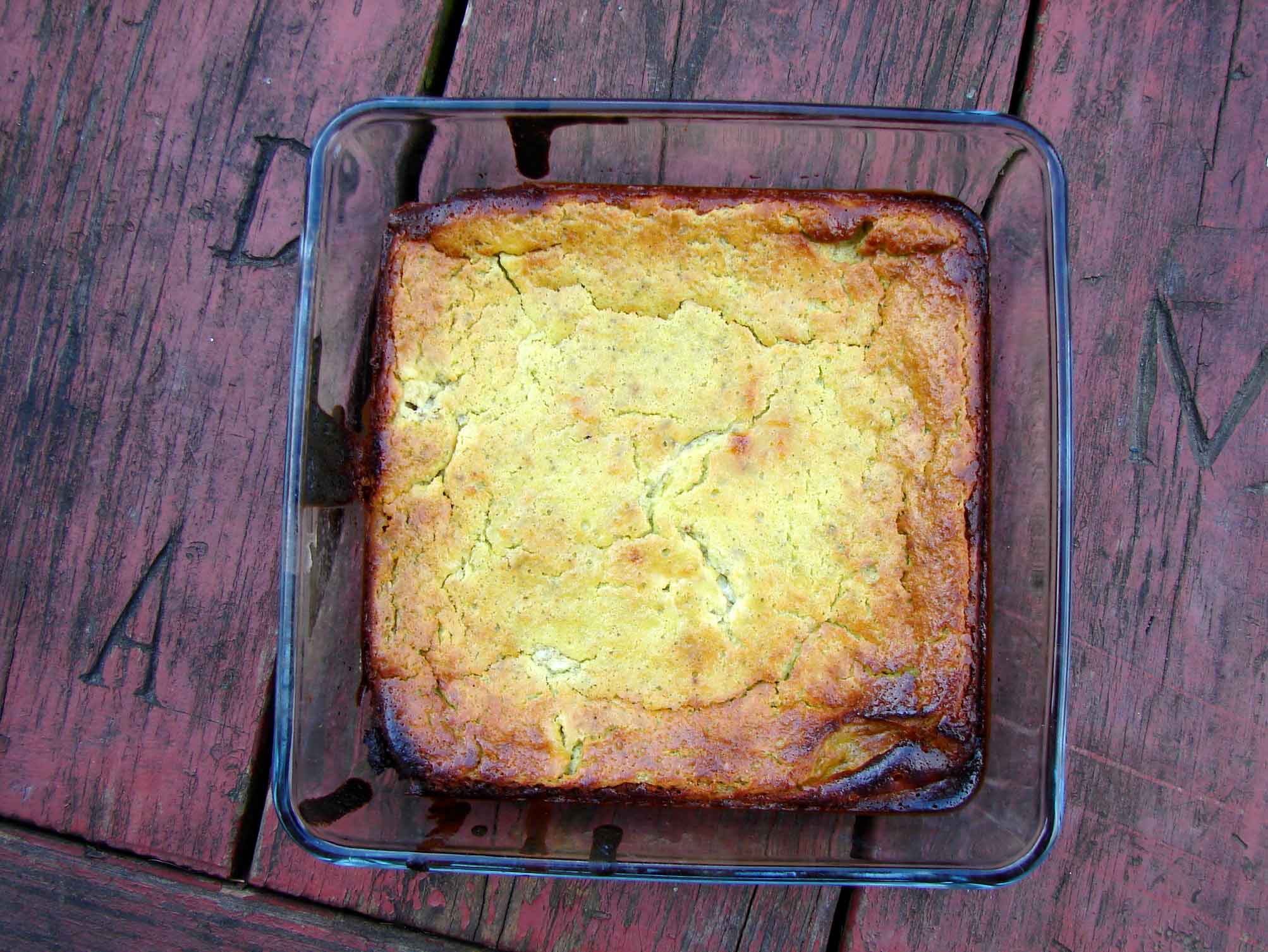
Arugula goat cheese and pine nut pate
This pate is green, which is why I’m allowed to talk about it on St Patrick’s Day. It was very simple to put together, but a nice blend of flavors, a little sweet a little tart, and quite addictive. We ate it with pita bread and with crackers, but it would be nice with a baguette, as well. Or it would make a nice side dish for any meal.
Here’s the Interactive Playlist, feel free to add songs you like. I have to go to work, so I’ll be adding most of my songs later this evening.
Continue reading
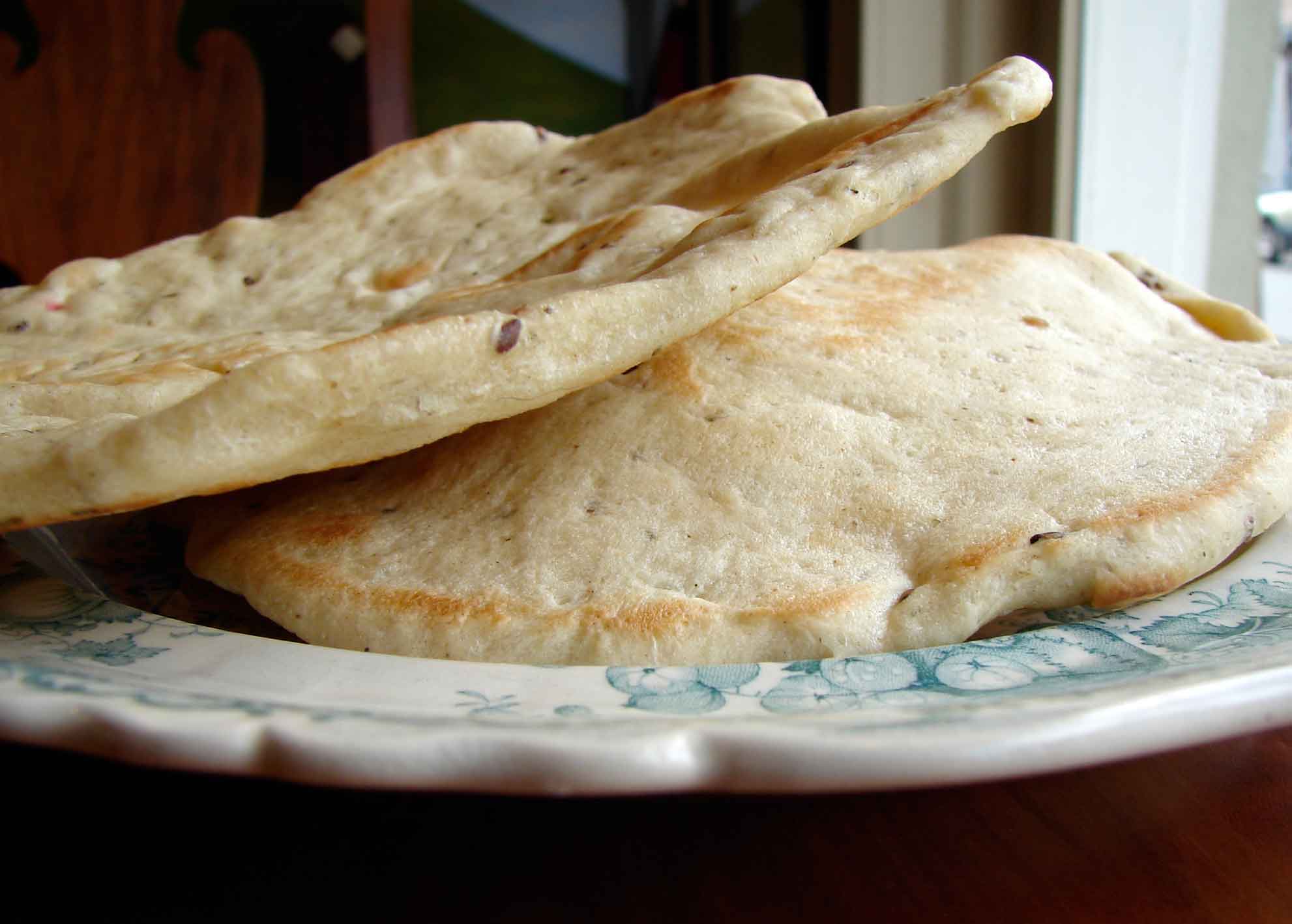
za’atar flavored pita bread
Mossbawn
1. Sunlight
There was a sunlit absence.
The helmeted pump in the yard
heated its iron,
water honeyed
in the slung bucket
and the sun stood
like a griddle cooling
against the wall
of each long afternoon.
So, her hands scuffled
over the bakeboard,
the reddening stove
sent its plaque of heat
against her where she stood
in a floury apron
by the window.
Now she dusts the board
with a goose’s wing,
now sits, broad-lapped,
with whitened nails
and measling shins:
here is a space
again, the scone rising
to the tick of two clocks.
And here is love
like a tinsmith’s scoop
sunk past its gleam
in the meal-bin.
I like making pita bread. It’s so simple and pleasurable, and so fun to eat when it’s done. I’ve always liked za’atar bread – middle-eastern flatbread crusted with za’atar spices, so I decided to bake some of them right into the dough of this pita bread. I used a red za’atar spice mix, and added thyme, but za’atar comes in many blends, so you could adjust it to suit your taste. These little breads were soft and puffy inside, so you could pull them apart and fill them with delicious things. The next day we toasted them, and they were lovely and crispy.
Here’s Heaney reading Mossbawn Sunlight

Ordinary pie
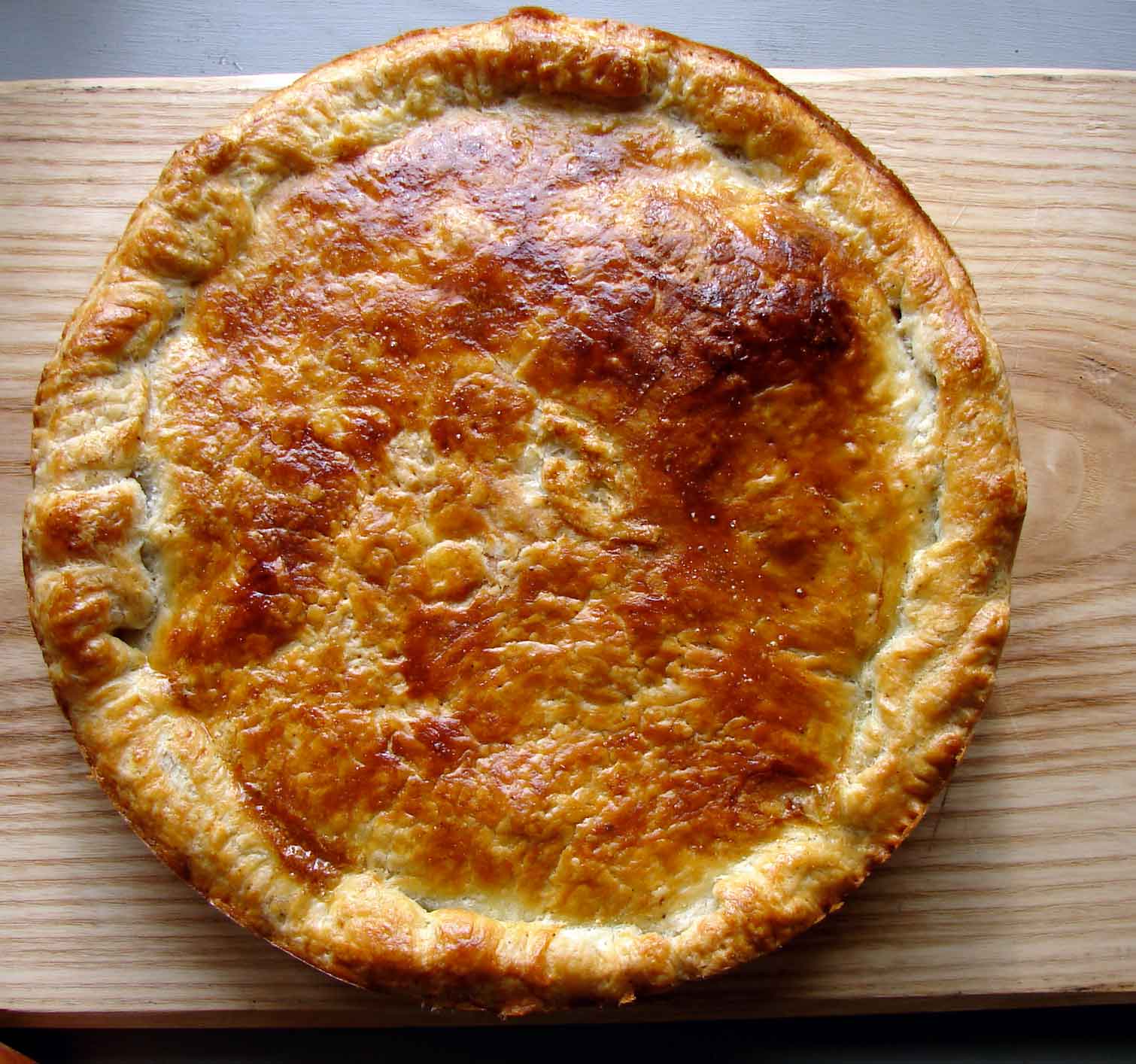
Mushroom and fench lentil pie

french lentils

roasted mushrooms

Ginger beer!
That’s Shakespeare saying that! That’s Shakespeare feeling discouraged and envious! Good lord! So I’m keen to share all of this love with Malcolm and Isaac. I know they’re a bit young, but Shakespeare is a language, the more you understand it the more you love it, and it’s good to start them on languages young. So we watched some animated tales with them. They’re nicely done! And the boys watch with rapt attention. Although we started with some comedies, and Isaac went stomping out of the room saying, “Do they all have to be about people falling in love?” He’s not a big fan of romance, our Isaac. He has a horror of people kissing on screen!
It was nice sharing Shakespeare with them just in the way it’s nice to cook with them. Creative and nourishing and hopeful. Malcolm and I have been making ginger beer, lately, and this is how we’ve been doing it. It’s a very simple method. I’ve read about putting a batch in a bowl under your bed until it turns alcoholic, or brewing it with yeast until it gets bubbly, but we didn’t do any of that. We made a concentrate of fresh ginger, lemon, lime and raw sugar, and then we added bubbly water. Then we drank a glass each, and poured the rest back into the bottle the fizzy water had come in. We used a sieve, because we like pulpy bits of ginger, but you could use a cheesecloth if you want it clearer and with less bite. We used turbinado sugar because it has such a nice, warm taste. You could use any kind of raw sugar, or white sugar or even brown sugar. I’m going to try it with honey, but I have to buy another bottle of fizzy water, first. I’ll let you know how it goes.
Here’s Shakespeare’s Sister by The Smiths.
 Out of the Ordinary