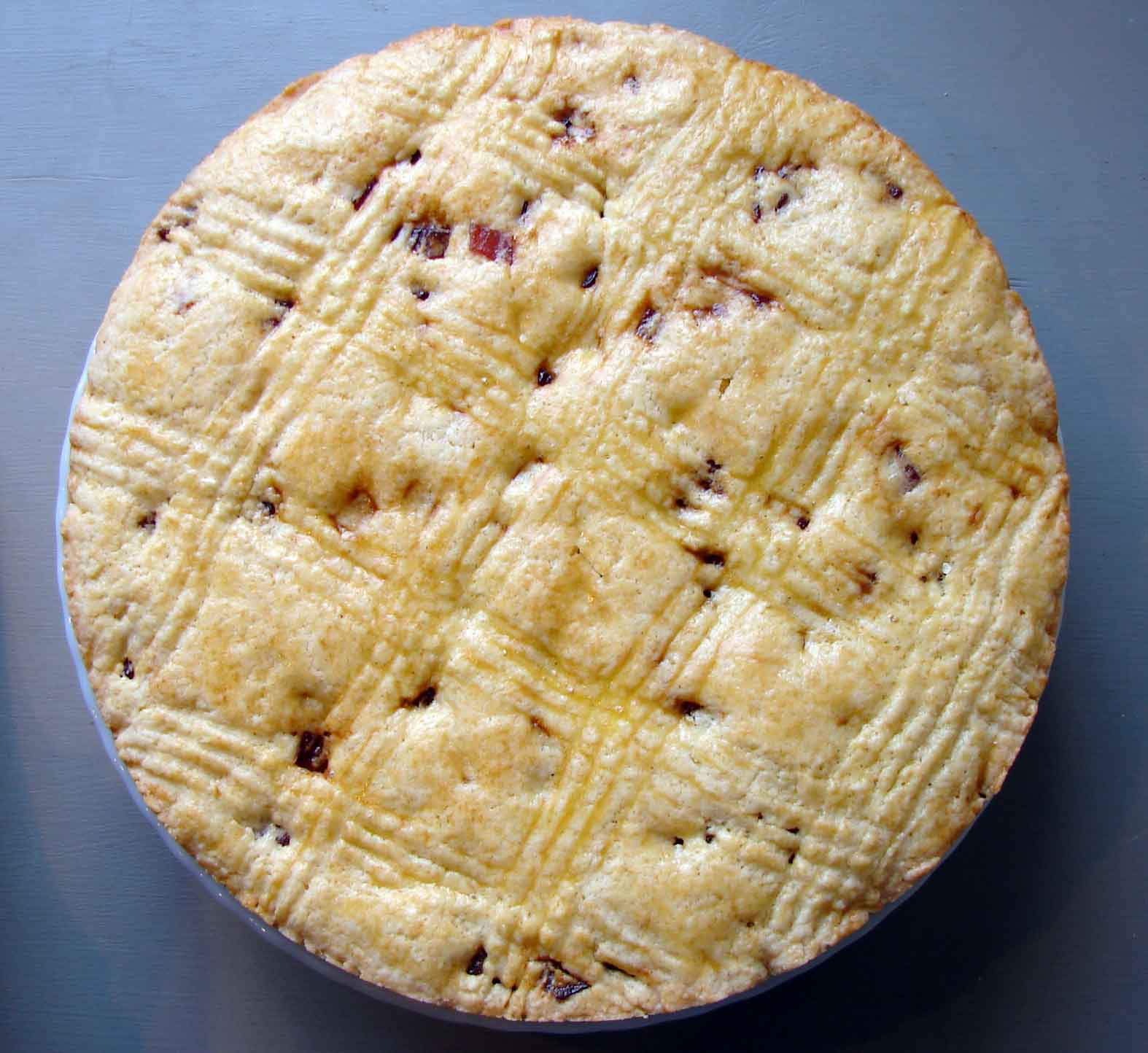
Galette Bretonne
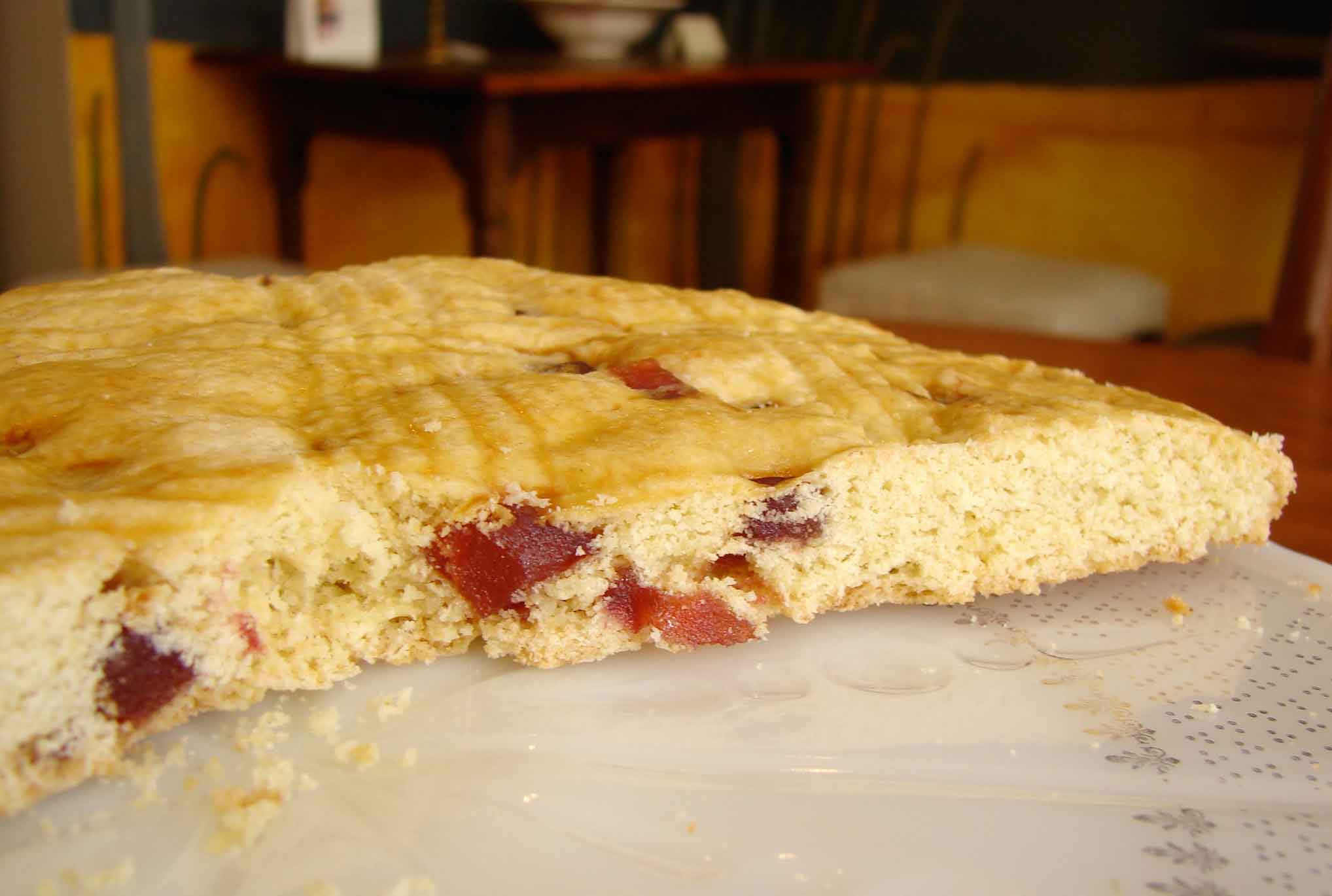
Galette bretonne
Here’s Space Boy Dream, by Belle and Sebastian, which is a nice expression of a flight of fancy.

Galette Bretonne
Galette bretonne
Here’s Space Boy Dream, by Belle and Sebastian, which is a nice expression of a flight of fancy.
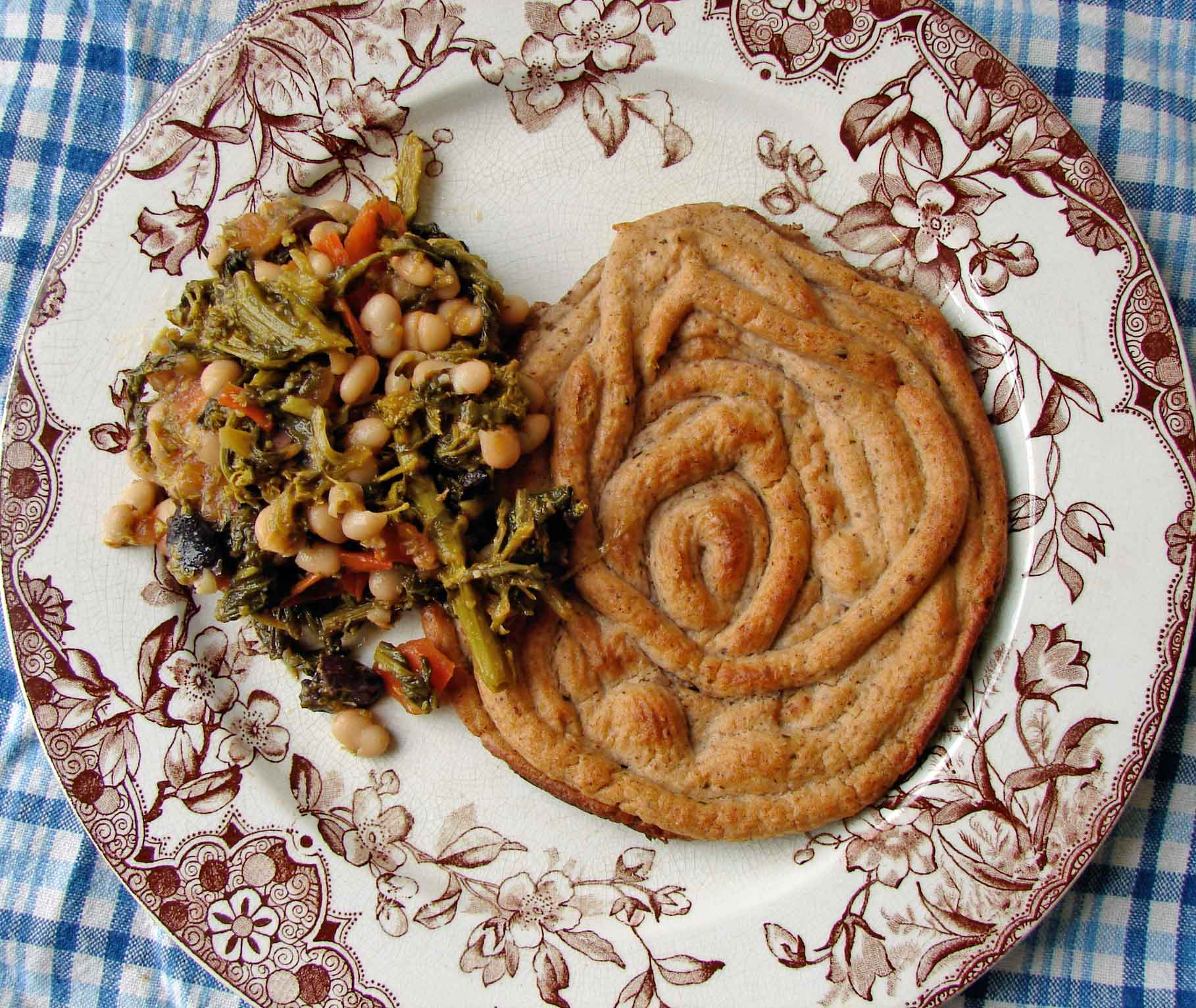
Cauliflower, pecan and potato nest
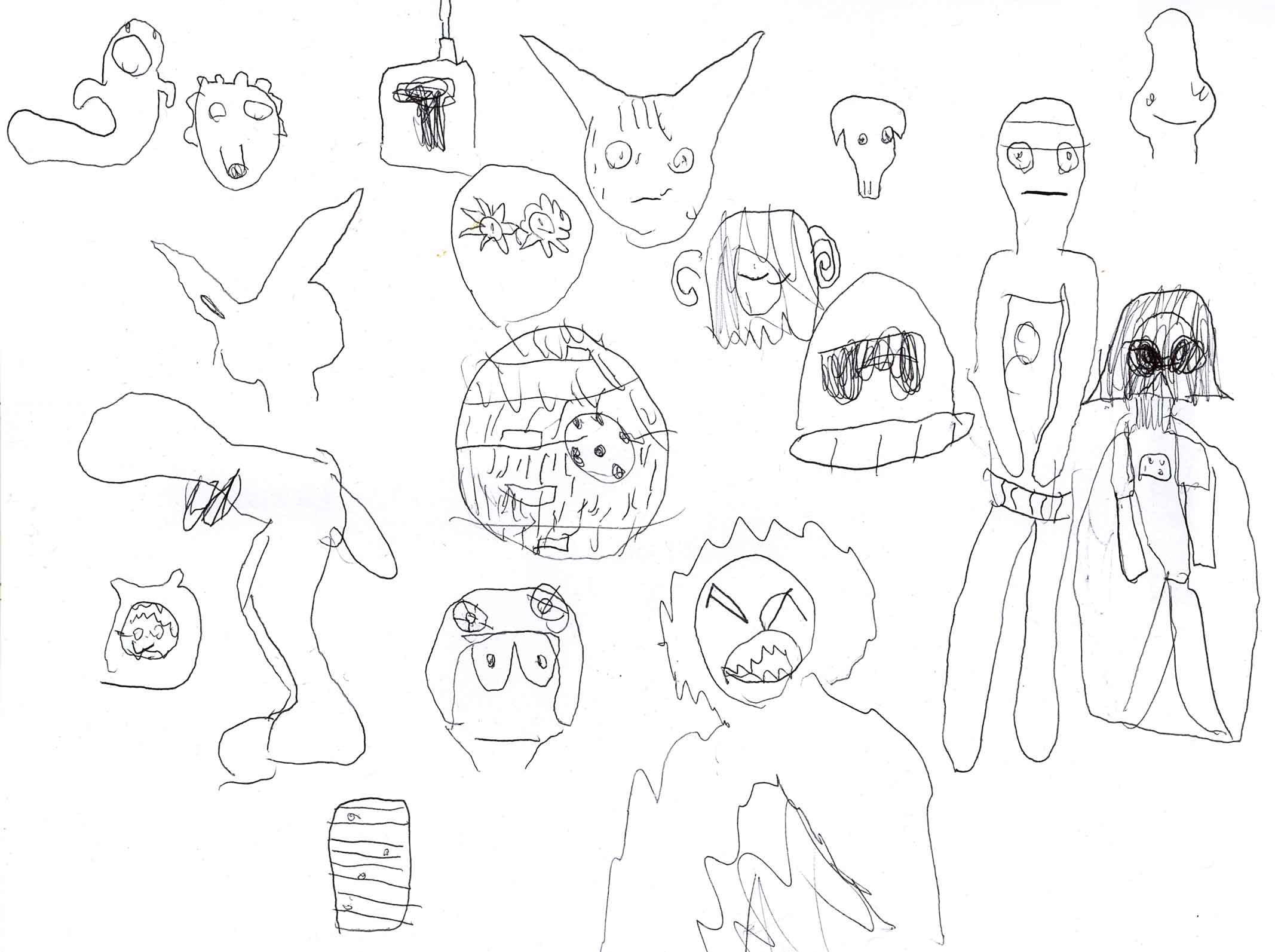
Isaac’s

Malcolm’s

David’s
So today’s Sunday interactive playlist is about generations…about a sense of history, a memory of the past or an anticipation of the future. Advice from elders, sass from youngsters…any of this will do!

Cauliflower nest
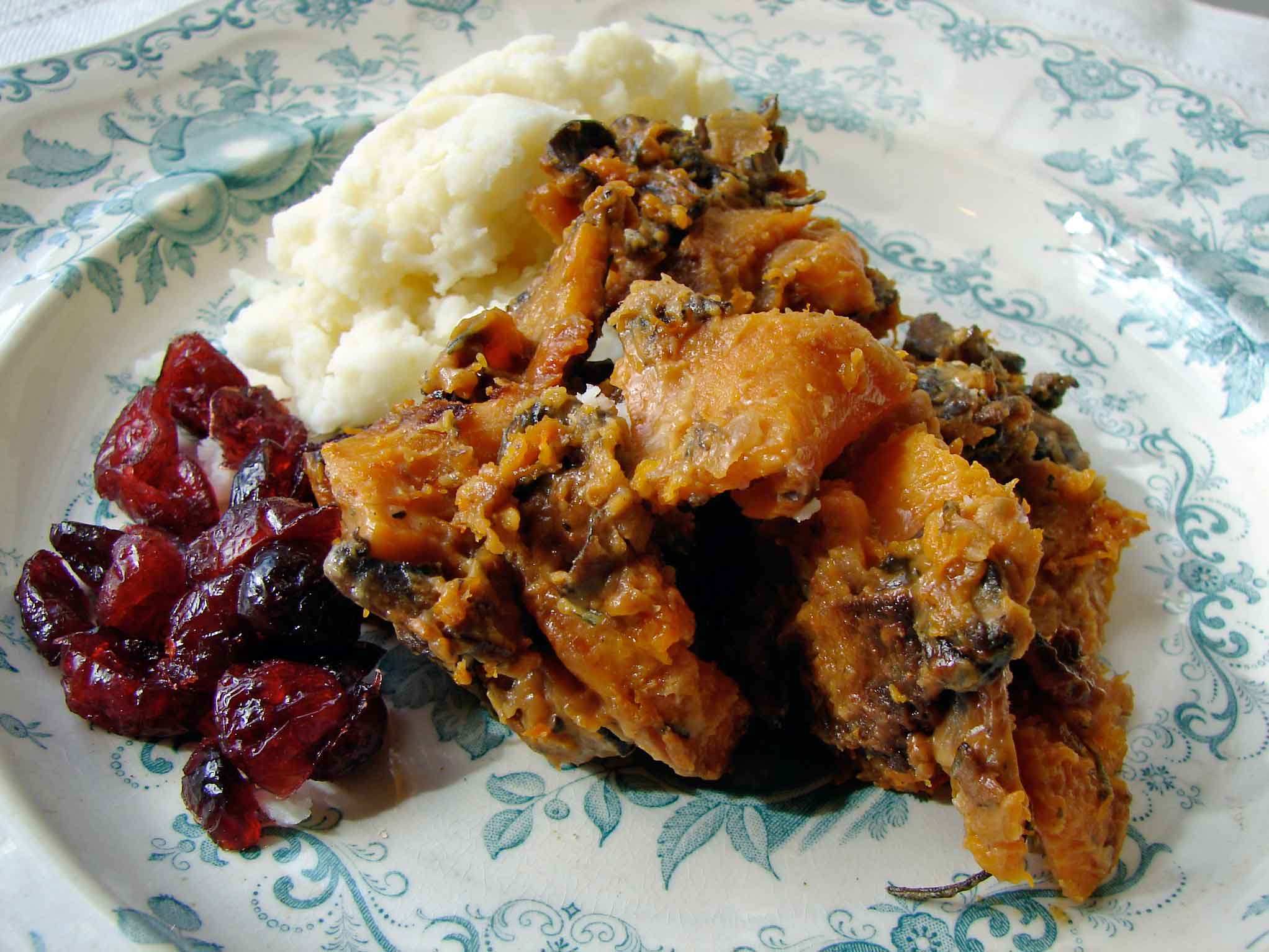
Roasted butternut with hendricks and gjetost cheese
“Thou shalt not kill” does not apply to murder of one’s own kind only, but to all living beings; and this Commandment was inscribed in the human breast long before it was proclaimed from Sinai. ~Leo Tolstoy
While we ourselves are the living graves of murdered beasts, how can we expect any ideal conditions on this earth? ~George Bernard Shaw
I did not become a vegetarian for my health, I did it for the health of the chickens. ~Isaac Bashevis Singer
Animals are my friends… and I don’t eat my friends. ~George Bernard Shaw
One farmer says to me, “You cannot live on vegetable food solely, for it furnishes nothing to make the bones with;” and so he religiously devotes a part of his day to supplying himself with the raw material of bones; walking all the while he talks behind his oxen, which, with vegetable-made bones, jerk him and his lumbering plow along in spite of every obstacle. ~Henry David Thoreau
The time will come when men such as I will look upon the murder of animals as they now look upon the murder of men.
Leonardo Da Vinci
The obligations of law and equity reach only to mankind; but kindness and beneficence should be extended to the creatures of every species and these will flow from the breast of a true man, as streams that issue from the living fountain.
Plutarch
And that’s all for now! On to this meal! Surely one of the strangest but tastiest I’ve made. I bought some gjetost cheese, as I’ve mentioned. I had read in the Guardian that this cheese could be used to thicken a Norwegian reindeer stew called Finnbiff. So I looked up a few recipes, and I decided to try it! I used thinly-sliced roasted butternut squash as a replacement for the reindeer meat. I roasted them mushrooms, too. Every recipe I saw called for Juniper berries. I didn’t have juniper berries, but I did have Hendrick’s gin, which is made with juniper berries! I added a big slosh of that, as well as a little bit of rosemary, because juniper berries are said to be a little piney. This whole meal was the most umami-ish thing I’ve ever eaten! It had a depth and sweetness that was lovely. Finnbiff is eaten with mashed potatoes and cranberries (well, lingonberries, originally, I think), so we had that, too. The mashed potatoes were perfect with the squash and mushrooms, as a nicely-textured, mild-flavored foil for their strong flavor.
Here’s Desmond Dekker with Wise Man.
 Yesterday was Nina Simone’s birthday. Today I want to write about her, but I don’t know where to begin. It’s hard to talk about something that you love as much as I love her music, it’s hard to talk about something that means so much to you. I suppose everybody is familiar with the autobiographical facts, so I’ll keep it brief. She was born Eunice Kathleen Waymon in Tryon, North Carolina in 1933. Her mother was a methodist preacher and a housemaid, her father was a handyman. From a very early age, she was determined to be a concert pianist. Her mother’s employer provided funds for piano lessons. After high school, she applied to the Curtis Institute, in Philadelphia, but was rejected. She moved to New York and studied at Juliard, supporting herself by playing piano in a bar, where she took the name Nina Simone to hide her profession from her mother. She was discovered, had a hit with I Loves You Porgy, and continued to record and play, jumping from one record company to another for most of the rest of her life. Her friendship with Lorraine Hansberry, Langston Hughes, James Baldwin and others helped to focus her fire, and she worked for civil rights with characteristic passion. She wrote the blistering song Mississippi Goddam (which has come to mind more than once this week!) in response the the murder of Medgar Evers and to the death of 4 black children after the bombing of a church. She eventually grew disillusioned in America, and moved abroad. She would live in Barbados, Liberia, the Netherlands, Switzerland, London, and finally the South of France, where she felt peaceful and free, and grew grapes, peaches, strawberries and raspberries. She was known to be temperamental, moody and volatile. She was a hypnotic performer, but an unpredictable one, and on more than one occasion she would berate the audience for talking. “My original plan was to be the first black concert pianist–not a singer–and it never occurred to me that I’d be playing to audiences that were talking and drinking and carrying on when I played the piano. So I felt that if they didn’t want to listen, they could go the hell home.” She defied labels, combining jazz, pop, blues, classical, gospel. She disliked the term “jazz,” which she saw as a way for white people to define black people, and she preferred to think of the genre as black classical music. Her voice is unmistakable and indefinable, deep, rich but light, raw and full of emotion, but with an odd, edgy coolness that cuts right to the most vulnerable part of you. She can take the sappiest song and make it speak to you about the human condition in such an intensely honest way that you feel she understands. She brings a magnetic dignity and gravity to everything she does, but she’s funny as hell, too, and light-hearted and surprising. After I’d had Isaac, Malcolm got very sick, and I was struggling with some poisonous combination of anxiety, postpartum depression and sleep deprivation. I felt down. I listened to Nina Simone sing Ooh Child, her voice full of compassion and gentle triumph, over and over, and I believed her, I believed things would get better. I knew that she’d been down, too, and she knew what she was talking about. “I feel what they feel. And people who listen to me know that, and it makes them feel like they’re not alone.” Langston Hughes, who wrote her song Backlash Blues wrote of Simone, “She is strange. So are the plays of Brendan Behan, Jean Genet and Bertolt Brecht. She is far out, and at the same time common. So are raw eggs in Worcestershire. She is different. So was Billie Holiday, St. Francis and John Donne. So is Mort Sahl, so is Ernie Banks. You either like her or you don’t. If you don’t, you won’t. If you do — wheee-ouuueu! You do!” Well that’s it! Whee-ouuuueu! She’s strange in a way that makes it good to be strange, for all of us to be strange, and in a way that feels so perfect and necessary that it almost seems normal. Or what normal should be – with that much inspiration, intelligence, intensity, wit, and passion. Nina travelled the world looking for freedom – freedom from oppression and greed, maybe freedom from her demons. In a remarkable performance of I Wish I Knew How it Feels to Be Free (which I’ve talked about before), she defines freedom as freedom from fear, as a new way of seeing, as a chance to be a “little less like me.” She’d learn to fly, and she’d look down and see herself, and she wouldn’t know herself – she’d have new hands, new vision. She tells us that the Bible says be transformed by the renewal of your mind. And her songs create a world with their intensely honest eccentricity, a world where you feel moved to your soul, and inspired to renew your mind, and be brave enough to see things anew, as they really are, or as they could be.
I’ve made a small playlist of some of my favorite songs. Including House of the Rising Sun, which she did before Dylan or the animals or Von Ronk; and Feeling Good, which is the best invocation of spring I know; and Nina’s Blues (two versions!) which is my favorite song of all. Beautiful, sad, and triumphant.
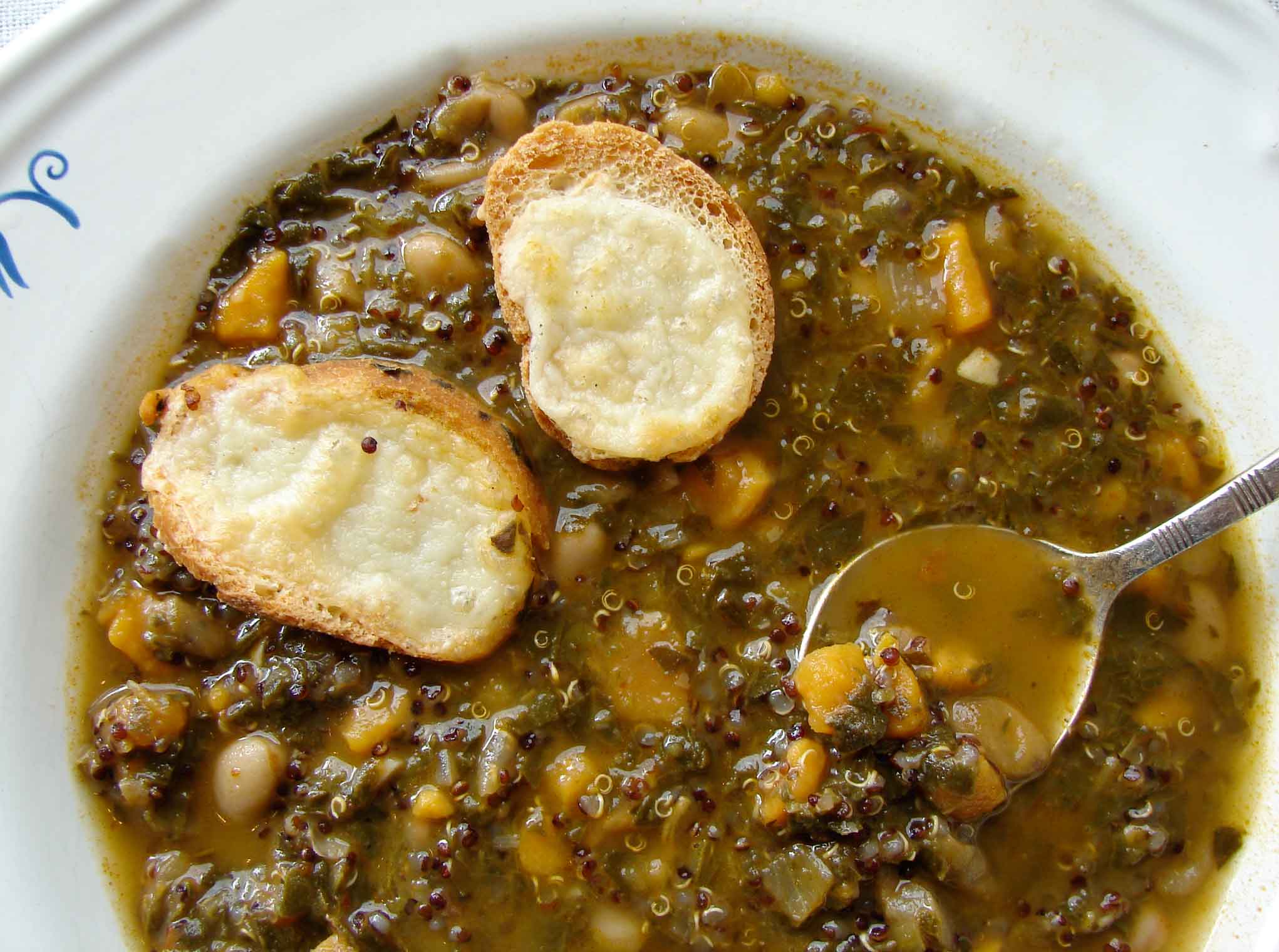
Oh yes, and here’s a recipe for red quinoa, chard, white beans and sweet potatoes. A nice combination of sweet, savory, earthy and bright. The boys liked it, which was all part of my evil plan, because I want them to eat more protein. I used great northern beans, because they’re nice and meaty, but you could use any manner of white beans you like. I made this like a thick stew, but you could add a bit more water and have a brothy soup, or add less water and have a nice side dish. We ate it with cheese toasts!
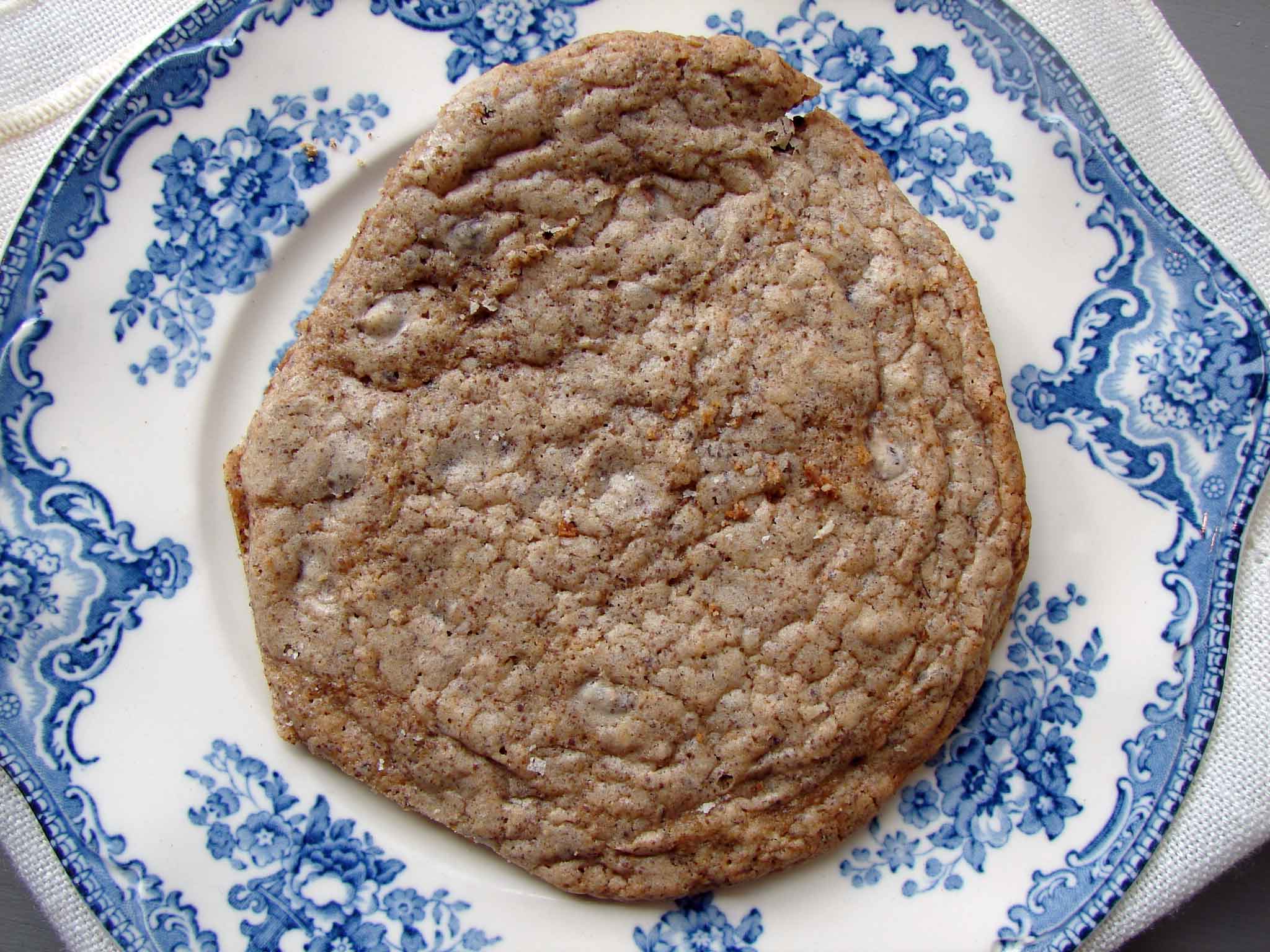
Almond, hazelnut chocolate cookie
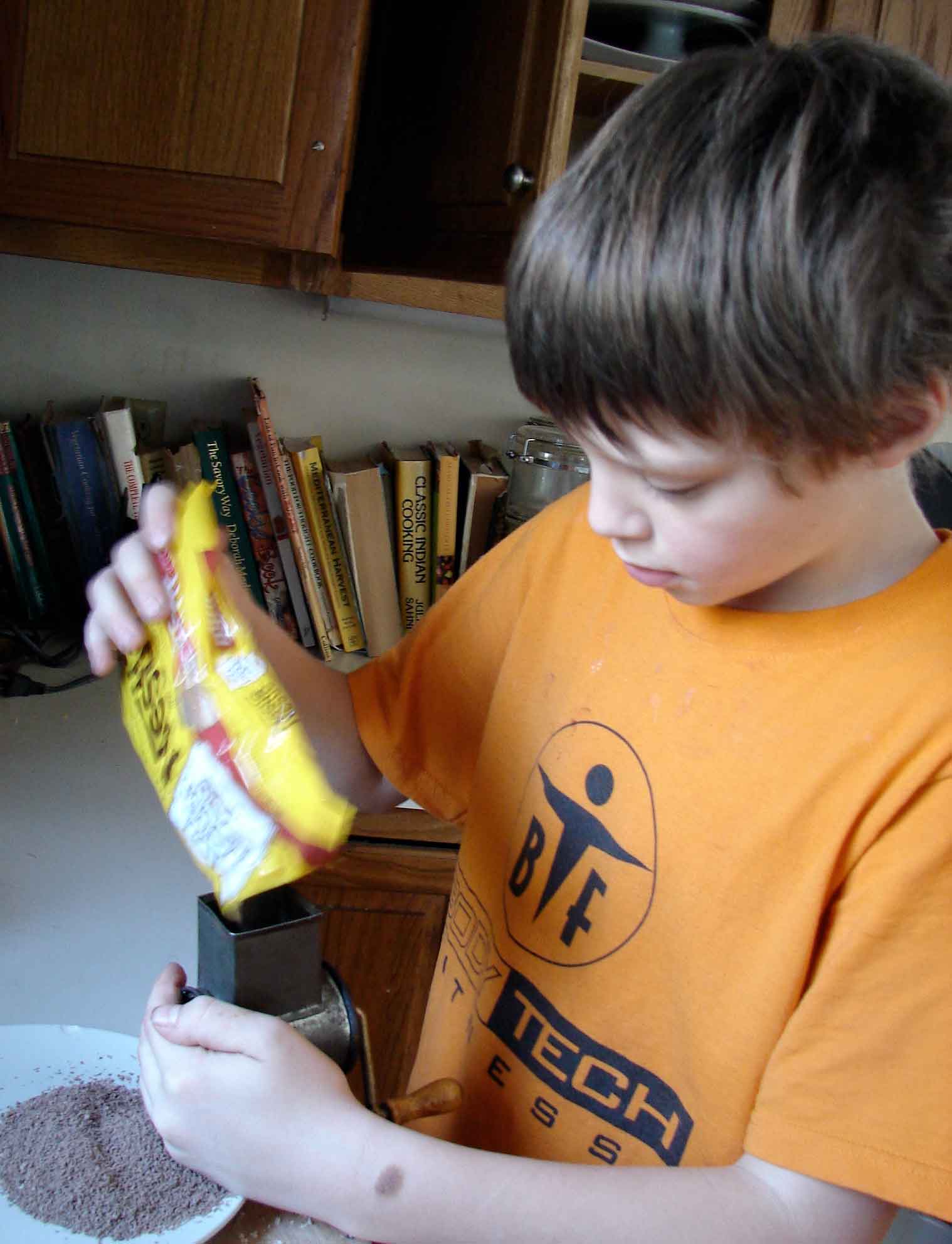 So he grated some almonds. And then he used his messer-ingenuity to devise a method of attaching the grater to a cutting board for more control. And then he grated hazelnuts. And then I said, ah yes! I remember it can be used for chocolate. So he grated chocolate.
 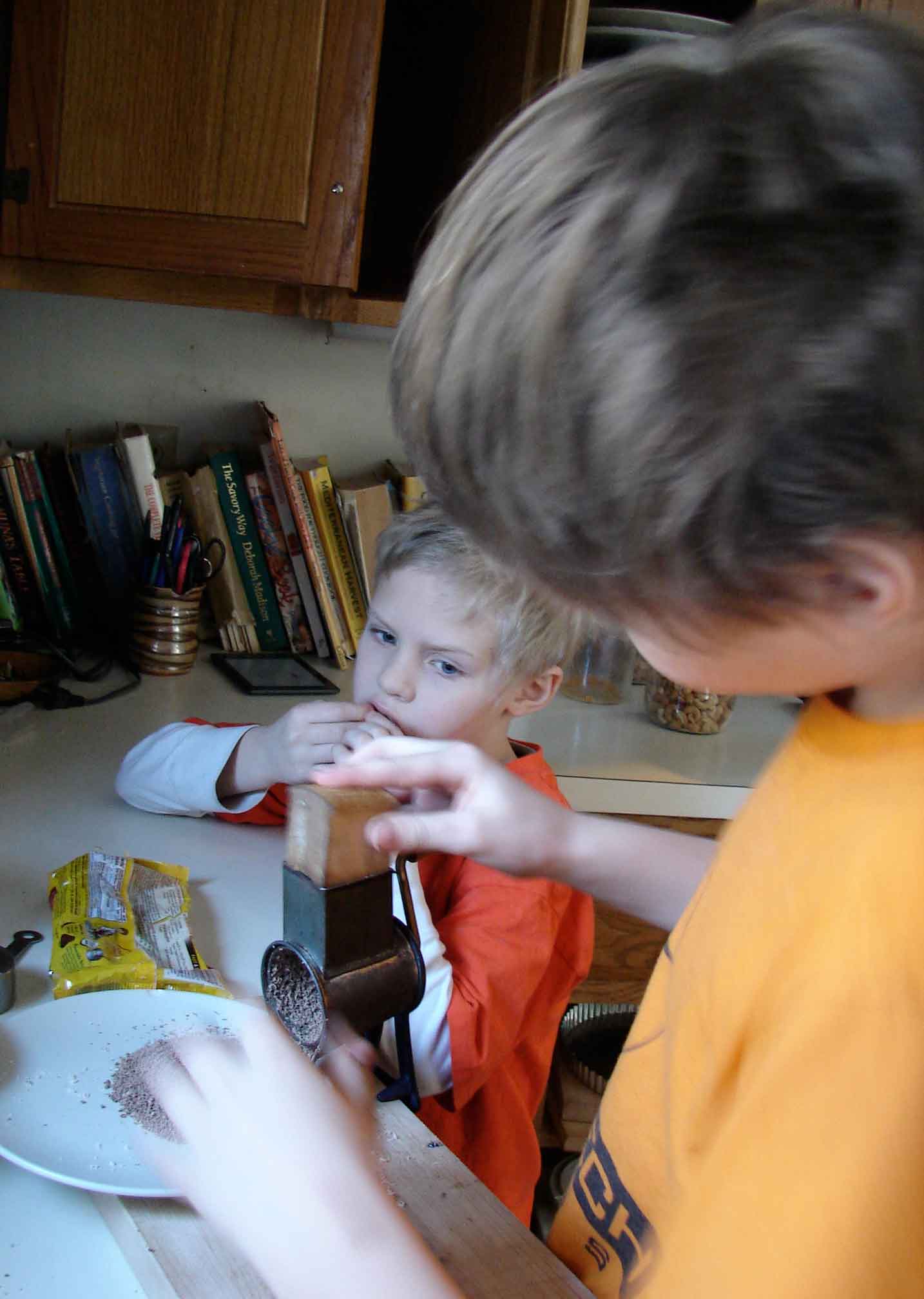 It was such good fun! And he created mounds of lovely soft, fine nuts and chocolate. We decided to make cookies. Or cakes. Cookie-cakes! And as we sat eating them after dinner, I realized that it was Monday, not Sunday, so the homework we planned to put off because it wasn’t due till Tuesday was due the next day…and that brings us to “pro-social others.” As part of Malcolm’s drug awareness and education class, we do worksheets together as a family. (I should start by saying that I’m glad he’s taking the class and I’m fine with the group activity-quality of it all! Although I don’t see why they can’t just have an assembly with a taciturn policeman showing slides of OD corpses and cocaine-ravaged septums, like when we were young. You know it worked because nobody in my high school ever did drugs.) The language of the worksheets is often very jargonny and difficult to wade through for meaning, but they’re so earnestly well-intentioned that it’s hard to be critical. And some of the scenarios are a little advanced for a ten-year-old, (I can’t imagine him shopping by himself at a mall any time soon!) but that’s okay, they’re starting early. But this phrase, pro-social others, it really bothers me!! I’m no fan of the redundantly, sales-gimmicky, self-help-y word “proactive,” but pro-social seems to have more meaning than that. Apparently it came about in the 80s (did anything good come out of the 80s?) as an antonym for anti-social. It means altruistic, other-oriented, helpful, intended to create social acceptance and friendship. Lord, I love the idea of altruism and helpfulness. I’d like to imagine and encourage such a society, I’d like Malcolm to join the ranks of happy friendly people. But “pro-social others” sounds so robotic, so unfriendly and inhuman. It sounds like a phrase invented to fool us into forgetting the real words. It sounds as if you can somehow control who your children become friends with, or order them perfect, socially accepted friends from a catalog. I genuinely hope that Malcolm doesn’t ever do drugs. He’s so curious and fearless that I worry for him, sometimes. I hope he’s strong enough in himself to resist peer pressure. But surely part of that is to encourage a little bit of rebel in him, to applaud the ability to question convention and to make the decision to be anti-social when the society you find yourself in is unkind or dangerous. It’s funny how everything these days seems to boil down to my wish for my boys. I love to see them with their friends, walking slowly, heads inclined toward each other as they discuss some serious mystery; leaping happily in the air on the street corner before school, pumping their arms and trying to get trucks to honk. Of course my wish for them is to have many friends, and to have interesting friends, and to have good friends. I hope they’ll be strong enough to help friends out of trouble rather than follow them into it. I hope they’ll be able to side-step pettiness and meanness. I hope they’ll experiment with paint or pastry dough instead of hard drugs. I hope they never have an aching empty hole they feel they can’t fill. As we sat discussing the worksheet, and I told Malcolm I hope he won’t ever do drugs, he pointed to my glass of wine, with a smile. “You drive me to it lad!” I yelled! No I didn’t, of course I didn’t. I said, “well, it’s social, and legal, and in moderation.” And he said he hoped that he could have a glass of wine with us someday. And I do, too! I look forward to that as well. To making a dinner with Malcolm, who is always the most fun to cook with, and having a glass of wine, and hearing about his life, wherever in the world it takes him, and hearing about the people that he loves and that love him!
Here’s a little playlist Malcolm put together that we’ve been listening incessantly to lately. It will always remind me of these days! (Sweary language alert!!)
Continue reading

Farro pilaf and fried butterbeans
So! I bought a can of butter beans, because they looked nice. I decided to fry them up in olive oil with some herbs, and then mix them with tomatoes at the end. So they’d stay somewhat firm – almost crispy on the edges. And I made a sort of pilaf with farro, carrots and peas to go with them. I seasoned the farro with a pre-mixed red zatar, but if you don’t have such a thing, any combination of sesame seeds, fennel seeds, sumac, cumin or coriander would work. Or just some thyme and oregano. Actually, you can’t go wrong with any sort of seasoning that you like! We ate these all together with some little boiled potatoes tossed in butter, and it was all very good together. Lovely flavors and textures. And I am now a big fan of butter beans! We had quite a bit of everything leftover the next day, so I mushed it all together to make burgers, which I fried up in a pan, topped with a slice of cheese, and ate on a bun. Yum.
Here’s Yo La Tengo, with The Point of It
And here’s a wonderful scene from Home Movies explaining the importance of points.
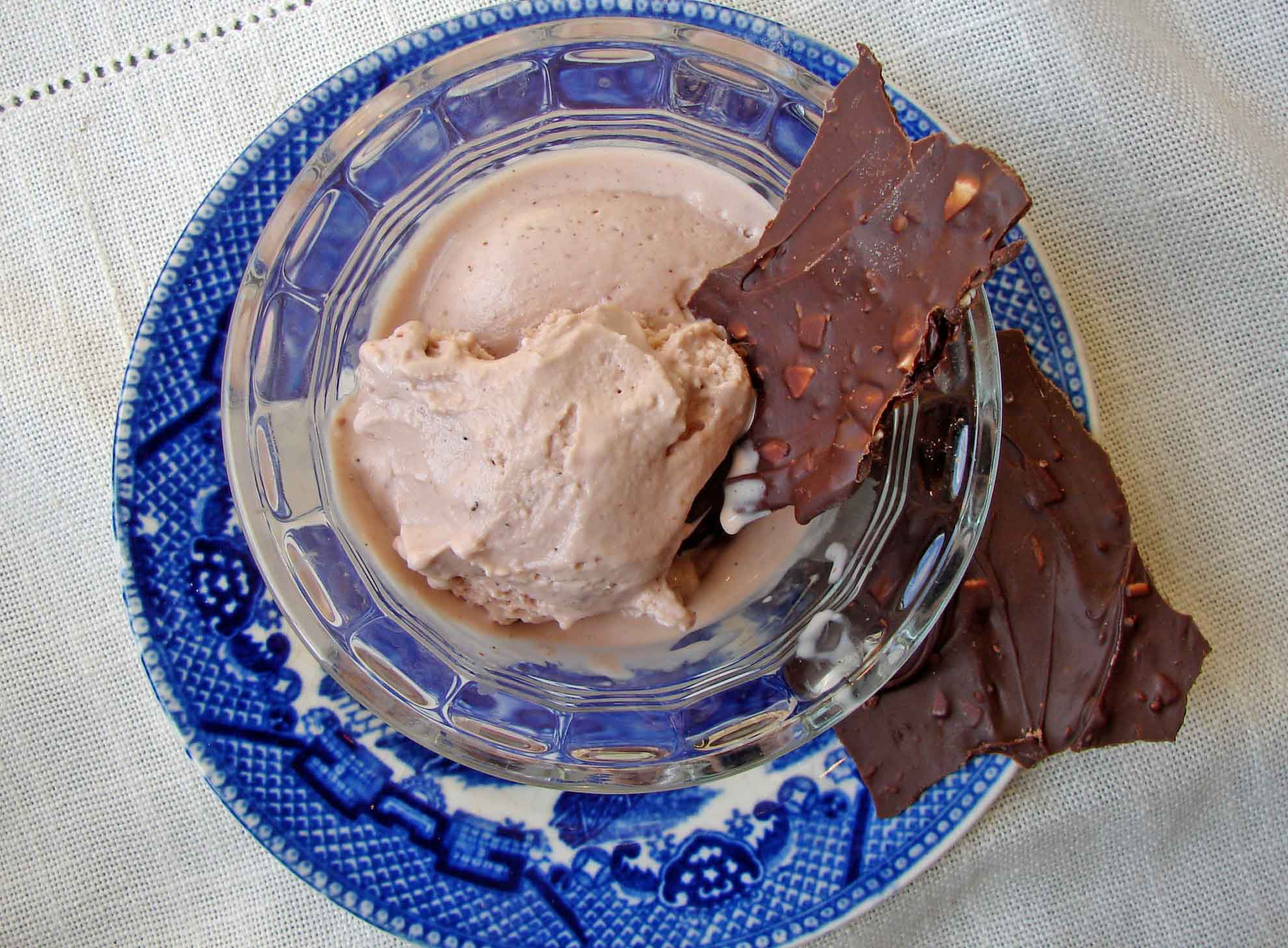
Port wine cherry ice cream
This ice cream was sooooo good! We ate it on valentine’s day, and it was a special dessert just for David and me. I’m not sure the port wine cooked off, because I felt pleasantly giddy after a few bowls! Basically, this is a port wine zabiglione (I love that word!) with some spiciness from cinnamon and black pepper, and some fruitiness from a few spoonfuls of good cherry jam. It’s mixed with lightly whipped cream, and frozen in an ice cream maker of any make or variety. And I served it with “bark” made of bittersweet chocolate, almonds, dried tart cherries, cayenne and cinnamon – crunchy, soft and kicky, all at once, nicely in concert and contrast with the flavor and texture of the ice cream. You could easily add anything you like to the bark (nuts, bolts, needles and pins…) any kind of dried fruit, any kind of nut, candied ginger, lemon peel, nutmeg, cardamom, coconut, whatever suits your fancy!
Here’s Louis Armstrong with Basin Street Blues. Why? Because Basin sounds like Bazin, of course! And because Louis Armstrong seems like another kind and generous spirit.
Continue reading
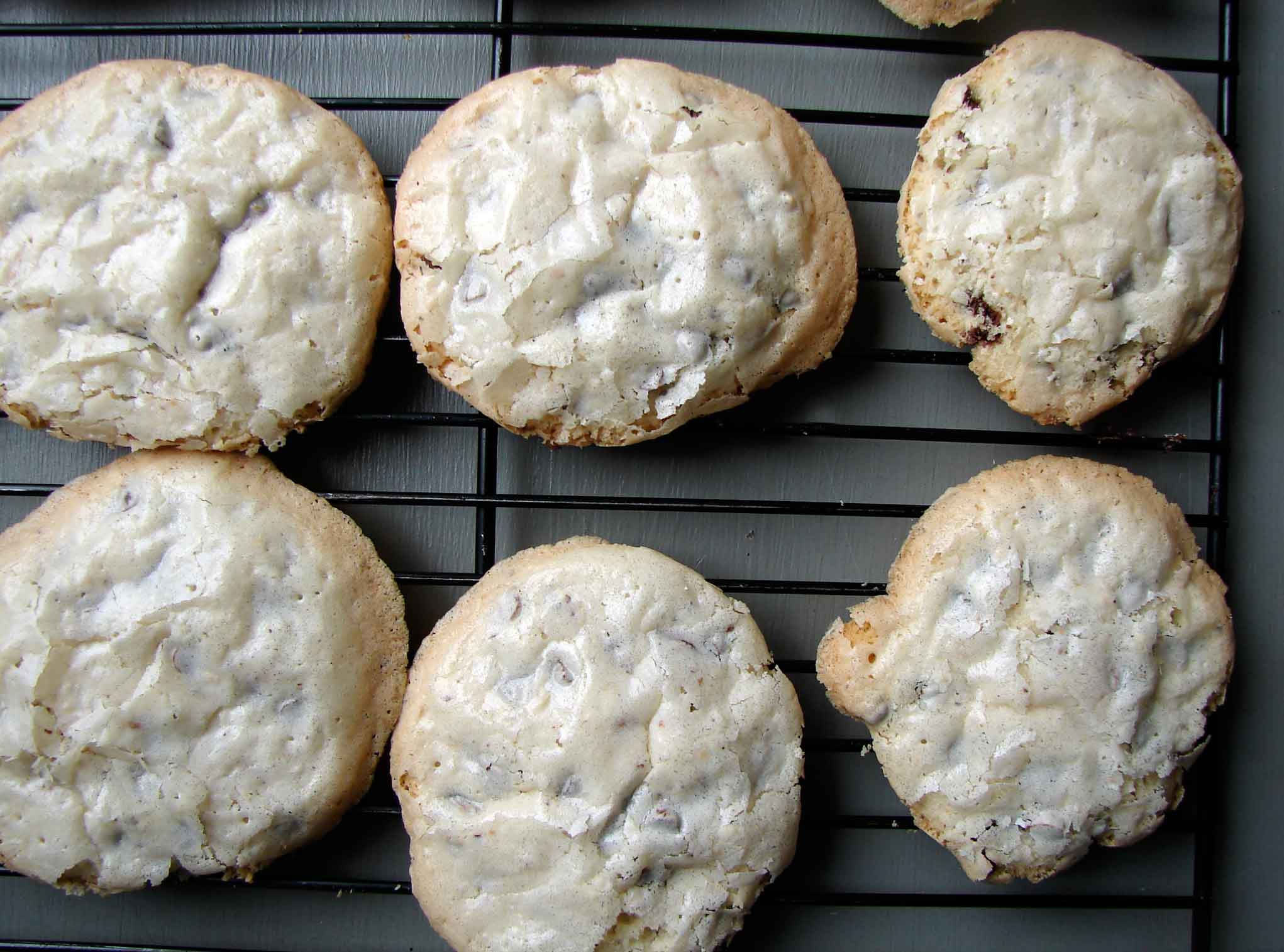
chocolate chip hazelnut cookies

Here’s Bob Dylan with Love Minus Zero/No Limit. She knows there’s no success like failure.
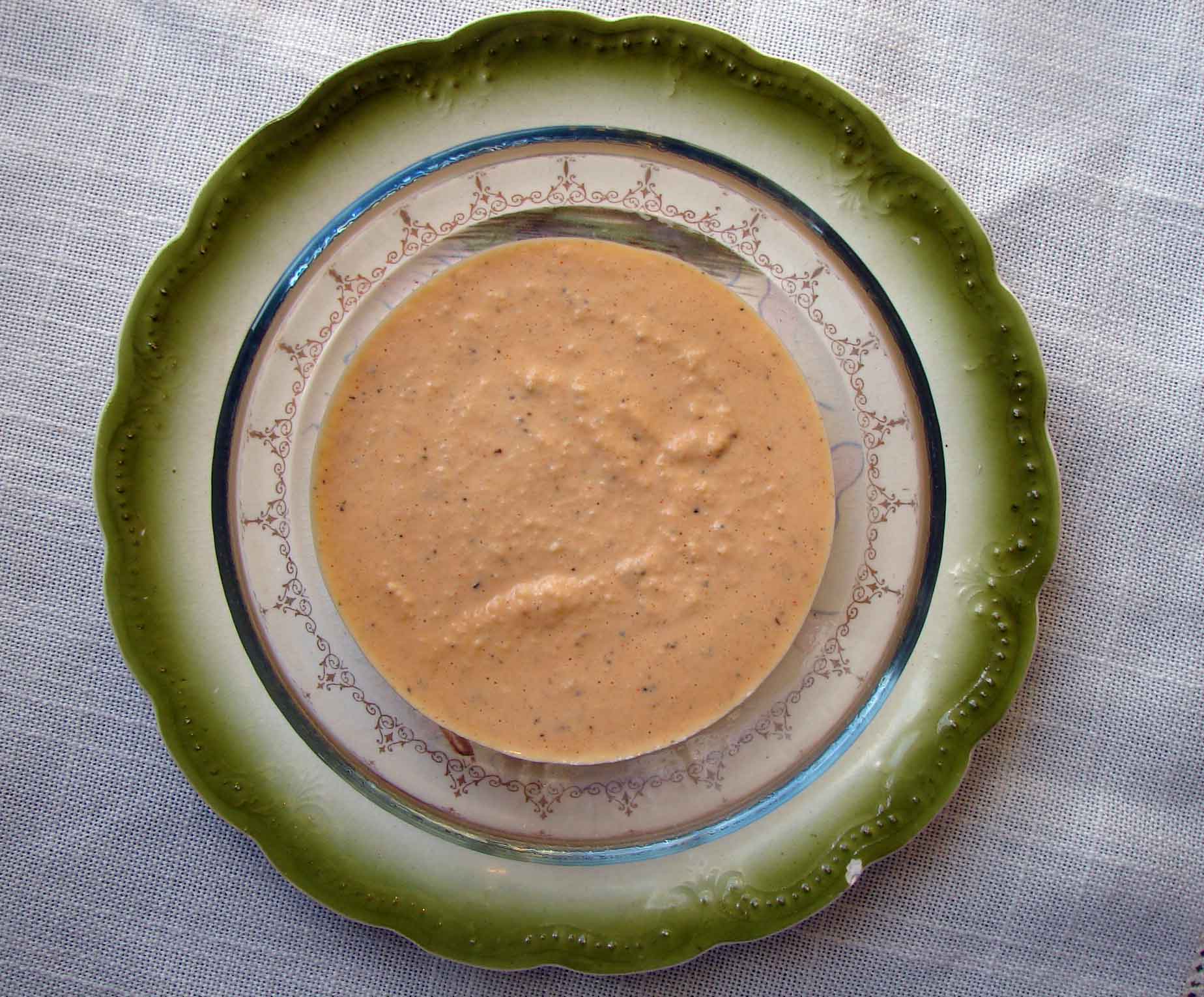
Vegan dressing/dip
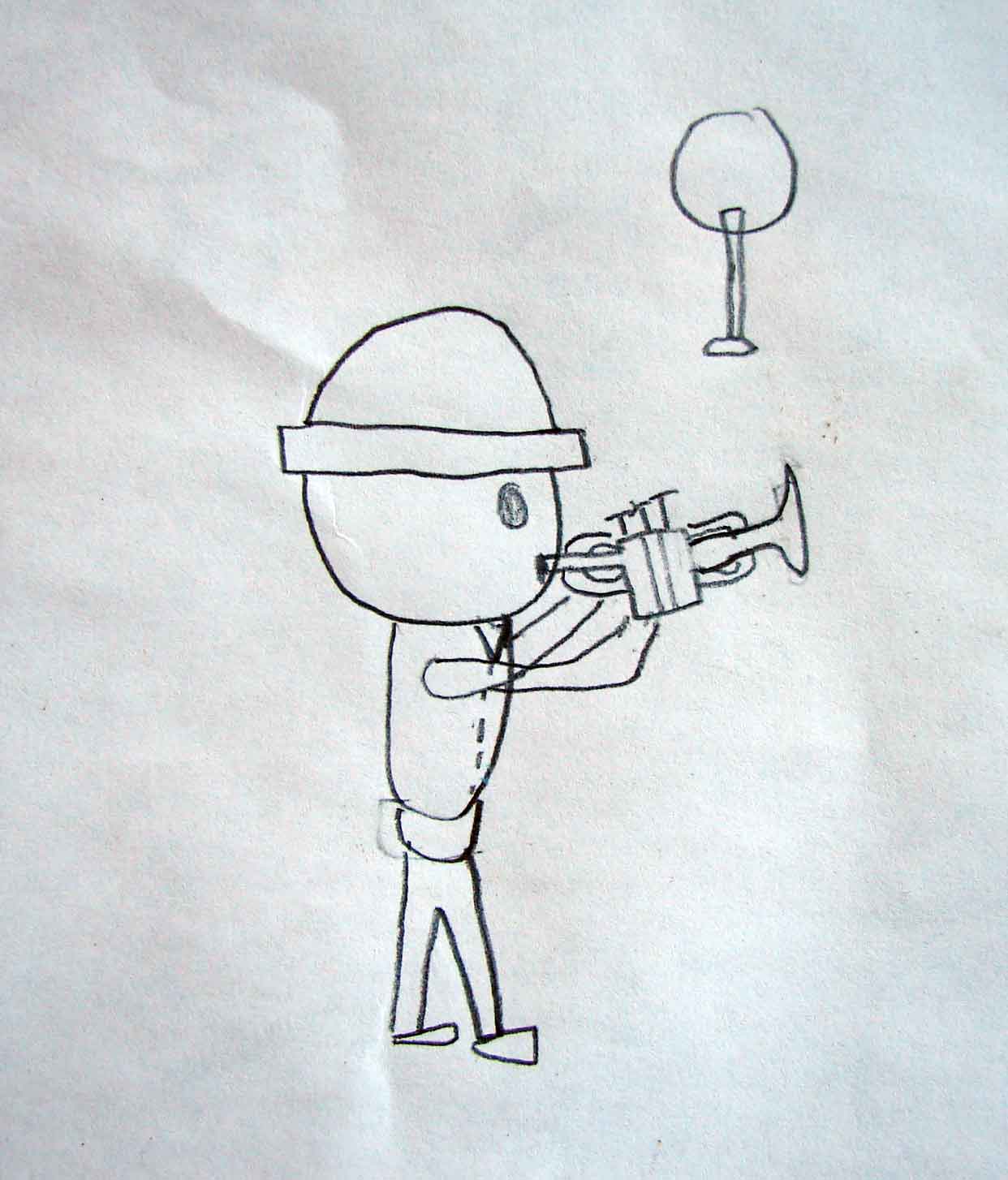
Malcolm’s self portrait playing his trumpet
Here’s a link to the children’s voices playlist…I’ll make it collaborative, so feel free to add what you like! I haven’t gotten very far with it and I need some help!

Blueberry meyer lemon cake
This is a simple cake. A cake you can have with a cup of coffee in the morning, a cup of tea in the afternoon, or a glass of wine after dinner. We always have something like this around the house! Some little sweet thing in the cupboard. It’s easy to make, and nice to eat. Meyer lemon zest, when baked, has a lovely piney flavor. Combined with the sweet tart citrussy kick of the juice, a few spoonfuls of marmalade, and a handful of fresh blueberries, this was a pleasantly juicy cake, with an unusual flavor.
Here’s Billie Holiday with Too Marvelous for Words.
 Out of the Ordinary