Tarragon and walnut pesto

tarragon and walnut pesto

tarragon and walnut pesto

Hey, kids! It’s Saturday storytelling time! As I’m sure you recall, this means that along with your daily recipe and song, you’ll get a story, too! Each week, everybody in our small salon of auteurs (well, generally me and one or two other people) writes a story based on a found photograph. If you’d like to write a story about it, and I hope you do, send me a copy and I’ll post it here, or send me a link if you have somewhere of your own to post it. Who are these men? Where are they? What are they reading?
27306_10151345374324589_1225531051_n

I bought a bunch of tarragon. I put some in a tart, and I had a lot left. I love tarragon, but I can’t put it in every single meal! So I decided to use it all in this pesto. We ate it with flatbread, beans and greens. You could toss it with pasta, or spread it on a pizza, or even serve it as a dip with chips or crackers. Strangely, Malcolm has said in the past that he doesn’t like tarragon, but he loved this, an gobbled it right down. It is very tarragon-y. This is vegan, but if you wanted it to be more like a traditional pesto, you could add parmesan, if you liked.

Here’s Duppy Conqueror by Bob Marley. It’s about ghosts, you know.
Continue reading

Curry-spiced chickpeas and broccoli rabe

Curried broccoli rabe and chickpeas

Curried broccoli rabe and chickpeas

When I was little I believed that there was something in the earth–in the trees and water and grass and dirt; call it spirit (for lack of a better word) or magic (for lack of a better word). Obviously, the animals can hear it and understand it–you can see that in their eyes and their quiet, graceful movements. But I believed that humans, in all their arrogance, didn’t acknowledge that it was there, or were frightened of it, and so they became unable to sense it. And then we bound it up and strangled it, with roads and buildings, and made it sick with chemicals and garbage. Yeah. I was a weird kid. David came across this quote, and of course I love it to pieces…

    One of the deepest and strangest of all human moods is the mood which will suddenly strike us perhaps in a garden at night, or deep in sloping meadows, the feeling that every flower and leaf has just uttered something stupendously direct and important, and that we have by a prodigy of imbecility not heard or understood it. There is a certain poetic value, and that a genuine one, in this sense of having missed the full meaning of things. There is beauty, not only in wisdom, but in this dazed and dramatic ignorance.

    – G.K. Chesterton, Robert Browning, 1903

(He found it on a website called Futility Closet) First of all, I love the phrase “prodigy of imbecility,” and I plan to incorporate it into my day-to-day dialogue, post-haste! Secondly, I’m obviously not the only weird kid in the room! I too, think there is beauty in dazed ignorance, and I find great cheer in that idea. Sometimes we comprehend something best when we don’t focus on it, when we see it glancingly from one side, when it flies off with a rustle of bright feathers into the shifting leaves. The less we can capture and hold something, the more beautiful it is. The more something grows and changes and decays, the more beautiful it is. And the more beautiful something is, the less we can imitate it or make a replica of it, because in freezing it we destroy it. I was reading about Yasujiro Ozu, a while back, and I came across the phrase mono no aware, coined by 18th century Japanese scholar Motoori Norinaga. According to my feeble understanding of the concept, this is a sort of sighing recognition of the transient beauty of all things–an idea that everything is more beautiful at the beginning and the ending, as it grows and as it decays, as it changes. And this understanding extends to all things that live and die, however inconsequential they seem. They have beauty worth noticing–they’re made beautiful because they’re noticed. And this feeling, this poignance, washes gently over a person, almost without their effort…it’s the feeling itself that is beautiful and important, but it can’t be studied or captured in words. Whereas in Western art, we try to define aesthetics, and seek symmetry or embellishment, and try to capture beauty in marble or oils, according to mano no aware (as I understand it) the beauty is in sensing imperfection, irregularity or decay, in feeling the sweetness and the sadness of it. Surely this is “one of the deepest and strangest of human moods.” This is the graceful, ever-changing, incomprehensible voice of the garden at night and the sloping meadows, which we love because we can never fathom it, we can only soak it in with dazed ignorance.

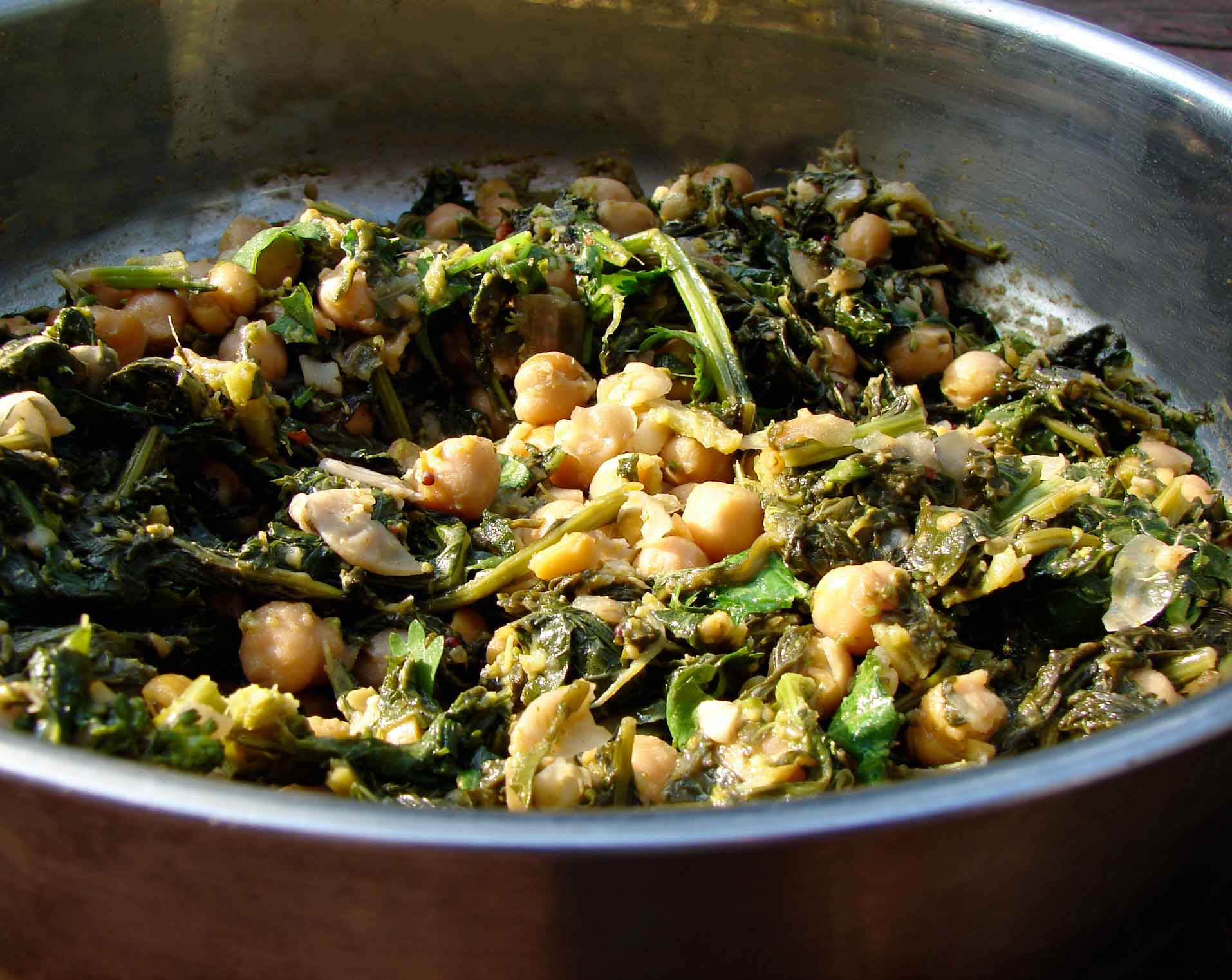
I love broccoli rabe, with its tenderness, and its bitterness, and its strong pleasant flavor. I’m the only one in my family that craves it. David will enjoy it from time to time, and the boys won’t go near it, so I feel like it’s the most indulgent thing that I cook. I make it because I want to eat it. This particular preparation was a sort of compromise. The boys do like curried chickpeas, so I served this with basmati rice, and picked out the chickpeas for them, and saved all the tender greens for myself!!

Here’s REM with Gardening at Night.

Continue reading

Spinach and goat’s cheese tart with roasted peppers and tomatoes

Spinach and goat cheese tart with roasted peppers and tomatoes

Spinach and goat cheese tart with roasted peppers and tomatoes

I have this strange feeling lately, from time-to-time, that I can’t complete a sentence. The words will get stuck somewhere between my brain and my tongue. I’ll wait patiently and powerlessly for somebody to hit me on the side of the head and unjam the process, but whomever I’m addressing will just give me a pitying but bewildered look and go about their business. Why is this happening? I don’t know! It’s senility, probably, but it feels oddly adolescent. I believe I spent my teenage years desperately trying to get my strange thoughts into the world, and then desperately trying to recall them and hide them away once I had, mortified by their strangeness and lack of consequence. And then as I got older I became much chattier, because I simultaneously realized that some of the best thoughts are strange thoughts, and that nobody gives a hoot about what you say, anyway, because they’re not listening half the time and they certainly won’t remember. There’s no point in agonizing regretfully over some stupid thing you said when nobody heard it in the first place. Thus followed a long period of time when I never stopped talking. I turned into a veritable warbling vireo. But with maturity comes increased self-doubt and self-censorship, and the new realization that it doesn’t matter all that much anyway what you say, because nobody is listening half the time so why bother? And you understand that it’s good to listen to other people, and that you have to stop talking for a minute in order to do that. Last night I was lying next to a pukey Isaac as he drifted off to sleep and listening to his odd, sleepy thoughts. He pondered the difference between funny ha ha and funny strange. It bothers him that people use “funny” to mean strange, because it’s not really funny at all. And it suddenly made perfect sense to me that the truth is funny strange, and the best way to express it is with the humorous kind of funny, as comedians and court jesters have known for centuries. And the best way to do this is to be fearless and to plough right on through even if the words come out garbled. And we may both have fallen asleep before I articulated all of this, but that’s okay, because my smart, honest, eloquent Isaac is every kind of funny, and he knows it already. So if I’m talking to you and I seem to get stuck half-way through a sentence, give me a gentle tap on the head, and we’ll see if my nonsense was worth hearing in the first place.

Roasted pepper and tomato tart

Roasted pepper and tomato tart

My friend Diane commissioned a dish for mother’s day. She wanted a vegetable side dish, and somehow I got the impression she wanted it to be substantial enough that any vegetarian guests could call it a meal. So, of course, I made a tart. It’s loaded with vegetables, and with colors and flavors. I had to make it a couple of days early, so I roasted the peppers and tomatoes, and dried them out in the oven a bit, so that they wouldn’t turn the tart too mushy. I think it worked well! (I made one for us, too, to be sure it was tasty, and I’m glad to report that it was!)

Here’s Belle and Sebastian’s Get Me Away from Here I’m Dying because he says, “Oh, that wasn’t what I meant to say at all,” which is such a lovely thing to hear in a pop song!

Continue reading

Perciatelli pasta with brothy asparagus, roasted pepper & olive sauce

Asparagus and red pepper sauce for pasta

Asparagus and red pepper sauce for pasta

Well, I survived another mother’s day lunch shift as a waitress. Nine hours with no break at all, literally not one second to sit down. I’ll pause for a moment so that you can shed a small tear for my plight. Aw, it’s not so bad. This is a fairly typical shift for the restaurant business, and it certainly suits me better than a job at which you can’t do anything but sit! I like the non-stop pace, I like being active, I enjoy talking to people. But it was tiring, and by the end of the day I stood in the middle of the restaurant yelling, “I’M A MOTHER TOO, DAMMIT! SOMEBODY HAD BETTER BUY ME A GLASS OF WINE RIGHT NOW!!” And when I walked Isaac to school this morning, and joined a group of parents talking about their mother’s day celebrations, I said, “I spent nine hours serving mothers lunch, and let me tell you, mothers are horrible people.” Heh heh, I can say that, because I am a mother! I’m kidding once again, of course. Mothers are wonderful people, each and every one of them. But mother’s day is widely recognized in the restaurant business as a particularly difficult day. You walk away from it bewildered by just now needy everybody is. Why is this? You ask yourself, as you walk home on tired feet. Why do people seem so needy on mother’s day? Maybe it’s because mothers are as needy as everyone else, but we have to suppress that neediness 364 days of the year, and on the one day we’re told by the media and the greeting card companies that somebody should take care of us, we’re going to squeeze every drop of sympathy and attention we can get. Because mothering, though it is a gratifying and demanding job, is not a very well-rewarded job in the usual ways that jobs are considered rewarding. We have no pay, no awards, no performance-reviews, no gold stars, no bonuses, no free gifts, no paid vacations, no benefits, no gala luncheons. We do have people who don’t listen when we talk to them, who keep us up all night when they’re sick, who expect us to feed them even when we’re sick, who act embarrassed when we talk to them in front of their friends, who shudder visibly when we try to feed them delicious foods that we’ve worked on for hours. And most of the time, that’s fine. Isaac has had some sort of stomach virus the last few days, and I haven’t gotten a lot of sleep, but I’ve been thinking that it’s sort of perfect for mother’s day weekend, because it makes you realize how good it feels to be needed by someone, to actually make somebody feel better if you rub their back or cuddle with them, to love someone so much that you’re always glad to hear them call your name, even at 3 in the morning (and 4 in the morning, and 6 in the morning…). So if a mother wants to fuss a little when her family takes her out, and be sure the meal is exactly as she likes it, and that her water has precisely the right number of ice cubes and lemon slices, more power to her!! If she wants to send something back because it’s not just the way she ordered it, that’s fine–she should have the perfect meal. If she wants proof that somebody is actually listening to her, even if it’s a stranger in an apron and stupid white shoes, I’m okay with that.
For mother’s day Isaac gave me a hand-print flower glued into a flowerpot made of brown construction paper. It was quite a big flowerpot, and I believe he was supposed to fill the whole thing with a poem. In his usual wise and simple way, he wrote, “I love my mom because she’s my mom.” And that sort of says it all. It defies rational expectation, but it’s true–we love our moms because they’re our moms. Because in reality all moms aren’t wonderful people, and no mom is always wonderful, but children have a remarkably elastic and forgiving sort of love, and most of the time, that’s reward enough.

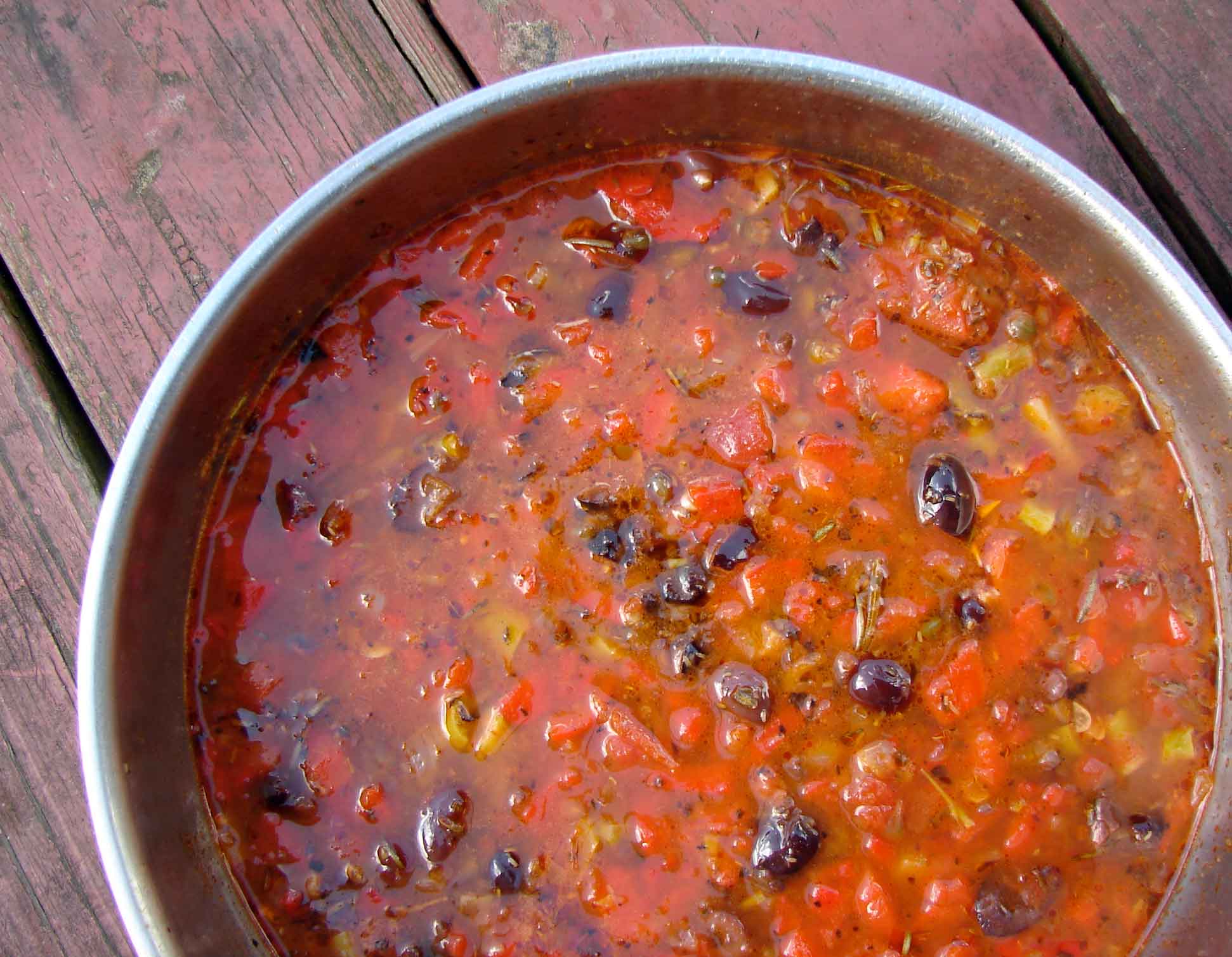
Both of my boys actually liked this meal! I made long tube-shaped pasta called perciatelli. Like spaghetti, but with a hole in it. I wanted to make a brothy sauce to go with it, so I made this concoction of asparagus, roasted red peppers, olives and capers. It’s got white wine and lots of herbs, and a little bit of tomatoes. The boys used the pasta like a straw to suck up the broth, but they ate all the vegetables as well, miracle of miracles.

Here’s Goody Mob with Soul Food

Looking to be one of dem days
When Momma ain’t cooking
Everybody’s out hunting with tha family
Looking for a little soul food

Continue reading

Apple oatmeal chocolate chip spice cake with caramel frosting

apple chocolate chip cake with caramel topping

apple chocolate chip cake with caramel topping

Happy mother’s day to all the mothers of the world, but in particular, of course, to my own mom, Jane. My mom is kind and compassionate and curious. She knows more about more things than most people ever will, and she’s fun to talk about them with, because she really thinks, and she really cares. She’s one of the bravest people I know. She’s travelled the world, but she has the warmest and most welcoming home. She’s got the most toasty and comforting hands, imbued with huge doses of mom magic. She’s amazingly supportive, and she’s probably the only one who reads every stupid blog post, every story, every tedious essay. She laughs at my jokes, and she always has, even when they were silly and childish, even when they’re still silly and childish. She really loves what she loves with a sincerity that’s hard to find these days. She’s funny and cheerful and thoughtful. She’s inspiring and inspired. She’s a good friend.

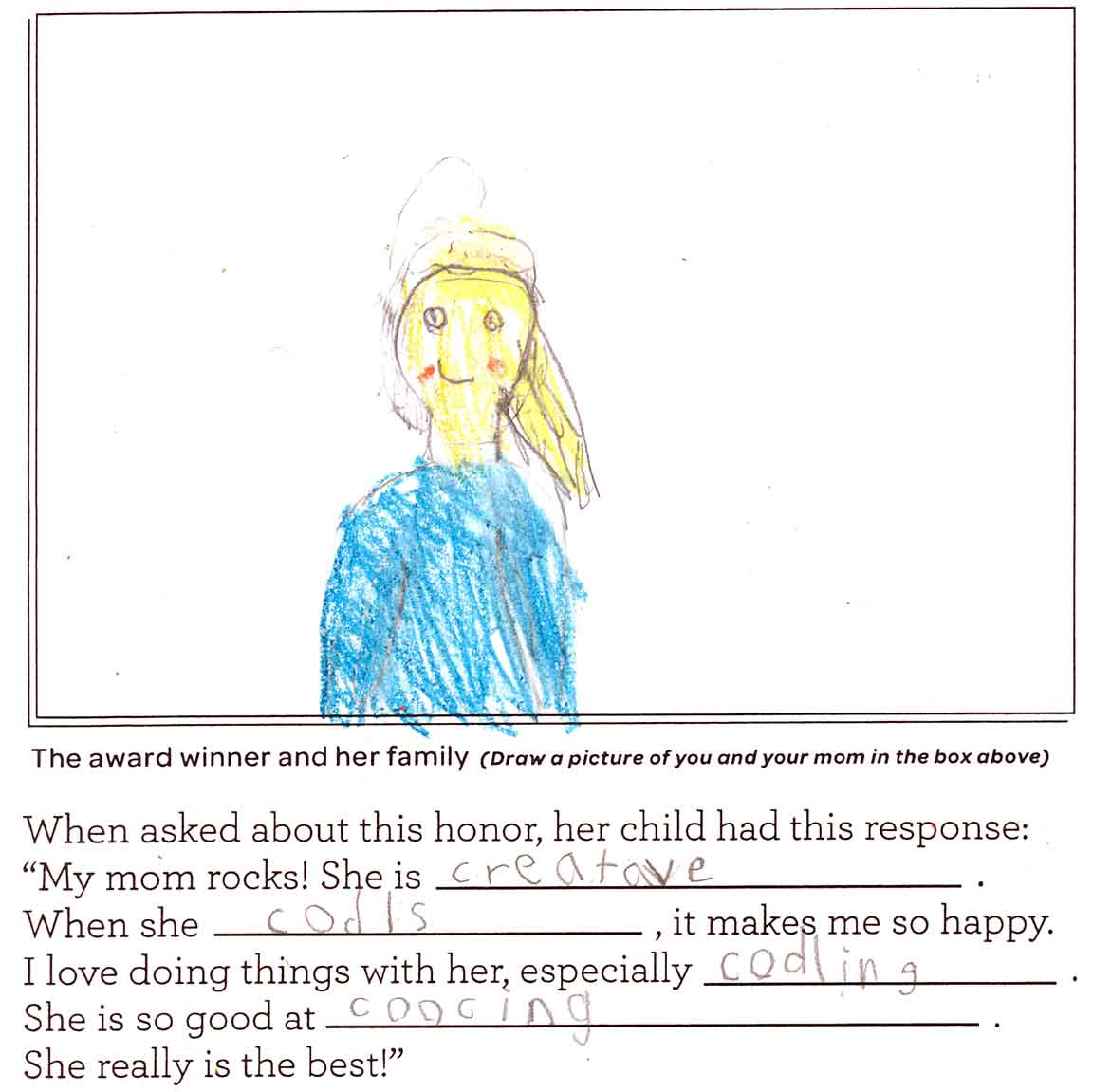
Here’s a picture Isaac drew of me for mother’s day, and his endorsement of my cuddling skills.
momsday

Apple caramel cake

Apple caramel cake

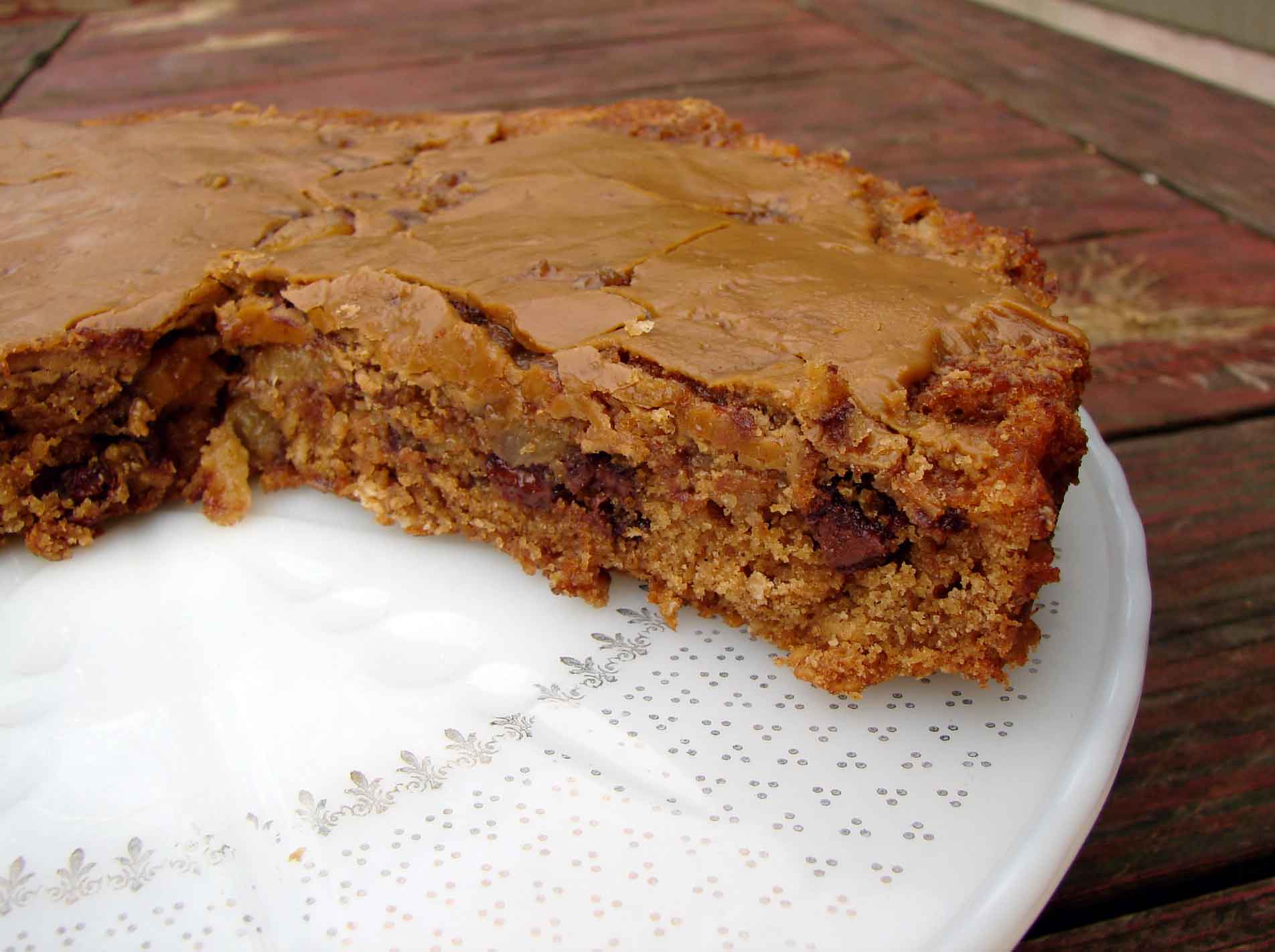
And here’s a recipe for apple oatmeal cake with bittersweet chocolate chips and a caramel topping! It was really nice–soft and spicy and comforting. I got the recipe for the caramel from my old mennonite cookbook. You cook it, and then you beat it till it’s creamy, and it really works! It seized up a bit on the cake, but I went over it with a knife dipped in warm water and that helped to smooth it out.

And today’s Sunday interactive playlist is on the subject of…MOTHERS! and GRANDMOTHERS!! Suprise!

Here’s the link, feel free to add what you like, or leave a comment and I’ll add it for you tomorrow, once I’ve recovered from my mother’s day shift at work.

Continue reading

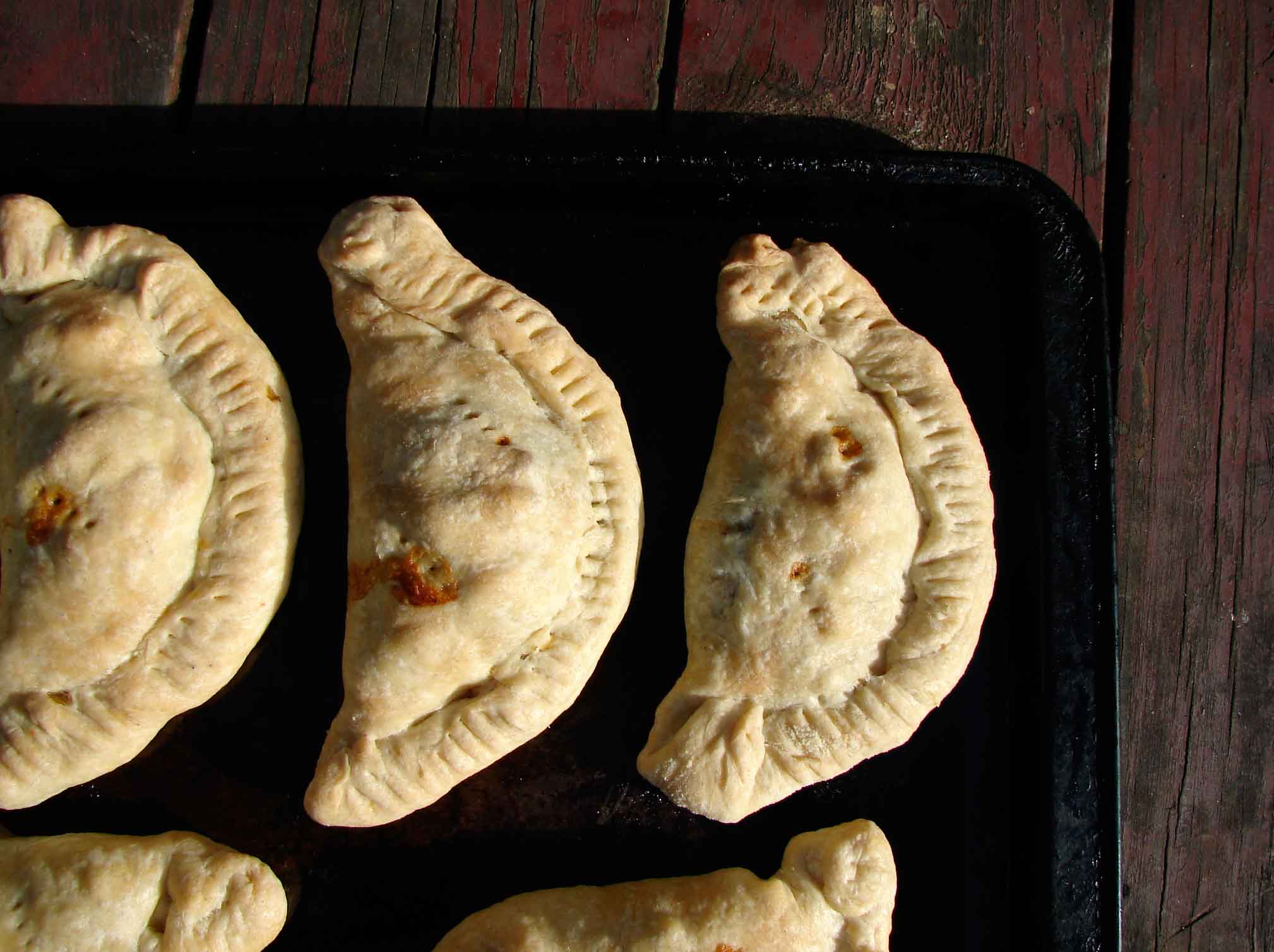
Spring empanadas with spelt flour, asparagus, arugula and white beans

Spring empanadas with asparagus arugula and white beans

Spring empanadas with asparagus arugula and white beans

Hey, kids! It’s Saturday storytelling time! As I’m sure you recall, this means that along with your daily recipe and song, you’ll get a story, too! Each week, everybody in our small salon of auteurs (well, generally me and one or two other people) writes a story based on a found photograph. Why is this man sleeping on the floor? Where is he, and what has he been up to? If you’d like to write a story about it, and I hope you do, send me a copy and I’ll post it here, or send me a link if you have somewhere of your own to post it.
430007_10151358718584589_1868399670_n
My friend asked me to make something with spelt flour, and this is what I came up with. They’re not gluten free, but they’re easier to digest for people that have a gluten intolerance. And spelt flour is a pleasure to work with!! These would work easily as well with regular flour. I thought they were nice–fresh and comforting. Perfect for this slow spring we’ve been entertaining.

Here’s Mississippi John Hurt with Make me a Pallet on Your Floor.

Continue reading

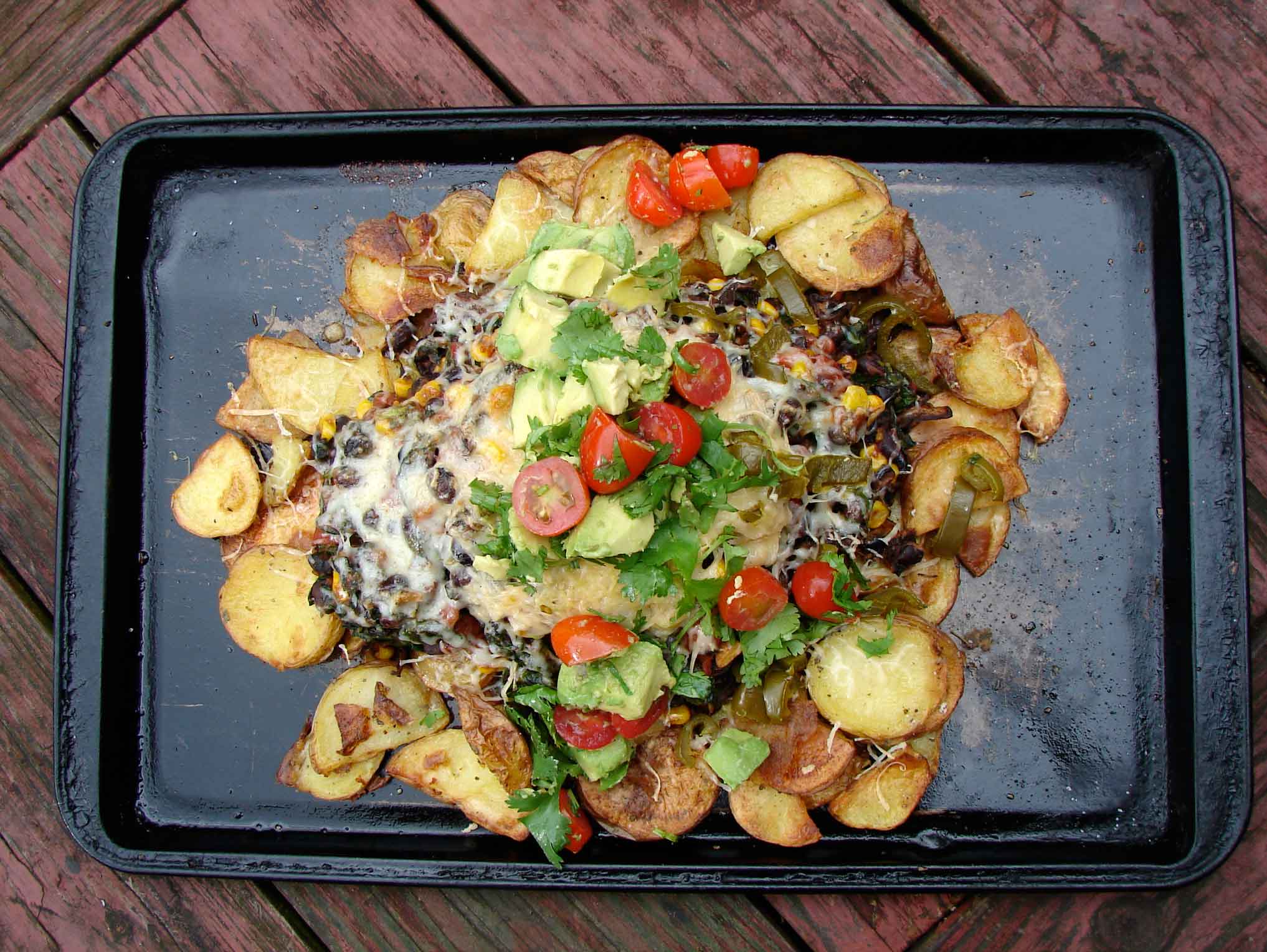
Thin crispy roasted potatoes piled with chipotle black beans, spinach, smoked gouda, jalapenoes, and guacamole

Thin crispy potatoes with black beans and guacamole

Thin crispy potatoes with black beans and guacamole

“Why is it okay to be scruffy when you’re real?” This is a question Isaac had to answer for class, and in solidarity with the lad, I’m going to try to answer it myself, here. I should start by saying that I haven’t read the book, so if it seems like I’m desperately flailing to sound relevant (to anything), that’s because I am. I would posit, however, that this is the nature of all communication after first grade, and thereby acceptable for the matter at hand. So. “Why is it okay to be scruffy when you’re real?” I believe that not only is it “okay” to be scruffy when you’re real, but that scruffiness is an indicator of reality. And not just an indicator of realness as opposed to imaginariness, but also of realness in contrast to fakeness. Real meaning “actual” as well as real meaning “genuine.” Anything that is too perfect or symmetrical seems plastic and artificial. Something may be perfect in your dreams or your imagination, but when you’re awake and viewing the real thing, you notice flaws and oddities. And these are the aspects that make you know that the object is yours, and these are the things that make the object beautiful in your eyes. Any slight imperfection makes an individual more interesting and appealing, makes it stand out from all others, makes it, in fact, individual. It is hard to love something that is exactly like every other such something in the world. It is hard to even recognize that it is yours. If every car in the world was the same, you might identify yours because of a scrape on the fender or a dent in the bumper. This scruffiness helps you to recognize that the car is yours, and the very state of being yours makes it more appealing than every more perfect car in the world. If every child in the world was identical in mind and body, you might feel a vague affection for all of them. But it’s the child you’ve nursed when they were ill, whose snotty nose you’ve wiped, whose strange thoughts you’ve listened to, that you love with a fierce passion. It’s the child whose dirty face and muddy fingernails you love, because it means they’ve had a good day playing in the yard or climbing trees. Because another definition of “real” is alive, animate, as in “a real boy.” And when you’re alive you’re subject to messiness, illness, and aging. But these things, as manifestations of life and liveliness, become poignant and beautiful. Scruffiness is a sign of change. It’s a sign of growing and living, of adventures and mishaps, of stories to tell. These are the things that make a creature interesting and alive. Mint-condition perfection can only be achieved through stasis and isolation, and few things in life are actually better for being static and alone. Scruffiness is okay when you’re real, because it is both symptom and source of a real love, such as can only be experienced by real people in real time. Scruffiness is vulnerability, it is showing yourself to another when your guard is down and your mask is off, and this rawness and openness is the only possible path to intimacy. Scruffiness is banal and day-to-day. It is tedious and unspecial, but when you share this ordinariness with someone, you become more real, your relationship becomes real. You delight in the habits that you share, and you slowly grow and change together, becoming more real and alive and wrinkled and eccentric and lovely with each passing year. By heaven, you’ll think your love more rare and real than any based on false illusions of perfection. And this is why it is more than okay to be scruffy when you’re real.
Thin crispy potatoes with chipotle black beans and guacamole

Thin crispy potatoes with chipotle black beans and guacamole

This was a yummy dinner!! I roasted some thinly sliced potatoes with sage and olive oil. Then I piled them high with roasted mushrooms, black beans, corn and spinach sauteed with chipotle puree, smoked gouda, sharp cheddar, pickled jalapenos and fresh, chunky guacamole made of avocado, tomato, cilantro and lime juice. Smoky, earthy, fresh, satisfying. It was fun to eat this! We ate it like nachos. The boys stuffed the black bean mixture in some soft tortillas.

Here’s Linton Kwesi Johnson with Reality Poem.

Continue reading

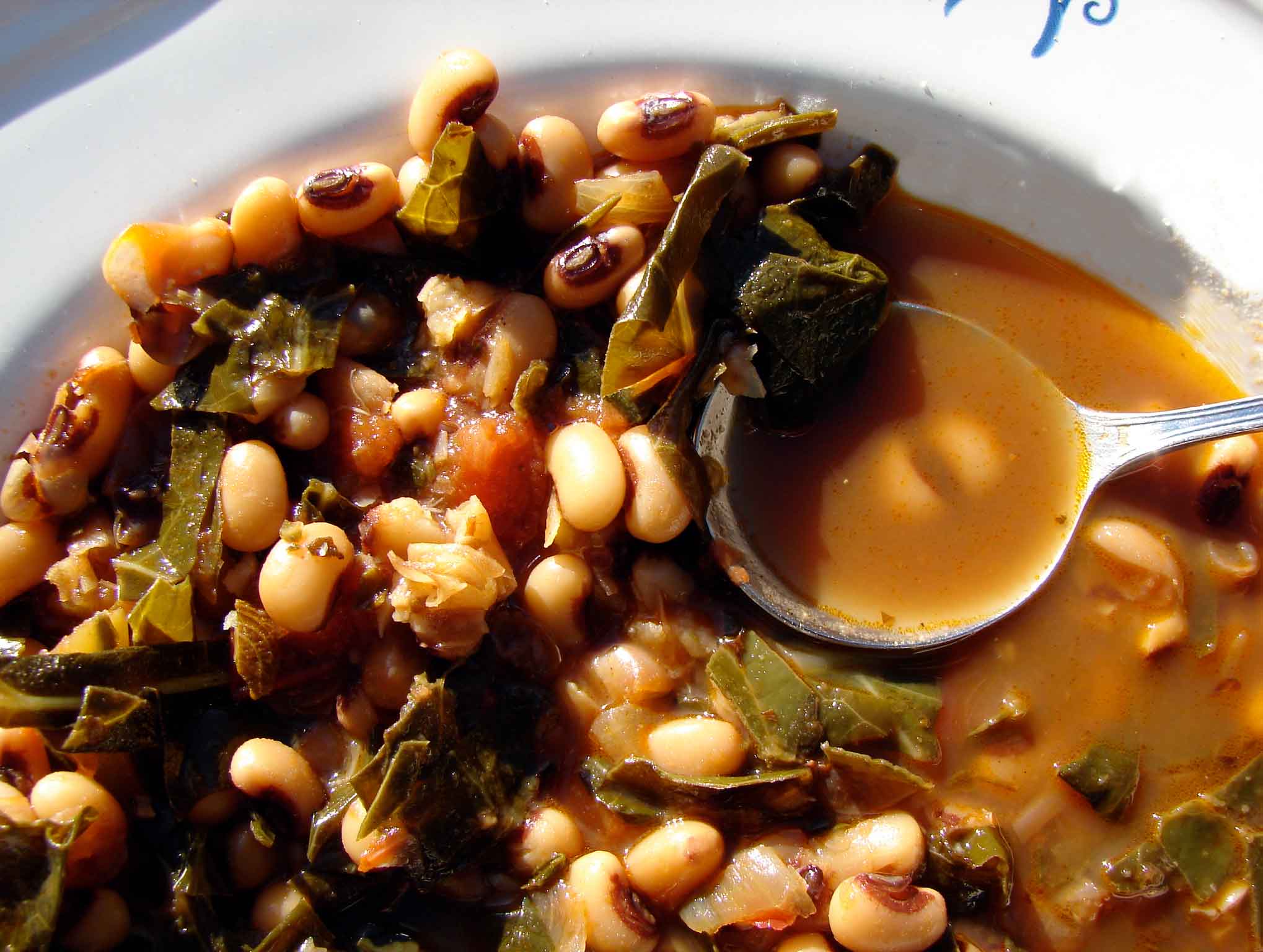
Collards and black eyed peas in spicy smoky broth

Collards and black-eyed peas

Collards and black-eyed peas

I’ve been talking so much, this week, here on The Ordinary’s virtual pages. I feel like I’ve had thoughts spilling out of my head messily all over this little blank box. So today we’ll have a bit of quiet, and we’ll return to a video project I’ve been working at off and on for years. Mostly off, I have to admit, but it’s something I want to get back to, and why not now? Why not here? I’ve mentioned the whole idea before, here at The Ordinary, so I’ll briefly plagiarize myself now. I’m a huge fan of stillness in films, and quiet moments. Whether they last the whole film long, or they form a small pocket in a louder busier film. A few years ago I submitted a series of short videos to an online gallery run by the remarkable Peter Ferko, a New York artist. The series was called Now:Here:This, and it involved art made in a moment (or a few moments) by people all over the world at roughly the same space in time. I started making short, static videos. I gave myself some rules…they had to last about a minute. I couldn’t change the frame. The sound would be whatever naturally occurred for that minute. I focused on leaves, or water, or shadows, even dirty dishes in the sink. The sound generally involved my children yelling for me and trying to get my attention, which was an idea that I liked a lot. It captured my life at the time (and to this day.) I became very taken with making the videos – there was nothing brilliant about them, but I liked the way that shooting them made me think about how long a minute lasts, how hard it is to be quiet and still, how my life sounded, how pretty small things could be. We like to have a story, so any small change in the action or the sound becomes significant. The idea wasn’t inspired by Yasujiro Ozu, it’s something I’d started long before I saw my first Ozu film, but it’s reminiscent of a technique that he uses in his beautiful still “pillow shots” between scenes. They’re shots down hallways, of empty rooms, along an alleyway. They’re not entirely static – the camera is still, but there’s movement of light, or of people walking by, clocks ticking, curtains blowing. You sense that the story is playing itself out somewhere nearby. The shots are so cool, so quiet but not silent. I find them incredibly compelling. And then Ozu went and stole the idea from me! I’d like to stop and look at my house, for moments at a time, from down a corridor, when nothing is happening. Of course it wouldn’t be quiet and clean and cool, like in Ozu’s films. It would be a warm messy muddle.

Yesterday morning, as I’ve already told you, we had a thunderstorm. The weather had been mixed and moody for days, in the way that you feel inside your head. I had a lot to do, but I took a moment to sit on the couch with Clio, and listen to the rain, and think about ichneumon wasps, as I’ve also already told you.

You can hear the rain and the thunder. You can hear the cars go by, which has its own sort of suspenseful build-up of sound. You can catch a glimpse of the cool wet world outside of my curtain. You see the legos and CDs that need putting away. And you can see me breathing, because I was holding the camera on my belly, which is an idea that I like…it’s marking time, and it makes the film feel alive. And that’s all I’m going to say about that, because it’s totally cheating to tell you anything about it, it’s against all the rules.

These smoky spicy sweet collards and black-eyed peas in a very brothy sauce went with the smoky cheesy bread I shared yesterday, much in the same way that this video goes with everything I wrote yesterday. They’re simultaneous. We ate them at the same time! I made the black-eyed peas from dried, which was fun. I cooked the peas and the collards at the same time, so that the cooking water becomes the broth for the dish. The smokiness comes from black cardamom, which is such an odd looking thing, with such a mysteriously delicious flavor. We also have pepper flakes and ginger for zing and pomegranate molasses for sweet tartness, Tamari for the umami, and a bit of brown sugar for molasses-y sweetness. A nice warm meal for a chilly rainy spring day!

Here’s Fats Dominoes completely lovely song It Keeps Rainin’

Continue reading

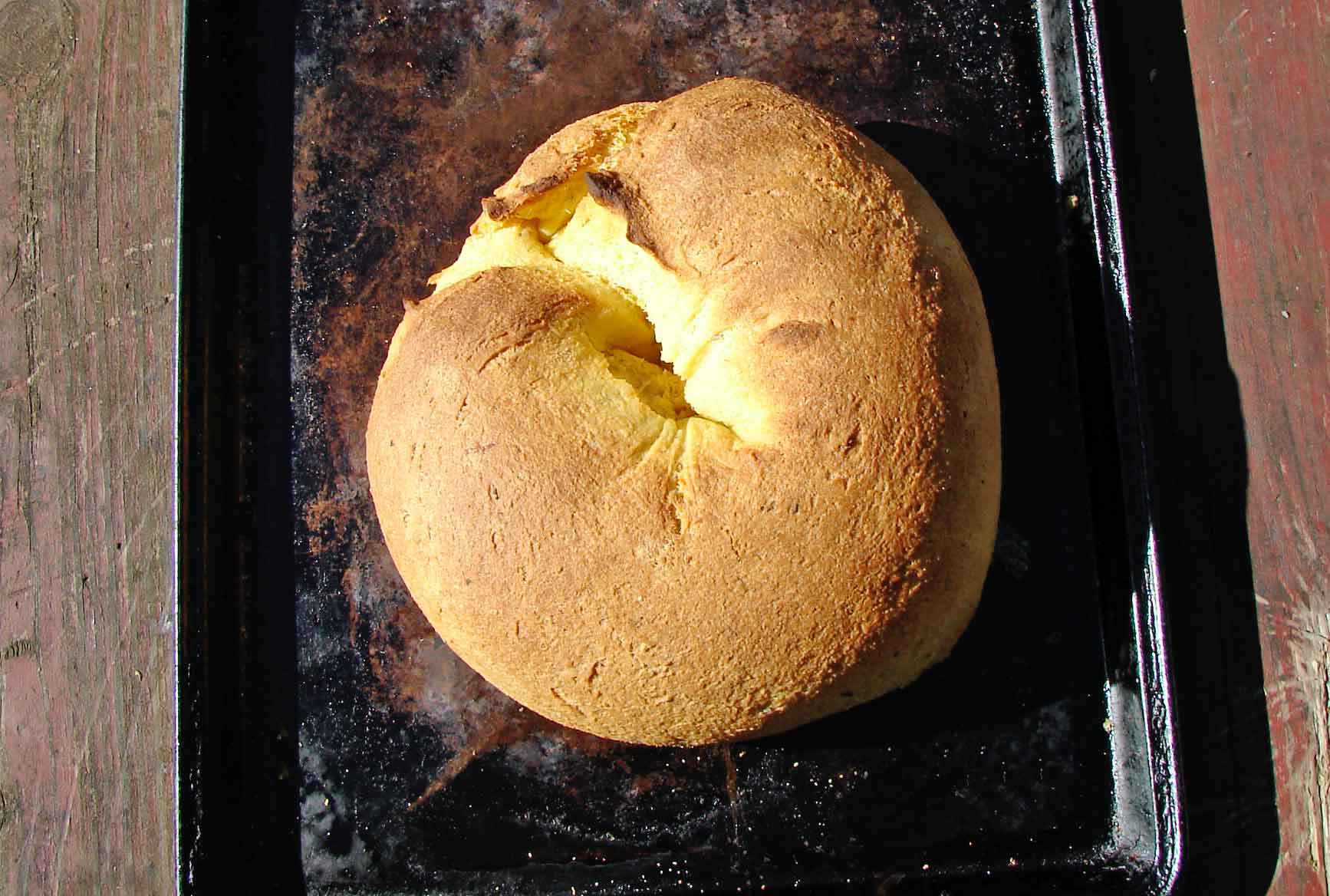
Smoky spicy cornmeal cheese bread

Cheesy smoky yeasted cornbread

Cheesy smoky yeasted cornbread

We had a gloomy, stormy morning. I sat on the couch with Clio listening to the rain and thunder and the cars going by like waves. I thought about ichneumon wasps and the man in Cleveland that held three women hostage for a decade. I thought about neighborhoods and people going about their business, and people being kind to one another.

    ‘The grisliness and apparent cruelty (at least, from a human perspective) of Ichneumonidae larval cannibalism troubled philosophers, naturalists, and theologians in the 19th century, who found the practice inconsistent with the notion of a world created by a loving and benevolent God. Charles Darwin found the example of the Ichneumonidae so troubling, it contributed to his increasing doubts about the nature and existence of a Creator. In an 1860 letter to the American naturalist Asa Gray, Darwin wrote:
    “I own that I cannot see as plainly as others do, and as I should wish to do, evidence of design and beneficence on all sides of us. There seems to me too much misery in the world. I cannot persuade myself that a beneficent and omnipotent God would have designedly created the Ichneumonidae with the express intention of their feeding within the living bodies of Caterpillars, or that a cat should play with mice.”‘

I can’t think of any perspective by which to judge an ichneumon wasp that doesn’t seem cruel, unless there’s an ichneumon deity, in which case we’re all in trouble! It’s a struggle, in the face of inexplicable cruelty, to make sense of things! It’s hard to understand a pattern or a purpose that includes this senseless suffering. I realize all of this is probably inappropriate for a light-hearted recipe blog, but since I’ve started I hope you won’t mind if I careen into a brief and bumpy discussion of my heart-felt beliefs. I believe that there’s a force that we don’t understand that’s bigger than all of us–call it god, if you like. I believe in souls and spirits and a million other things that we don’t understand and can’t explain. I believe that there is a force that wants things to grow and live–in springtime it’s easy to believe this, as the world around us is glowing and green and hopeful. I believe that this is a benevolent force, in as much as our words can be used to describe something so complicated and inexplicable. I don’t believe that humans, or the interests of mankind are necessarily at the center of this force. We’re told that man was created in god’s image, and that man has dominion over animals and all of nature, but I don’t believe that this can be true. I believe that any tenet of religion that can be used to justify cruelty to any living thing, be it human or animal, or that can be used to provoke wars or violence of any kind is a false teaching. I believe that I’m very confused and I’m digging myself into a little hole of confusion and inarticulateness! So humans aren’t the center of the pattern, but we are part of it. The fact that we aren’t god or god’s chosen creature doesn’t cast us into an amoral, uncaring abyss, because we’re part of a pattern of growing and living and caring for each other and for everything around us. Because we’re alive, and we want to stay alive and we want to be happy, we should be kind and compassionate. Everything is connected, and we all work together towards the same goal…we’re all on the same journey at the same pace. And kindness leads to happiness–this isn’t a “we should be moral because we’re rational” argument, although I think there’s some truth to that. Even on a selfish sort of level, it feels good to be kind–not just to your loved ones, but to everybody–to the people bagging your groceries, to the people you serve in your job, to the stranger walking by on the street. To your neighbors, even if you don’t know them. It feels good to have them be kind in return, it feels good to live in a world where people are caring and cheerful. We’re all dependent on the kindness of strangers. Except that it’s not that simple, and I know that, and on gloomy mornings like this it’s hard not to think about it, even though it will never make sense.

Sorry for this mad ramble! Let’s talk about the food! This is a yeasted corn bread. It has some corn meal and some regular flour. It has sage and cayenne, and it has smoked gouda and sharp cheddar baked right in. It’s quite soft on the inside, because I added some milk and an egg, but it’s nice and crispy on the outside. Perfect to cheer a gloomy, stormy day.

Here’s Belle and Sebastian’s cheerful The Magic of a Kind Word.
Continue reading

Arugula and balsamic tart with a walnut crust

Arugula and balsamic tart

Arugula and balsamic tart

If you’re following along at home, you’ll remember that yesterday I very nearly told you the secrets of the universe. I very nearly had it all figured out. But then housework got in the way. It’s hard to ponder the meaning of life while you’re trying to remember not to forget to buy all the boring non-food items in the grocery store. Especially if you’re feeling slightly saddened to realize that the edgy alternative music of your teenage years is now supermarket soundtrack material. Sigh. I haven’t quite collected myself to return to the BIG QUESTIONS, but I have found myself pondering this medium-sized question. I’ve been wondering if the reason that we have so many great men explaining the inner workings of the human soul and mind is that the great women were off cleaning their houses and raising their children (or managing the people they hired to do those tasks). As any mother will tell you, it’s hard to complete a sentence, let alone a major work of philosophical importance, when you have a child bopping around you saying, “Mom, guess what? That’s what!!” and dissolving into giggles and then doing it again. And again. It’s hard to remember all the brilliant thoughts you might have had, when you can’t sit still and write them down until you’ve mopped a few floors and scrubbed a few toilets. It’s hard to look sufficiently erudite in your author photograph when you can’t grow a flowing white beard. For centuries, women haven’t had a voice, because their thoughts weren’t deemed worth hearing. It’s hard to fight against that sort of prejudice and shout, “This is what I know to be true,” when you’re tired out from all your chores and your children won’t eat or sleep the way they’re supposed to. It’s hard to think beyond the tangled present, the cluttered day-to-day. Which I think is a shame, because I think it’s impossible to really figure anything out, if you haven’t spent some time struggling through the humbling sameness of our days. It’s hard to understand how humanity works if you haven’t spent some time raising or cleaning up after humans. It’s hard to understand our place in the world if you shut yourself off from everything real in that world. Obviously, having children and being around children changes your perception of everything forever. It opens doors inside of you, and gives you a glimpse into the pure heart of our place in the universe. It gives you a real feeling of being an animal, full of elemental needs and wants, but it also teaches you about the transcendent quality of love, which connects you to everything else on some indefinable spiritual level. (I’m sorry if this sounds cheesy, but I swear it’s true.) The jobs that are traditionally considered “women’s jobs,”–teaching, nursing, nannying–are not only arguably the most important jobs, they are also the jobs that give you the clearest insight into all of the complicated ways that our minds and bodies grow and work. It’s all very fine to lock yourself in your study and collect your serious thoughts and your beautiful words, but don’t forget the messy, teeming life outside that door. Don’t forget the children screaming at each other in the kitchen, because they understand a lot of things you’ve forgotten. Don’t forget the world outside your window that’s slowly and inevitably rolling and growing and dying and growing and dying and growing again, whether we understand it or not.

Arugula balsamic tart

Arugula balsamic tart

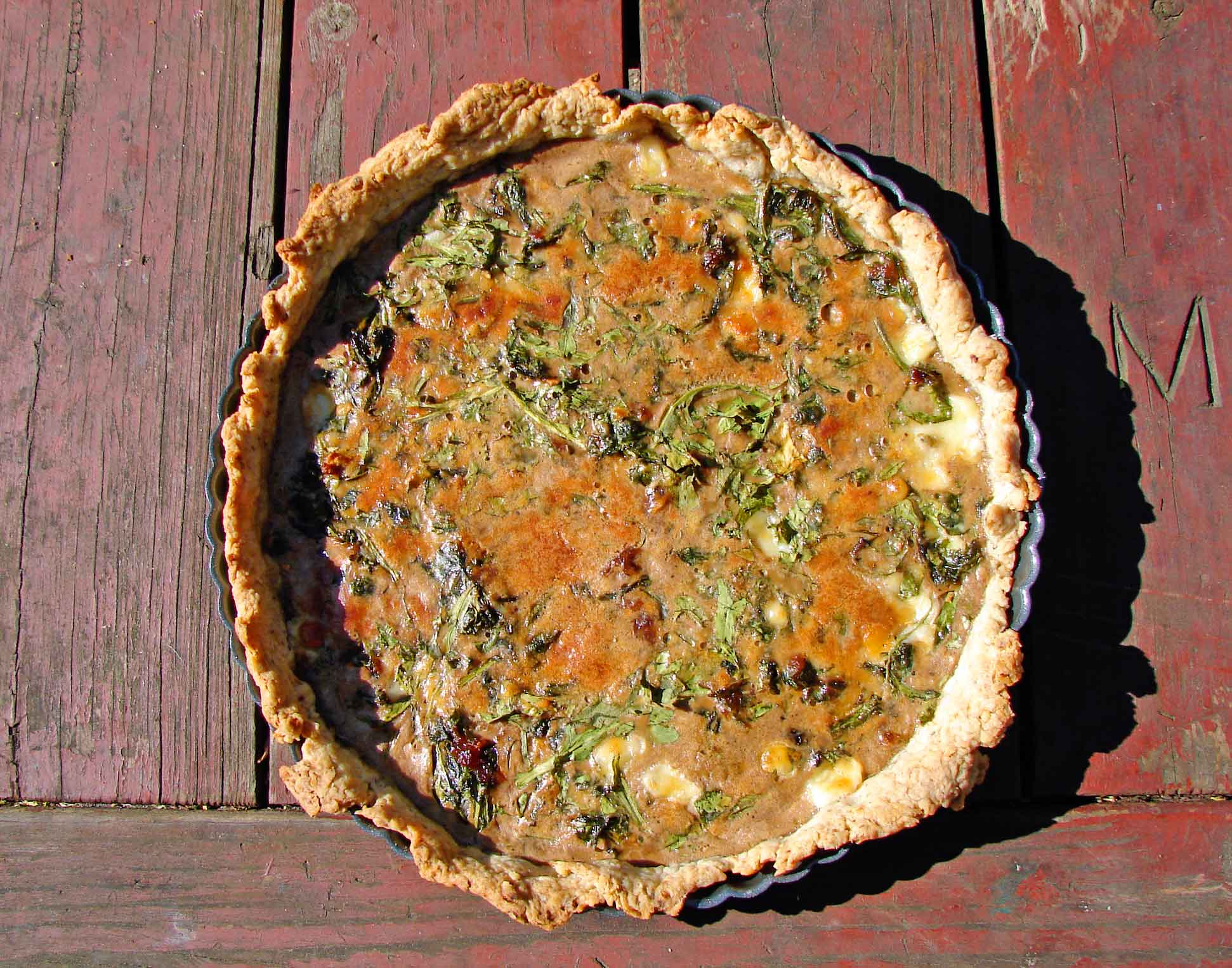
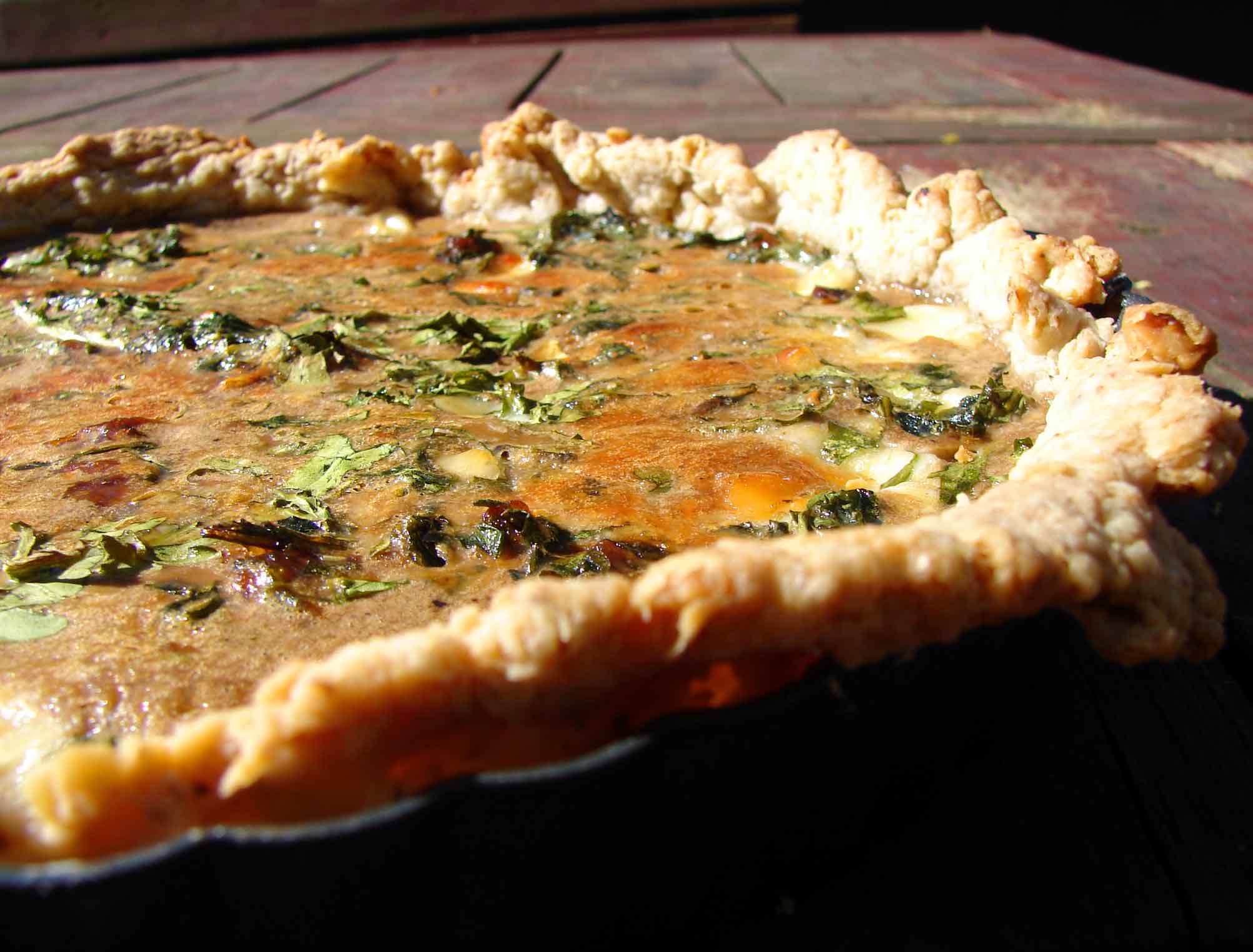
I’ve been craving arugula and balsamic salads lately! Something about the slightly bitter nuttiness with the slightly bitter sweetness is just such a perfect combination. So I decided to combine them in a tart, because that’s what I do. I added a crunchy walnut crust. I reduced the balsamic and mixed it right in with the custard. I added some sharp cheddar and small cubes of mozzarella. And I added some caramelized onions I made last summer and froze. If you don’t have caramelized onions on hand, and don’t have time to make them, you could always mince up a shallot and cook it with the garlic, if you liked.

Here’s Buddy Holly with I’m Changing All Those Changes, because it just came on as I’m typing, and I like it, and I can’t think of a song about female philosophers or arugula tarts.

Continue reading