Crispy rosebud herb roasted potatoes

Crispy rosebud herb-roasted potatoes

Crispy rosebud herb-roasted potatoes

I’m feeling a little the worse for wear today, and I’m going to tell you why. It all started when a friend of ours invited us to their chalet in the south of France. Of course we flew over for the weekend, staying up till all hours drinking wine from their vineyards. On the way home we stopped in Barcelona to shoot a few scenes of a friend’s film and drink some robust riojas in the rooftop garden of their streamlined city loft. So, you know, what with the jet lag and the late nights… I’m lying, of course. I’m tired because waitressing is really hard work, and we were so busy this weekend that it made my head spin, and my head continued to spin after I’d gone to bed, and I lay half-awake waiting tables in my head all night long. And I threw my back out during the week, which made waitressing that little bit harder and more painful than usual. And that’s the unglamorous truth.
The other day, as I waited on a large party, I said “Can I get you anything else?” as waitresses do, and one woman replied “Do you have a million dollars?” And I laughed and said, “If I did, I wouldn’t be here!” But I thought about it, as the day progressed, and I’m not sure that’s true. The thing is, as strange as it may sound, I like waiting tables. Maybe I would stay on one or two days a week, even if I had a million dollars. A manager I worked with for a few years used to joke that she wasn’t in it for the money, she just wanted to keep “the common touch.” And there’s something to that… eating is something we all do, we have that in common, and it’s pleasant to see people in this way. I like this chance to talk to complete strangers, and learn a little bit about their lives. I like when they become regulars instead of complete strangers, and they’re glad to see me week after week. I like this way of almost being friends, but in a completely different sphere of life–in a way that none of my actual friends ever sees me. I like to be good at something, and I’m good at waiting tables, which is an incredibly complex and physically demanding job. I’m proud of that. I like the feeling of comradery you get from working with other people, that sort of backstage feeling you get from being part of the process of creating a meal for someone. So maybe I would stay on for a shift now and then, even if I had a million dollars. It might make a nice change from our trips to the rooftops of Barcelona.

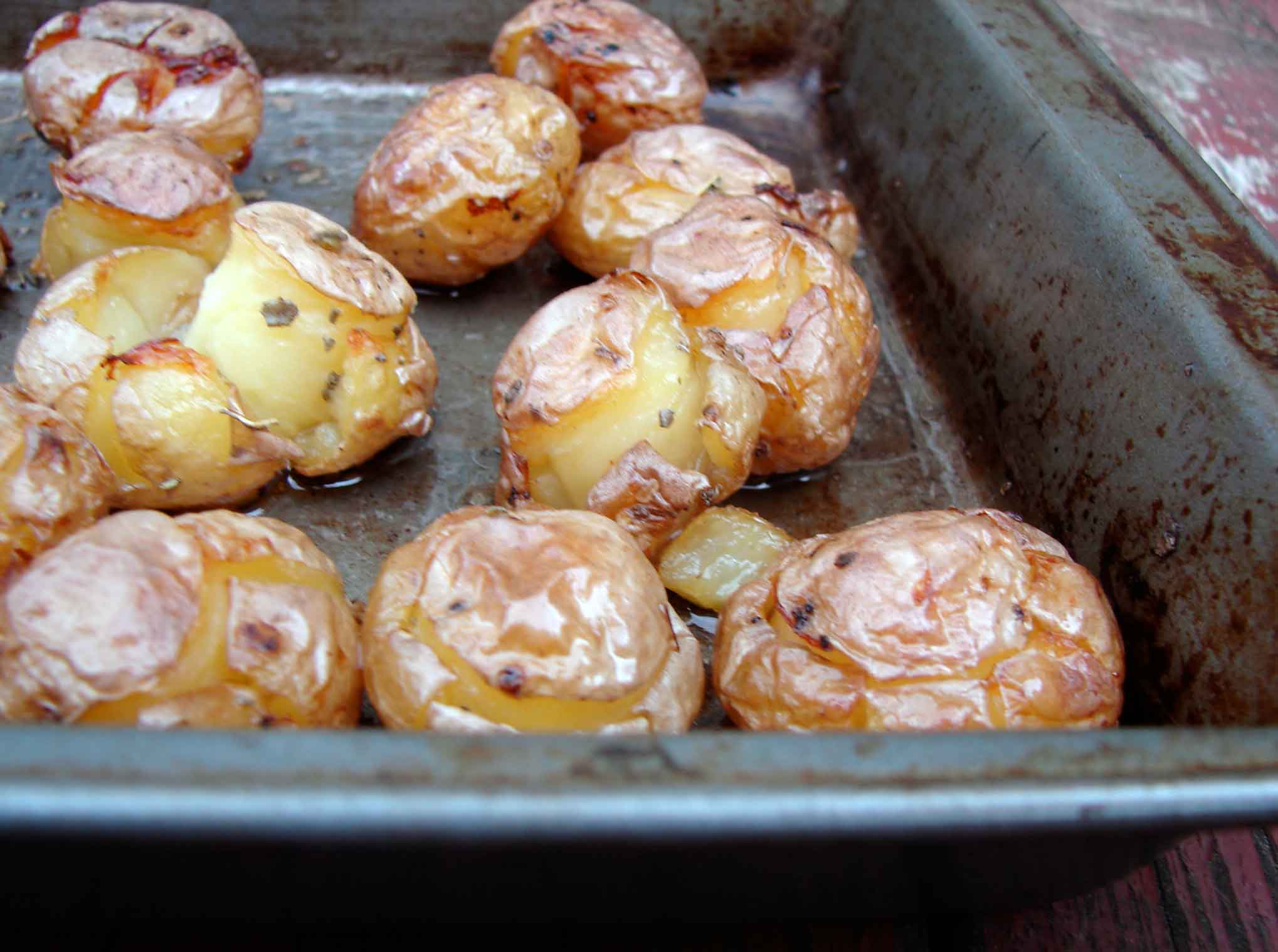
These potatoes are so simple I feel almost foolish telling you about them. Except that they were so tasty! And they’re perfect for spring, which is finally making an appearance around here. I boiled some new potatoes for a few minutes, until they were just starting to soften, and then…I cut each one with an apple corer! Just a little bit, not all the way through–about three-quarters of the way down. This made them pretty, with a round central portion and petals on the side, and then I drizzled olive oil and herbs on them, and then I roasted them till they were nicely cripsy. And that was that! I used dry sage, because nothing is growing in my garden yet, but as the season progresses, I’ll try this again with fresh herbs – rosemary, tarragon, basil, thyme. The possibilities are endless!

Here’s Hotter Scorcher by Sweet Confusion, in honor of the warmth of the day, and because I think it’s the sweetest song!
Continue reading

French lentil & barley stew with sage, rosemary and port wine

French lentil barley stew

French lentil barley stew

Beware of any post that starts, “Last night, I was trying to fall asleep and I started thinking about…” You’ve been warned! So, last night, I was trying to fall asleep and I started thinking about the Easterish theme of resurrection. And I’ve had Elizabeth Cotten in my head (delightfully) for a few days, so I started to think about blues musicians who recorded some tracks in the 20s and early 30s, and then weren’t heard from again until the sixties. Their careers were resurrected.

Of course their lives continued in those decades, and they worked and struggled to get by, and they wrote about working and struggling, they wrote about their lives. In particular, I was thinking about Mississippi John Hurt and Skip James. (And then I thought about how hard it is to write about something that you really love as much as I love the music of Mississippi John Hurt and Skip James. But here goes!) Mississippi John Hurt and Skip James were Delta blues musicians. They were both born around the turn of the last century in Mississippi. They both started playing very young, sneaking a chance to play guitar any time they could. They were both largely self-taught, and they both developed unique styles of playing, just as Elizabeth Cotten did. She, being left-handed, turned the guitar upside-down, plucking out the melody with her thumb. Skip James has his own special tuning, in melancholy D-minor. Mississippi John Hurt played the guitar the way he “thought it should sound.” And when you hear him play, you’ll agree, this is the way guitar should sound.

Their music and their lyrics are disarming–sophisticated and wild, perfectly, strangely, human and familiar, poetical, violent, at times, but always sung in the sweetest possible way. Mississippi John Hurt’s voice is gentle and comforting, Skip James’ high and haunting.

Hurt was born in Avalon Mississippi, and he was endearingly fond of his home town. He travelled to Washington and New York to record music in the late 20s, but he wasn’t happy there – he was homesick. They tracked him down, later in life, based on lyrics to his song Avalon Blues. “New York’s a good town but it’s not for mine. New York’s a good town but it’s not for mine.” He was given a chance to perform with a traveling show, but he declined, because he wanted to stay near to his home. Skip James travelled for jobs and work camps, but his lyrics are about the people back home.

I wonder what it must have been like for them to be in their 60s and suddenly discovered by New York City folksy hipsters. What it must have been like to travel, at that age, and perform at the Newport Folk Festival, and be revered by these kids whose lives must have been so different from their own. Supposedly, Hurt, whom everybody liked his whole life due to his pleasant nature, enjoyed the experience, and James, who “could be sunshine, or thunder and lightning depending on his whim of the moment,” hated the folkie scene, and wasn’t fond of some of the covers of his songs that became wildly popular. What a strange turn for their lives to have taken. Blues music is full of fables and mythical characters, tales of death and life and reinvention, tales of people with legendary powers. I like to think about the long and hard-earned lives of James and Hurt in this way.

Here’s a short playlist of some of my favorite Mississippi John Hurt and Skip James songs.

So, this meal is something like winter’s last hurrah. It’s warm and comforting and nourishing. It has barley and french lentils, spinach, potatoes and carrots. So it’s pretty much everything you need in one big pot. The sauce is rich and savory, with port wine, tamari, sage and rosemary. And we topped the whole thing off with some grated smoked gouda and sharp cheddar. This is one of those “serve-with-a-good-loaf-of-crusty-bread” meals.

Continue reading

Roasted cauliflower, potatoes and butterbeans in spicy red pepper – olive sauce

Roasted potatoes, cauliflower and butterbeans with spicy red pepper sauce

Roasted potatoes, cauliflower and butterbeans with spicy red pepper sauce

When a child tells a joke (my child, at any rate) he always explains it. He always adds a little, “do you see what I did there?” (Except when they tell knock knock jokes, of course – not because they need no explanation, but because there is no explanation. They make no sense, and that’s the point of them.) As they get a little older they might just send it out there into the world, and see how it plays. They start to understand the universal language of jokes, and they recognize that others understand it as well. And if it plays well, they’ll repeat it, over and over and over again. There’s a regular at the bar where I work. He’s a friendly, loquacious guy, and everybody’s always happy to see him, as befits his status as regular. He tells jokes that aren’t always appropriate, and he lets us know they’re not appropriate by saying, “If you know what I mean.” One day, the bartender said, “Everybody always knows what you mean!” She said it in a jolly, joking way, but he seemed a little chastened. He was uncharacteristically silent for a few minutes. When I think about it, which I frequently do, it’s so odd that we can communicate at all. Words are so frustratingly, beautifully inadequate. Either they seem to have no meaning at all, or they have so many meanings you don’t know which to choose. We could lose ourselves in the space between what we mean to say or what we want to say, and what is actually said. We watched Tokyo Story by Ozu yesterday. (Beautiful!) His films are about regular, contemporary people facing problems that we all face, and one of these is, simply, talking to one another, conveying meaning. The characters are speaking Japanese, of course, which is a language I don’t understand, but they’re so clearly sharing the difficulty of sharing, with their gestures and expressions. They use small sounds, single syllables or grunts, that seem to carry more meaning, and be better understood, than whole streams of words. I love this! Each person fills the syllable with their own inflections, the whole force of their personality. Ozu will show one side of a phone call that consists of nothing but these short grunts, and you know what the person on the other end is saying. I read a little bit about these sounds, and they each have their own written character, which is a beautiful thing. I suppose we have something similar in English, but our small sounds, our ums and ers and uh-huhs seem to create little spaces of non-meaning, little expressions of frustration with meaning. Or maybe it’s just easier to see meaning when you’re less entangled in the words, when you’re outside, looking in.

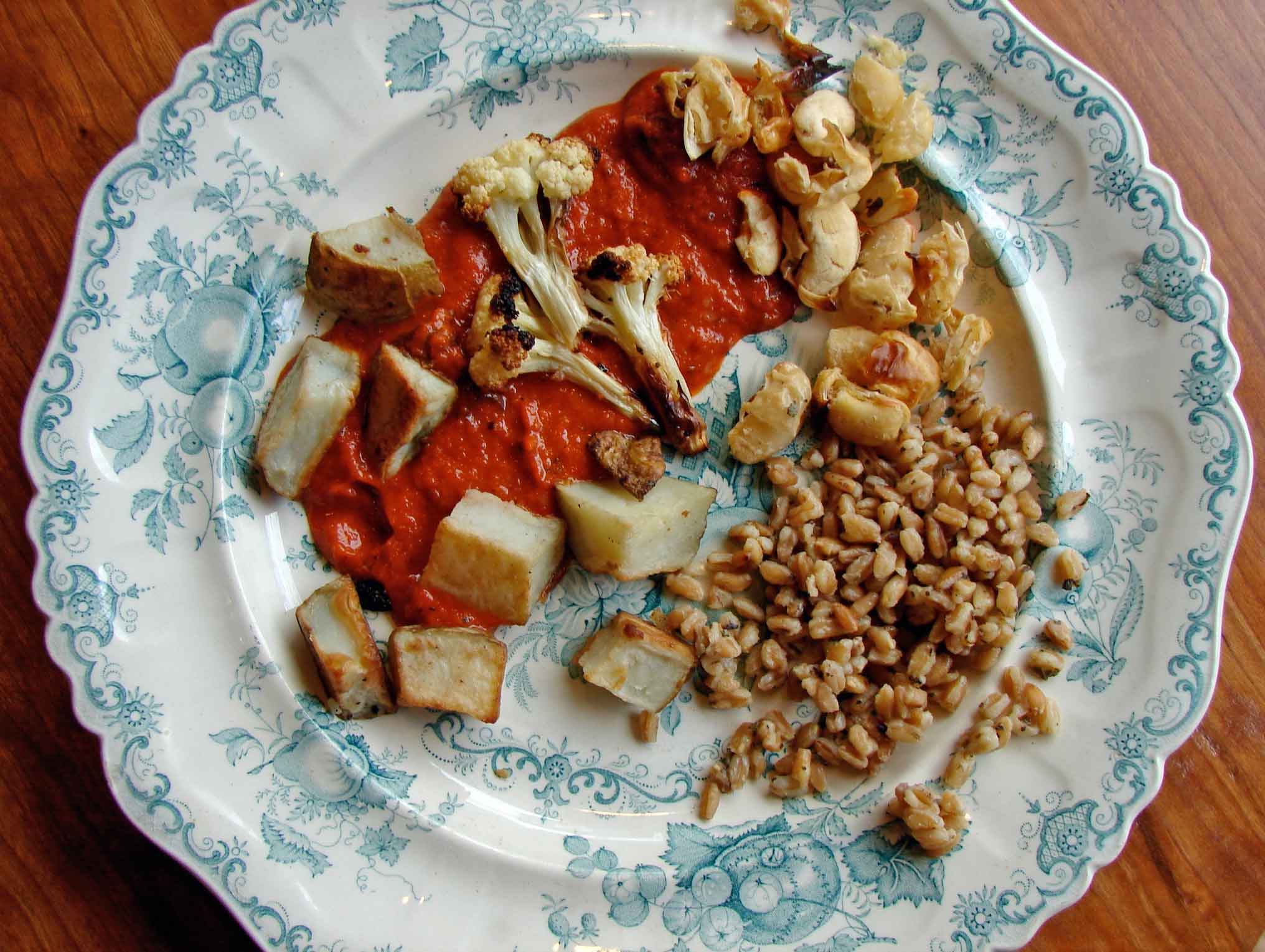
It’s funny how recipes can become construed and misconstrued, made up, as they are, of words. The symbols I take as universal are very confusing to some people. And measurements are so changing and mysterious, especially when you’re talking about the size of a vegetable! In recipes such as this one, it’s okay that the measurements are vague. You can adjust the amounts to your taste. We have roasted potatoes, cauliflower and roasted butter beans (yummy!) And we have a sauce to toss them in, and you can roast just as much of each as you like! You can mix everything together, and fry it in a skillet till the sauce is fairly dry and coating each piece, and that’s tasty. Or you can leave the elements separate, and let people take what they like, which is what we did, because not everyone in the family is as enthusiastic about cauliflower. We ate this with simple herbed farro, and some sauteed kale and broccoli rabe tossed with lemon and butter.

Here’s the Tokyo Story Theme, by Saito Kojun

Continue reading

Roasted potatoes and artichoke hearts

Roasted potatoes and artichokes

Roasted potatoes and artichokes

I was going to put as my facebook status “don’t you hate it when you’re feeling really down and discouraged, and you hope that something nice might happen to cheer you up, but instead your dog gets sick and it’s Sunday night and you don’t have a car, so you have to ask somebody to drive you to the emergency vet and the visit costs as much as you made in tips all weekend long at your lousy job?” But of course I didn’t! Nobody wants to read depressed and moan-y news like that, unless it has a picture of a cat attached. And I don’t have a cat! People mostly tend to write about stuff they feel good about, on these social media forums, or minor pet peeves, or share inspirational sayings, or post pictures of cats, or the everloving inspirational quotes with pictures of cats. Here at The Ordinary, I try to share some of the times when things don’t go well, when I ruin dinner or Malcolm yells at me that I’m mean, because I’d feel like a liar if I pretended everything was perfect all the time. But I guess I try to be a bit cheerful about it, to find some vague reason to be happy in the end, even if it’s a fairly foolish reason…Dinner turned out horrible and I threw a temper tantrum, but Malcolm gave me a big hug, so who cares? Well, I have been feeling discouraged lately, and Clio did get sick and I was up much of the night with her, and to be honest I was having a really hard time trying to see it in a positive light. But I started thinking about it, as I sat on a bench basking in the mild but well-meaning sunshine and watched the boys play with their friends, and I realized that the very act of writing about it makes me feel more hopeful. Not just because it helps to talk about it or it’s cathartic in some way, but because of the writing itself. It makes me happy to put words together. I feel good when the words sound good, and even when they don’t, which is probably most of the time. And it makes me happy to think about this thing that makes me happy that’s so simple – it doesn’t require complicated equipment or lots of planning. It’s completely free of charge. It might be a self-indulgent waste of time, but who cares! It doesn’t hurt anyone, and nobody can take it away from me. I like to think that everybody could have this…some seemingly trifling activity that doesn’t make you forget your worries so much as it opens a possibility of some endeavor that’s more important than your worries, if you let it be. Maybe you doodle, maybe you strum a guitar, maybe you cook a mean risotto. Any of these things can be shared, can be nourishing to yourself and others. And now, I may have been in a foul mood all day, and may not have gotten much sleep, but Malcolm is asking if I want to make ginger beer with him, so who cares?

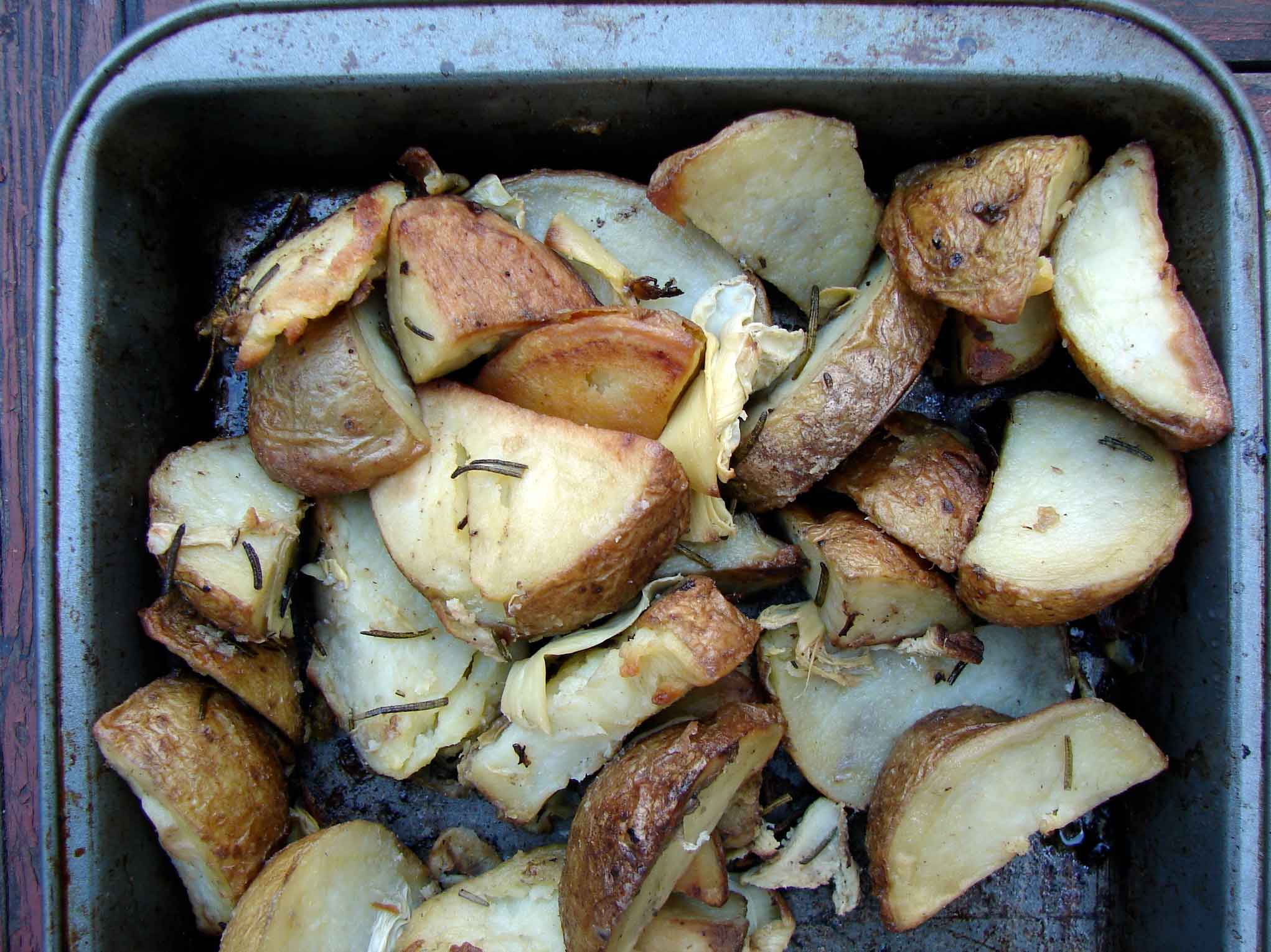
These potatoes were a breeze! Easy peasy lemon squeezy, and they’d be good with a squeeze of lemon. I made them after work one day with some leftover canned artichoke hearts. But they turned out so good! Crispy and tender and flavorful. They’re very simple, as they’re presented here, but they seemed a little fancy to me anyway. You could easily add shallots or garlic or olives before you roast, or sprinkle on some cheese towards the end. But they’re nice like this – simple – with salt and lots of pepper.

Here’s Who Cares by Michelle Shocked, which has been in my head a lot lately.

Continue reading

French lentil and farro soup with spinach

French lentil farro soup

French lentil farro soup

    • “He was standing by the edge of a small pool – no more than ten feet from side to side – in a wood. The trees grew close together and were so leafy that he could get no glimpse of the sky. All the light was green light that came through the leaves: but there must have been a very strong sun overhead, for this green daylight was bright and warm. It was the quietest wood you could possibly imagine. There were no birds, no insects, no animals, and no wind. You could almost feel the trees growing. The pool he had just got out of was not the only pool. There were dozens of others – a pool every few yards as far as his eyes could reach. You could almost feel the trees drinking up the water with their roots. This wood was very much alive. When he tried to describe it afterward Digory always said, “It was a rich place: as rich as plumcake.”

The strangest thing was that almost before he had looked about him, Digory had half forgotten how he had come there. …If anyone has asked his “Where did you come from?” he would probably have said, “Ive always been here.” That was what it felt like – as if one had always been in that place and never been bored although nothing had ever happened. As he said afterward, “It’s not the sort of place things happen. The trees go on growing, that’s all.”

This, of course, is a passage from The Magician’s Nephew, by CS Lewis. He’s describing “the wood between the worlds,” a strange, lazy, dreamy green-lit place. It’s a place I think about a lot. We used to love The Chronicles of Narnia when we were little, my brother and I. Who wouldn’t like to imagine a magical world you could escape to at any time, where you could (safely) go on adventures and talk to animals? Your dog could finally tell you what she’d been thinking about all this time! We had a world of our own, in which we were talking animals, and the world had a history, a geography, a morality all its own. I’d tell you all about it, but it’s top secret! This world was almost like a religion for us, and it shaped our outlook on life to a remarkable extent. I’ve been looking forward to sharing Narnia with the boys, but I’ve been reading through parts of the books lately, and I feel a little disappointed! I’d forgotten about that whole, “Buck up, old chap, and stop your blubbering or we’ll despise you for the rest of the book” mentality. One of my favorite books was always The Horse and His Boy. I love the idea of stories that take place between the major conflicts. My idea of a good book would be a story of life when Peter was high king in which absolutely nothing happened. No drama, no evildoers to overthrow, just a tale of what day-to-day was like in this happy golden time. Well, I went back and read a bit of Horse and His Boy. It’s the story of light-haired, light-skinned noble well-intentioned people from the north fighting against swarthy-skinned, dark-haired, backwards and mean-spirited people from the South. Ugh! It’s still a good story, but I feel a little queasy when I imagine Malcolm reading it. Maybe I’m crazy.

Anyway…I’ve always loved the idea of the wood between the worlds. So many times in my life I’ve felt like I’m there, I’m in this tranquil in-between place, trying to decide which pool to jump in next. Because each pool is a world, and you don’t know what you’ll find there, when you jump in. Here in the green wood, you’re safe, all you have to do is sit still, and your memories are vague and dreamlike, and you can almost feel yourself growing. You don’t have to act, or interact with anyone. But you can’t stay forever. As Polly says, “This place is too quiet. It’s so – so dreamy. You’re almost asleep. If we once give in to it we shall just lie down and drowse for ever and ever.” So you have to exert yourself and pick a pool (or a school, or a job, or a place to live …) You have to wake up and exert yourself and engage with your life, and let the wood between the worlds become your dream. Since the boys were born, I feel like I’m having an extended stay in the wood between the worlds. I can feel the boys growing, at the incessant imperceptible rate that people grow, but how it all happened, how they got to be the boys they are now, on their way to being the boys they will someday be, is a jumble of memories and expectations and anxieties, all swathed in a glowing green light – a hopeful light, a healthy growing light. Sometimes I rouse myself from my pleasant drowse and I think about jumping into one of the pools – I apply for a job, I contact people about shooting a film – but I never seem to do much more than get my ankles wet in the wrong pool before I’m lying on the soft green grass again, wondering how I got there, listening to the boys grow, watching them get ready to choose which pool to jump into. Some day, in the glowing green future. There’s no hurry, it’s very nice here.

Well, I’ve mentioned that we’re all feeling a bit under the weather, here at The Ordinary. So I wanted to make a rich, comforting soup that would have a bit of spiciness to cut through the lurgy. So I made this soup, with french lentils and farro, for sustenance, spinach for all-around wonderfulness, and cayenne, ginger, and lemon, for salubriousness. It was very good! We floated green toast in it, made from the colcannon bread, which was lovely. This is a very hearty, meal-in-itself soup, but it wasn’t heavy at all – it had a nice warm smoky broth, and the ginger and lemon helped to brighten it.

Here’s This is Your World by Sam and Dave. What a good song!

Continue reading

Colcannon bread (kale and potato bread)

Colcannon bread

Colcannon bread

Here at The Ordinary, we’re not quite well. Isaac has an actual fever, and the rest of us feel crummy in the head, throat, and spirits. Add to that the chilly drizzliness of the day, and you have a general idea of the mood here. Actually, I quite like a day off with Isaac, as long as he’s not miserably ill. He’s such a little chattery singer, and even as his fever rises he continues a cheerful warble. We’ve cuddled on the couch; made a paper sea-dragon from a book; drawn mixed-up animals, (which Isaac decided he could name any way he wanted to, and he could spell the name any way he wanted to, because he invented them. They won’t be on the test!); discussed the philosophical and moral implications of the statement that it’s hard to be mad at Clio because she’s so cute; made a pancake with cinnamon (Isaac wanted me to tell you about that!); and watched a movie. I’m going to keep it brief so I can get back to the cuddle-couch, but I want to tell you about the movie we saw, because it was remarkable and beautiful. It’s a short, wordless, animated version of Peter and the Wolf made by Suzie Templeton. Technically and aesthetically, it’s wonderful. The film takes place in a bleak and dingy village on the edge of the woods. It’s a modern setting, replete with graffiti and chain-link fences, but even the dreariness is gorgeously rendered. The characters – a boy, a runner duck, a hooded crow, a fat cat, a blue-eyed wolf, and a grumpy old man – are full of personality and glow with inner life. The film brings a real sense of compassion and soul to the familiar story – it’s about friendship and forgiveness, cruelty and kindness. You understand, as you watch, that prey can easily become predator, bullies can be bullied, and cruelty and aggression may be valued and rewarded, but that doesn’t make them right. Everybody wants to live, and empathy extends to all creatures. I can’t wait to watch it tonight with Malcolm and David!
kale and potato bread

kale and potato bread

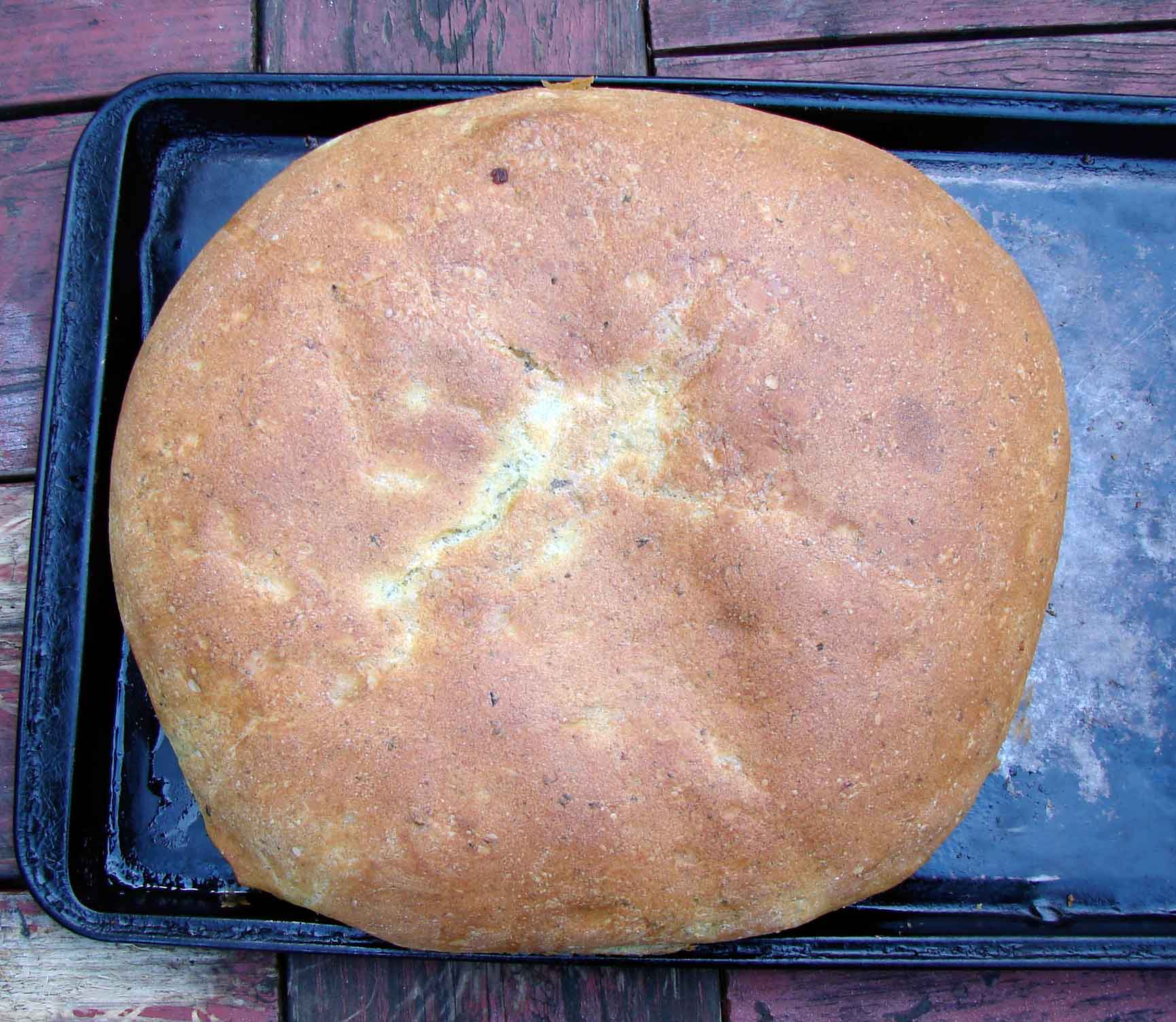
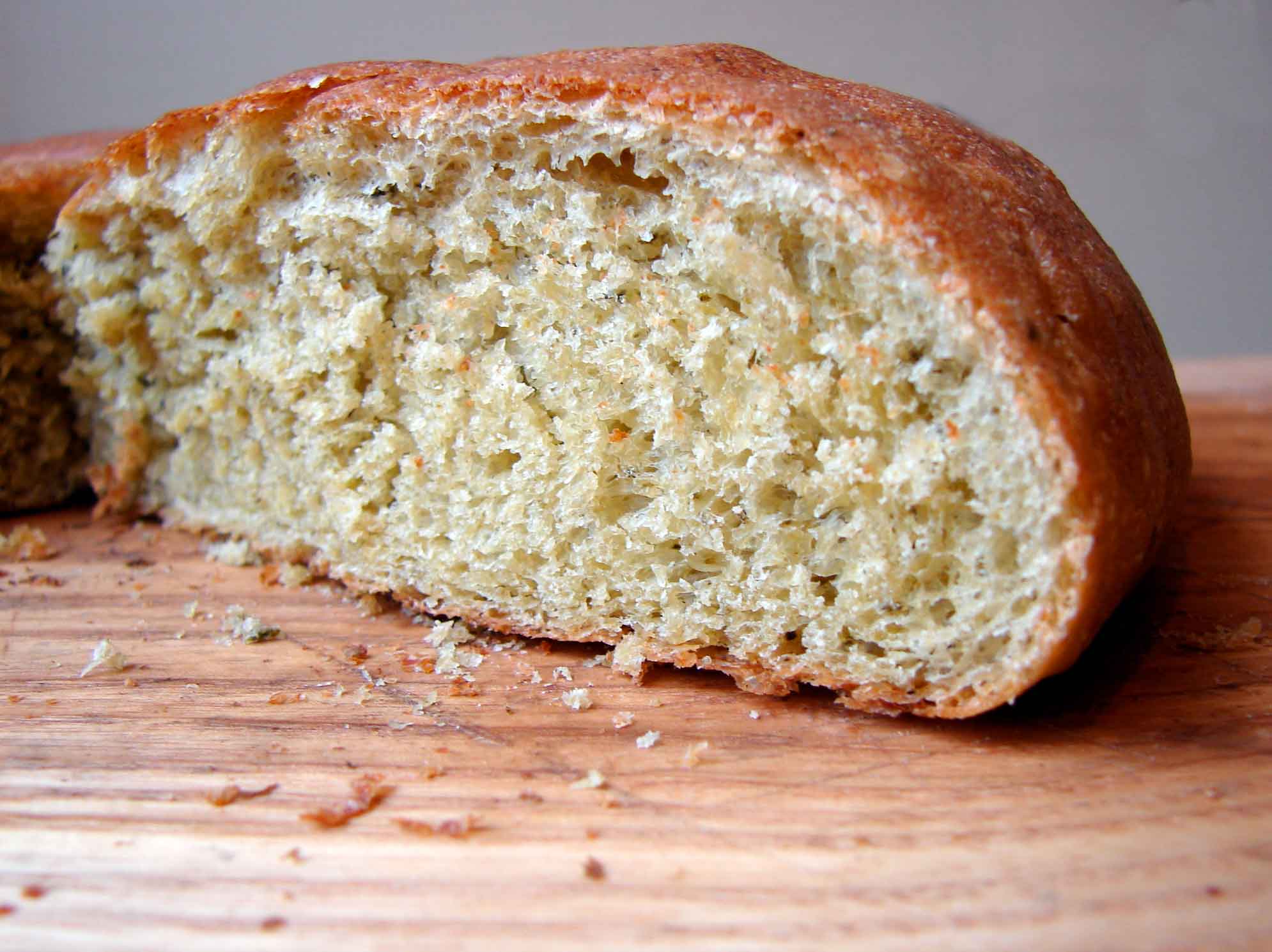
I’m very very excited about this bread! It’s the oddest thing, but I dreamed about it two nights in a row, and then I woke up and spent the rest of each night trying to figure out how to make it. Colcannon, of course, is an Irish dish that contains mashed potatoes and kale or cabbage. In my dream I made it into bread, and so…in real life I did just that! It’s a lovely, light but dense, pale green bread with darker green flecks. The flavor is very subtle – you don’t actually taste kale, just a nice savoriness (which means small boys will like it!). I added plenty of freshly ground pepper for flavor, and an egg and a bit of milk to make it soft inside. It’s got a nice crispy chewy crust. I made one huge loaf, which is very seussical looking, but it probably would have been more practical to make two smaller ones. Maybe next time!

Here’s REM with Wolves, Lower, appropriately, live in Ireland!

Continue reading

Cauliflower, potato, tarragon, and pecan nests with broccoli rabe, white beans, olives and tomatoes

Cauliflower, pecan and potato nest

Cauliflower, pecan and potato nest

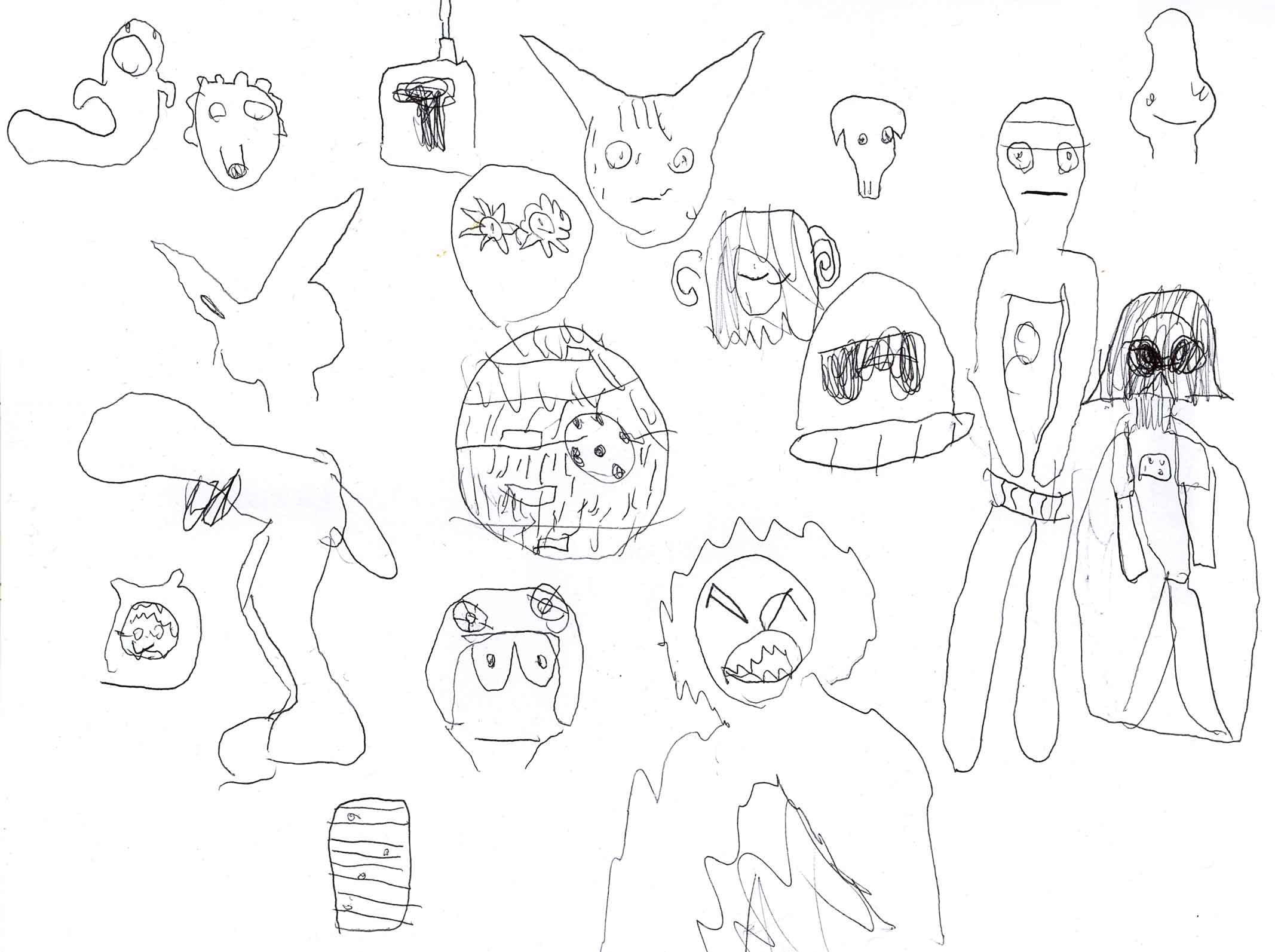
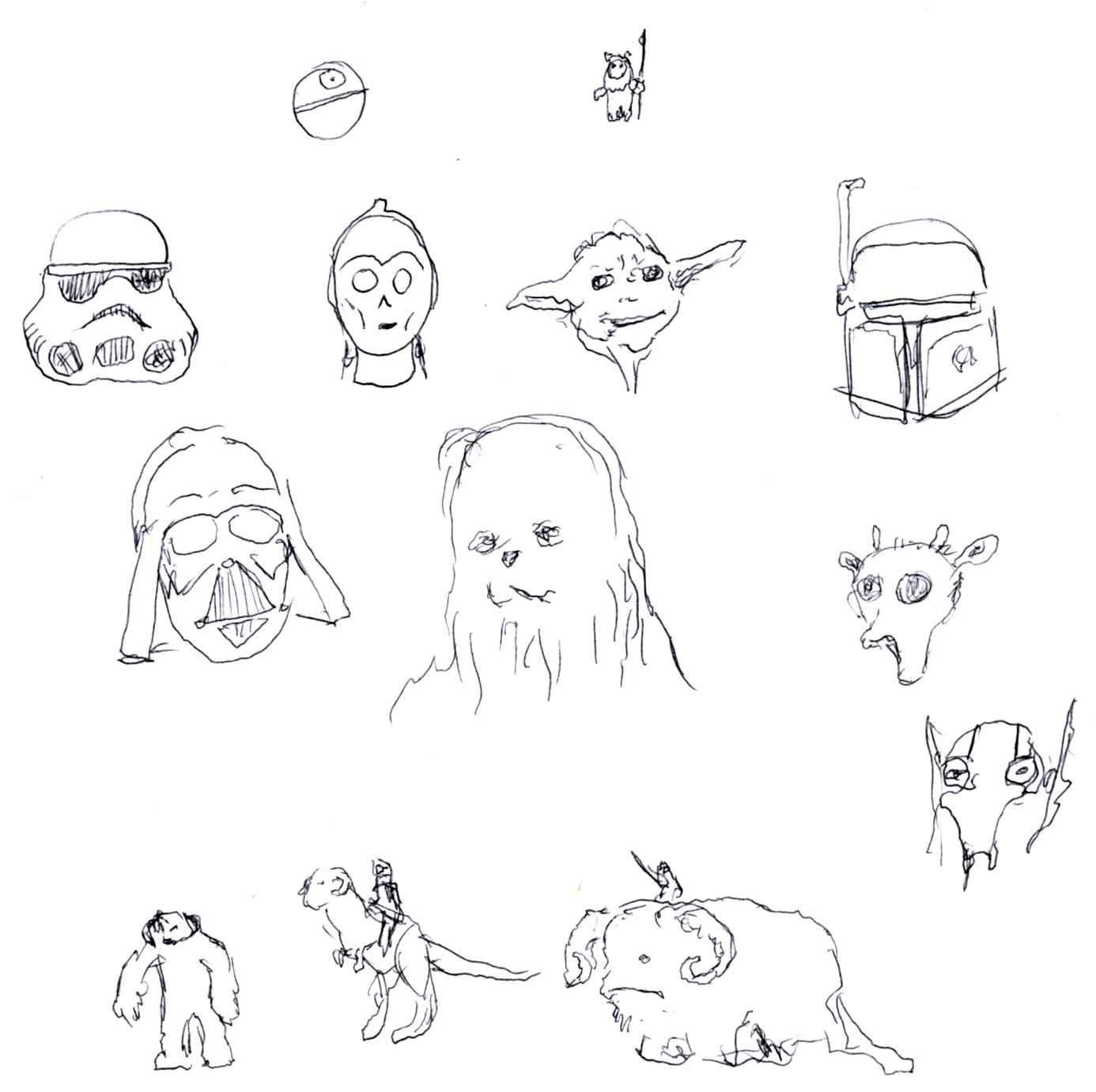
“Daddy, do you want to play with star wars toys?” asked Isaac in his bright voice. “Nobody’s said that to me in thirty years!” said David. (He did want to play.) I remember the first time I saw Star Wars. It was 1977 (of course) and we waited on line. We saw it in a theater in a mall, and it was a seventies mall, all orange and brown and drab and fluorescent. And of course we loved the movie! It’s so bright and inventive and richly imagined. I love to think about George Lucas with this whole universe inside of him, and how joyful it must have been to make the movie and to watch the movie, and to see that people liked it. I love the fact that Star Wars has a history, even the first movie had a future and a past, and though it would be decades before we’d know the full story, even in that first (fourth) film, you could feel the haunting weight of memory. Which is a sort of a beautiful thing in a film! Star Wars is about generations, so it seems fitting and wonderful that we can share it with our sons. I love that our boys love it! (Actually, I like the fact that all boys love it!) It feels good to share this modern mythology with them, a mythology that’s probably shaped our consciousness more than we know! Like most mythology it’s about good versus evil, strength versus weakness, in the world at large and within ourselves. It’s about the struggle to understand where we’re from and where we’re supposed to go, and who we should trust to go with us. It’s about discovering that we have some invisible power within ourselves that we have to harness and struggle to control, and learn to use for good. Epic! The other night, whilst watching Star Wars for the gazillionth time, we played a game. I named Star Wars characters, and David and the boys had to try to draw them from memory. It was more fun than it sounds! Unless it sounds really fun to you. I LOVE the pictures they drew, and I love the way they illustrate visual memory, and the working of busy minds, and the fact that drawing ability has been handed from father to sons. Here they are…
Isaac's

Isaac’s

Malcolm's

Malcolm’s

David's

David’s

So today’s Sunday interactive playlist is about generations…about a sense of history, a memory of the past or an anticipation of the future. Advice from elders, sass from youngsters…any of this will do!

Cauliflower nest

Cauliflower nest

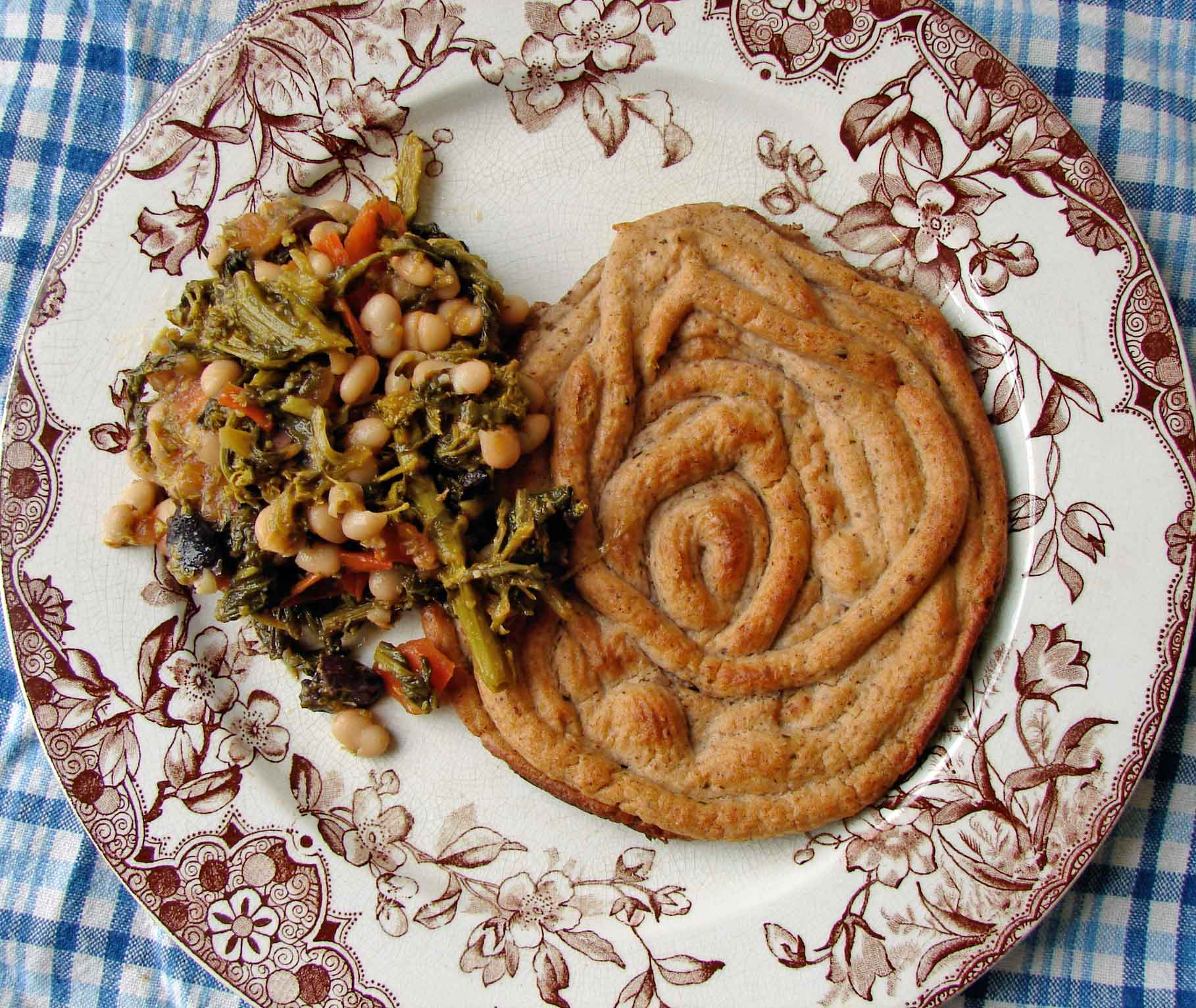
ANd this crazy meal was the result of some leftover mashed potatoes and a desire to play with my pastry tube. I decided to combine the potatoes with some steamed cauliflower, some pecans and some tarragon, (as well as some eggs and cheese) and make a smooth thick batter I could shape into a sort of nest. And since all of these things (potatoes, pecans, cauliflower, eggs and cheese) are sort of mild and comforting, I thought I’d combine them with something bright and saucy, like broccoli rabe and tomatoes. So that’s what I did! I thought it all turned out very tasty. You pecans and tarragon are very nice together. You could serve these with any kind of greens, or any sort of saucy dish that you like.
Continue reading

Red quinoa with chard, sweet potatoes and white beans

red-quinoa-white-beanYesterday was Nina Simone’s birthday. Today I want to write about her, but I don’t know where to begin. It’s hard to talk about something that you love as much as I love her music, it’s hard to talk about something that means so much to you. I suppose everybody is familiar with the autobiographical facts, so I’ll keep it brief. She was born Eunice Kathleen Waymon in Tryon, North Carolina in 1933. Her mother was a methodist preacher and a housemaid, her father was a handyman. From a very early age, she was determined to be a concert pianist. Her mother’s employer provided funds for piano lessons. After high school, she applied to the Curtis Institute, in Philadelphia, but was rejected. She moved to New York and studied at Juliard, supporting herself by playing piano in a bar, where she took the name Nina Simone to hide her profession from her mother. She was discovered, had a hit with I Loves You Porgy, and continued to record and play, jumping from one record company to another for most of the rest of her life. Her friendship with Lorraine Hansberry, Langston Hughes, James Baldwin and others helped to focus her fire, and she worked for civil rights with characteristic passion. She wrote the blistering song Mississippi Goddam (which has come to mind more than once this week!) in response the the murder of Medgar Evers and to the death of 4 black children after the bombing of a church. She eventually grew disillusioned in America, and moved abroad. She would live in Barbados, Liberia, the Netherlands, Switzerland, London, and finally the South of France, where she felt peaceful and free, and grew grapes, peaches, strawberries and raspberries. She was known to be temperamental, moody and volatile. She was a hypnotic performer, but an unpredictable one, and on more than one occasion she would berate the audience for talking. “My original plan was to be the first black concert pianist–not a singer–and it never occurred to me that I’d be playing to audiences that were talking and drinking and carrying on when I played the piano. So I felt that if they didn’t want to listen, they could go the hell home.” She defied labels, combining jazz, pop, blues, classical, gospel. She disliked the term “jazz,” which she saw as a way for white people to define black people, and she preferred to think of the genre as black classical music. Her voice is unmistakable and indefinable, deep, rich but light, raw and full of emotion, but with an odd, edgy coolness that cuts right to the most vulnerable part of you. She can take the sappiest song and make it speak to you about the human condition in such an intensely honest way that you feel she understands. She brings a magnetic dignity and gravity to everything she does, but she’s funny as hell, too, and light-hearted and surprising. After I’d had Isaac, Malcolm got very sick, and I was struggling with some poisonous combination of anxiety, postpartum depression and sleep deprivation. I felt down. I listened to Nina Simone sing Ooh Child, her voice full of compassion and gentle triumph, over and over, and I believed her, I believed things would get better. I knew that she’d been down, too, and she knew what she was talking about. “I feel what they feel. And people who listen to me know that, and it makes them feel like they’re not alone.” Langston Hughes, who wrote her song Backlash Blues wrote of Simone, “She is strange. So are the plays of Brendan Behan, Jean Genet and Bertolt Brecht. She is far out, and at the same time common. So are raw eggs in Worcestershire. She is different. So was Billie Holiday, St. Francis and John Donne. So is Mort Sahl, so is Ernie Banks. You either like her or you don’t. If you don’t, you won’t. If you do — wheee-ouuueu! You do!” Well that’s it! Whee-ouuuueu! She’s strange in a way that makes it good to be strange, for all of us to be strange, and in a way that feels so perfect and necessary that it almost seems normal. Or what normal should be – with that much inspiration, intelligence, intensity, wit, and passion. Nina travelled the world looking for freedom – freedom from oppression and greed, maybe freedom from her demons. In a remarkable performance of I Wish I Knew How it Feels to Be Free (which I’ve talked about before), she defines freedom as freedom from fear, as a new way of seeing, as a chance to be a “little less like me.” She’d learn to fly, and she’d look down and see herself, and she wouldn’t know herself – she’d have new hands, new vision. She tells us that the Bible says be transformed by the renewal of your mind. And her songs create a world with their intensely honest eccentricity, a world where you feel moved to your soul, and inspired to renew your mind, and be brave enough to see things anew, as they really are, or as they could be.

I’ve made a small playlist of some of my favorite songs. Including House of the Rising Sun, which she did before Dylan or the animals or Von Ronk; and Feeling Good, which is the best invocation of spring I know; and Nina’s Blues (two versions!) which is my favorite song of all. Beautiful, sad, and triumphant.

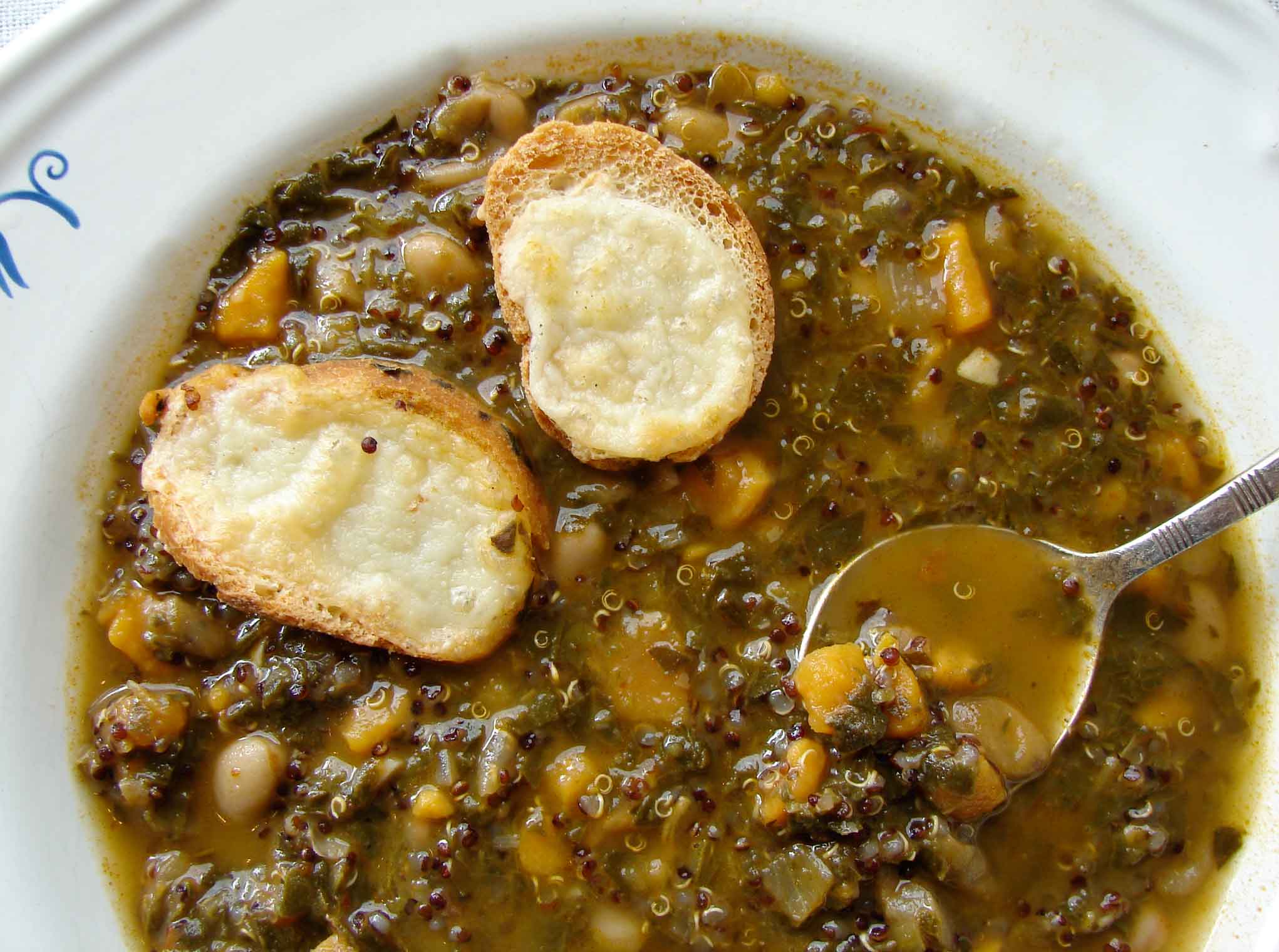
Oh yes, and here’s a recipe for red quinoa, chard, white beans and sweet potatoes. A nice combination of sweet, savory, earthy and bright. The boys liked it, which was all part of my evil plan, because I want them to eat more protein. I used great northern beans, because they’re nice and meaty, but you could use any manner of white beans you like. I made this like a thick stew, but you could add a bit more water and have a brothy soup, or add less water and have a nice side dish. We ate it with cheese toasts!

Continue reading

Mashed potato popovers

mashed-potato-popoversIt feels so good to get your appetite back after you’ve been sick. I love that moment of realization that what I’m experiencing is hunger and not nausea. I like to be hungry – it makes me feel healthy and alive. I know that it’s a privilege to feel this way. Not to feel hunger, of course, which is fairly universal, and is decidedly horrible if you don’t have food for yourself or your family. I know it’s a luxury to enjoy hunger, to know that you have a meal coming – that you have all the food you need and more – and to know that you’ll relish it more for being hungry for it. It strikes me that we complicate hunger these days – we eat when we’re not hungry, we eat more than we want, we have appetite suppressants, for god’s sake! What an insane idea! What an indication that we have too much, that we’d need to simulate sickness to try to make ourselves more healthy. This is one of those times that I look at my boys, and they seem to have it all figured out. They have good appetites, it seems as though they’re always hungry. So they eat what sounds good to them, until they’re full, and then they stop. It’s so simple! It makes so much sense! And it has so little relation to the way most adults eat. It’s harder to earn our food these days. We sit all day at desks or computers, we snack constantly, we don’t “build an appetite.” I love the idea of a healthy appetite – not just for food, but for learning, and living, for ideas and enjoyment and music and art. I like the idea of voraciously reading or writing or drawing or cooking – it seems all connected in our spirit, and when one fades, they all fade. Just as you can be sick in your belly, you can be sick in your soul or your heart or whatever you call the part of you that makes you feel creative and curious and alive. And you can spoil these appetites, too, with too much snacking on all the noise from the computer and the television and the tabloids, so you lose that keen edge of hunger. I’ve read that all animals instinctively know what kind of food they need. If they have some sort of deficiency in protein or a nutrient, they’ll seek out foods rich in those things. Humans must have that, too, under layer upon layer of ideas about what we think is healthy or we’re told we should or shouldn’t eat, under all of the nonsense that passes for knowledge. And we must have this instinct, too, about what we need to feed our minds to make them healthy and alive, so that they can work and grow. Of course, sometimes it’s nice to cuddle on the couch with your ten-year-old son, eating junk food and watching dopey historical dramas! Sometimes that’s what you’re hungry for, and that makes it good for you, too.

I’m better, but I still feel a little blurry in my head today, so I hope you’ll forgive all the nonsense I’ve been prattling! There are some clear ideas under there somewhere. When I first regained my appetite, I wanted soft, mild comforting foods. I wanted mashed potatoes and popovers, and I wanted them all at once! So I combined them. David said that these are the food equivalent of a warm snuggly blanket. They’re flavorful with rosemary and black pepper, they’re soft with mashed potatoes and eggs and cheese, they’re nourishing, and they’re delicious! We ate them with carrot parsnip and apple soup, and it was a lovely meal! They do pop up, but, obviously, not as high as regular popovers, and they deflate pretty quickly. But they still taste lovely!

Here’s Bob Marley with Them Belly Full.
Continue reading

Potatoes with meyer lemons and castelvetrano olives

potatoes and meyer lemons

potatoes and meyer lemons

Here at The Ordinary, we have a rigorous exercise routine. It consists of charging up and down the towpath at breakneck speed with Clio for, oh, half a mile (and stopping to say hello to every single dog we meet.) This is followed by a session of jumping up and down with a can of beans in each hand whilst watching dopey TV on the computer. Every once in a while we run up and down the stairs, being careful not to fall. It’s high-impact, low tech, low-stress, and no monthly fees. And there’s nobody there to see but the dog, who lies on the couch watching with her bright eyes, compiling material for her book Humans do the Dumbest Things! We’ve collected all of this into a kit for each of you at home! For a low low price, you can have two cans of beans (or chickpeas!), a video tutorial on how to turn your computer on and find dopey television, a guide to all the dogs you’ll meet on the towpath, by name and temperament, and detailed diagrams on how to execute the complicated jumping up followed by the jumping down. And repeat. To be honest, this is my routine, and being a routinized person, I’m quite addicted to it. This morning I decided to do something different. After a dash on the towpath with Clio, I gathered Malcolm and we set off to shoot some baskets. The morning is icy cold, but the sun was struggling to warm the world. It hadn’t reached the basketball court, but it glowed in pale golden pools in the silvery branches of the sycamores around the court. The moon hung low in the sky, half-full, ghostly and fading. Wispy clouds stretched across as if trying to hold the moon in a box. The spirit of the night lingered in the day, and Malcolm said it felt like summer in winter, even though he was wearing pajamas under his pants, and had a hat on his head and a hat in his hand. Malcolm’s face was rosy and bright, and light collected in his huge luminous eyes. I felt alive! I felt vivid! The sun finally broke through the trees above the basket, and with each shot made sunspots in my vision that cast the whole world in a flash of rosy gold, like an old snapshot, or a polaroid, reminding me that this was a morning that I wanted to capture and keep. It’s good to break out of your routine, sometimes!

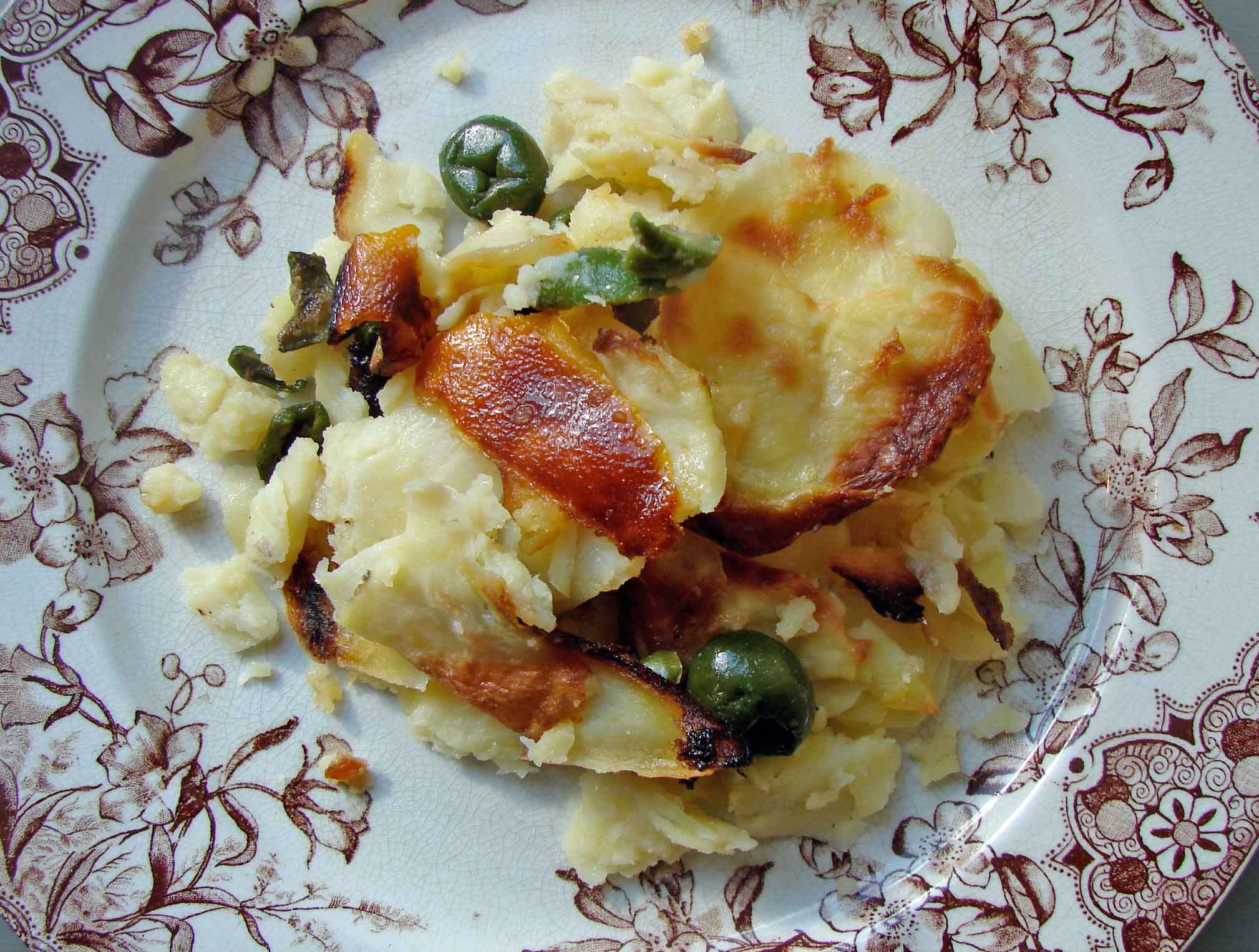
So we have meyer lemons and castelvetrano olives, and, as I warned, I intend to use them in every single thing I make until they’re gone. Olive brownies! I like this dish because, like the morning, it’s comforting and wintery, but very bright, too. I peeled the lemons in long slices, and put the rind and some rosemary sprigs under the potatoes. Their flavor spread upward as the potatoes cooked. I liked to eat the cooked lemon peel, which got a little crispy. Others didn’t so we just served the potatoes on top. And that’s how it goes!

Here’s Early One Morning by Elmore James.

Continue reading