Blackberry chocolate chip galette

blackberry and chocolate chip galette

blackberry and chocolate chip galette

On the back of my new copy of Aristotle’s The Nicomachean Ethics, it says “The supreme happiness, according to Aristotle, is to be found in a life of philosophical contemplation; but this is only possible for the few…” Well, I think it’s obvious that I don’t need to actually read the book to determine that I’m one of those few. I love just sitting around and thinking. I do it all the time! Seriously, you can frequently find me sitting on the couch with my dog and, you know, contemplating things. In fact, I think this makes Clio a philosopher, too, because she’s a contemplator. Oh yes, she’s almost always in an attitude of thoughtful contemplation, when she’s awake. All joking aside, I do actively enjoy thinking. I always have. This is why I’m never bored. This is why our recent 14-hour car trip, aside from the stress of driving and the achiness of my back, was no real hardship. I brought books to read and to write in, but mostly I just sat and thought, and that felt good. I tried to steer my thoughts a little bit, to head them away from things I didn’t want to think about, and head them in the direction of things I did want to think about. I tried to focus them on stories I hope to write or the movie I want to make. But I wasn’t too successful at any of this, and in the end I just let my mind wander where it would. But I think that’s fine, because most of the time my best ideas and my best writing–my brightest strings of words–come when I least expect it, when I’m concentrating on something else. I think it’s healthy and even productive to take some time, once-in-a-while, to let your mind meander–not to try to figure anything out or write anything down, just to let it go. I think it was good for my boys, too, to be away from television or video games, and just to sit and watch the world go by, and think their thoughts, and snooze, and wake to watch the world go by again. I feel very grateful to have my thoughts, I feel like they’re valuable. Sure it’s hard to be stuck in the same mind, all the time, and my thoughts drive me crazy sometimes, but they’re mine, and nobody can take them away from me. And everybody has this! Everybody has this gift of contemplation and reflection! All the time, whenever we need it. Everybody’s thoughts are valuable, if they’d only recognize that this is true, and nobody needs to be bored ever.

I believe this galette is what one would call a rustic fruit tart. Which mostly means that you don’t have to worry about getting the crust perfect. You just sort of fold it up on itself. And because the crust has hazelnuts and brown sugar in it, it’s like a big cookie, so you don’t have to worry about making it super-thin. Hazelnuts, chocolate and blackberries are lovely together–juicy, bitter-sweet and nutty. There’s a sort of baked custard that hold everything together in this. If it seeps out of the edges of your crust, don’t worry about it, just break these parts off before you serve the galette.

Here’s Tom Waits with Everything You Can Think.

Continue reading

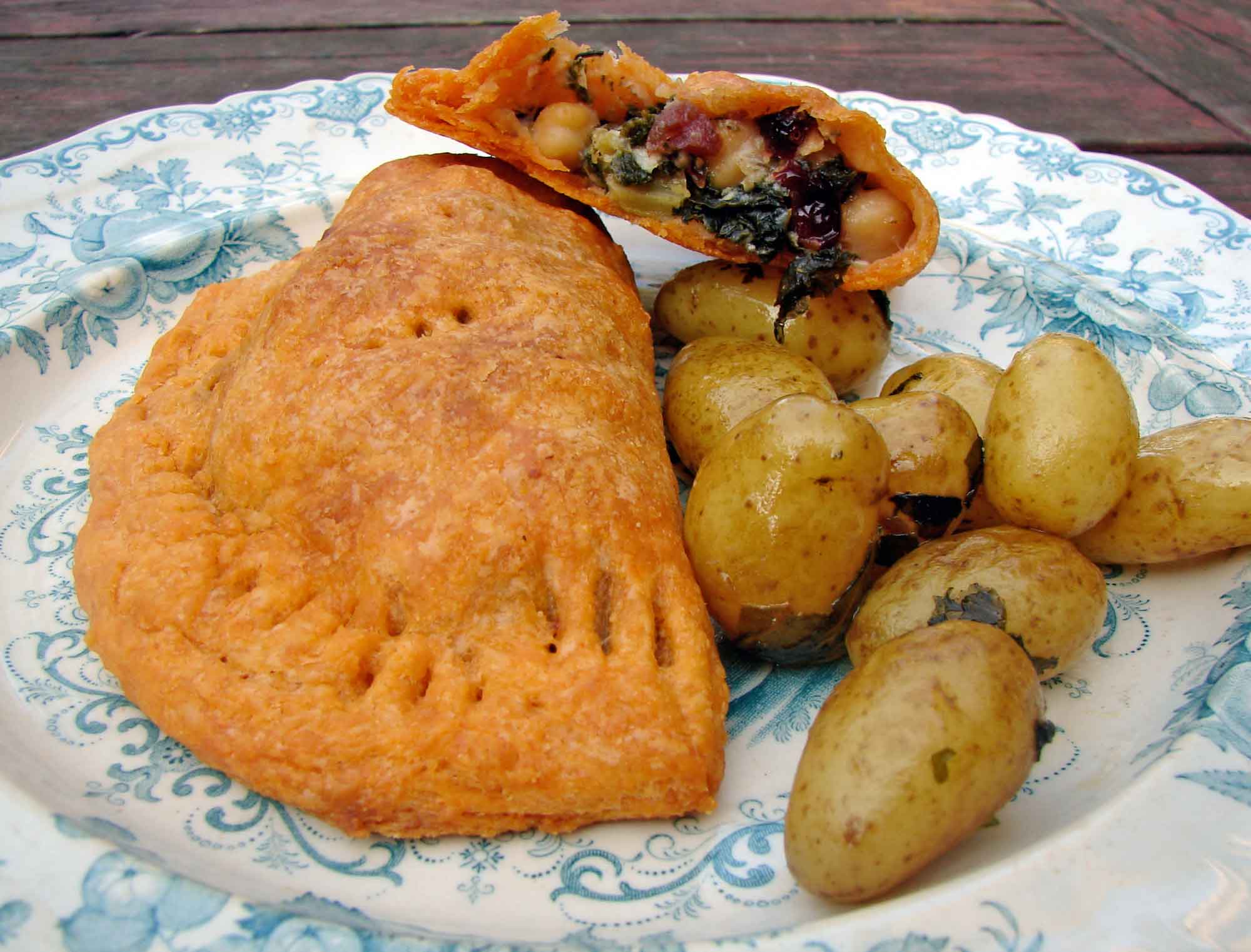
Empanadas with greens, chickpeas and cranberries

Kale, cranberry and chickpea empanadas

Kale, cranberry and chickpea empanadas

I’ve been thinking about the way our world changes, and specifically about the way people bring about that change. Our history as humans is a pattern of progress and change, progress and change. We’ll head blindly in one direction, unable to see quite where we’re going because it’s so close, and then somebody or somebodies will push us in another direction. With a grand gesture, with a slow protest, with a war, with a sit-in, with a newspaper article, with a violent act, with a strike, with a clear bold voice, or in a confused tangle of contradictory words.

I’ve been thinking about certain small acts of rebellion that I love, certain quiet ways that people have changed the rules. They change the world slowly, almost imperceptibly, but the change grows in widening waves. The personal becomes political and art becomes powerful.

I love to read about blues musicians from the last century, growing up in a world of poverty and discrimination and finding a way to make music no matter what the odds. Nobody hired them a music teacher so they’d understand the rules of musical theory. Big Bill Broonzy made a fiddle from a cigar box, Elizabeth Cotten taught herself to play guitar upside-down, they figured it out themselves, with the help of some friends. They sang about their lives, the way they actually were, the trains running by their door, the work they had to do, and they sang about the way they wished their lives could be. The rules they answered to in life were harsh and unjust, but in music they made their own rules, they made music the way they wanted it to sound–that was theirs.

And with books like Catcher in the Rye, Grapes of Wrath and To Kill a Mockingbird, we find a whole new world of writing, with the language people actually use, according to the rules of conversation and not those of grammar. These books are intimate and personal and real, and they describe the lives of normal people as they actually are. This small feat frightened people enough that they were all banned, at one time or another.

And, of course, I love filmmakers who make films the way they think they should be. Hollywood films have quite a rigid set of rules that dictate the way they’re made. These rules are nearly invisible to the viewer, because they’re designed to make a film seem more realistic, and because we’ve grown up with them, we’ve learned them, without even realizing. Well, I love a director like Yasujiro Ozu, who defies these rules. He sets the camera where he thinks it should be, he moves it when it needs to be moved (not very often!) he crosses sight lines, he leaves out plot points. Not to be rebellious, but because he knows how he wants his films to look. His films are mostly about middle-class families going about their lives. They seem placid and uneventful, at least compared to most movies. But in showing us the way we live, in showing us hurtful pettiness and gossip, thoughtlessness and ingratitude, he makes us think about the way we could live, the way we could treat the people around us. It’s subtle and slow, but it seeps into you and makes you notice everything differently and more clearly.

And I believe this small slow change is the most important, and that it extends to all things…not just to art and politics, but to life, which is the very heart of art and politics. We can change the world with the food that we eat, the cars that we drive, the books that we read. We change the world by struggling to understand it, by recognizing the rules that govern us as they are, and by deciding the way we want them to be. We change the world with every kindness to another person, and it’s a shame that this sounds sappy, because it’s true.
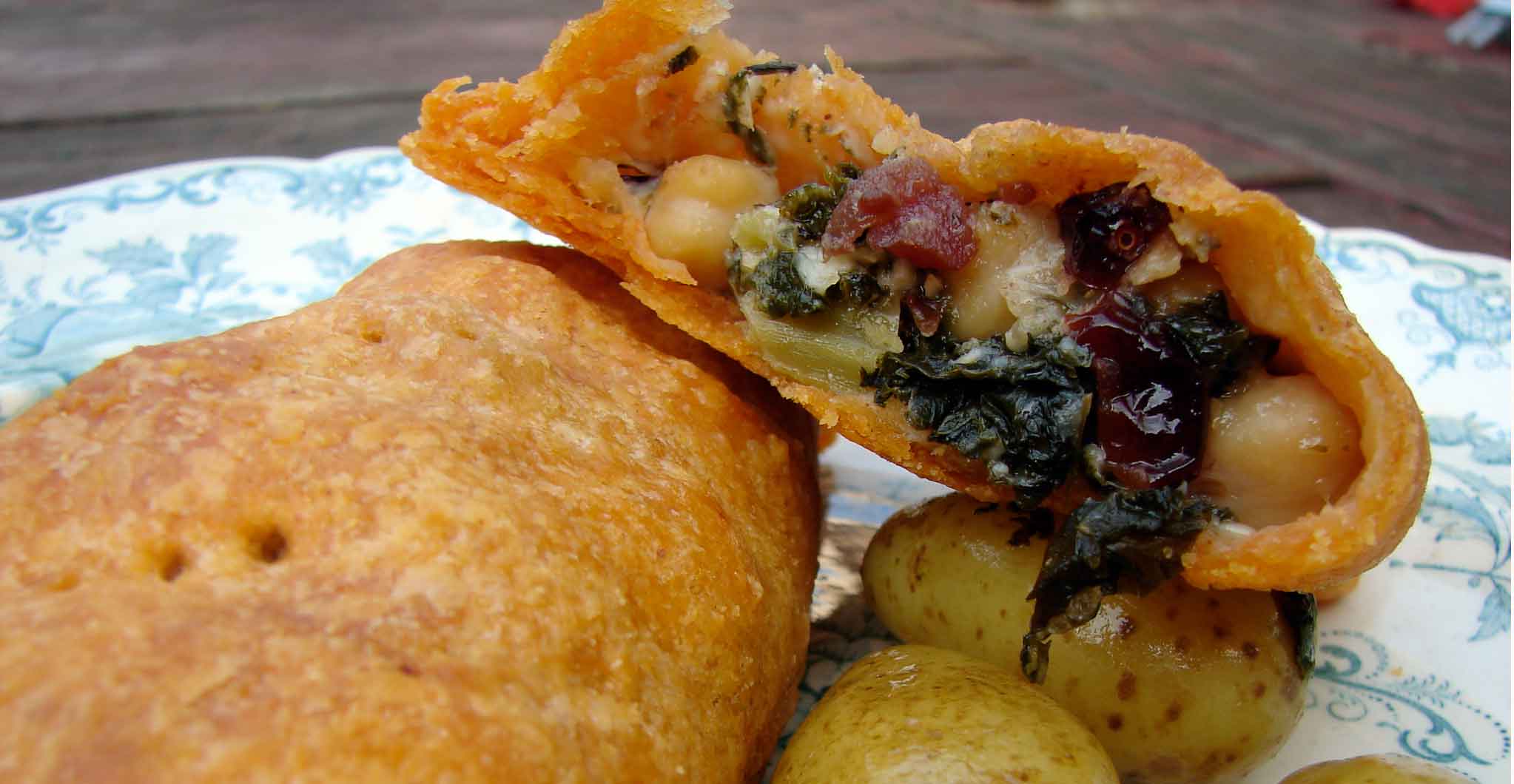
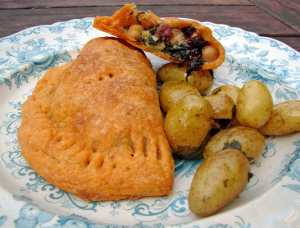
Kale, chickpea and cranberry empanadas

Kale, chickpea and cranberry empanadas

Well, I totally wasn’t going to go on and on about this today! It’s been on my mind, man. I think it’s because David and I just bought some Big Bill Broonzy CDs and they’re phenomenal, and because I’m reading this biography of Jean Vigo. Yeah. So! These are summery sorts of empanadas, I think. I made them for our anniversary picnic dinner. Empanadas make the best picnic food, because you can eat them with your hands and walk around with them, and they combine so many flavors and food groups in one neat package. I also boiled some little potatoes and tossed them with herbs and butter, and they are also a fun, if messy, picnic food. Our picnic was spoiled by dozens and dozens of ticks…a sickening tickening…but we came home and sat in our backyard and finished our empanadas, or lovely smoky, savory sweet empanadas.

Here’s Big Bill Broonzy with Feelin Low Down. Phew, what a song!

Continue reading

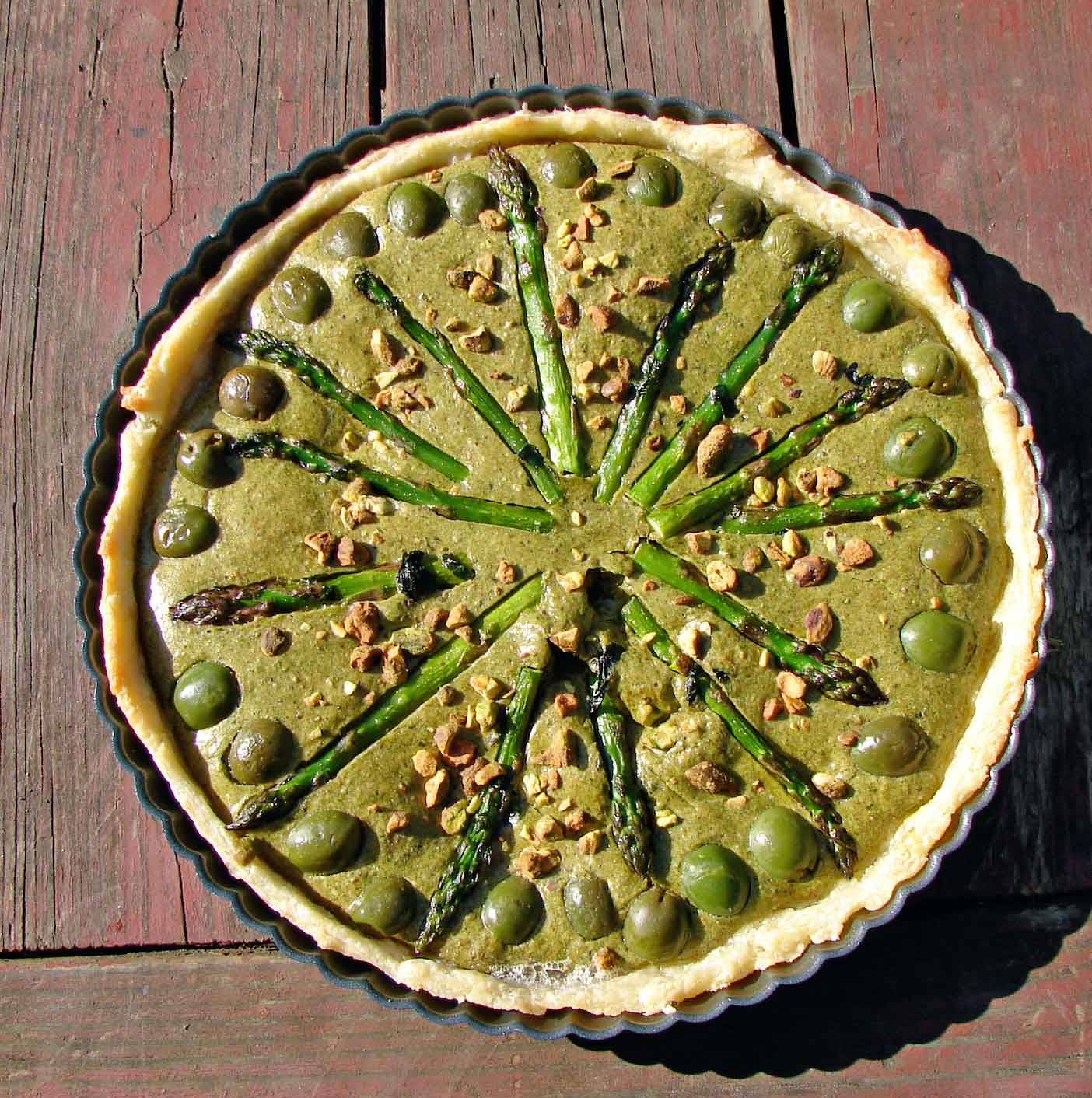
Pistachio and tarragon tart with castelvetrano olives and asparagus

Asparagus, pistachio, castelvetrano tart

Asparagus, pistachio, castelvetrano tart

If The Ordinary was a TV program, (and it’s only a matter of time, really, when you think about it) this would be the moment when we’d saunter, smiling and chatting, over to a book so large it’s printed in dozens of volumes. Everyone in the audience would jump from their seats, screaming, “The OED! Yay! Tell us how some random word was used in the 13th century! And the 15th century and the 18th, and, if possible, give us an example from only a few years ago!! Yay!!” Yes, it’s OED time! Your word for today is “sigh.” Why? Because for some reason I found myself sighing a lot this weekend. And sometimes I would just say, “sigh,” instead of sighing. And then I wrote a story about a ghost who always has a sigh in his voice, and who can shake the whole room with his sigh. Strange, very strange. So on Monday I did the obvious thing and looked the word up in the OED. Turns out its meaning hasn’t changed dramatically over the years. It’s always meant something close to “A sudden, prolonged, deep and more or less audible respiration, following on a deep-drawn breath, and esp. indicating or expressing dejection, weariness, longing, pain, or relief.” It was oft used, ere this, by the supersensitive overwrought poets and lady novelists. And yet, I find it a very fascinating word! Because it’s not a word at all. It’s a space between words. Like the grunts I found so remarkable in Ozu’s Tokyo story, which rise or fall and contain a million different easily readable meanings in one small sound, it’s almost more expressive than any actual word. And a sigh is so full of variations and possibilities! A sigh can indicate exasperation, sadness, fatigue, resignation, comfort, satisfaction. One small sound, barely a sound! Just a breath, quieter than a whisper. And everybody sighs, often without meaning to or even being aware of it. It’s a universal language. My favorite sigher at the moment is Clio. She’ll make herself perfectly comfortable, and then she’ll settle her head on her paws and heave a great sigh, as though she’s just taken care of some very important business and now she can rest for a moment. Even the leaves and the grass and the wind sigh, especially in poems. “Whenever a March-wind sighs He sets the jewel-print of your feet In violets.” A sigh can express longing, you can sigh for something or someone. You can sigh something away…even your life, “Sapores..sighed out his affrighted ghost, at the age..of seventy one,” or your soul, “Hundreds of martyrs sighed away their souls amid the flames.” Maybe your sadnesse is sigh-swolne, your age is sigh-blown, or your tone is sigh-deepened. I love the idea of communicating without words, with something only slightly more audible than a gesture or an expression, with something as vital and intimate as our breath. I love the fact that “Some sighes out their woordes. Some synges their sentences.”

Asparagus pistachio castelvetrano tart

Asparagus pistachio castelvetrano tart

I think of this as my splurge tart. I spent more money than I should on castelvetrano olives and pistachio kernels, (yes, I’m a lazy spendthrift) and asparagus, which doesn’t seem to be getting any cheaper no matter how far into spring we get. So I decided to put them all together in one tart. I made a sort of frangipane of pistachio kernels, but I added asparagus and spinach, too. I wanted it to taste very green. And asparagus and castelvetrano olives are lovely together, juicy and fresh.

Here’s Dolcissimo Sospiro (I think it means “sweet sighs”) sung by the remarkable Montserrat Figueras
Continue reading

Spinach and goat’s cheese tart with roasted peppers and tomatoes

Spinach and goat cheese tart with roasted peppers and tomatoes

Spinach and goat cheese tart with roasted peppers and tomatoes

I have this strange feeling lately, from time-to-time, that I can’t complete a sentence. The words will get stuck somewhere between my brain and my tongue. I’ll wait patiently and powerlessly for somebody to hit me on the side of the head and unjam the process, but whomever I’m addressing will just give me a pitying but bewildered look and go about their business. Why is this happening? I don’t know! It’s senility, probably, but it feels oddly adolescent. I believe I spent my teenage years desperately trying to get my strange thoughts into the world, and then desperately trying to recall them and hide them away once I had, mortified by their strangeness and lack of consequence. And then as I got older I became much chattier, because I simultaneously realized that some of the best thoughts are strange thoughts, and that nobody gives a hoot about what you say, anyway, because they’re not listening half the time and they certainly won’t remember. There’s no point in agonizing regretfully over some stupid thing you said when nobody heard it in the first place. Thus followed a long period of time when I never stopped talking. I turned into a veritable warbling vireo. But with maturity comes increased self-doubt and self-censorship, and the new realization that it doesn’t matter all that much anyway what you say, because nobody is listening half the time so why bother? And you understand that it’s good to listen to other people, and that you have to stop talking for a minute in order to do that. Last night I was lying next to a pukey Isaac as he drifted off to sleep and listening to his odd, sleepy thoughts. He pondered the difference between funny ha ha and funny strange. It bothers him that people use “funny” to mean strange, because it’s not really funny at all. And it suddenly made perfect sense to me that the truth is funny strange, and the best way to express it is with the humorous kind of funny, as comedians and court jesters have known for centuries. And the best way to do this is to be fearless and to plough right on through even if the words come out garbled. And we may both have fallen asleep before I articulated all of this, but that’s okay, because my smart, honest, eloquent Isaac is every kind of funny, and he knows it already. So if I’m talking to you and I seem to get stuck half-way through a sentence, give me a gentle tap on the head, and we’ll see if my nonsense was worth hearing in the first place.

Roasted pepper and tomato tart

Roasted pepper and tomato tart

My friend Diane commissioned a dish for mother’s day. She wanted a vegetable side dish, and somehow I got the impression she wanted it to be substantial enough that any vegetarian guests could call it a meal. So, of course, I made a tart. It’s loaded with vegetables, and with colors and flavors. I had to make it a couple of days early, so I roasted the peppers and tomatoes, and dried them out in the oven a bit, so that they wouldn’t turn the tart too mushy. I think it worked well! (I made one for us, too, to be sure it was tasty, and I’m glad to report that it was!)

Here’s Belle and Sebastian’s Get Me Away from Here I’m Dying because he says, “Oh, that wasn’t what I meant to say at all,” which is such a lovely thing to hear in a pop song!

Continue reading

Strawberry chocolate hazelnut tart -or- failed macaron tart

failed-macaron-tartAndre Bazin once suggested that critics should only write about films they like, and I agree with him. I feel as though I wasted some time earlier in the week talking about aspects of films that I don’t enjoy, and, to borrow Dylan’s phrase, that don’t do no one no good. One of my goals as proprietress of The Ordinary is to share films and music and art that I’ve stumbled upon at some point in my life. I’d like to share things that are often overlooked because they’re small or not-well-hyped or outside the mainstream. I want to share them not just because they deserve to be known, or because their creators have earned praise and recognition, but because your life will be richer for knowing them. Or so I believe. In that spirit, I give you Little Fugitive. I spoke in grand and foolish terms about the death of independent cinema last week, so it’s fitting to talk now about the film that many people have described as the birth of American independent film. Little Fugitive was made in 1953 by novelist Raymond Abrashkin and photographers Morris Engel and Ruth Orkin. It was nominated for an Oscar for best writing, which is somewhat surprising, because the story, though full of drama, is somewhat sparse of plot. Seven-year-old Joey takes a practical joke a little too seriously and believes that he’s killed his older brother. He’s on the lam, and he flees to Coney Island, where he spends a few days eating hot dogs and cotton candy, sleeping under the boardwalk, and collecting the deposit money on glass bottles to pay for food. Richard Andrusco, who played Joey, was a non-professional, as were most of the other actors. Engel hid a camera inside his coat, and he filmed Coney Island, teeming with life. He filmed hundreds of people who had no idea they were on camera. His portrait is joyful and affectionate, he captures every small beautiful gesture. He shows the poetry of two people folding a towel, coming together and moving apart as if in some strange sweet dance, he shows the easy generosity of a boy carrying a younger child through a flooded street. The story is told with the spontaneity and humor of a child–he sees everything because few people notice him, and we’re afforded the same chance. He’s buoyant and resourceful, as most children are. He operates outside the rules of the bustling society around him, darting in and out of crowds, weaving through a sea of towels and sunbathers. During the day this is mostly exhilarating and fun–he’s getting away with something. But as evening falls we feel his wistfulness and loneliness. We’re not told about it, we’re not hammered over the head with it, but we feel it in the off-kilter shots, in shots of him still in the center of a whirl of families, in the lights of the amusement park separated from him by a sea of forbidding darkness, and in the way he falls as the parachute falls, floating slowly down to the dark earth.

In this scene of a sudden summer storm, everybody runs for shelter, and we see Joey by himself, in a desert of lonely empty beachfront, searching for bottles.

The film is so visually beautiful and yet so simple and unplanned–more about observation than manipulation, more about noticing and capturing the beauty of the every day than creating a pretty scene with an expensive budget. The movement of the crowds, the small dramas, the lights and shadows of the boardwalk, the boy’s little triumphs and failures are so beautifully captured and so captivating. Francois Truffaut credits The Little Fugitive with the birth of the French New Wave, “Our New Wave would never have come into being if it hadn’t been for the young American Morris Engel, who showed us the way to independent production with his fine movie The Little Fugitive.” I wish the Americans had noticed this film half as much! I wish it had been like a little pin full of simplicity and honesty to prick the bloated studio system, and let out all of that hot air.

Strawberry hazelnut tart

Strawberry hazelnut tart

The filmmakers of Little Fugitive worked with the materials they had, and that’s what we do here at The Ordinary as well. I had a lot of leftover egg whites from a job I did last week. I tried to make them into hazelnut macarons. All went well, they fluffed up nicely and piped up nicely. But they were soft and sticky when they were done. And they all stuck to the tray. So I scraped them off, mixed them with some butter, liqueur and brown sugar, and made them into a topping for this tart with strawberries and chocolate. Delicious! They crisped up nicely as topping, and added a wonderful crunch to the juicy fruit and the flaky crust. You could use almond macarons, or meringues and chopped hazelnuts. You could probably even combine eggwhites, sugar, coarsely ground hazelnuts and a bit of butter, and it would work just as well.

Here’s One Too Many Mornings by Bob Dylan, because it’s been on my mind, and it seems like such a perfect song right now.

Continue reading

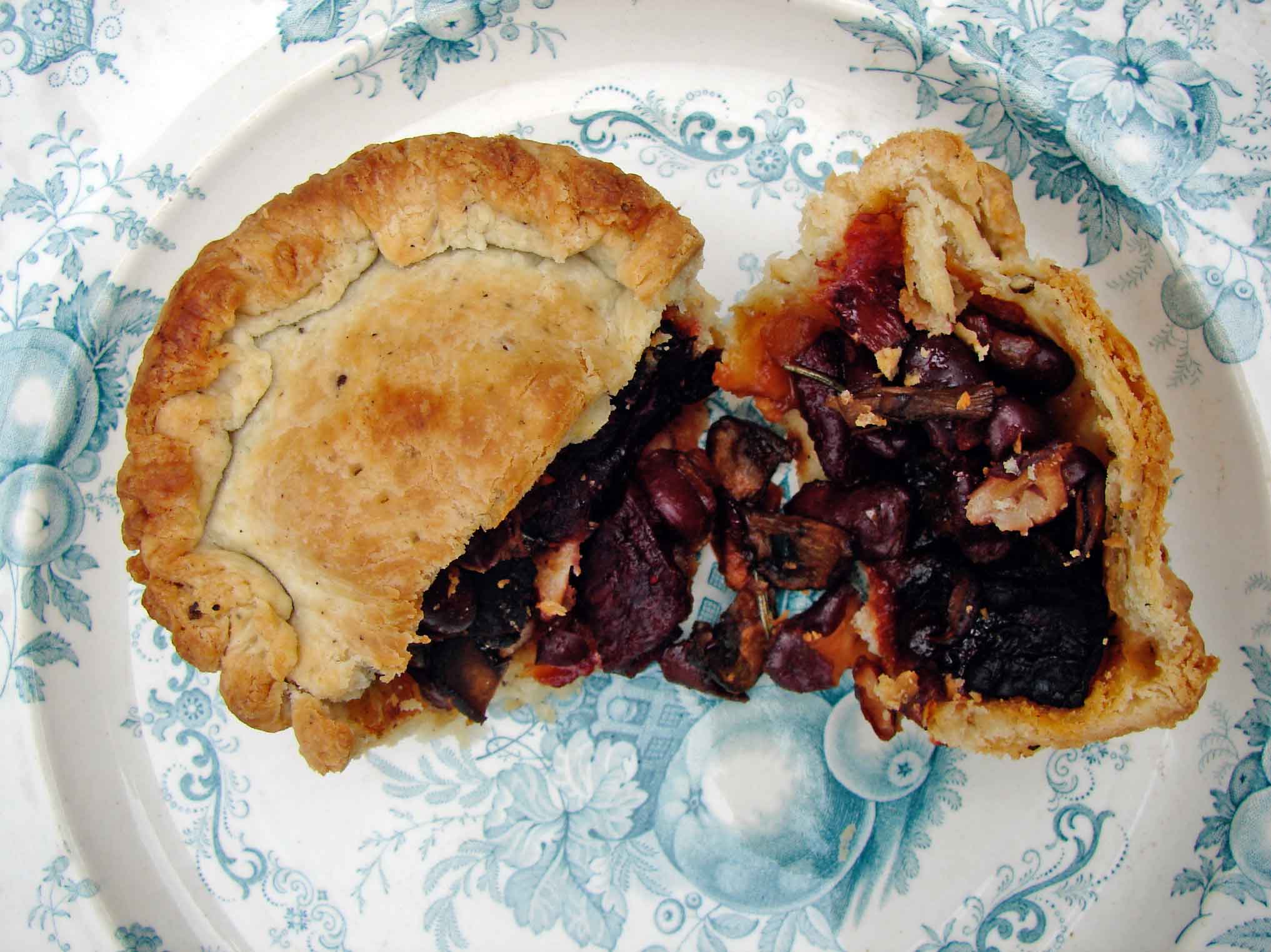
Beet and kidney (bean) pies

Beet and kidney bean pie

Beet and kidney bean pie

It’s take your child to work day. The boys are at the shop with David, hopefully not routering their arms or circular sawing their fingers. Take your child to work day. It’s a little odd, when you stop to think about it, which for better or for worse I’ve just done. It seems to imply a certain neatness and regularity to the world that just doesn’t exist, as I see the world. Does every parent have a safe, child-friendly job? Does every parent have bosses and co-workers that will put up with an infestation of restless children? Does every parent have a job they can work at productively whilst entertaining a bored and or curious tyke? Does every parent have a job during school hours? Maybe they’re chefs or professors or rock stars or stage actors, and they work at night. Does every parent have a job at all? 399919_10200595609406883_2047603223_nI’ve just read that the day was invented by Gloria Steinem as Take Your Daughter to Work Day, and was intended to give girls a sense of possibility and purpose. This makes it seem even odder to me, almost as if it was subversively designed to illustrate the messiness of the world. How many children are bundled off to work with their fathers, because their mothers don’t work during the week because they’re home with children. Maybe they work at night or on the weekend so that they can be there to pick up their children after school. Maybe they have a job but its the kind of job many women have at some point in their lives–cooking or cleaning or caring for someone else’s children, and, strangely, this isn’t the kind of job you’d like to share with your own child. Maybe, like many women, you’re not treated with respect at your job, you’re not treated as an equal. A lot of things have changed, a lot of things have not. Of course, all of this stopping-to-think-about-it has included some thoughts on my own life, my own work, my own ideas of success or failure and how they don’t quite fit into those of the rest of the world. Any thing you do is considered work if somebody pays you to do it. And the more they pay you, the more successful you are at your job. I’ve been doing a bit of pastry cheffing, and yesterday I made a cake for a restaurant. If the boys had stayed home and helped me with that, they would have been at work with me (and we would have had fun!). Today, I don’t have any commissions for cake, so if the boys stayed home from school and baked a cake with me, we’d be goofing off (and we’d still have fun!). If I sit around writing or cooking or conspiring to make a movie, I’m a shiftless slacker who should go out and get a real job (I know, I know…). If somebody pays me to do those things, I’m a person who has followed my dreams to find success (although I probably still can’t afford health insurance.) Everything is a little different looked at through the prism of parenthood. What seems brave and valuable when you’re a single person with only yourself to care for, seems irresponsible once you have children. We have our own small business. We work seven days a week, one way or another, and the truth is that the boys spend all weekend every weekend at work with David, watching him watch the store while I wait tables. This is life as they know it. We don’t have days off or weekends or paid vacations, and we still can’t afford health insurance. And all summer when they knock about the house with me, cleaning and cooking and keeping themselves happy and creative, waiting impatiently while I finish writing some dumb thing so we can go to the creek, they’re at work with me, whether they know it or not. It’s messy, it doesn’t fit into any tidy pattern of employment, but I think they’re okay with it. I think they’re proud of us, and have a sense of possibility and purpose. I think they wouldn’t have it any other way.

Beet and kidney bean pie

Beet and kidney bean pie

Beet and kidney bean pie! It’s ruddy! This was inspired, of course, by beef and kidney pie, or steak and kidney pie. It does have a certain meaty quality to it. It’s roasted beets and mushrooms combined with kidney beans in a saucy sauce of tamari, sage, rosemary, thyme and allspice. If you use vegetable shortening instead of butter in the crust, this would be vegan.

Here’s King Oliver’s Creole Jazz Band with Workingman’s Blues.

Continue reading

Spinach, chickpea and tarragon galette with a pecan crust

Spinach chickpea and tarragon tart

Spinach chickpea and tarragon tart

I had a discussion about film this weekend with some kids at work. They mentioned Tarantino, and, of course, being the bitter old lady that I am, I launched into a diatribe about how much I despise his films. (They love me at work! I’m a bright ray of sunshine!) The kids I was talking to probably thought I was some lame older person who just didn’t get it, man. That’s the whole point of cool films like Tarantino’s, they piss off the humorless missish squares and the easily offended. Well! Obviously I couldn’t leave it at that, so I calmly explained that I’d made a few films myself, and I’d had a lot of respect and hope for the American independent film movement, when I was the same age as these kids, and that Tarantino SINGLE HANDEDLY KILLED IT DEAD!! And that although I haven’t actually seen any of his films since Pulp Fiction, I HATE THEM ALL!! And I quietly assured them that my films weren’t failures due to any flaws that they (obviously) don’t have, but that it was, in fact, ALL QUENTIN TARANTINO’S FAULT!! Well, not just his fault, there are a couple of other people I blame, too. The kids said, “Well, his films are very violent.” And I replied serenely, “IT’S NOT THE VIOLENCE I OBJECT TO!! IT’S THE CLEVER SOULLESS INSINCERITY!! It’s the violence for no reason other than to shock. And we eat it up!” I’ve been thinking about it a lot, since, wandering through the week in the heavy fog of news of shocking violence. I keep returning to the same place, the place I always come back to. It’s so easy to shock. It’s so easy to make people sad or scared. Combine this with a little cleverness, an exploitative knowledge of some cool films other people have made and a good soundtrack, and you’ve got a hit. Obviously this doesn’t just apply to American independent film. It applies to all art, it applies to life. Acts of shocking violence get attention in a way that acts of kindness and generosity rarely do. We have odd values, here in the USA. We pay more attention to petty dramas and insipid squabbles than to anything with complicated depth of emotion. It’s not just Tarantino or independent film, it’s everything–our news, our (sur)reality shows, our politics. It’s difficult to create something that’s quiet and thoughtful and beautiful. It’s difficult to bare your soul, it’s difficult to make something sincere. It’s difficult to make a film about violence as violence actually is–messy and anguished and disjointed. Without honesty, soul, and love, a film isn’t worth watching, a song isn’t worth listening to, life isn’t worth living. This is my diatribe and I’m sticking to it!

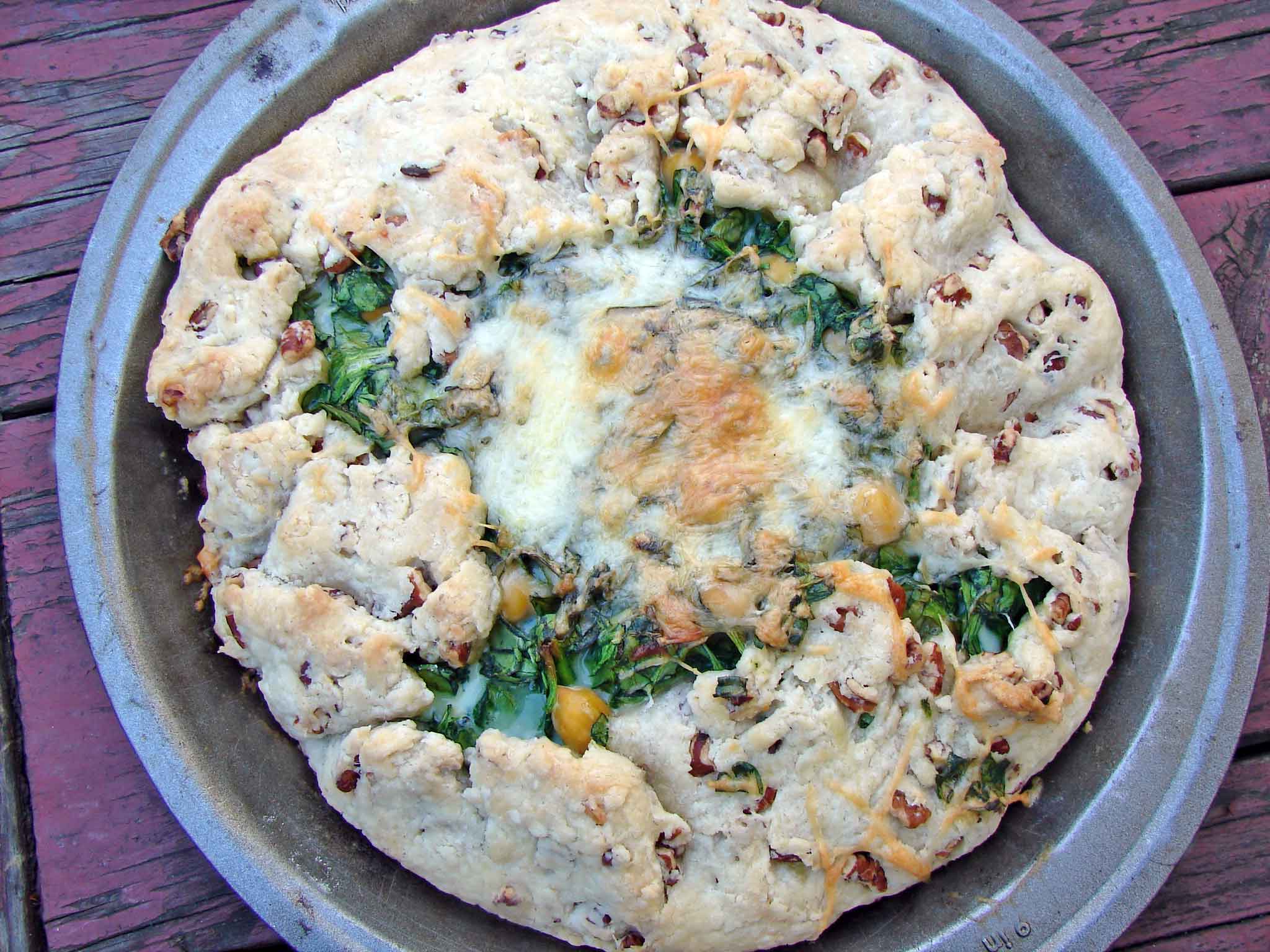
I like a rustic galette in the springtime. It’s a nice transition between the solid, nutty, beany double-crusted pies of winter and the light vegetabley open tarts of summer. You’ve got your greens and your fresh herbs, but they’re sheltered from the cool spring breezes by a touch of crust. A light jacket of crust, a shawl, maybe. This particular crust was nice and crunchy with pecans. And I flavored the filling of spinach and chickpeas with tarragon and fenugreek, because I wanted to do something different. THey’re nice together–they both have mysterious flavors, a little sweet, a little bitter. Don’t use too much fenugreek or it will take over the flavor. A pinch will do it.

Here’s I Know it’s Over, by The Smiths. It’s so easy to laugh, It’s so easy to hate, It takes guts to be gentle and kind.
Continue reading

Pizza with baby spinach, rosemary-roasted mushrooms and brie

Roasted mushroom, spinach and brie pizza

Roasted mushroom, spinach and brie pizza

I find it very beautiful and moving that people make connections–not just that we’re able to, but that we need to. We connect little bits of fact to make stories, because it helps us to understand and to share those little bits of fact. When an event occurs that’s hard for us to understand or explain, we find ways to connect ourselves to it, to make sense of it through our experiences. We do this almost without thinking, it’s our first reaction. And our second is to share those connections, to tell others about them, to talk and talk and try to understand. We’ll say, “I’ve lived in that place,” “I knew that person,” “I knew someone that knew that person.” We’ll make connections to other similar events that we’ve lived through, that we’ve survived. It’s tempting, in a less generous or a myopically hypocritical moment, to say, “We only talk about violence when it happens in a place where we love, to people like us!” Or even to shout, “It’s not about you!” But, of course, it is about you, whoever you may be. It’s about all of us. It’s our way to lend our strength to strangers we may never meet, to suffer with the sufferers and explain the inexplicable. It’s our way to give hope for a better time after a strange, sad time. It’s our way to connect ourselves not just to events but to people, our way to extend our sense of family, to create new bonds of responsibility and affection through compassion and empathy. It’s probably facile and foolish to say it, but it seems that if we could expand these connections to reach beyond similarities of geography or experience, if we could make a larger more universal connection–if we could sympathize with somebody not because we lived in the same place but because she, too, has a daughter, or is a daughter, or is human, or, simply, is alive–if we could do this then we would have fewer of these incomprehensible events to explain, and fewer people to mourn.

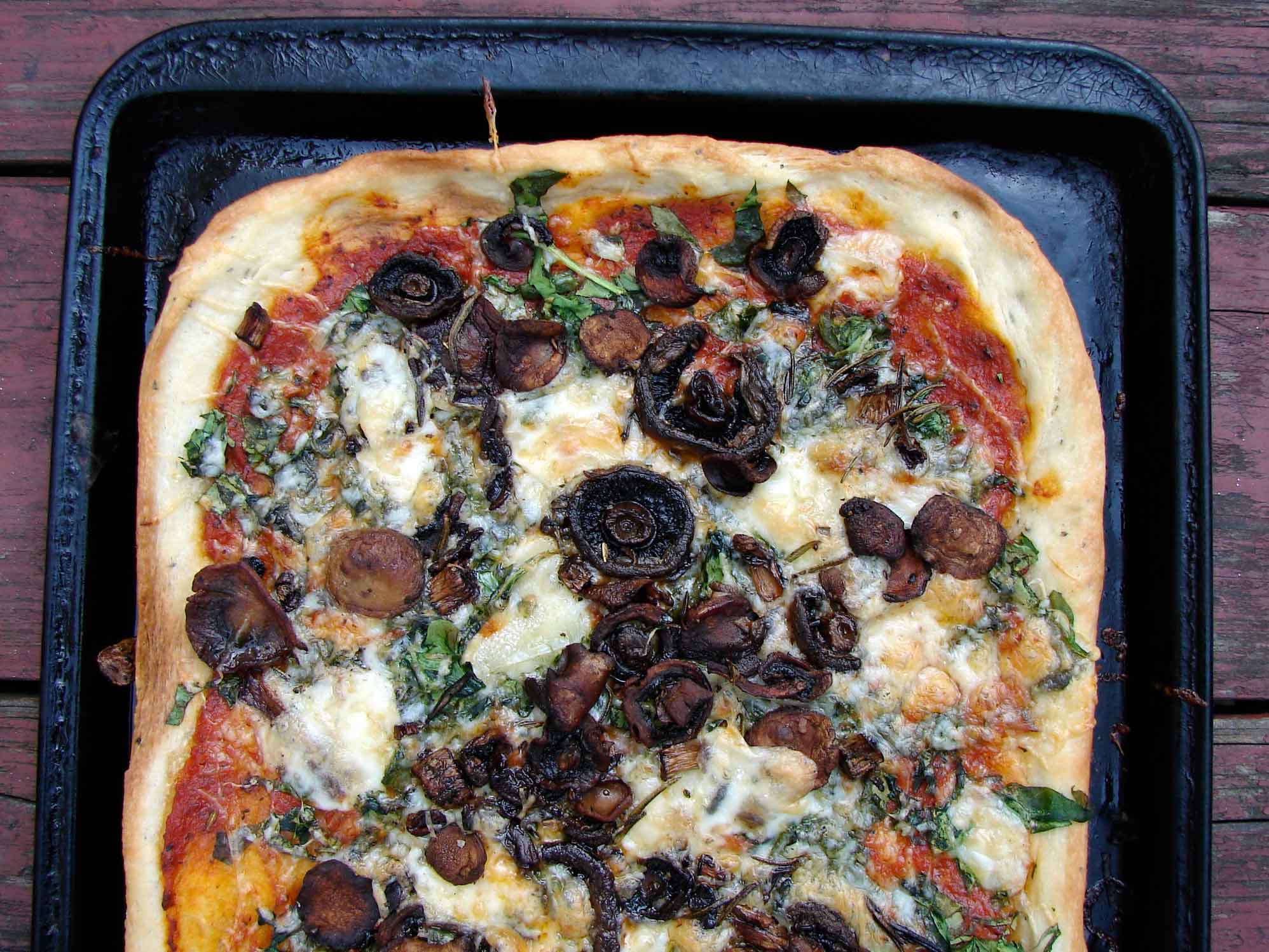
So this is what I’ve been thinking all morning, as I kneaded dough and rolled out dough and shaped quite a few tarts. Baking as comfort and therapy! Over the weekend we made some pizzas. I wanted to make something the boys liked to eat, that they’d actually look forward to, and pizza never fails. I made the dough before I went to work, and then when I came home we made all the toppings. The dough rose for quite a few hours, this way, but it turned out extra crispy! This makes two big cookie-tray-sized pizzas. I made one plain, with just sauce and cheese, and one fancy, with spinach and musrhooms and brie. I’ve given the toppings in amounts here to make two fancy pizzas, but do as you like! That’s the beauty of pizza!

Here’s Elmore James with It Hurts Me Too. One of the best songs ever ever ever.

Continue reading

Roasted butter bean, mushroom, and pecan galette

Roasted mushroom and butterbean galette

Roasted mushroom and butterbean galette

As I’m sure you recall, we’ve been hosting a story-writing salon, here at The Ordinary. The cool kids have started calling it “Story Writing Saturdays at OOTO.” Yeah, it’s been wild. So far, one person has written a story (thanks so much, Laura!) And I’ve gotten one comment on my stories. (“Weird, very weird.”) Flushed with this unparalleled success, we’re marching on with the project. I love today’s picture, I think it’s a real beauty, and I hope that you do, too!
62167_10151448415479589_1872686226_n

As ever, my story is after the jump, and yours could be, too. My rules so far have been–make it quick, and don’t over think. But make your rules up as you go along.

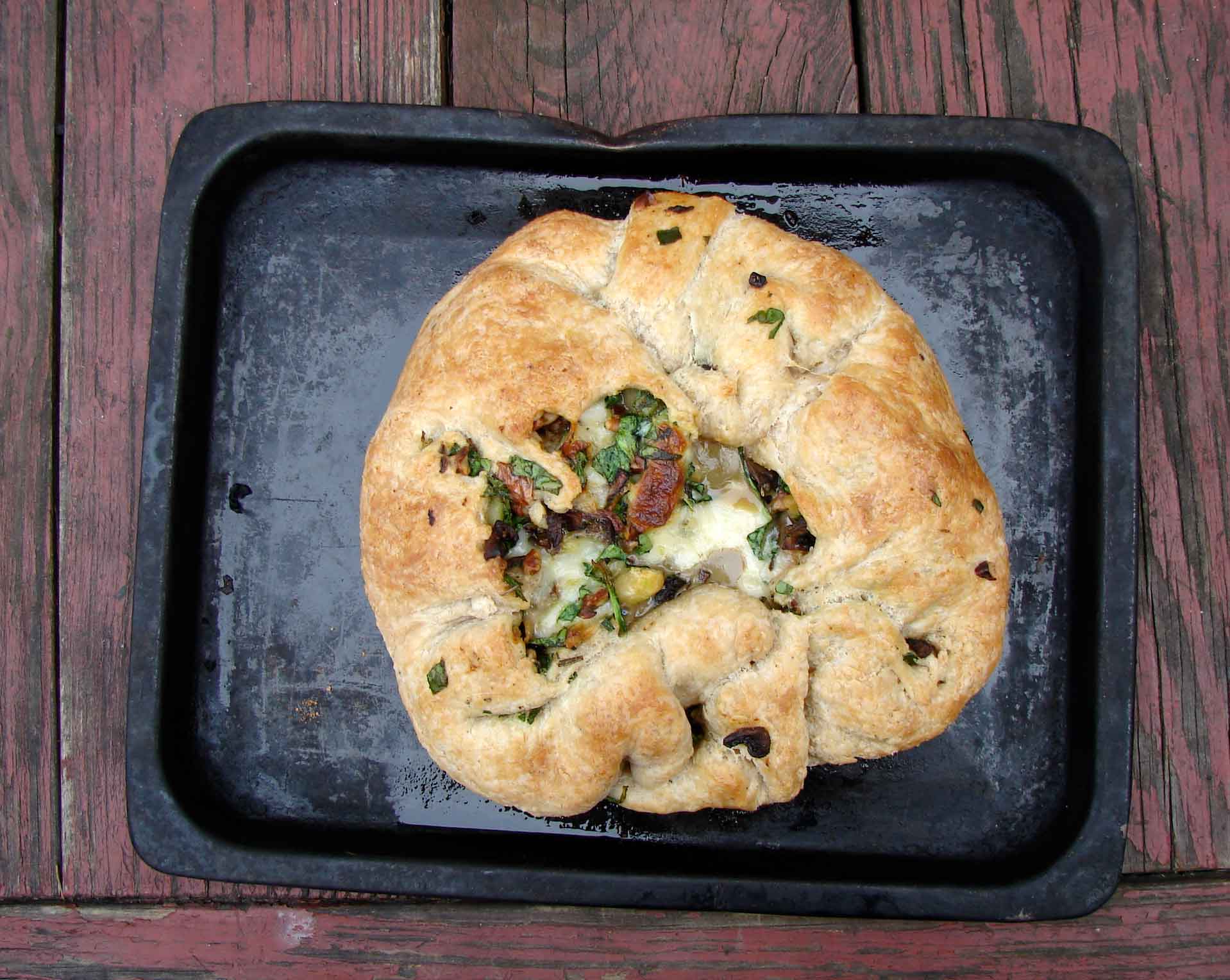
I made this galette up as I went along, until it got to a place that I could actually imagine eating it, and then I knew I’d arrived at the right combination! I roasted some mushrooms and some butter beans. Roasted butter beans are one of my new favorite things! I combined these crispy-soft items with some fresh baby spinach and some crunchy toasted pecans, and then threw in some melty mozzarella, and I baked the whole thing up in a free-form pie. Delicious! And quite easy, too.

Here’s a song from one of my favorite storytellers, Mr. Tom Waits. Gun Street Girl.

Continue reading

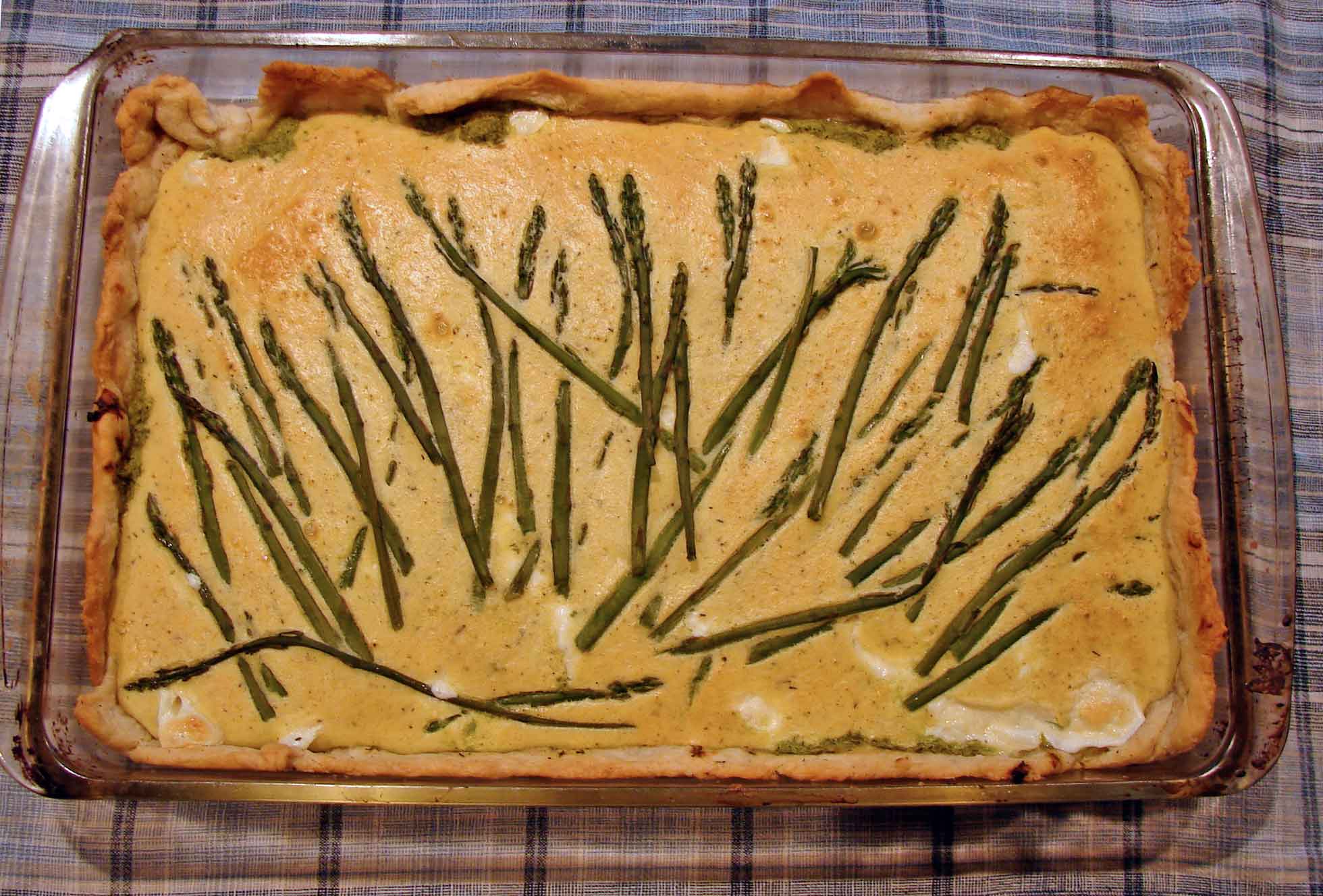
Asparagus and macadamia tart with a lemon-pepper crust

Asparagus and macadamia tart

Asparagus and macadamia tart

I’ve been in a little bit of a blue funk lately, and I couldn’t start to tell you why. It’s inexplicable! The other morning I was lying in bed, trying to think of a good reason to get out of it, and I heard birds singing outside my window. I heard birds whirring and calling and warbling. It wasn’t a particularly nice morning, it was grey and unseasonably cool, but the sun came up a little earlier than it had the day before, as it does this time of year. The birds seemed to recognize that fact and want to sing about it. The birds and bugs and flowers just get on with their work, they go about their business. They wake up and live because that’s what they do in the spring. Maybe they think about time passing. Maybe they’re bewildered by memories and worries, but it doesn’t seem to slow them down any. As the days grow longer and lighter, they work harder and louder, and they seem satisfied with that. They seem happy. It felt like a comfort to me, listening to the birds busy outside my window. It felt like a good reason to get out of bed and get on with my life, and join the cool bright world waking up all around me, at its own irrepressible pace. You can never hold back spring.

This is what we made for easter dinner. It’s modeled on a bakewell tart, so you’ve got your crust, your jammy layer (pureed asparagus and tarragon!), and your baked nut custard layer (with macadamia nuts!). I added lemon zest and pepper to the crust, because both those things go well with asparagus and seemed fresh and springlike. Other than that, we kept it really simple and clean. I thought it was very tasty – bright but comforting.

Here’s Tom Waits with You Can Never Hold Back Spring. Remember everything that spring can bring.
Continue reading