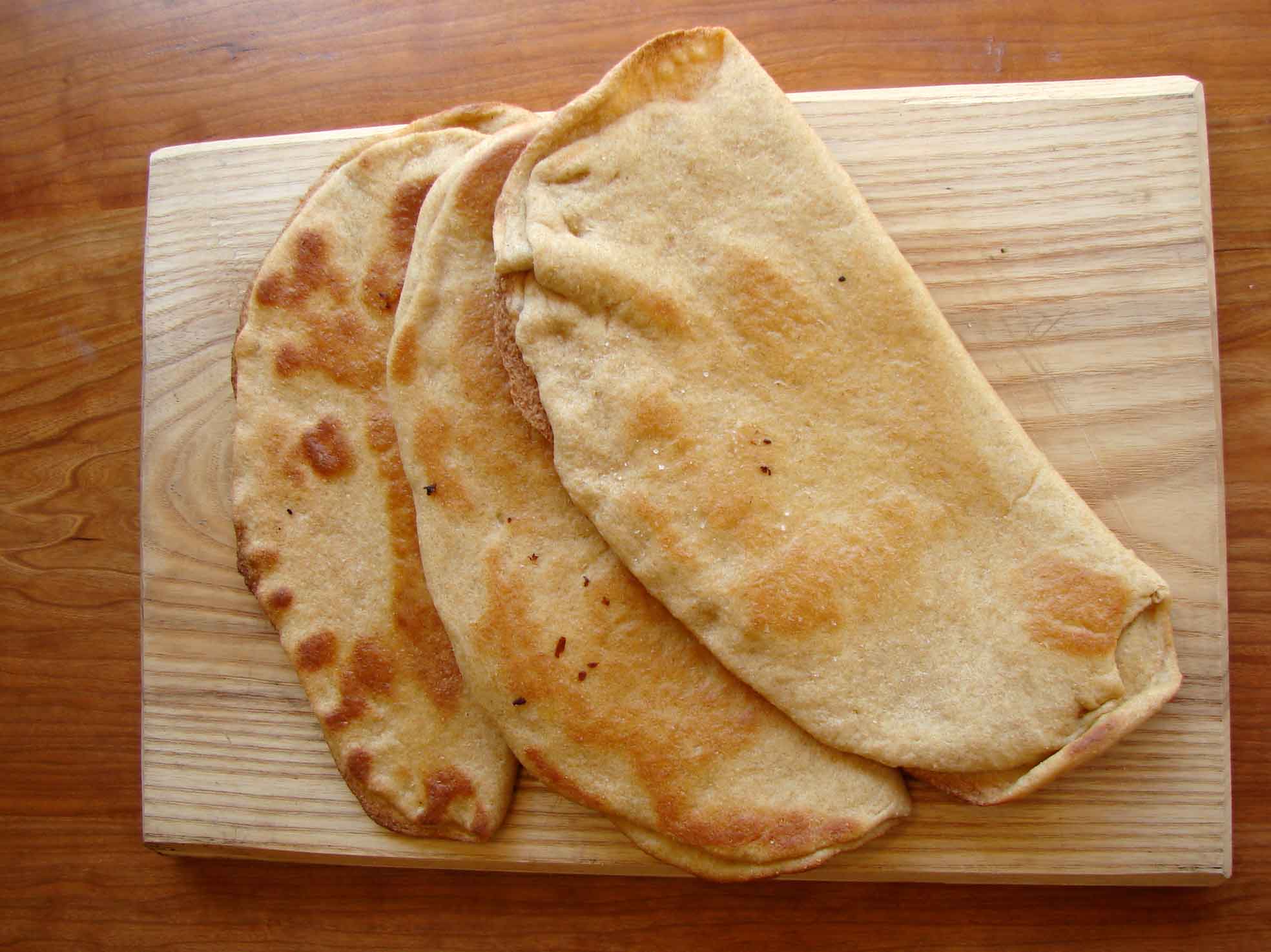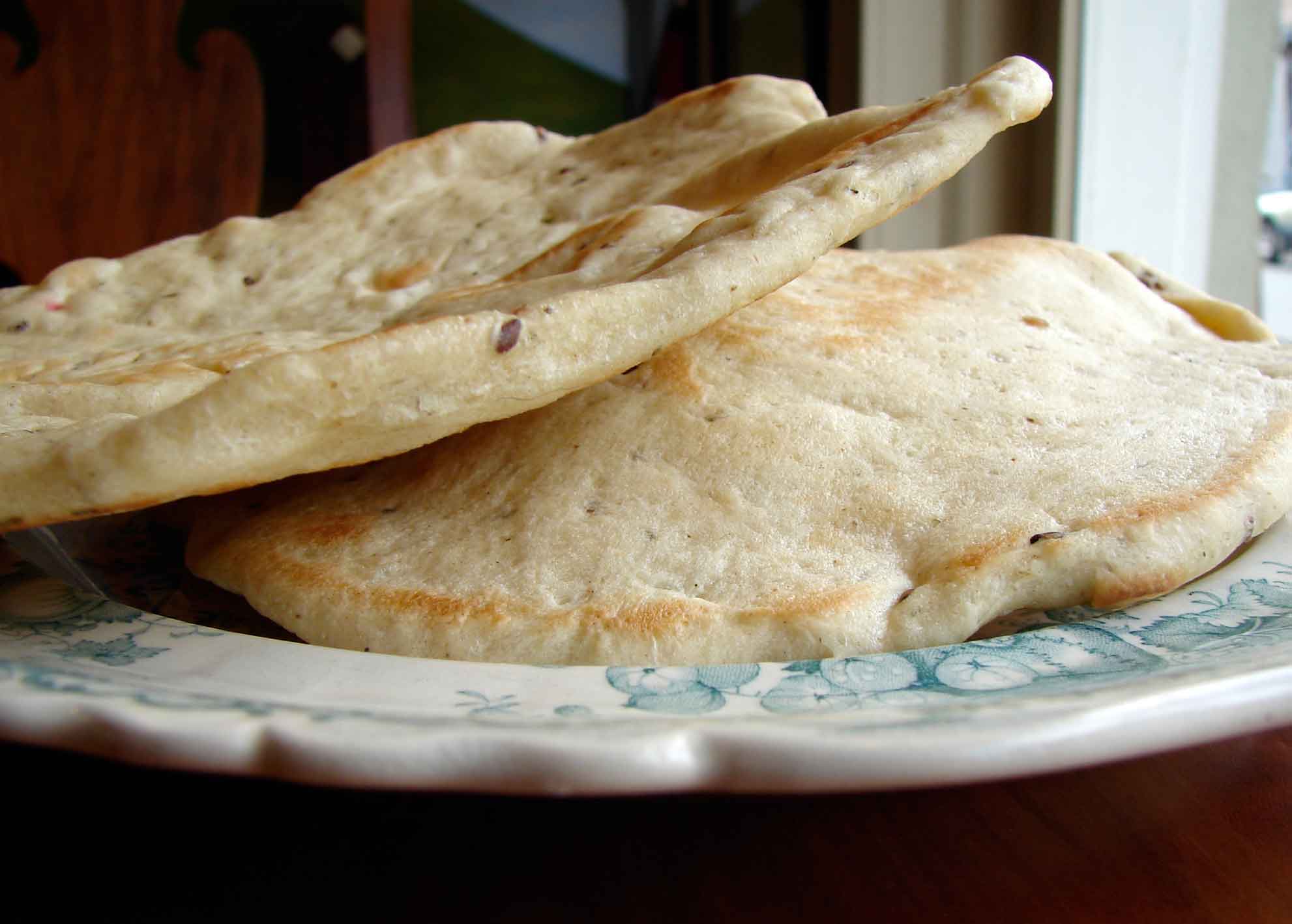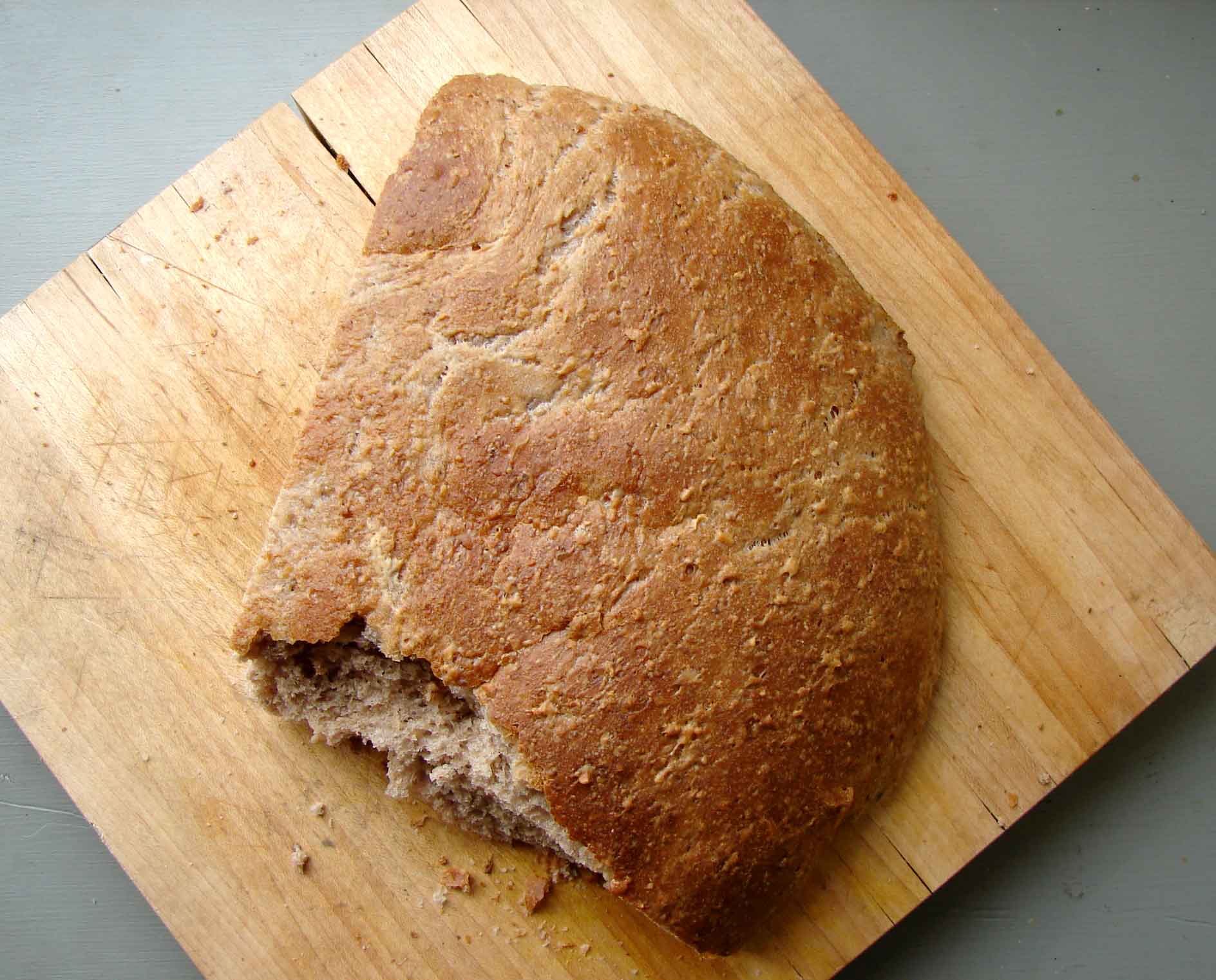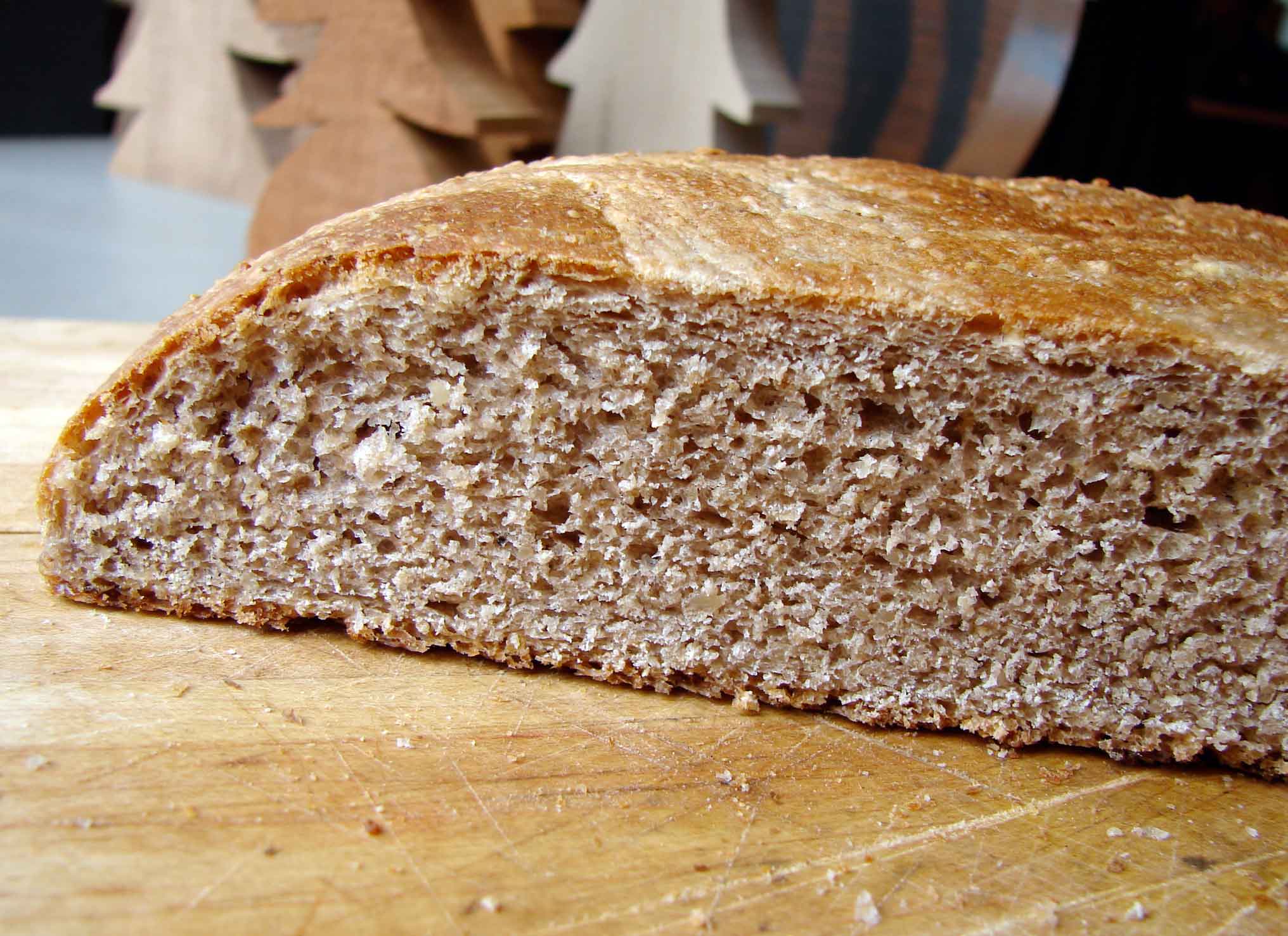
These flatbreads are partially made with whole wheat flour. They have a nice consistency – tender inside, crispy outside. Buttery and yummy. They’re folded over, so you can tuck things inside of them. Which is the most fun way to eat!!
Category Archives: bread
Pita bread flavored with za’atar
Mossbawn
1. Sunlight
There was a sunlit absence.
The helmeted pump in the yard
heated its iron,
water honeyed
in the slung bucket
and the sun stood
like a griddle cooling
against the wall
of each long afternoon.
So, her hands scuffled
over the bakeboard,
the reddening stove
sent its plaque of heat
against her where she stood
in a floury apron
by the window.
Now she dusts the board
with a goose’s wing,
now sits, broad-lapped,
with whitened nails
and measling shins:
here is a space
again, the scone rising
to the tick of two clocks.
And here is love
like a tinsmith’s scoop
sunk past its gleam
in the meal-bin.
I like making pita bread. It’s so simple and pleasurable, and so fun to eat when it’s done. I’ve always liked za’atar bread – middle-eastern flatbread crusted with za’atar spices, so I decided to bake some of them right into the dough of this pita bread. I used a red za’atar spice mix, and added thyme, but za’atar comes in many blends, so you could adjust it to suit your taste. These little breads were soft and puffy inside, so you could pull them apart and fill them with delicious things. The next day we toasted them, and they were lovely and crispy.
Here’s Heaney reading Mossbawn Sunlight
Tender buttery rolled-up rolls
Here are two songs by Elizabeth Cotten, another of those people who seems to have all the answers.
Colcannon bread (kale and potato bread)
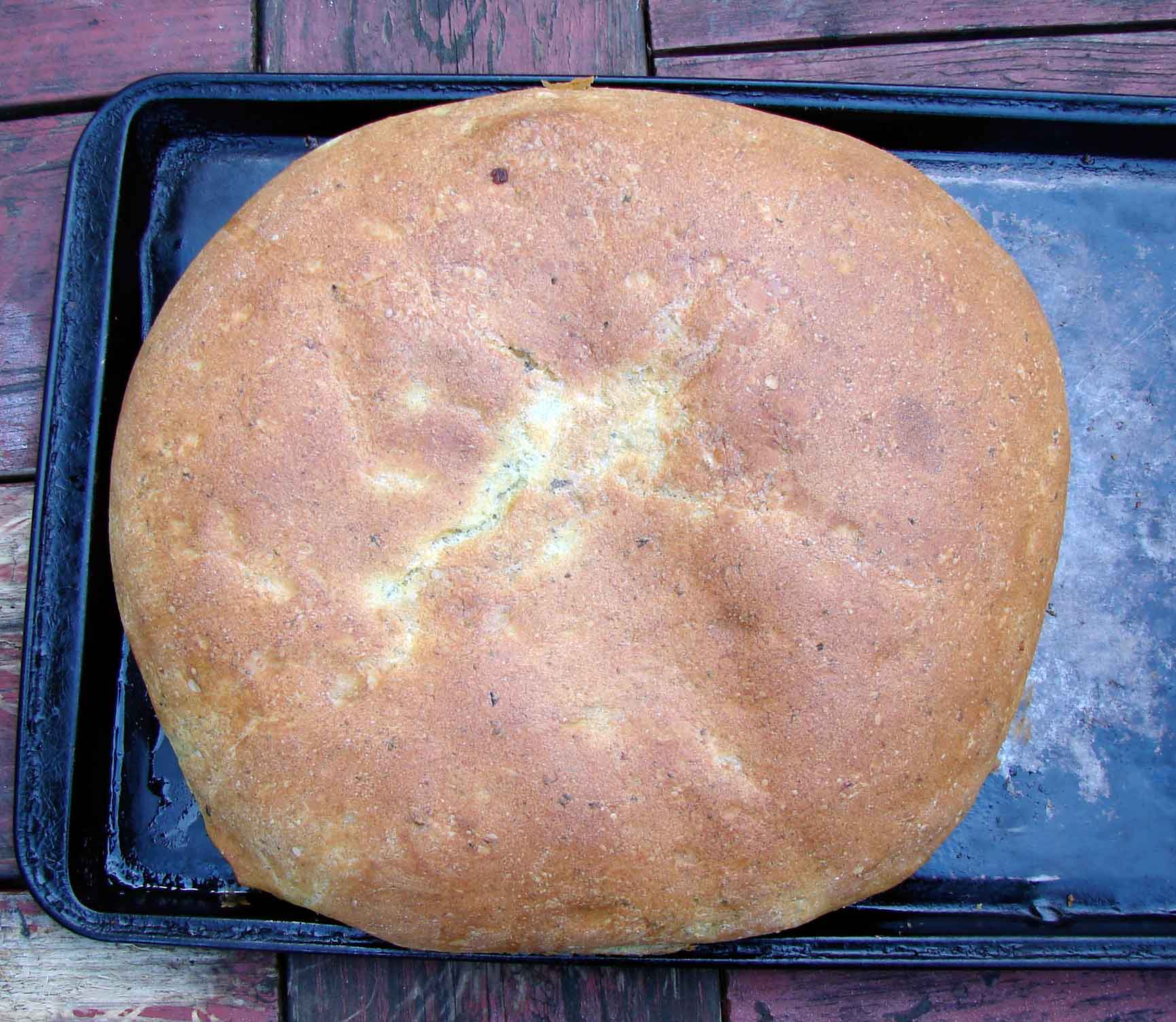
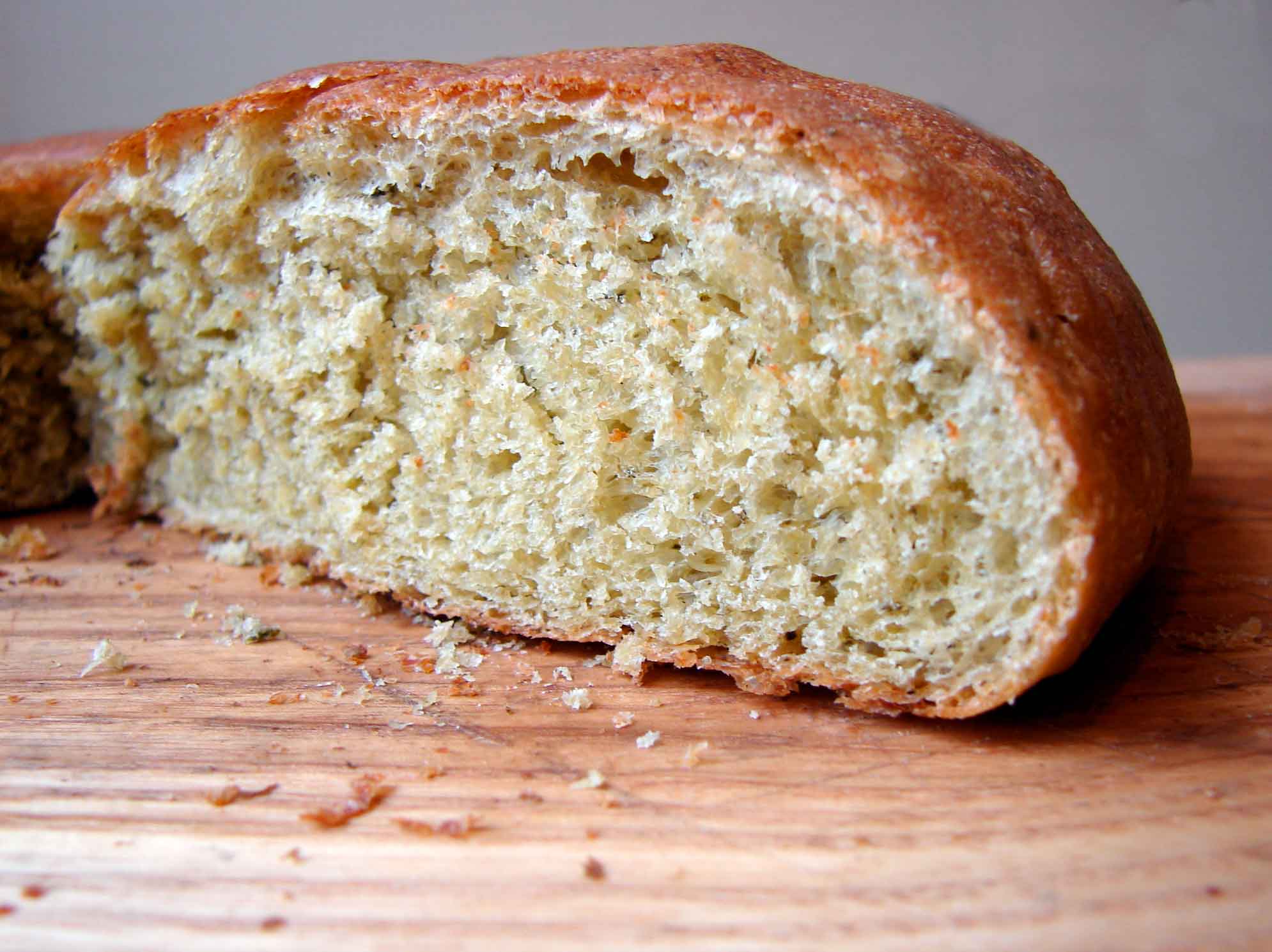
I’m very very excited about this bread! It’s the oddest thing, but I dreamed about it two nights in a row, and then I woke up and spent the rest of each night trying to figure out how to make it. Colcannon, of course, is an Irish dish that contains mashed potatoes and kale or cabbage. In my dream I made it into bread, and so…in real life I did just that! It’s a lovely, light but dense, pale green bread with darker green flecks. The flavor is very subtle – you don’t actually taste kale, just a nice savoriness (which means small boys will like it!). I added plenty of freshly ground pepper for flavor, and an egg and a bit of milk to make it soft inside. It’s got a nice crispy chewy crust. I made one huge loaf, which is very seussical looking, but it probably would have been more practical to make two smaller ones. Maybe next time!
Here’s REM with Wolves, Lower, appropriately, live in Ireland!
Spinach and mozzarella cake
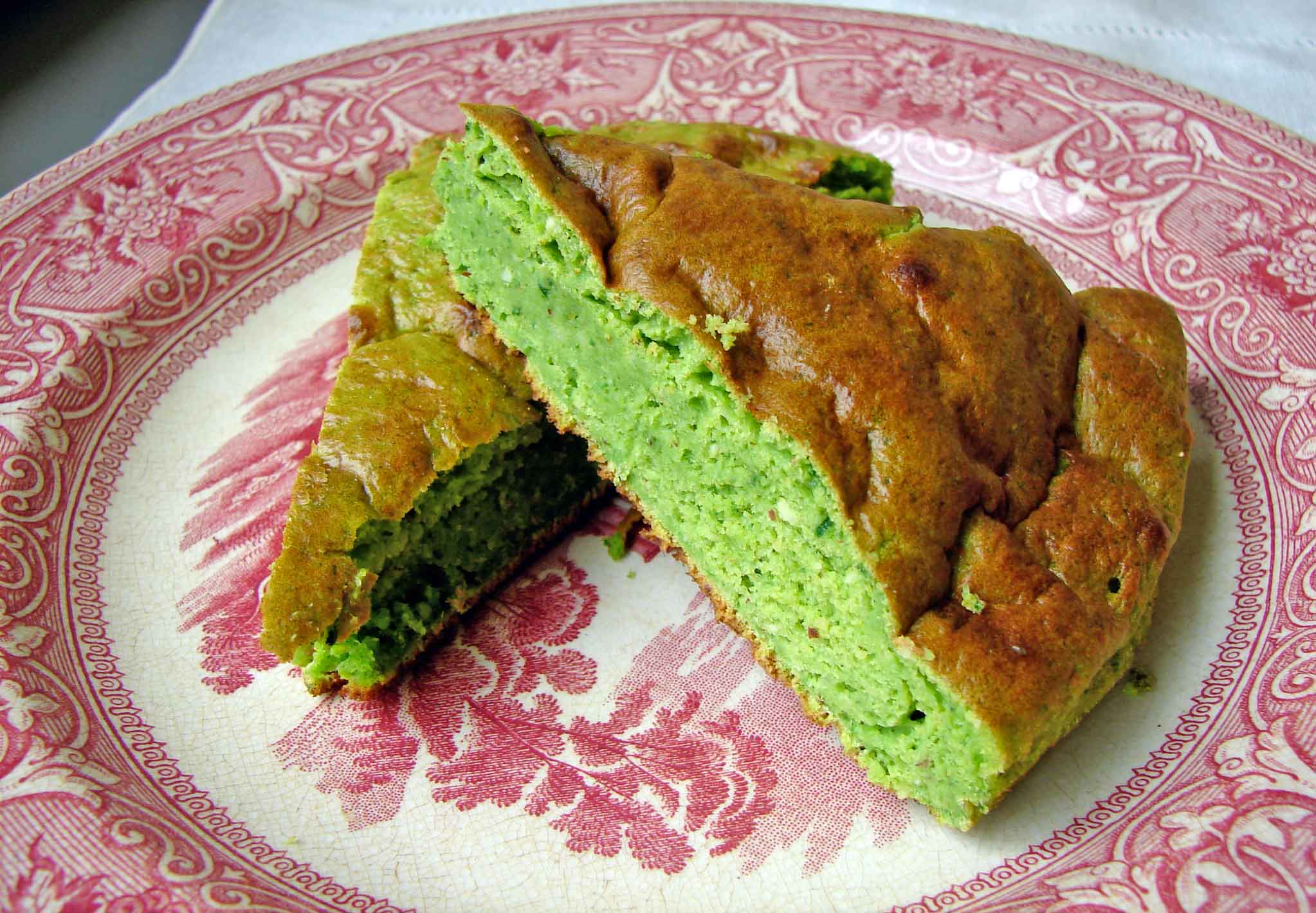
Well, I love this quote! I’d been thinking about these things – the mutability of morality, the shifting quality of truth, the unreliability of words. It struck me as so similar to Emerson’s “A foolish consistency is the hobgoblin of little minds, adored by little statesmen and philosophers and divines. With consistency a great soul has simply nothing to do. He may as well concern himself with his shadow on the wall. Speak what you think now in hard words, and to-morrow speak what to-morrow thinks in hard words again, though it contradict every thing you said to-day” (Thank you, universe, for making everything connect.) I’ve said it before and I’ll say it again – I’m a very vague person, I’m blurry at the edges, and I see the world this way. I think it’s dangerous to decide the world is a certain way, and that we have to act in a certain way in the world, according to a strict set of rules. The idea that morality should come from within – that we need a core of strength despite the fact that the outlines are shifting – is so hopeful about humanity, but it’s a little frightening, too. It would be a comfort to believe that there’s some larger system to decide right and wrong – to reward the good and punish the wicked. But how often have these ideals been corrupted by the people that claim to interpret them for us? How dangerous it is to stubbornly hold onto conclusions to the point where we act out of habit, thoughtlessly, without consideration. How much better to constantly question, to actively seek answers, even though they might not exist in any definitive form, or they may shift and change the moment we catch up to them. And to struggle to express ourselves and share our thoughts, even though the words themselves are as transparent and mutable as water. The world is constantly changing, time is streaming by us, we’re never grown-up, we’re never done. It’s a silly notion, but I have a dream-like image of people as spirits, moving through the world, with some sort of light of truth inside of them, burning strong. What nonsense I’m spouting today! What extra-special foolishness! Happy shrove tuesday! A day that we confess our sins and eat pancakes! I like the idea of pancakes as absolution. I know it doesn’t quite work that way, but it’s a nice notion, anyway. I believe the original habit of pancake-eating on shrove Tuesday began as a way to use up all the fat and sugar in the cupboard before then lenten fast began. Or, more likely, it was because it was February, and everybody wanted something simple and comforting. Like this Seussically green, fat, cheesy pancake! We had some saucy chili left over, and I wanted something to eat it with. Something the boys would like, that would contain vegetables and protein, but in a non-objectionable way. And so we have this cake. It has some almonds, for flavor, texture and protein. It’s got flavorful herbs, it’s got a bit of cheese. And it’s BRIGHT GREEN for spring. After all, supposedly “lenten” comes from the old English for long, because the days are getting longer at the moment, and have such a hopeful light about them!
Here’s The Meters with Mardi Gras Mambo.
Honey oatmeal walnut bread
-
This was a person or, more accurately speaking, a Russian gentleman of a particular kind, no longer young, qui faisait la cinquantaine, as the French say, with rather long, still thick, dark hair, slightly streaked with grey and a small pointed beard. He was wearing a brownish reefer jacket, rather shabby, evidently made by a good tailor though, and of a fashion at least three years old, that had been discarded by smart and well-to-do people for the last two years. His linen and his long scarf-like neck-tie were all such as are worn by people who aim at being stylish, but on closer inspection his linen was not overclean and his wide scarf was very threadbare. The visitor’s check trousers were of excellent cut, but were too light in colour and too tight for the present fashion. His soft fluffy white hat was out of keeping with the season.
In brief there was every appearance of gentility on straitened means. It looked as though the gentleman belonged to that class of idle landowners who used to flourish in the times of serfdom. He had unmistakably been, at some time, in good and fashionable society, had once had good connections, had possibly preserved them indeed, but, after a gay youth, becoming gradually impoverished on the abolition of serfdom, he had sunk into the position of a poor relation of the best class, wandering from one good old friend to another and received by them for his companionable and accommodating disposition and as being, after all, a gentleman who could be asked to sit down with anyone, though, of course, not in a place of honour. Such gentlemen of accommodating temper and dependent position, who can tell a story, take a hand at cards, and who have a distinct aversion for any duties that may be forced upon them, are usually solitary creatures, either bachelors or widowers. Sometimes they have children, but if so, the children are always being brought up at a distance, at some aunt’s, to whom these gentlemen never allude in good society, seeming ashamed of the relationship. They gradually lose sight of their children altogether, though at intervals they receive a birthday or Christmas letter from them and sometimes even answer it.
The countenance of the unexpected visitor was not so much good-natured, as accommodating and ready to assume any amiable expression as occasion might arise. He had no watch, but he had a tortoise-shell lorgnette on a black ribbon. On the middle finger of his right hand was a massive gold ring with a cheap opal stone in it.
This is Ivan’s devil, who may or may not be a figment of Ivan’s fevered imagination. He’s an extremely ordinary fellow! He doesn’t have the decency to wear horns and a cloak, like a devil should. He’s shabby, and dull and embarrassing. Ivan hates him with a passion, he represents everything Ivan despises – everything within himself he hates, facets of his boorish father and elements of Russian society that Ivan disdains. Ivan calls him stupid and foolish, which is the worst thing a person could be, to Ivan. And yet his devil is not stupid at all. He’s extremely clever, of course, because he’s part of Ivan, he shares Ivan’s brilliance. He’s articulate, even witty, and it’s obvious that Ivan has a strange delight in talking to him – in testing him and trying to catch him out, in trying to untangle his devilish riddles. Ivan has met his match, and it is piquant to him, it pierces him almost to madness. He’s sure this devil has the answers to all of his questions, all of the questions that won’t let him rest. It’s such a strange, nightmarish, beautiful passage. The devil has Ivan tied in desperate knots, trying to understand if he is real, or merely a figment, and in the end, it seems he’s both. “Yet such dreams are sometimes seen not by writers, but by the most ordinary people, officials, journalists, priests…. The subject is a complete enigma. A statesman confessed to me, indeed, that all his best ideas came to him when he was asleep. Well, that’s how it is now, though I am your hallucination, yet just as in a nightmare, I say original things which had not entered your head before. So I don’t repeat your ideas, yet I am only your nightmare, nothing more.” In an odd way, it makes you understand and love Ivan better. He’s depressed, and he’s not sure why, but you know that he feels love as well, which is something he would deny, and that he’s almost frantcially hopeful despite his cynicism. I wonder what my devil would be like, made up of all of the parts of myself and the world around me that I hate and fear. Maddeningly ordinary, no doubt, but very dull as well. Probably better not to think about it!
This bread was very nice, I thought! Subtle. It has walnuts and oats, both toasted, but they’re ground to a fine crumbly consistency, so they don’t overwhelm the bread. It’s got a touch of honey, a touch of black pepper, so it’s a little sweet and a little spicy. Very good with soup, very good toasted the next day with cinnamon sugar, and lovely made into savory french toast, which I’ll tell you about another time.Here’s Andrew Manze playing Tartini’s Devil’s Sonata.
Collards and red beans with smoky masa harina pudding-bread
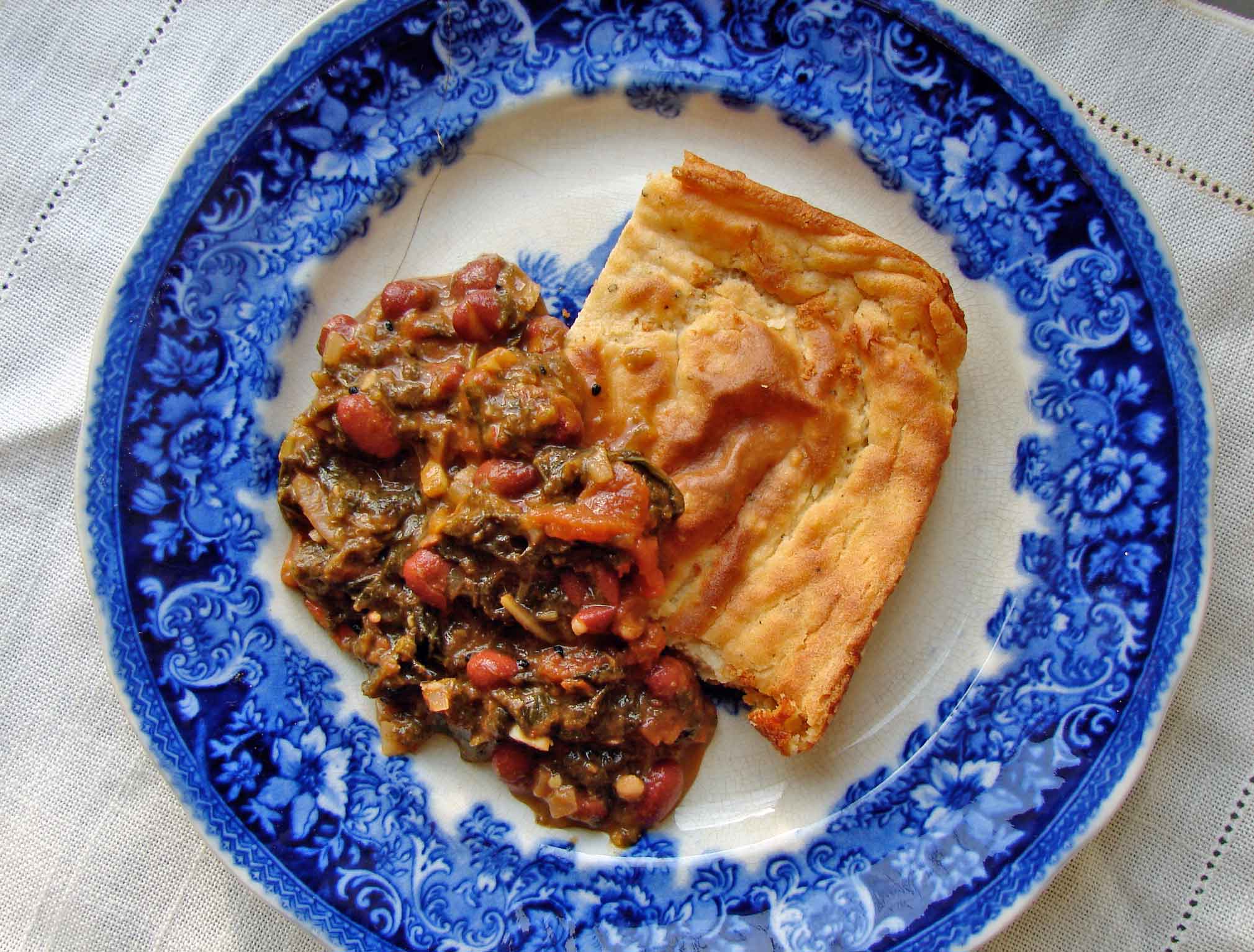
This meal was very comforting in its way. The masa harina bread was soft and dense inside, which is why I think it’s pudding like, and it has the lovely mysterious flavor of masa harina. I love collards! They’re quickly becoming my favorite green. I don’t know why they’re not as popular as kale, but I’d like to announce my campaign to make them so!! Here they’re sauteed with red beans, tomatoes, and lots of lovely spices, like ginger, smoked paprika, and cardamom, to make them spicy, smoky and a tiny bit sweet. Delicious!
Here’s Bessie Smith with Thinking Blues.
Continue reading
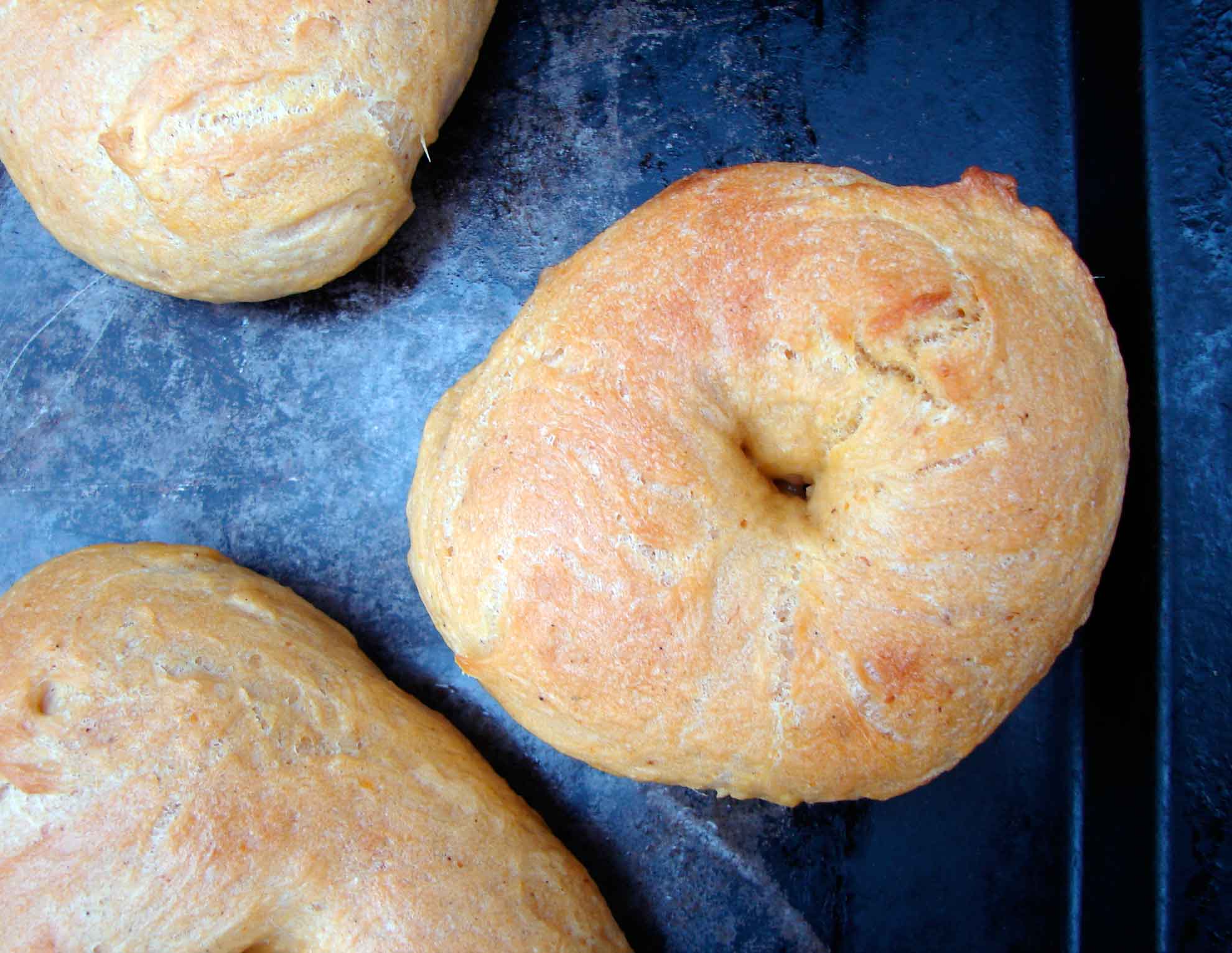
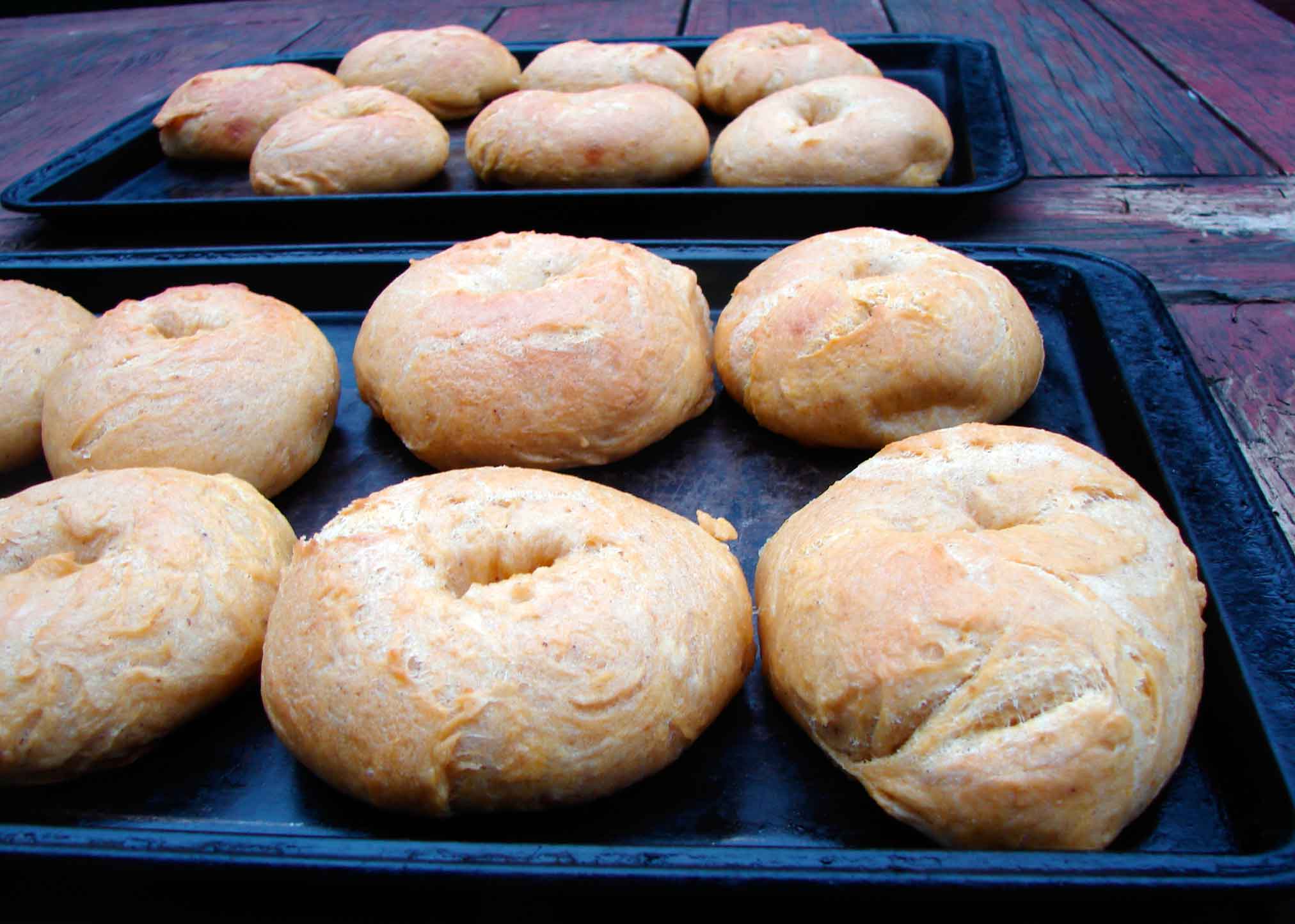
Pumpkin bagels
Here’s the Menahan Street Band with Make the Road by Walking
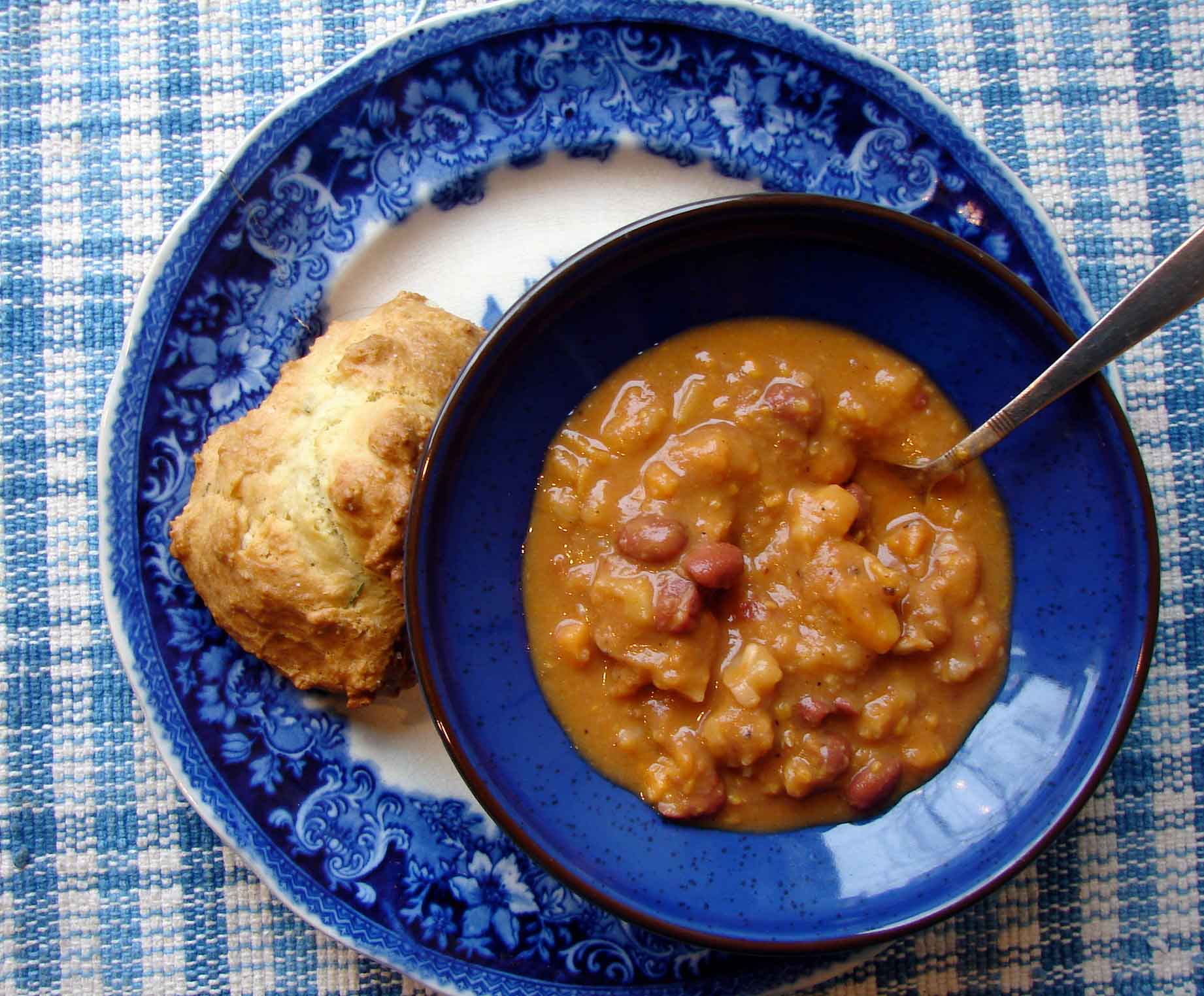
Red bean, sweet potato & hominy stew and Olive oil rosemary biscuits
I felt a little silly posting a recipe today, (and doing laundry, and cleaning, and all other trivial chores). But, maybe that’s part of what it’s all about – about the freedom to get on with these things. These chores are trivial to me, but are luxuries for some people. To buy healthy, nourishing food for your family, to cook it up in a way that you feel good about. To have a safe, warm home to serve it in. Everybody deserves these things! In that spirit I present to you a recipe for a warm, comforting stew full of flavor. I bought pomegranate molasses for the first time, and I’m having fun playing with the sweet/tart continuum. I decided to pair it with a tiny bit of mustard, balsamic, sage, red pepper flakes and smoked paprika, to make a spicy, sweet, tart, smoky sauce. And the biscuits are incredibly easy to make, and very tasty, too. They’re butter-free, and the taste of olive oil in a baked good is always surprising and pleasant.
Well, there are quite a few songs I could choose for today’s post, but I’m going to give you Mos Def’s Fear Not of Men. It’s based, of course, on Fela’s Fear Not For Man, the lyrics of which go thus…
-
Brothers and sisters
The father of Pan-Africanism
Dr. Kwame Nkrumah
Says to all black people
All over the world:
“The secret of life is to have no fear”
We all have to understand that
Mos Def’s song isn’t explicitly about Martin Luther King’s Day, but the lyrics have always resonated on this day of all days. He says, “A lot of things have changed, and a lot of things have not.” And there’s no doubt that this is true, for better or for worse. But the song is about courage in the face of danger, courage to work towards something that’s bigger than all of us. And it’s about a universal rhythm that beats through all of us, surely leading us inevitably in the same direction.
-
All over the world hearts pound with the rhythm
Fear not of men because men must die
Mind over matter and soul before flesh
Angels for the pain keep a record in time
which is passin and runnin like a caravan freighter
The world is overrun with the wealthy and the wicked
But God is sufficient in disposin of affairs
Gunmen and stockholders try to merit your fear
But God is sufficient over plans they prepared.
Millet, red lentil, and sweet potato dal and pumpkin ricotta flatbreads
There is something to be learned from a rainstorm. When meeting with a sudden shower, you try not to get wet and run quickly along the road. By doing such things as passing under the eaves of houses, you still get wet. When you are resolved from the beginning, you will not be perplexed, though you will still get the same soaking. This understanding extends to all things.
I found that I didn’t feel quite so unproductive, because my mind was busy, and then I felt foolish for thinking that. Then I thought about writing about thinking about writing about sitting there. And then Clio said, “Man, you’re cramping my style. I’ve got some napping to be getting on with.” The mail came, but I didn’t bring it in because it’s only bills and advertisements. Then I went up to clean the bathroom, and thought about writing about that, but luckily for you I won’t do that. When I was little, I used to narrate my actions in my head in the third person. Not all the time, because that would be crazy! But often. “And then Claire sat on a bench in the middle of the room. She always got through with looking at paintings before everyone else. She did everything quickly. And now she sat and watched the people looking at the paintings…” And on an on it goes! I feel like I’ve been doing that again lately, because of The Ordinary. Not in third person now, so it’s slightly less eccentric. But when I cook, I’ll think about writing about it, and aboutexplaining how it’s done. And sometimes I’ll wake up in the middle of the night, and try to occupy my brain with whatever I might say on here the next day (explains a lot about the quality of the work, doesn’t it?) and I’ll find myself writing in my head. And, yes, this might seem crazy, but I think this is a good thing!!! I firmly believe that the more you write, the more you write. The more you think about writing, the more you’ll write, and hopefully it will become a habit. (This doesn’t guarantee good writing, mind you! It just makes it easier to get started.) I think this understanding extends to all things. The more you draw, the more you’ll draw. If you want to make movies, you should watch movies, talk about movies, take photographs, write movies, make shorts. The more you cook, the more you’ll think about cooking, and the more you’ll want to try new things and experiment with new ingredients, until you’ll get sick of it all and go out to dinner. If you want to make music, the more you listen to songs, and practice making music, and think about music, the more life will present itself to you as a song. Because even if writing and making movies and drawing aren’t important, which, arguably they’re not at all, I’d still like to go through life looking for things to write about (or sing about or draw pictures of.) Just as the actors that work with Jaques Tati started to see little comic pieces in everyday exchanges in the world around them, you’ll start to find that even small things are worth noticing and remembering and examining, which in some way makes life worth living.
And now I feel foolish for writing about writing, so let’s talk about this dal instead. It’s made with red lentils, millet and sweet potatoes, and it’s cooked for some time, which makes it dense and soft and porridgey. Red lentils are nice because they cook quickly, but if you cook them longer, as (I believe) Indian dals are cooked, they take on a whole different life. I added spinach and peas to pep things up and provide a little texture. And I used beautiful black cardamom pods, which are so smoky and sweet (but watch out for them when you eat the dal, you wouldn’t want to bite down on one!) I decided that cumin was too obvious in this dish, so I left it out in favor of other sweet and smoky spices, like cardamom, nigella seeds and smoked paprika. The flat breads were quick and easy to make – they have a little pumpkin puree and a little ricotta, which gives them a nice flavor and texture, and they were just crunchy enough to provide a pleasant contrast to the soft dal.
Here’s Station Showdown from the Yojimbo soundtrack, cause it’s all about the millet. Golly, this soundtrack is brilliant!