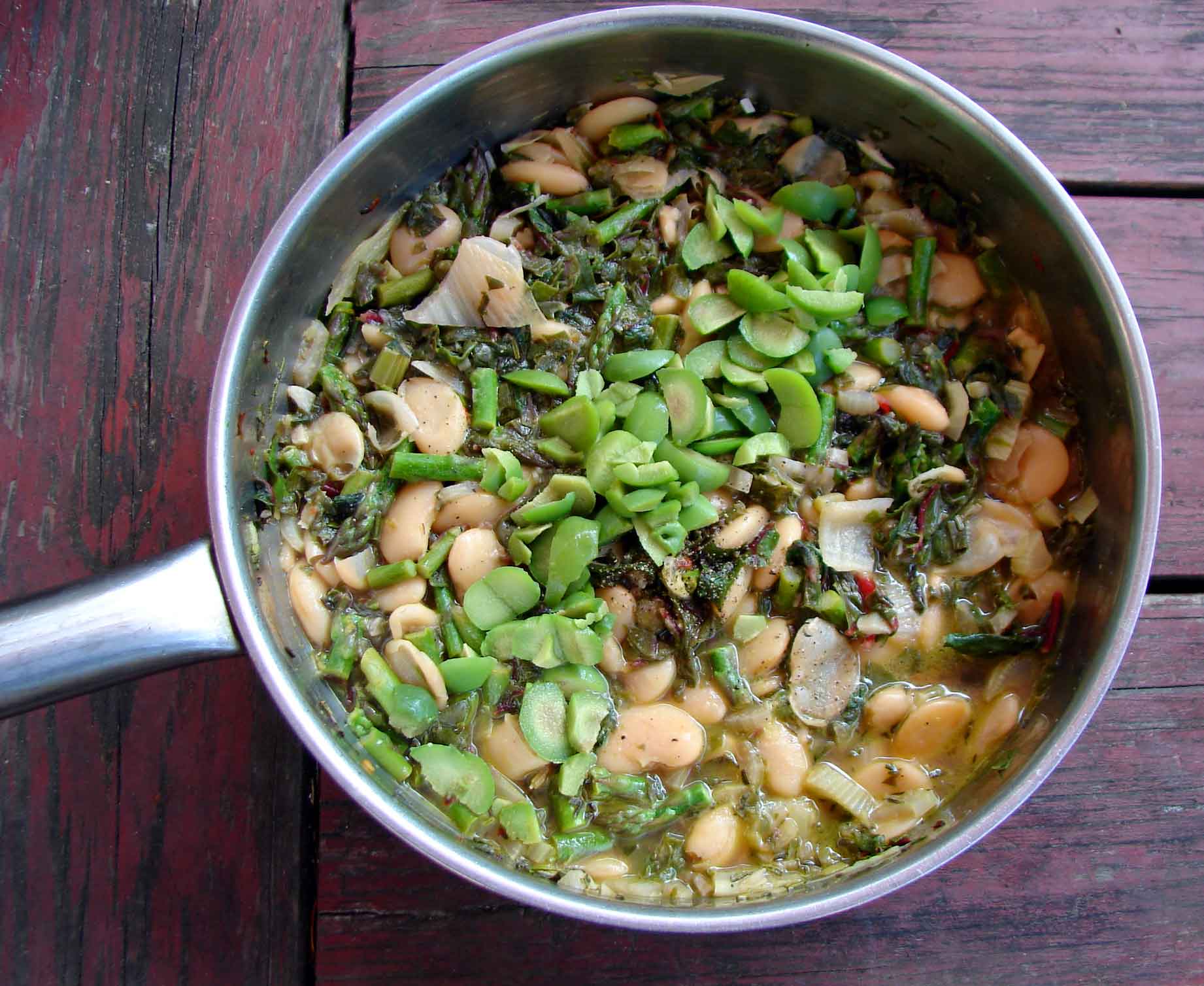
Butter beans with chard, asparagus, fennel, and castelvetrano olives

Butterbean and spring vegetables

Butterbean and spring vegetables

I’m always in a hurry when Isaac and I walk to school. He’s an ambler, and he’s not concerned at all about the dire consequences of tardiness. One of us has to be! As a mother, I think the responsibility falls to me. So I’m always rushing him along, yelling, “With me!” as if he’s a dog I’m teaching to heel. Not this week, though. It’s the last week of school. Monday morning the air was just right, like water of a perfect temperature. In a sleep-deprived daze following a weekend of insomnia, it seemed as though we were swimming serenely through the air. It felt perfect to walk along, holding Isaac’s hand, answering true and false questions about matters big and small. I didn’t want the walk to end.
“True or false, the universe has a universe.” True!
“True or false, all bats are scaly and rough.” Well, that’s complicated, because all bats are different. “Wrong! It’s false, all bats are incredibly soft and furry.” Wait a minute, just because your brother touched one bat and it was incredibly soft and furry does not mean that every bat in the whole world is soft and furry. That’s faulty reasoning. “Nope, Malcolm said so. All bats are soft and furry.”
“True or false, when a bat flaps its wings, the vibrations can be felt on the other side of the world.” Um, true? Short pause. “Dad said it was false.” Well, where did you hear it was true? Longer pause. “Batman. Why are you laughing?”

I’ve been feeling like a literary magpie, lately. Or maybe just an airhead. I’ll happen across a small passage that intrigues me, and then I’ll buy the whole book from the magical used book store across the street, which has every book you can ever think of, precisely when you’re thinking of it. Then I’ll read a chapter, be completely charmed by it but understand it not at all. I’ll read a wikipedia entry on the text, feel slightly more informed and slightly guilty, and then some new passage will capture my gnat-like attention, and I’ll chase after that like Clio chases after dried leaves. A bit of Aristotle, a bit of Hobbes, a bit of the Mahabarata…maybe a few pages of Tintin to clear the palate. And of course I want to talk about whatever I’m reading, I want to discuss it and try to understand it, but my lack of comprehension combines with my inability to string words together to form a sentence and I sound like a complete idiot. But I think I’m okay with that. I’m not in school, I don’t have to write an essay or pass a test. I don’t even have to finish a book if I don’t want to! Although I usually do want to, if only for a feeling of completion. I like to read books about other people trying to figure things out, even though I don’t believe it’s possible to do so. I love the language, particularly in the very old books, I like the perfect parallel between my inability to understand a concept and the strangeness of the words themselves. I’m fascinated by the connections between books from around the world and throughout history, by the patterns that form, and the way everybody was influenced by somebody else, their thoughts echo the thoughts of those who wrote before them. In a poem Isaac described himself as “a thinker.” I’m so glad that he is, and that he knows that he is! I like to see Isaac and Malcolm make sense of everything, everything that teachers tell them, and friends tell them, that they tell each other, everything they read, and yes, even all the important scientific facts they learn from a batman cartoon. They’re processing it all, and learning to doubt and to reason, and it’s a beautiful process to watch. There’s a beautiful portrait of young Francis Bacon by Nicholas Hilliard with an inscription that translates as, “If only I could paint his mind.” I know what he means!

UPDATE! This was our conversation on the way home from school, and it seemed relevant, and I want to remember it, so here you go…

Isaac: I frequently think about what was there before space.
Me: Do you frequently think about that?
Isaac: Yes.
Me: And what do you think was there?
Isaac: Well, I get frustrated, because I think there was nothing, but then I think about what color nothing would be.
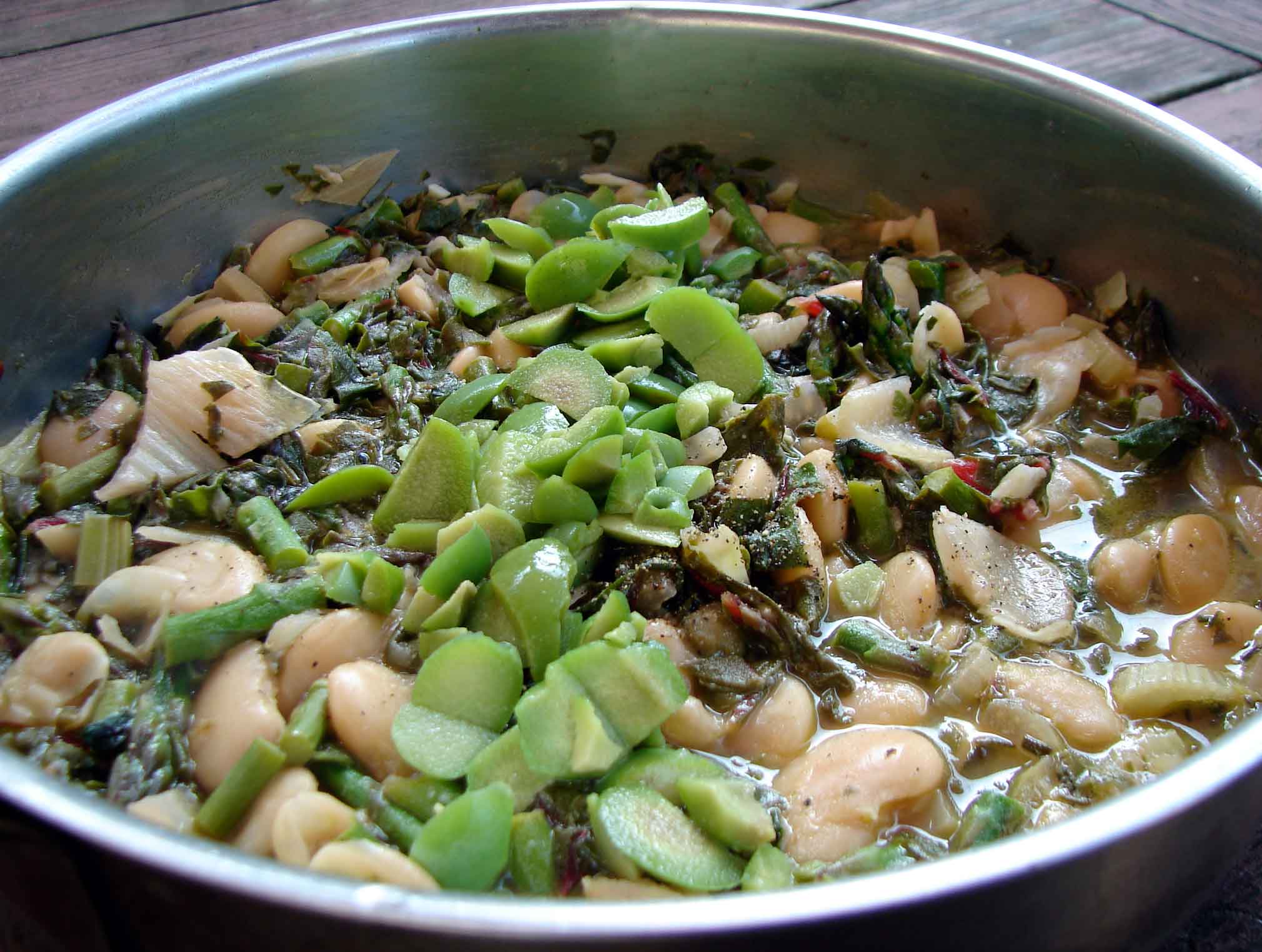
Butterbeans and spring vegetables

Butterbeans and spring vegetables

This was a green meal! A spring green meal. We kept it fresh and simple, with a saucy sauce of white wine and lemon. We used greens and fresh herbs from the CSA, and a special treat of castelvetrano olives from the market up the road. The boys ate this over gemelli pasta, and I ate it over a mix of lettuces from the farm, and arugula and fresh spinach, as a sort of warm salad. Good either way!

And here’s The Pixies with Where is my Mind??? Which has been stuck in my head, for some reason.
Continue reading

Masa crusted potatoes with smoky red beans and greens, and honey-lime avocado cucumber salsa

Masa-dusted potatoes, red beans and roasted red peppers, and lime honey cucumber guacamole

Masa-dusted potatoes, red beans and roasted red peppers, and lime honey cucumber guacamole

One of the delightful things about my disintegrating eyesight is that when I read I’m no longer confined to the actual words on the page. When I read without glasses, who knows what the book really says? Not me! So I have a whole new world before me, in which the page contains whatever words I want it to–I get to choose! Sometimes at work I’ll overhear small chunks of conversations, and my brain will fill in the parts that are too quiet for me to pick up. Usually, the resulting discussion, in my head, is very funny (and frequently off-color). And now this effect has sidled over to my appreciation of printed matter. It says whatever I think it says. The other day I was reading the boys’ Rocks and Minerals books, as one does, and I came across a fascinating map of the world. It had little icons to show the various regions where people mine for things–I’m assuming coal and gold and the like, but I couldn’t tell you for sure because the writing in the legend was tiny. According to my eyes, one thing that people mine for throughout the globe is precious stories. Well! I like this idea a lot! I like to think of people traveling all over the world and mining for valuable tales, digging deep amongst the people that live in each region to come up with raw, beautiful chunks of legend. The icon for precious stories seemed to be in some very varied and interesting parts of the world, and in my imagination the stories are found in thick veins, running through all of the people there. People would come and set up camps, and they’d follow the story from one person to the next, probably never finding the end of it, because the myths would be as old as the rocks and would lie deep in the earth. Maybe they’d take it and refine it and polish it, or maybe they’d leave it in its original state, rough and strong. Farther along in the book, I misread a caption to read “metaphorical rocks.” And people would collect these, too, and string them together to make new stories. The metaphorical rocks would be prized and valued above diamonds and gold, which would be deemed pretty but relatively useless, when compared to a cherished tale. People would understand the value of a story to spark creativity, to heal, to transform, with these metamorphical metaphorical rocks.

Masa dusted potatoes

Masa dusted potatoes

I thought this was a really fun meal! First, I sliced some potatoes quite thinly, parboiled them, dusted them with rosemary and masa harina and then roasted them in olive oil. They came out with a nice texture–not super crunchy, exactly, but with more oomph. And they have the lovely subtle flavor of the masa harina. Then I roasted some red peppers, and combined them with red beans and spinach in a smokey sauce of chipotle and smoked paprika. And we added a bright light guacamole-salsa made with cucumbers, tomatoes and avocado lightly dressed with lime and honey. We topped it all off with grated sharp cheddar and pickled jalapenos, which my Malcolm loves! Any part of this meal would be good on its own, but it was very fun to eat all together as well.masa-potatoes-and-beans

Here’s REM with Maps and Legends.

Continue reading

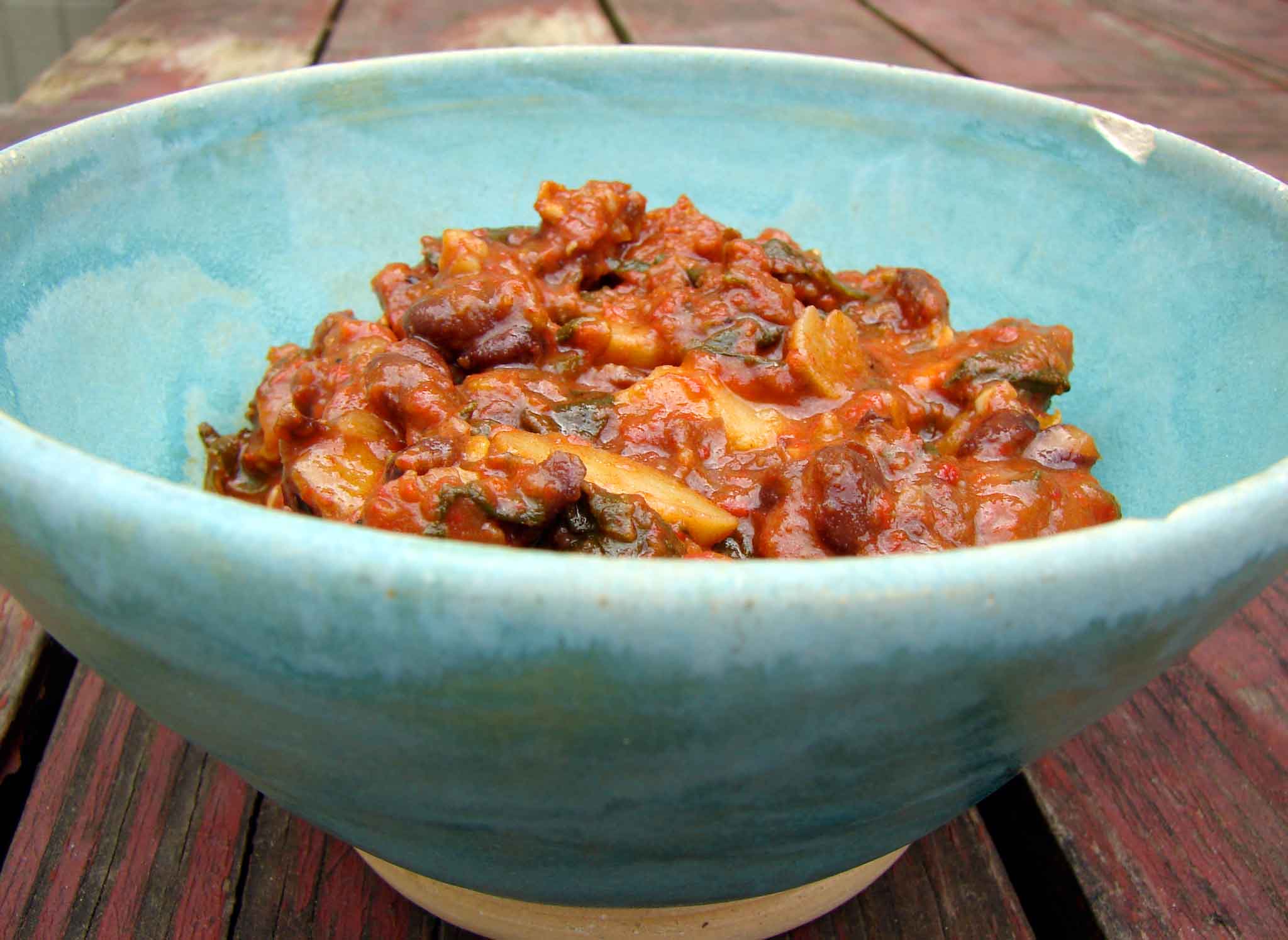
Red lentils and kidney beans with zucchini, spinach and rosemary

Red lentils, kidney beans and spinach

Red lentils, kidney beans and spinach

I forgot to buy dish soap at the grocery store, because that’s what I do. So I went to the little store down the block. They carry ultra joy. Well, what do you know? Money can buy happiness. And not very much money, either! It only costs a couple of dollars. I made a joke at the counter about how I was purchasing ultra joy, because it seemed like a funny idea to me. The woman at the register didn’t understand that I was joking, because in normal human conversation you can’t add LOLs and smiley faces. She said, “It works really good.” I thought, I hope so, because I’m feeling a little down and whybotherish. I wonder how that would work? Would you use the soap to wash away all of your doubts and sadnesses? Would happiness float to you in iridescent bubbles? Surely you wouldn’t have to drink it, because it might make you happy, but it would probably make you pretty sick, too. I suppose it would be dangerous if you could buy ultimate elation in a plastic squeeze bottle of lemon-scented liquid soap. It might make us all very lazy. Ultra joy is something you should have to work for, and it should be saved for rare and special occasions. They sell a non-ultra joy, too, as it happens, of the dish soap variety. This seems more reasonable, on a day-to-day basis. You can squeeze out small portion of relative contentment, or tired-but-cheerfulness, or it-could-be-worseness. Maybe it would be nice if something as quotidian as washing dishes held some magical power to make you feel joyous and light-hearted. I suppose it could, if we could muster the energy to enjoy the feeling of warm water and soapy bubbles, if we could understand how fortunate we are to have warm running water in the first place, or food to make our dishes dirty. Maybe the soap is meant as a subtle reminder of all that we should be grateful for. Wouldn’t that be an unusual marketing campaign? Well, I’ve just written a small essay on dish soap, so it’s probably time for me to get on with my day. After all, I’ve got laundry to fold, and the detergent promised me everlasting bliss.

Before I go, I’ll tell you about this dish of red lentils, kidney beans, zucchini and spinach. It’s a little like a dal, but with lots of rosemary instead of curry spices. It’s like a bright green potage, but the kidney beans add a nice texture. It’s simple to make, and doesn’t take much time. You could serve it over rice or pasta, or just with some good crusty bread. I topped mine with grated mozzarella, which melted right in.

Here’s Billy Bragg with The Busy Girl Buys Beauty

Continue reading

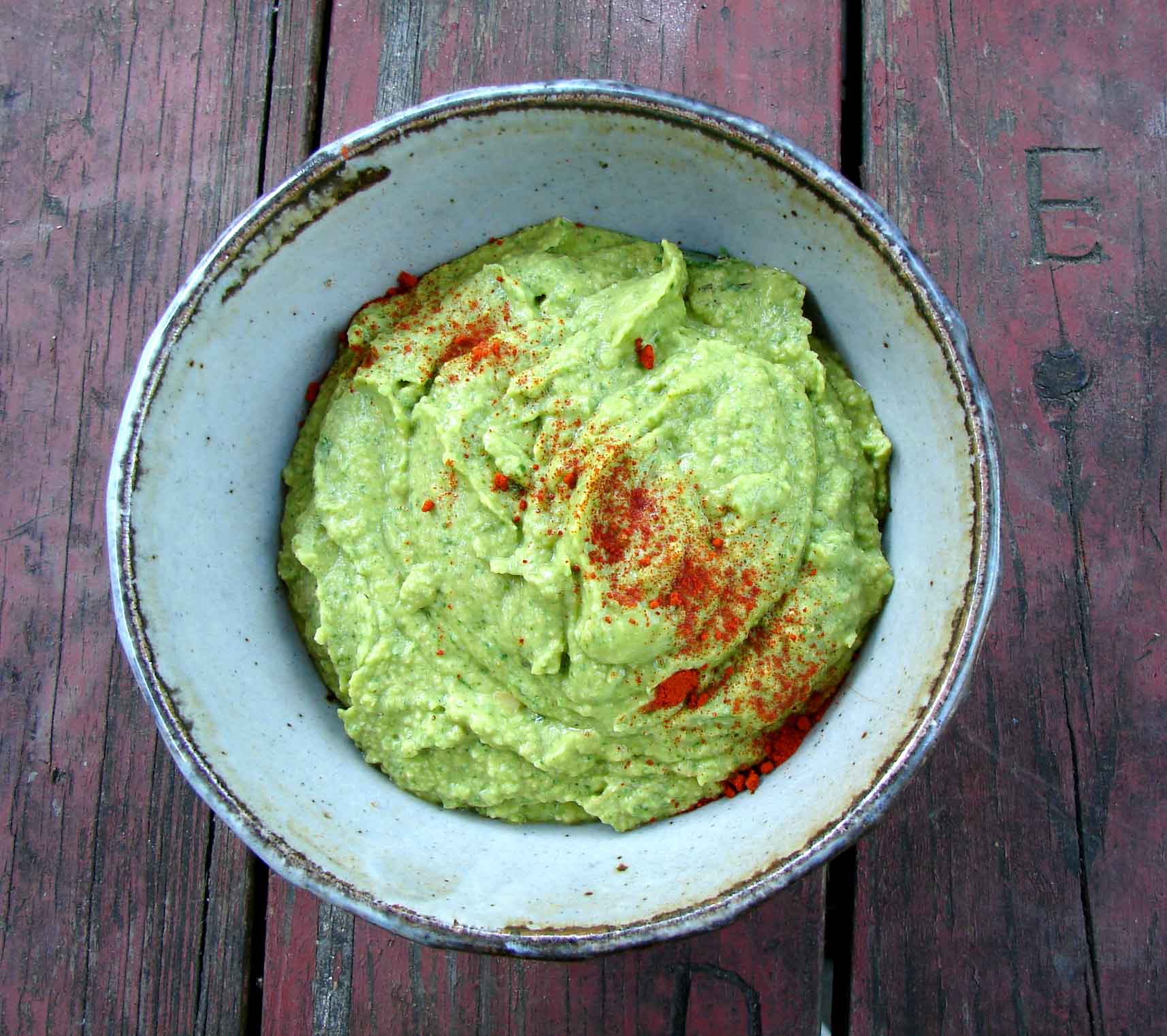
Spinach and herb hummus

Spinach and herb hummus

Spinach and herb hummus

The memorial day parade goes right by our house. We live in a small town, so it’s a small parade, but people come early and set up lawn chairs. They line the streets, waiting, with their early morning Italian ices. The band marches by, loud and raggedy and perfect, followed by the city council members, then a small group of girl scouts and boy scouts, and then the ladies auxiliary drives by. The town’s veterans walk by, followed by a car-full of veterans of foreign wars. And then every single fire truck for miles around rattles by our house. Everybody throws candy, and my boys sit on the stoop waiting, and scramble around to pick up the pieces as they fall. This is what memorial day is about for my boys. I think they miss the bigger meaning of the day and think it’s sort of a small-scale halloween–a twin celebration that strangely combines remembering the dead with eating candy, just like halloween does. And it’s a good day for me to try to turn off that part of me that’s resistant to any kind of flag-waving, pom pom shaking show of school spirit or patriotism, that’s always been distrustful of what could easily become unthinking support for any cause, which has gotten us into too many wars in the first place. A good day for me to try to silence my inner cynic, and recognize the value of remembering, as a community, and sharing our gratitude. After all there’s something very moving about our scruffy little parade, something solemn and joyful and beautiful.

I worked a long weekend, too, because aside from everything else, Memorial day is a holiday and people go out to eat. Lots of people. So I was too tired to cook when I came home, and we made one of my favorite quick and tasty dinners. Oven roasted french fries and hummus! I blended some baby spinach into the hummus for flavor and greenness. And I added some herbs. I used dried, but obviously fresh would be far better.

Here’s Dancing at Whitsun by Jean Redpath.

    The fields they stand empty, the hedges grow free
    No young men to tend them nor pastures to seed
    They are gone like the forests of oak trees before
    Have gone, to be wasted in battle.

    Down from the green farmlands and from their loved ones
    Marched husbands and brothers and fathers and sons.
    There’s a fine roll of honour where the Maypole once stood,
    And the ladies go dancing at Whitsun.

    There’s a straight row of houses in these latter days
    All covering the downs where the sheep used to graze.
    There’s a wreath of red poppies a gift from the Queen
    But the ladies remember at Whitsun,

Continue reading

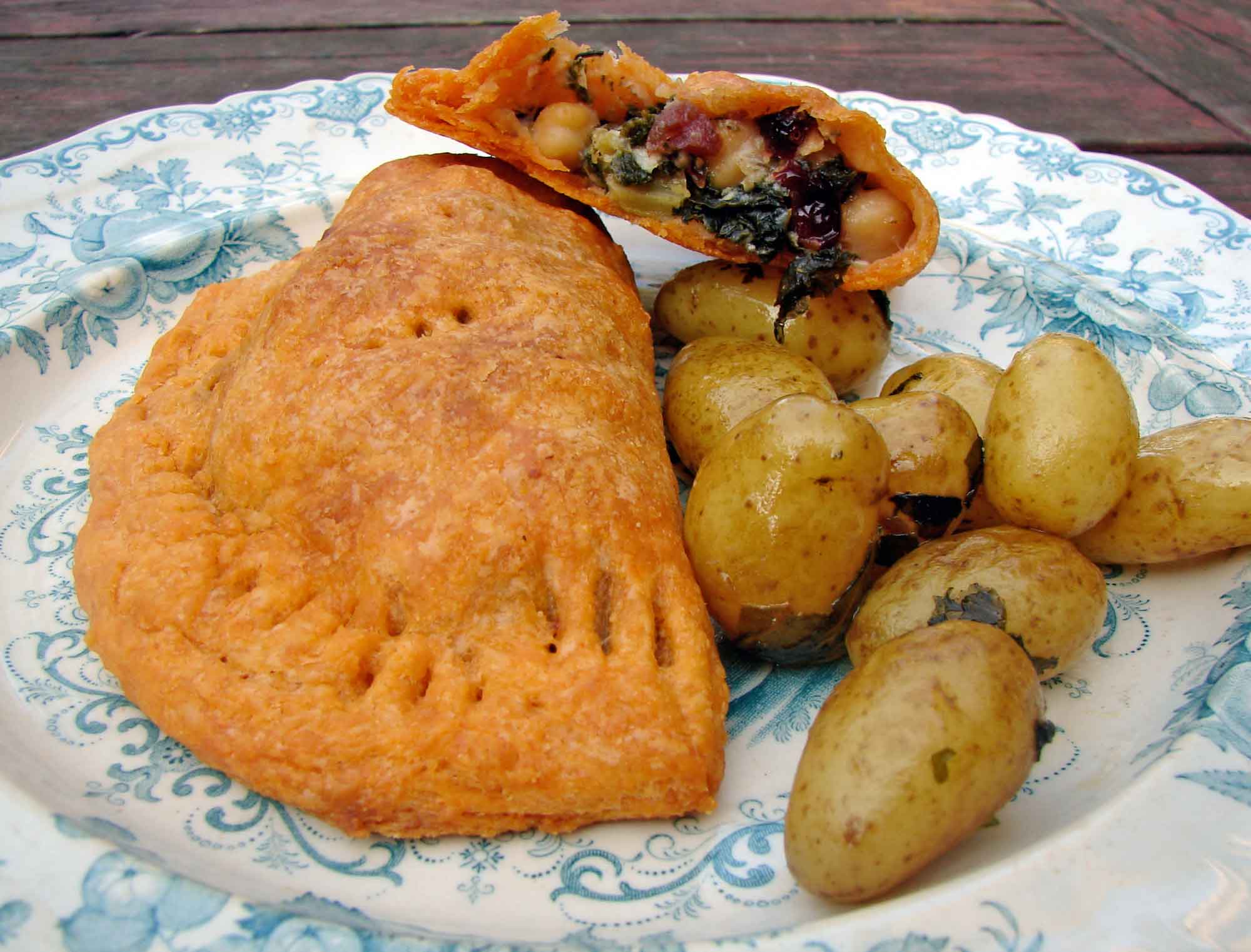
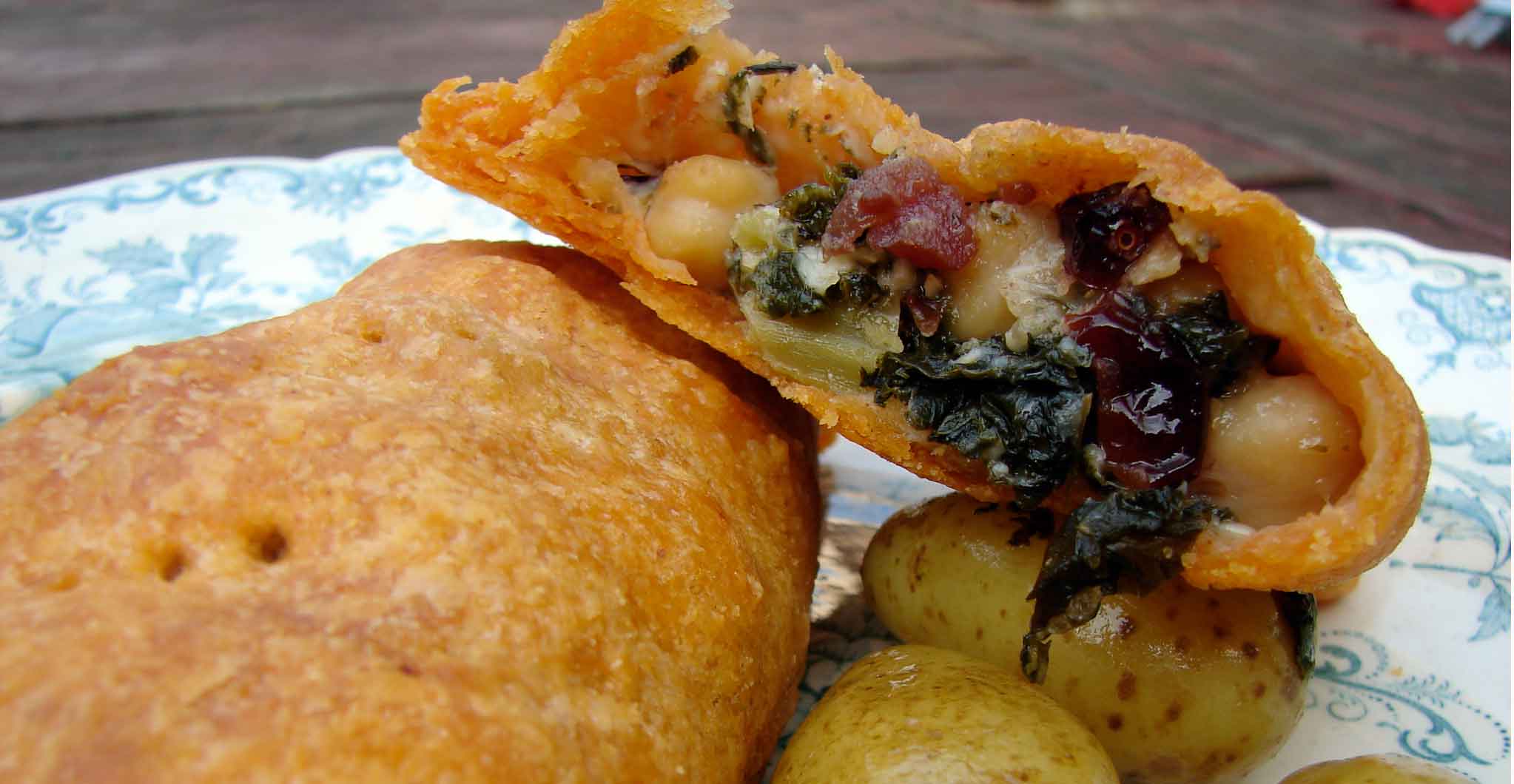
Empanadas with greens, chickpeas and cranberries

Kale, cranberry and chickpea empanadas

Kale, cranberry and chickpea empanadas

I’ve been thinking about the way our world changes, and specifically about the way people bring about that change. Our history as humans is a pattern of progress and change, progress and change. We’ll head blindly in one direction, unable to see quite where we’re going because it’s so close, and then somebody or somebodies will push us in another direction. With a grand gesture, with a slow protest, with a war, with a sit-in, with a newspaper article, with a violent act, with a strike, with a clear bold voice, or in a confused tangle of contradictory words.

I’ve been thinking about certain small acts of rebellion that I love, certain quiet ways that people have changed the rules. They change the world slowly, almost imperceptibly, but the change grows in widening waves. The personal becomes political and art becomes powerful.

I love to read about blues musicians from the last century, growing up in a world of poverty and discrimination and finding a way to make music no matter what the odds. Nobody hired them a music teacher so they’d understand the rules of musical theory. Big Bill Broonzy made a fiddle from a cigar box, Elizabeth Cotten taught herself to play guitar upside-down, they figured it out themselves, with the help of some friends. They sang about their lives, the way they actually were, the trains running by their door, the work they had to do, and they sang about the way they wished their lives could be. The rules they answered to in life were harsh and unjust, but in music they made their own rules, they made music the way they wanted it to sound–that was theirs.

And with books like Catcher in the Rye, Grapes of Wrath and To Kill a Mockingbird, we find a whole new world of writing, with the language people actually use, according to the rules of conversation and not those of grammar. These books are intimate and personal and real, and they describe the lives of normal people as they actually are. This small feat frightened people enough that they were all banned, at one time or another.

And, of course, I love filmmakers who make films the way they think they should be. Hollywood films have quite a rigid set of rules that dictate the way they’re made. These rules are nearly invisible to the viewer, because they’re designed to make a film seem more realistic, and because we’ve grown up with them, we’ve learned them, without even realizing. Well, I love a director like Yasujiro Ozu, who defies these rules. He sets the camera where he thinks it should be, he moves it when it needs to be moved (not very often!) he crosses sight lines, he leaves out plot points. Not to be rebellious, but because he knows how he wants his films to look. His films are mostly about middle-class families going about their lives. They seem placid and uneventful, at least compared to most movies. But in showing us the way we live, in showing us hurtful pettiness and gossip, thoughtlessness and ingratitude, he makes us think about the way we could live, the way we could treat the people around us. It’s subtle and slow, but it seeps into you and makes you notice everything differently and more clearly.

And I believe this small slow change is the most important, and that it extends to all things…not just to art and politics, but to life, which is the very heart of art and politics. We can change the world with the food that we eat, the cars that we drive, the books that we read. We change the world by struggling to understand it, by recognizing the rules that govern us as they are, and by deciding the way we want them to be. We change the world with every kindness to another person, and it’s a shame that this sounds sappy, because it’s true.

Kale, chickpea and cranberry empanadas

Kale, chickpea and cranberry empanadas

Well, I totally wasn’t going to go on and on about this today! It’s been on my mind, man. I think it’s because David and I just bought some Big Bill Broonzy CDs and they’re phenomenal, and because I’m reading this biography of Jean Vigo. Yeah. So! These are summery sorts of empanadas, I think. I made them for our anniversary picnic dinner. Empanadas make the best picnic food, because you can eat them with your hands and walk around with them, and they combine so many flavors and food groups in one neat package. I also boiled some little potatoes and tossed them with herbs and butter, and they are also a fun, if messy, picnic food. Our picnic was spoiled by dozens and dozens of ticks…a sickening tickening…but we came home and sat in our backyard and finished our empanadas, or lovely smoky, savory sweet empanadas.

Here’s Big Bill Broonzy with Feelin Low Down. Phew, what a song!

Continue reading

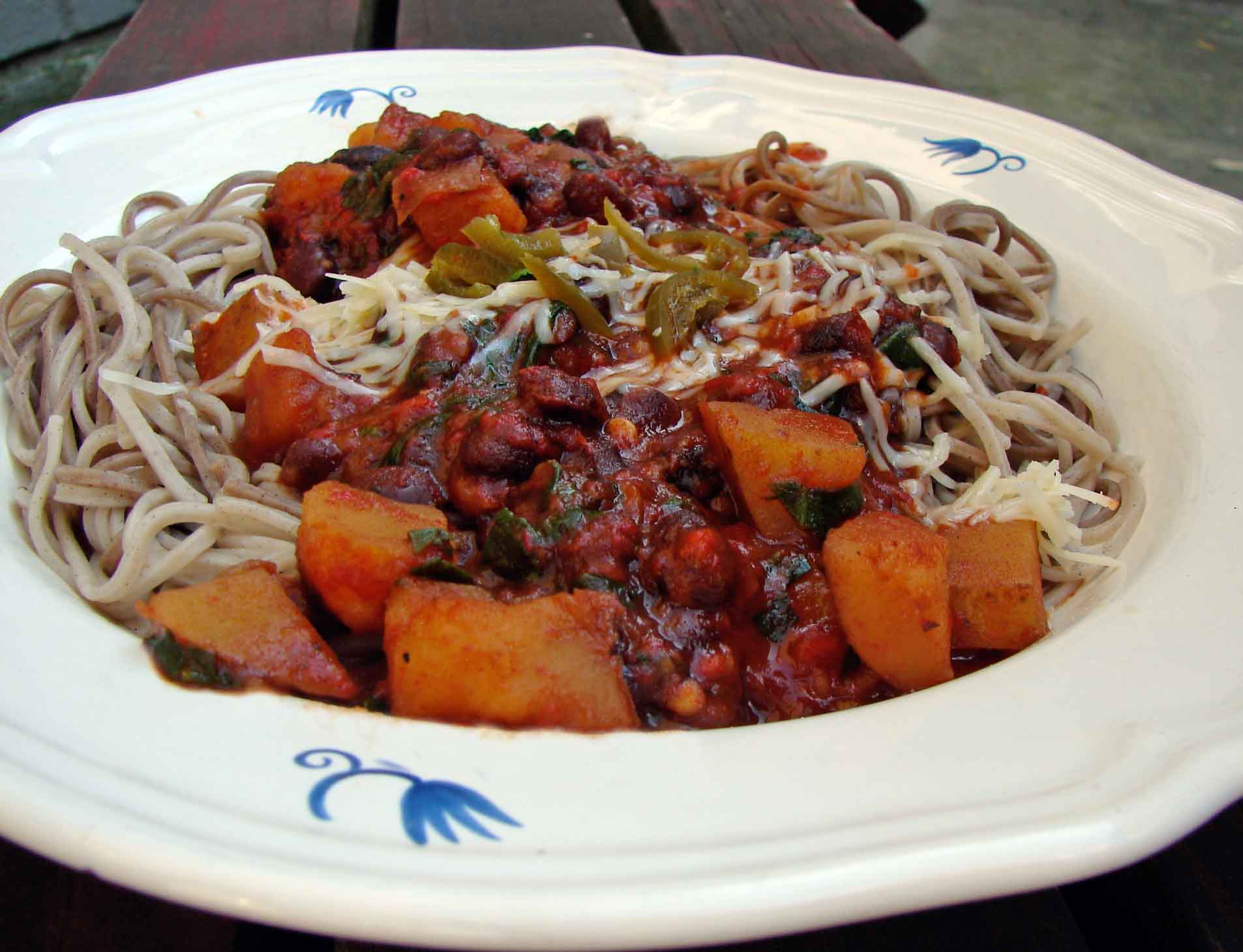
Soba noodles with potatoes, black beans and spinach in red pepper sauce

Roasted red pepper and black bean sauce

Roasted red pepper and black bean sauce

Each day on our way to school, Isaac and I pass a house that half-burned down a few years ago at Christmastime. Apparently it will be torn down before too long, but now it’s oddly beautiful with its charred, inside-out appearance. Many of its lovely architectural details remain intact, but now it feels as though you can catch a glimpse of its pretty bones. The last few times we’ve passed, a giant black vulture has peered down at us from the roof. I happen to think black vultures are remarkable birds–beautiful in their black-upon-black scruffiness. We have a lot in our area, and we’ll see them lined up with gothic gravity on abandoned barns and silos, or perching with unlikely balance on slim branches their weight should snap. They seem social, as they all stand together, long wings stretched in a wide arc to catch the sun. When we passed our local vulture today, my little modern-day Ben Franklin said that he likes turkey vultures better than eagles because eagles kill their prey, whereas vultures just take what’s already dead. They just clean up. So between Franklin and Isaac, we’ve established that bald eagles are thieves and murderers, whereas turkeys are brave, and turkey vultures mild and helpful. It’s funny that we saw the vulture just now, because my boys have spent the week scavenging. Not for carcasses of course (we’re vegetarian!) but for junk. It’s sparkle week in our town, which means that people put out their still-sometimes-useful garbage, and other people pick it up and take it home. It’s a nice idea, really, and many people I know have furnished their house this way, and in quite a stylie style, too. However, if you have two small pack rats, it can become dreadful. Isaac is sparkle-obsessed. He wants everyone else’s half-broken toys. He flies from garbage pile to garbage pile shouting “sparkle! sparkle!” Like some mad trash fairy. He roots through broken glass and dog crap, convinced that a treasure awaits if he only looks hard enough. Malcolm is an admirably efficient sparkler. He found a working door knob, a working watch, a perfect darth vader mask, and any number of small, intriguing objects. I suppose this bodes well for his chances of surviving in a post-apocalyptic landscape. He’ll build us a home of packaging foam and old dressers, and we’ll cook our food on abandoned grills and dismantled ovens. Personally, I’ve always been a little wary of used goods and thrift-store clothes. I can’t shake the idea that they take on the personality of the people that owned them. That they’re imbued with the sadness or happiness of the lives they were part of, and that they become spirits of their own as they pass from person to person. It’s silly, I know! I should saunter down the street, like Malcolm, hand in pocket, flannel shirt catching the breeze, coolly appraising each pile of reusables, happy to be part of the cycle of renewal that takes place each spring in our small town.

Soba noodles with roasted red pepper sauce, black beans, spinach and tomatoes.

Soba noodles with roasted red pepper sauce, black beans, spinach and tomatoes.

I seem to still be making warm and earthy meals, despite the fact that on paper it’s springtime. We’ve had a damp and chilly spring, and I haven’t found mounds of sweet peas, fiddleheads and ramps. Even the asparagus looks thick and woody, and costs a bundle for a bundle. So I’m still in the warm and saucy world of food. I think this would make a nice summer meal, though. It has the appealing color of a sun-drenched brick wall in summertime. It involves red pepper, which is summery, which I roasted under the broiler, but which would be even better grilled. Malcolm loves soba noodles. They’re made of buckwheat, and they have a nice nutty flavor. They go nicely with earthy potatoes and black beans, and I mixed them, in this instance with smoky peppers, smoked paprika and spicy red pepper flakes and jalapenos. You could eat this over rice with tortillas, or even on it’s own as a sort of chili.

Here’s Decemberists’ Sweet Clementine, because I borrowed a phrase for my essay today!

Continue reading

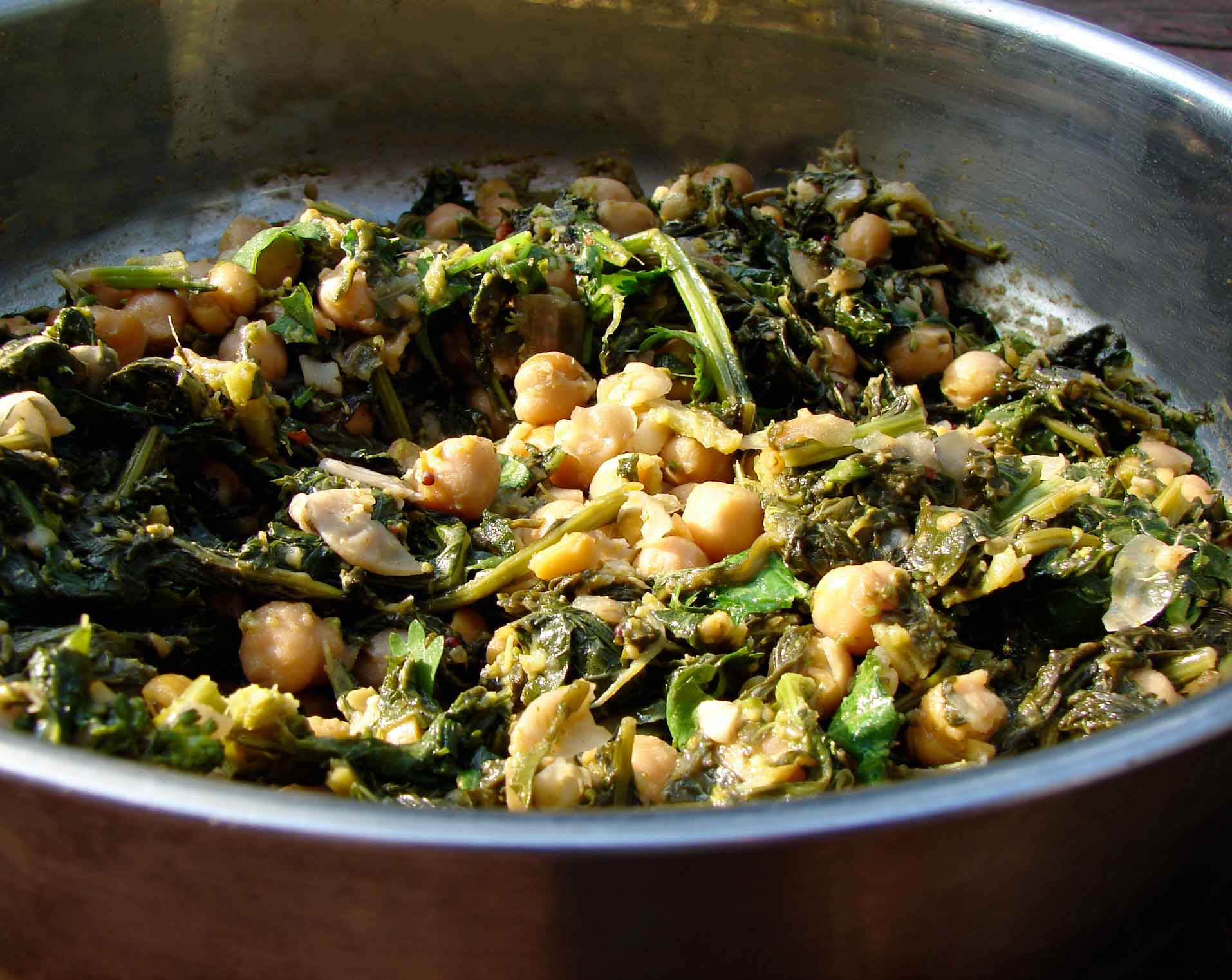
Curry-spiced chickpeas and broccoli rabe

Curried broccoli rabe and chickpeas

Curried broccoli rabe and chickpeas

When I was little I believed that there was something in the earth–in the trees and water and grass and dirt; call it spirit (for lack of a better word) or magic (for lack of a better word). Obviously, the animals can hear it and understand it–you can see that in their eyes and their quiet, graceful movements. But I believed that humans, in all their arrogance, didn’t acknowledge that it was there, or were frightened of it, and so they became unable to sense it. And then we bound it up and strangled it, with roads and buildings, and made it sick with chemicals and garbage. Yeah. I was a weird kid. David came across this quote, and of course I love it to pieces…

    One of the deepest and strangest of all human moods is the mood which will suddenly strike us perhaps in a garden at night, or deep in sloping meadows, the feeling that every flower and leaf has just uttered something stupendously direct and important, and that we have by a prodigy of imbecility not heard or understood it. There is a certain poetic value, and that a genuine one, in this sense of having missed the full meaning of things. There is beauty, not only in wisdom, but in this dazed and dramatic ignorance.

    – G.K. Chesterton, Robert Browning, 1903

(He found it on a website called Futility Closet) First of all, I love the phrase “prodigy of imbecility,” and I plan to incorporate it into my day-to-day dialogue, post-haste! Secondly, I’m obviously not the only weird kid in the room! I too, think there is beauty in dazed ignorance, and I find great cheer in that idea. Sometimes we comprehend something best when we don’t focus on it, when we see it glancingly from one side, when it flies off with a rustle of bright feathers into the shifting leaves. The less we can capture and hold something, the more beautiful it is. The more something grows and changes and decays, the more beautiful it is. And the more beautiful something is, the less we can imitate it or make a replica of it, because in freezing it we destroy it. I was reading about Yasujiro Ozu, a while back, and I came across the phrase mono no aware, coined by 18th century Japanese scholar Motoori Norinaga. According to my feeble understanding of the concept, this is a sort of sighing recognition of the transient beauty of all things–an idea that everything is more beautiful at the beginning and the ending, as it grows and as it decays, as it changes. And this understanding extends to all things that live and die, however inconsequential they seem. They have beauty worth noticing–they’re made beautiful because they’re noticed. And this feeling, this poignance, washes gently over a person, almost without their effort…it’s the feeling itself that is beautiful and important, but it can’t be studied or captured in words. Whereas in Western art, we try to define aesthetics, and seek symmetry or embellishment, and try to capture beauty in marble or oils, according to mano no aware (as I understand it) the beauty is in sensing imperfection, irregularity or decay, in feeling the sweetness and the sadness of it. Surely this is “one of the deepest and strangest of human moods.” This is the graceful, ever-changing, incomprehensible voice of the garden at night and the sloping meadows, which we love because we can never fathom it, we can only soak it in with dazed ignorance.

I love broccoli rabe, with its tenderness, and its bitterness, and its strong pleasant flavor. I’m the only one in my family that craves it. David will enjoy it from time to time, and the boys won’t go near it, so I feel like it’s the most indulgent thing that I cook. I make it because I want to eat it. This particular preparation was a sort of compromise. The boys do like curried chickpeas, so I served this with basmati rice, and picked out the chickpeas for them, and saved all the tender greens for myself!!

Here’s REM with Gardening at Night.

Continue reading

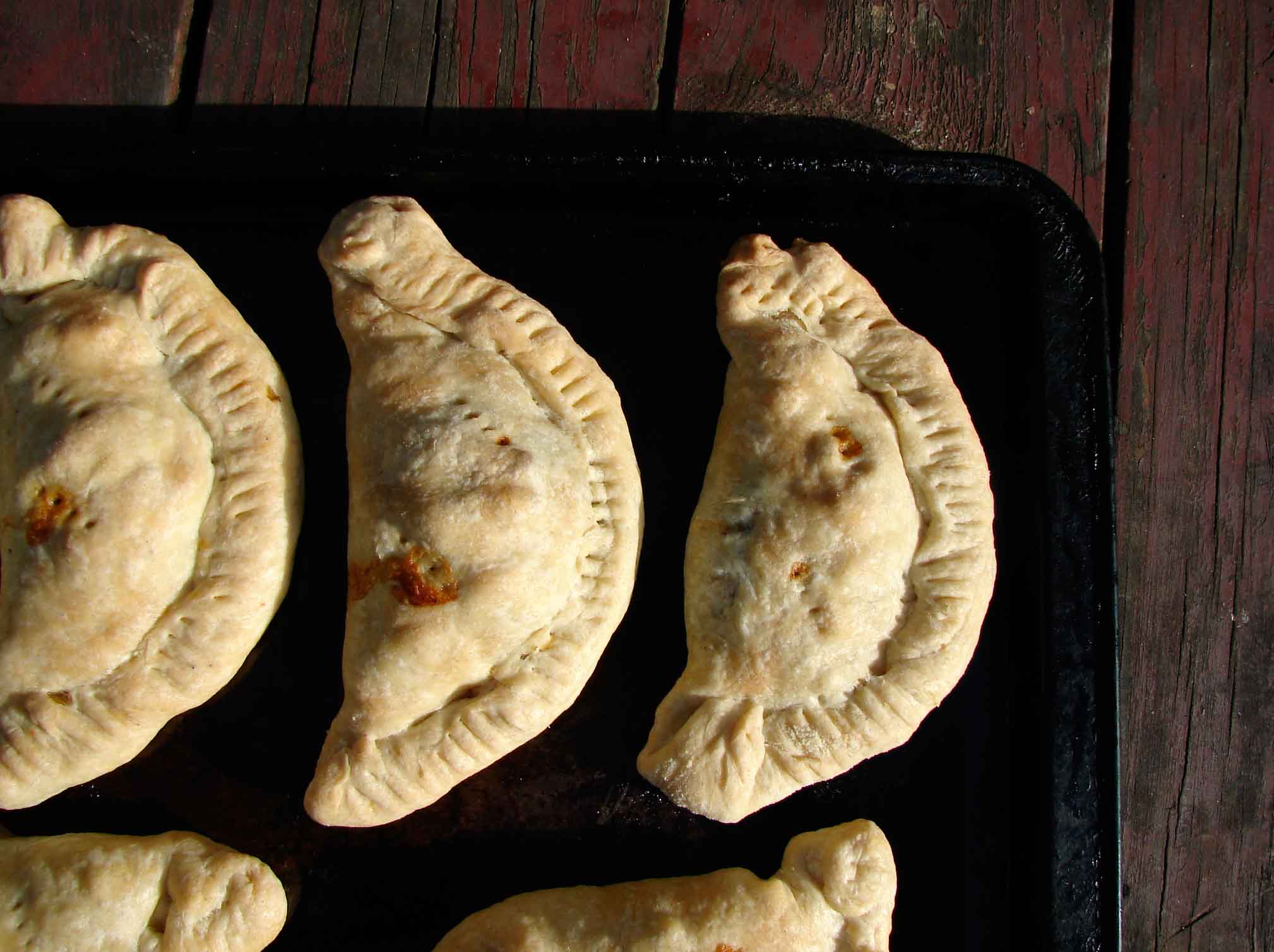
Spring empanadas with spelt flour, asparagus, arugula and white beans

Spring empanadas with asparagus arugula and white beans

Spring empanadas with asparagus arugula and white beans

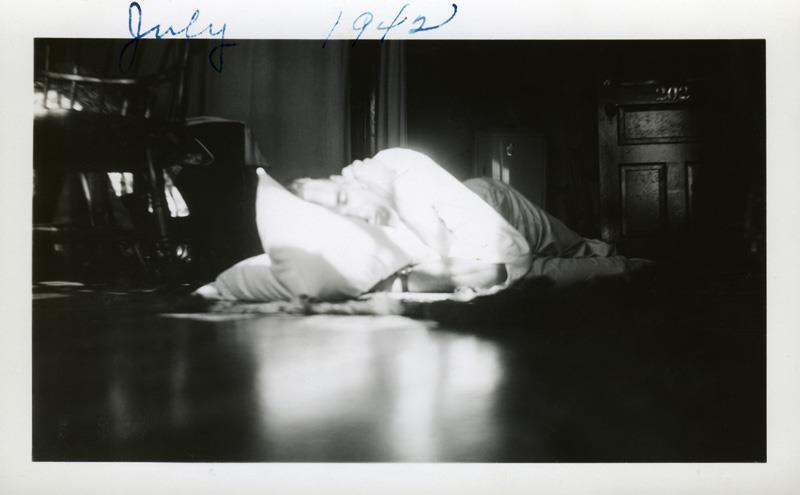
Hey, kids! It’s Saturday storytelling time! As I’m sure you recall, this means that along with your daily recipe and song, you’ll get a story, too! Each week, everybody in our small salon of auteurs (well, generally me and one or two other people) writes a story based on a found photograph. Why is this man sleeping on the floor? Where is he, and what has he been up to? If you’d like to write a story about it, and I hope you do, send me a copy and I’ll post it here, or send me a link if you have somewhere of your own to post it.
430007_10151358718584589_1868399670_n
My friend asked me to make something with spelt flour, and this is what I came up with. They’re not gluten free, but they’re easier to digest for people that have a gluten intolerance. And spelt flour is a pleasure to work with!! These would work easily as well with regular flour. I thought they were nice–fresh and comforting. Perfect for this slow spring we’ve been entertaining.

Here’s Mississippi John Hurt with Make me a Pallet on Your Floor.

Continue reading

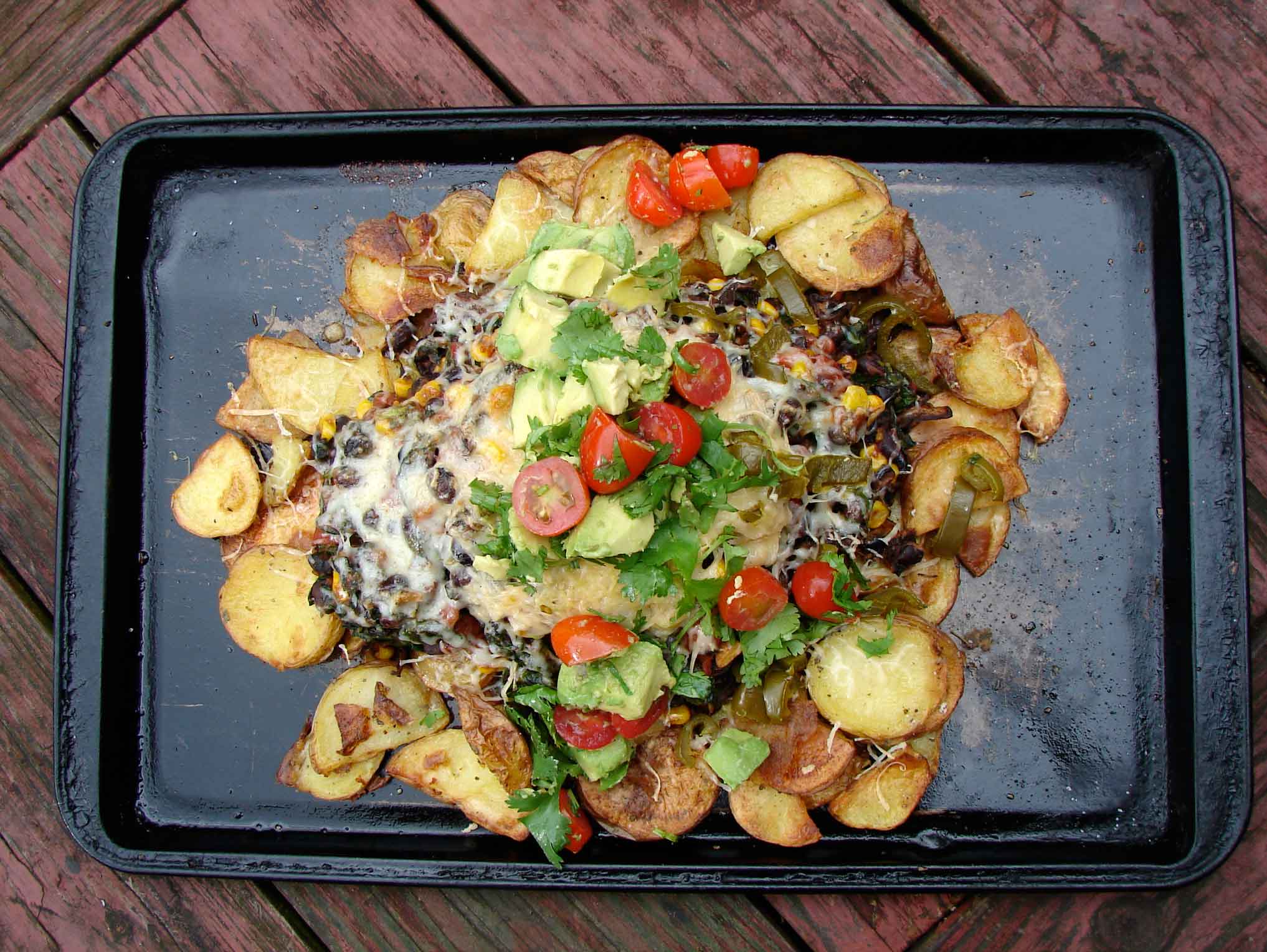
Thin crispy roasted potatoes piled with chipotle black beans, spinach, smoked gouda, jalapenoes, and guacamole

Thin crispy potatoes with black beans and guacamole

Thin crispy potatoes with black beans and guacamole

“Why is it okay to be scruffy when you’re real?” This is a question Isaac had to answer for class, and in solidarity with the lad, I’m going to try to answer it myself, here. I should start by saying that I haven’t read the book, so if it seems like I’m desperately flailing to sound relevant (to anything), that’s because I am. I would posit, however, that this is the nature of all communication after first grade, and thereby acceptable for the matter at hand. So. “Why is it okay to be scruffy when you’re real?” I believe that not only is it “okay” to be scruffy when you’re real, but that scruffiness is an indicator of reality. And not just an indicator of realness as opposed to imaginariness, but also of realness in contrast to fakeness. Real meaning “actual” as well as real meaning “genuine.” Anything that is too perfect or symmetrical seems plastic and artificial. Something may be perfect in your dreams or your imagination, but when you’re awake and viewing the real thing, you notice flaws and oddities. And these are the aspects that make you know that the object is yours, and these are the things that make the object beautiful in your eyes. Any slight imperfection makes an individual more interesting and appealing, makes it stand out from all others, makes it, in fact, individual. It is hard to love something that is exactly like every other such something in the world. It is hard to even recognize that it is yours. If every car in the world was the same, you might identify yours because of a scrape on the fender or a dent in the bumper. This scruffiness helps you to recognize that the car is yours, and the very state of being yours makes it more appealing than every more perfect car in the world. If every child in the world was identical in mind and body, you might feel a vague affection for all of them. But it’s the child you’ve nursed when they were ill, whose snotty nose you’ve wiped, whose strange thoughts you’ve listened to, that you love with a fierce passion. It’s the child whose dirty face and muddy fingernails you love, because it means they’ve had a good day playing in the yard or climbing trees. Because another definition of “real” is alive, animate, as in “a real boy.” And when you’re alive you’re subject to messiness, illness, and aging. But these things, as manifestations of life and liveliness, become poignant and beautiful. Scruffiness is a sign of change. It’s a sign of growing and living, of adventures and mishaps, of stories to tell. These are the things that make a creature interesting and alive. Mint-condition perfection can only be achieved through stasis and isolation, and few things in life are actually better for being static and alone. Scruffiness is okay when you’re real, because it is both symptom and source of a real love, such as can only be experienced by real people in real time. Scruffiness is vulnerability, it is showing yourself to another when your guard is down and your mask is off, and this rawness and openness is the only possible path to intimacy. Scruffiness is banal and day-to-day. It is tedious and unspecial, but when you share this ordinariness with someone, you become more real, your relationship becomes real. You delight in the habits that you share, and you slowly grow and change together, becoming more real and alive and wrinkled and eccentric and lovely with each passing year. By heaven, you’ll think your love more rare and real than any based on false illusions of perfection. And this is why it is more than okay to be scruffy when you’re real.
Thin crispy potatoes with chipotle black beans and guacamole

Thin crispy potatoes with chipotle black beans and guacamole

This was a yummy dinner!! I roasted some thinly sliced potatoes with sage and olive oil. Then I piled them high with roasted mushrooms, black beans, corn and spinach sauteed with chipotle puree, smoked gouda, sharp cheddar, pickled jalapenos and fresh, chunky guacamole made of avocado, tomato, cilantro and lime juice. Smoky, earthy, fresh, satisfying. It was fun to eat this! We ate it like nachos. The boys stuffed the black bean mixture in some soft tortillas.

Here’s Linton Kwesi Johnson with Reality Poem.

Continue reading

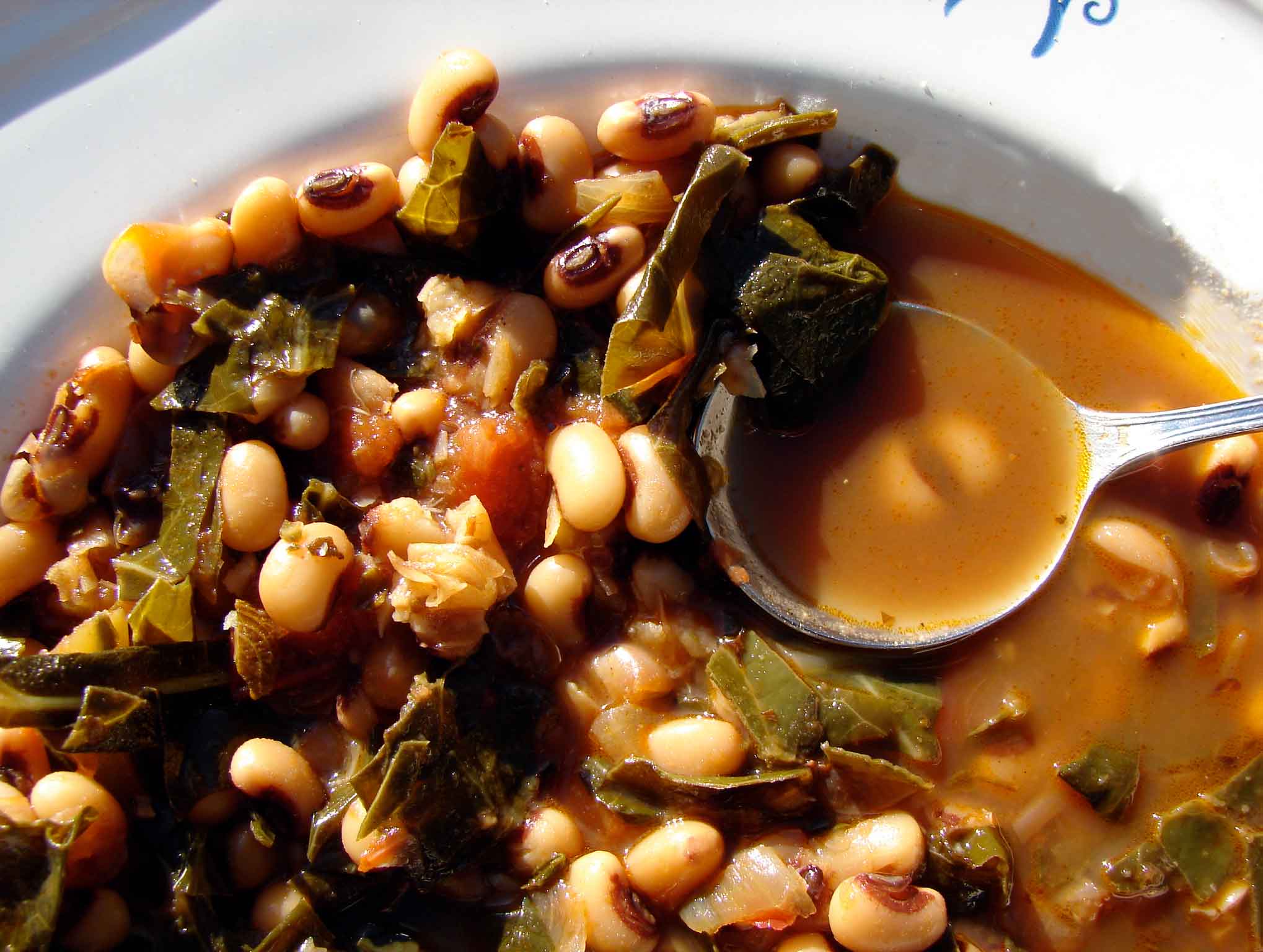
Collards and black eyed peas in spicy smoky broth

Collards and black-eyed peas

Collards and black-eyed peas

I’ve been talking so much, this week, here on The Ordinary’s virtual pages. I feel like I’ve had thoughts spilling out of my head messily all over this little blank box. So today we’ll have a bit of quiet, and we’ll return to a video project I’ve been working at off and on for years. Mostly off, I have to admit, but it’s something I want to get back to, and why not now? Why not here? I’ve mentioned the whole idea before, here at The Ordinary, so I’ll briefly plagiarize myself now. I’m a huge fan of stillness in films, and quiet moments. Whether they last the whole film long, or they form a small pocket in a louder busier film. A few years ago I submitted a series of short videos to an online gallery run by the remarkable Peter Ferko, a New York artist. The series was called Now:Here:This, and it involved art made in a moment (or a few moments) by people all over the world at roughly the same space in time. I started making short, static videos. I gave myself some rules…they had to last about a minute. I couldn’t change the frame. The sound would be whatever naturally occurred for that minute. I focused on leaves, or water, or shadows, even dirty dishes in the sink. The sound generally involved my children yelling for me and trying to get my attention, which was an idea that I liked a lot. It captured my life at the time (and to this day.) I became very taken with making the videos – there was nothing brilliant about them, but I liked the way that shooting them made me think about how long a minute lasts, how hard it is to be quiet and still, how my life sounded, how pretty small things could be. We like to have a story, so any small change in the action or the sound becomes significant. The idea wasn’t inspired by Yasujiro Ozu, it’s something I’d started long before I saw my first Ozu film, but it’s reminiscent of a technique that he uses in his beautiful still “pillow shots” between scenes. They’re shots down hallways, of empty rooms, along an alleyway. They’re not entirely static – the camera is still, but there’s movement of light, or of people walking by, clocks ticking, curtains blowing. You sense that the story is playing itself out somewhere nearby. The shots are so cool, so quiet but not silent. I find them incredibly compelling. And then Ozu went and stole the idea from me! I’d like to stop and look at my house, for moments at a time, from down a corridor, when nothing is happening. Of course it wouldn’t be quiet and clean and cool, like in Ozu’s films. It would be a warm messy muddle.

Yesterday morning, as I’ve already told you, we had a thunderstorm. The weather had been mixed and moody for days, in the way that you feel inside your head. I had a lot to do, but I took a moment to sit on the couch with Clio, and listen to the rain, and think about ichneumon wasps, as I’ve also already told you.

You can hear the rain and the thunder. You can hear the cars go by, which has its own sort of suspenseful build-up of sound. You can catch a glimpse of the cool wet world outside of my curtain. You see the legos and CDs that need putting away. And you can see me breathing, because I was holding the camera on my belly, which is an idea that I like…it’s marking time, and it makes the film feel alive. And that’s all I’m going to say about that, because it’s totally cheating to tell you anything about it, it’s against all the rules.

These smoky spicy sweet collards and black-eyed peas in a very brothy sauce went with the smoky cheesy bread I shared yesterday, much in the same way that this video goes with everything I wrote yesterday. They’re simultaneous. We ate them at the same time! I made the black-eyed peas from dried, which was fun. I cooked the peas and the collards at the same time, so that the cooking water becomes the broth for the dish. The smokiness comes from black cardamom, which is such an odd looking thing, with such a mysteriously delicious flavor. We also have pepper flakes and ginger for zing and pomegranate molasses for sweet tartness, Tamari for the umami, and a bit of brown sugar for molasses-y sweetness. A nice warm meal for a chilly rainy spring day!

Here’s Fats Dominoes completely lovely song It Keeps Rainin’

Continue reading