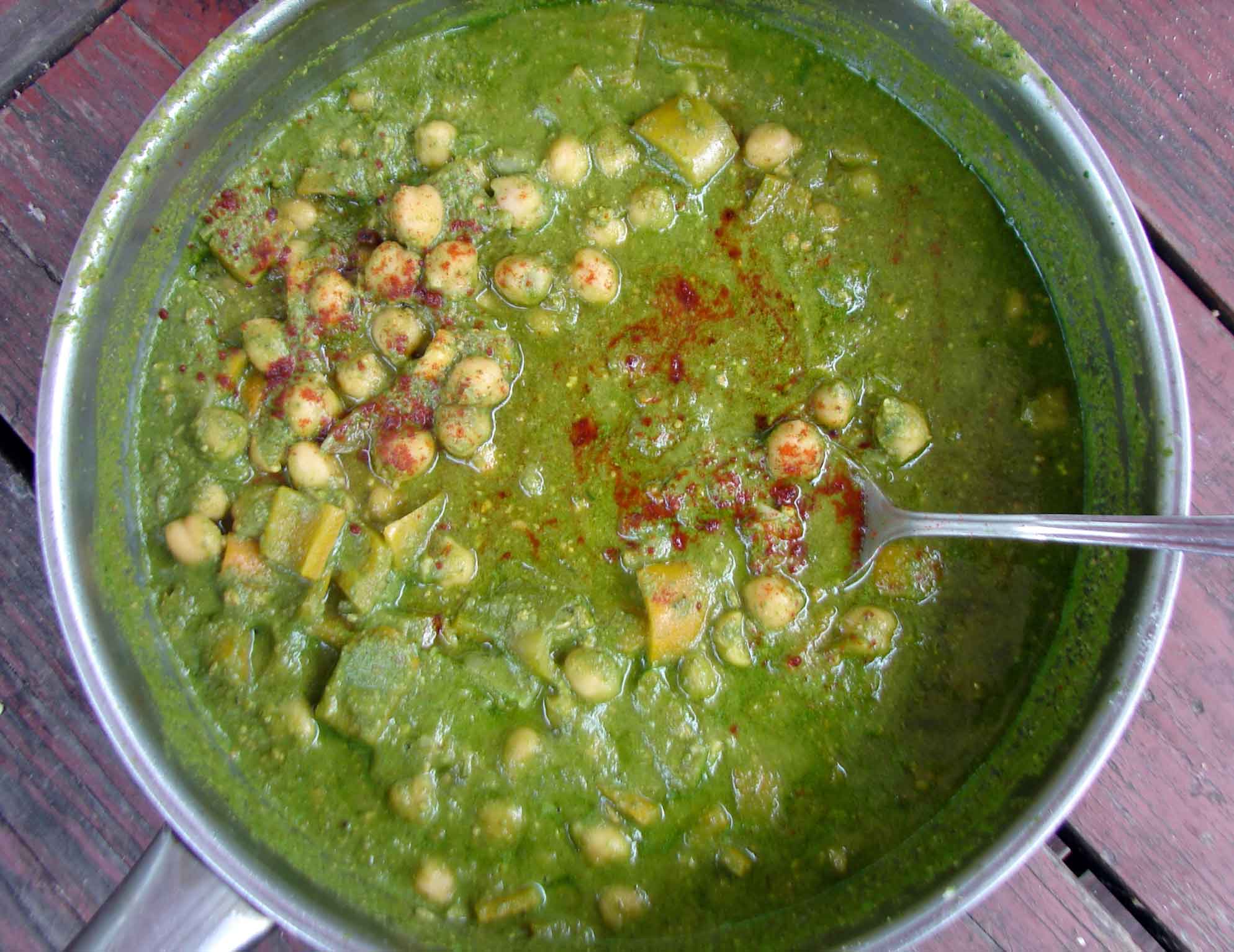
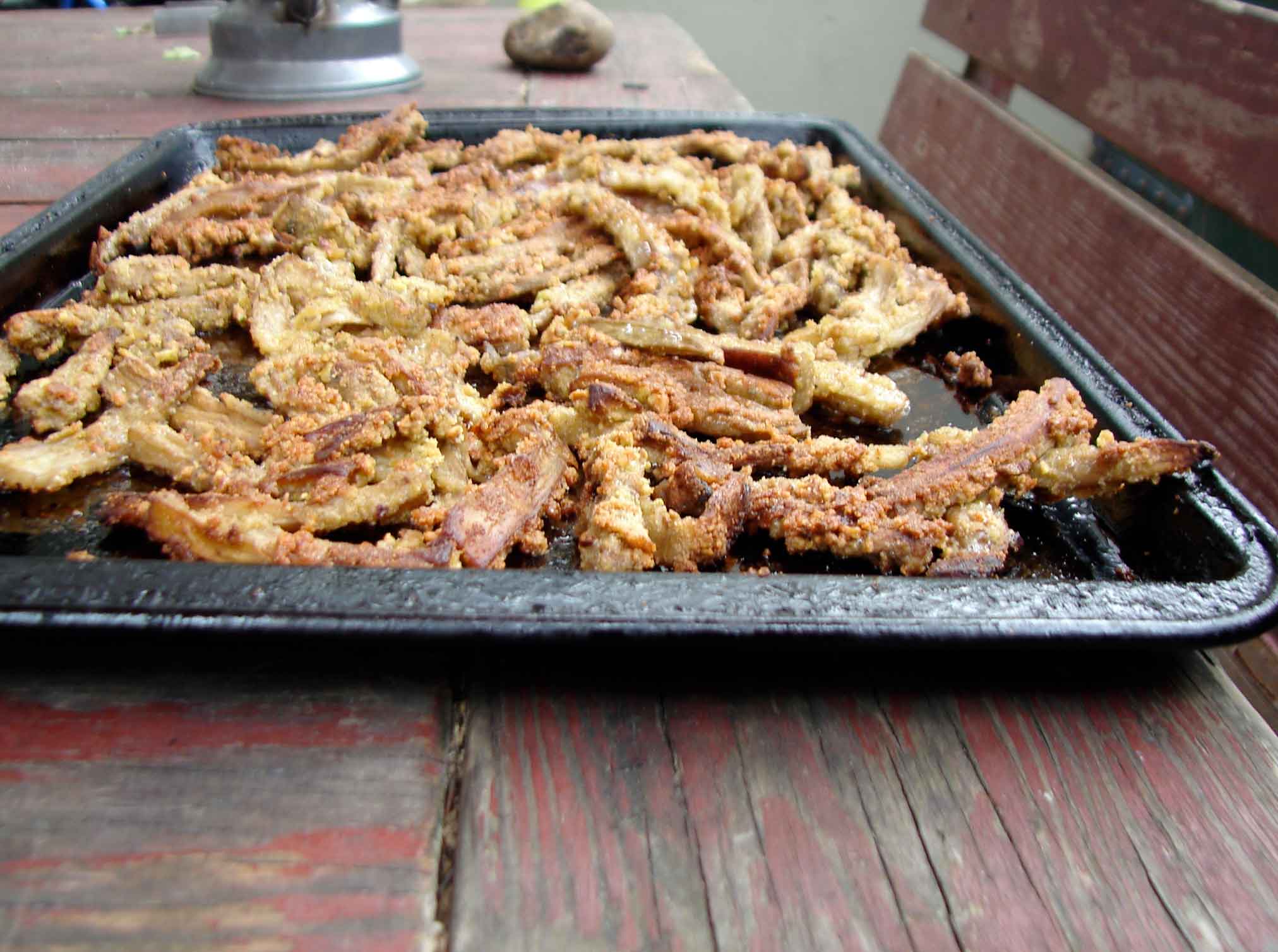
Pistachio basil curry with crispy pistachio crusted eggplant sticks

Pistachio basil curry

Pistachio basil curry

Well the moon is broken
And the sky is cracked
Come on up to the house
The only things that you can see
Is all that you lack
Come on up to the house

All your cryin don’t do no good
Come on up to the house
Come down off the cross
We can use the wood
Come on up to the house

So goeth Tom Waits’ Come on up to the House, and so goeth our interactive Sunday playlist. We’re looking for songs about strange and intriguing places. They could be hotels, houses, islands, parks, churches, but there should be something mysterious about them, something that makes you want to explore them. Maybe they’re sheltering, maybe they’re scary, but they’re the stuff of local legend.

Pistachio crusted eggplant

Pistachio crusted eggplant

Wasn’t this a green meal? It’s a curry with chickpeas, red peppers and cherry tomatoes in a sweet spicy sauce of pistachios, baby spinach, and lots of basil. And I made thinly sliced crispy pistachio-crusted eggplant to go with it.

Here’s a link to your interactive playlist.
Continue reading

Leek, potato & butterbean stew

Leek, potato and butterbean stew

Leek, potato and butterbean stew

    “His little treat, when he was nice and clean…was to leave his chest bare for a while. His pale skin, as white as that of an anaemic girl, was covered in tattoo marks scraped and scored by the coal, “cuttings,” as the miners call them; and he displayed them proudly, flexing his strong arms and broad chest, which gleamed like blue-veined marble. In summer, all the miners sat out on their doorsteps like this. Despite the day’s wet weather, he even went outside for a moment, to exchange ribald remarks with another bare-chested neighbor, on the other side of the gardens. Other men came out too. And the children, who had been playing on the pavements, looked up, and laughed with pleasure at the sight of all this tired flesh released from work and at last allowed to breathe in some fresh air.”

I’ve been reading Germinal by Emile Zola. I’ve never read anything by him before, and I’m so happy to have discovered him. It’s like Dickens with more sweat and pee and nakedness. Germinal is the tale of French miners in the late 19th century. They work more than five hundred meters below the earth, in cramped, dangerous, miserably hot, miserably cold, horribly dark and dangerously coal-dusty conditions for less than a living wage. They live crowded together into a cramped two-room house where they have no privacy and little peace. Their cupboards are literally bare, and their breakfast is hot water poured over yesterday’s coffee grounds. They’re all tired and anaemic and tubercular. And yet they’re very much alive, and full of humor and affection and desire. The story of their day-to-day life, the work the men and children do in the mines, the work the women do in their homes, is told in detail so rich and gripping you’ll find yourself hanging on every word, waiting impatiently to see what happens next. All of the characters are described with such warmth and generosity that I feel I’d like to know them, though I’d have trouble justifying the comfort in which I live, in which I expect to live.

Potato, tomato and leek stew

Potato, tomato and leek stew

When La Maheuse finally manages to beg and plead for some supplies, she makes a soup of potatoes, leeks and sorrel. We just got some leeks and potatoes from the farm! So, of course, I had to try to make a French coal miner’s stew. I added herbs and butterbeans and wine and red peppers tomatoes. I don’t have sorrel, so I used lemon juice to attain that lemony flavor. I thought it turned out very tasty! I made a big round loaf of bread to go with it, but you could always just buy a baguette.

Here’s Driver 8 by REM, because the passage I quoted above reminds me of the line, “The children look up all they see are sky blue bells ringing.”

Continue reading

Red bean, potato and pine nut tacos…and croquettes

Red bean, potato, and pine nut croquettes

Red bean, potato, and pine nut croquettes

We woke up this morning to grey and stormy skies, torrential rains, thunder, flood warnings. Everything was dark and slaty as far as we could see; grey upon grey upon grey. I’ve always liked a day like this in the summer time, a day to stay inside, to read and write and eat chocolate. (Of course that was before the boys and the stir craziness and the cabin feverish daziness.) I’ve always seen a lot of beauty in a grey day, and this seems like a good time to finish my small series of discussions of kitchen sink films, by talking about Lonliness of the Long Distance Runner. It’s a beautiful film despite the relentless smoky greyness of the industrial landscape, despite the gloomy wintery bleakness. The film tells the story of Colin, a poor boy from Nottingham played with characteristic brilliance by Tom Courtenay. He doesn’t have a lot of options in life, he doesn’t have a lot of hope, and he takes advantage of an open window to pilfer a cash box. It’s the rain that gives him away, washing all of the money out of its hiding place in a drain pipe to collect around his feet while he’s being interrogated by a policeman. He finds himself in a boy’s reformatory, and his only relief from the drudgery and degradation is running. He runs to escape, but you feel as though he runs to figure things out, too. He finds the space to think, in the solitude, in the regular rhythm of his feet. He finds joy and solace, and he finds enough hope and self-respect to quietly take a stand against the repressive authorities and the brutally condescending public school boys he’s pitted against in a race. As he comes to understand his life and his place in the world while he runs, so do we, we share in his memories to see what brought him to this place, and we share a bleak sort of hopefulness for his future. He might be stuck in a place he doesn’t want to live, but at least he can live with himself and his decisions.

Red bean, potato, pine nut tacos

Red bean, potato, pine nut tacos

This is two two two meals in one! I made tacos with potatoes and green peppers and tomatoes from the farm, with some crispy diced tomatoes and pine nuts. They were somewhat smoky, with smoked paprika and chipotle puree. We ate them with warm tacos, basmati rice, grated cheese, and avocados mixed with cherry tomatoes. The next day I combined the leftover bean mixture with the leftover rice to make croquettes, which were almost better than the tacos themselves!

Here’s Belle and Sebastian’s The Loneliness of the Middle Distance Runner. One of my favorites!

Continue reading

Spicy cherry tomato chickpea stew; oven roasted hash browns

Spicy cherry tomato chickpea sauce

Spicy cherry tomato chickpea sauce

– Au moins si l’on mangeait du pain à sa suffisance ! répéta pour la troisième fois Étienne, sans transition apparente. (“If only we had enough bread to eat,” Etienne repeated for the third time, with no apparent connection.) I’ve just started reading Germinal by Zola. I haven’t read enough of it to talk about it much (yet) but so far I like it as much as cherries. I love this exchange, in the very first conversation in the book, in which Etienne Latiner says three times, “…if only one had enough bread to eat,” with no apparent connection. And now, with no apparent connection, I’m going to tell you that Hergé (yes, that Hergé) was the pen name of Georges Remi. His initials arranged backwards (RG) and pronounced Frenchly, became Hergé. Of course, when I read this I thought about what mine would be. AC (never you mind that Claire isn’t actually my first name!) or AH SAY or … assez, enough. (French friends, correct me if I’m wrong). Well, I like the word “enough,” I like the concept. It’s not as voluptuous and joyful as “plenty,” but it seems honest and practical, “it is right or needful.” If we have enough bread to eat we can live and be content, and if we have plenty of bread we can turn it into bread pudding. Enough is just what we need, and all that we can ask. Enough money to live, enough food to eat, enough strength to carry on from day to day, and enough humor to enjoy it all. If nobody had too much, then everybody would have enough. And there’s no reason the world can’t work that way, except that to greedy and deluded people too much is never enough. Enough also means done to perfection, “Bake it in the oven, and when enough, strew Sugar again over it.” And now this essay is probably enough. I’ve said enough, and you’ve had enough of it. But when you see the graffiti tag ASSEZ all over the world, you’ll know where it came from.

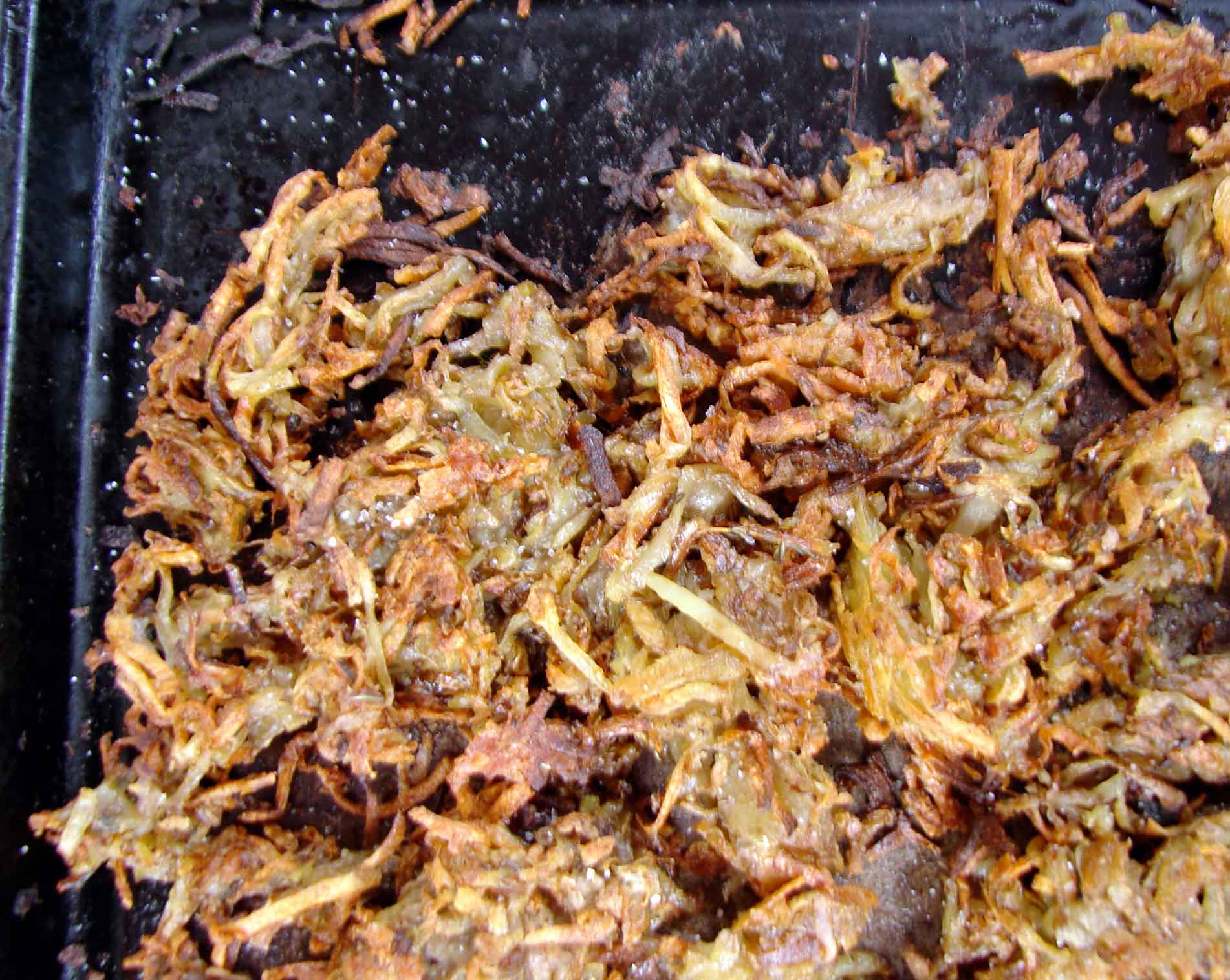
Oven-roasted hash browns

Oven-roasted hash browns

We picked enough cherry tomatoes at the farm to last for weeks! There was “no limit” on what we could pick, and the four of us collected a beautiful pile of jewelly tomatoes, bright and sweet and perfect. I decided to make them into a sauce with chickpeas, because it’s sweet that they’re nearly the same size. I cooked half of the tomatoes until they were soft and stewy, and saved half to the end, to add their bright freshness. I seasoned this with smoked paprika, ginger and cinnamon and topped it with fresh basil, chives and parsley. I thought it was pretty and tasty! We also got a lot of potatoes and fresh herbs from the farm, and I had the idea of grated them and tossing them with together with olive oil, and roasting them till crisp. These sort of oven-roasted hash browns made a nice base for the saucy tomatoes and chickpeas.

Here’s earworm extraordinaire Just Can’t Get Enough by Depeche Mode.

Continue reading

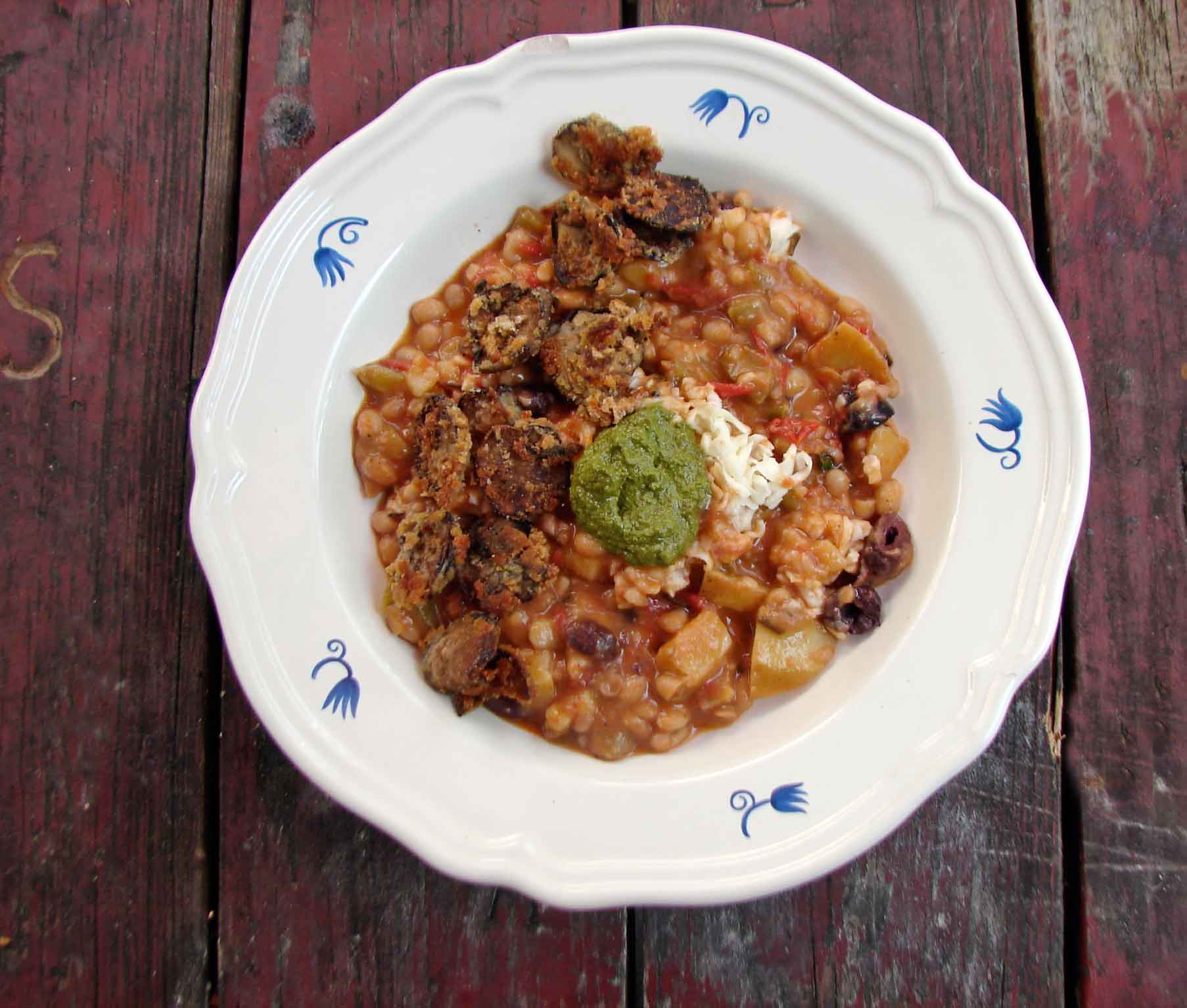
Summer stew with white beans, potatoes, crispy eggplant and basil-pistachio pesto

Summer stew with white beans, potatoes and tomatoes

Summer stew with white beans, potatoes and tomatoes

This morning Malcolm and I went out for a long walk on the tow path. He told me about a dream he’d had. The water turned to air and the air turned to water. So the fish swam in air below us, and we walked through water as though we were flying. There were strange creatures in the water that we moved through: tadpoles with teeth, ducks with oddly shaped wings, lizards with tongues longer than their bodies that lived on our backs and were our friends. In this new world we walked though forests of “wimping trees,” that had fallen over, swooning, and were easy for us to climb. The water rose up into space, but an evil wizard had rented out all of space, so there was no space for rent, no space for rent. As we walked it became less the memory of a dream and more the telling of a story. We saw a clicking kingfisher and a bright swooping gold finch. I was hazy from sleep and felt that I might be moving through water, rippling with Malcolm’s words of a world turned upside down. The trees and bushes had bright flashes of crimson and pale gold, which seems too early but is not unwelcome.

So today’s interactive playlist is on the subject of dreams. Songs about dreams, or songs that that just seem dreamy. Add them to the list yourself, or leave a comment and I’ll try to remember to add them through the week.

Basil pistachio pesto

Basil pistachio pesto

This is my favorite kind of meal! Something saucy and flavorful made from potatoes, eggplant, tomatoes and herbs fresh from the farm, with a big loaf of crusty bread to mop up the sauces. I served olives, grated mozzarella, pesto and crispy eggplant on the side, to add as you like. I used french-lentil cooking broth, but you could use a simple vegetable broth or even water, and it would still have nice flavor.

Here’s a link to the dreamy interactive playlist.
Continue reading

Grilled mushroom and white bean dip

Grilled mushroom and white bean dip

Grilled mushroom and white bean dip

Well my story isn’t done. It’s barely even started. Yesterday I wasted lots of time waxing eloquent about how I wanted to write a story, and it sounded like it was going to be a pretty good one, all glowy and underwatery. And I actually wrote one in my head, or part of one at least. And then I got home all eager to write it down, opened up my notebook, and…naw, that’s no good. And then I spent some time looking for another picture to write about, but I couldn’t even do that, I couldn’t pick one. And I started maybe three different stories, but didn’t like any of them, and I began to feel like Isaac, frustrated and angry, yelling at myself, “I HAVE TO WRITE A STORY! WHY WON’T YOU LET ME WRITE A STORY!” I fear my little writer’s block-clearing exercise is giving me a mean case of writer’s block. Or maybe it’s the heat, it’s probably the heat. Anyway, I thought I’d tell you instead about a storyteller that I admire very much (thanks, Saneshane!). His name is Jeffrey Lewis, and he tells stories with pictures and songs. His songs are musically simple but very sweet and compelling, and his lyrics are wonderful. He tells stories about moments of his life that might not seem all that eventful, but that become memorable and meaningful in his songs. He’s witty, pessimistic, hopeful, honest and philosophical, and all in a lovely confiding conversational style. He’s brilliant but self-deprecating, discouraged but full of life. He also writes comic books, and sometimes he tells stories with pictures and songs at the same time. In fact, he did a whole series of songs for the History Channel on subjects such as the French Revolution and the Fall of Rome.

Here are some songs I like by him.


I like them all, actually, but I’m late for work.

This recipe is super easy! It’s a great way to use up leftover grilled vegetables. You just purée them with some beans and spices, and you’re done! It’s great with crackers or chips or spread on crusty bread. Or serve it with oven-roasted fries and a salad as a meal. It would work really well with leftover grilled red peppers, too.
Continue reading

Roasted potatoes and butter beans with summer savory

Potatoes, butter beans and savory

Potatoes, butter beans and savory

I have the whole day to myself for the first time since…well, I can’t really remember the last time. “Oh! Miss Woodhouse, the comfort of being sometimes alone!” I had such big plans! I was going to get so much work done. I was going to start a novel, and make some progress on pre-production on this movie I’ve been talking about for half a decade. I was going to be creative and productive!

Six hours in, and I’m having such a strangely hard time focussing. I could blame it on the heat, because it is hellish hot, but in truth I think it’s the silence. It’s the complete and bewildering lack of distraction. Why isn’t anybody asking me for a snack, and then ten seconds later insisting on a drink to go with it? How can I possibly be expected to get any writing done if I can’t yell at anyone to stop yelling so that I can get some writing done–if I don’t have the deadline of a trip to the river to motivate me?

I’m actually a big fan of aloneness. I think it’s important to be alone some of the time, so that you can pursue the thoughts in your own head wherever they might lead you, so that you can try to figure out all of those things it’s impossible to figure out. It’s one of my tedious mantras that a person should have such a supply of inner resources that they’re happy alone with no distractions for long periods of time.

But, as in all things, I believe we need to find a balance. We need other people, and we need to be needed by them. It’s important to have an outlet and a reason for your wandering thoughts, so that you have something solid to tether them to. It’s important to have a sense of community, be it local or international. I’ve been thinking about this a lot, the last couple of days. If we know our neighbors, and understand them and care for them, then we’ll trust them as well. We won’t sit in paranoid solitude till we drive ourselves crazy with hate and rage. And we’ll understand why the actions of a few people acting out of hate and rage will be greeted by an ever-growing community of humans caring for strangers as if they were friends, with generosity, compassion and understanding.

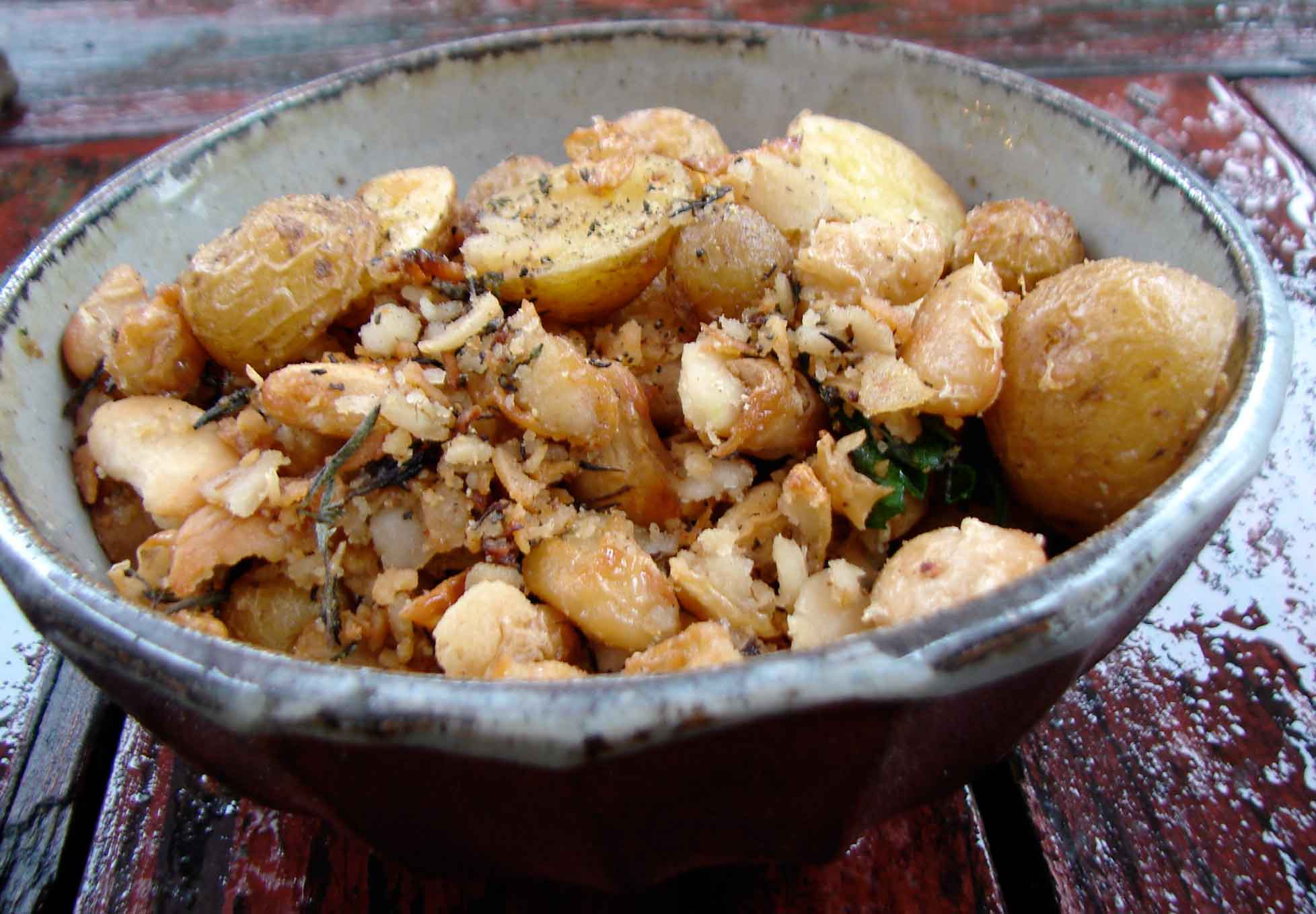
Each week I’ve been picking handfuls of fresh herbs from the farm–rosemary, thyme, sage and more sage, oregano, mint, lavender, and summer savory. I generally throw everything together into one big mix of flavors, because this random wildness is part of what’s beautiful about this time of year. But summer savory is a flavor I don’t encounter very often. It’s not as nice dried, and it’s lovely and distinctive–a little lemony and, well, savory! So I decided to use it all on its own in this recipe, roasted simply with tiny potatoes from the farm and big butter beans that were almost as large as the potatoes. I roasted everything in olive oil, and then drizzled some truffle oil on top. If you don’t have truffle oil, you can leave this step out–it will still be very flavorful!

Here’s People Make the World Go Around by The Stylistics

Continue reading

Tacos with broccoli, chard, and kidney beans in chipotle-coconut curry sauce

Chard, broccoli and kidney beans in coconut curry sauce

Chard, broccoli and kidney beans in coconut curry sauce

I got an iPhone four years ago. In the time since I’ve developed a nervous habit of checking my e-mail every few minutes. I don’t do it while I’m talking to people, of course, or at a meal or a gathering of any kind, but if I’m waiting on line, walking the dog, trying to write, if I’m actually just trying to check the time, I’ll always check my e-mail, too. It feels sort of hopeful and foolish. Any minute now, somebody is going to tell me they’d like to offer me a big advance to write a novel or make a feature film, and obviously they’re going to do it via e-mail, and it’s going to be totally legitimate, and if I don’t respond immediately I’ll lose the opportunity. Yeah. We got new phones, the other night, and now I get a gentle little chime each time I get a new e-mail. This means I don’t need to check!! This means that I know immediately that I got an important message from staples or toys r us or astrocenter (what the hell is astrocenter? Why are they bothering me?). Well, it feels strange. It’s vaguely disappointing, somehow. I no longer have the feeling that I could be getting good news at any time, because I know I’m not. Now I feel much more foolish than hopeful. And all of this got me thinking about mail, and how nice it used to be to wait for real mail from the mailman, and to write real letters, that required time and thought. And then I started thinking about photos, and how precious they used to be. People used to have special ways to keep photographs, little frames and boxes they would carry their one or two precious pictures in. Now we have phones loaded with snapshots. It used to require time and patience to take a photograph. The process was half skill, half luck in capturing the perfect moment. Now it’s all luck, the camera takes care of all the rest, and we can snap a billion shots a day. We have a much higher chance of capturing a randomly beautiful moment. I’ve been thinking about this quote I scribbled in my notebook a few years ago. It’s from René Claire, a filmmaker and writer who worked at the very beginning of cinema. He wrote essays about this miraculous new art form describing how passionately he felt about the direction it should take. He held it as a great responsibility to make films a certain way that would ensure that cinema lived up to its potential. Here’s the quote…

    In this era, when verbal poetry is losing the charm it exerted on the masses … a new form of poetic expression has arisen and can reach every beating heart on earth … a poetry of the people is there, seeking its way.

It’s easy to feel down and discouraged about the overwhelming barrage of messages and photos and news and information that we receive every single day, whether we like it or not. It’s easy to regret the days when a letter or a photograph was a rare and precious thing. It’s easy to be sad about the bloated, disappointing state of American film. But maybe it’s better to think about this new endless procession of snapshots, which capture an instant, are taken in an instant, and are shared in an instant, as a form of poetic expression available to most, and capable of reaching every beating heart on earth. Equal parts hopeful and foolish.
IMG_3027
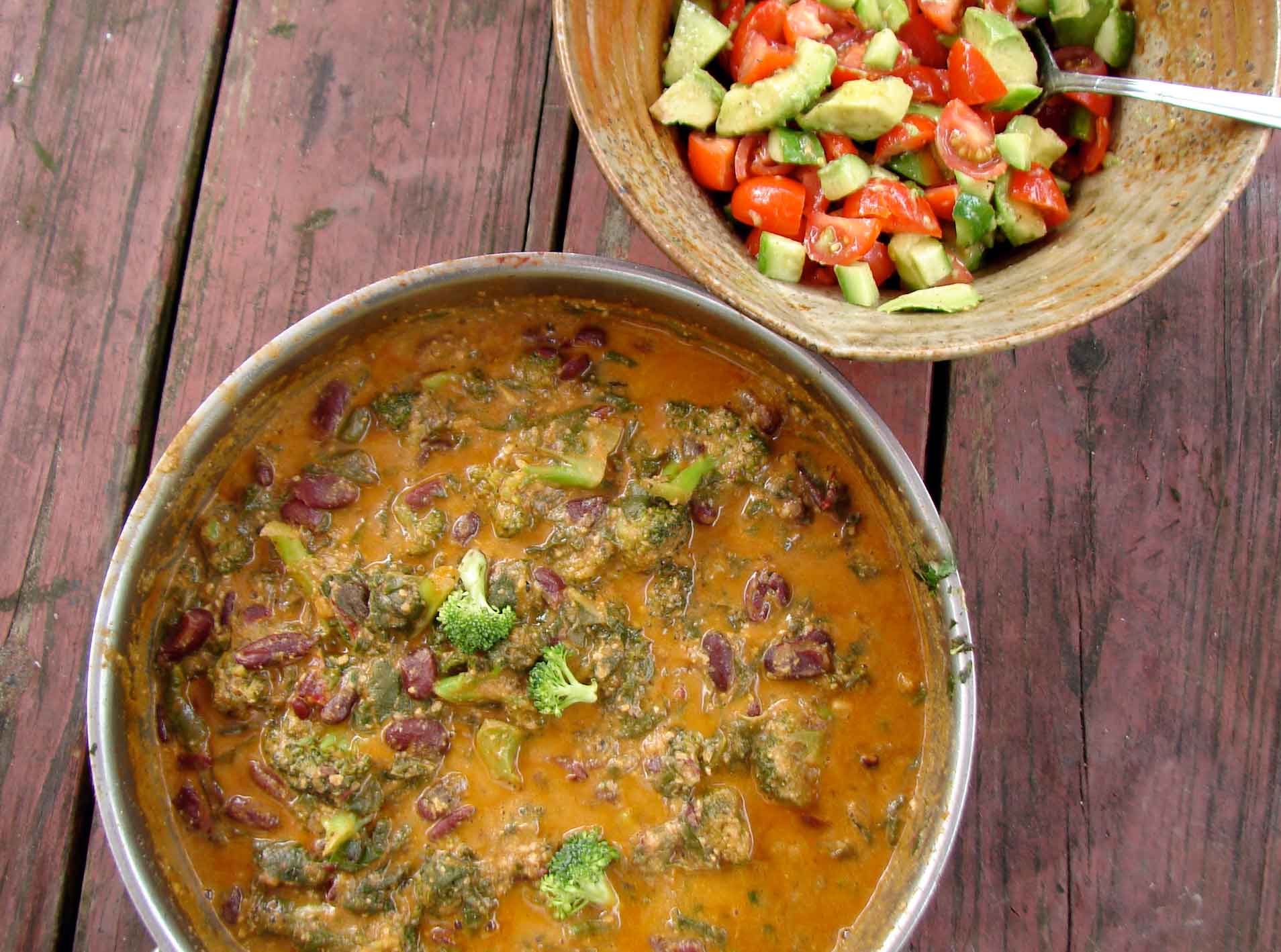
We have tons of chard from the farm, which makes me very very happy, because I love chard. I decided to try something different with it, and cook it in a chipotle coconut milk sauce. It turned out really tasty! I added broccoli and kidney beans for substance, and lime and spices for flavor and brightness. We ate this with basmati rice, warm wheat tortillas, and a fresh salad made of avocado, cucumber and tomatoes, but you could eat it just with rice or any other grain you like.

Here’s Photo Jenny by Belle and Sebastian

Continue reading

Roasted beets, potatoes and white beans with herbs and lemon

Roasted beets, potatoes and white beans

Roasted beets, potatoes and white beans

Early on this sweltering June morning, the first real day of summer vacation, you could find my Malcolm in a shady room, watching Akira Kurosawa’s Hidden Fortress. We all watched it together, some time ago, and he liked it so much he asked me to get it again. (The film is best-known, probably, as the inspiration for George Lucas’ screenplay for Star Wars: A New Hope.)

I was on my way out the door, and I just stopped, and sat with Malcolm and watched it again. I’d forgotten how beautiful it is. The film is moving, on so many levels. In the very first scene, we see two peasants, backs to us, walking away. They’re highly animated, squabbling and quarreling, bickering about plans for a future they have absolutely no control over. And then a wounded samurai careens into the frame from a crazed angle, followed by men on horseback who stab him, repeatedly, in an oddly beautifully choreographed dance. (I apologize in advance for using the word “beautiful” hundreds of times.) The peasants are caught between warring clans, and they’re captured and forced to bury the dead and dig for gold. During an uprising they escape, and they find a bar of gold hidden in a log of wood. And then they meet Toshiro Mifune, and they spend the rest of the film walking; following him, running from him, racing back to him.

They’re traveling with hundreds of bars of hidden gold and a princess disguised as a mute peasant. They walk through ghostly bamboo forests, slanting rain, stands of bare trees in the fog, soldier’s spears and flags, they thread their way through one beautiful vertical arrangement after another. They enter the frame unexpectedly, from any side at any time, in stark contrast to the standard left to right movement we’ve come to expect from a hollywood film. They creep, muttering, in one direction and dash, screaming, back again in the other. And they walk in and out of stories.

Each time they stop a small tale unfolds, a small perfect interaction between them or the people they encounter. They start the film as fools, comic and ridiculous, but the thought of gold makes them nearly imbecilic; they can’t control themselves and they stumble and flail, and say things they aren’t supposed to say, and fall all over themselves trying to escape from their poor tangled fate. We laugh at them, but we empathize with them as well. They’re poorer than poor, and they’re caught in a violent struggle that holds no meaning for them, but could destroy their lives.

The princess (Misa Uehara) is also caught in this struggle. She, too, is bound by the history of her family to behave in a certain way. She’s pretending to be mute, but her expressions as she sees a world she’s never seen before–outside of the castle, with people who behave unpredictably because they don’t know who she is–her face as it lights up at the sight of ordinary people doing ordinary things, is wonderful to behold.

In the midst of all the death and violence, all the scheming and subterfuge, all the struggle to keep power and wealth, the travelers happen upon a fire ceremony. Everybody sings and dances as one, as they throw logs into a huge bonfire. Our friends are forced to throw all of their gold into the fire. The peasants are beside themselves with grief and worry, but the princess looks freed, transcendent, as she joins in the dance and sings the odd, dark, existential song. She recalls it later after they’ve been captured, and she sings it in a beautiful scene that places all of the beautiful and ridiculous drama of the movie, and of our lives, too, into a strange, somber, hopeful sort of perspective.

The life of a man
Burn it with the fire
The life of an insect
Throw it into the fire
Ponder and you’ll see
The world is dark
And this floating world is a dream.

I missed a few scenes because I was making the boys’ breakfast. When I returned, the princess sat in a wild tangled bower of bushes, smiling with a sort of happy wisdom, as at something she’d never seen or noticed before. I said, “Malcolm, why is she smiling.” He thought for a moment and said, “It’s the birds.”

This is a summery roasted vegetable dish. It combines new potatoes, beautiful red and golden beets, white beans, shallots, olives, capers, herbs and lemon for a bright roasty flavor. It would be nice with a sauce, like a pecan tarator sauce or a spicy tomato sauce. It makes a meal with some sort of grain–farro, millet, quinoa, rice and a salad, and it would make a nice side dish as well.

Here’s the main theme from Hidden Fortress. The soundtrack is spectacular.

Continue reading

Chard and white beans with raisins, walnuts and smoked gouda

Chard and white beans with walnuts and smoked gouda

Chard and white beans with walnuts and smoked gouda

If you’re following along at home, you’ll recall that yesterday found us, here at The Ordinary, seeking some solace from our busy thoughts in the form of quiet film scenes. David mentioned a film we’d watched last week, Le gamin au vélo, and I thought “ah, yes, of course.” I was going to add a scene from the movie to yesterday’s post, but in watching the scene, I realized that this was one I want to go on an on about, so that’s where we find ourselves today. The film is by the Dardenne brothers of Belgium, renowned for making emotionally and stylistically bleak and austere films, most notably La Promesse in 1996. They almost never use non-diegetic music–they don’t have a soundtrack. The sounds of the film are those that people make going about their day, and these sounds become oddly compelling as we become immersed in the rhythms of the character’s lives, as we learn their routine and become alert for any small change in the patterns. All of their films are quiet, they’re a succession of silent moments. And that’s why this scene is disarmingly beautiful. We’re given music! We’re given, specifically, a small, moving swell of music, like a warm gentle wave; a few notes from the second movement of Beethoven’s Emperor piano concerto. And then we return to the quiet world of this ridiculously beautiful expressive boy, to the sound of his breath, and of his madly pedaling feet. Throughout the film, in certain scenes, this music washes over us, just a few notes, and then recedes. You feel that you need to hear the rest, you want the notes to resolve themselves. You want the boy’s life to resolve itself, you want him to care for himself, you want him to let somebody take care of him. The Dardenne brothers’ films, though beautiful, are often hard for me to watch. The very honesty and rawness that makes them wonderful makes them painful. Their characters are battered by life, conflicted and rejected, and they spend a lot of time alone. We’re compelled to watch them in their solitude, drowning in the silence of their own company, facing rotten choices and making regrettable decisions. They raise all sorts of questions for me, as a film viewer, and as somebody that hopes to one day call herself a filmmaker again. You could make a film this revelatory of human nature as it actually is–you could, and you probably should, but why would you? Why watch something so depressing? The older I get, I find I have less tolerance for unrelentingly grim movies. When I was younger I could watch anything, but now that I have children, I just can’t–particularly if the movie involves kids the age of my boys, as this film does. I don’t need a happy ending. I don’t want to watch sickeningly sweet saccharine feel-good movies, but I do need some small hopeful sign. So I will admit to you that when we watched this film, we stopped halfway through, and I read about how the film ended, and only then did we watch the rest. But we did watch the rest. Because in being entirely honest about human nature, you have to include moments of warmth and generosity and connection, and that’s what this film does, quietly, slowly, without melodrama or judgement. The few notes of Beethoven that we hear throughout the film are full of sweet sadness, the music veers between hope and despair, light and darkness, but it’s so beautiful that we need to follow it to the end, which they finally allow us to do during the credits. And that is why you watch a movie like this one.

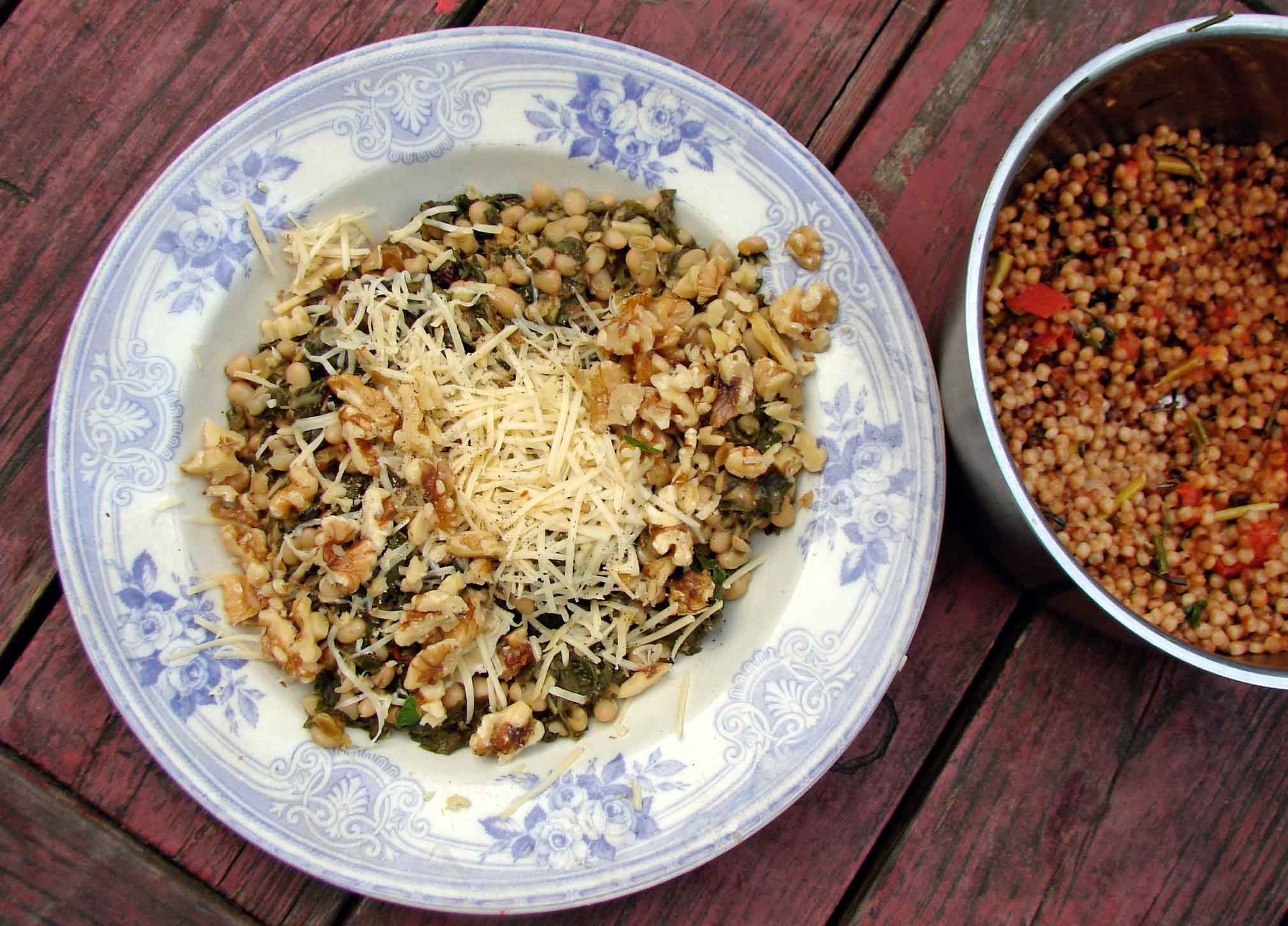
Chard and white beans with walnuts, raisins and smoked gouda

Chard and white beans with walnuts, raisins and smoked gouda

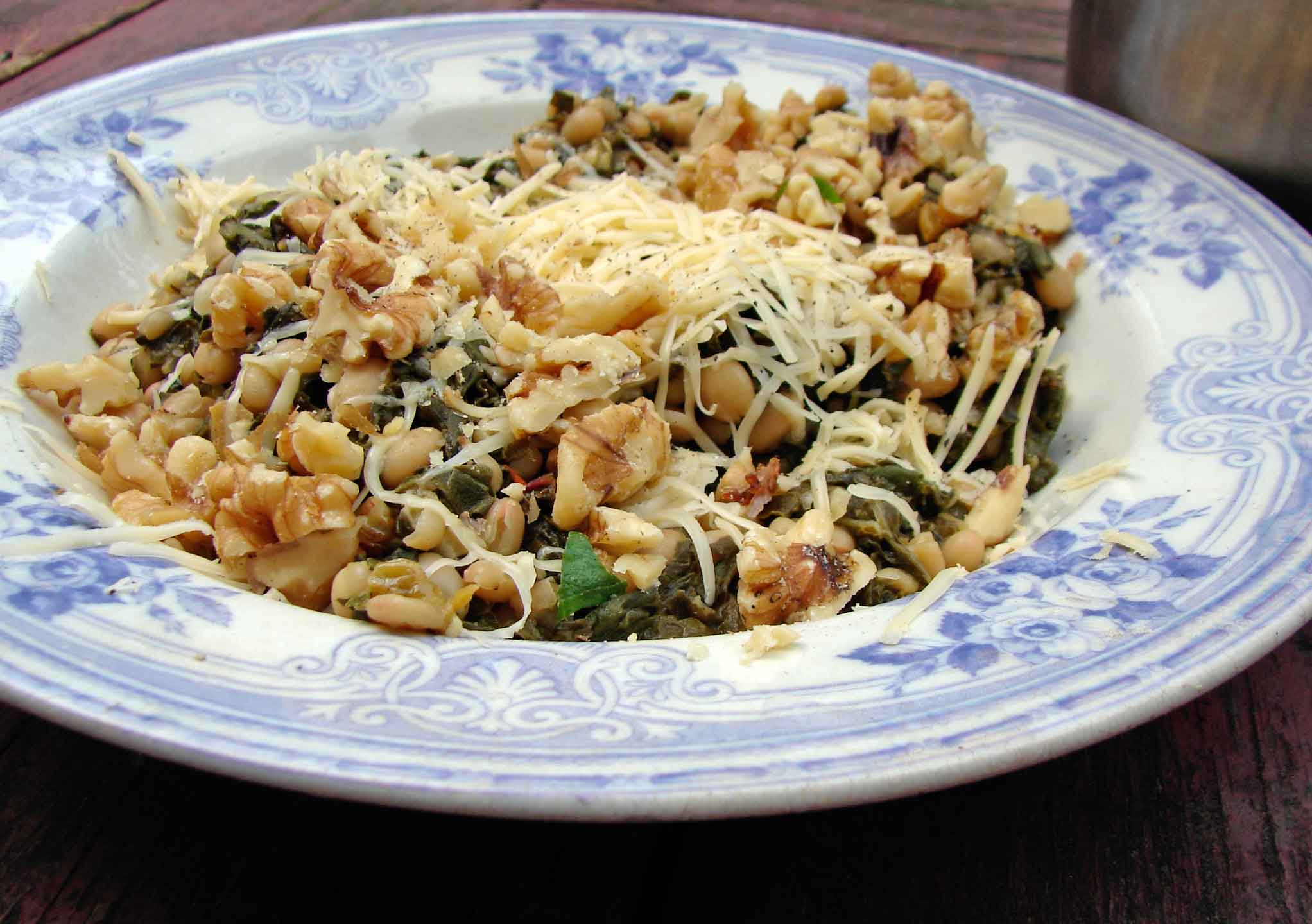
Greens are my favorite! This time of year is the best! We’re getting greens by the armful from our CSA–chard, kale, spinach, broccoli rabe. I love to come up with new ways to prepare greens, and this one turned out really good. It’s a twist on the old chard/raisin/pine nut combination that I love so much. This one adds white beans and smoked gouda, for extra substance and flavor. We ate this with whole wheat pearled couscous, which I prepared “according to the package instructions,” except that I cooked the couscous in olive oil and herbs at first. You could eat it with pasta, rice, millet, farro, a big bed of lettuces, or as a vegetable side dish. You could eat it in a box, you could eat it with a fox.

Here’s the second movement of Beethoven’s Emperor piano concerto.

Continue reading