Broccoli rabe and black beans with ginger and tamari (and tofu!)

black-bean-broccoli-rabeIn my dream I decided to legally change my name to Clairey the Observer. And in my dream this was my job (my dream job!), I was a professional observer. I just sat back and watched people and then I wrote about it. I made observations. I half-woke up and thought about what a nice job this would be in real life, I imagined myself on a high perch, taking notice of all that happened around me, and I thought about writing stories based on observations of people. I want this job! Unfortunately I didn’t dream about the part where you apply for the position, so I don’t know how to go about it. But then when I was fully-woken up, I looked up “observe” in the OED, as one does, so I’d be fully apprised of the job description before I undertake the employment. Observe. It’s such a rich and fascinating word. According to my understanding of the term in my dream, my main responsibility as an observer would be “To take notice of, be conscious of; to notice, perceive, see.” And then “To remark or make observations on.” If I was actually applying for this job, I would write in my cover letter, “I think I would be very good at taking notice and being conscious of things, because it’s very important to me to notice things, and not to just let them pass me by. I want to observe things and collect and keep them, and not just let life wash over me as though I was in a sleepy stupor. I want to be a keen observer, and notice even the small things and feel them, too.” Further duties of an observer would include acting “To watch over, look after, keep safe.” And I feel confidant that I could do this very ably. Just ask my dog or my sons, if anything I’m likely to keep too close a watch and generally look after too fondly and anxiously. I also understand that as an observer I might be called upon to abide by or adhere to or to maintain or uphold a mode of existence, a covenant, or a promise, and I assure you that in my day-to-day existence, I will strive to observe principles of curiosity, creativity, generosity, honesty, and, of course, verbosity and I will faithfully observe such small daily rituals as necessary to ensure a life fully lived and thoughtfully observed, as far as I am able. In summation, I would like to share the words of Francis Bacon, “If men will intend to observe, they shall finde much worthy to observe.” I hope that you will consider me for this position of observer, howsoever it shall be found and remunerated, yours sincerely and henceforth, Clairey the Observer.

Malcolm picked out some tofu at the grocery store. I only like tofu when it’s fried very crispy, and I don’t like the way my kitchen smells when I do that at home. So I had the bright idea to take it to work and ask the chef to put it in the fryer for a few minutes. And he very very kindly agreed, for which I am eternally grateful. I brought it home, and Malcolm and I made a sauce for it, consisting of tamari, honey, balsamic, and a bit of ginger. I decided to use this same treatment on some black beans, and pile these on some broccoli rabe as a backdrop for the tofu, so that is what we did. Quick and simple meal, but quite tasty, too. You could use broccoli instead of broccoli rabe, and just add it to the beans and cook until bright and tender.

Here’s Niney and the Observers with Blood and Fire.
Continue reading

Red lentil, red bean and yellow split pea curry (with sweet potatoes, red peppers and kale)

Red bean, red lentil and yellow split pea curry

Red bean, red lentil and yellow split pea curry

Isaac likes to ask questions he knows the answers to. He’ll ask them again and again, and there must be something reassuring in getting the same answer every time. Of course this is dangerous when you have a mother who earned the name “Miss Snide” in her youth because of her snarky response to every question with an obvious answer, and who can’t give the same answer twice. So frequently our walks to school go a little something like this. “Mom, do you think Clio is cute?” “No, I think she’s a hideous beast.” “Mom, do you think Clio is cute?” “No, I think she’s foulfiendish.” “Mom, do you think Clio is cute?” On and on until I finally break and yell, “Of course I think Clio is cute, I only tell her so ten thousand times a day!” Last night when we were reading before bed it was, “Mom, what’s your favorite color?” “You know the answer, you tell me.” “GREEN! What’s your other favorite color?” “You tell me again,” “Blue!” And then Isaac recalled a time when one friend, who is a girl, said that her favorite colors are pink and red, and another friend, who is a boy, said she couldn’t like red because it’s a boy’s color. And then both Malcolm and Isaac said “There’s no such thing as boy colors and girl colors! Any body can like any color!” Isaac said it’s a made up myth. And Malcolm said that it sucks for girls, though, because they only get two colors, but boys get every other color there is. Well! It seemed like such a wise thing to say. It seemed like such a perfect metaphor for so much else in life, and I’d never thought about it before in that way. Pink and purple. I mean of course I’d realized how ridiculous it was to think of these as girlie colors, or let colors be so defining, and I’d always been proud of my boys for liking pink and purple in defiant solidarity. But I’d never realized how imbalanced it was. I’d never really thought about how every single other color belongs mostly to the boys. I had a funny sort of flash of “What else do we just live with and take for granted that I need my eleven-year-old to state with brilliant matter-of-fact clarity?” This week Isaac had to fill in a big poster about himself, and in the box for favorite color he drew just about every color known to magic markerdom. I love to think about my boys refining the light of the entire spectrum through the perfect prism of their ridiculously lovely combination of imagination and good sense. I love to think about them glowing with all the colors, with every color in the world.

Red lentil, red bean, and yellow split pea curry

Red lentil, red bean, and yellow split pea curry

Speaking of color! This dal had red lentils, yellow split peas and red beans. So it was very warm and autumnal. It also had red peppers and sweet potatoes, to add to the warmth and autumnalness. It was tasty, too, and satisfying. If you cook if for a nice long time, the red lentils will break down into a sort of background creaminess, but the split peas and red beans will retain their texture. We ate this with basmati rice and some Ooto flatbreads.

Here’s Louis Armstrong with What a Wonderful World.
Continue reading

FIrst frost stew

First frost stew

First frost stew

I’d been feeling very discouraged, and I thought I wanted to watch something light-hearted and stupid and funny, to forget about feeling disappointed for a while. But we didn’t have something lighthearted and stupid and funny, we had the exact opposite of that. We had Diary of a Country Priest, by Bresson, and it turned out that this movie was exactly what I needed. The film is long and slow and dreamlike, it’s narrated from the diary of a priest new to a small town–his first parish. “I don’t think I’m doing anything wrong in writing down daily, with absolute frankness, the simplest and most insightful secrets of a life actually lacking any trace of mystery.” But the film is full of mystery! It’s one of the strangest films I’ve ever seen, but in such a gentle, soft-spoken way, it’s quietly bewildering. At times it seems like a suspense film, a noir film, Gaslight or Rebecca. The priest faces antagonism from his parish, and we don’t know why. They suspect him of wrongdoing, he’s accused of terrible things, but we don’t fully know what they are. He’s accused of being a drunk, but it’s also possible that the wine he drinks might be bad in some way, or might even be poisoned. It’s never clear if all if this is in his head or if it’s real, and conversations with others rarely clear up the confusion. In his monologue he hints at events and confrontations that we never actually see. Of course, on an overtly religious level the film is about a man struggling with his faith, which is his job. He despairs of his ability to pray, and he expresses doubt when he should be professing his complete assurance. This childlike frankness extends to all of his actions. And like a child, it seems as though everything that people tell him comes from a different world, all the advice he’s given seems a little doubtful or strange, as it must seem to a child when somebody tells them to do something they don’t understand. He seems frustratingly weak, sometimes, but like a child, he has a strong voice inside that tells him who he is and what he needs. And, like a child, he makes questionable decisions sometimes about his well-being. The priest lives on wine, bread, and fruit, because he has a sensitive stomach, and this strange diet and his constant pain leave him dizzy and faint. The film has a beautiful blurred glow, it’s almost out of focus–apparently the result of a poorly attached filter, a mistake which the director loved despite the cameraman’s protest. The landscape is wintery and soft, and the film is visually beautiful. The priest’s face is luminous with a sad quiet glow, and we only see him smile one time, when he’s given a ride on the back of a motorcycle. He’s as childish in his pleasure as he has been in his pain all along. And when the man who gives him the ride tells him that he imagines they could be friends in different circumstances, he’s endearingly doubtful and glad. Because he’s incredibly alone, he’s completely isolated, and more than anything the film felt to me to be a portrait of loneliness. All of his doubts and fears and bad nights and strange moments of despair and weakness feel so much worse because he has nobody to comfort him. I want somebody to care for him like a child, like the sick child that he is, but despite rare moments of comfort and connection, this doesn’t happen. I’m not religious in any Christian sense of the world, but I find the priest’s search for faith and grace beautiful on a human level, or perhaps on the level of a human searching for something bigger than themselves, whatever name we happen to give to that. I spoke last week about the idea of soul being the seat of a person’s emotions, feelings, or thoughts or the moral or emotional part of a person’s nature or the central or inmost part of a person’s being, and I think that is something this priest would understand. His solemnity and his honesty raise him above the petty bickering of his parishioners. He doesn’t bother to defend himself from their accusations, because his understanding is on a completely different level. When he realizes this he says, beautifully, “I’d discovered with something bordering on joy that I had nothing to say.” I love that. The film is full of unexpectedly beautiful statements like this. His “old master” an odd sort of priest who appears throughout the film, follows a stream of advice with the words, “And now, work. Do little things from day to day while you wait. Little things don’t seem like much, but they bring peace.” I think that’s true in all of our lives, no matter what our circumstance no matter what our faith. As does his further statement, “Keep order all day long, knowing full well disorder will win out tomorrow, because in this sorry world, the night undoes the work of the day.” For the priest, the little thing that brings peace and order is his writing. He writes because he needs to, with a sort of desperate compulsion. At times he scribbles out what he has written, as if the words are too powerful or too doubtful or too strange. And his quiet voice, narrating the action sometimes in concert with the actions we see, sometimes just off, before or after the action, is dreamlike and compelling. Such a strange film, so beautifully full of questions and doubts. In the end the priest is given absolution by a friend who has fallen from his faith, and he says, “”What does it matter? All is grace.”

My friend Diane sent me an e-mail wishing me a “happy first frost,” and asking if I’d make some sort of stew for her. So I made this first frost stew. So-called not just because it’s warm and comforting, but also because it’s four kinds of white, flecked with a little bit of green. Butterbeans, small white beans, potatoes and rutabaga mixed with lemon thyme and kale. Warm but brignt.

Here’s Jesus by the Velvet Underground. “Help me in my weakness because I’m falling out of grace,” could be a line from the movie.
Continue reading

Roasted beet, mushroom and butterbean galette with walnut crust

Roasted beet, mushroom and butterbean galette with walnut crust

Roasted beet, mushroom and butterbean galette with walnut crust

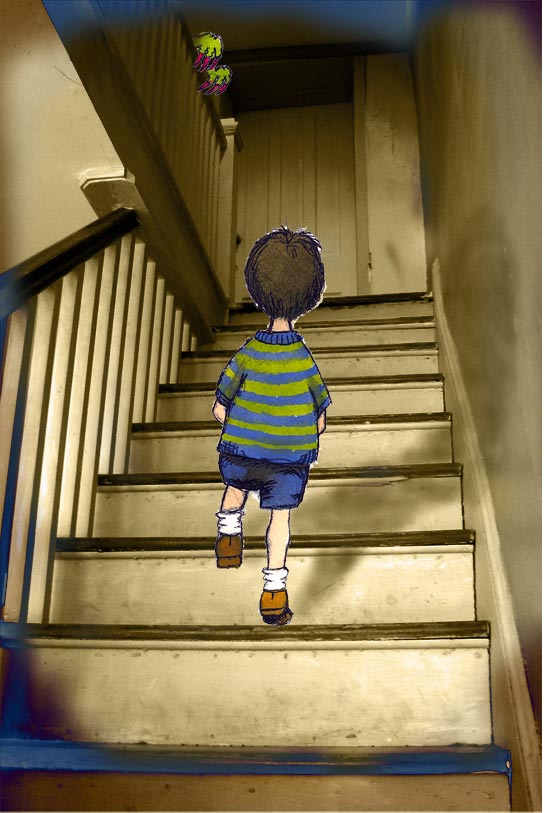
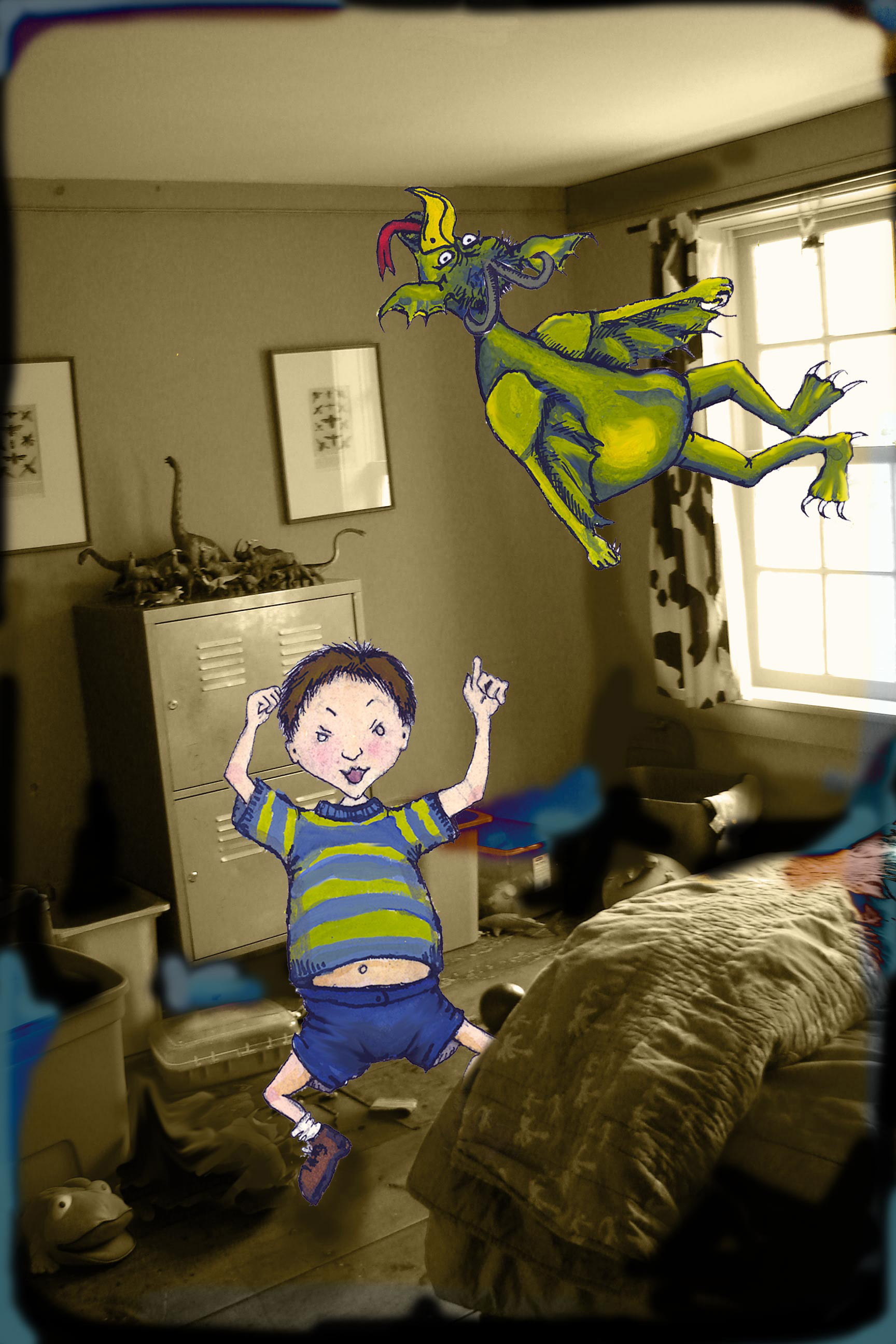
Today we’re going to do a cheater’s version of Saturday storytelling time. I didn’t actually write a story this week, but I’ve thought about it a lot. Incessantly, so surely it’s only a matter of time before it pops out of my head fully formed. So this is a story I wrote a few years ago. In honor of Halloween, it’s a monster story! It’s a story for children (childrens’ book publishers form an orderly queue) about a boy and his monster. Here are some pictures I did for the story. The text is after the jump.
stairwelllo
flying-monster

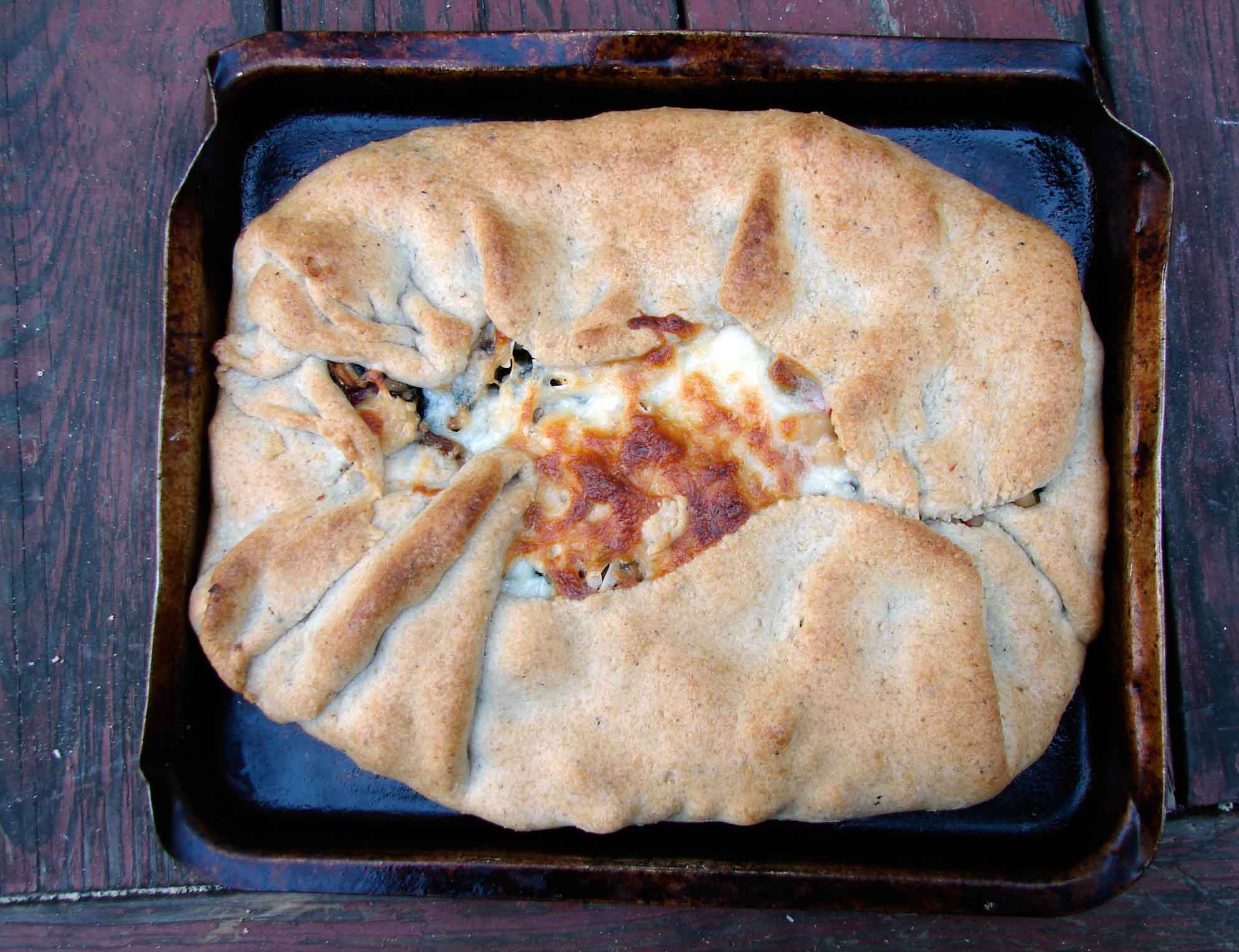
And, as ever, we have a recipe, too! This is an autumnal galette. The crust has walnuts and black pepper, and the inside has roasted beets and roasted mushrooms, as well as butterbeans sautéed with chard. It’s all topped off with smoked gouda. Lots of warm, sweet, earthy, smoky flavors!

Here’s The Boogie Monster by Gnarls Barkley

Continue reading

Navy beans with fennel and roasted sweet potatoes, and butter-fried croquettes

Navy beans with fennel and roasted sweet potatoes

Navy beans with fennel and roasted sweet potatoes

“He wouldn’t listen to her, and he clasped her desperately, his heart drowning in an immense sadness. A need for peace and an uncontrollable need for happiness invaded him; and he pictured himself married, in a nice clean little house, with no other ambition than for the two of them to live and die together inside it. They would only need a little bread to eat; and even if there was only enough for one of them, he would give her the whole piece. What was the point of wanting anything else? Was there anything in life worth more than that?” Indeed! Well, I haven’t finished the book yet, but I know how things turn out. I always read ahead, I read a few pages here and there in the middle, and I read the end. I always have, somehow knowing how it will end makes the story more compelling for me, even if it ends sadly, as this one does, I’m sorry to say. They are, of course, Etienne and Catherine from Germinal. They’re sitting on the edge of the bed in icy darkness, preparing to go back down the pit. After a winter of sickness and strife, starvation and deprivation, after months of physical and emotional abuse from her cruel lover, after ages of liking and loving and longing for each other, all unspoken, they’re at a crossroads. “Don’t do it!” You want to yell at them. “Don’t go down the mine. Run away!!” When I was little I used to imagine an island people could go to when things weren’t going well for them in plays or books or movies. An island for star-crossed lovers where everything aligned a little more benevolently, and all of the outside forces that kept them apart were nowhere to be found. It would be a place you could go despite your obstacles–money troubles couldn’t keep you away, and neither could overbearing relatives or jealous lovers or fickle fortune. And once you got there you’d be free to live out your days with your lover, just as you choose. You would grow old together. And maybe this would be hard for some of the couples that wind up on the island, because they hadn’t known each other very long in the old world, but I think they’d be glad to have the chance. After all, we each have to grow old, and it’s nice to have somebody to do it with. Romeo and Juliet were so young when they died. Juliet is thirteen. So maybe on this island they would grow up together, they would become adults together and be good friends. Catherine and Heathcliff–well, I just don’t know. They started as friends, they did grow up together, but weren’t they disappointingly cruel to each other and themselves and everyone around them. I don’t think even a magical island could provide them with a cheery future. Catherine and Etienne, though, I think they’d be okay. They’ve both suffered so much and worked so hard that they’d be glad of the peace and freedom to be kind to one another, to really love each other. They’d delight in any small warmth that they could find, and they’d kindle such a bonfire of pent-up affection they’d be able to light up a whole wintery mining village. And they wouldn’t be ignorant but happy, either. I think about Catherine a lot, about how bright and interested she is, and about how her only hope in life is to earn enough money to survive, and that her cruel man won’t be too cruel to her. I like to think about her writing stories in her head, down in the pit. But Etienne has taken such pleasure in learning, and in educating himself, and you know he’d love to teach her, too, and that he’d take pleasure in doing it, and be proud of all she learned. I like to think about what she might do, if she had some knowledge. I like to imagine them happy. They don’t expect much, and they deserve the world.

Butter-fried vegetarian bean loaf

Butter-fried vegetarian bean loaf

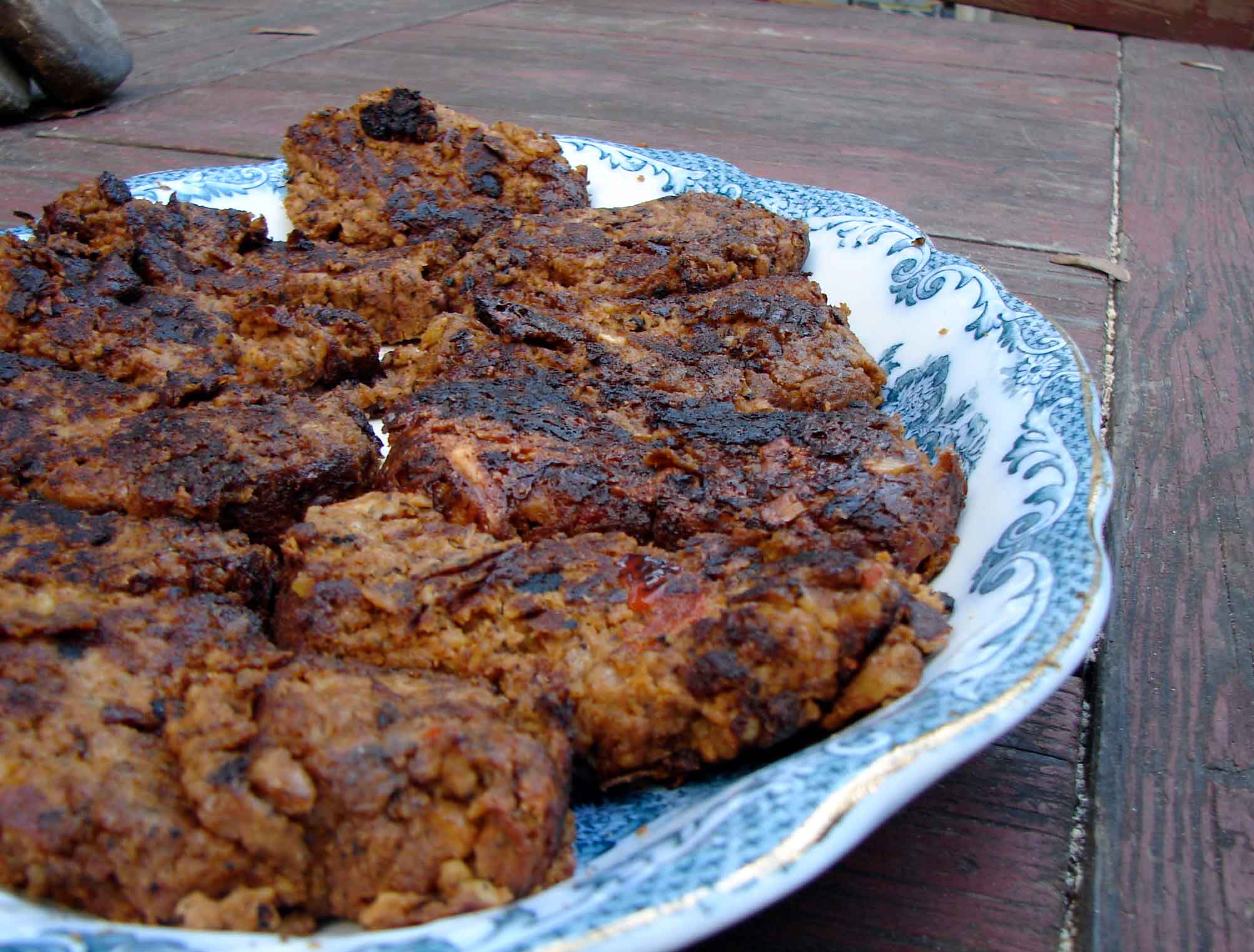
Here we have another meal that started as a bean and vegetable stew and ended up as croquettes. THe first night we had a bright, sweet, tart stew made of navy beans, fennel, and roasted sweet potatoes. It also had lemon thyme, lemon, caper, and a handful of raisins. Very delicious! And we ate it with bulgur. The next night I smashed all the leftovers together with bread crumbs, eggs, cheese, and smoked paprika, and baked it in a loaf pan. Then I sliced it (or tried to, it fell apart a bit) and fried it all in butter. The boys said it was like hotdogs, and it kinda was! Very good, though!

Here’s Louis Armstrong with Song of the Islands

Continue reading

Kale and sweet potato empanadas with pecans, goat cheese and smoked gouda

Kale and sweet potato empanadas

Kale and sweet potato empanadas

“For years, Cohen’s approach was to shoot three rolls of film over a two-hour walk, develop the rolls directly, have dinner, then go back to the darkroom, develop eight to nine prints directly from the negatives, and cast aside the rest. Cohen did this several times a week for decades. He estimates he has 600,000-800,000 images that he’s never seen or developed, not even on contact sheets.”

Mark Cohen is a street photographer who shoots images from his hip, without looking through the viewfinder. In an article in today’s Guardian, he describes his methods. He doesn’t carry a camera with him all the time, he goes on specific walks just to take photographs. This used to be in his home town of Wilkes-Barre Pennsylvania, but he’s recently moved to Philadelphia, and now he takes trolley rides, “I get on a trolley and go to a specific intersection. I like to go to the same one 10 times, so I understand the texture of the neighbourhood.”

His photographs, not surprisingly, are unusually framed, they’re askew and disorienting–not focussed on face and shoulders, but on whatever part of the body he happened to catch. There’s something beautiful in this discombobulation. The photos of people feel more intimate and specific to one person, because they capture some part of that person nobody would notice, but they also feel like a document of people everywhere at this particular moment in time. They look familiar, like family snap-shots, like people you knew, and in their abstraction they become surprising and new…you see the human form in a different light, as a collection of angles and light and shadows, vulnerable and beautiful.

Bare thin arms against aluminum siding

Bare thin arms against aluminum siding

I love the eccentric ordinariness of this whole process. I love the way it’s described as part of his routine, as natural as making a meal. In describing his career trajectory, from gallery shows in New York in the seventies to relative obscurity (although he has a show in Paris at the moment) he seems more than resigned. As his career waned, he remained as productive as ever, perhaps even more so. ‘Removing himself from the New York scene gave him a “purity”, he says, by virtue of “not having a personality so involved in the dissemination of work”. But by his own admission, he “dropped out” in the late 80s. “Gallerists couldn’t sell my stuff,” he says matter-of-factly. “My work’s not the most optimistic. It’s not like Yosemite.”‘

In all of these things: his subject matter, his seeming need to take photographs, the fact that he hasn’t developed many of his negatives, or even looked at them, he reminds me of Vivian Maier, another brilliant photographer who had a unique view of the world all around us. They capture time as it passes, they save moments in the lives of strangers and make them into something remarkable–something worth noticing, something worth saving. There’s a feeling almost of melancholy in the works of both photographers, something almost lonely in a glimpse into the life of somebody else. But there’s tenderness and compassion, too: we feel a connection.

kale and sweet potato empanadas

kale and sweet potato empanadas

Autumn empanadas!! These were warm and smoky, earthy, sweet and tangy. Very very nice on a chilly autumn evening. The kale and sweet potatoes are from the farm, as are the sage and rosemary. I used a combination of goat cheese and smoked gouda, for the nice contrast in flavor and texture. These were mostly soft and pleasing, but they did have a bit of crunch from the crust and the pecans.

Here’s Jimmy Smith with Just a Closer Walk With Thee.

Continue reading

Roasted butternut squash and black beans in coconut milk

Roasted butternut squash and black beans in coconut milk

Roasted butternut squash and black beans in coconut milk

Yesterday, despite my advanced years, the intimidating gravity of my demeanor, and my preeminently eminent status among the scholarly scholars of the world, I was scolded like a child. Like a bad child, I tell you! Like an impertinent middle schooler. I was made to iron my shirt, I was forced to roll silverware into linen napkins in the basement! (To be fair this is all part of my job, anyway, but it sounds so much more dramatic like this.) Obviously I only took this job so that I would have sympathy for all the scolded children of the world, so that I would learn the virtues of humbleness, obedience, and biddability, and yesterday my fiendish plan paid off in spades. So this week’s interactive playlist is scolding songs, songs that tell you to be good, get a haircut, fall in line, straighten up and fly right, or generally obey the rules and laws of society.

And this was a nice sweet and tart curry of roasted butternut squash, roasted peppers, black beans coconut milk and lime. Earthy and warm and autumnal. Good with basmati rice. Very very versatile…you could add any kind of greens you have, or tomatoes, you could substitute sweet potatoes for butternut squash.

Here’s a link to the interactive playlist. Add your own songs, or leave a song in the comments and I’ll try to remember to add it.
Continue reading

Freekeh! And chard, chickpeas and sweet potatoes

Chard chickpeas and sweet potatoes

Chard chickpeas and sweet potatoes

It’s strange how some moments can leave you feeling unexpectedly raw. Some days I’ll be walking along through the world, fully possessed of my maturity and composure and whatever other calloused armor lets us walk through this world in a capable and functioning fashion, and some small gesture will undo me. It’s usually something seemingly insignificant, something I could easily pass by without noticing at all (they do call me “oblivia” after all). But it will leave me a weepy puddly mess, for a minute or two.

Sometimes on our bike rides we pass what seems to be an entire school out exercising (it’s a very small school.) This is always a somewhat touching scene, just to see the glowing happy running faces, and the reluctant trudging faces, and everything in between, just to see the way the children arrange themselves in little groups, or end up by themselves, and to remember what that felt like. One day the teacher had organized a different sort of exercise, and as one group of kids ran out, another was returning to the starting line. They had to slap hands with the kid they passed. That was it, that’s all that happened, and this gesture of children touching hands with other children as they ran by was enough to make me hope the kids wouldn’t look up in my red and tear-y face as they trotted by.

Today I walked Isaac to school, like I do five days a week. Malcolm came running up, all bright-faced and happy. The power was out! They were being bussed to another school! They might have to have pizza for lunch! The excitement was palpable, and the noise was thunderous, as an entire school-yard full of children looked forward to the strangest, best day ever. Such a confusion! Such a botheration! Children large and small, making noise, tangling everywhere! No bell to get their attention, and the poor safety-patrol overwhelmed by children bouncing and bubbling all around them. It was chaos, I tell you! Cheerful chaos! And suddenly the remarkable music teacher walked out and clapped a rhythm. All the children around her clapped the rhythm, and then every child in the courtyard followed. Silence ensued. And what the heck, man, I’m suddenly the crazy mom standing on the edge of the courtyard with a mad grey dog, trying to think of an excuse for my red nose and watery eyes. I came home and told David about it and got weepy all over again! I’m weepy now, writing about it! What is wrong with me?

Oh, I could go on, I could tell you about how last week when Malcolm went to his friend’s house for breakfast (with all of his other friends) I made him some apple sauce to bring, and he said it was so good he could have eaten it all by himself. And last night he asked me to make more, and I assumed it was to bring to breakfast at his friend’s house again, but he said, “No, nobody else would eat it,” which means that he was asking me to make applesauce out of kindness to me, because he liked something his strange mother made even if nobody else would try it! That kills me! And that’s it, that’s all it takes.

I suppose it’s moments of connection, if I stop and look at it rationally, that strike such a tender chord; moments of communication or thoughtfulness. And they’re everywhere! They’re all around us! I feel crazy for getting so emotional about small things, but maybe we’re crazy for not being constantly undone by these moments, for not being constantly aglow with emotion set off by these small gestures. I don’t suppose we’d get much done, though, throughout the day.

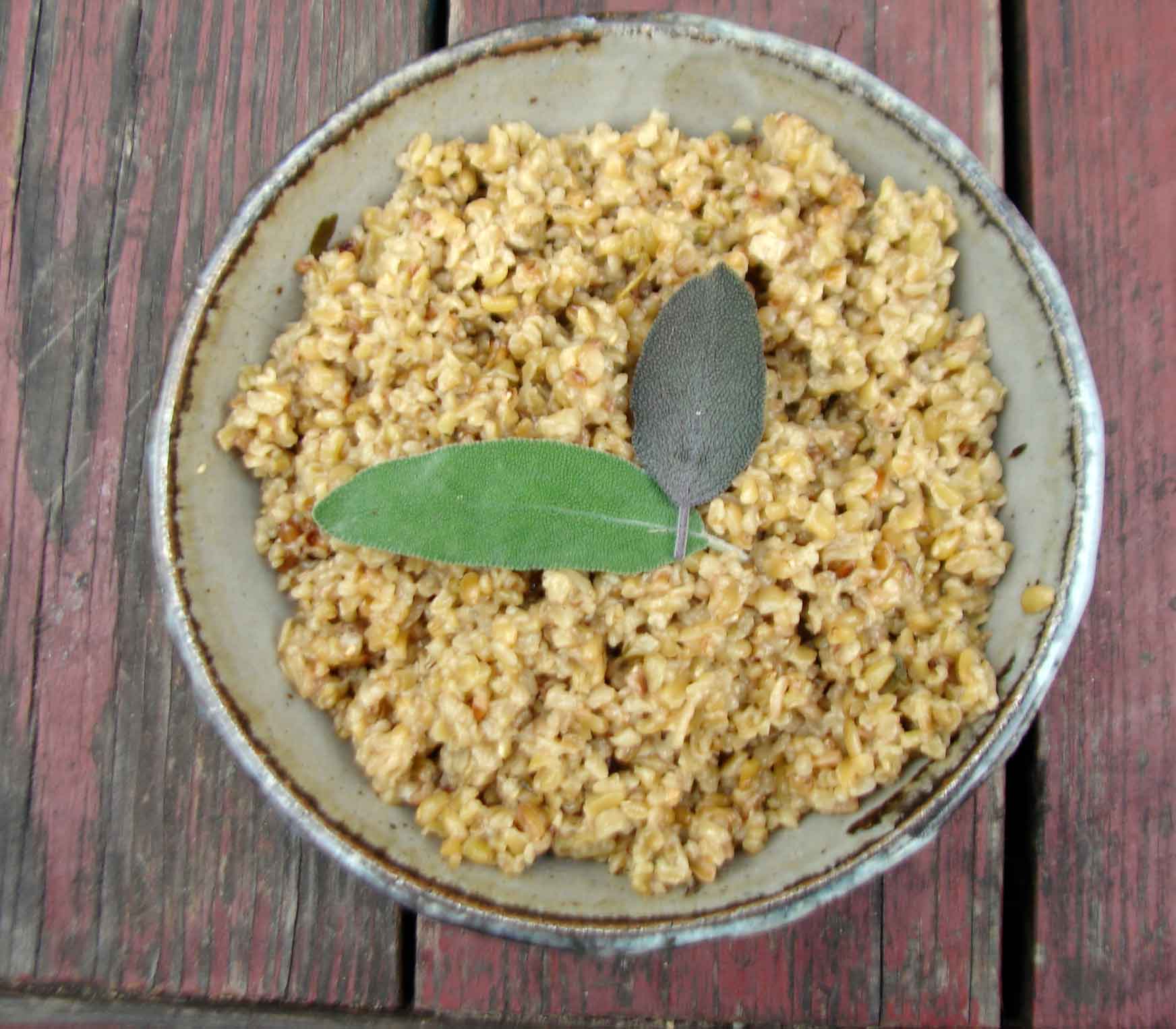
Freekeh! I saw it at the grocery store in the bulk food bins. I’d never seen it before and it looked interesting, so I bought some! I did some research, and it seems to be the new, next super grain. I’m cutting edge! It’s wheat, but not as you know it. Well, it’s similar to bulgur, but it’s…well, I’ll let wikipedia tell you, “The wheat is harvested while the grains are yellow and the seeds are still soft; it is then piled and sun-dried. The piles are then carefully set on fire so only the straw and chaff burn and not the seeds. It is the high moisture content of the seeds that prevents them from burning. The now roasted wheat undergoes further thrashing and sun-drying to make the flavor, texture, and color uniform. It is this thrashing or rubbing process of the grains that gives this food its name, farīk or “rubbed.” The seeds are now cracked into smaller pieces so they look like a green bulgur.” I cooked it like I cook bulgur, toasted it in butter with some herbs, then simmered it till it was fluffy. I made a sort of stew of chard, sweet potatoes, herbs, and tomatoes from the farm, threw in some raisins, chickpeas, artichoke hearts, smoked paprika and nutmeg, and that’s what we at with the freekeh. The next day I mashed up the leftover stew, stirred in the leftover freekeh, some pecans, some bread crumbs, and an egg, and made croquettes.

Here’s the Beastie Boys with B Boys making with the Freekeh.
Continue reading

Mashed potato and white bean croquettes with sage and rosemary

Potato and white bean croquettes with sage and rosemary

Potato and white bean croquettes with sage and rosemary

People at work have been giving me grief about my handwriting. Sometimes they’re joking, sometimes they’re exasperated and angry, but it’s always the same cry, “You have to write more neatly.” The odd thing is that in my 44 years, most of which I’ve spent a lot of time writing, nobody has ever said a negative word about my handwriting. It’s not pretty, I’m no calligrapher, but it’s always been legible. I get my point across. I’m tempted to say, “Don’t worry, my seven-year-old has a hard time reading cursive, too. You’ll get it eventually.” But I don’t. The other odd thing is that it’s surprisingly hurtful to be teased about your handwriting. It feels bad to be scolded. It feels bad for about a minute, because this is just my extremely part-time job, and I don’t really care enough to care, and when you work in a restaurant if you can’t weather some criticism barked at you by stressed-out cooks you won’t last very long. The other day we were trying to sort through the mess of papers in Malcolm’s backpack, and most of them said, “Write more neatly!!” Well! I had such a surge of sympathy for my Malcolm! He hears it all the time. The teachers are only doing their job, and I’m sure they’re kinder than my co-workers (they’d better be!!). But I’m sure it’s not just the handwriting, it’s everything. I’m sure he’s constantly told to sit still, focus, be organized, pay attention. And that’s just the school part, just the educational side. He’s got a million other things to figure out, too. The other day he needed his tiger hat. With classic Malcolmish single-mindedness and urgency, he wouldn’t even eat breakfast until he found it. He was sure all the other kids would be wearing their animal hats (last year his class was like a strange sort of zoo.) Well, they weren’t. It’s just Malcolm and his tiger hat. But he didn’t care, he’s still happy to wear it, as cool as ever a kid could be. Yesterday Malcolm was worried about a grade he got on a math test. So worried that he wouldn’t look at me or talk to me. He wouldn’t lift his head, and I found myself talking to the blankly staring, slightly surprised button eyes on the tiger’s hat, pushed back to the top of Malcolm’s head. It’s overwhelming! There’s so much for Malcolm to be responsible for, to keep track of, to figure out! He’s so bright and sweet and smart and practical, but it seems like so much. We can’t do it for him, we can’t even be there with him most of the time while he’s holding all the pieces together. It’s just so strange to be a parent, sometimes. It’s my job to show Malcolm that all of this is important: that grades are important, and neatness, and showing your work,and points, there are always points to keep track of, to be lost and never regained. It’s my job to make this matter to Malcolm, when part of me wants to shout, “Who cares what your handwriting looks like if the words you write with it are as imaginative and clever and funny as you are? Who cares if your spelling is erratic as long as your stories are so brilliant and creative? And who cares about math at all?!” But of course I would never say that, because I do care, and I know that he should, too. I know he can manage all of this, I know he can. He’s a strong swimmer, I know he can carry himself over this sea of worries and responsibilities. His mind is a vivid, teeming, beautiful place, and I know his head hurts sometimes with trying to see his way through clearly, trying to rein it all in, and trying to get it all out–trying to organize all this brilliance and show his work, and write more neatly so other people can share it, too. I understand that sometimes a person might need to lie on the floor and hide behind his tiger hat before he wades in again, I might try it myself sometime.

I think there’s nothing more comforting than mashed potatoes! They smell like a holiday while they’re cooking, and they’re so pleasing and soft and gently flavorful. I had some left over, and I wanted to make something that accentuated their comfortingness, so I made these little croquettes. I kept them very simple, but they’re not bland. It’s just mashed potatoes mixed with smushed white beans, eggs, white sharp cheddar, and rosemary and sage. Quick and easy. I made a red sauce to go with them, with some balsamic and garlic and shallots, so it’s got stronger sharper flavors which were nice against the simplicity of the croquettes.

Here’s James Brown with Mashed Potato
Continue reading

Kale with white beans, raisins and tomatoes

Kale white beans and tomatoes

Kale white beans and tomatoes

How strange it is to one day wake up and find yourself the age that you are, whatever age that may be. And find yourself living where you do, wherever that may be, and living with the people you live with, whomever they are, (and still uncertain when to use who or whom, despite your best attempts to learn). How strange to find that you still struggle with all the things you’ve ever struggled with, although some are stronger or weaker now, some are just nagging shadows of old worries, and some threaten unexpectedly to drown you, on a bad day. How strange to hope for the things you hope for, and work at the things you work at, and find that they haven’t changed all that much since you were a child, and how strange that you’re not still a child. And where did this dog come from? How did she end up here, of all places? It’s a funny discombobulation, sometimes, to look at your life from the perspective of your former or future self, and to walk around your world dizzy with the speed that everything is going. I made a joke yesterday that I’m a bon vivant who spends my days making witty quips and drinking champagne cocktails. I’m so obviously not a bon vivant. I’m not quick enough for clever witticisms, and I don’t even like champagne, it gives me a headache. (Although I do like bitters!) And yet, I do believe that I am a bon vivant, in the sense of a person living well. I think my former self, though somewhat shocked at the age that I am, would be gladdened and cheered to see where I live and whom I live with. I think she’d be satisfied with all that we have, and with all that we try to do with it. She’d be encouraged by the persistence in focus of hopes and works. And of course she’d love the dog. And I think that my present self had damn well understand all this with great alacrity, given the relentless pace of time passing, before she creates regrets for my future self!

Kale with white beans, raisins and tomatoes

Kale with white beans, raisins and tomatoes

If she’s not talking about beets she’s talking about beans and greens! Sheesh. But I love beans and greens! And I particularly like them prepared this way. This is a fairly traditional treatment of kale, I think…cooked with white beans and garlic. But there are two special sneaky things that make this different. One, it has raisins in it. Just a small handful of golden raisins, chopped up, but it lends a subtle sweetness which goes nicely with the kale’s bitter edge. And two, it has a small amount of red wine, which gives it a nice rich warmth. I put small cubes of mozzarella in, which gave it a nice meltyness, and made it nice to eat with crusty bread. The boys ate it with orchiette pasta, but it would also be good with couscous, farro or bulgur, or even rice.

Here’s Once in a Lifetime, by Talking Heads

Continue reading