Kale and sweet potato empanadas with pecans, goat cheese and smoked gouda

Kale and sweet potato empanadas

Kale and sweet potato empanadas

“For years, Cohen’s approach was to shoot three rolls of film over a two-hour walk, develop the rolls directly, have dinner, then go back to the darkroom, develop eight to nine prints directly from the negatives, and cast aside the rest. Cohen did this several times a week for decades. He estimates he has 600,000-800,000 images that he’s never seen or developed, not even on contact sheets.”

Mark Cohen is a street photographer who shoots images from his hip, without looking through the viewfinder. In an article in today’s Guardian, he describes his methods. He doesn’t carry a camera with him all the time, he goes on specific walks just to take photographs. This used to be in his home town of Wilkes-Barre Pennsylvania, but he’s recently moved to Philadelphia, and now he takes trolley rides, “I get on a trolley and go to a specific intersection. I like to go to the same one 10 times, so I understand the texture of the neighbourhood.”

His photographs, not surprisingly, are unusually framed, they’re askew and disorienting–not focussed on face and shoulders, but on whatever part of the body he happened to catch. There’s something beautiful in this discombobulation. The photos of people feel more intimate and specific to one person, because they capture some part of that person nobody would notice, but they also feel like a document of people everywhere at this particular moment in time. They look familiar, like family snap-shots, like people you knew, and in their abstraction they become surprising and new…you see the human form in a different light, as a collection of angles and light and shadows, vulnerable and beautiful.

Bare thin arms against aluminum siding

Bare thin arms against aluminum siding

I love the eccentric ordinariness of this whole process. I love the way it’s described as part of his routine, as natural as making a meal. In describing his career trajectory, from gallery shows in New York in the seventies to relative obscurity (although he has a show in Paris at the moment) he seems more than resigned. As his career waned, he remained as productive as ever, perhaps even more so. ‘Removing himself from the New York scene gave him a “purity”, he says, by virtue of “not having a personality so involved in the dissemination of work”. But by his own admission, he “dropped out” in the late 80s. “Gallerists couldn’t sell my stuff,” he says matter-of-factly. “My work’s not the most optimistic. It’s not like Yosemite.”‘

In all of these things: his subject matter, his seeming need to take photographs, the fact that he hasn’t developed many of his negatives, or even looked at them, he reminds me of Vivian Maier, another brilliant photographer who had a unique view of the world all around us. They capture time as it passes, they save moments in the lives of strangers and make them into something remarkable–something worth noticing, something worth saving. There’s a feeling almost of melancholy in the works of both photographers, something almost lonely in a glimpse into the life of somebody else. But there’s tenderness and compassion, too: we feel a connection.

kale and sweet potato empanadas

kale and sweet potato empanadas

Autumn empanadas!! These were warm and smoky, earthy, sweet and tangy. Very very nice on a chilly autumn evening. The kale and sweet potatoes are from the farm, as are the sage and rosemary. I used a combination of goat cheese and smoked gouda, for the nice contrast in flavor and texture. These were mostly soft and pleasing, but they did have a bit of crunch from the crust and the pecans.

Here’s Jimmy Smith with Just a Closer Walk With Thee.

Continue reading

Roasted butternut, pecan, & mushroom pies

Roasted butternut French lentil pies

Roasted butternut French lentil pies

This weekend marks not only the second anniversary of The Ordinary, but the first anniversary of Clio’s stay in our house, as well. She’s lived with us a whole year! I remember when I went to get her. She was an hour’s drive away, and I was so nervous I felt sick. After weeks of begging for a puppy like a spoiled child, and nights of being sure someone else would adopt her first, I had gotten my way and I was plagued by saucy doubts and fears. Clio had met twenty other prospective families, or so her foster mother had said, and none were right for her. Would she like me? Would I like her? There was another family there to meet another dog. This dog was older, very calm and quiet and frightened, and the foster mom said, “Yes, she’s very good, you’ll have no problems with her.” And then she said, “But I’m not sure about this one,” and let Clio out of her cage. She bounced with joy! She jumped in my lap and licked me madly! She jumped in the lap of every member of the family there to meet the calm dog! She tried to kiss the man behind the counter! And that was that, she came home with me, and she’s been here ever since. People who know me get sick of hearing me say all the things I like about Clio, but it’s her anniversary, so I’m going to tell you here. I love her paws!! She’s a rough and tumble dog’s dog, but her paws are surprisingly elegant. They’re white and silky, and she holds them like a dancer. When she lies down she crosses them, and she’s got many different styles of cross-paws. There’s demure cross paws, and ballerina cross paws, and the extreme, one-arm-slung-over-the-other-I’m-so-glad-you’ve-joined-me-in-my-library-for-a-cognac-in-our-dressing-gown cross paws. Her paws are very speaking, she grabs hold of you and tries to make her wishes known, but we’re so slow! I love the way she sings when she’s nervous. I love the way she hugs–she stands and hovers for a moment and then puts one paw on either side of your waist and squeezes and whuffles. I love the way she cuddles, and especially the way she waggles her head contentedly when she lays it on your arm or leg, as if to get as close and comfortable as possible. I love her sweetness…she loves every dog she’s ever met, even though she’s been bitten badly twice. I’ve never heard her growl at another dog. And she loves most people, unless they’re wearing sunglasses or excessive cologne. And I love the way that she’s leapingly happy, jumpingly joyful. So, in honor of the anniversary of her stay here, today’s Sunday interactive playlist will be on the subject of jumping, leaping, hopping, bounding, bouncing.
IMG_1087

This is the dinner I made for David’s birthday. It’s a very fancy Ordinary dinner. It employs some Ordinary staples, such as french lentils and roasted mushrooms. It’s autumnal, because it also has roasted butternut squash, smoked gouda, and pecans. I made it in big muffin tins, with large holes in them, but if you don’t have those, you could make little free-form galettes and they’d be just as tasty.

Here’s a link to your interactive playlist. Keep bouncing!
Continue reading

Harvest pie with potatoes, tomatoes and basil

End of summer pie

End of summer pie

Autumn is a good season for time travel. Not extensive trips involving complicated machines, but small, simple glimpses into the past. Maybe it’s the way scents travel in the clear air, or the way the light seems more slanting and golden, but for the last few days I keep finding myself in some other time of my life. Not that I’m just reminded of another time, but for a moment I’m there. I’m a child walking to school in England, or a twenty-three year old walking through the world with my new friend David. For some reason I’ve been thinking a lot the past few days about time passing. Not in the usual way that I think about it passing in my life or in the lives of people I love or in the seasons changing, but on a larger scale, a bigger cycle, about how the world has changed so much and is constantly changing, but under all the clutter and confusion people haven’t changed that much. We still all want the same things: someplace safe to rest our head when we’re tired, enough food to eat, sunshine when it’s chilly and shade when it’s warm. People have probably always struggled, as we do now, to free ourselves from the burden of being hopelessly, irredeemably, the center of our own universe so that we could be kind to others, and see everything around us with more clarity.

End of summer pie

End of summer pie

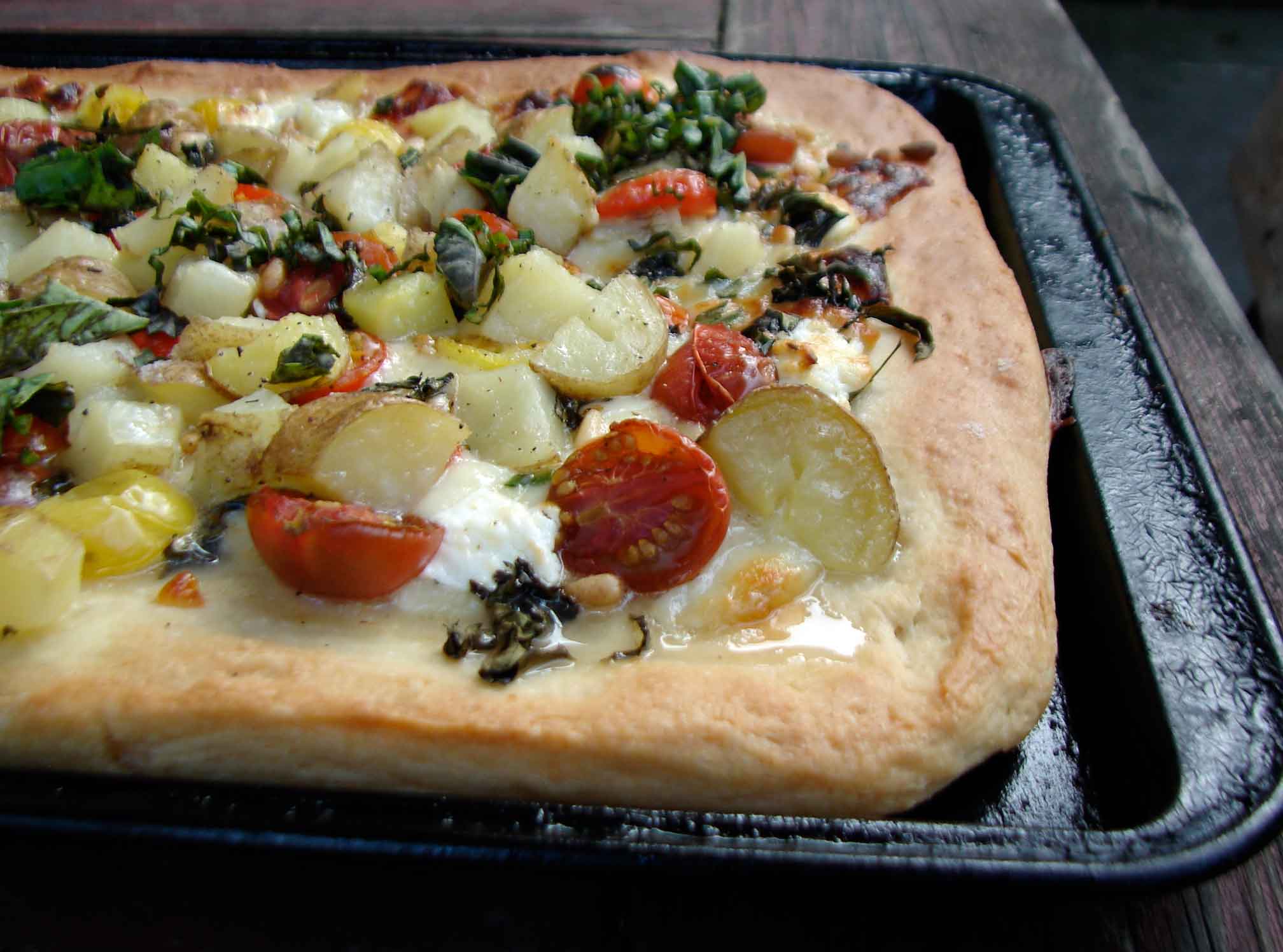
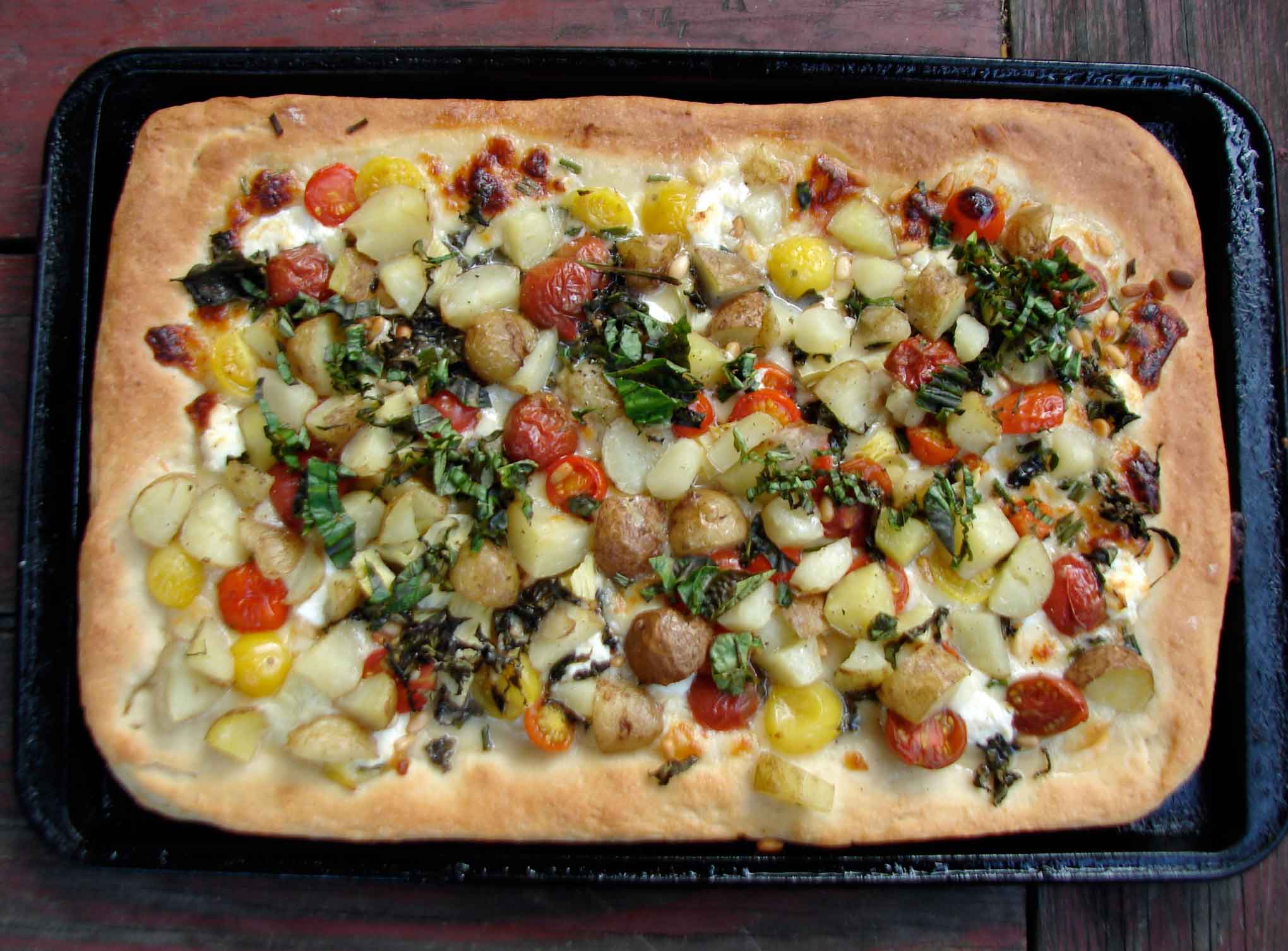
Here’s a good pie for the change in seasons! It’s like a pizza, so you can call it that if you want. I made the crust much thicker than I usually make my pizza crust, so it would be comfortingly soft and strong enough to hold up to all the toppings. All the herbs and vegetables are from our farm. I like potatoes on a pizza, it’s one of those things that shouldn’t work, but somehow does. I parboiled these and then tossed them in a little olive oil, so they’re soft but just starting to crisp up. I love the combination of tomatoes, potatoes and basil, but you can add any kind of vegetables or cheese or herbs you like on here.

Here’s Good Feeling by the Violent Femmes. I’ve been listening to them a lot lately…talk about a portal to the past!!

Continue reading

Tomme de savoie and roasted mushroom tart

Tomme de savoie and mushroom tart

Tomme de savoie and mushroom tart

Hogarth Hughes is very brave, but he’s not fearless. When he hears a strange loud noise, he’ll head out into the darkness by himself, armed only with a flashlight duct-taped to a BB gun. But when he finds out that the loud noise was caused by a giant robot, he sensibly runs screaming. And then he turns back. What made him overcome his fear? Compassion. The giant robot is stuck in electrical wires, he’s helpless and screaming in pain. Hogarth heads back to turn off the electricity and save the giant. The giant recognizes this act of compassion, he’s grateful for the kindness, and this is how they become friends. The Iron Giant, a beautiful film by Brad Bird was made in 1999, set in 1957, and based on a fantastical novel called The Iron Man, written by Ted Hughes and published in 1968. The film is set during the cold war, the novel was written during the Vietnam war, and I write about it now after years of war in Iraq and Afghanistan, and frighteningly on the brink of another in Syria. And, of course, on the anniversary of 9/11, a day of sickening grief and fear. Unlike most movies about giant metal weapons, The Iron Giant is a peaceful movie: anti-war, anti-gun, even anti-hunting. Almost unwittingly, Hogarth shows the giant that he has a soul, because he cares for this little human boy. Tim McCanlies, the screenwriter of Iron Giant, has said that they chose to make paranoia the enemy in the film, rather than any physical, bomb-able character or country. The threat is fear, and the threat is the violence that our fear provokes in us. It feels right on this anniversary to watch a movie that celebrates friendship, empathy, and the strength to resist the urge to act thoughtlessly and violently in the face of our fear.

Tomme de savoie and mushroom tart

Tomme de savoie and mushroom tart

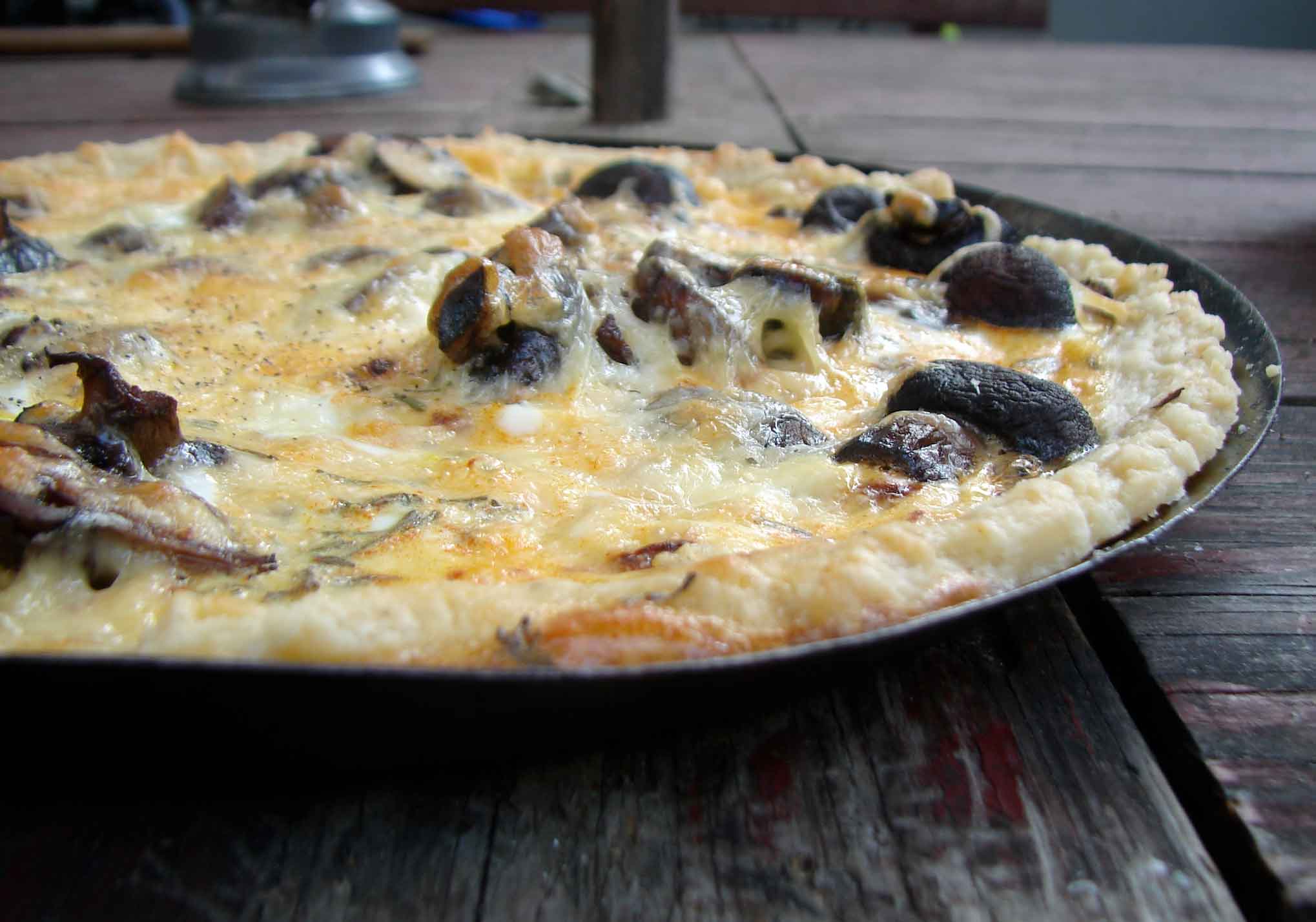
This recipe was inspired by another Brad Bird film…Ratatouille, of course! In the beginning of the film, Remy finds a piece of Tomme cheese, a mushroom, and a sprig of rosemary. He combines them all on a spit, and then he gets struck by lightning! The flavors combine to make a lightning-y delicacy. Well! I wasn’t going to actually get struck by lightning to make a tart! So I added some smoky flavor with roasted mushrooms and smoked paprika. I bought a little piece of Tomme de savoie cheese, and it was very lovely…semi-soft, creamy, mild but flavorful. If you can’t find it you could substitute any semi soft cheese–even goat cheese or brie.

Here’s Barbara Dane and The Chambers Brothers with Come By Here.

Continue reading

Leek and caper tart

Leek and caper tart

Leek and caper tart

Au Hazard Balthazar, an austere, scathingly honest film, feels beautifully simple and full of meaning at the same time. Much has been written about the possible meanings of the film, and in particular about its function as a religious parable. In this light, it does seem packed with symbolism: Balthazar has seven owners who could represent the seven deadly sins, the seven stations of the cross; he endures great suffering and is called a saint; the film is bathed in images of wine and bread, and in beautiful shots of hands. And yet aside from all of this, beneath all of this, Au Hazard Balthazar is the life story of a donkey. The film begins with a ringing of bells, and Balthazar as a foal, suckling from his mother on a beautiful hillside on a beautiful day. He’s given to some children as a pet, and they seem to love him. The next shot shows him many years later, as an adult, surrounded by a group of men who beat him brutally. And so the film goes, Balthazar passes from owner to owner, some are crueler and more abusive than others, but none of them are kind, none care about the donkey. The film is, in many ways, a study of human cruelty and indifference on every level. It’s a very depressing and pessimistic view of mankind. And yet there’s something transcendent and very nearly hopeful about the film–about the fact that somebody made an empathetic film about a donkey, about the chance to look at our world from a different perspective, and about the great beauty of the film itself. Ultimately, the bread and the wine don’t feel like religious imagery, to me, they feel very human, and they remind us that religion addresses our very human needs and frailties. And the beautiful disembodied shots of hands, which could be from paintings of saints, are living human hands, reaching to one another with kindness or cruelty or grace. At the end of the film, the wounded donkey is surrounded by sheep, they stream around him like a river, showing him the first real compassion and kindness that he’s experienced in the film. You feel such love for the donkey and for the sheep, who have found something that all the humans in the film have missed, when they clutter their lives with boredom and casual cruelty and self-imposed misery. I think as humans we tend to make everything hold meaning for us as humans, but what the sheep and the donkey know feels deeper than allegories and metaphors and stories humans need to tell ourselves, it feels fundamental and honest and beautiful, and the movie ends the way it began, with the ringing of warm bells.

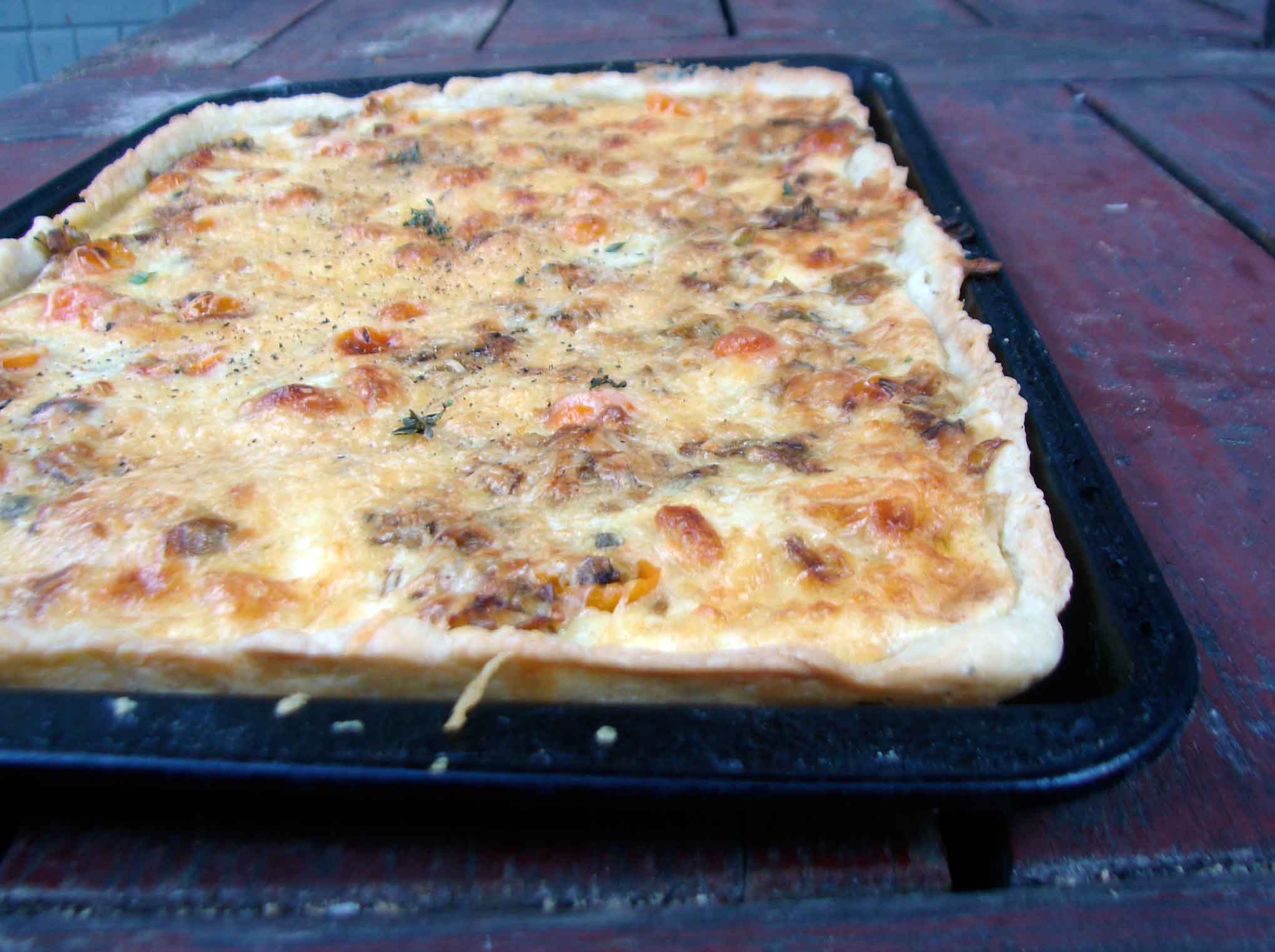
I think my favorite thing we’ve gotten from the farm this summer is leeks. They’re supposed to be a peasant food, they’re supposed to be something that the characters in Au Hazard Balthazar might eat when they’re down on their luck. But they’re quite expensive around here! So it has been a treat to get thin, beautiful, sweet bundles of leeks from the farm. I decided to make a big flat tart with some of them…almost like a pizza with a pastry crust. I sauteed the leeks with thyme, capers and white wine, and then made a custard of eggs, milk, and two kinds of cheese. I suppose gruyere would be the ideal cheese to use here, but it’s beyond our budget at the moment, so I used a combination of sharp cheddar and mozzarella.

Here’s Ride Your Donkey by the Tennors.

Continue reading

French cake a week–Tarte aux cerises

Tarte aux cerises

Tarte aux cerises

In which Claire, who doesn’t speak French, bakes her way through a French cookbook from 1962.

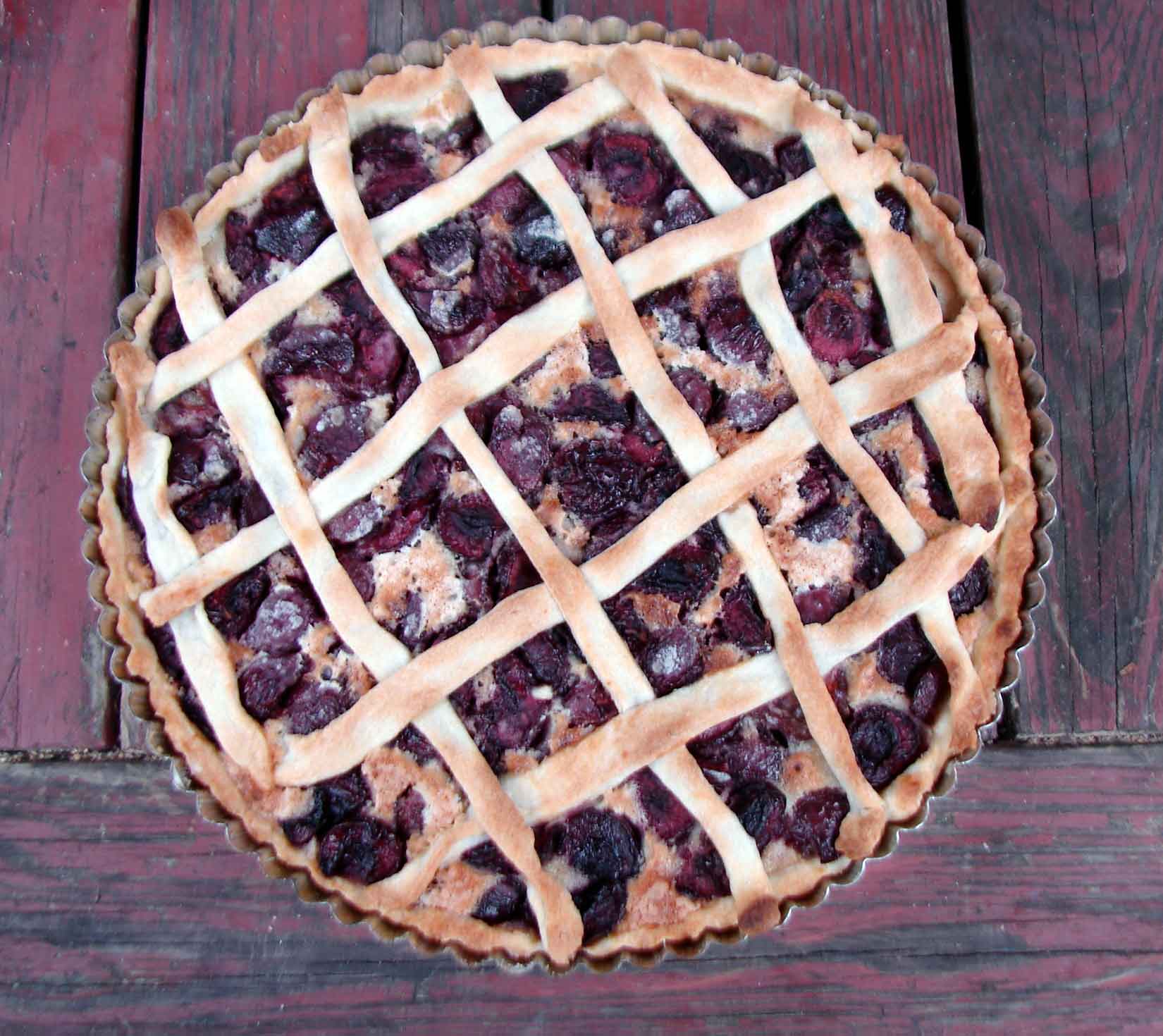
What?!?! French cake a week? French cake every few months is more like it. It’s been a while. I got side tracked. But we’re back! And in keeping with the almost-forgotten tradition, we’ll talk about a French film as well as a French cake. This week’s offering is Séraphine. The film tells the true story of Séraphine Louis, a maid who has a secret passion for painting. She’s “discovered” by Wilhelm Uhde, a noted art critic who happens to be renting space in the house where Séraphine is employed. That’s the story of the film, but the film is truly about Séraphine herself; about her slow, quiet movements, about her passions and fears and loneliness. The film itself is slow and quiet, following Séraphine as she collects the materials to make paint, which is a mysterious and beautiful ritual. Séraphine is happiest outdoors, and her almost religious love of nature translates into her paintings, which are wild and vibrant and beautiful. Séraphine doesn’t paint for wealth or fame, she paints for the glory of god, and because she has to paint. She has a lush, vivid world inside of her head, and it spills out onto the canvas with a sort of ecstasy. She paints with her hands, with the power of her whole body, and the fervor of her fevered soul.

Tarte aux cerises

Tarte aux cerises

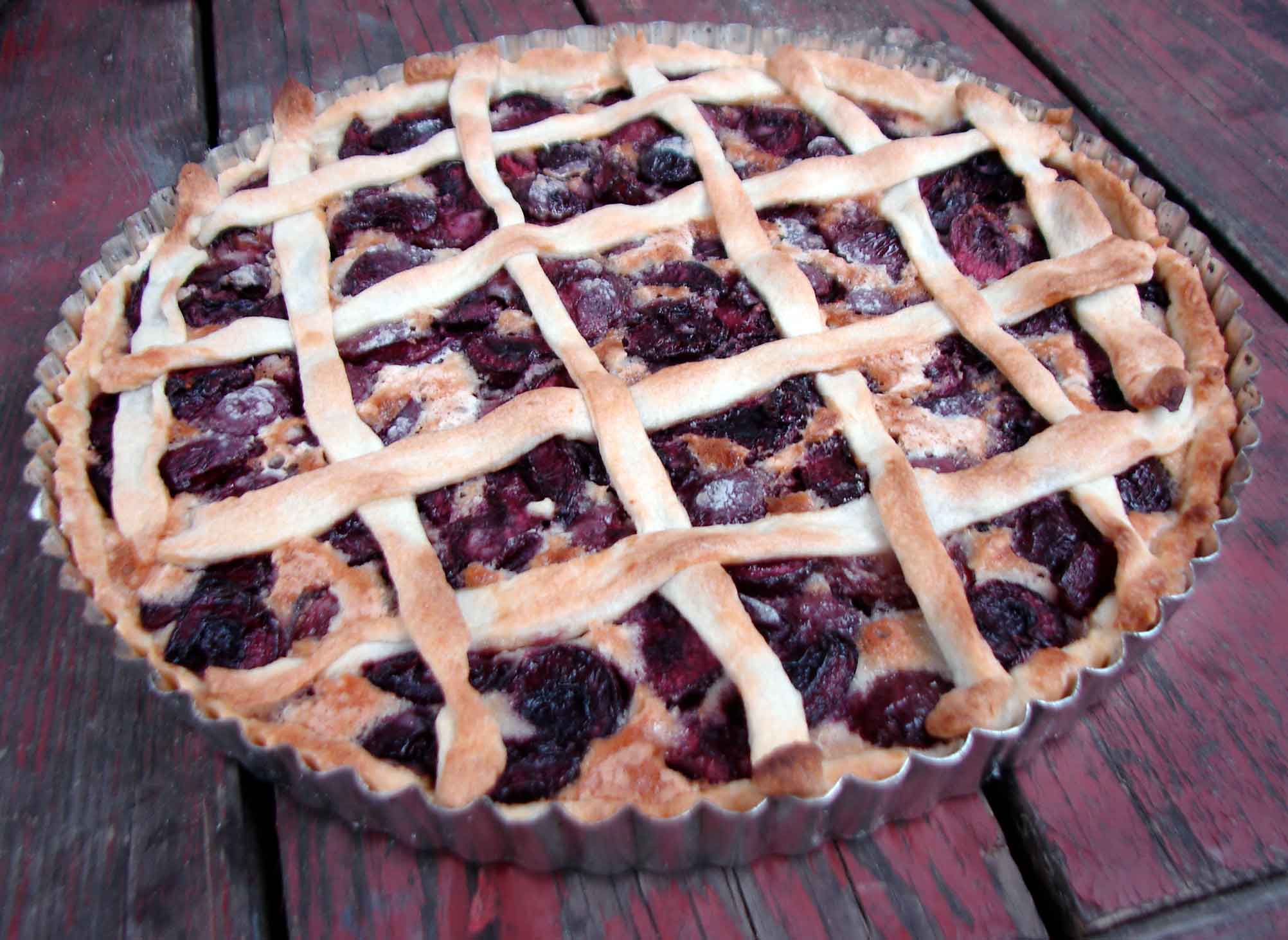
And it’s another cherry tart! This one is quite simple, just fresh cherries (and bittersweet chocolate chips, which weren’t in the recipe but which I couldn’t resist adding) in a simple crust, with a sort of “cream” poured over. Sometimes simple is best–this was delicious. I had a little bad-tempered trouble trying to piece together the lattice, but I don’t think it needs to be perfect. It’s all getting eaten, anyway!!

The soundtrack to Séraphine was lovely…deep and moving, and here’s a song from it.

Continue reading

Goat cheese tart with roasted eggplant, olives, and a lemon-semolina crust

Goat cheese tart with eggplant and olives

Goat cheese tart with eggplant and olives

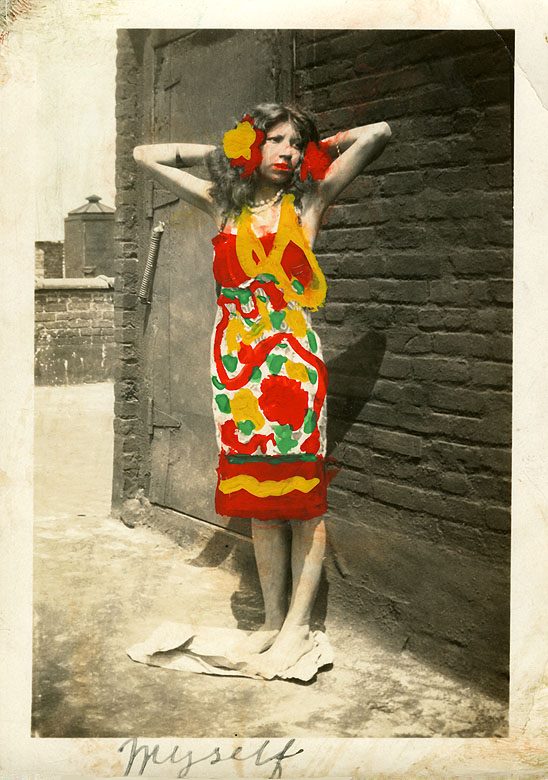
It’s Saturday storytelling time! It’s summer sporadic schedule Saturday storytelling time!! As I’m sure you’ll recall, each Saturday we post a found photograph, a vernacular picture, and we write a story about it, and invite everyone else to write one, too. And then, in theory, we all read each others’ stories and offer wise editorial advice. Today’s picture is lovely, I think. It has layers. And here it is… Send me your story and I’ll print it here, with mine after the jump, or send me a link to share, if you have somewhere of your own to post it.
396693_10151262642494589_839365559_n

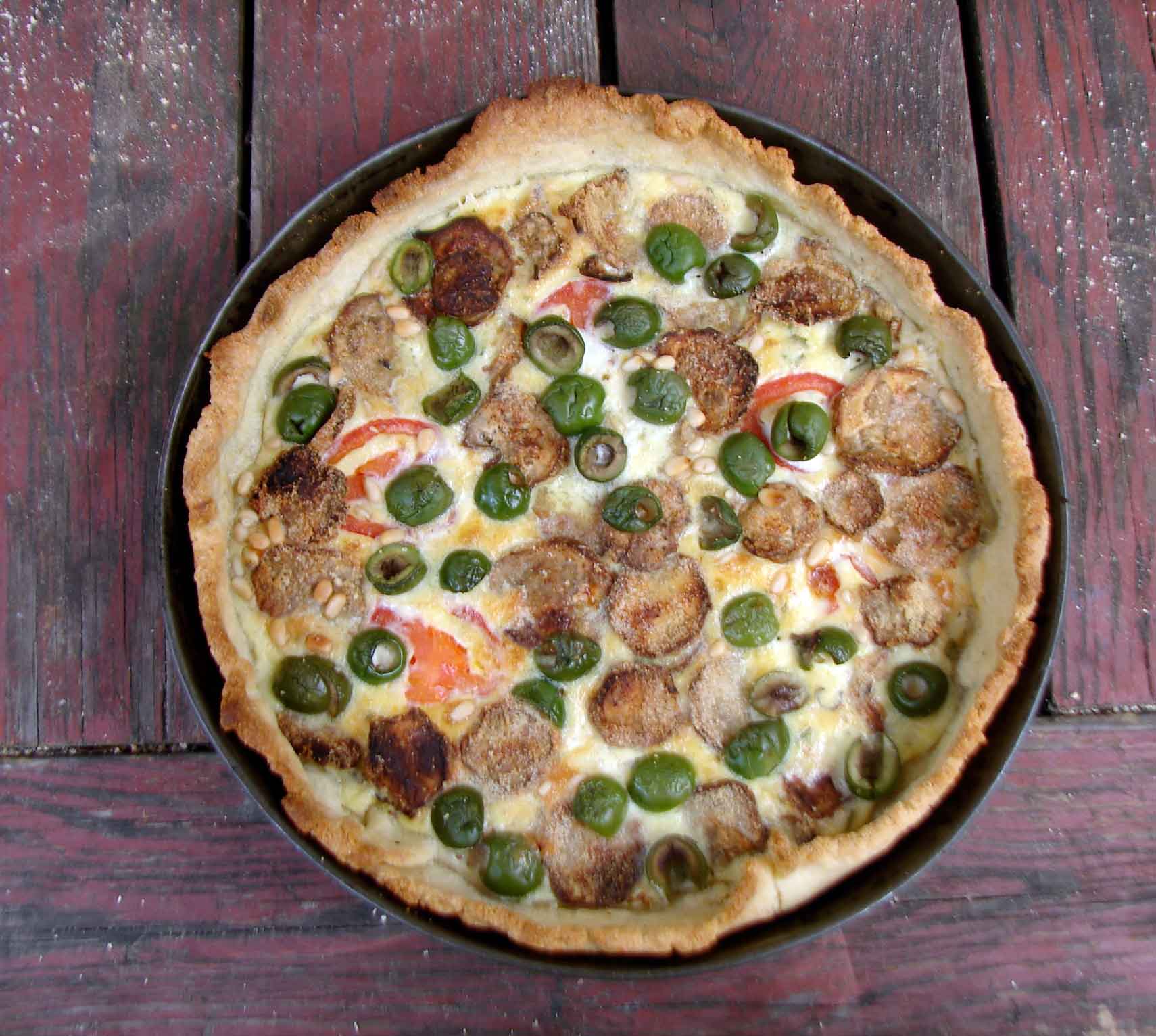
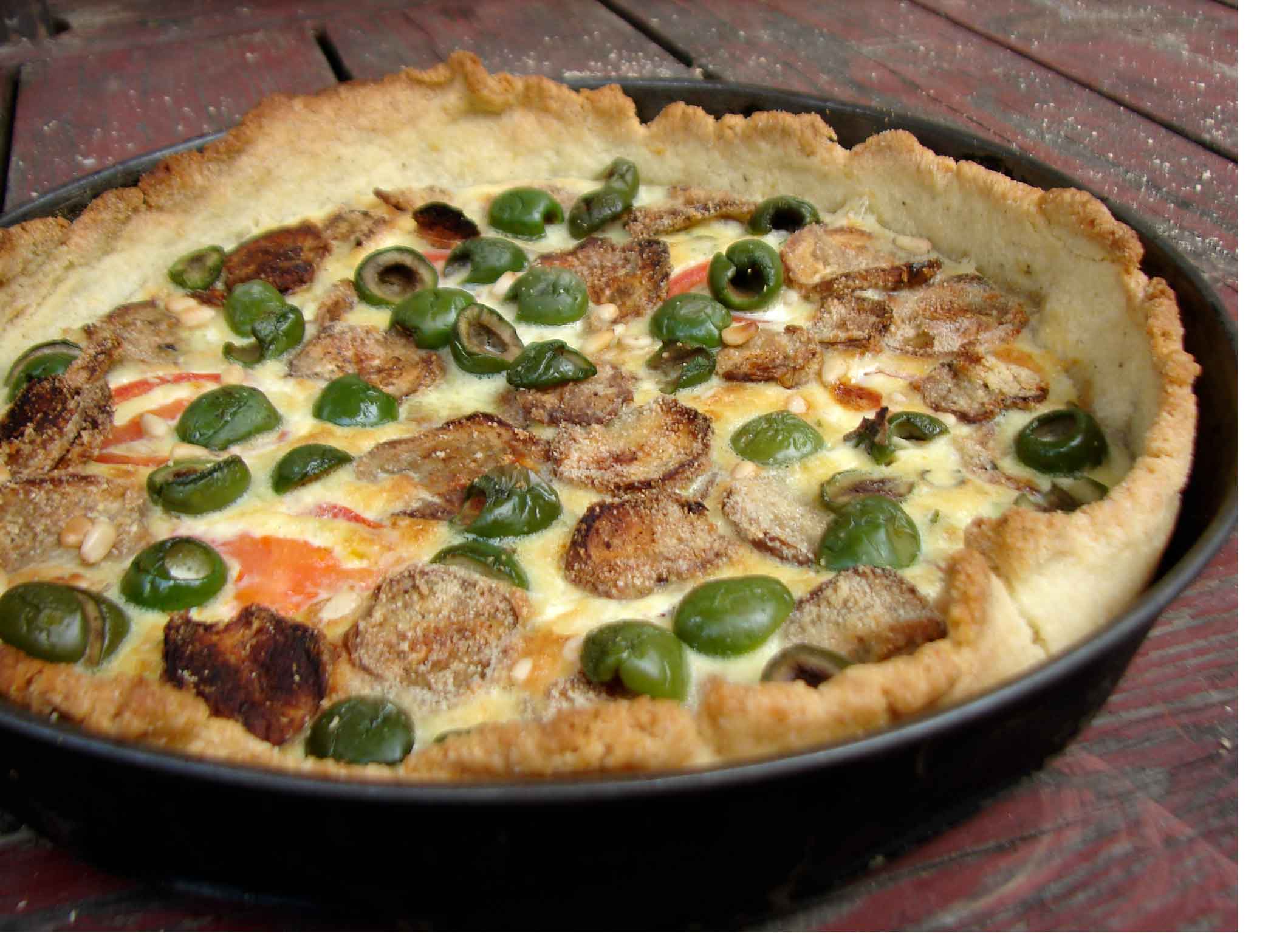
eggplant-olive-tartIt’s a summery tart! The eggplant is from the farm, of course, which means it’s really really the middle of summer. This whole tart is quite light and fresh-flavored, I think. The crust has semolina in it, which makes it extremely crispy, and it has lemon in it, which makes it bright. I think olives, eggplant and goat cheese form a sort of perfect trinity of flavor. So there it is!

Here’s Up on the Roof by the Drifters

Continue reading

Pistachio ricotta tart topped with greens

Pistachio tart with greens

Pistachio tart with greens

“You’re probably a year old! You’re not a puppy anymore! Stop chewing up my reading glasses.” “You’re a big seven-year-old boy, stop crying over every little thing.” “You’re nearly eleven years old, learn how to share with your brother!” Yes, I’ve been resorting to the tired parental chestnut of “you’re too old to behave that way,” and this has been my constant refrain of late, generally said with a weary sigh. Of course I realize that my boys could easily answer back, “Well you’re a middle-aged old fool and you cry at stupid things, too.” And Clio could say, “Well, teach me how to read! I want to reeeeeaaad!!” And they would all be right. I read an article recently that examined our changing ideas of how we should all be comporting ourselves at a certain age. People in their twenties used to be considered adults, with jobs and houses and responsibilities and children, and now they’re just roustabouts clinging desperately to every shred of youthful irresponsibility. And by the time we’re fifty or sixty we’re pretending to be thirty or forty. It’s all just one life-long delusional muddle. And maybe they’re right, the writers of this article. They’re probably right. But it’s hard to move through life gracefully, acting as expected at every stage. It’s hard to respond with appropriate maturity to all of life’s frustrating situations. Sometimes it seems as though everybody is constantly struggling not to act like a toddler, desperately trying not to pout or scream about not getting what they want. Some days it is hard to keep from crying over every little thing. Many days I feel less mature than the boys: when I yell at them irrationally or say something petty and childish. They’re very patient with me. From time-to-time I feel that Malcolm is even taking care of me. He saw a biting fly in the car just before I drove off, and he tried to show it the door. When it wouldn’t leave he said, “Mom, don’t get scared and crash the car.” One day, he and I went for a walk and it started to thunder. I grabbed his arm. He said, “sometimes I feel as though I’m the parent and you’re the child.” I laughed until he added, “I hate that feeling.” Sob! Since then I’ve been more careful. I have a lot of fears, but I’m a strong person, and I understand why it’s important for him to know that. And I am a useless lout of a forty-four-year-old ne’er-do-well, and I do go into a sad panic at the thought of growing older. But part of what makes it less frightening and even hopeful is the thought of my boys growing big and strong and funny and wise, the thought of them meandering through life at whatever the going rate is when they’re twenty-year-olds and thirty-year-olds, the thought of them making sense of their own beautiful muddle of time passing.

Deep pistachio tart

Deep pistachio tart

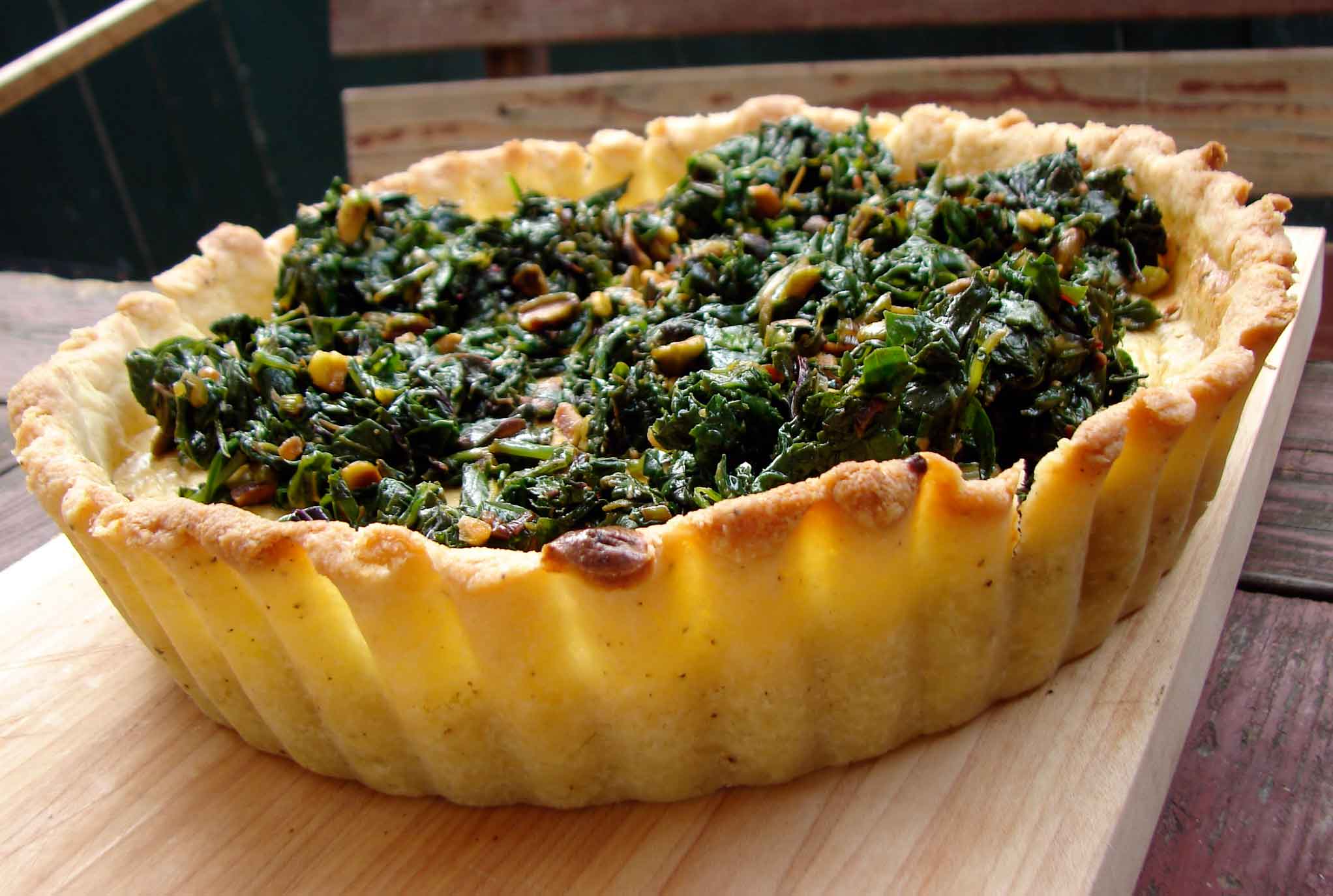
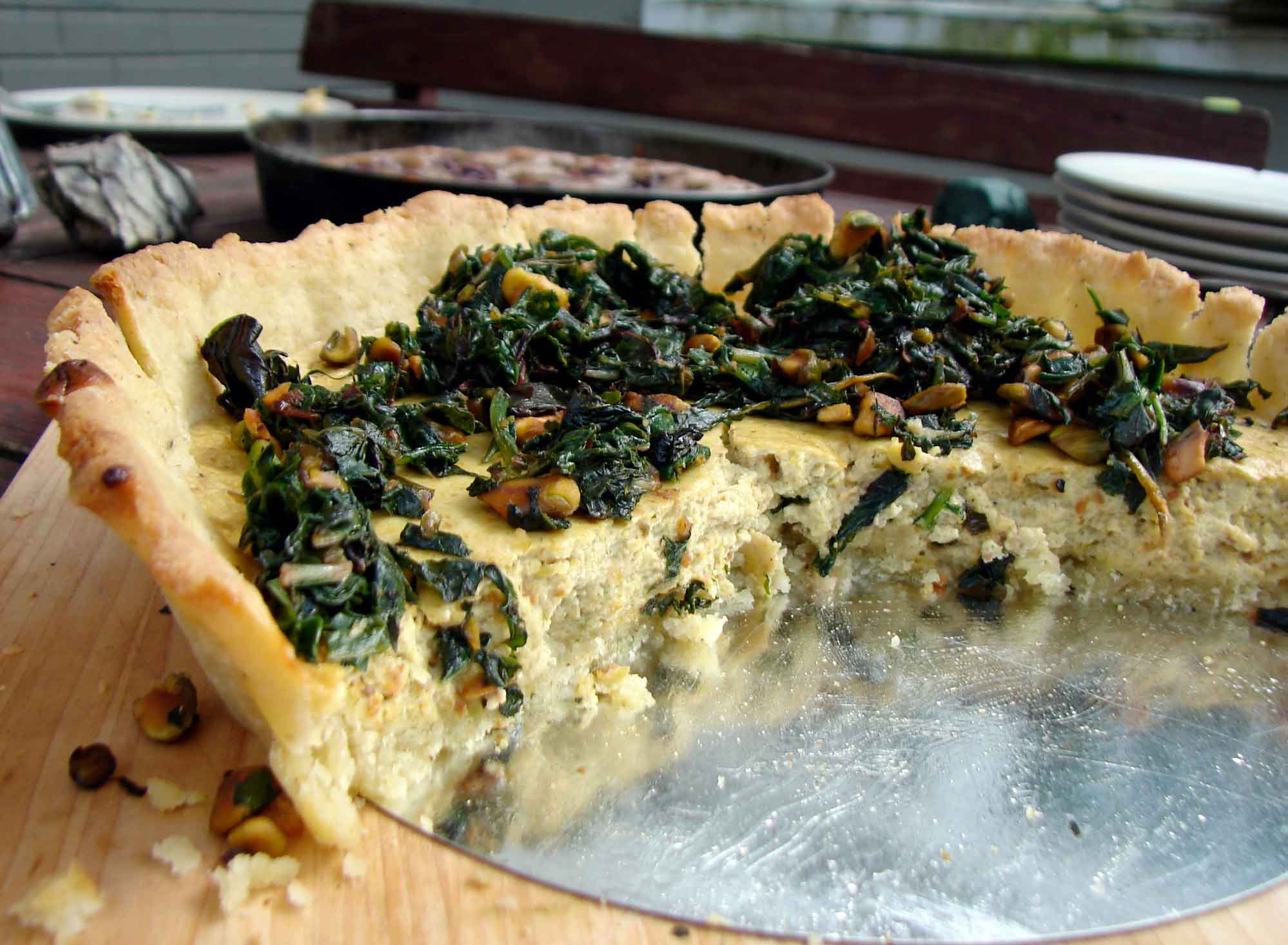
David said this might be his new favorite! I’m very excited about it! For my birthday I got a lovely deep tart pan (thanks mom & dad!). I decided to make a high crust, with a layer of pistachio ricotta custard, and then to sautée some greens and pistachios to pile on top. It worked very well! A nice combination of flavors and textures. You could really taste the pistachios in the custard, which was a treat. The crust is half semolina flour, which makes it very crunchy. I used garlic scapes with the greens, because it’s that time of year, but you could use regular garlic. You could also add tomatoes or olives to the greens if you were feeling fancy. And you could absolutely make this in a normal-sized tart pan or even a cake tin.
pistachio tart with greens

pistachio tart with greens

Here’s I was Born, by Billy Bragg and Wilco, featuring Natalie Merchant. She doesn’t know how old she is!

Continue reading

Asparagus and pecan tart

Asparagus and pecan tart

Asparagus and pecan tart

Last week I inattentively read an article in the Guardian UK about a mother who left her three very young children to do stand-up comedy 100 days in the row. She cited an article by a woman who said every mother should only have one child in order to achieve her full professional potential (or was it creative potential? I’m losing points for comprehension and retention on this one!). She also mentioned a response by Zadie Smith who said, Well, Tolstoy and Dickens had dozens of children each. The whole exchange seemed so strange, to me, so judgy and self-righteous, that I heaved an exasperated sigh and forgot all about it. Until last night when I couldn’t sleep, of course, and the conversation went round and round in my mind like a squeaky hamster wheel. The comedian’s oddly-humorless article pretended to disparage anybody who would leave their small children at night, but she was obviously very proud of herself, and expected us to ignore the fact that it would be absurd for anybody to do 100 stand-up shows without a night off, regardless of how many children he or she had, and (if I was being ungenerous I might say) we can only assume this gimmicky trick was meant to hide the fact that she’s not all that funny. And I hope nobody made this other writer feel bad about having only one child, because I can’t understand why you’d write such an article unless you’re feeling defensive (although I haven’t read the article!). And I hope Zadie Smith doesn’t feel excessive in having two children, and I hope she realizes that Tolstoy and Dickens are pretty bad examples of successful working mothers, but that she herself might be a very good example, because she’s written some remarkable books. The comedian seemed to suggest that it’s impossible to achieve professional or creative satisfaction without sacrificing your marriage and your sanity, at least sacrificing them enough that you can write a book about the experience. And she made a big point of saying that it’s perfectly fine if you stay at home all the time with your children and have absolutely no ambition outside of their needs, in the most condescending and contradictory manner possible. Well I find the whole conversation frustrating! Of course having children is going to cause you to sacrifice some of your time and alter your ambitions, but it’s hardly the only thing that will! I could blame the boys for the fact that I haven’t made a movie in over a decade, but that would be foolish of me. I made two features films before I was thirty, and they cost a lot of time and money, and although I’m proud of them and glad that I made them, in any practical reading of the situation, they failed. That’s discouraging! That makes it hard to muster the energy and optimism to make another. Let alone the money. And you can’t forget about the money, because films are expensive. I could blame the fact that I don’t have a flourishing professional career on the boys as well, but we all know that started much earlier, with my inability to network or sit at a desk for eight hours or behave myself in an office setting. Oh, and my determination to make feature films instead of concentrating on a practical career! The truth is that it’s all very hard. And I’m very lucky, I had a lot of opportunities and support. Plenty of people work at night without a break because they have to to keep a roof over their head. Plenty of people have jobs that don’t allow them opportunity for advancement or a satisfying creative outlet. Whether you have children or not, it’s hard to get ahead, it’s hard to do all the things that you want to do, it’s hard to find time for yourself. And the truth is that there are plenty of people that manage to work things out, that have a few kids, and work full time at a job they find fulfilling, or write novels and make films that they feel good about. I always think of Agnes Varda, who joyfully, humorously, poignantly, put all of these challenges into her work, and made it stronger and more appealing in this way. When she was pregnant, she made short films, not about being pregnant, but informed by the process. Her films seem are full of life in the best possible way–full of her life. And now she makes movies with her children–they’re in her films, they shoot her films. I’m determined to do this with my boys, to soak up some of their creativity and imagination and wit, all of which makes any time I’ve given up to care for them well-spent. Showing them the movies and books and pictures we love, sharing music with them, watching them experience the world through their eyes is the best inspiration I can think of. For me it all comes down to thinking of life as a process and a balance, and trying to notice and understand everything, even though this is impossible. To try to make all the ordinary things as beautiful and creative as possible, so that you don’t sit around waiting for the right moment to do your great work, so that you’re always working on one big great rolling series of works. You let it all in, and you process it, and you find some way to share it, if you need to, you find a way to speak it or draw it or film it or sing it or tell jokes about it. And that’s how I feel about that.

Asparagus pecan tart

Asparagus pecan tart

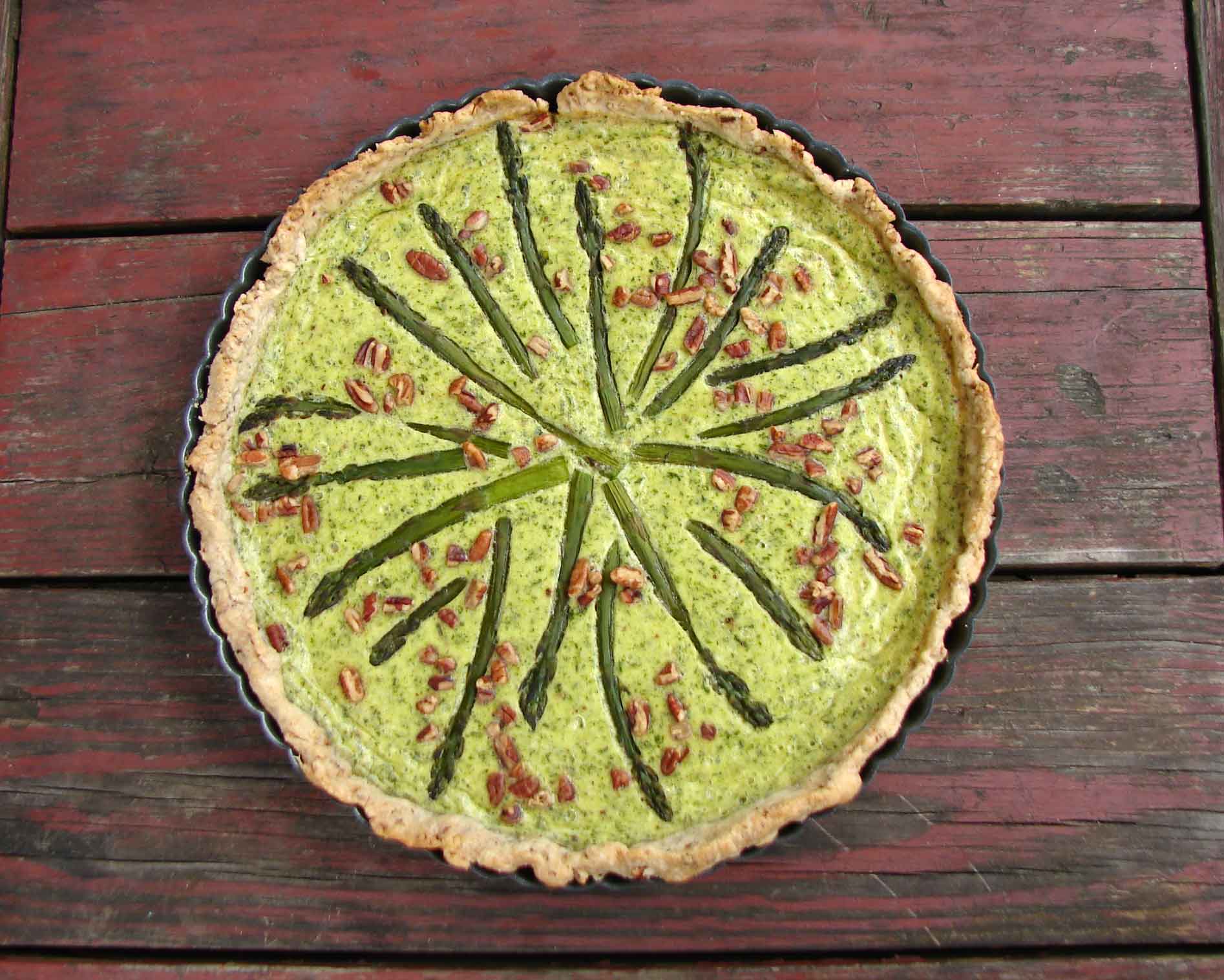
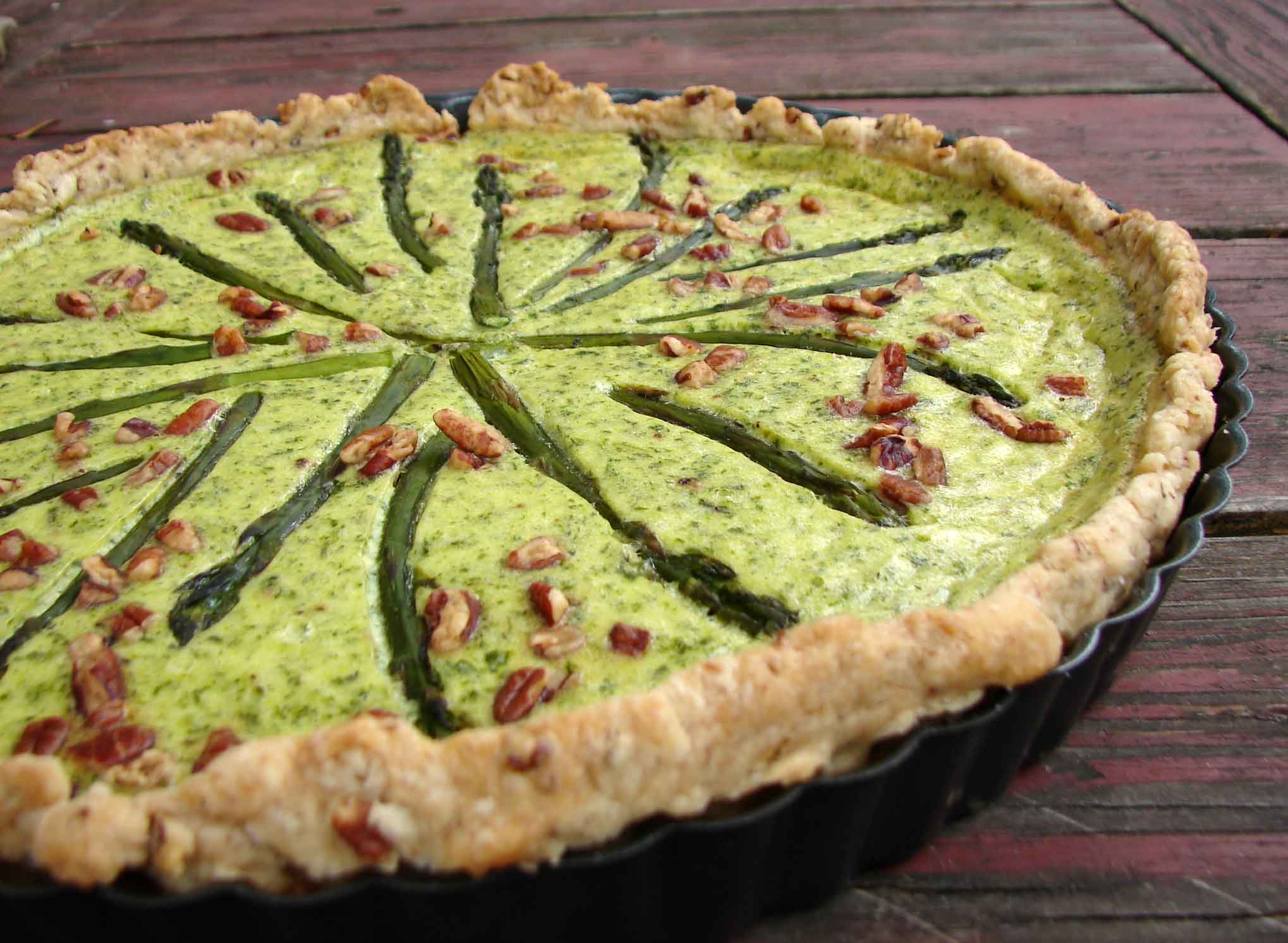
Speaking of babies and creativity, I made this tart for the baby shower of my sister-in-law and her wife, who are two of the most creative people I know. They’re constantly busy, and they’ve made pregnancy part of their beautiful creative process–they’ve expressed their joy and anticipation so solidly that it glows, and I’m sure all the moments of their daughter’s life will be caught and held, with wonder and love. Yeah. Well, this tart has a pepper pecan crust, and a mild yet flavorful filling of asparagus, spinach, a bit of thyme, and some sharp cheddar. It’s pretty easy to put together, and has a nice combination of green and nutty flavors.

Here’s Who Feels it Knows It, by the Wailing Wailers, just because I love it.

Continue reading

Empanadas with greens, chickpeas and cranberries

Kale, cranberry and chickpea empanadas

Kale, cranberry and chickpea empanadas

I’ve been thinking about the way our world changes, and specifically about the way people bring about that change. Our history as humans is a pattern of progress and change, progress and change. We’ll head blindly in one direction, unable to see quite where we’re going because it’s so close, and then somebody or somebodies will push us in another direction. With a grand gesture, with a slow protest, with a war, with a sit-in, with a newspaper article, with a violent act, with a strike, with a clear bold voice, or in a confused tangle of contradictory words.

I’ve been thinking about certain small acts of rebellion that I love, certain quiet ways that people have changed the rules. They change the world slowly, almost imperceptibly, but the change grows in widening waves. The personal becomes political and art becomes powerful.

I love to read about blues musicians from the last century, growing up in a world of poverty and discrimination and finding a way to make music no matter what the odds. Nobody hired them a music teacher so they’d understand the rules of musical theory. Big Bill Broonzy made a fiddle from a cigar box, Elizabeth Cotten taught herself to play guitar upside-down, they figured it out themselves, with the help of some friends. They sang about their lives, the way they actually were, the trains running by their door, the work they had to do, and they sang about the way they wished their lives could be. The rules they answered to in life were harsh and unjust, but in music they made their own rules, they made music the way they wanted it to sound–that was theirs.

And with books like Catcher in the Rye, Grapes of Wrath and To Kill a Mockingbird, we find a whole new world of writing, with the language people actually use, according to the rules of conversation and not those of grammar. These books are intimate and personal and real, and they describe the lives of normal people as they actually are. This small feat frightened people enough that they were all banned, at one time or another.

And, of course, I love filmmakers who make films the way they think they should be. Hollywood films have quite a rigid set of rules that dictate the way they’re made. These rules are nearly invisible to the viewer, because they’re designed to make a film seem more realistic, and because we’ve grown up with them, we’ve learned them, without even realizing. Well, I love a director like Yasujiro Ozu, who defies these rules. He sets the camera where he thinks it should be, he moves it when it needs to be moved (not very often!) he crosses sight lines, he leaves out plot points. Not to be rebellious, but because he knows how he wants his films to look. His films are mostly about middle-class families going about their lives. They seem placid and uneventful, at least compared to most movies. But in showing us the way we live, in showing us hurtful pettiness and gossip, thoughtlessness and ingratitude, he makes us think about the way we could live, the way we could treat the people around us. It’s subtle and slow, but it seeps into you and makes you notice everything differently and more clearly.

And I believe this small slow change is the most important, and that it extends to all things…not just to art and politics, but to life, which is the very heart of art and politics. We can change the world with the food that we eat, the cars that we drive, the books that we read. We change the world by struggling to understand it, by recognizing the rules that govern us as they are, and by deciding the way we want them to be. We change the world with every kindness to another person, and it’s a shame that this sounds sappy, because it’s true.

Kale, chickpea and cranberry empanadas

Kale, chickpea and cranberry empanadas

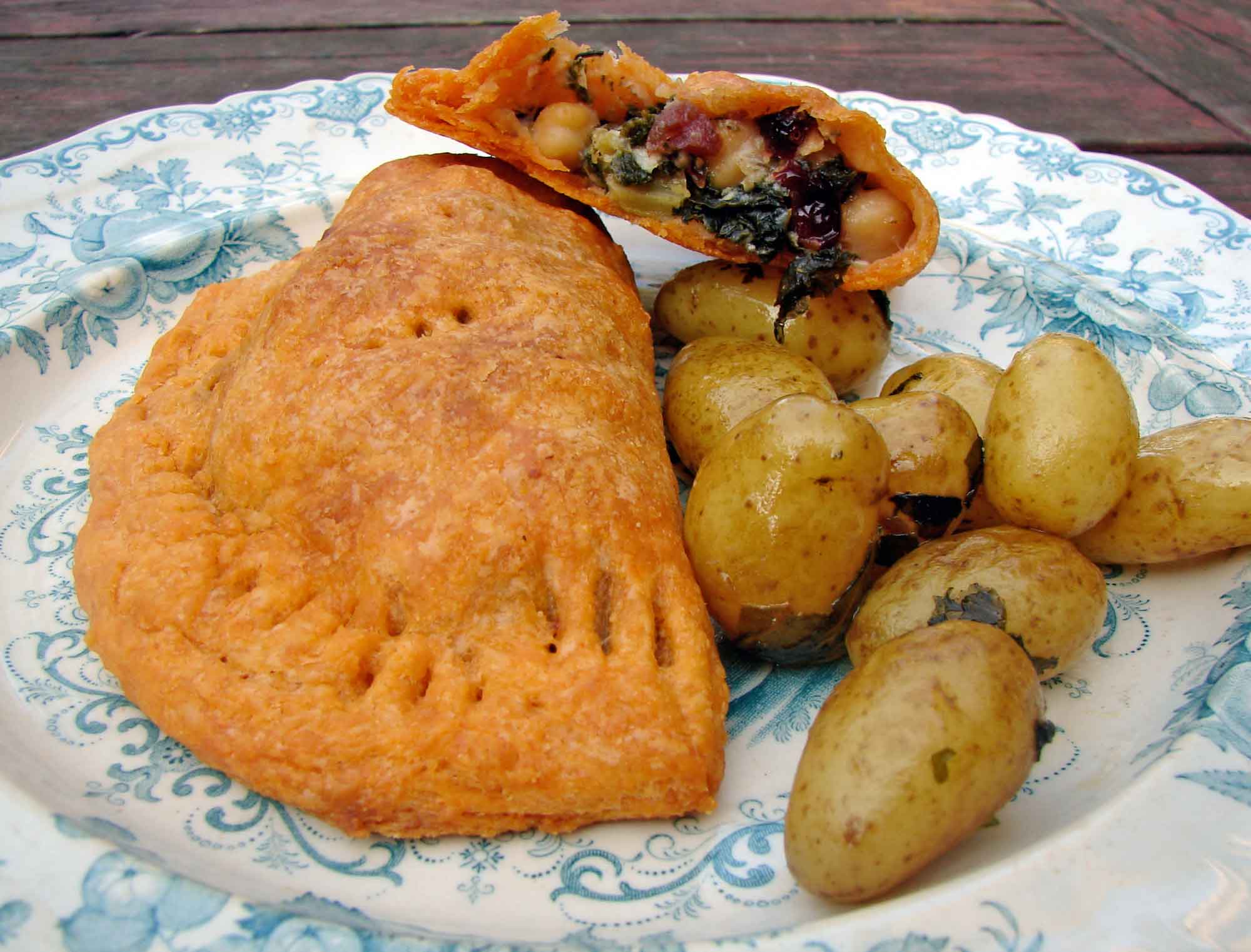
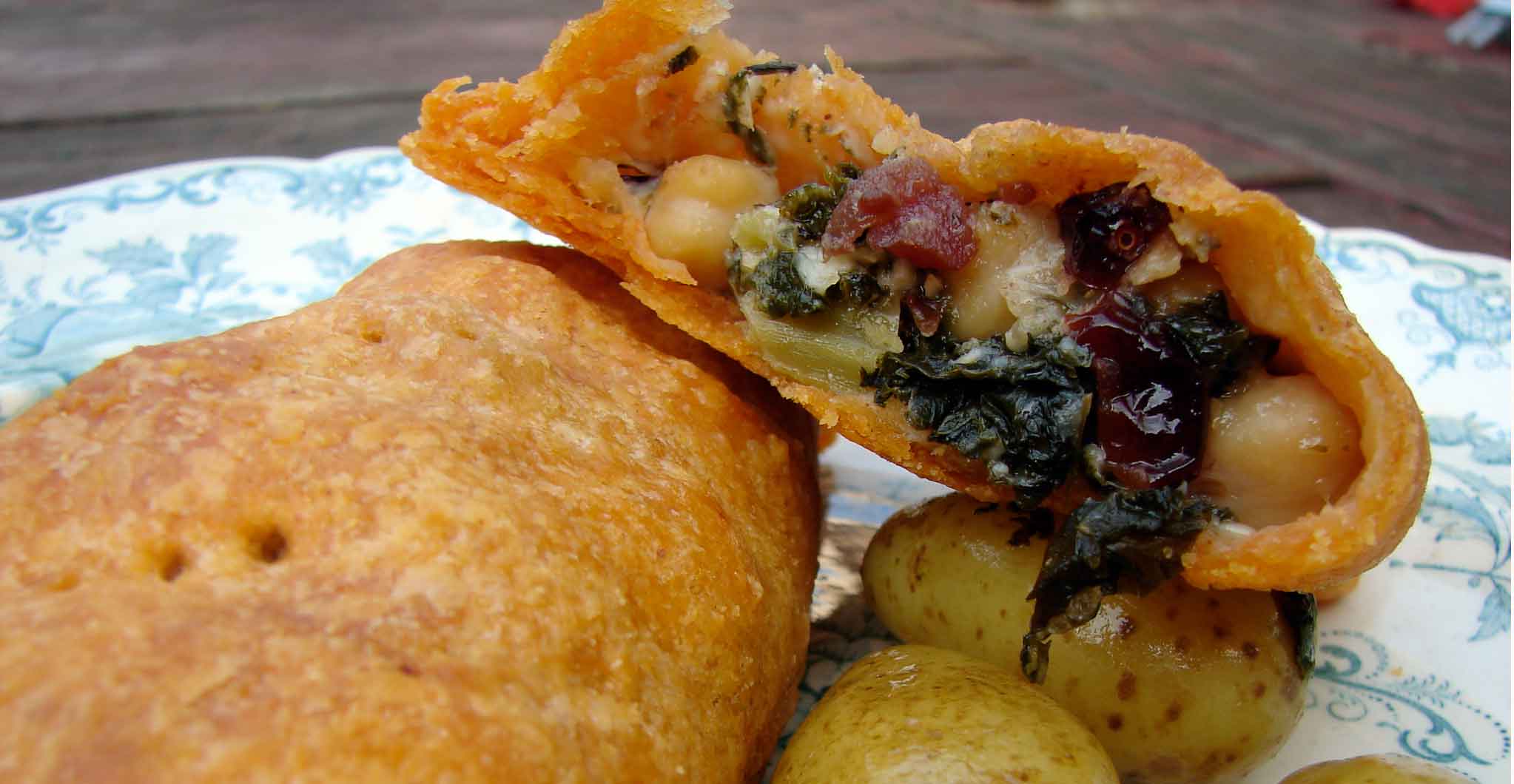
Well, I totally wasn’t going to go on and on about this today! It’s been on my mind, man. I think it’s because David and I just bought some Big Bill Broonzy CDs and they’re phenomenal, and because I’m reading this biography of Jean Vigo. Yeah. So! These are summery sorts of empanadas, I think. I made them for our anniversary picnic dinner. Empanadas make the best picnic food, because you can eat them with your hands and walk around with them, and they combine so many flavors and food groups in one neat package. I also boiled some little potatoes and tossed them with herbs and butter, and they are also a fun, if messy, picnic food. Our picnic was spoiled by dozens and dozens of ticks…a sickening tickening…but we came home and sat in our backyard and finished our empanadas, or lovely smoky, savory sweet empanadas.

Here’s Big Bill Broonzy with Feelin Low Down. Phew, what a song!

Continue reading