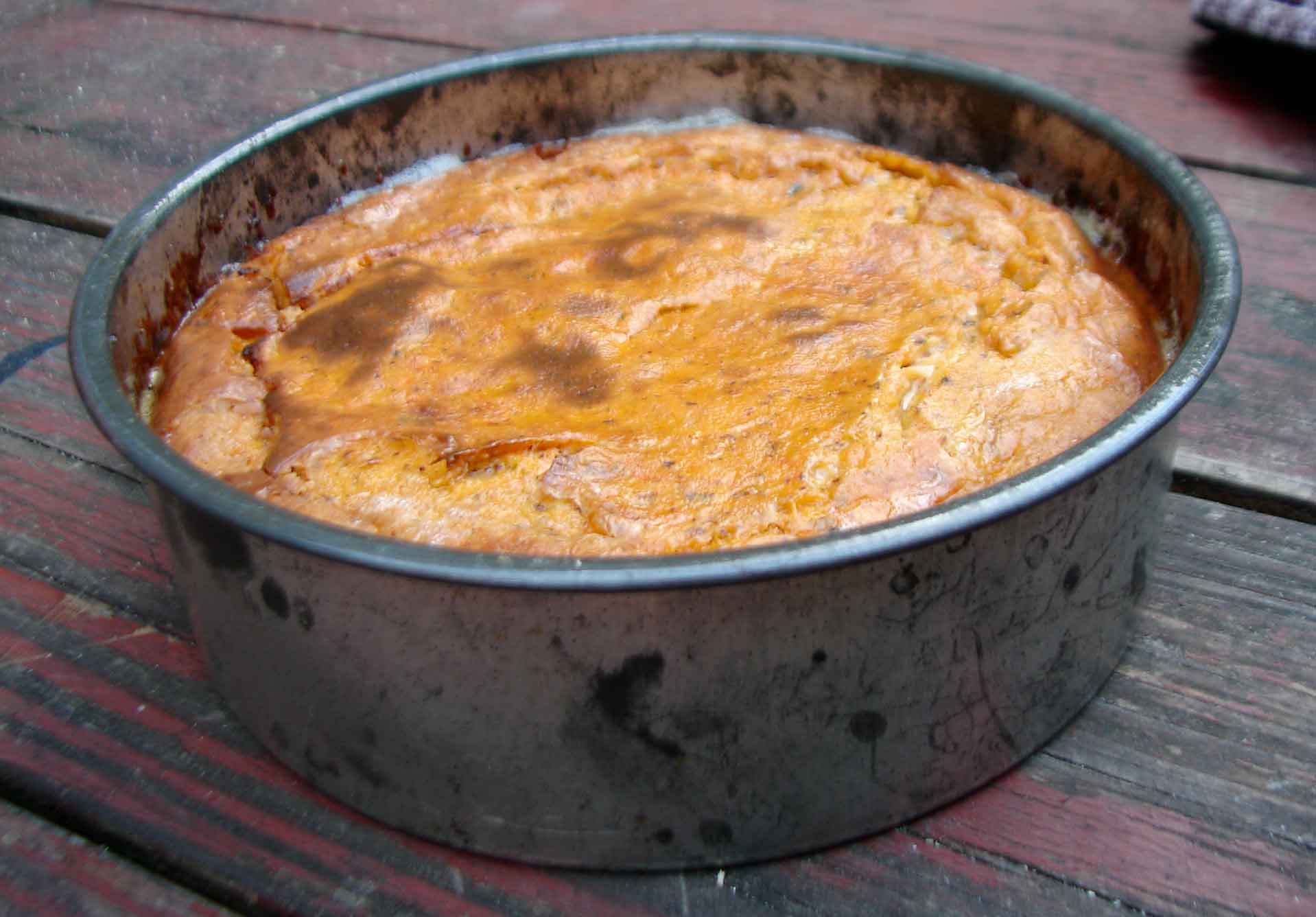
Polenta “pizza” with capers, tomatoes, and fresh basil

polenta pizza

polenta pizza

Last night was the school Halloween dance. Just a bunch of over-tired over-sugared kids who had lost half their costume running around like mad things, but strangely beautiful all the same. The younger grades went first, and played a manic dangerous game of tag through the smoke machine smoke and disco lights, with Thriller playing over and over in the background. And then the older kids took over the gym and played a more fraught game of tag, because social anxiety increases with every passing year. Some of the girls danced, but the boys raced around the edges, or walked around looking cool and handsome with their hands in their pockets (that’s my Malcolm, of course.) I was in charge of the pumpkin-pong game, the object of which is to bounce ping pong balls into plastic pumpkin buckets. I didn’t think there would be a lot of takers (Girls and boys and Thriller, what do they need pumpkin pong for?) But they loved it. And the ones that loved it really really loved it and came back time and time again. I became caught up in the excitement; I cheered when they got one in and I was disappointed for them when they didn’t. I was supposed to collect tickets for the game, but the whole exercise demonstrated my woeful inability to make money in real life. If they got one ball in, they got their ticket back, and they almost always got at least one ball in. They got a free turn if they helped me collect the balls that skittered away from the buckets. They got a few extra balls to pitch if they looked disappointed enough at the end of their turn. Toby asked if he could have a free turn because he was my neighbor, but I had to draw the line at that kind of political pandering…handing out favors to the constituents in my neighborhood! Where would the corruption end? (I gave him a free turn if he promised to get one in, which he did.) If you said to the kid, “You’re really good at this.” Or “You’ve got the best score yet.” The kid always came back to play again. This is either an easily exploited cynical ploy to get children hooked on gambling for life, or a testament to the power of encouragement. After all, they didn’t win anything except a chance to try again and a pat on the back from somebody else’s mother. But if they felt that they were good at it they wanted to try again, they wanted to be better at it. They wanted to practice and refine their technique. They weren’t worried about who was watching them, and if they had one bum turn, it was seen as a minor setback, a reason to try again and do better. It’s a lesson to us all, a pumpkin-pong life lesson. As you go about your day remember to say, “Good job, kid, you’re really good at this!” and give a nice big pat on the back to everyone you meet.

Polenta pizza

Polenta pizza

This is more of a serving suggestion than a recipe. You take some firm polenta stir in some cheese and herbs, let it set, slice it quite thin, coat with olive oil, and broil on both sides until crispy. Then you top it with whatever you like. I used mozzarella, black olives, fresh tomatoes and capers, but you could use pesto or red sauce or anything you like!

Here’s Monster Mash
Continue reading

Chocolate chocolate chip spice cake

Chocolate chocolate chip spice cake

Chocolate chocolate chip spice cake

I had a dream last night that the boys were flying small airplanes. (Must have been because we watched Gamera!) I think they dropped fruit from their airplanes, or maybe fruit-flavored candy (it is Halloween, after all!) And in the cockpit of each was a flashing light which said, “CONFORM.” I think my understanding in the dream was that this meant that the planes conformed to safety standards–always a good thing. Of course it read as a message to my boys as well, those glowing yellow lights. CONFORM! David was saying just the other day that Malcolm must be trying to figure out if he’s normal, and just what normal is. He’s at that age. His teachers say “Malcolm’s like this,” and his friends say “Malcolm’s like that,” and surely Malcolm must know best of all what Malcolm is like, but it’s not always that simple, is it? And how do you say, “Yes, you’re perfectly normal, you’re just like everybody else?” And at the same time say, “Normal is not all that it’s talked up to be.” I have watched him with his friends and classmates, and he’s an eleven-year-old boy like any other. They’re all loopy. You want them to be just like everybody else in the ways that make life easy, but good grief do I love all the ways that they are just like themselves and nobody else in the world. For Halloween they’re a wizard motorcycle captain and a devil boat captain. When they walk up to a door and somebody says, “And what are you, son?” They don’t say, “A pirate!” and run off the porch. They need to pull up a chair and say, “Well, it all started many years ago. You see, I was a normal boat captain once…” They’re characters! They have a story! They have a history. And normal children might worry about their house being burgled, but for Isaac it’s not impossible that a burglar will come to our house wearing squirrel-smelling perfume, and all the humans in the house will think, “Oh it’s just a squirrel in our bedroom,” (because that happens all the time) but Clio will say, “Wait a minute…” I cleaned up their room yesterday and I unearthed such a treasure of funny stories they started, and creatures they invented, perfectly normal games they combined to make way better games, odd contraptions they’ve devised of broken toys and electrical tape. They’re geniuses, I tell you! Mad geniuses! So maybe being normal means just pretending to be like everyone else, but if everybody is pretending to be like everybody else, and everybody is actually a little crazy, where does that leave us? I told Malcolm that maybe getting by in school, in this day of standardized tests, means just trying to figure out the rules, like it’s a game. And he said, “That’s easy, it’s just one button to press, over and over.” I suppose like all things it’s a balance. And we’re all in it together, we’re all holding up this fragile thing we’ve created, this semblance of sanity and normalcy, made from fragile wires and papers, but buoyed by the fire of our creativity and imagination. You need to learn to walk the line, but if you spend too much time in the middle of the road, you’ll get run over.

I love molasses. It’s such an odd, old-fashioned flavor. It tastes like autumn to me. I decided to combine it with very dark cocoa powder and sweet spices to make a cake. And of course I added chocolate chips because everything is better with chocolate chips. Yes, Malcolm told me last week that I make to many cakes, but he wasn’t complaining about this one, because he loves it. He says it’s like spicy brownies.

Here’s Johnny Cash with I Walk the Line.
Continue reading

FIrst frost stew

First frost stew

First frost stew

I’d been feeling very discouraged, and I thought I wanted to watch something light-hearted and stupid and funny, to forget about feeling disappointed for a while. But we didn’t have something lighthearted and stupid and funny, we had the exact opposite of that. We had Diary of a Country Priest, by Bresson, and it turned out that this movie was exactly what I needed. The film is long and slow and dreamlike, it’s narrated from the diary of a priest new to a small town–his first parish. “I don’t think I’m doing anything wrong in writing down daily, with absolute frankness, the simplest and most insightful secrets of a life actually lacking any trace of mystery.” But the film is full of mystery! It’s one of the strangest films I’ve ever seen, but in such a gentle, soft-spoken way, it’s quietly bewildering. At times it seems like a suspense film, a noir film, Gaslight or Rebecca. The priest faces antagonism from his parish, and we don’t know why. They suspect him of wrongdoing, he’s accused of terrible things, but we don’t fully know what they are. He’s accused of being a drunk, but it’s also possible that the wine he drinks might be bad in some way, or might even be poisoned. It’s never clear if all if this is in his head or if it’s real, and conversations with others rarely clear up the confusion. In his monologue he hints at events and confrontations that we never actually see. Of course, on an overtly religious level the film is about a man struggling with his faith, which is his job. He despairs of his ability to pray, and he expresses doubt when he should be professing his complete assurance. This childlike frankness extends to all of his actions. And like a child, it seems as though everything that people tell him comes from a different world, all the advice he’s given seems a little doubtful or strange, as it must seem to a child when somebody tells them to do something they don’t understand. He seems frustratingly weak, sometimes, but like a child, he has a strong voice inside that tells him who he is and what he needs. And, like a child, he makes questionable decisions sometimes about his well-being. The priest lives on wine, bread, and fruit, because he has a sensitive stomach, and this strange diet and his constant pain leave him dizzy and faint. The film has a beautiful blurred glow, it’s almost out of focus–apparently the result of a poorly attached filter, a mistake which the director loved despite the cameraman’s protest. The landscape is wintery and soft, and the film is visually beautiful. The priest’s face is luminous with a sad quiet glow, and we only see him smile one time, when he’s given a ride on the back of a motorcycle. He’s as childish in his pleasure as he has been in his pain all along. And when the man who gives him the ride tells him that he imagines they could be friends in different circumstances, he’s endearingly doubtful and glad. Because he’s incredibly alone, he’s completely isolated, and more than anything the film felt to me to be a portrait of loneliness. All of his doubts and fears and bad nights and strange moments of despair and weakness feel so much worse because he has nobody to comfort him. I want somebody to care for him like a child, like the sick child that he is, but despite rare moments of comfort and connection, this doesn’t happen. I’m not religious in any Christian sense of the world, but I find the priest’s search for faith and grace beautiful on a human level, or perhaps on the level of a human searching for something bigger than themselves, whatever name we happen to give to that. I spoke last week about the idea of soul being the seat of a person’s emotions, feelings, or thoughts or the moral or emotional part of a person’s nature or the central or inmost part of a person’s being, and I think that is something this priest would understand. His solemnity and his honesty raise him above the petty bickering of his parishioners. He doesn’t bother to defend himself from their accusations, because his understanding is on a completely different level. When he realizes this he says, beautifully, “I’d discovered with something bordering on joy that I had nothing to say.” I love that. The film is full of unexpectedly beautiful statements like this. His “old master” an odd sort of priest who appears throughout the film, follows a stream of advice with the words, “And now, work. Do little things from day to day while you wait. Little things don’t seem like much, but they bring peace.” I think that’s true in all of our lives, no matter what our circumstance no matter what our faith. As does his further statement, “Keep order all day long, knowing full well disorder will win out tomorrow, because in this sorry world, the night undoes the work of the day.” For the priest, the little thing that brings peace and order is his writing. He writes because he needs to, with a sort of desperate compulsion. At times he scribbles out what he has written, as if the words are too powerful or too doubtful or too strange. And his quiet voice, narrating the action sometimes in concert with the actions we see, sometimes just off, before or after the action, is dreamlike and compelling. Such a strange film, so beautifully full of questions and doubts. In the end the priest is given absolution by a friend who has fallen from his faith, and he says, “”What does it matter? All is grace.”

My friend Diane sent me an e-mail wishing me a “happy first frost,” and asking if I’d make some sort of stew for her. So I made this first frost stew. So-called not just because it’s warm and comforting, but also because it’s four kinds of white, flecked with a little bit of green. Butterbeans, small white beans, potatoes and rutabaga mixed with lemon thyme and kale. Warm but brignt.

Here’s Jesus by the Velvet Underground. “Help me in my weakness because I’m falling out of grace,” could be a line from the movie.
Continue reading

Hazelnut oatmeal chocolate cake with cinnamon and black pepper

hazelnut oat chocolate cake

hazelnut oat chocolate cake

My sister-in-law and her wife are getting married today! If that sentence doesn’t make much sense, it’s because the world hasn’t made much sense for years, but it’s starting to look a lot more sensible here in New Jersey. Christy and Danni were civil-unioned on this date six years ago, and today they’re getting married married. I’m so happy for them and proud of them, and I’m so happy my boys get a chance to stand up with them at their wedding. They are a perfect example of two remarkable people who make a remarkable couple. Danni is a set-builder, and Christy is a photographer and a teacher and a poet, and it’s always seemed to me that they have made their lives, they have made their life together. They have a picture of how their life could be, and they use their great energy and resourcefulness to make it that way, and to keep it that way. They use their enviable cheerfulness and passion to set their lives aglow, to capture all the beautiful moments, and they use their generosity to share it all with their friends and family. Anyone who is married will tell you that as well as bringing joy and comfort, marriage takes a lot of work, and Christy and Danni make the work look like fun. It makes so much sense for them to be together, just as it makes sense that any two people in love should be married if they want to, and it’s a beautiful thing to see the world shifting in this direction. It feels like a real triumph, to stand up to bullies like Chris Christie and anyone else who operates out of hate and fear. Today is a joyful day, a beautiful golden autumn day, to share love and to celebrate the fact that sometimes the world does change for the better.

The other day, Malcolm looked at me very seriously and said, “Mom, you make too many cakes.” And he’s right, I probably do. (I have one in the oven now!) But it’s so comforting to make them, and they’re so nice to eat on dark and icy October mornings and evenings. Hazelnut and chocolate is an obviously delicious combination. I combined it, here with some oats and spices, to make a sort of top-of-the-coffeecake cake. It’s got a crumbly consistency and a nice earthy spicy flavor.

Here’s The Turtles with Happy Together

Continue reading

Tender cheese-filled buns

Tender cheese-filled bun

Tender cheese-filled bun

I love the word “soul.” I like the sound of it, it’s a pretty word, a soul-full word. I love all of its different meanings, and the fact that none of them can be precisely pinned down. They’re all a little vague and shifty, but in a beautiful way that makes you want to think about them more, and try to see through the mist. Of course I looked it up in the OED, and it has more meanings than I ever knew, and they all sound like poetry to me. “The condition or attribute of life in humans or animals; animate existence; The principle of intelligence, thought, or action in a person (or occas. an animal); The seat of a person’s emotions, feelings, or thoughts; the moral or emotional part of a person’s nature; the central or inmost part of a person’s being; Strength of character; strongly developed intellectual, moral, or aesthetic qualities; spiritual or emotional power or intensity; (also) deep feeling, sensitivity.” Þri þinges þet byeþ ine þe zaule, beþenchinge, onderstondynge, and wyl! I like to think about soul as some part of you that you own, some essence of your creativity and your intelligence and your honesty and your vision that’s yours alone and can’t be taken away. Some spark that keeps you alive and lively, despite the often soul-crushing realities of life that we all face. A fire within us, that warms us and lights our way and shines through the dullness and the man-made ugliness.

    So they build their world in great confusion
    To force on us the devil’s illusion.
    But the stone that the builder refuse
    Shall be the head cornerstone,
    And no matter what game they play,
    Eh, we got something they could never take away;
    We got something they could never take away:
    And it’s the fire, it’s the fire
    That’s burning down everything:

And, of course, this is the season of all souls, of tiny spirit fires in jack-o-lanterns, of ghostly souls all around us keeping us company in the increasing cold and lengthening darkness. So this week’s Sunday interactive playlist is a little subjective. It’s songs that seem soulful to you. Not specifically-labeled “soul music,” although that’s more than welcome, but songs in which a person seems to be singing from their soul, or songs that ravish your soul. “Now is his soule rauisht, is it not strange that sheepes guts should hale soules out of mens bodies?” So add it to the list yourself, or leave a comment and I’ll try to remember to add it through the week.

These aren’t exactly soul-cakes, of course, but they’re very good! They’re a brioche-type of dough, tender and flaky, with a filling of cheese. I used goat cheese and sharp cheddar, but you can use whatever cheese you like. I didn’t use too much cheese, just a tablespoonful or two, so they don’t have a gooey center, the cheese kind of bakes into the bread in a pleasing way. Of course you could always use more cheese if you want a molten center. A big lump of mozzarella might be fun!
Here’s a link to the collaborative playlist.

Continue reading

Roasted beet, mushroom and butterbean galette with walnut crust
Roasted beet, mushroom and butterbean galette with walnut crust
Roasted beet, mushroom and butterbean galette with walnut crust

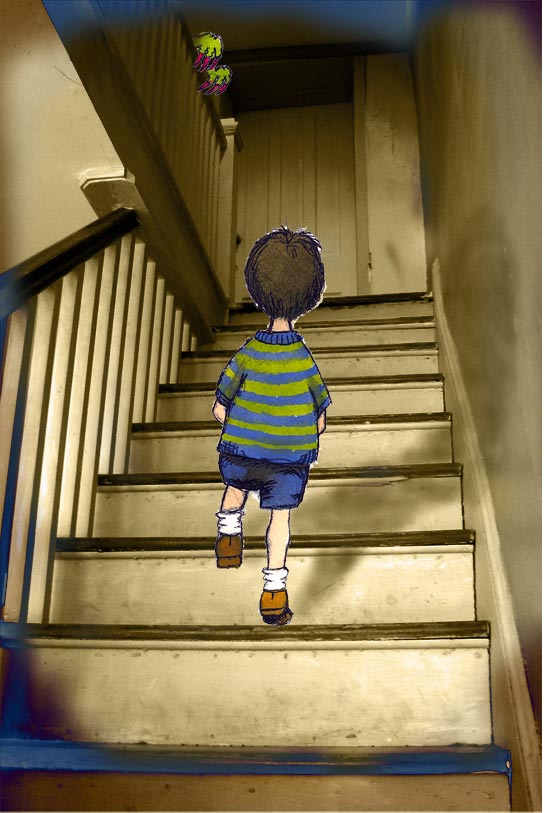
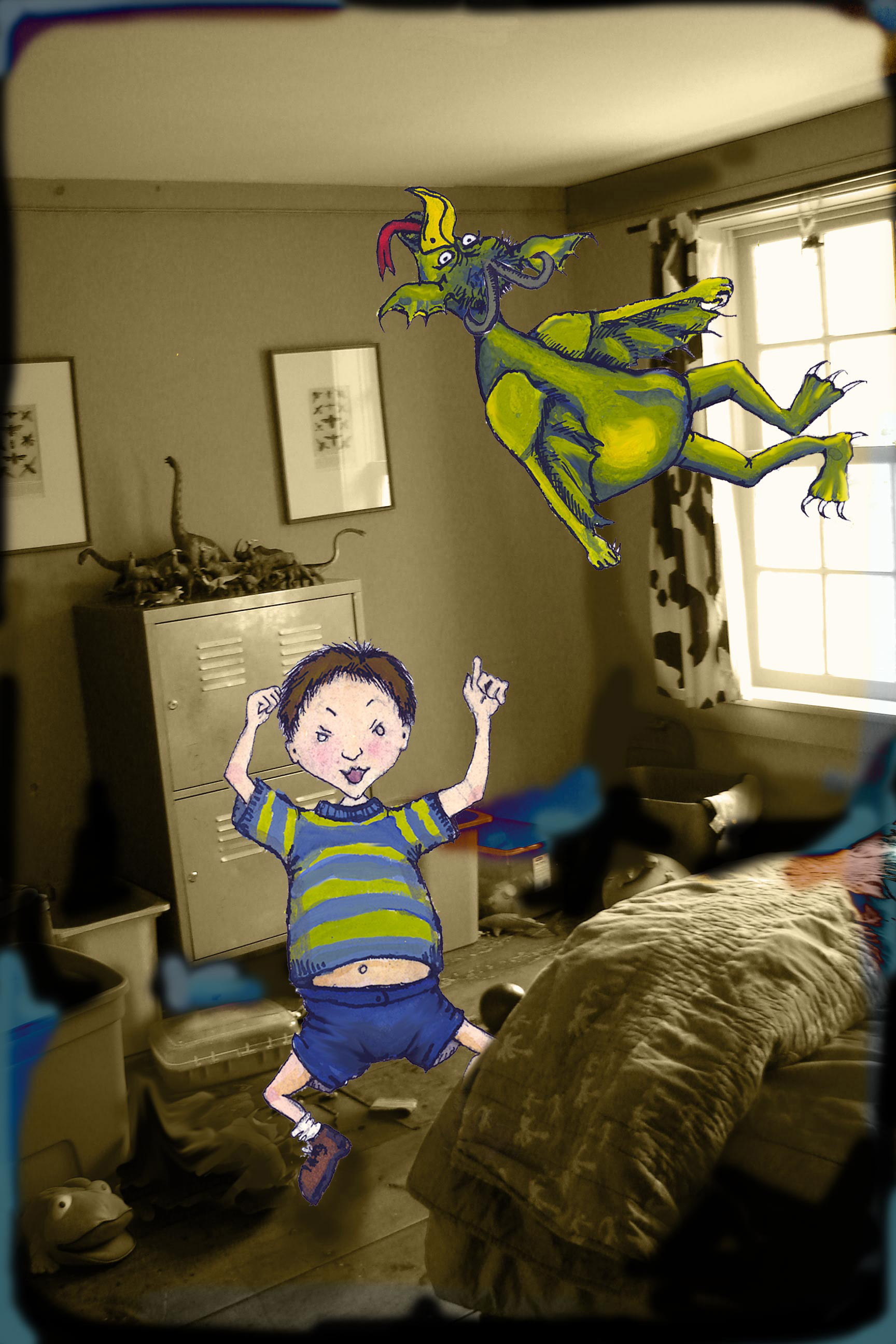
Today we’re going to do a cheater’s version of Saturday storytelling time. I didn’t actually write a story this week, but I’ve thought about it a lot. Incessantly, so surely it’s only a matter of time before it pops out of my head fully formed. So this is a story I wrote a few years ago. In honor of Halloween, it’s a monster story! It’s a story for children (childrens’ book publishers form an orderly queue) about a boy and his monster. Here are some pictures I did for the story. The text is after the jump.
stairwelllo
flying-monster

And, as ever, we have a recipe, too! This is an autumnal galette. The crust has walnuts and black pepper, and the inside has roasted beets and roasted mushrooms, as well as butterbeans sautéed with chard. It’s all topped off with smoked gouda. Lots of warm, sweet, earthy, smoky flavors!

Here’s The Boogie Monster by Gnarls Barkley

Continue reading

Navy beans with fennel and roasted sweet potatoes, and butter-fried croquettes

Navy beans with fennel and roasted sweet potatoes
Navy beans with fennel and roasted sweet potatoes

“He wouldn’t listen to her, and he clasped her desperately, his heart drowning in an immense sadness. A need for peace and an uncontrollable need for happiness invaded him; and he pictured himself married, in a nice clean little house, with no other ambition than for the two of them to live and die together inside it. They would only need a little bread to eat; and even if there was only enough for one of them, he would give her the whole piece. What was the point of wanting anything else? Was there anything in life worth more than that?” Indeed! Well, I haven’t finished the book yet, but I know how things turn out. I always read ahead, I read a few pages here and there in the middle, and I read the end. I always have, somehow knowing how it will end makes the story more compelling for me, even if it ends sadly, as this one does, I’m sorry to say. They are, of course, Etienne and Catherine from Germinal. They’re sitting on the edge of the bed in icy darkness, preparing to go back down the pit. After a winter of sickness and strife, starvation and deprivation, after months of physical and emotional abuse from her cruel lover, after ages of liking and loving and longing for each other, all unspoken, they’re at a crossroads. “Don’t do it!” You want to yell at them. “Don’t go down the mine. Run away!!” When I was little I used to imagine an island people could go to when things weren’t going well for them in plays or books or movies. An island for star-crossed lovers where everything aligned a little more benevolently, and all of the outside forces that kept them apart were nowhere to be found. It would be a place you could go despite your obstacles–money troubles couldn’t keep you away, and neither could overbearing relatives or jealous lovers or fickle fortune. And once you got there you’d be free to live out your days with your lover, just as you choose. You would grow old together. And maybe this would be hard for some of the couples that wind up on the island, because they hadn’t known each other very long in the old world, but I think they’d be glad to have the chance. After all, we each have to grow old, and it’s nice to have somebody to do it with. Romeo and Juliet were so young when they died. Juliet is thirteen. So maybe on this island they would grow up together, they would become adults together and be good friends. Catherine and Heathcliff–well, I just don’t know. They started as friends, they did grow up together, but weren’t they disappointingly cruel to each other and themselves and everyone around them. I don’t think even a magical island could provide them with a cheery future. Catherine and Etienne, though, I think they’d be okay. They’ve both suffered so much and worked so hard that they’d be glad of the peace and freedom to be kind to one another, to really love each other. They’d delight in any small warmth that they could find, and they’d kindle such a bonfire of pent-up affection they’d be able to light up a whole wintery mining village. And they wouldn’t be ignorant but happy, either. I think about Catherine a lot, about how bright and interested she is, and about how her only hope in life is to earn enough money to survive, and that her cruel man won’t be too cruel to her. I like to think about her writing stories in her head, down in the pit. But Etienne has taken such pleasure in learning, and in educating himself, and you know he’d love to teach her, too, and that he’d take pleasure in doing it, and be proud of all she learned. I like to think about what she might do, if she had some knowledge. I like to imagine them happy. They don’t expect much, and they deserve the world.

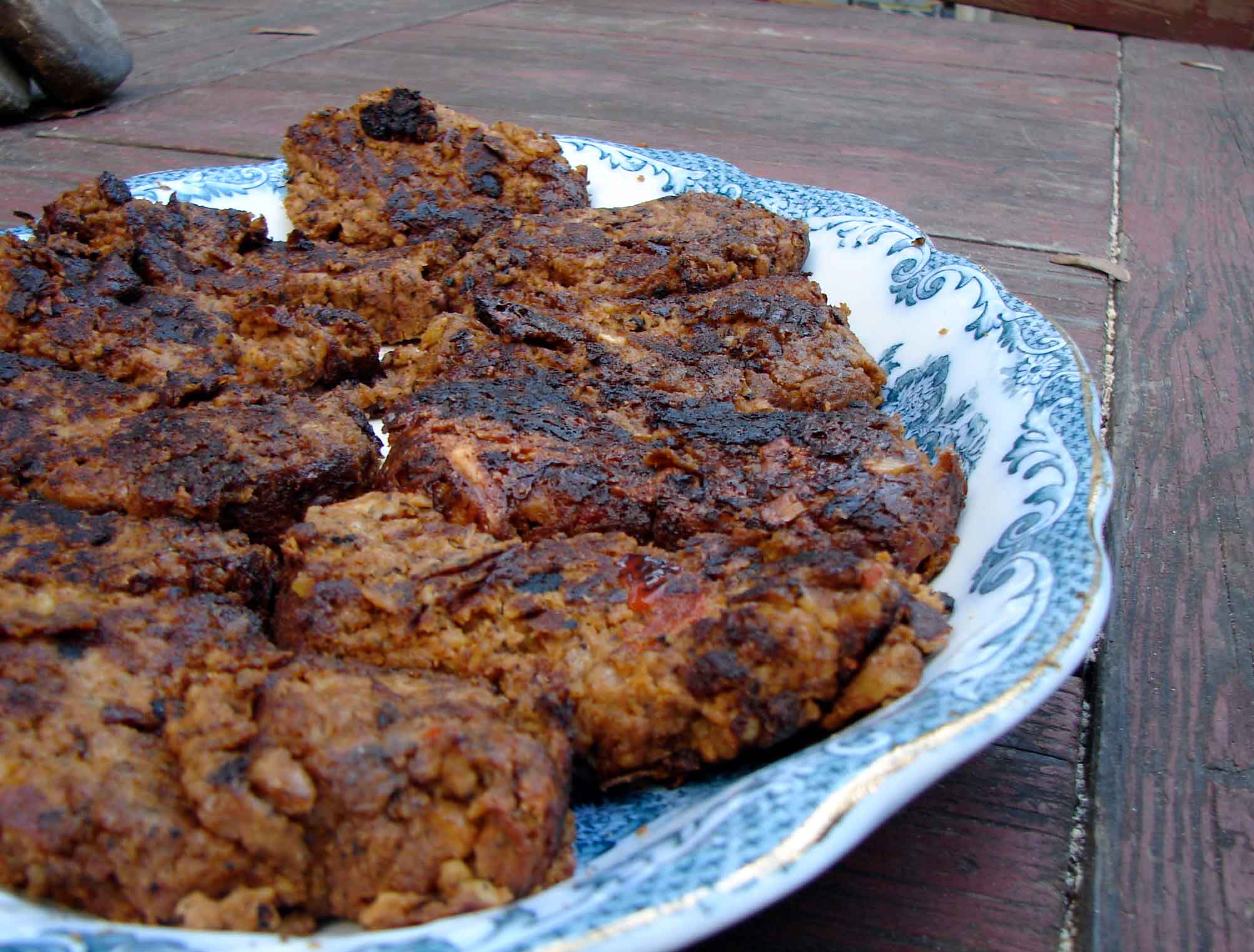
Butter-fried vegetarian bean loaf

Butter-fried vegetarian bean loaf

Here we have another meal that started as a bean and vegetable stew and ended up as croquettes. THe first night we had a bright, sweet, tart stew made of navy beans, fennel, and roasted sweet potatoes. It also had lemon thyme, lemon, caper, and a handful of raisins. Very delicious! And we ate it with bulgur. The next night I smashed all the leftovers together with bread crumbs, eggs, cheese, and smoked paprika, and baked it in a loaf pan. Then I sliced it (or tried to, it fell apart a bit) and fried it all in butter. The boys said it was like hotdogs, and it kinda was! Very good, though!

Here’s Louis Armstrong with Song of the Islands

Continue reading

Tender flakey herbed bread

Tender-flakey-herbed-bread “What profit a man if he shall gain the whole world but lose his soul?”In the film A Band Called Death, Dannis Hackney tells us that the actions of his brother, David, embodied the meaning of this quote. The documentary tells the story of Death, a proto-punk band formed in Detroit in 1971. The band was comprised of three brothers, David, Dannis, and Bobby, and more than anything, the film is a story about their family, a testament to their warmth and loyalty. It’s a portrait of David, the brother who died in 2000 of lung cancer, and a moving celebration of the way that he lives on in the love of his brothers and in the music that they made together. One of the brothers says the whole story is “…strange. It’s just…strange.” And it is, but in the beautiful way that some stories are so strange they make perfect sense. David is portrayed as something of an eccentric genius, a spiritual philosopher. On the day of his father’s funeral, he took this picture of the clouds:
Tri-photo-300x168

He saw a triangle in the sky, and this took on the significance of the three elements of life, mental, spiritual, and physical. On the side he saw another shape, the shape of somebody looking after them, their father, maybe, or their heavenly father. This pattern became the band’s logo:
Death-logo-300x168
And Death became unequivocally the name of the band. Throughout their short career, this name created nothing but trouble. Nobody wanted to hear music by a band called “Death,” and they were offered a contract if they changed the name. But they refused, because that would have been like losing their soul, and in this context the word “death” is so much more about soul than anything else. It feels oddly perfect that we watched the film now, during the season of all souls, the season that the spirits of the dead can communicate more easily with the living. The Hackney brothers talk about their mother and father, who gave them a love for music, who taught them to always back up their brothers, who encouraged them to play even at their noisiest. We mourn with them when their mother dies, but we’re glad to see them so full of love and hope. When Death is finally discovered after 35 years, and achieves a bewildering popularity, we feel the confusion of Bobby and Dannis, happy that David’s prediction has come true, happy to share the music that he loved, but sorry that he missed this time. They re-form as a band with a new guitarist, three men on stage, and the photograph of David hanging alongside, watching over them. I think for any art to be great it has to have sincerity and soul, and the band Death, and these brothers, Dannis and Bobby, in their cheerfulness, and affection, and lack of pretension, in the energy and the warmth of their music and their lives, have a humbling amount of each. It’s strange, it’s just beautifully strange.

Bread! I love baking bread, particularly when it starts to get colder, as it is rapidly doing these days. I love that it takes all day, that it feels impossible, and, of course I love eating the bread! This bread has eggs, butter and milk, all of which make it tender and flaky. It also has a nice strong crust, and it has some herbs. I used sage, rosemary and thyme, because that’s what I’ve been getting from the farm, but you could use any that you have and like. Or leave out the herbs altogether, which would make this a great loaf for sweet things, like butter and jam, or cinnamon sugar, or french toast.

Here’s the albumDeath For All the World to See.
Continue reading

Romesco paté

romesco paté

romesco paté

Yesterday as we were walking home from school, Malcolm told me that he sometimes feels as though he has lots of different people inside of him. He’s not bound to this world or this time or the narrow point of view of one individual person, and he can close his eyes and be somewhere else, in a different world. I thought this was such a beautiful idea, and he spoke about it so beautifully, that of course I wanted to hear more, I wanted to ask him who he became and where he went, and I wanted to tell him he should write about it. Instead, instead, I said, “Oh, and is that when you get distracted and stop paying attention?” Because we’d just come from a conference with his teachers, all of his teachers. The poor boy was sitting at a tiny table with his long legs wrapped around a tiny chair, and he was surrounded by six adults, and we were all talking about him. It’s a familiar story, Malcolm is bright and creative and imaginative (or so say all of his teachers) but he has trouble focussing, and showing his work, and listening and following directions. I know that all of his teachers only want the best for him, and its their job to prepare him to take these epic standardized tests, but I had such a raw feeling of heartache, sitting next to Malcolm, looking out the window at the moody changing weather, listening to him trying to explain himself in his slightly husky voice, which has never really sounded like a small child’s voice. They asked him if he knew what an essay is, and I wanted to tell them all about my understanding of the word “essay,” which means to try something, and not to be crippled by fear of failure. But he said “it’s something really long,” and that’s the answer they were looking for. And as Colbert told us yesterday, the essays on standardized tests are soon to be graded by computers, “You see, tech companies have developed an automated reader which can grade 16,000 essays in 20 seconds…these essays are being compu-graded by evaluating critical elements like: How long the average word is; how many words are in the average sentence; and how long is the essay. Because as Shakespeare wrote, ‘Brevity is the soul of wit but splendiferous loquaciousness is paramount to acing your Lit final.’” You like to think about what sort of score Hemingway would get for his Nick Adams stories! And then you want to cry thinking about how little creativity and imagination matter in a world where ideas are graded in this way, and in which children are taught to write essays that will be graded this way. The teachers were talking about the importance of following directions, and they said, “If you were cooking something you’d need to follow the directions exactly, or what would happen?” Hoo, boy. I felt like yelling out, “You’d come up with something potentially a million times better! And it would have flavors you like, that combine in unexpected and wonderful ways, and it would use ingredients that you have, that grew in your garden, maybe, and it would be different from anything anyone had made!” Part of the reason I love cooking with Malcolm is that he’s not tethered to preconceived notions of how to cook or which flavors taste good together. His recipes are always completely fresh and unusual and delicious, and they always makes sense in some perfect, strange way. But I didn’t say anything, because I understand that you have to be able to follow directions before you can change them. You have to understand what’s expected of you before you can make something unexpected. You have to know all the rules, and be able to follow them, before you can allow yourself to break them. And I know Malcolm can do it, because my Malcolm, as I know him, is one of the cleverest, most observant and most capable people I know. He notices everything, and he understands how things work, and what he needs to do to make them work. He might be able to travel to different worlds in his head, he might have mighty castles in the air, but they have strong foundations rooting them to the earth. He might be able to see the world from a lot of different points of view, but he’s very strong in himself, he knows who he is and what he’s good at, with a sort of common-sense coolness that I aspire to, myself. When the teachers asked Malcolm what would happen if you didn’t follow a recipe exactly, he said with a smile, “It depends on the recipe.” I love this boy! He’s got a lot of work to do reining in his energy and imagination, but I know he can do it, and when he gets home we’ll cook up the craziest most unusual meal ever, and eat it with great delight.

Romesco paté

Romesco paté

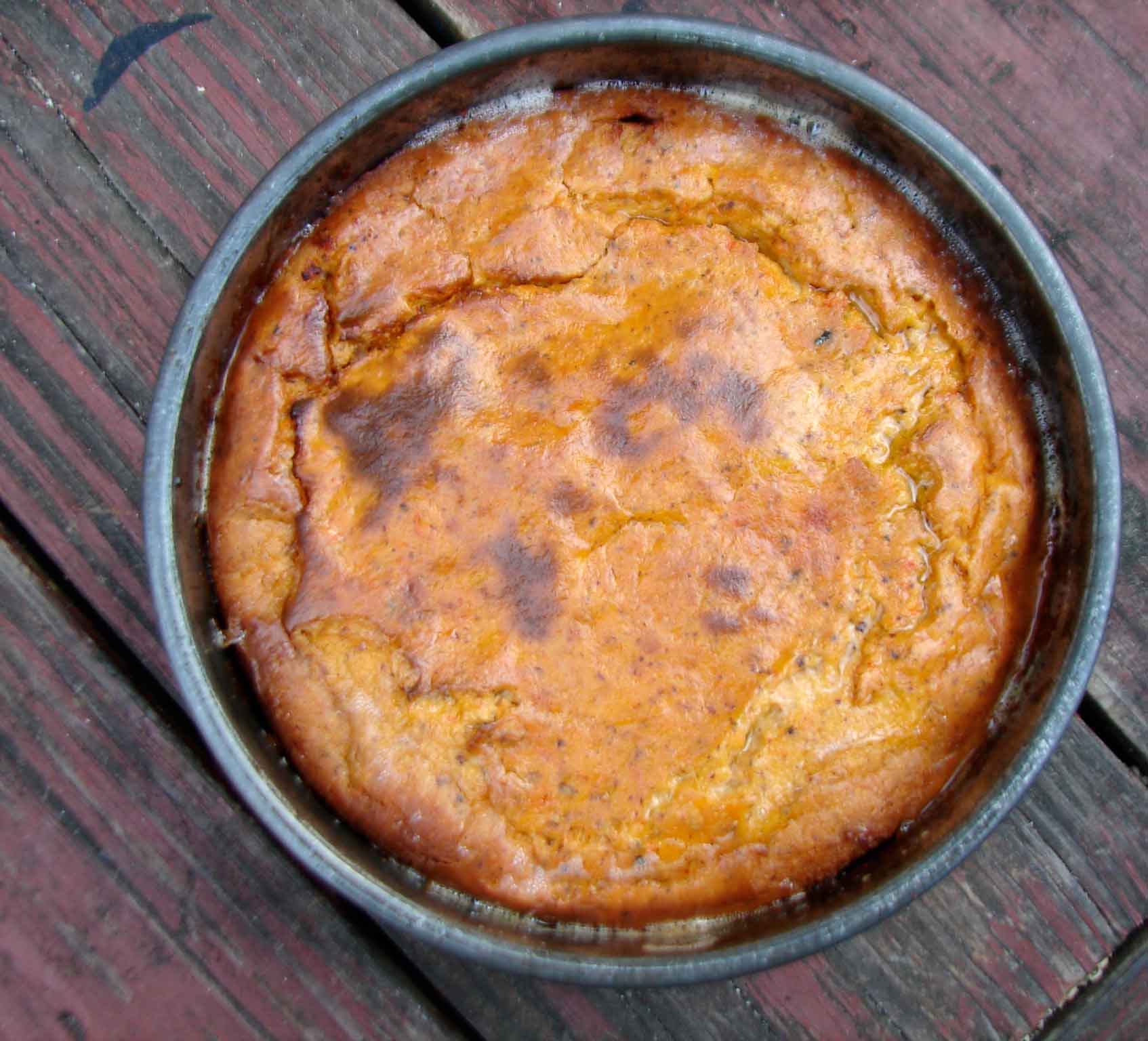
I’ve always loved romesco sauce, the smoky, tangy mix of roasted red peppers, tomatoes, hazelnuts and almonds. I decided to try to make it into a sort of soufflé or paté. So I added some milk and eggs and cheese, and baked it in the oven. It puffed up like a souffle, but deflated pretty quickly. It was nice as a sort of side dish, but I think it would be good spread on crackers or toast as well.

Here’s They Might Be Giants, Malcolm’s current favorite band, with We Want a Rock.

Continue reading

Kale and sweet potato empanadas with pecans, goat cheese and smoked gouda

Kale and sweet potato empanadas

Kale and sweet potato empanadas

“For years, Cohen’s approach was to shoot three rolls of film over a two-hour walk, develop the rolls directly, have dinner, then go back to the darkroom, develop eight to nine prints directly from the negatives, and cast aside the rest. Cohen did this several times a week for decades. He estimates he has 600,000-800,000 images that he’s never seen or developed, not even on contact sheets.”

Mark Cohen is a street photographer who shoots images from his hip, without looking through the viewfinder. In an article in today’s Guardian, he describes his methods. He doesn’t carry a camera with him all the time, he goes on specific walks just to take photographs. This used to be in his home town of Wilkes-Barre Pennsylvania, but he’s recently moved to Philadelphia, and now he takes trolley rides, “I get on a trolley and go to a specific intersection. I like to go to the same one 10 times, so I understand the texture of the neighbourhood.”

His photographs, not surprisingly, are unusually framed, they’re askew and disorienting–not focussed on face and shoulders, but on whatever part of the body he happened to catch. There’s something beautiful in this discombobulation. The photos of people feel more intimate and specific to one person, because they capture some part of that person nobody would notice, but they also feel like a document of people everywhere at this particular moment in time. They look familiar, like family snap-shots, like people you knew, and in their abstraction they become surprising and new…you see the human form in a different light, as a collection of angles and light and shadows, vulnerable and beautiful.

Bare thin arms against aluminum siding

Bare thin arms against aluminum siding

I love the eccentric ordinariness of this whole process. I love the way it’s described as part of his routine, as natural as making a meal. In describing his career trajectory, from gallery shows in New York in the seventies to relative obscurity (although he has a show in Paris at the moment) he seems more than resigned. As his career waned, he remained as productive as ever, perhaps even more so. ‘Removing himself from the New York scene gave him a “purity”, he says, by virtue of “not having a personality so involved in the dissemination of work”. But by his own admission, he “dropped out” in the late 80s. “Gallerists couldn’t sell my stuff,” he says matter-of-factly. “My work’s not the most optimistic. It’s not like Yosemite.”‘

In all of these things: his subject matter, his seeming need to take photographs, the fact that he hasn’t developed many of his negatives, or even looked at them, he reminds me of Vivian Maier, another brilliant photographer who had a unique view of the world all around us. They capture time as it passes, they save moments in the lives of strangers and make them into something remarkable–something worth noticing, something worth saving. There’s a feeling almost of melancholy in the works of both photographers, something almost lonely in a glimpse into the life of somebody else. But there’s tenderness and compassion, too: we feel a connection.

kale and sweet potato empanadas

kale and sweet potato empanadas

Autumn empanadas!! These were warm and smoky, earthy, sweet and tangy. Very very nice on a chilly autumn evening. The kale and sweet potatoes are from the farm, as are the sage and rosemary. I used a combination of goat cheese and smoked gouda, for the nice contrast in flavor and texture. These were mostly soft and pleasing, but they did have a bit of crunch from the crust and the pecans.

Here’s Jimmy Smith with Just a Closer Walk With Thee.

Continue reading