Ginger beer!

Ginger beer!

Ginger beer!

“Wherefore” means “why” and not “where.” You’re probably thinking, well, duh, Claire, everybody knows that. But the truth is that I didn’t know that till I was a teenager, and it really blew my mind, man. Because when Juliet says “wherefore art thou Romeo,” she’s asking why not where. (And I know I’m not the only one that didn’t know this, because how many times have you heard this speech with the emphasis on art instead of Romeo? Right?) Well, it got me thinking…how many other exchanges had I completely misinterpreted over the years? It was as though a whole world had opened up. A rich world of language, in which each word was like a door that lead to a surprising and beautiful world. Or several surprising and beautiful worlds, because every exchange is full of so many shades of meaning. I love Shakespeare! I know that doesn’t exactly make me unique, but it’s good to shout it aloud from time to time. I love his humanity and his humor. I love the fact that the way his characters acted in the 16th century is exactly, disarmingly, the way people act today. I love the ridiculous pang of pleasure that you get when a character says something so perfectly true and beautifully expressed that you feel you’ve always known it. I love the fact that he invented words as he went along, and we still use them now. I love the fact that the exchange between Romeo and Juliet is a sonnet – their dialogue is a perfect sonnet, worked into the play. But he doesn’t tell you that, it’s just there, for you to discover. I love the fact that Hamlet’s opening of “Who’s there?” sums up the entire play in many ways. I love Hamlet, the mad melancholy man. I’d love to spend some time with him, and just listen to him talk. Lately my memory is failing, and it sometimes seems as though huge portions of my past life are nothing but a blur. The fabric is stretched thin and threadbare, and holes are forming in it. And yet I have a Shakespeare sonnet memorized, and that’s still there, thank heavens, that hasn’t gone anywhere. It’s number 29, of course, and just last week, in my own despairing and hopeless spate of discouragement, I kept thinking of these lines –

    …And look upon myself and curse my fate,
    Wishing me like to one more rich in hope,
    Featured like him, like him with friends possessed,
    Desiring this man’s art, and that man’s scope,
    With what I most enjoy contented least…

That’s Shakespeare saying that! That’s Shakespeare feeling discouraged and envious! Good lord! So I’m keen to share all of this love with Malcolm and Isaac. I know they’re a bit young, but Shakespeare is a language, the more you understand it the more you love it, and it’s good to start them on languages young. So we watched some animated tales with them. They’re nicely done! And the boys watch with rapt attention. Although we started with some comedies, and Isaac went stomping out of the room saying, “Do they all have to be about people falling in love?” He’s not a big fan of romance, our Isaac. He has a horror of people kissing on screen!

It was nice sharing Shakespeare with them just in the way it’s nice to cook with them. Creative and nourishing and hopeful. Malcolm and I have been making ginger beer, lately, and this is how we’ve been doing it. It’s a very simple method. I’ve read about putting a batch in a bowl under your bed until it turns alcoholic, or brewing it with yeast until it gets bubbly, but we didn’t do any of that. We made a concentrate of fresh ginger, lemon, lime and raw sugar, and then we added bubbly water. Then we drank a glass each, and poured the rest back into the bottle the fizzy water had come in. We used a sieve, because we like pulpy bits of ginger, but you could use a cheesecloth if you want it clearer and with less bite. We used turbinado sugar because it has such a nice, warm taste. You could use any kind of raw sugar, or white sugar or even brown sugar. I’m going to try it with honey, but I have to buy another bottle of fizzy water, first. I’ll let you know how it goes.

Here’s Shakespeare’s Sister by The Smiths.

Continue reading

Tender buttery rolled-up rolls

Rolled up rolls

Rolled up rolls

Ezra Jack Keats seems like somebody I’d like to spend some time with. Like Ozu and Tati and Vigo, he seems like somebody that has a lot of answers but wouldn’t feel compelled to tell you about it. So you’d just have to spend some time with them, to listen and learn. He is, of course, the author and illustrator of The Snowy Day, as well as 21 other books. The Snowy Day tells the story of Peter, a little boy who wakes up to find that it has snowed. And then it describes his day – walking through the snow, making foot prints, making tracks with a stick, wanting to join a snowball fight but understanding that he’s too little when he gets knocked down with a snow ball, trying to save a snowball and surprised when it disappears in his pocket in the warmth of his house. It’s a perfect book. The language is simple and haiku-like, the illustrations a jumble of color and movement. The Snowy Day was published in 1962, which also happens to be the year the name of a crayola crayon was changed from “flesh” to “peach.” Peter is black, but that’s never mentioned in the text, and the book is not about that. In our literary history black characters had frequently appeared as caricatures or background figures, but Peter is just a little boy, just Peter, so full of personality and charm, so fully conjured with so few words. Keats has said, “My book would have him there simply because he should have been there all along.” The book is about the wonder of walking in a world transformed by snow… “I wanted The Snowy Day to be a chunk of life, the sensory experience in word and picture of what it feels like to hear your own body making sounds in the snow. Crunch…crunch…And the joy of being alive…I wanted to convey the joy of being a little boy alive on a certain kind of day—of being for that moment. The air is cold, you touch the snow, aware of the things to which all children are so open.” Like all of Keats’ books, the problems facing the boy are small and real – not as dramatic as being chased by death eaters, maybe, but all the more compelling for being universal and recognizable and honest. All good books and films about children are not about having children – not cynically appealing to what some focus group has suggested would sell to a certain age group. They’re about being children, about always being a child in certain situations, like when the snow falls. or when you feel inadequate or disappointed, or left out of a crowd. Keats has said that discovering collage made him feel like “…a child playing…I was in a world with no rules.” And it feels exactly like my boys’ lives and their creativity…pulling a bit of something from here, a scrap of something from there, and piecing it all together in their teeming, colorful little brains. It’s a good way to experience the world and connect everything you see and hear and feel…aware of the things to which children are so open. Keats understands.

tender rolled up rolls

tender rolled up rolls

These rolled up buttery rolls turned out really delicious! The perfect thing to eat after coming in from the snow! I wanted them to be really really soft and tender, so I added milk and butter and an egg. And I wanted them to be fun to eat, so I flattened them and then rolled them up. They were fun to eat! We could pull apart each soft layer. We could fill them with greens and beans, or with scrambled eggs the next morning. They’re very versatile, too. I added a bit of pepper in the layers, but you could add herbs or nuts or cheese. Or cinnamon sugar, if you want them to be sweetish. Or chocolate chips, if you want them to be really sweet!

Here are two songs by Elizabeth Cotten, another of those people who seems to have all the answers.

Continue reading

Cadbury mini-egg ice cream

Cadbury mini egg ice cream

Cadbury mini egg ice cream

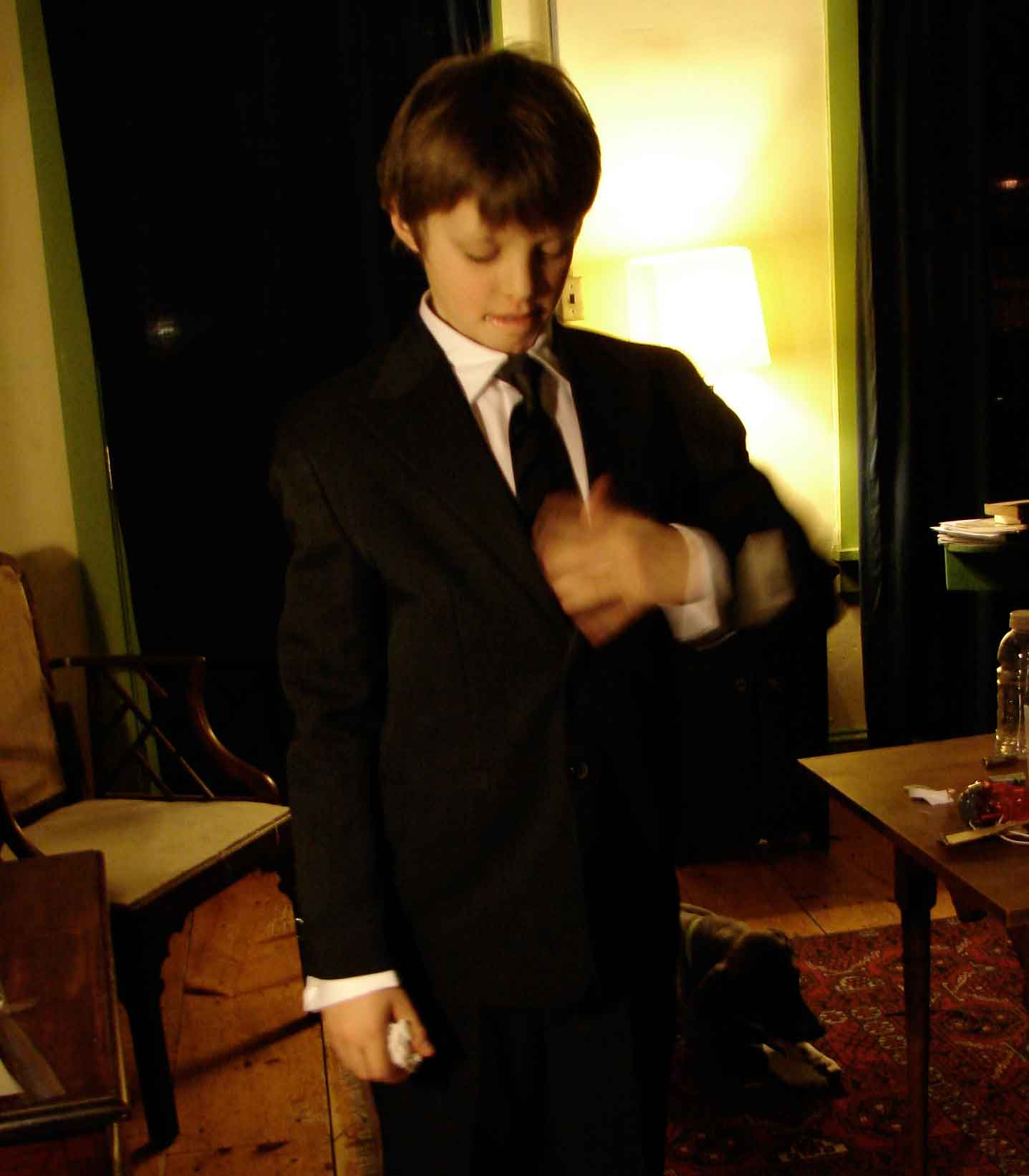
We bought Malcolm a suit. Why did we buy him a suit? Don’t we know that he won’t wear it very often, take very good care of it, or fit in it for very long? Of course we do! Of course we know all those things! So why did we do it? I’m honestly not sure, but I’ve been thinking about it a lot. I think, maybe, we bought him a suit because he wanted one. Not that he brattily demanded one, and threw a tantrum, and wouldn’t let us rest until we agreed to buy him one. I don’t think he even expected one – he seemed surprised when I told him we were going shopping for it. The fact that he wanted to wear a suit seemed so sweet, and so cool in a way that’s just like Malcolm and no one else. He has a dance on Friday, and he told me he wanted to wear a suit to the dance. I asked if anyone else was wearing one, and he said, “I don’t care!” To me, that’s the very definition of coolness in a ten-year-old boy. Malcolm doesn’t dress like the average American ten-year-old. He has a real sense of style – not outlandish, but unique – it might be called “stylie ragamuffin.” I love this about Malcolm! I love to think about him thinking about what he’ll wear, because he’s not anxious about getting it right, he’s cheerful about it, and if he wants to wear it, it is right. He’s got style with ease, baby. He’s fond of certain clothes, and he’s happy in them. Of course he didn’t want the kind of suit kids wear to school dances. He wanted the kind of suit the Blues Brothers wear, well, all the time. A mod suit, a hep suit, a timelessly suave suit. It was fun to hear him describe it, fun to watch him pick it out, and try it on, and walk around the house feeling good in it. Like all mothers, I think my own boys are the most beautiful in the world. And the thing about Malcolm is that he could wear anything. He could pull off any look, he could make any clothes look good. Not just because his healthy vegetarian diet has made him strapping and lean, but because he seems so comfortable in his body, so sure of his movements, so free and easy and strong. I worry about the years ahead, the teenage years when people try to make you feel bad about yourself and your clothes and your hair and your choices, and it’s easy to become an insecure basket case. This seems to be starting earlier and earlier these days. Lord, I hope Malcolm can maintain his breezy self-assurance, his imagination, his idiosyncratic taste in music and clothes and food. It’s such a powerful pleasure to watch as his tastes form and grow – to watch him enjoy and identify with things, to watch him become a person, his own person. We’ll send him out into the cold and critical world armed with our love and pride and looking sharp in his natty new suit.Malcolm-suit

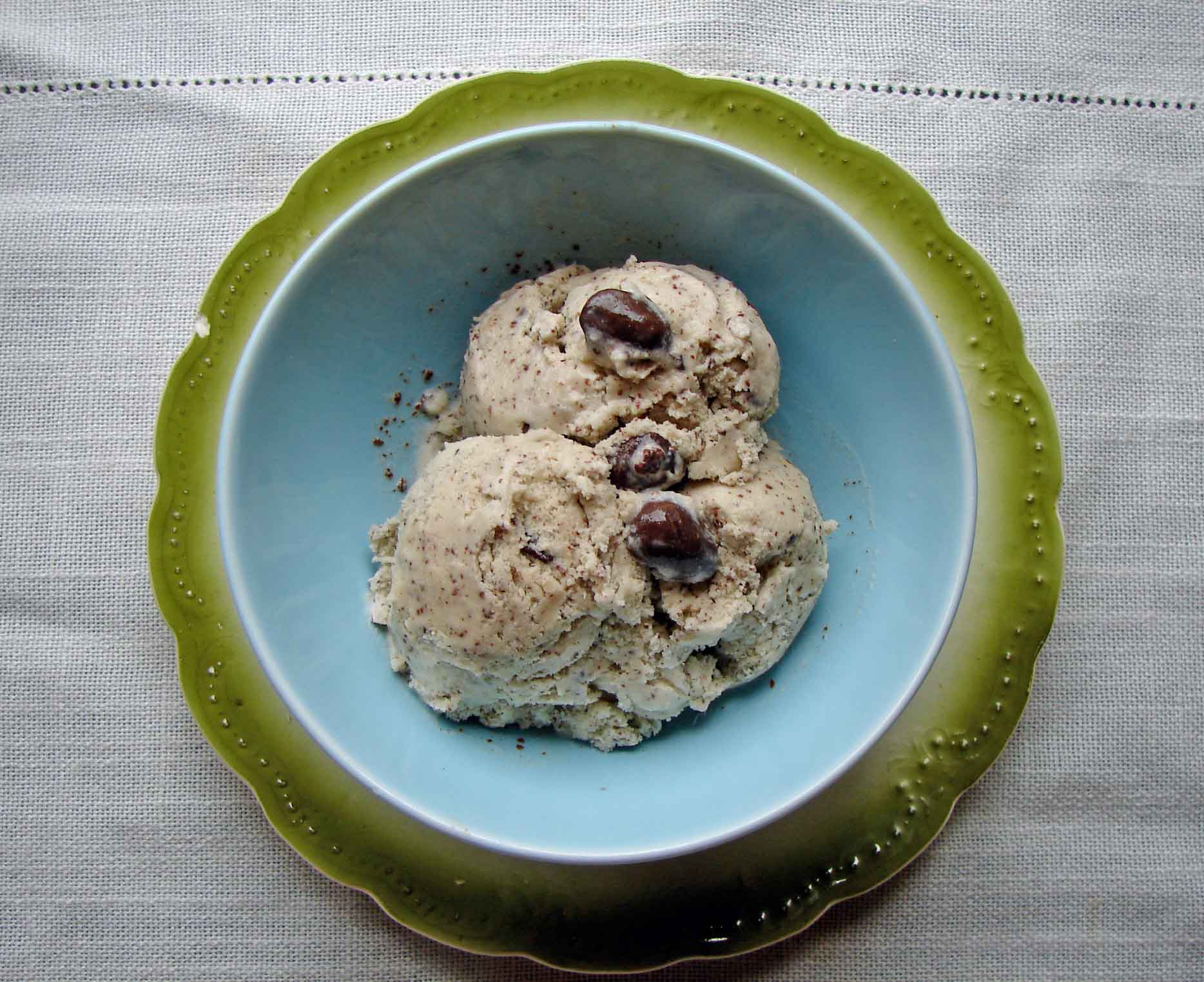
It’s cadbury mini egg season! If you recall, last year I baked them into just about everything I made. This year, I decided to crush them up and put them in ice cream. It’s quite simple, really. A lovely vanilla ice cream, with varying sizes of crushed cadbury egg in it. We smashed some with a mortar and pestle, and Malcolm actually grated some with a hand grater. So you have large pieces – most of the egg, really, and smaller crunchy bits of shell. You could probably just put them in a bag and smash them lightly with a hammer!

Here’s The Beastie Boys with The New Style
Continue reading

Raggedy pasta filled with spinach, ricotta, artichoke hearts topped with roasted red pepper pine nut sauce

Spinach ricotta pasta with roasted red pepper & pine nut sauce

Spinach ricotta pasta with roasted red pepper & pine nut sauce

In a scandalous act of shocking laziness, I’m going to plagiarize myself for today’s post. (I have to get to work soon!) This appeared in the Guardian this week, I wrote it! So I’m just going to repeat myself here, with the original un-edited version. Ready?
Every city has its shantytowns, tenements, projects and favelas; cramped, tightly-knit urban regions in which people are thrown together, joined by poverty and a sense of stagnation. These spaces form a teeming world of their own within the larger macrocosm of the city, connected but self-contained. Life is stacked upon life in a confined area, making the situation rife for story telling; a perfect stage setting of tension and drama. People struggle to survive from day to day, and dream of escape. They form a network of friendship and support, but crowded conditions breed pressure, and the threat of violence is never distant. Privacy is scarce when one person’s front door opens onto another’s and a network of alleys or balconies forms the veins that connect them all. This is brilliant fodder for movies, but it makes for good songs, as well. So this week’s Sunday interactive playlist is on the subject of cramped urban housing.

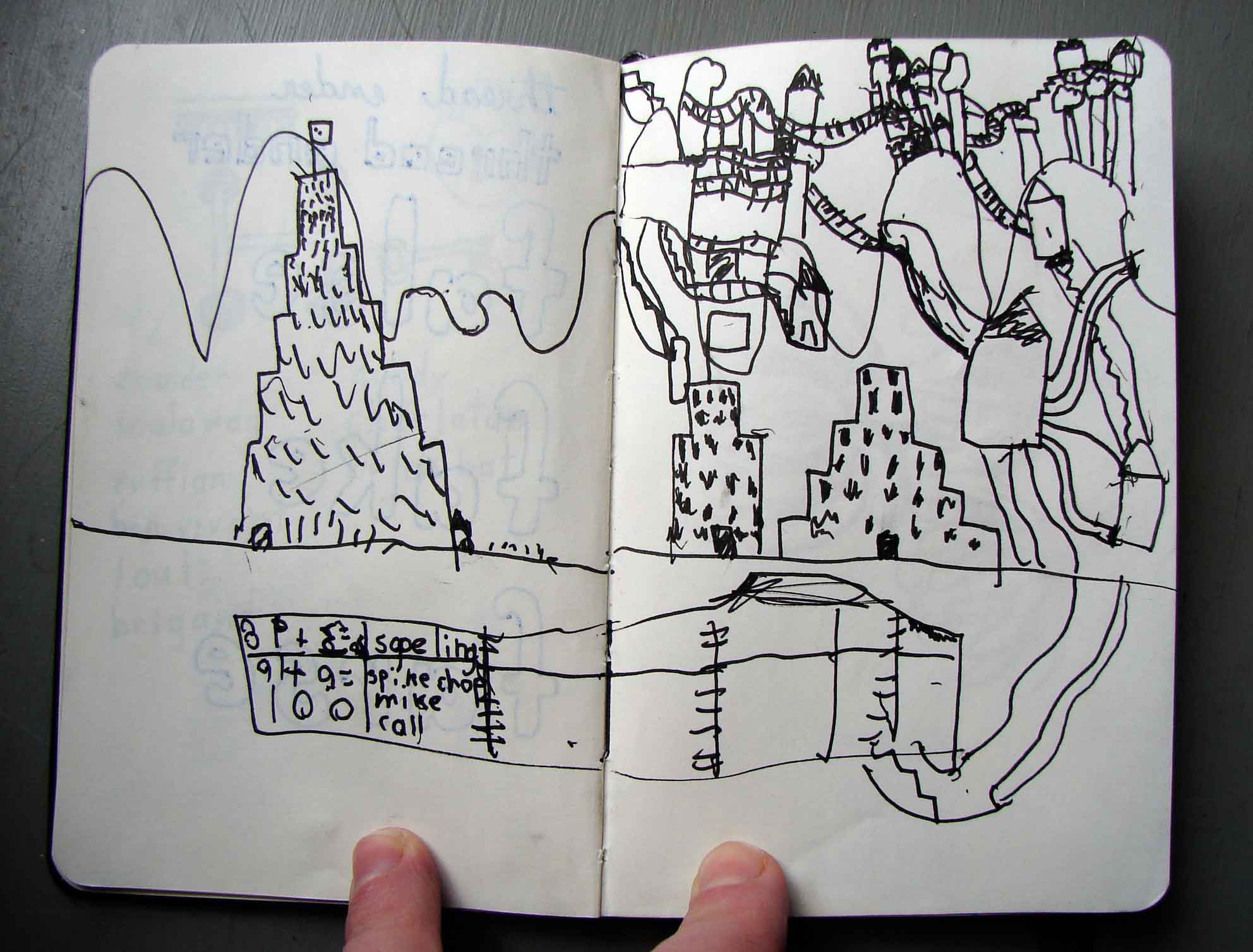
Here’s a picture that Isaac drew a few weeks ago. He started drawing “city towers,” and then he got caught up drawing these crazy rambling houses that sprawl up the hillside, and connect and expand and have levels and layers and turrets. The oval area in front is an underground space where they meet (and apparently practice math facts!)Isaac's-picture
This pasta is kind of like his labyrinthine spread. It’s handmade pasta for people who don’t have a pasta maker. What you do is this…you make pasta dough (which is fun and easy!) You roll it as thin as you possibly can (which is a bit of work, but also fun!) You cut it into any shape you like – triangles, squares, rectangles. You fill each one with a spoonful of delicious filling, then you wrap it up any way you like – each one a different shape. Some you roll in tubes, some you make in pockets. Some you put seam-side down, some you put seam-side up. You pile them on top of each other or next to each other. (You try not to get too great a concentration of layers of pasta in one place, so it’s not stodgy.) You cover them with a delicious smoky sauce made of pine nuts and roasted red peppers. You sprinkle mozzarella on top. You bake the pasta. It has nice soft pockets of filling, some lovely melty cheese, some crispy parts where the pasta sticks out and crisps up as it bakes. And then you eat it! You could also easily use this filling and this sauce to make lasagna, stuffed shells, manicotti, or any other sort of stuffed baked pasta that you buy at the store. And that’s that!

Continue reading

Jerk patties with pigeon peas, butternut squash and kale

Jerk patties with kale and butternut squash

Jerk patties with kale and butternut squash

Malcolm has been trying to remember a song. It’s a song I listened to all the time when he was little, that I sang along to. (These claims check out, because I do tend to become obsessed with songs and sing along with them over and over.) Malcolm is the boy with the long memory. If we’re trying to remember where we put something, or if we watched something, or who said what, we ask Malcolm. I love to think about Malcolm looking out on the world with his wise, observant, beautiful eyes, these past ten years, and collecting a trove of thoughts and images and recollections, and storing them in his remarkable brain. It’s one of the things that makes him seem wiser and more mature than his years. (As opposed to, say, giggling over fart jokes with his brother in the back seat. And there’s also plenty of that!) I used to have a good memory for strange, inconsequential things, but I feel as though my memory is fading with my eyesight, which is a weird sort of impaired, half-awake feeling. So we’ve been trying to recall this song. On Saturday night we sat on the couch, and he leaned heavily against me in the sweet way I’m sure he won’t do for much longer, and he played songs on his iPod (or fragments of songs – he’s an erratic DJ!). We thought about all the songs we’d listened to when he was very little. We listened to songs that used to make me burst into tears when I was very pregnant or just after he was born, because I was overwhelmed with the scale of our impending change. We tried to remember all of the songs he’d sing along to, with delightfully incorrect words. And there’s no medium more powerful for conjuring recollections than music! And as we listened for old memories in the songs, we were weaving new ones as well, so that years from now these songs will have layer upon layer of remembrance. We never did figure out which song he had in mind, but in the end, of course, it didn’t matter. The joy was not in remembering this one song, the joy was in remembering.

Food is another great trigger of memories! I remember walking around Central Park in the blazing hot sun during a street festival. I coveted the jerk patties, so bright and festive and fragrant, but they usually had chicken or beef in them. Not these, my friend! These have kale and pigeon peas. And I developed a new technique with the butternut squash. I grated it and then roasted it. I like it this way, especially in a pie – it turned out more roasty, and a lovely texture. I tried to minimize the time it took to make these by rolling out a long thin sheet of dough (two feet by ten inches, maybe) putting big glops of dough along one side, folding over, sealing, and then cutting apart. Kind of like making ravioli. If this seems, actually, to be more work, feel free to divide the dough in six, roll out thin rounds, and make this half-circle shaped.

Here’s Stars of Track and Field by Belle and Sebastian. Malcolm used to sing “Stars and dragons still too far.”

Continue reading

Farro pilaf with pan-fried butterbeans

Farro pilaf and fried butterbeans

Farro pilaf and fried butterbeans

Here at The Ordinary, we’ve uncovered the secret inner-workings of society as we know it, and we’re prepared to share that discovery with you. Points. That’s right, points. We’ll get straight to the point, with a pointed argument, and if you find yourself adrift in the vagaries of the conversation and unsure of your point of sail, pick up a handy pocket map at the point of sale to guide you back to the point of no return. Which is where we are, and this is how it goes. Everybody is allotted a certain number of points to start out with, according to no criteria whatsoever. If this seems arbitrary, that’s because, in point of fact, it is. At this point I should point out that if you happen to be somebody that starts out with an obscene number of points, nothing that follows really applies to you. You can carry on as you like without penalty. Everybody else, however, starts with a certain number of points, which will be depleted or augmented according to various rules of behavior, pretty much from the first. Points well be taken away for sloppy handwriting, for tardiness, and for poor spelling. Points will be taken away for daydreaming or over-enthusiasm. We’re glad you know the answer, but you called it out of turn. Points will be subtracted. We’re pleased that you got the right solution, but you didn’t show your work. Points will be subtracted. You got the right answer and showed your work, but it was the wrong work. Points will be subtracted. Points will be taken away for creativity, unless you’ve invented some way that humans can stay more permanently and utterly attached to their computers, in which case points will be rewarded. Points will be awarded for compliance, for cleanliness, for prettiness, and for whiteness of teeth. If you have many points, it will be easier to get more points. Points will be subtracted if you’re missing part of your uniform. Points will be subtracted if your uniform is not pressed and perfect. If you run out of points, that’s very bad, and more points will be taken away from you. Since you don’t have points at this point, points will be loaned to you at a very great interest, and if it seems like you’ll never be able to pay them back, that’s because you won’t. Of course we value kindness and compassion, but they won’t be on the test, and no points will be rewarded. What’s the point of it all? That’s beside the point, it is a completely pointless question, so we’ll all just carry on, shall we?

So! I bought a can of butter beans, because they looked nice. I decided to fry them up in olive oil with some herbs, and then mix them with tomatoes at the end. So they’d stay somewhat firm – almost crispy on the edges. And I made a sort of pilaf with farro, carrots and peas to go with them. I seasoned the farro with a pre-mixed red zatar, but if you don’t have such a thing, any combination of sesame seeds, fennel seeds, sumac, cumin or coriander would work. Or just some thyme and oregano. Actually, you can’t go wrong with any sort of seasoning that you like! We ate these all together with some little boiled potatoes tossed in butter, and it was all very good together. Lovely flavors and textures. And I am now a big fan of butter beans! We had quite a bit of everything leftover the next day, so I mushed it all together to make burgers, which I fried up in a pan, topped with a slice of cheese, and ate on a bun. Yum.

Here’s Yo La Tengo, with The Point of It

And here’s a wonderful scene from Home Movies explaining the importance of points.

Continue reading

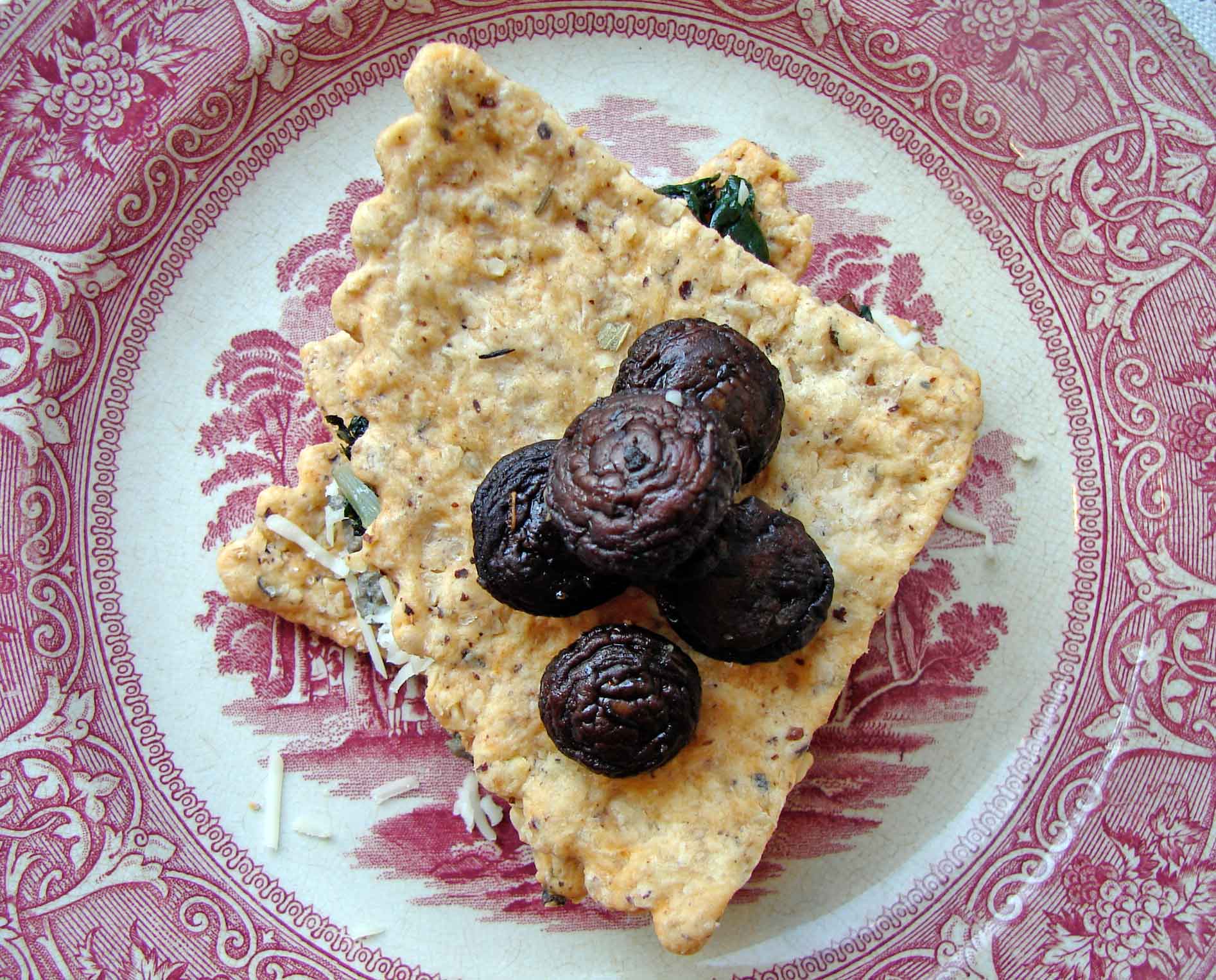
Hazelnut sage cracker fans stacked with roasted mushrooms, french lentils and chard

Hazelnut cracker stacker

Hazelnut cracker stacker

Isaac gave me a card for valentine’s day. It’s got a three-dimensional heart made of red tissue paper flowers, and it says “my heart belongs to you.” Sweet. A fairly traditional valentine’s day sentiment. Nicely made card. It undid me! I get weepy when I think about it! The thought of my Isaac’s heart – so sweet and generous, odd and contrary, so singularly Isaac – the thought that it’s mine, at least in part, threw me for a loop. The gift and the responsibility of being loved by both my boys is almost overwhelming, if I stop to think about it, and my lovely card made me do just that. I like the word, “unmanned.” It’s an old-fashioned term, I know, but I like to think about men striving to be manly, working to be strong and just and mature. And I like the idea that, in an instant, some emotional force can dissolve all of that, and leave him feeling like a boy, raw and bewildered. Sometimes I feel “unwomanned.” I don’t walk through the world thinking about being a woman or a mother. Honestly, despite my advanced and advancing years, I don’t really feel old enough, most of the time. Being a mother is a fairly common pastime. Everyone in the world has one. But when you take a moment to consider motherhood, it’s awesome, it’s terrifying, it’s wonderful. Isaac’s heart belongs to me, and I made that heart! And I’m responsible for keeping him healthy, and feeding him good foods that will help that heart to grow. I work to be strong and just and mature – to be worthy of the boys’ love; to be a good example for them; to give them some core of conviction and kindness. But sometimes it feels as though all of that falls away in a moment – not in a bad way, but in a way that makes me feel more awake, more keenly aware of my power and privilege in being important to the boys. Last summer Isaac had an echocardiogram. I sat with him for an hour in a darkened room, while we watched the workings of each inch of his beautiful beating heart. It was almost too much information. I felt undone, but I had to be collected when the lights came on – I had to listen attentively, ask relevant questions, reassure Isaac, and answer his sweet anxious worries. It’s such a strange world! We all walk around each day with our hearts working so inexplicably and so persistently, and with those hearts we love people, so inexplicably and so fervently. And we can’t even think about it, or we’d be so overwhelmed we’d never get out of bed!
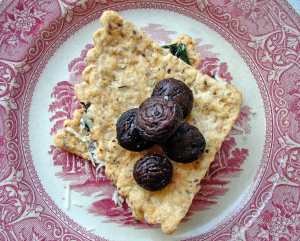
Hazelnut crackers stacked with chard and roasted mushrooms

Hazelnut crackers stacked with chard and roasted mushrooms

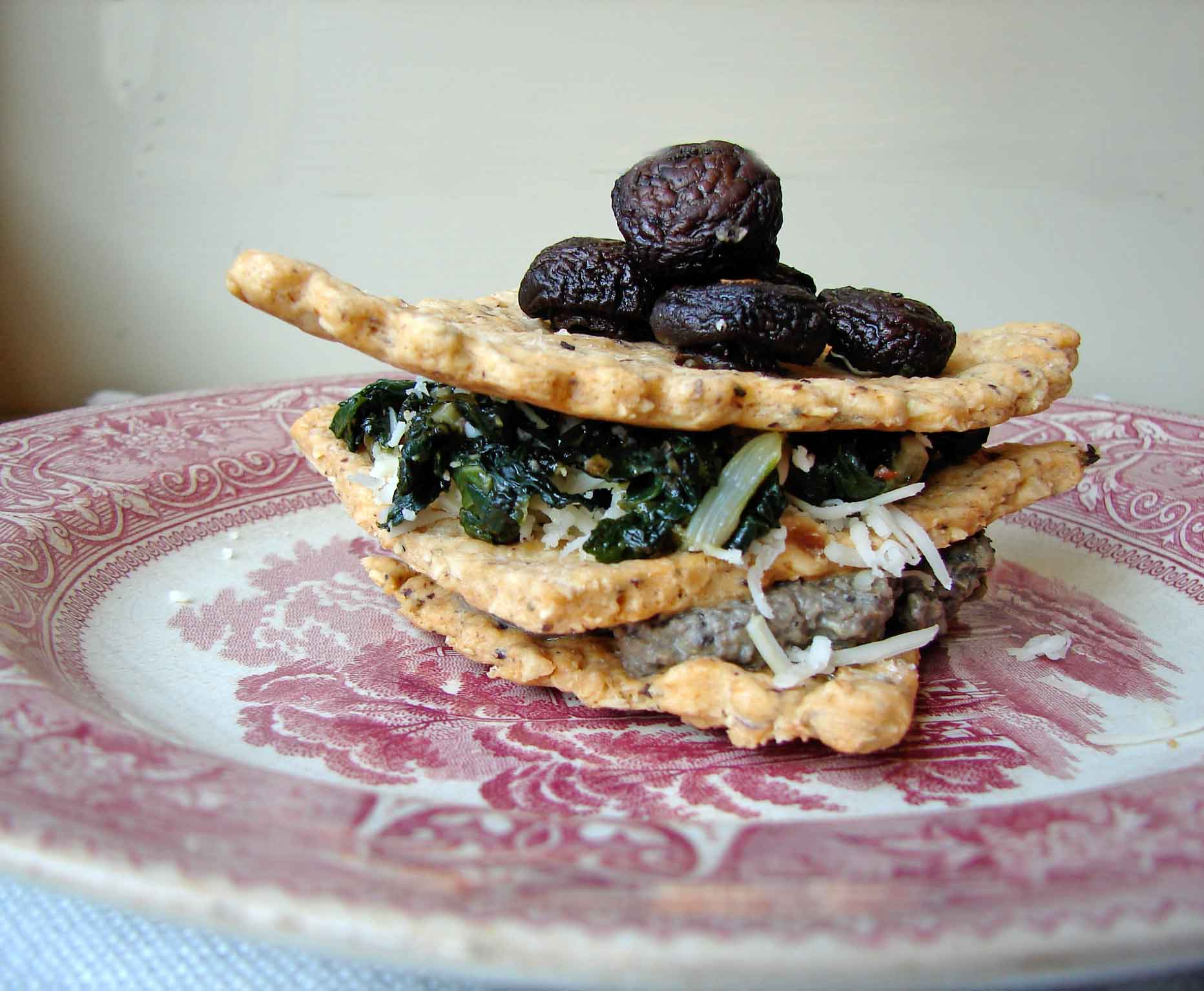
Last night, for valentine’s day, we took some time off. I made a special, strange meal. We ate together and talked together, and we let everything slide. We missed a basketball game and a meeting. We cuddled on the couch and watched a movie, and decided to skip the showers and the evening reading. It feels good to be irresponsible, some times! And, guess what? I’m a mother, so if I say it’s okay, it’s okay!! It was a really nice night. And the dinner was strange! I wanted to make something a little fancy, and less pedestrian than my usual fare. So I made some large fan-shaped crispy crackers, flavored with sage and smoked paprika, and crunchy with hazelnuts. I piled these with layers of sauteed chard, roasted mushroom & french lentil puree, cheese, and whole, small roasted mushrooms. It was very fun to make, and very fun to eat, too! I thought all of the flavors and textures were nice, altogether. I used my 8-ish inch tart pan ring to cut the dough into fluted circles, and then I cut those into quarters. You could use a medium-sized bowl with a thin edge. Or just cut it freehand with a knife. Or make circles instead of fans, by cutting with a large glass. Whatever, man!

Here’s My Heart, by Louis Armstrong. It’s bright and cheerful and serious and thoughtful at the same time, like my Isaac.
Continue reading

Honey oatmeal walnut bread

Oatmeal walnut bread

Oatmeal walnut bread

Today, friends, I’d like to talk about one of the most singular applications of ordinariness that I’ve come across. I refer, of course, to Ivan Karamazov’s devil. Here he is…

    This was a person or, more accurately speaking, a Russian gentleman of a particular kind, no longer young, qui faisait la cinquantaine, as the French say, with rather long, still thick, dark hair, slightly streaked with grey and a small pointed beard. He was wearing a brownish reefer jacket, rather shabby, evidently made by a good tailor though, and of a fashion at least three years old, that had been discarded by smart and well-to-do people for the last two years. His linen and his long scarf-like neck-tie were all such as are worn by people who aim at being stylish, but on closer inspection his linen was not overclean and his wide scarf was very threadbare. The visitor’s check trousers were of excellent cut, but were too light in colour and too tight for the present fashion. His soft fluffy white hat was out of keeping with the season.

    In brief there was every appearance of gentility on straitened means. It looked as though the gentleman belonged to that class of idle landowners who used to flourish in the times of serfdom. He had unmistakably been, at some time, in good and fashionable society, had once had good connections, had possibly preserved them indeed, but, after a gay youth, becoming gradually impoverished on the abolition of serfdom, he had sunk into the position of a poor relation of the best class, wandering from one good old friend to another and received by them for his companionable and accommodating disposition and as being, after all, a gentleman who could be asked to sit down with anyone, though, of course, not in a place of honour. Such gentlemen of accommodating temper and dependent position, who can tell a story, take a hand at cards, and who have a distinct aversion for any duties that may be forced upon them, are usually solitary creatures, either bachelors or widowers. Sometimes they have children, but if so, the children are always being brought up at a distance, at some aunt’s, to whom these gentlemen never allude in good society, seeming ashamed of the relationship. They gradually lose sight of their children altogether, though at intervals they receive a birthday or Christmas letter from them and sometimes even answer it.

    The countenance of the unexpected visitor was not so much good-natured, as accommodating and ready to assume any amiable expression as occasion might arise. He had no watch, but he had a tortoise-shell lorgnette on a black ribbon. On the middle finger of his right hand was a massive gold ring with a cheap opal stone in it.

This is Ivan’s devil, who may or may not be a figment of Ivan’s fevered imagination. He’s an extremely ordinary fellow! He doesn’t have the decency to wear horns and a cloak, like a devil should. He’s shabby, and dull and embarrassing. Ivan hates him with a passion, he represents everything Ivan despises – everything within himself he hates, facets of his boorish father and elements of Russian society that Ivan disdains. Ivan calls him stupid and foolish, which is the worst thing a person could be, to Ivan. And yet his devil is not stupid at all. He’s extremely clever, of course, because he’s part of Ivan, he shares Ivan’s brilliance. He’s articulate, even witty, and it’s obvious that Ivan has a strange delight in talking to him – in testing him and trying to catch him out, in trying to untangle his devilish riddles. Ivan has met his match, and it is piquant to him, it pierces him almost to madness. He’s sure this devil has the answers to all of his questions, all of the questions that won’t let him rest. It’s such a strange, nightmarish, beautiful passage. The devil has Ivan tied in desperate knots, trying to understand if he is real, or merely a figment, and in the end, it seems he’s both. “Yet such dreams are sometimes seen not by writers, but by the most ordinary people, officials, journalists, priests…. The subject is a complete enigma. A statesman confessed to me, indeed, that all his best ideas came to him when he was asleep. Well, that’s how it is now, though I am your hallucination, yet just as in a nightmare, I say original things which had not entered your head before. So I don’t repeat your ideas, yet I am only your nightmare, nothing more.” In an odd way, it makes you understand and love Ivan better. He’s depressed, and he’s not sure why, but you know that he feels love as well, which is something he would deny, and that he’s almost frantcially hopeful despite his cynicism. I wonder what my devil would be like, made up of all of the parts of myself and the world around me that I hate and fear. Maddeningly ordinary, no doubt, but very dull as well. Probably better not to think about it!

Honey walnut oatmeal bread

Honey walnut oatmeal bread

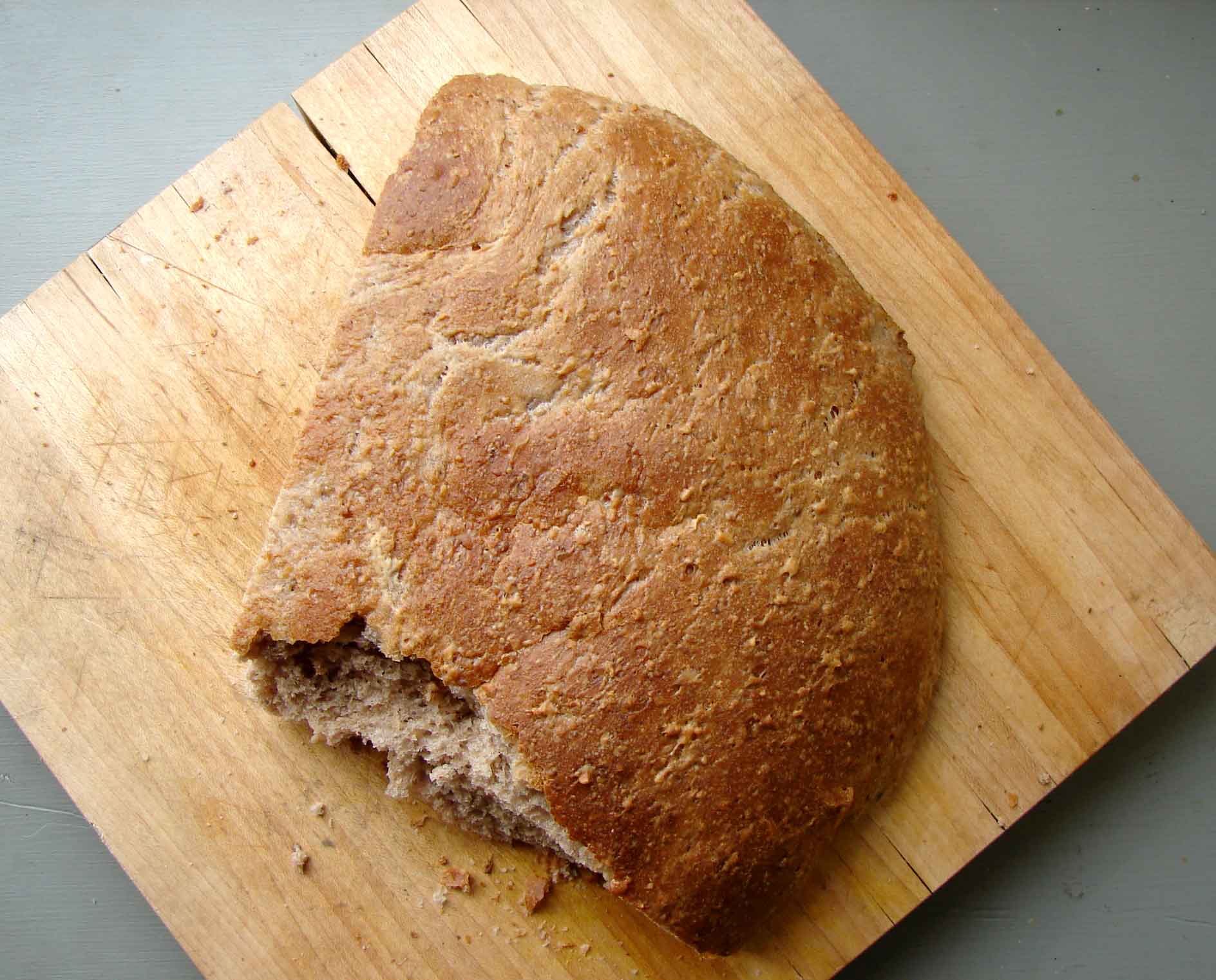
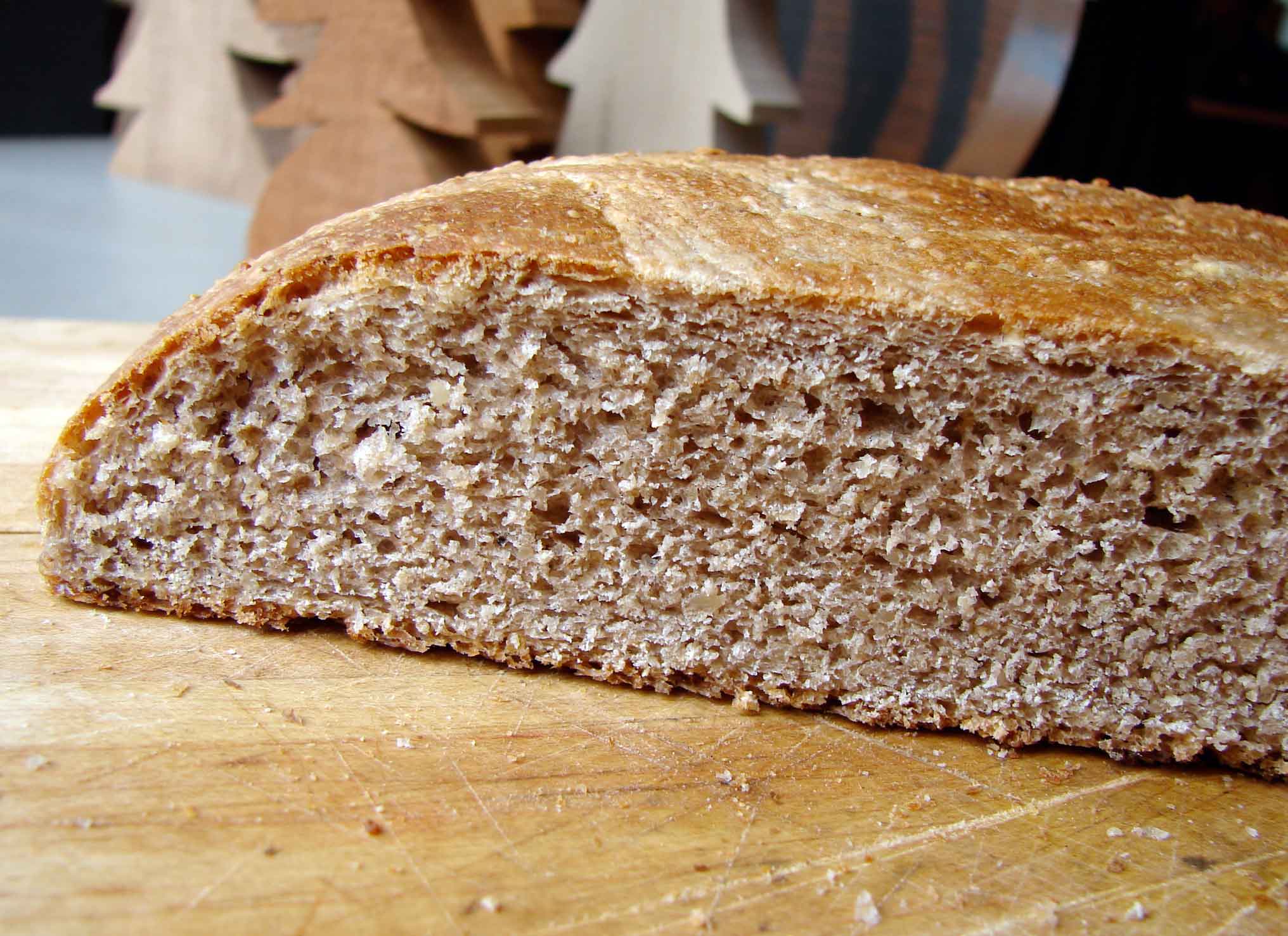
This bread was very nice, I thought! Subtle. It has walnuts and oats, both toasted, but they’re ground to a fine crumbly consistency, so they don’t overwhelm the bread. It’s got a touch of honey, a touch of black pepper, so it’s a little sweet and a little spicy. Very good with soup, very good toasted the next day with cinnamon sugar, and lovely made into savory french toast, which I’ll tell you about another time.

Here’s Andrew Manze playing Tartini’s Devil’s Sonata.

Continue reading

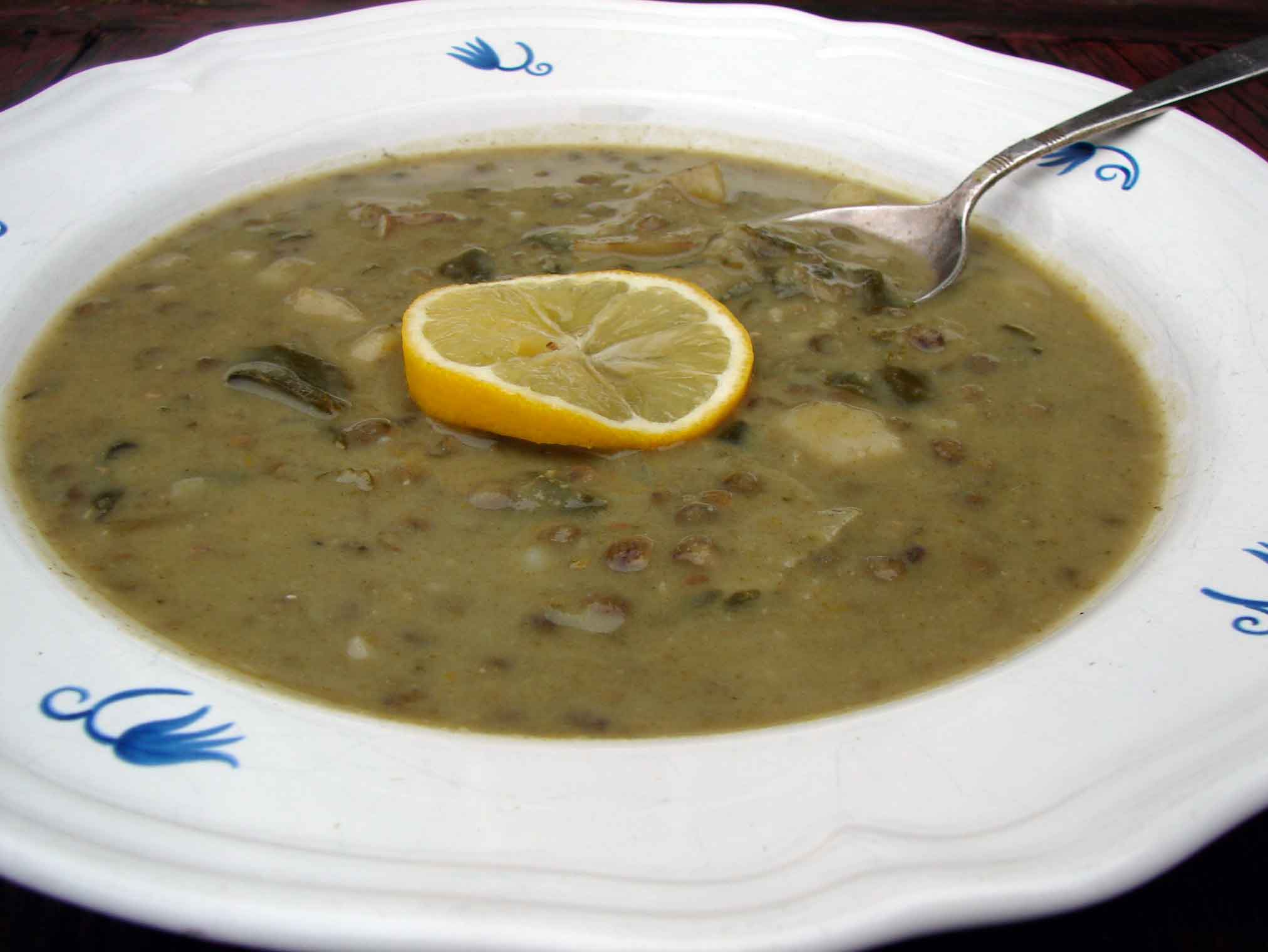
French lentil chard soup with meyer lemon and ginger

Chard, lentil and meyer lemon soup

Chard, lentil and meyer lemon soup

    There’s Nothing as Trustworthy as the Ordinary Mind of Ordinary Man.

So readeth a banner on the wall of Lonesome Rhodes. Lonesome himself is on the balcony, raving like a Tom Waits-voiced Tarzan about how the people listen to him, because the people love him, because he is the people and they are Lonesome. He’s playing to an empty house, his own empty penthouse, lonely and cavernous, wrapped in sinister shadows. But his friend Beanie is laying on the applause – loud and often – on a machine that he himself, Lonesome, invented – it applauds him and laughs with him and oohs and ahs at his wise sayings. He starts to sing that he’s ten thousand miles from home, but he breaks off. He’s breaking down.

What is this madness? A face in the Crowd, directed by Elia Kazan in 1957. What a remarkable, odd, oddly contemporary film! It tells the story of Lonesome Rhodes (Andy Griffith), a drifter picked up in a jail by an eager Sarah Lawrence graduate (and all that that implies) played by Patrica Neal. She records him for a radio show on the voice of the common people, called Face in the Crowd. He’s irreverent and folksy. He becomes a star, a personality, first in Arkansas, and then all over the whole country. In New York his show is sponsored by Vitajex, a placebo that he sells as a libido-enhancer (Big Lebowski-esque dream sequence!); the CEO of Vitajex introduces him to a man running for senator, a tepid, aristocratic person that Rhodes sells as a man of the people. The film’s themes are startlingly relevant today: the intersection of commerce, politics and entertainment; the cynicism of the entertainment industry about the intelligence of their audience “Those morons out there? Shucks, I could take chicken fertilizer and sell it to them as caviar. I could make them eat dog food and think it was steak. Sure, I got ’em like this… You know what the public’s like? A cage of Guinea Pigs. Good Night you stupid idiots. Good Night, you miserable slobs. They’re a lot of trained seals. I toss them a dead fish and they’ll flap their flippers.” In the beginning of the film, Rhodes is irreverent towards the company that endorses him and suspicious of any commercial enterprises. He appeals on the air for all of his listeners to help a woman whose house has burnt down. By the end he’s on TV, exchanging quips with his senator about the evils of social security, and thinking of his audience, the crowd, the ordinary people, only in terms of the money, votes, or adulation they can give him. He’s seduced by the idea that he could become one of the elite, that he could guide the thinking of the masses. He’s funded by the Koch brothers of the day, to tell people what to buy, and to vote for the guy who will keep them poor, suspicious, and under-educated. He’s an ordinary person, but some people are more ordinary than others. Of course his career crashes, his women leave him, and he’s back where he started, ten thousand miles from home, and he doesn’t know where to go.

I bought a bag of meyer lemons! Look for them in every single recipe I make for the next week or so! They’re so lovely – sweet, tart, a little piney. I was thinking about french lentils, as one does. I love them, but I always seem to cook them the same way. I decided to try something a little different, and give them a kick with meyer lemons and ginger. This soup was so delicious! Comforting with potatoes and lentils, but very lively, with not just a squeeze of lemon, but the juice of two whole lemons!! Oh yes.

Here’s A Face in the Crowd, sung by Andy Griffith (to the tune of Sitting on top of the World, by the Mississippi Sheiks.

Continue reading

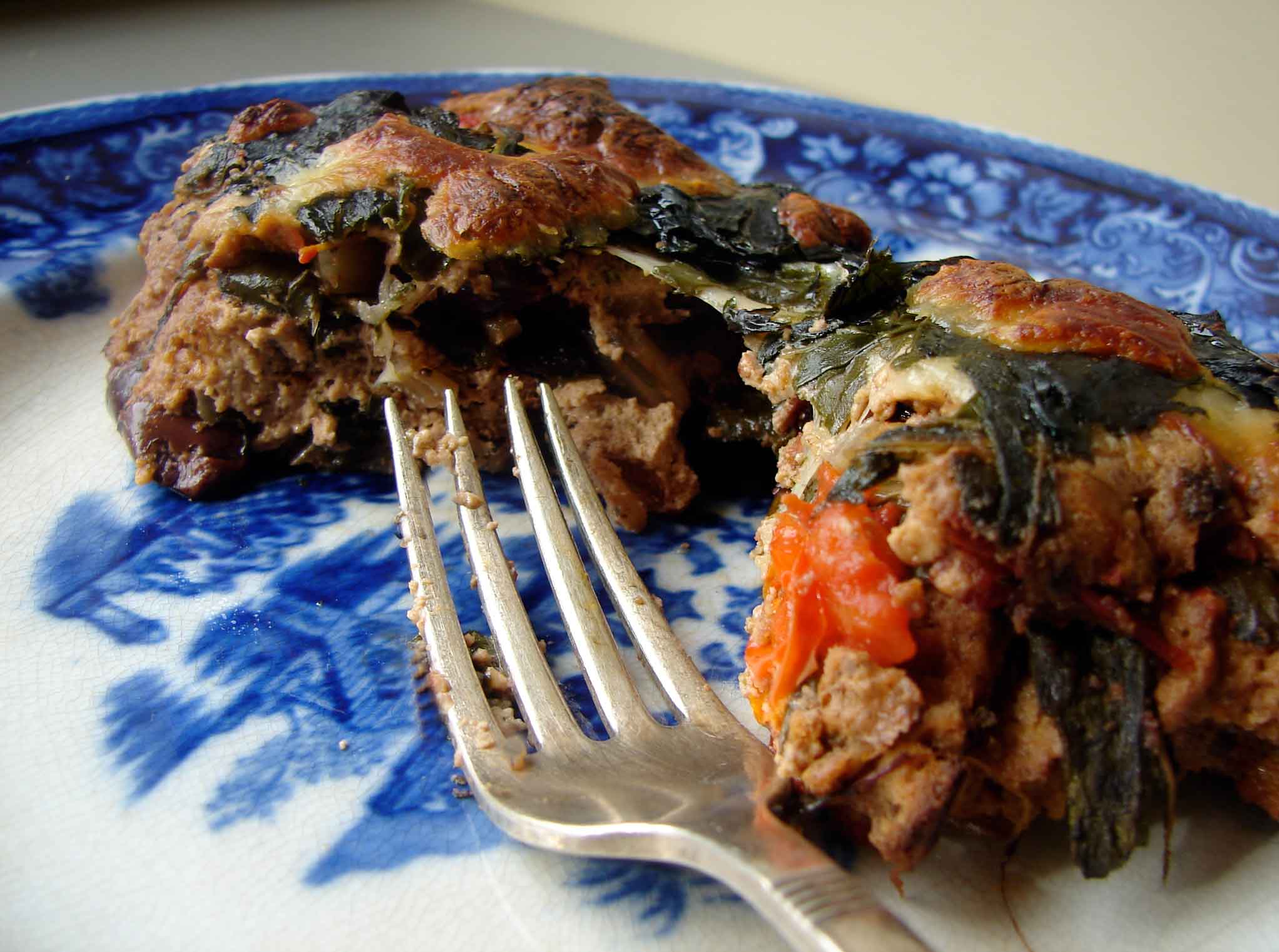
Chard “lasagna” with fennel, roasted reds, olives, and walnut ricotta

chard lasagna

chard lasagna

One summer, when I was 11 or 12, I fell down a lot. I skinned my knees so many times in one summer that they’re still mapped with scars. I don’t remember being all that bothered by it. At some point scabby knees became normal for me – itching and peeling and catching on my clothes. A few years later I fell off my bike on the way to my piano teacher’s house and I cried for a week. There’s no accounting for my irrationally fervent response, but everything seemed suddenly so fragile and vulnerable and poignant. My boys seem to like falling. When Isaac’s nervous and trying to impress someone he’ll make a silly face and topple to the ground. Pratfalls never fail to amaze! When they’re riding skateboards and scooters, it always seems to me that they’re learning how to fall as much as they’re learning how to ride – it’s an equally important skill. Of course, raising children is a pattern of watching them fall and then get back up again. When they first sit up, and they’re so proud and so happy with their new vantage point, and then they just…tip over. When they’re learning how to walk, and you brace yourself for the sickening sound of hard little head on pavement. Sometimes they bounce back, sometimes they crumple and wail. Malcolm has always loved to climb – chairs, tables, trees, rocks. I could create an extensive photo essay of “Malcolm sitting on top of things.” It was hard to let him go, at first. I remember consciously telling myself not to blurt out “be careful” as he clambered from chair to table. And, of course, that was the exact moment he fell. Mostly I let him go, now, because I trust him to know what he can do. I close my eyes and hold my breath and wait to look till he’s safely on the earth again. I’ve been thinking about falling a lot, lately, for some reason. When I’m running with Clio, or walking down the stairs, I can imagine myself falling, I can almost feel that it’s going to happen, so I go very cautiously. I feel gravity’s pull more. I dream about falling and wake myself with a start, like a newborn. When Clio and Malcolm jump and climb and clamber, it’s not just that they’re young and strong and agile, it’s that they don’t doubt themselves. It never occurs to them for a second that they might not make it. If Clio is behind the tall-backed couch and wants to be on the other side, she doesn’t run around the couch, or get out a measuring tape and calculate the height of the back of the couch, she doesn’t take a few trial hops. She doesn’t imagine what would happen if she wipes out before she reaches the top of the couch. She leaps! When Malcolm scales a giant rock-face, he doesn’t catastrophize about what would happen if he slips, he clambers happily to the top and beams down at us from on high.

I love giant chard leaves. It always feels like such a shame to chop them up. So I decided to leave them whole and use them in a sort of lasagna, instead of noodles. I have layers of braised fennel with roasted peppers, capers and olives, layers of melty mozzarella, layers of walnut ricotta, and layers of chard leaves. It turned out very tasty indeed! The walnut ricotta is made with walnuts, olive oil, balsamic, rosemary and honey, and it’s very earthy and good. Nice all together!

Here’s Tom Waits with Falling Down.

Continue reading