Savory cake with mushrooms, chard, pecans & pistachios

Savory cake with chard, mushrooms, pecans and pistachios

Savory cake with chard, mushrooms, pecans and pistachios

“Mom? Someday? Can we go to a junkyard? And bring home junk? And make sculptures with it? What are those things called?”
“Sculptures?”
“Yeah.”
“Um, they’re called sculptures.”
“Yeah. You know a lot of people think junk is just junk, but it’s not!”
“What is it?”
“Art materials!”
I realize that lately the subtitle of Out of the Ordinary could be “Isaac and Claire talk on the way to school.” And I never intended it to turn out that way, but the truth is, I come home and I think about all of the odd things he’s told me. I think about them for hours, setting off a little chain of loosely connect thoughts which generally lead back to whatever he was talking about in the first place. Today I thought about junkyards, and I thought about the Gleaners and I and Vik Muniz’ Wasteland, and Agbobloshie, and aircraft boneyards. And I thought of the term “rag-and-bone,” which has been in my head for days, although try as I might I can’t remember what put it there in the first place. And of course that made me think of “Rag and bone shop of the heart,” so I had to look up the whole poem. The Circus Animal’s Desertion. What a name for a poem! What a poem! It ends thusly:

    Those masterful images because complete
    Grew in pure mind, but out of what began?
    A mound of refuse or the sweepings of a street,
    Old kettles, old bottles, and a broken can,
    Old iron, old bones, old rags, that raving slut
    Who keeps the till. Now that my ladder’s gone,
    I must lie down where all the ladders start
    In the foul rag and bone shop of the heart.

And it’s so strange to think about Yeats lacking inspiration or feeling disappointed. It’s so strange to think about him looking back on his career with any kind of sadness or regret, or looking into his heart and feeling despair or disdain for what he finds there. I want to tell him what Isaac would tell him, that those old kettles and bottles and bones aren’t junk, they’re art materials. He can make himself a new ladder out of old iron and broken cans, a ladder that might be more true and stronger than his old one. But of course he knows that, he knows it all, because he found his inspiration, he wrote this poem, and it’s beautiful and he must have felt that in his deep heart’s core.
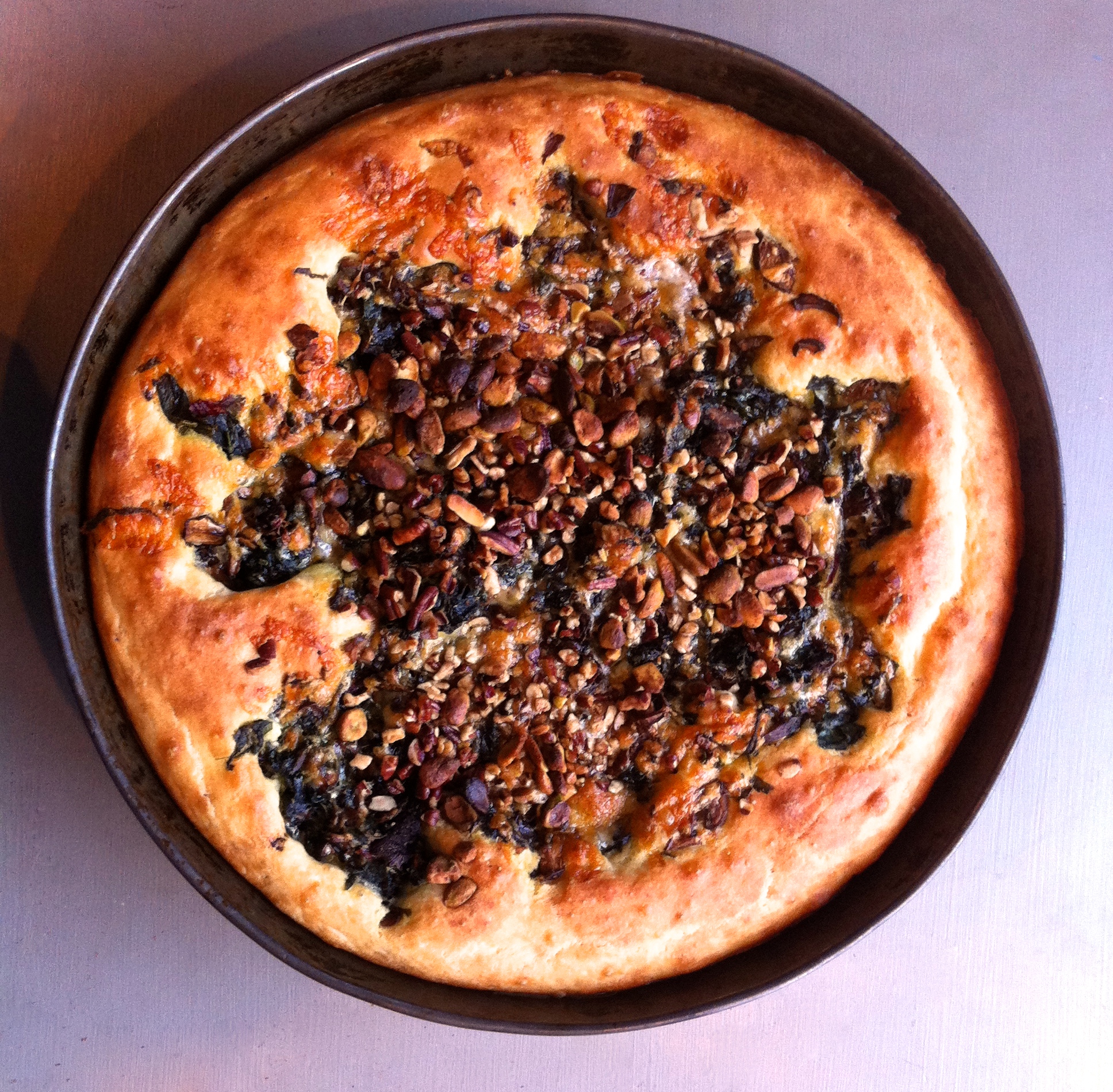
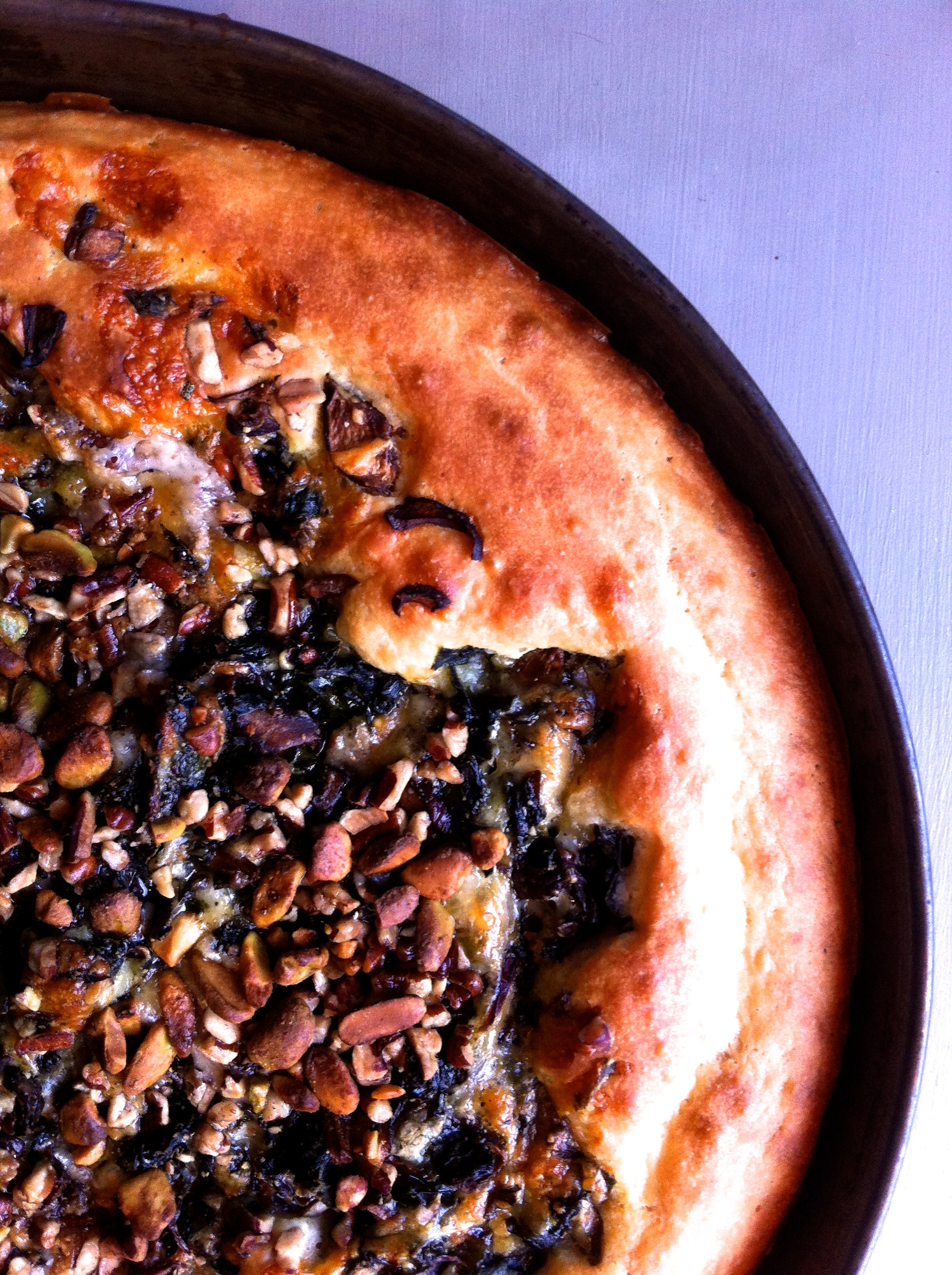
Savory cake with chard, roasted mushrooms, pecans and pistachios

Savory cake with chard, roasted mushrooms, pecans and pistachios

I’ll blame it on the weather, on the seemingly endless winter, but I’ve wanted to make warm comforting bready meals lately. Last night it was this savory cake, which is a lot like a pizza with the toppings baked right into the dough. I made the dough rich and tender, with butter, milk and an egg (I think of it as brioche-like). And I filled that with my favorite combination of chard and mushrooms. I used pecans and pistachios, but you could use one or the other, whichever you have. We ate this with leftover asparagus pesto and with a pecan sauce something like this one.

Here’s Rag and Bone by The White Stripes
Continue reading

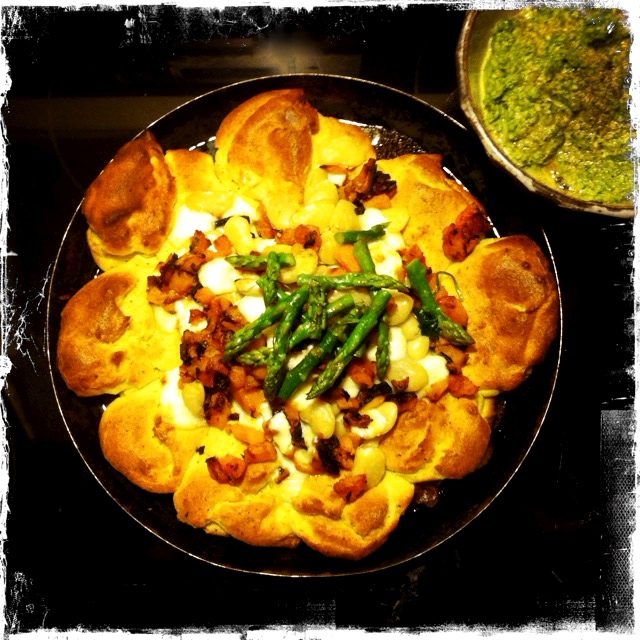
semolina dumpling ring with roasted butternut, butter beans and spinach-almond-asparagus pesto

Semolina dumplings with roasted butternut and butter beans

Semolina dumplings with roasted butternut and butter beans

“I doe now publish my Essayes; which, of all my other works, have been most Currant: For that, as it seems, they come home, to Mens Businesse, and Bosomes.” This is how Francis Bacon prefaces The Essays: or Counsels, Civil and Moral. I have a beautiful copy of this book, and I love the form of it. It is, simply, a series of short essays: Of Truth, Of Death, Of Unity in Religion, Of Revenge, Of Adversity, Of Simulation and Dissimulation, Of Parents and Children, Of Marriage and Single Life, Of Envy, Of Love and so on and on it goes. And I love the tone of it. It’s quite matter-of-fact, he’s stating truths as he believes them, and he makes the truths sound incontrovertible, but we also feel that he hasn’t arrived at them lightly. He’s thought and thought on these subjects, and considered all of the facets and vagaries of them. And though he sounds sure of himself, he hasn’t sealed his mind on any of these ideas. He’s thinking on them still. We feel that he would agree with James Baldwin and with me that “…all theories are suspect, that the finest principles may have to be modified, or may even be pulverized by the demands of life, and that one must find, therefore, one’s own moral center and move through the world hoping that this center will guide one aright.” My favorite essay is the first, On Truth. You can tell that he loves truth as a thing, almost as a person. He loves the search for truth, “…yet truth, which only doth judge itself, teacheth that the inquiry of truth, which is the love-making, or wooing of it, the knowledge of truth, which is the presence of it, and the belief of truth, which is the enjoying of it, is the sovereign good of human nature.” And just as a hope is a place, so is truth, “It is a pleasure, to stand upon the shore, and to see ships tossed upon the sea; a pleasure, to stand in the window of a castle, and to see a battle, and the adventures thereof below: but no pleasure is comparable to the standing upon the vantage ground of truth (a hill not to be commanded, and where the air is always clear and serene), and to see the errors, and wanderings, and mists, and tempests, in the vale below; so always that this prospect be with pity, and not with swelling, or pride. Certainly, it is heaven upon earth, to have a man’s mind move in charity, rest in providence, and turn upon the poles of truth.” He talks about poetry being the shadow of a lie, which adds some beauty to the truth, and he talks about lies such as “vain opinions, flattering hopes, false valuations, imaginations as one would, and the like,” as saving men’s minds from becoming “poor shrunken things, full of melancholy and indisposition.” In just this way he mixes wild, poetical language with the more staid and scholarly, and helps us to see not just the matter of his text, but his passion for it as well. I’d like to write a book of essays like this. I’d like to see everybody do it! We could pick the topics, of course, according to our interests, but we’d keep the essays short and fierce and thoughtful, like these are. We’d look at the world around us and decide what questions are important to ask, and then we’d spend time thinking about these questions, and then we’d write it all down. Not the answers to the questions, because there are no answers, but we’d write all of the ways we’ve been thinking about it, the truths that we have wooed. We’d share our truths with each other, and see that our truths aren’t the only ones, and that would make us seek not just the truth of our own little world, but of the great and common world, the whole round world.

"IF ONE COULD BUT PAINT HIS MIND."

“IF ONE COULD BUT PAINT HIS MIND.”

Semolina dumpling ring with roasted butternut squash, butter beans and asparagus almond pesto

Semolina dumpling ring with roasted butternut squash, butter beans and asparagus almond pesto

Speaking of round! I made this ring of semolina dumplings, which are puffy and soft and comforting. Then I filled the center with butternut squash roasted with herbs, butter beans and mozzarella…all soft and creamy and sweet and roasty. And I topped the whole thing off with a bright, green, vegetal, lemony pesto of spinach, almonds and asparagus. This meal has layers. It didn’t take long to make, and it was a nice complex but comforting winter meal.

Here’s some more Gary Davis for you.

Continue reading

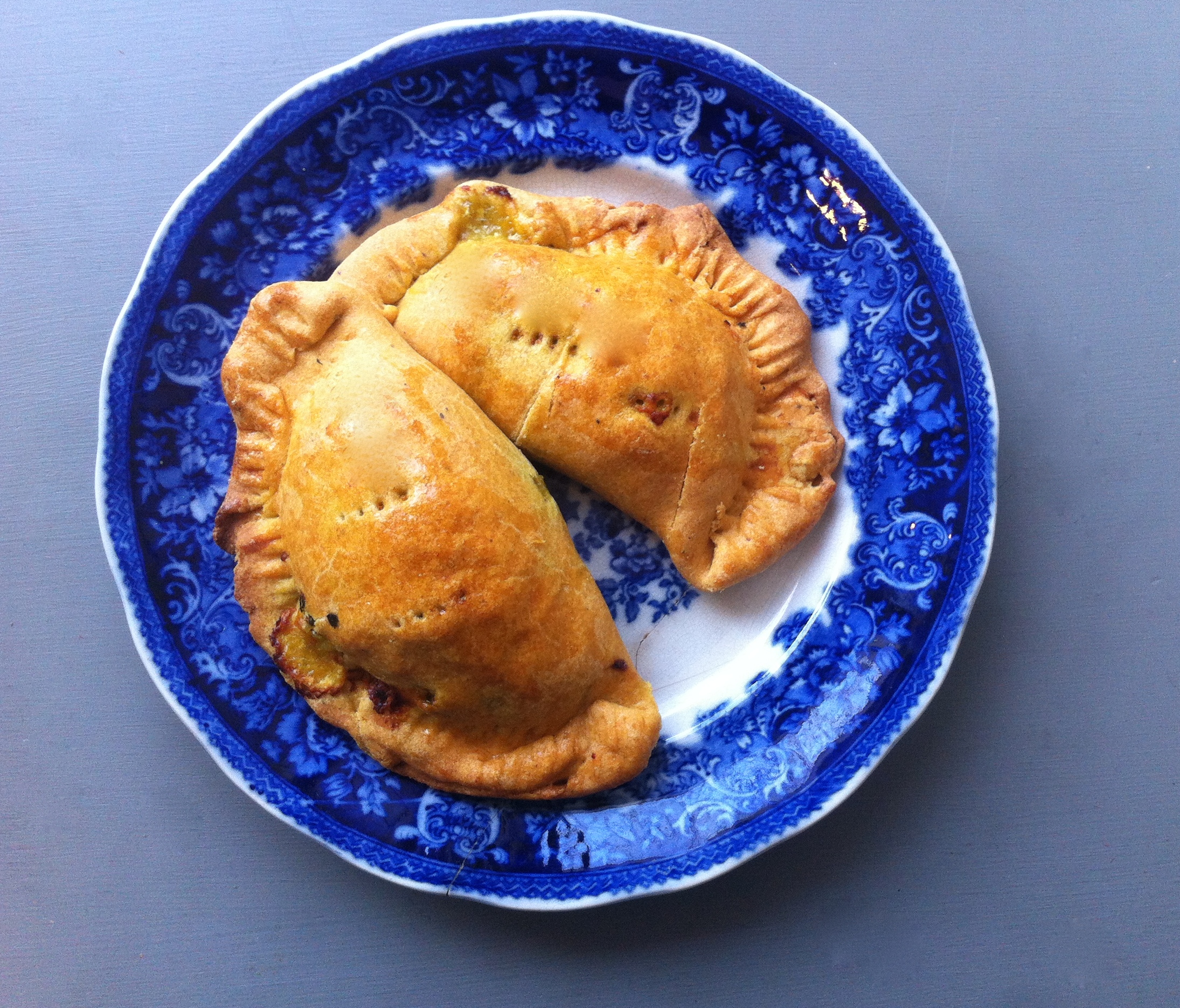
Empanadas with roasted golden beets, pistachios, raisins and greens

Golden beet, pistachio and golden raisin empanadas

Golden beet, pistachio and golden raisin empanadas

“Did you ever beam in Clio’s eyes?”
“Beam in her eyes? You mean shine a light in them?”
“No, you know, beam in them, you just look right in her face.”
“I suppose…”
“Hagrid and Dumbledore do it all the time.”
“They beam in people’s faces?”
“No, they just beam around. They’re always beaming around.”

At this point in the conversation it became obvious that Isaac was talking about a word Rowling frequently uses to describe an affectionate smile. But before that moment of comprehension, when I was in my early morning daze and enjoying the feeling of charmed confusion that Isaac’s observations often provoke, I had such a different picture of beaming. Just last week I wrote this sentence in these very virtual pages,
“I love to think about people having a light inside them, even being that light. I believe that this is something that every creature has, and as we grow and become jaded and mature, we learn to hide our light, we become closed and dark and careful. You can see it in dogs and children, though, everything they feel comes beaming out of them, unfiltered, unshaded, so bright and powerful you can warm yourself in their glow.” So as I pictured it in my mind, if you beam in someone’s eyes, you shed all the light and warmth of your love and spirit in their direction. You send all the glow of your hope and grace towards them. And probably they’re ignited by your beam, you help to kindle their beam, and then you have mingling beams, which flame higher and brighter than one beam alone. You’re a beamer, and now they’re a beamer, too. If ever I met a beamer, it’s our Isaac. From when he was very tiny, he would smile at people, even at complete strangers, and you could tell that their whole world had brightened perceptibly. He’s always beaming around, that Isaac. I’ve been feeling discouraged today, but I keep thinking about beaming. I keep thinking about people all over the world working so hard and hopefully, just to stay alive, to get by, to get ahead, to make something good; and about all of the rejection and discouragement that casts a dark shadow over everybody. And then I think about all of the beaming going on, all of the beamers in the world, spreading their lights around, breaking through the clouds with great rays and flashes of light. “For beamers came from around and counforted her, beaming that place of darkenesse wyth unspeakable cleernesse.” After all, we all have our own light, we’re all beamers.

Roasted golden beet, raisin and pistachio empanadas

Roasted golden beet, raisin and pistachio empanadas

These empanadas have a sort of golden glowing theme to them. Pretty golden beets, plump golden raisins, warm golden-brown crust. They’re a little sweet because of the raisins and beets, but they have earthy beet greens and spinach and delicious crunchy pistachios to set that off. They’re tender on the inside and nice and crunchy outside, because they have a little cornmeal in their crust. I grated the beets before I roasted them, which gives them a nice soft/crispy texture and a perfect roasty taste. My golden beets were tiny, so I decided to add some grated carrots to the roasting pan, which went nicely with everything.

Here’s Parliament with Flashlight. Everybody’s got a little light under the sun.

Continue reading

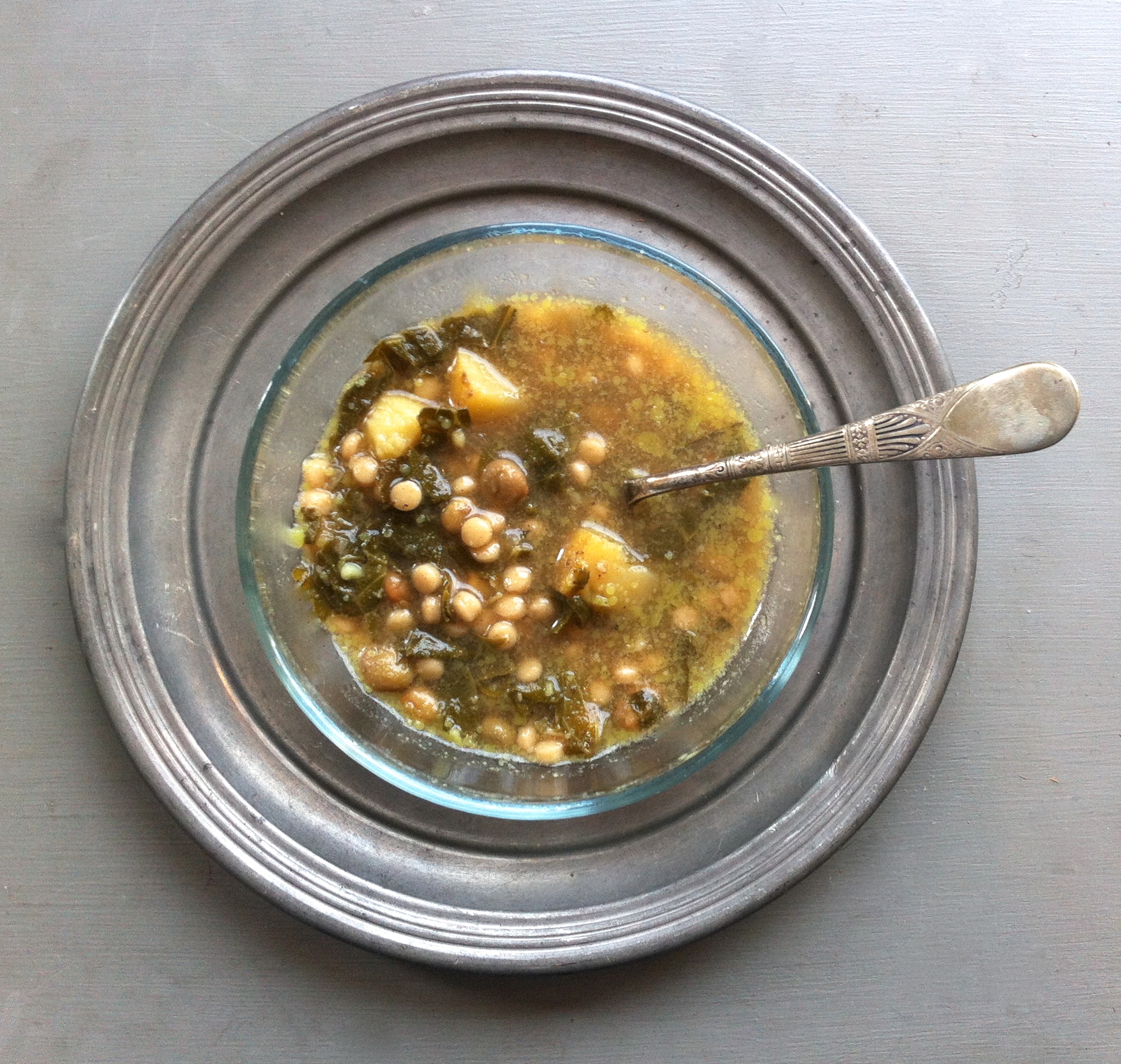
Pigeon pea soup with pearled couscous and collards

Pigeon pea soup with pearled couscous and collards

Pigeon pea soup with pearled couscous and collards

“Nothing makes one so vain as being told that one is a sinner.” – Oscar Wilde

“Adam was but human—this explains it all. He did not want the apple for the apple’s sake, he wanted it only because it was forbidden. The mistake was in not forbidding the serpent; then he would have eaten the serpent.” – Mark Twain

“Be a sinner and sin boldly, but believe and rejoice in Christ even more boldly.” Martin Luther

“This shalbe the synneplage of Egipte and the synneplage of all people.” – the Bible

“The Sin-score was settled with St. Kentigern in the regular way.” – R. Soutey

“The farther this foul sine-spring flows It still more mud die and more filthie grows.” – J. Sylvester

“To err is human – but it feels divine.” – Mae West

“There is a luxury in self-reproach. When we blame ourselves, we feel that no one else has a right to blame us. It is the confession, not the priest, that gives us absolution.” – Oscar Wilde

Birds cry warning from a hidden branch
Carving out a future with a gun and an axe
I’m way beyond the gavel and the laws of man
Still living in the palm of the grace of your hand
The worlds not easy the blind man said
Turns on nothing but money and dread
Dogs been scratching at the door all nite
Long neck birds flying out of the moon light

I’m gonna take the sins of my father
I’m gonna take the sins of my mother
I”m gonna take the sins of my brother
Down to the pond – Tom Waits

Oh Sinnerman, where you gonna run to?
Sinnerman, where you gonna run to?
Where you gonna run to?
All on that day
Well I run to the rock, please hide me
I run to the rock,please hide me
I run to the rock, please hide me, Lord
All on that day
But the rock cried out, I can’t hide you
The rock cried out, I can’t hide you
The rock cried out, I ain’t gonna hide you guy
All on that day – Nina Simone

He set my sinful soul on fire
He made me laugh and he made me cry
Glory, hallelu

Whoa!
Yeah, glory how happy I am – Gary Davis

Hieronymus_Bosch-_The_Seven_Deadly_Sins_and_the_Four_Last_Things

Today’s Sunday interactive playlist is on the subject of SIN. Add a song yourself or leave a title in the comments and I’ll try to remember to add it through the week.

This soup was very tasty and hearty! It has cumin, cinnamon, ginger and lemon so it’s a nice bright spicy flavor. It feels good on your throat if you have a cold. In contrast, we have the pleasant earthiness of pigeon peas, potatoes, pearled whole wheat couscous and collard greens. It’s good, and good for you, too!

Here’s a link to your interactive playlist

Continue reading

White bean, spinach, and pecan timbales

White bean, spinach, and pecan timbales

White bean, spinach, and pecan timbales

I’ve just discovered that a “hope” is a piece of enclosed land in the midst of fens or marshes or of waste-land generally. (OED) It’s also a small, enclosed valley, or an inlet, a small bay or a haven, you’ll find “wide green holms and deep blind ‘hopes’ or hollows among the mountains.” What a beautiful idea! Hope is a place. A verdant, sheltered, fertile place in a swampy treacherous world. A haven. You can travel to Hope, over the mountains, through the swamps, or across the sea, and find shelter from the winds and waves and quagmires. You may be driven there by “contrarie winds,” after weeks or years adrift and uncertain with no clear course. When the storm calms, you’ll find yourself in a quiet, peaceful place where you can safely come aground and think clearly and make plans for your future. Or maybe you’ve heard stories of Hope, and all your life you’ve thought, “one day I’ll make a journey there.” You live in a cluttered ugly world surrounded by confusion and discouragement, by empty cleverness and petty competition. So you gather your supplies, your favorite foods, your bag of wine, your warm clothes and walking stick, your good friends and your best dog, and you’ll set out for Hope, having adventures along the way that inevitably involve trolls and dragons and giant spiders. Or maybe Hope is closer than you think. Maybe you live in a giant landfill, a wasteland of garbage where nothing good grows, and everything goes to rot and ruin. But somewhere in the middle of it all is a sweet-smelling refuge, a Hope where people are working on good things. And however you get there, once you reach Hope you’ll find what you need to make whatever you’ve been dreaming of. You’ll find rich soil and soft warm rains and abundant sunshine, you’ll plant seeds, and you’ll wait and watch for them to grow. You’ll tend the bright tender seedlings, and wait and plan for their fruits and flowers, which will be beautiful and nourishing. You’ll remember where you came from, and think about where you’re going; you’ll mix desire with memory and expectation. And when the flowers and fruits come, you’ll share them with everybody you know and even with those you don’t. And they’ll plant the seeds and grow more fruits and flowers and share those with everyone they know and even those they don’t…

It’s funny because we live in a very very small town. You could walk one end to the other in under a half hour, probably. But we have a towpath! It goes beyond the town to the North for miles and miles through other towns, and it goes below the town for miles and miles through other towns and cities, along other rivers. I know this because I have seen it with my own eyes! You always have the feeling that you could just walk and walk forever, and discover new places. It’s McElligot’s towpath. Once you travel down it, you never know what you’ll find! But for over a month it’s been hard to walk, because of snow and ice and general treacherousness. It makes the town feel so small. It makes me long for spring, when we can explore again, and find all of the secret fields and valleys that the towpath leads to. All of the Hopes. And David just said he saw a bluebird on the way home from work!

White bean, spinach and pecan timbales

White bean, spinach and pecan timbales

I made these on Valentine’s day for a Special Meal. I wanted something main coursey and steaky but still, obviously, vegetarian. So I made these, and I served them over a sort of pilaf of rice and farro cooked with annatto oil and smoked paprika. And we had cauliflower puree, and some kind of sauce, but I can’t remember which one. And that’s that!

Here’s All the Places by Pete Rock and CL Smooth.

Continue reading

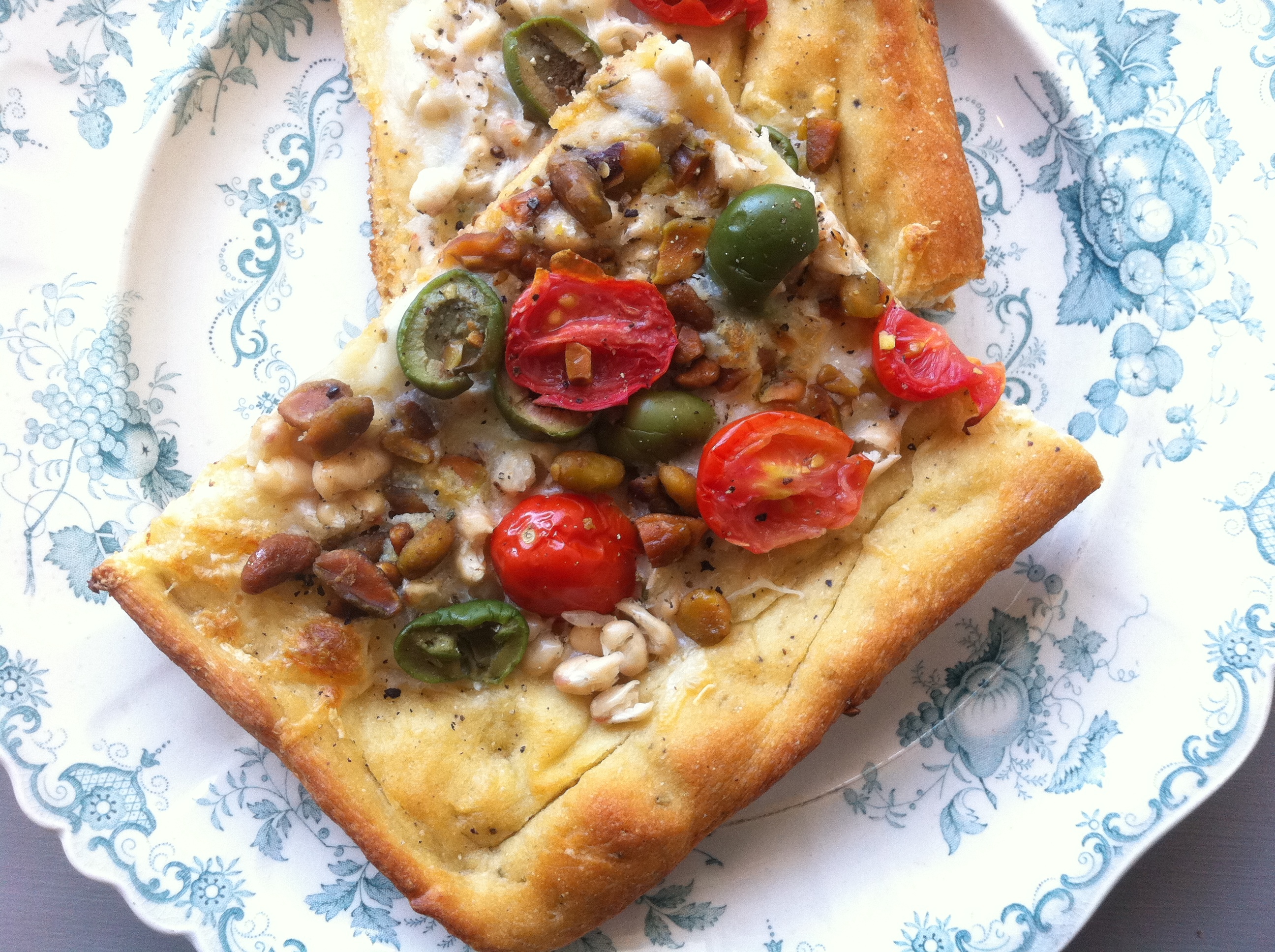
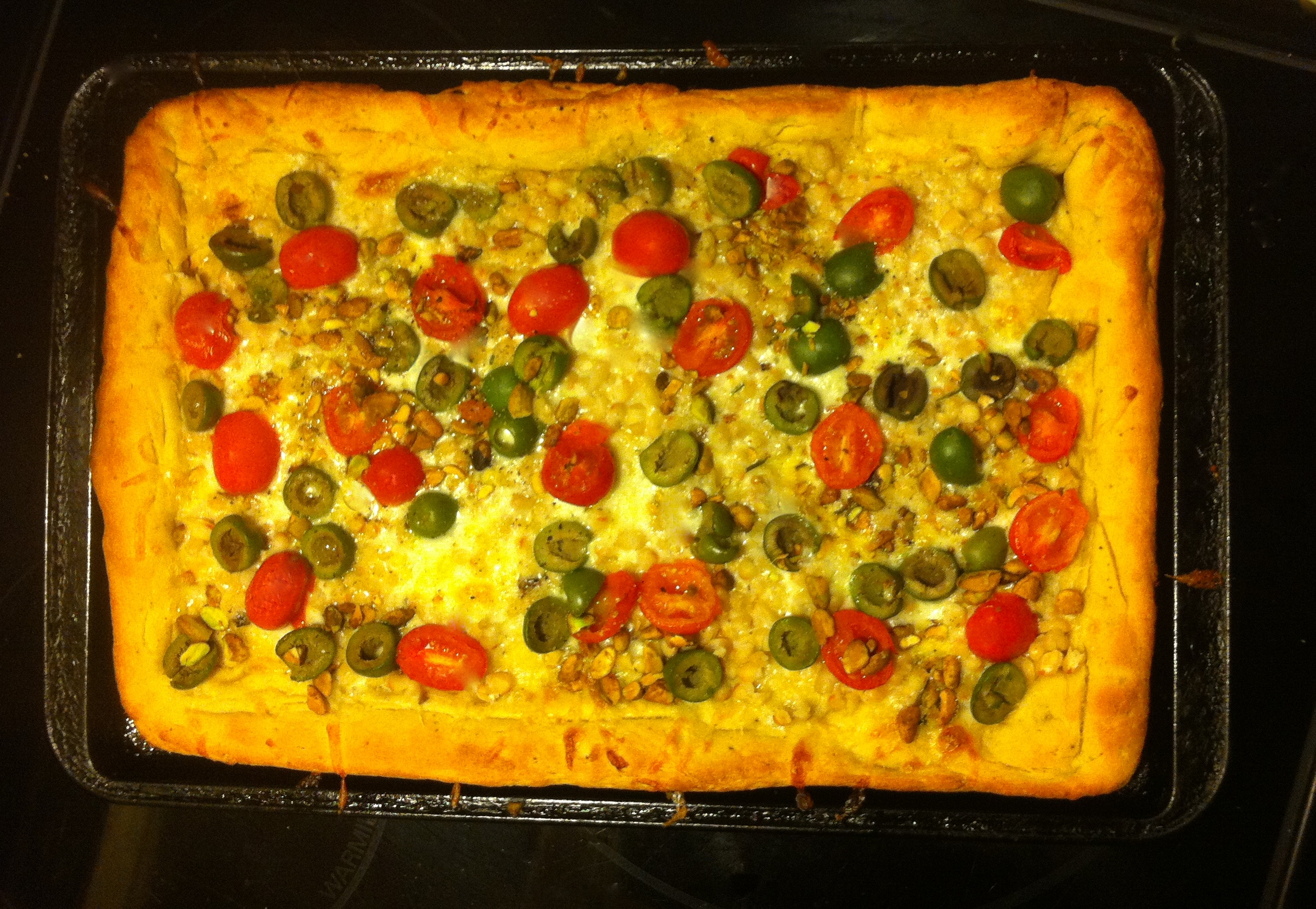
Castelvetrano pistachio and white bean pizza with a chickpea flour crust

White bean, olive and pistachio pizza

White bean, olive and pistachio pizza

“I am the Light of This World,” is the name of a song by The Reverend Gary Davis that I am currently completely obsessed with. It’s got a surpassingly sweet tune, seemingly simple, but actually a beautiful collection of voices woven around each other. The song rises and falls and goes round and round like water, and it feels good to let yourself get carried along with it. And the lyrics kill me. He doesn’t see the light, he doesn’t have the light, HE IS THE LIGHT OF THIS WORLD! He sings, “I’ve got fiery fingers, I’ve got fiery hands, And when I get up in heaven, Gonna join that fiery band.” I love the hopeful honest triumph of this whole idea. He’s not boasting, he’s stating the truth. I think of him as glowing, he sounds as though he’s glowing, and it must come out his finger tips and all along his hands as he plays his guitar, with so much skill and soul. He spreads the light with his music. I love to think about people having a light inside them, even being that light. I believe that this is something that every creature has, and as we grow and become jaded and mature, we learn to hide our light, we become closed and dark and careful. You can see it in dogs and children, though, everything they feel comes beaming out of them, unfiltered, unshaded, so bright and powerful you can warm yourself in their glow. I found a remarkable excerpt from an interview Gary Davis did with Elizabeth Lyttleton Harold, the wife of Alan Lomax. He’s so wise and funny and poetical. He speaks often of light, of his light, “It takes bitter medicine to do you good. But it’s a fact – I have had greater light on this experience about things, that’s why nothing don’t go hard with me. That’s the light that substantiate me to tell anybody what to weep and cry over and what to laugh over.” The light is knowledge, the light is faith, and the light is kindness and warmth. Again and again, Davis’ spirituality shines through as the strength to overcome sadness and trouble, and as the warmth of kindness, so that “You can know how to treat everybody, you know.” He describes death as a deep dark shower of rain, and lord knows that he’s experienced plenty of loss in his life, but he says, “I want to live as long as I possibly can.” He’s still got a lot of work to do, and as long as he’s in this world, he is the light. “The weakness of man’s strength and the brightness of his knowledge is what makes a man the finest of God’s creatures to walk the earth. I’m all the time studying what I can do for my people. You can’t do nothing for yourself unless you do it for somebody else first. You can’t bake a corncake for yourself unless you bake it for somebody else. It ain’t worth the effort.

In this world we have to talk a little and hush a heap.

Love is just like a vein in a spring:
Keeps you with supplements to cherish up what you have.”

Amen.

White bean, olive and pistachio pizza

White bean, olive and pistachio pizza

I’ve been wanting to put white beans on a pizza for a long time. Why? I DON”‘T KNOW! I just thought it would be good, and it was good! I’ve put chickpeas on pizzas, and that turned out well. I wanted this to be a simple pizza, mostly white and green, with some flashes of red from the tomatoes. So it’s got pretty castelvetrano olives, tasty toasted pistachio kernels, white beans, and just a smattering of cheese. It’s a light and tasty affair. I added some chickpea flour to the dough, making it almost like a socca (except that it also has yeast and white flour in it!) I think this gave the crust a kind of earthy substantiality and crispiness that worked well as a base for all of these bright flavorful toppings.

Here’s I Am The Light of this World.

Continue reading

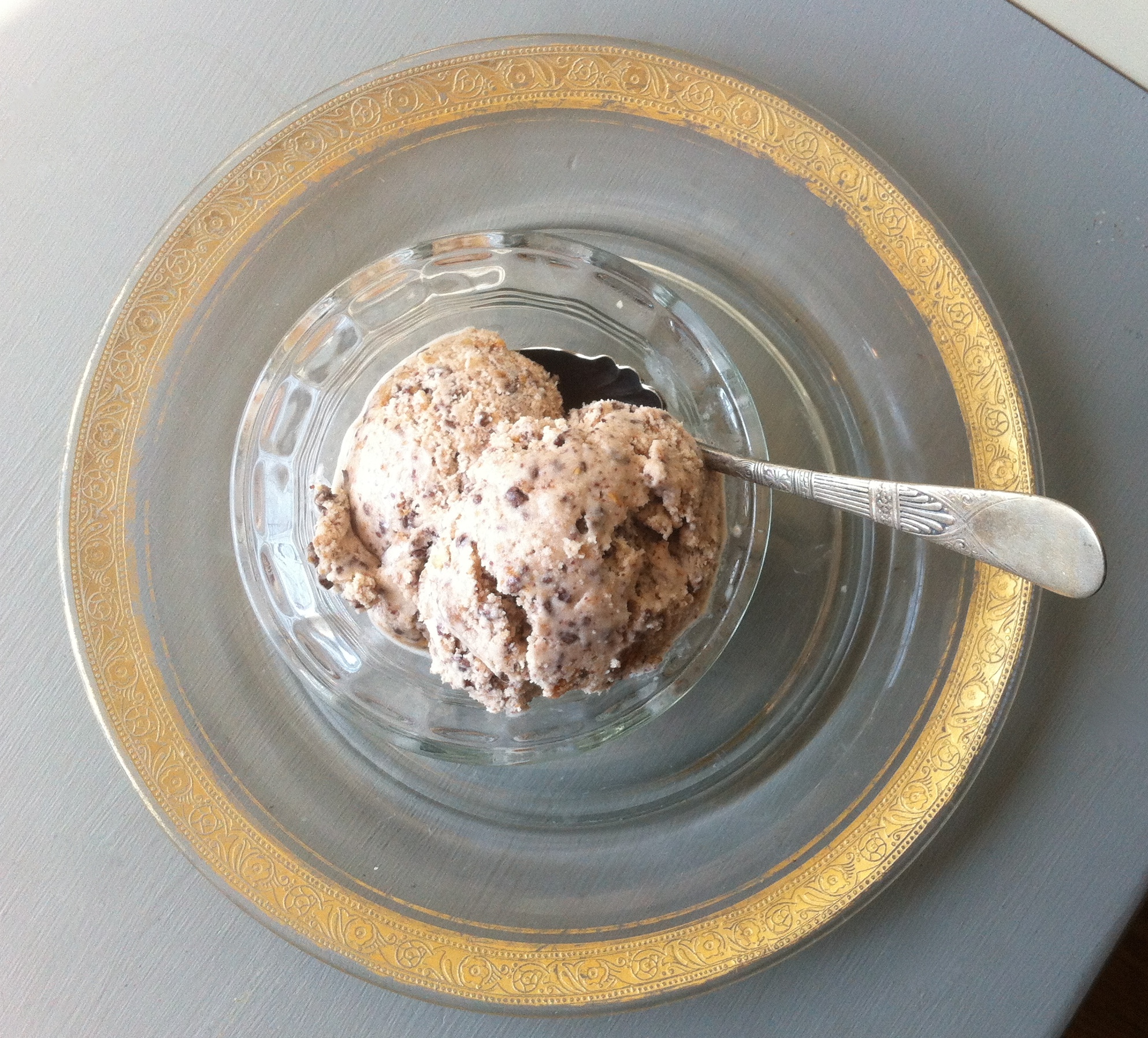
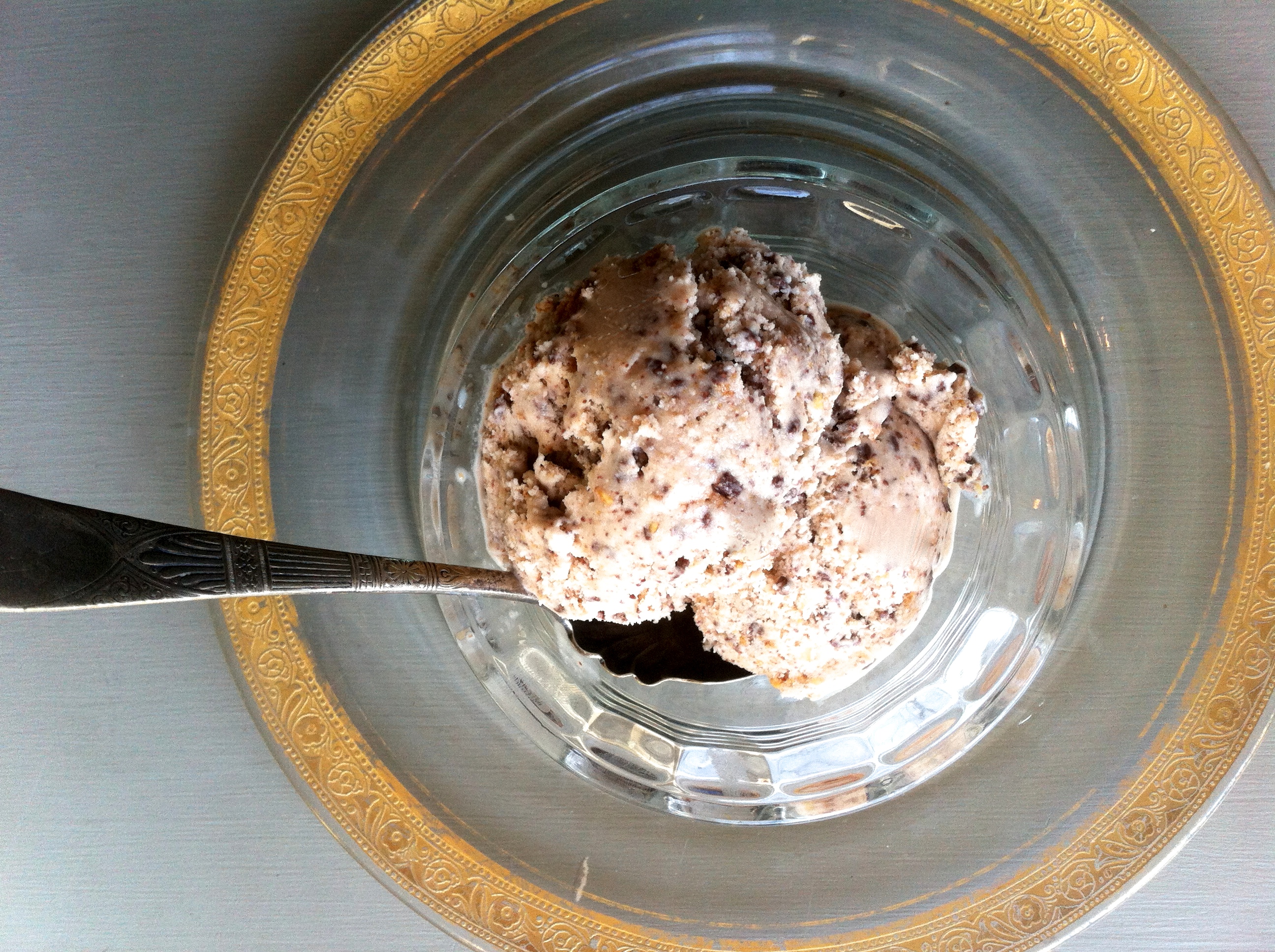
Raspberry chocolate biscotti ice cream

Raspberry chocolate biscotti ice cream

Raspberry chocolate biscotti ice cream

“Would you rather have one weakness nobody could detect, or no weaknesses at all?”

“No weaknesses at all.”

“No, would you rather have one weakness nobody could detect or no weaknesses at all?”

“Well I just don’t see why anybody would want a weakness if they could choose to have no weaknesses.”

“If you have a weakness and you wish to get rid of it, then you’re not yourself any more! Your weakness is part of who you are!”

These are the wise words of our Isaac, eight years old. At the beginning of the year when getting-to-know-you exercises abound, Isaac brought home a self-portrait with bright blue eyes, and on the bottom he wrote that his blue eyes and his heart murmur make him special. He’s got a heart murmur he won’t grow out of, and when they first diagnosed it, he thought it might be a defect, but now he’s embraced it as something that makes him different, something to be proud of. After all, there’s nobody on earth with a heart like Isaac’s! I love to think about Isaac thinking about these things. I love to think about him thinking about what makes a person a person, and thinking with such grounded generosity about the weakness that everybody on earth must inevitably have. Of course a weakness is a vulnerability, which is why we keep our weaknesses as secret as we can, and we hope that no one will detect it. Unless we love somebody, and then we open our hearts to them, and trust them with the knowledge of all or our weaknesses and foibles; we share our good and our bad. This takes great courage, but it turns weakness into strength, and Isaac does this better than anyone. He shares his remarkable thoughts, his uncommon contemplations, and his unguarded love with a warmth and wisdom that make him as strong as anyone I know.

Raspberry chocolate biscotti ice cream

Raspberry chocolate biscotti ice cream

I have a terrible weakness for ice cream! We’ve been snowed in so many days that I’ve been baking through bag after bag of flour. On one day I made croissants and biscotti, both from Craig Claiborne’s New York Times Cookbook. We changed the biscotti recipe slightly, because Malcolm wanted to add almonds and chocolate. So we added some almond extract, too, and a pinch of cinnamon. They turned out nice! In order to coat one side of them with chocolate I devised the ingenious method of placing chocolate chips along one side when they’re returned to the oven for the final ten minute drying-out period, and then spreading the chocolate once it softened. I think I might have baked them slightly too long, because they were extra crumbly when I tried to slice them, but we put those crumbs to good use! We took any of the half-pieces and mangled pieces and tiny pieces, and we ground them up even further in a food processor with some bittersweet chocolate chips, and we added them to raspberry ice cream. (Wintertime raspberry ice cream, with framboise and raspberry jam rather than fresh raspberries). This turned out deeeeeeelicious!

Here’s The Weakest Part by Yo La Tengo.

Continue reading

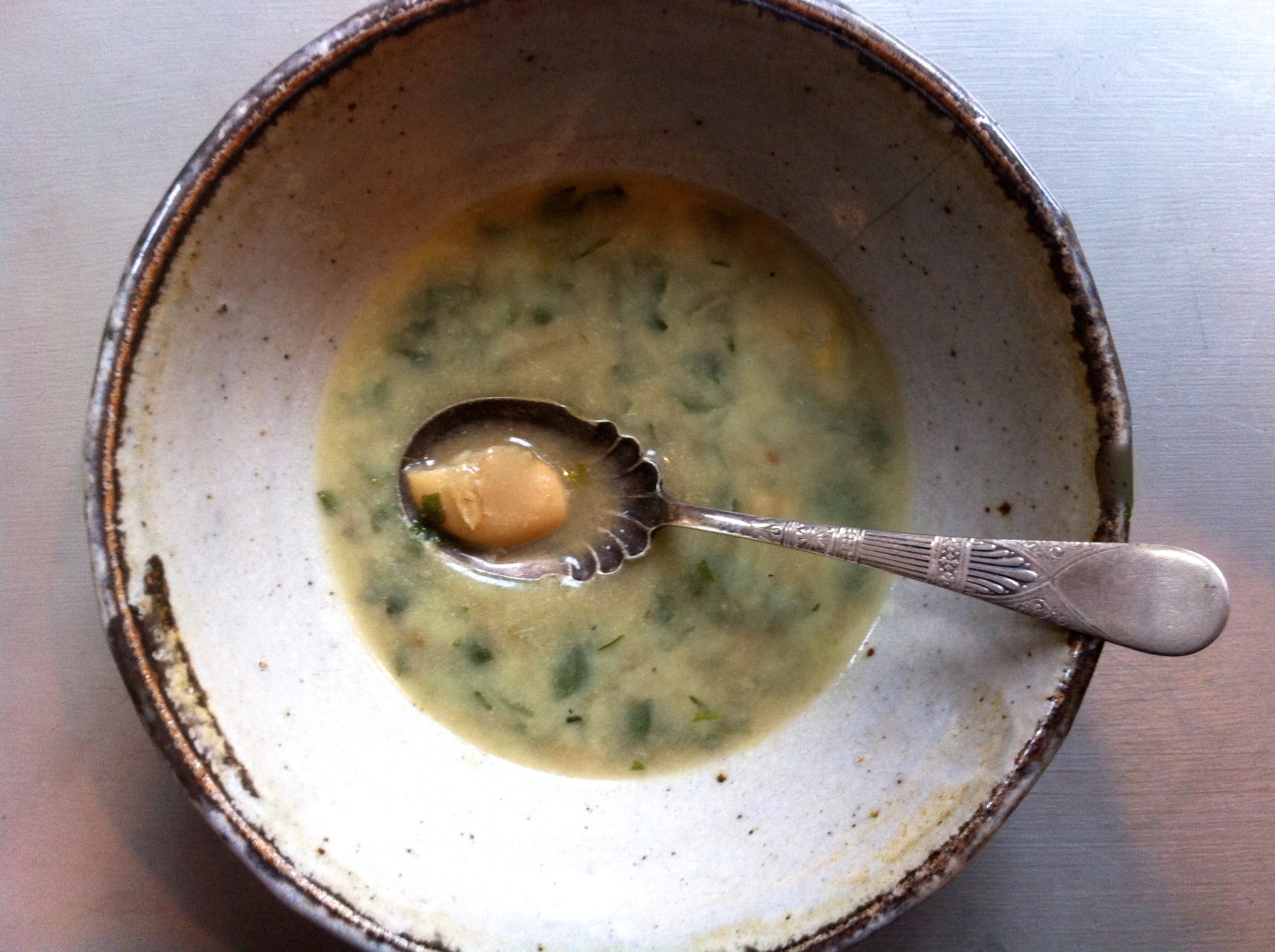
French lentil and butter bean soup with tarragon and spinach

French lentil and butter bean soup with tarragon

French lentil and butter bean soup with tarragon

Reverend Gary Davis was born in Laurens, South Carolina in 1896. He was born partially blind, and became fully blind as an infant. He was the only one of eight children to survive to adulthood. His father was killed when he was ten, his mother didn’t treat him well, so he went to live with his grandmother. He taught himself guitar, and invented a way of playing with many voices at once. In the twenties and thirties he was active in the Piedmont blues scene, and made some recordings. He became a Baptist minister. He moved to New York City in the forties, and performed as a street musician for a while before being rediscovered during the folk revival and becoming very popular with lots of rock stars of the day. All of these are facts straight from the wikipedia, but what the wikipedia can’t tell you is that his music is phenomenal. Such a perfect combination of exquisite technical skill and deeply sweet soulfulness. Such a perfect balance of heavy darkness, which we recognize as part of everybody’s life, and of the hope and humor that make it bearable. Such strange poetry to describe feelings that we all have. I’m flabbergasted (to use one of Malcolm’s vocabulary words) by his music, and by the fact that I haven’t discovered him earlier. I must have heard a song here or there, but I couldn’t have been paying attention, because I wasn’t stopped in my tracks and incapable of doing anything but listening, as I have been all week, steeped in his music.

I’m so obsessed with Reverend Gary Davis at the moment that I wanted to make this Sunday interactive playlist all about him. But we obviously need a bit of diversity, so I decided to pick something that he’d fit into nicely. As well as many chilling and beautiful songs about death, sin, and the afterlife, he’s got some beauties about life and love. And he has quite a few versions of Candyman. This being valentine’s day weekend, I decided that was the direction to take. So this week’s Sunday interactive playlist is on the subject of sweets. Of course songs about candy are never really about candy, are they?

This soup was perfect for a winter’s night. Flavorful but simple. Hearty but brothy and bright, and with the springlike greenness of tarragon. Not at all hard to make.

Here’s a link to your interactive playlist. Add what you like, or leave a comment and I’ll add it through the week.

Continue reading

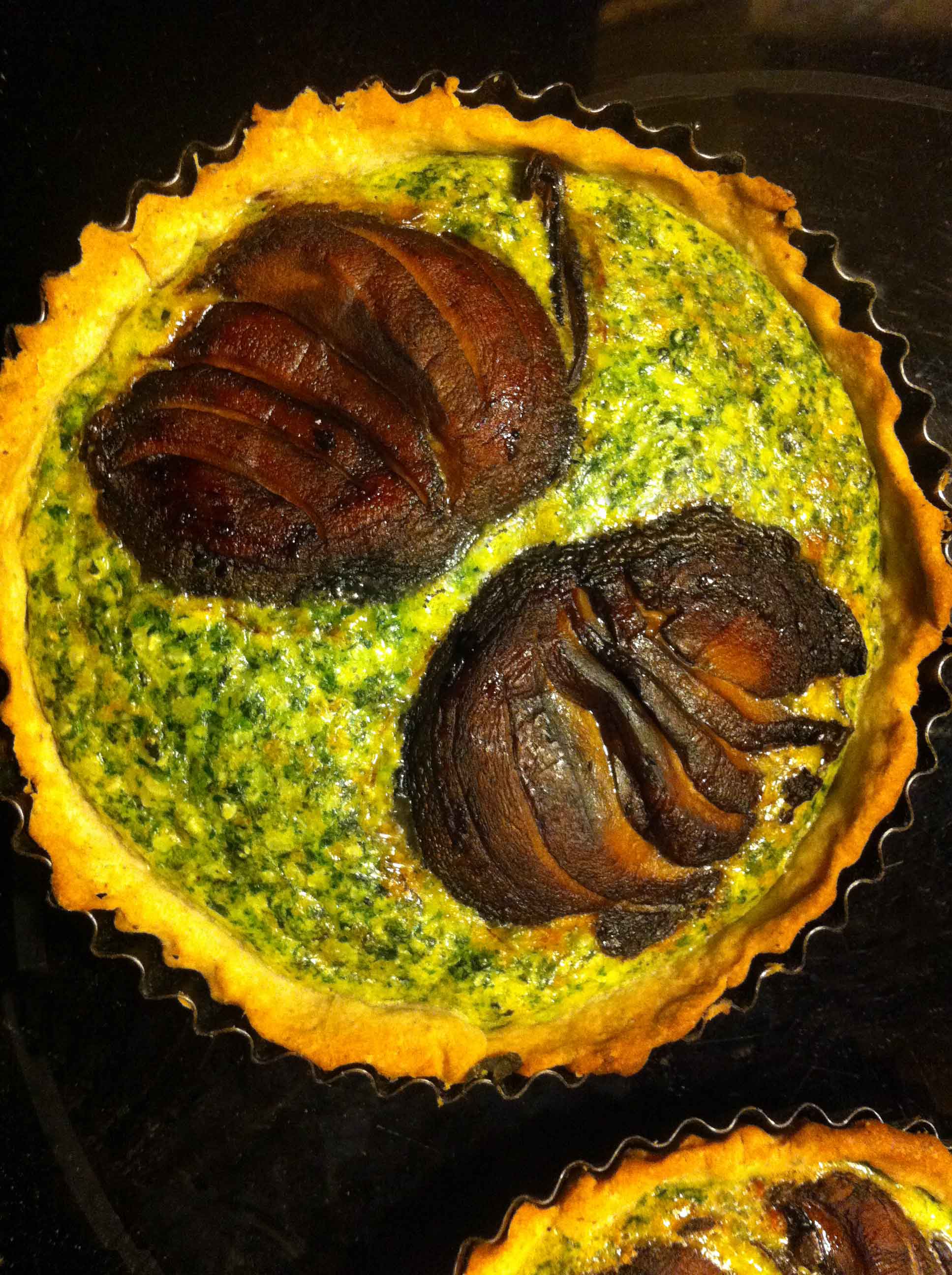
Spinach and Portobello tarts with a pecan crust

Portobello and spinach tart

Portobello and spinach tart

We both forgot it was valentine’s day. To be honest, I also forgot it was Friday or mid-February and I can barely remember my name. It’s all a big blur of snow and sniffles and boys home from school every other day. In truth it didn’t matter that we forgot Valentine’s day, because that’s sort of the point. When you’re in love you don’t need to remember Valentine’s day. After more than twenty years a lot of our pleasures together are of the everyday sort, but as much as I value and champion the ordinary, I know that these everyday pleasures, shared every day, are not ordinary at all. I fully realize that having somebody to share each day with, to share our odd sense of humor, our strange meals, our crazy boys, our comfortable silences, our worries and woes, our trips to the grocery store, our wine before dinner, our difficult decisions, our rare days off, our ramshackle house, our dreaming bed, our morning coffee and the cake to go with it, our newly discovered old music, our fondly remembered long-ago loved music, our inspiration, our down days, our photographs, our shared memories of nearly half our lives, our memories of before we met, our new ideas, our favorite films, our exhaustion, our sickness, our hope for spring, our lengthening days; I fully realize that having somebody to share all of this is a rare and wonderful thing. I fully understand this, and I’m thankful for it, every day. Happy Valentine’s day!

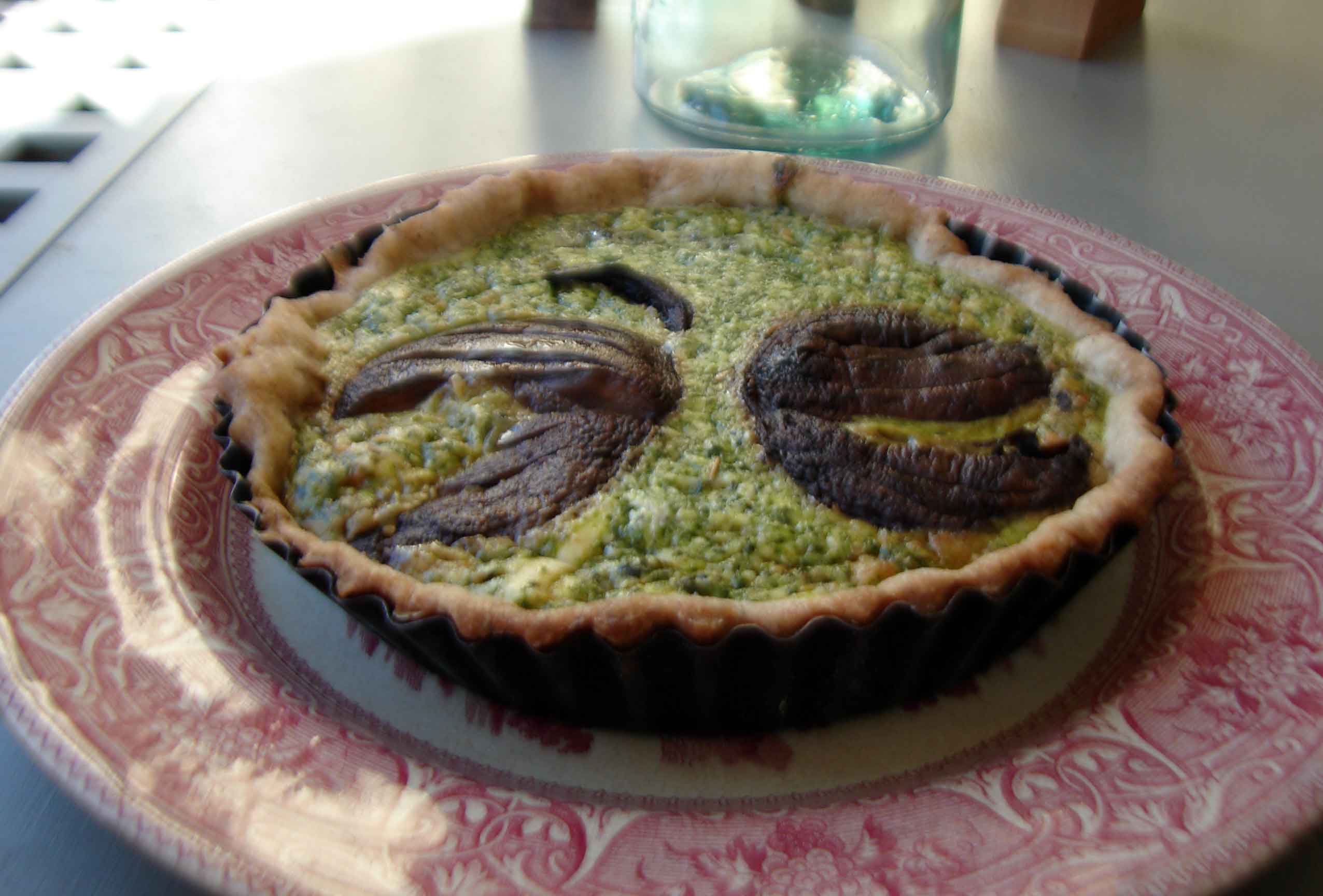
Spinach and portobello tarts

Spinach and portobello tarts

Of course, though I don’t need to remember Valentine’s day, I’m always glad of an excuse to think of some special meal to make. I made this a few days ago, and it seemed pretty special at the time. David had the idea of slicing the mushrooms the way apples and pears are frequently sliced on top of a fruit tart, and I think it worked very well. The custard is spinachy and smoky and pleasantly tender, and the mushrooms crisp and meaty.

Here’s Cee Lo Green with All Day Love Affair

Continue reading

Pistachio, almond and tarragon “mayonnaise”

Pistachio tarragon mayonnaise

Pistachio tarragon mayonnaise

We have another storm predicted for tonight, with the snowing and the blowing and the icy raining and the cries of near impossible travel conditions! and temperatures well below zero! I suspect they make it sound more dire than it will be because they want you to watch the news, but I feel mildly panicky anyway. I’m scared we’ll lose power, because I didn’t deal with it very well last time, and that was autumn, it wasn’t even all that cold yet. We’ve had a long winter and I’d love to see a few blades of grass, or step out of the house and feel the warm sun on my face. But it hasn’t been so bad. I don’t mind staying inside and writing and baking and reading and snoozing. I’ve been thinking a lot lately about accounts I’ve read of storms in the midwest back in the days of pioneers and homesteaders. Letters home of blizzards that last for days and bury entire flocks of cattle, entire houses and towns. Snow that makes its way into houses made of sod or held together with mud or dug into a hillside. They didn’t fear losing power, because they didn’t have it to begin with, and it must have been hard to keep their fire going and their wood dry for days and days on end. I think of The Long Winter, by Laura Ingalls Wilder. I didn’t read the Little House on the Prairie books until I was an adult, but when I finally came to them I fell for them hard. I read them at a strange point in my life–I was feeling a little lost and lonely and down, and something about the simplicity of the tales appealed to me. Their work was so hard and so endless and they faced it with such energy and thrift and cheerfulness. When they had nothing they found something to be thankful for, they found a way to make themselves what they needed. I love the straightforward language and the detailed descriptions of everyday activities, so fascinating to us now, though they must have seemed dreary and dull enough at the time. I love Laura, so funny and strong and smart and flawed. But mostly I love the unexpected poetry in the stories. I love the moodiness and mystery the sense of some force that comes from nature, but is bigger than anything we understand. I love Laura’s strange thoughts and the beautiful way that she expresses them.

    Outdoors the sun-glitter hurt her eyes. She breathed a deep breath of the tingling cold and squinted her eyes to look around her. The sky was hugely blue and all the land was blowing white. The straight, strong wind did not lift the snow, but drove it scudding across the prairie.

    The cattle were standing in sunshine and shadow by the haystacks—red and brown and spotted cattle and one thin black one. They stood perfectly still, every head bowed down to the ground. The hairy red
    necks and brown necks all stretched down from bony-gaunt shoulders to monstrous, swollen white heads.
    “Pa!” Laura screamed. Pa motioned to her to stay where she was. He went on trudging, through the low- flying snow, toward those creatures.

    They did not seem like real cattle. They stood so terribly still. In the whole herd there was not the least movement. Only their breathing sucked their hairy sides in between the rib bones and pushed them out again. Their hip bones and their shoulder bones stood up sharply. Their legs were braced out, stiff and still. And where their heads should be, swollen white lumps seemed fast to the ground under the blowing snow.

    On Laura’s head the hair prickled up and a horror went down her backbone. Tears from the sun and the wind swelled out her staring eyes and ran cold on her cheeks. Pa went on slowly against the wind. He walked up to the herd. Not one of the cattle moved.

    For a moment Pa stood looking. Then he stooped and quickly did something. Laura heard a bellow and a red steer’s back humped and jumped. The red steer ran staggering and bawling. It had an ordinary head with eyes and nose and open mouth bawling out steam on the wind.

    Another one bellowed and ran a short, staggering run. Then another. Pa was doing the same thing to them all, one by one. Their bawling rose up to the cold sky. At last they all drifted away together. They went silently now in the knee-deep spray of blowing snow. Pa waved to Laura to go back to the shanty, while he inspected the haystacks.
    “Whatever kept you so long, Laura?” Ma asked.
    “Did the cattle get into the haystacks?”
    “No, Ma,” she answered. “Their heads were . . . I guess their heads were frozen to the ground.”
    “That can’t be!” Ma exclaimed.
    “It must be one of Laura’s queer notions,” Mary said, busily knitting in her chair by the stove. “How could cattle’s heads freeze to the ground, Laura? It’s really worrying, the way you talk sometimes.”
    “Well, ask Pa then!” Laura said shortly. She was not able to tell Ma and Mary what she felt. She felt that somehow, in the wild night and storm, the still-ness that was underneath all sounds on the prairie had seized the cattle.

    Laura’s future husband Almanzo also sees the world around them as almost a living thing,

    “But he had a feeling colder than the wind. He felt that he was the only life on the cold earth under the cold sky; he and his horse alone in an enormous coldness.

    “Hi-yup, Prince!” he said, but the wind carried away the sound in the ceaseless rush of its blowing. Then he was afraid of being afraid. He said to himself, “There’s nothing to be afraid of.” He thought, “I won’t turn back now. I’ll turn back from the top of that next slope,” and he tightened the reins ever so little to hold the rhythm of Prince’s galloping.

    From the top of that slope he saw a low edge of cloud on the northwestern sky line. Then suddenly the whole great prairie seemed to be a trap that knew it had caught him.”

And Laura’s father is the same way, he hears the strange voices, too, and he sees the sign. And he works hard to keep the darkness away from his family. Pa rose with a deep breath. “Well, here it is again.”
Then suddenly he shook his clenched fist at the northwest. “Howl! blast you! howl!” he shouted. “We’re all here safe! You can’t get at us! You’ve tried all winter but we’ll beat you yet! We’ll be right here when spring comes!” And there you have it…it’s been a long winter, but we’ll be right here when spring comes.

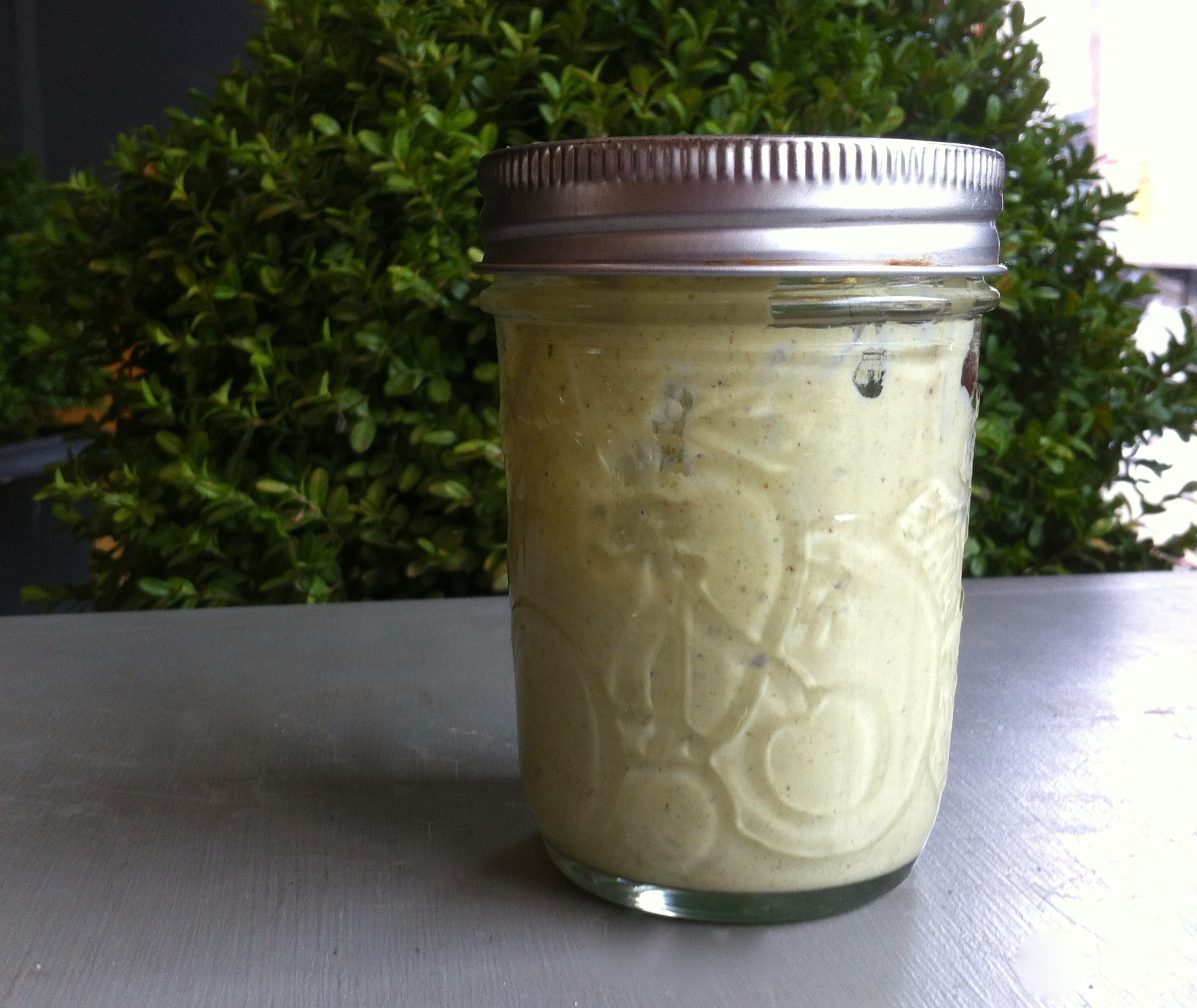
Pistachio tarragon mayonnaise

Pistachio tarragon mayonnaise

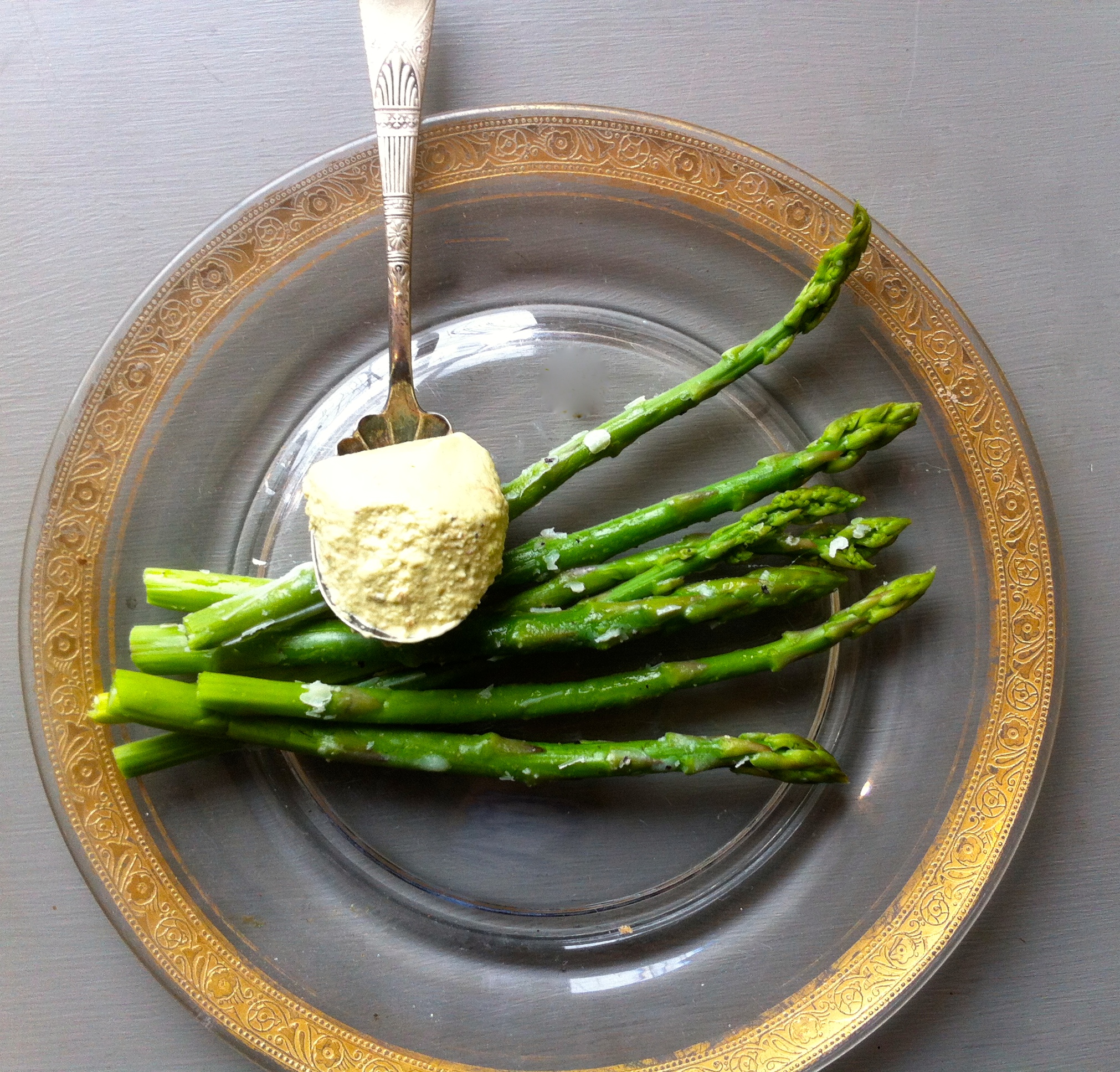
Speaking of spring, David said that this tasted like spring. And it does, it’s delicious, I could eat it with a spoon. It’s a little like mayonnaise, but it’s vegan. It’s only got pistachios, almonds, tarragon, capers, lemon juice and olive oil, but it’s creamy and flavorful and quite lovely. We ate it with asparagus, but you could have it with potatoes, or spread on a sandwich, you could dip chips in it or use it as a salad dressing. Pretty and green and tasty.

Here’s Footprints in the Snow by Bill Monroe and the Bluegrass Boys
Continue reading