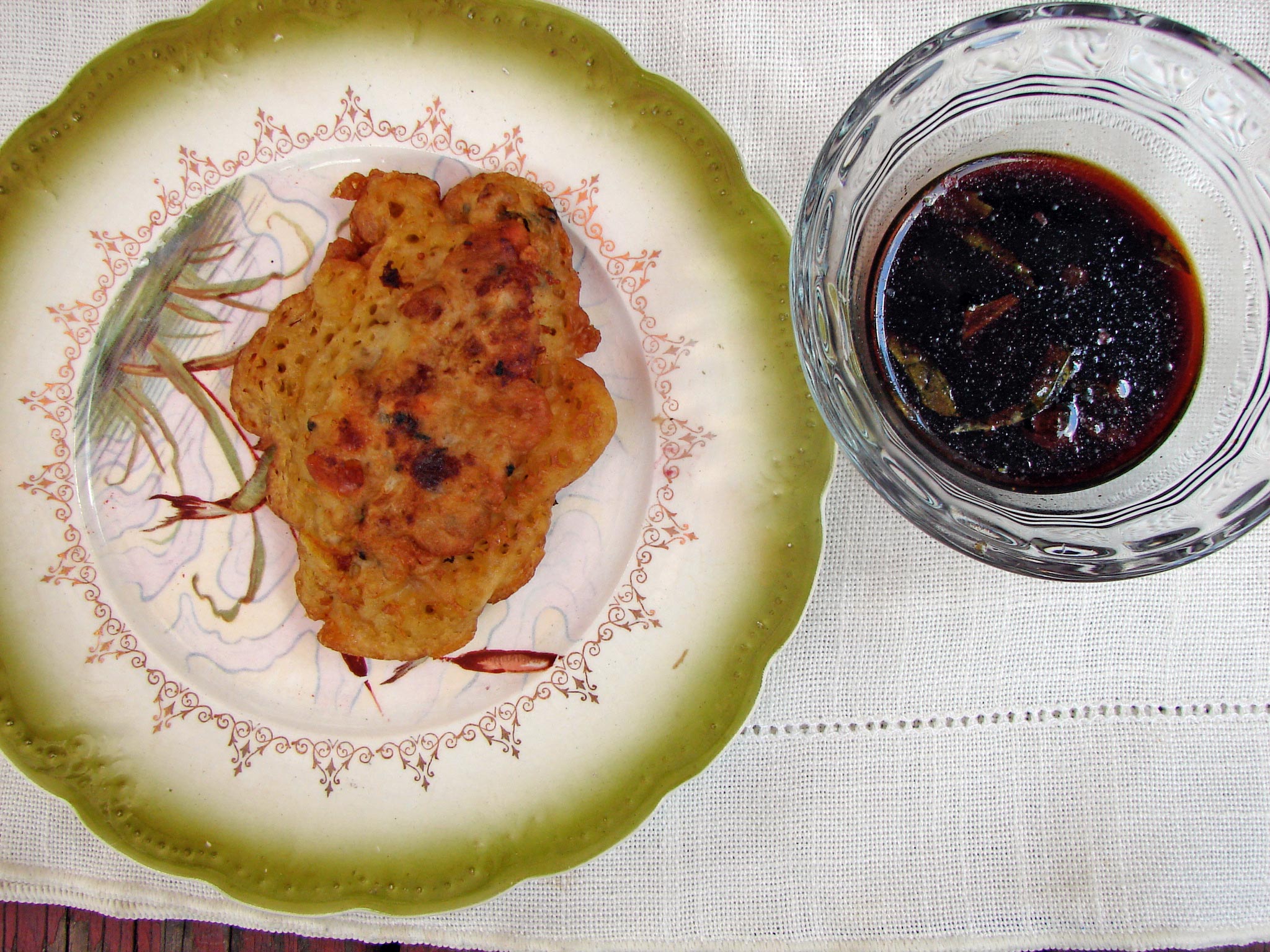
GInger beer-battered zucchini & artichoke fritters

GInger beer-battered fritters

We had a family joke when I was growing up that whenever my brother was ill, my mom would make enchiladas. Delicious, yes, but maybe not an ideal comfort food. It probably only happened once or twice, but it became the stuff of family legend. Yesterday Isaac wasn’t feeling well, and I made these. Sigh. I thought it would be fun for him, because he likes food you can eat with your fingers and dip in sauce (as who doesn’t!). In my defense, his fever didn’t start till after dinner, but when you’re feverish, battered vegetables probably aren’t your first choice of meal. Malcolm loved them, though, and the dipping sauce they went out in (which had tamari, balsamic, lime, red pepper flakes, and basil.) I thought it would be fun to make a beer batter, but with ginger beer, because I LOVE GINGER BEER! I flavored the filling with a touch of ginger and lots of fresh basil, and added goat cheese for taste and texture. So, crispy on the outside, soft and melty inside, tasty and fun to eat.

A while back I wrote an essay on food, music, childhood, comfort, memory and the soul. I sent it around to a few places, but, strange to say, there’s not a huge market for essays about Proust, Memphis Minnie, and RZA! Who knew! Well, guess what, today we’re going to have a guest speaker in the form of my own self. Most if it will be after the jump, because the authoress goes on and on and on.

And here’s a short playlist of the songs mentioned.

The Taste of Memory

We all know about Proust’s Madeleine. After a dreary day, the prospect of a depressing morrow left the narrator dispirited, until one bite of Madeleine, dipped in tea, filled him with an overwhelming joy. The taste of the food, and the memory of childhood happiness acted as a powerful tonic. He describes taste and smell as souls, persistent, faithful, bearing the weight of the vast structure of recollection in their tiny, fragile essence. Most adults have probably experienced this – when you’re feeling unwell or depressed, you crave some food you ate when sick as a child. It’s not the food that makes you feel better, it’s the memory of being cared for, of a time when you were not isolated by your maturity, not relied on to make decisions, not expected to take care of yourself and protect others.

To be continued…. (the recipe is after the jump as well, just like it always is!)
Continue reading

Millet and summer stew with black beans and hominy

Summer stew and millet

First we see a beautiful black and white shot of majestic mountains. Into the frame come the head and shoulders of a samurai, his back to us. He stands and looks up at the mountains for a few moments. And then he hunches his shoulders and scratches his head. He’s got fleas! We follow the back of his shaggy head as he walks, and without even seeing his face, we learn so much about him, from his posture and his gait. It’s Toshiro Mifune, baby! Surely one of the most charismatic actors of all time! As he walks, he comes across a farmer berating his son. The son wants to go off and join a gang of gamblers because, as he says, it’s better than a long life eating gruel. The film, of course, is Yojimbo, by Akira Kurosawa. It’s an action-packed film, with plenty of sword fights and intrigue, but, as with many of Kurosawa’s films, the real struggle concerns extreme poverty and deprivation. In this film, as in Seven Samurai, the inhabitants of a small rural town literally have nothing to eat but rice or millet, and they’re in danger of losing that. The samurai that fight for their lives and often to their deaths, are fighting for grain, fighting so that the son of a farmer can have a long life eating gruel. As with all of my favorite films, it’s the humanity and humor mixed with the drama that resonates. We love the samurai as much because he’s rootless, confused, and has fleas as we do because he’s charming and a brilliant swordsman. As I’ve mentioned many times, I’m a peaceful person of low ambition, and I think I could enjoy a long life eating gruel, if the gruel was as tasty as I could possibly make it!

It was partially because of Kurosawa that I went out and bought some millet. I’ve made it in the past, but not very well. I wanted to try again. I used a basic technique, described by Madhur Jaffrey, of toasting and then steaming the grains. But I cooked them in broth instead of water. It turned out delicious!! Everyone in the family liked it! Soft, but fluffy and flavorful. I’m a millet fan! I also made a sort of summery stew of lots of vegetables mixed with black beans and golden hominy. (You could easily substitute white hominy!) You could call it CSA stew, because I used up a lot of the veg we got this week. I seasoned it with smoked paprika, sage, and chipotle, and we ate it with toasted strips of tortilla. Everybody liked everything!!

One of the absolute best things about Yojimbo is the soundtrack. It reminds me of RZA’s soundtrack for Ghost Dog. (High praise indeed!!) Here’s Big Trouble, from the sound track.
Continue reading

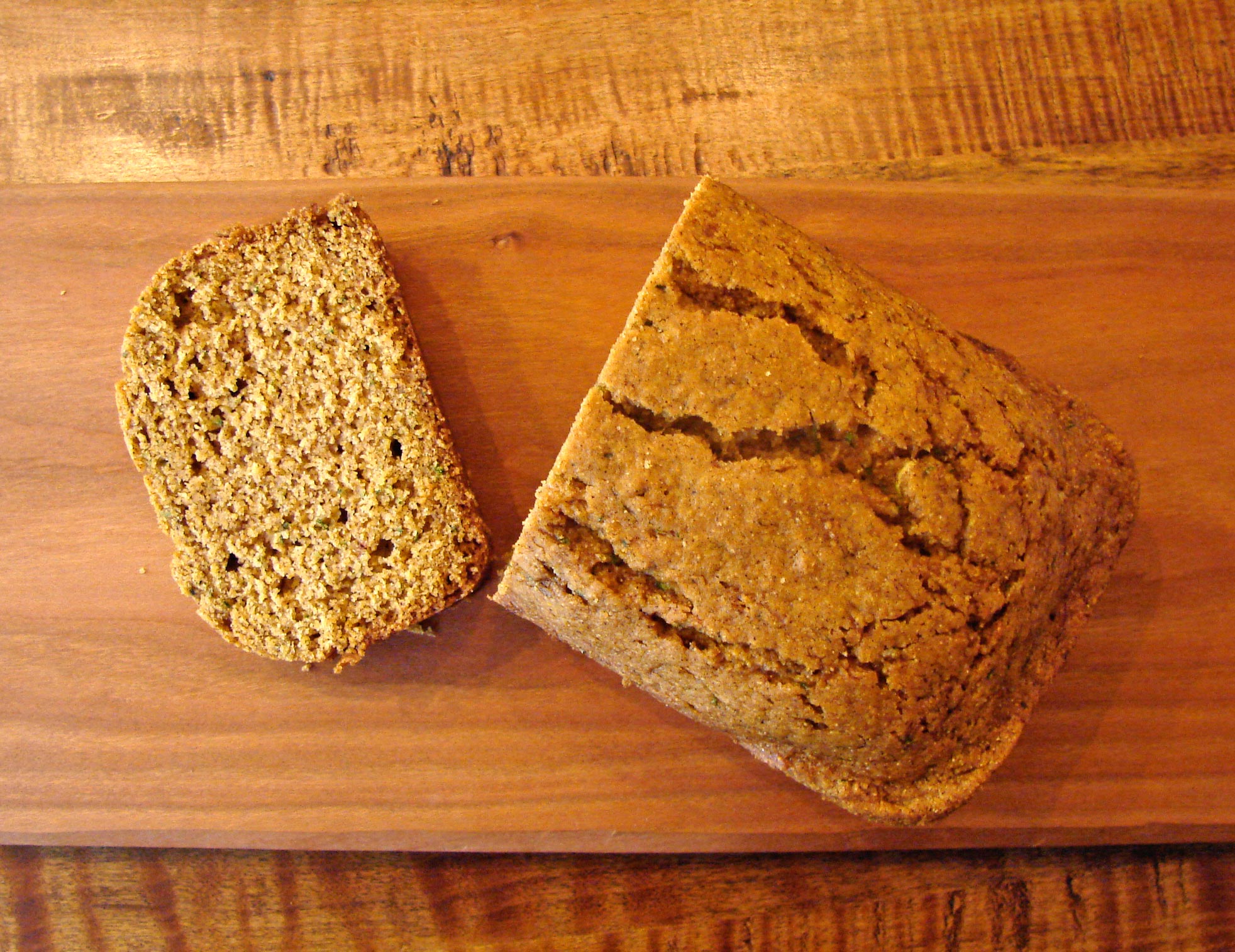
Zucchini corn bread

Zucchini corn bread

I’ve mentioned in the past that bird watching was a big part of our courtship. These days it’s mostly sitting in the backyard with our coffee before the boys get up, watching the sparrows and squirrels. But it’s nice to know there’s still a busy world going on above our heads. We might not be able to stop and look for a long time, but we can still hear them, and know them by their song. Once, many years ago, I asked David what kind of bird I would be, if I were a bird. He said maybe a warbling vireo. If you’re not familiar with a warbling vireo, I’ll tell you that it’s a small, green & grey bird known for its song, which is delivered in “…long melodious warbling phrases.” Heh heh heh. If there’s a warbling vireo around, you know it, because they never stop singing! They have a lot to say! Perfect, right? It’s a sweet bird, and very nice to be compared to. One of the qualities I admire in David is that he’s very economical with words. That seems like a rare quality in our loud world. Everybody’s talking and texting and making noise, and not listening at all. He doesn’t talk incessantly, but when he does talk, he says just the right thing. The right words at the right time. He’s very witty, but he doesn’t need everybody in the room to hear him. My boys think he knows everything, and it does seem that way at times, but he doesn’t need to tell you that he knows everything. (Like I do! If I know the answer I’ll be in the back of the room with my hand in the air saying “Ooh ooh ooh, call on me! Call on me!”) And when he does nice things for people, he doesn’t need them to know that he’s the one that did them. He doesn’t need anyone to know! I love that. So if he was a bird, maybe he’d be a veery. They don’t talk much, but when they do you want to hear them, because they have a remarkable song.

David really liked this zucchini bread! It’s basically a corn bread, but because corn bread can sometimes be quite dry, I added a grated zucchini to moisten it up. (And, let’s face it, it’s zucchini season – they’re going in everything!) I added a little brown sugar, some cinnamon, and a pinch of cayenne. I think it turned out quite well! A little sweet, with the mysterious flavor of corn, and just enough cayenne that the flavor sort of pops in your mouth. It was also incredibly easy to make – you can mix it together in minutes.

Here’s Talib Kweli’s beautiful Talk to You.

Continue reading

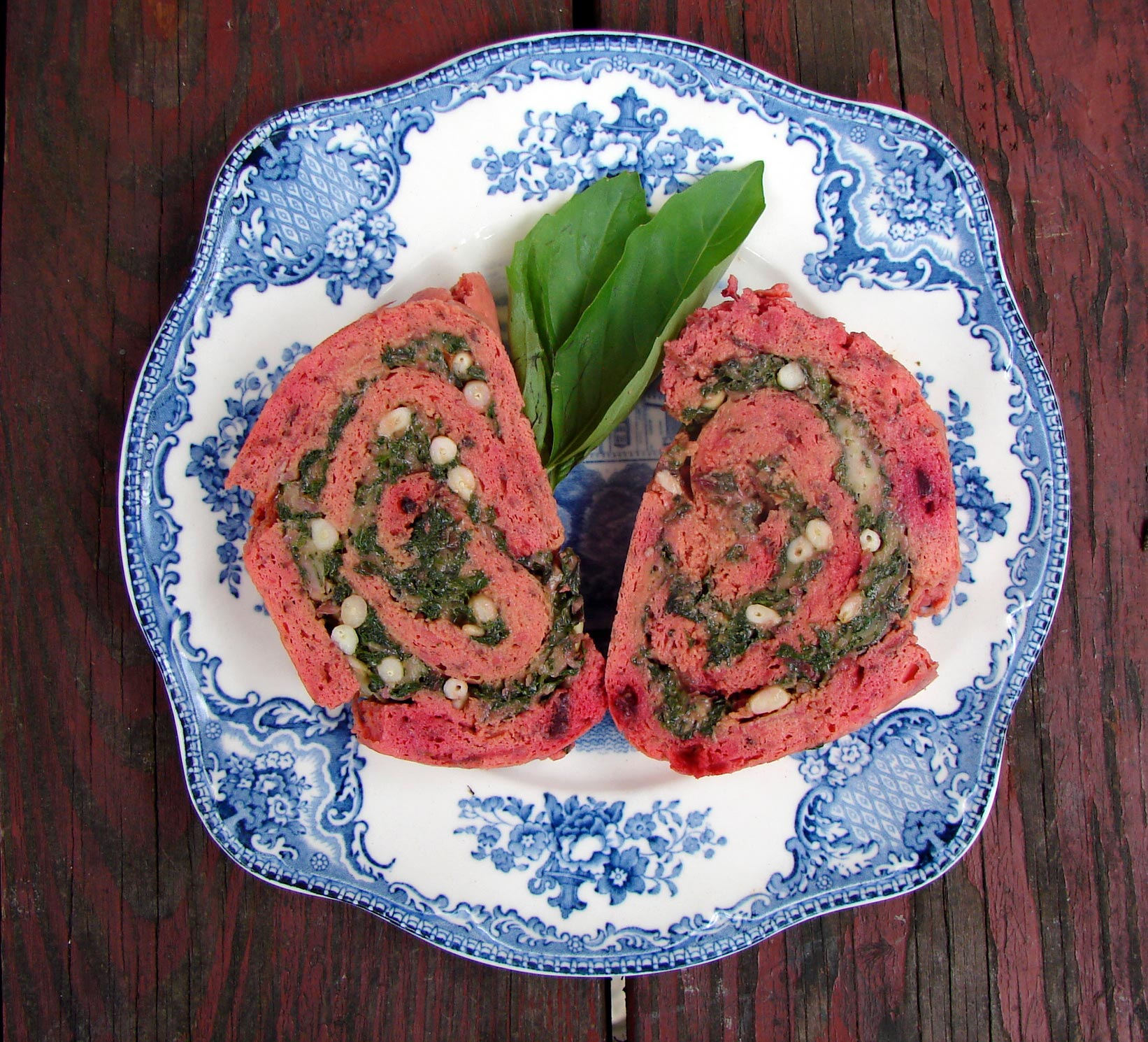
Beet & goat cheese roulade filled with greens and pinenuts

Beet roulade

I’m feeling a little dull and blue today, for no reason whatsoever! It’s a funny thing about feeling blue, because it’s not really a bad feeling, as I use the term. It’s a contemplative, slightly melancholy feeling. But there are so many shades and moods of blue, and I love them all. Tintin blue is one of my absolute favorite colors – bight and clear. Bill Traylor’s high singing blue is exhilarating. Midnight blue is deep and mysterious. Indigo is dark and rich. Sky blue is light and floating. Flame blue is like a flickering soul or spirit. Vein blue is alive and poignant. Musically, the blues put you in a mood, but it’s not a depressed mood. A little sad, maybe, but joyful, too, just because they exist. To shake the dullness, I thought I’d post a few dancey scenes. Dancing always livens the party! There are so many good ones, and here are few of my favorites.

There are so many! I could go on and on and never stop! What are some of your favorite dance clips?

You know what else will cheer you up? A bright pink and green pinwheel! This roulade was very fun and easy to make, and tasted delicious! The roulade itself was like a big fat pancake (it’s actually closer to a flatter soufflé!). It was sweetish, because of the beetish, and a little tangy with goat cheese, and lovely and summery with thyme. The filling used the greens from the beets, in combination with some chard (you could use any green you like!) and was a nice savory contrast to the roulade. Pine nuts add a bit of smoky crunch. The nice thing about the roulade is that it’s very good at room temperature, so if you don’t want to heat your kitchen up before you eat (on a 100 degree day, say) – make this earlier in the day and set it aside till you’re ready! We had it with a no-cook sauce of tomatoes and avocados, chopped chunky-style, and tossed with olive oil, basil, and balsamic. Add a salad of crisp arugula and crunchy hazelnuts, lightly dressed with olive oil, sherry vinegar and some crumbled goat cheese, and you have a perfect summer meal!!

Here’s Jackie Mittoo and the Soul Vendors with Love is Blue.

Continue reading

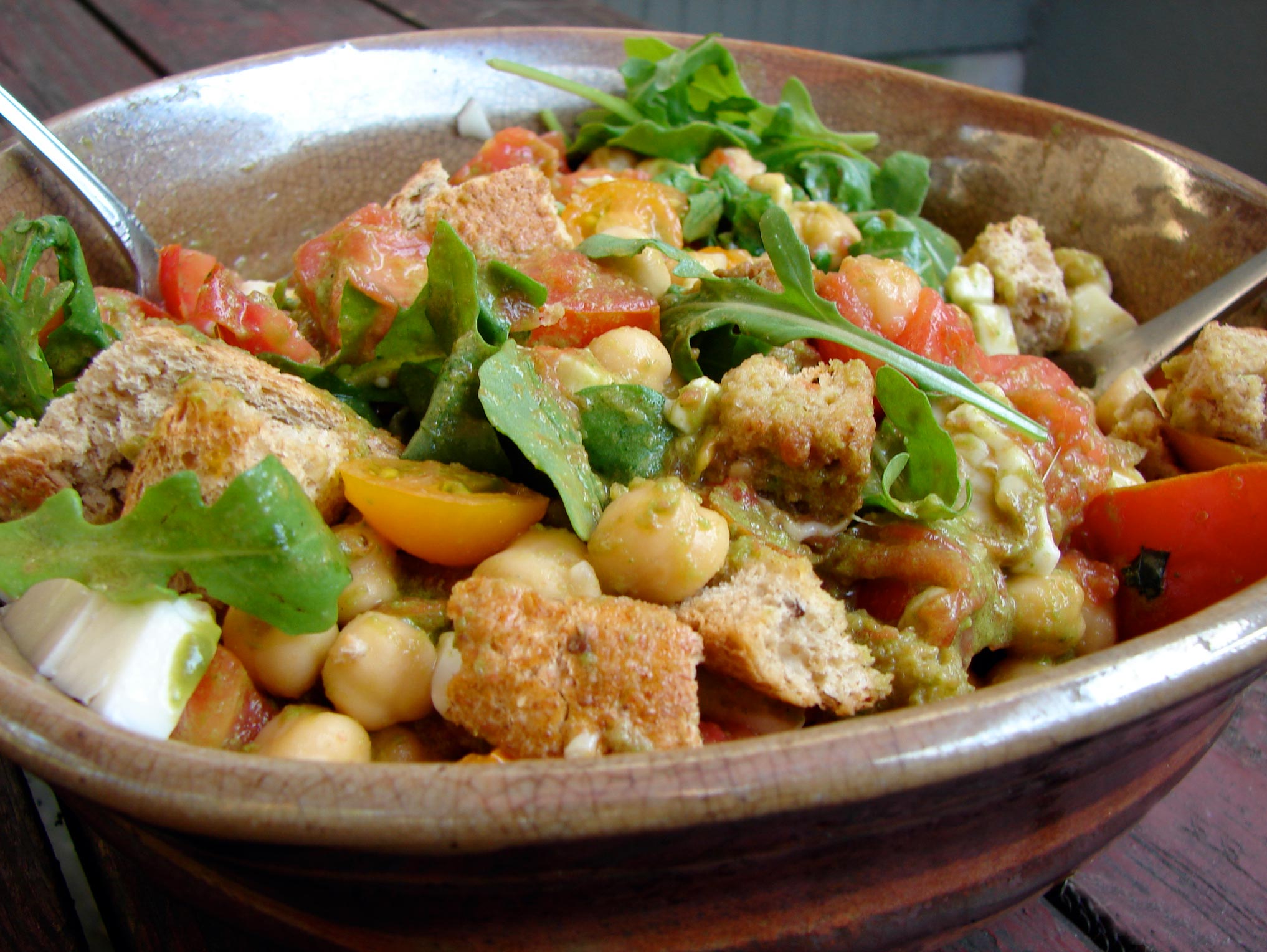
Chickpeas, tomatoes and pesto

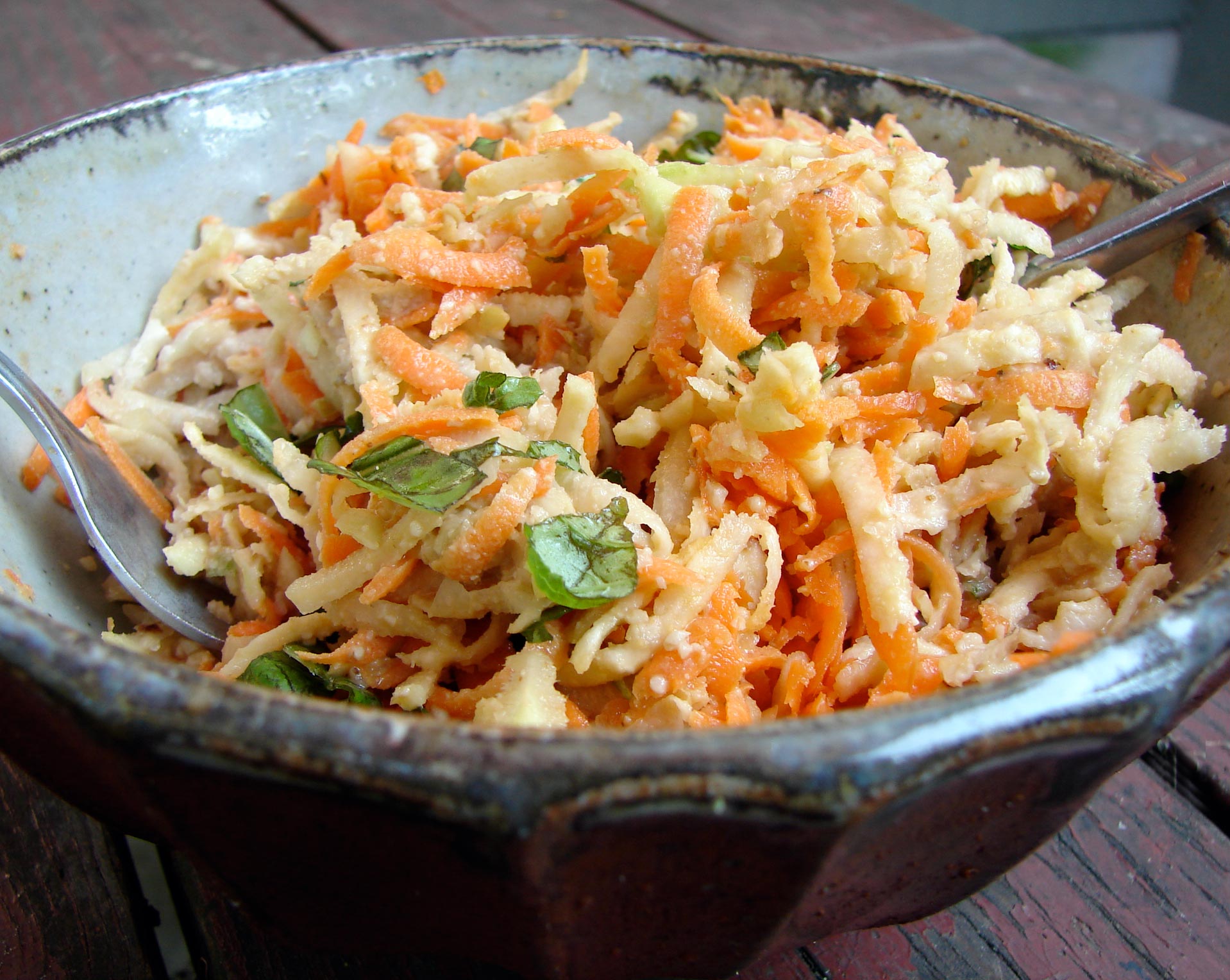
…and kohlrabi slaw with walnut and scallion dressing!
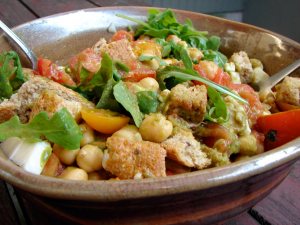
Chickpeas & pesto

We watched a remarkable movie the other night. Waste land, which is about Brazilian artist Vik Muniz’s lengthy project of making portraits of catadores, garbage pickers at the Jardim Gramacho landfill in Rio de Janeiro, was engrossing, disturbing, inspiring and hopeful, all at the same time. The landfill itself was massive and horrifying, and the jobs of the pickers – sorting through mountains of garbage to collect recyclables – seemed too awful to imagine. Yet they were cheerful, if not happy, and they’d created a supportive community for each other. Muniz makes a series of portraits of catadores in poses borrowed from famous paintings, and he uses the recyclable materials from the landfill as his medium. Waste Land reminded me of a film by Agnes Varda called The Gleaners and I. Varda, who is wonderfully curious and engaging, shoots a documentary about gleaners, people who follow after the harvest has been collected, to pick the fruit that was left behind. Varda shows people who find food and other treasures in vineyards, fields, and urban markets. Some live on the food and money they make from the objects they find. Some turn them into art. The film is a history of gleaning, a portrait of gleaners, a meditation on aging, a subtle examination of the artist as a gleaner, of the documentarian as a person who collects treasures from the world around her. Both films are about excess and waste, beauty and love. They are about the strength and fragility of people – in body and spirit. In both films, many of the people we meet have been living in this way, literally on the outskirts of society, since childhood, even for generations. They’re bright and energetic and resilient, but both films are permeated with an atmosphere of mortality and decay. The stories of the catadores and the gleaners remind us that life is fragile, and our position in society is more so. In this country we talk about a “safety net,” which seems to have failed many of these people completely. And yet they’ve built their own community to protect each other, and care for each other, to feed each other – they’ve built libraries and learning centers. Aunt Irma has set up huge pots in Jardim Gramacho, and she cooks for the pickers, using food thrown away by grocery stores and restaurants, brought to her as fresh as possible. She seems so happy with her life, and her role of feeding her friends, that it made me weepy. I could go on and on! Both films contained layer upon layer of meaning and beauty and emotion.
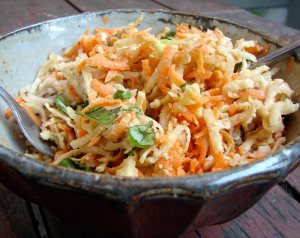
Kohlrabi slaw with walnut/scallion dressing

But I’ll move right along now, to tell you about a meal that we partially gleaned. We were walking home from rec camp, on a blisteringly hot day. We passed a table with an awning covered with baskets of vegetables. It was part of an outreach program from Fisherman’s Mark, a local organization, called Farmers, Families, and Fisherman’s Mark. Local farms bring their excess produce, or the produce that’s just nearly past it, and they teach classes on nutrition, and provide demonstrations of easy ways to prepare the vegetables. We stopped for a glass of ice water, a moment in the shade and a chat, and left with some burstingly ripe tomatoes, a few kohlrabi, and a loaf of day-old whole grain bread. It was nearly too hot to cook, even for me, so we decided to open a can of chickpeas, and toss them with tomatoes, toasted cubes of bread, pesto, and small chunks of mozzarella cheese. All to be served over fresh and crispy baby arugula. I decided to cook the tomatoes just for a second, because I like how saucy they get, and I like the fact that they melt the cheese a little bit, but you could leave this step out, especially if you have fresh mozzarella! And I made the kohlrabi into a sweet and spicy slaw with carrots and a walnut scallion dressing.

Here’s Apfelsextet, by Pierre Barbaud from the Gleaners and I.
Continue reading

Zucchini, walnut and raisin pastries

Zucchini walnut pastries

A few months ago, my friend Tony described something I’d written in these virtual pages as an “essay.” That idea was so pleasing to me, and it’s something I’ve thought a lot about since. I like the idea of writing essays. In school I used to love essay tests. I felt like I didn’t really understand whatever I was writing about until I started writing about it, and then connections would come flying out at me. I found it quite exciting (I was a weird kid).

On the one hand, essays feel so substantial and victorian. On the other hand – the smiling side of the janus face, if you will – is the fact that “essay” comes from the word “to try.” How lovely is that! You’re not succeeding (or failing). You’re not even worried about that! You’re just giving it a go. According to the highly reliable dictionary that pops up on my computer when I press a button (definitive source!) the “try” in “essay” doesn’t just mean “attempt.” It also means “test,” or “weigh.” As in “I tried the strength of the rope bridge that crossed over the fiery ravine before I commenced my journey upon it.” Interesting! If you’re following along at home, you’ll recall my infatuation with the word Selah, which also meant “to weigh.” I think of selah as being about feeling the weight of the words, and valuing that, and essay as being about testing the weight of the words by sending them out there and watching whether they sink or swim.

One thing I’ve been thinking about essays, as it directly relates to this collection of recipes, is that cooking is like writing essays. You have an idea, you try it. You weigh the possibilities, you weigh the ingredients. (I’m almost done, I promise! I’ve nearly followed this unravelling line of thought to its illogical conclusion.) You don’t know how it will turn out, and that’s why it’s fun to try. If you think that it might not come out well, you’ll won’t make the attempt. And there’s so much joy in trying!

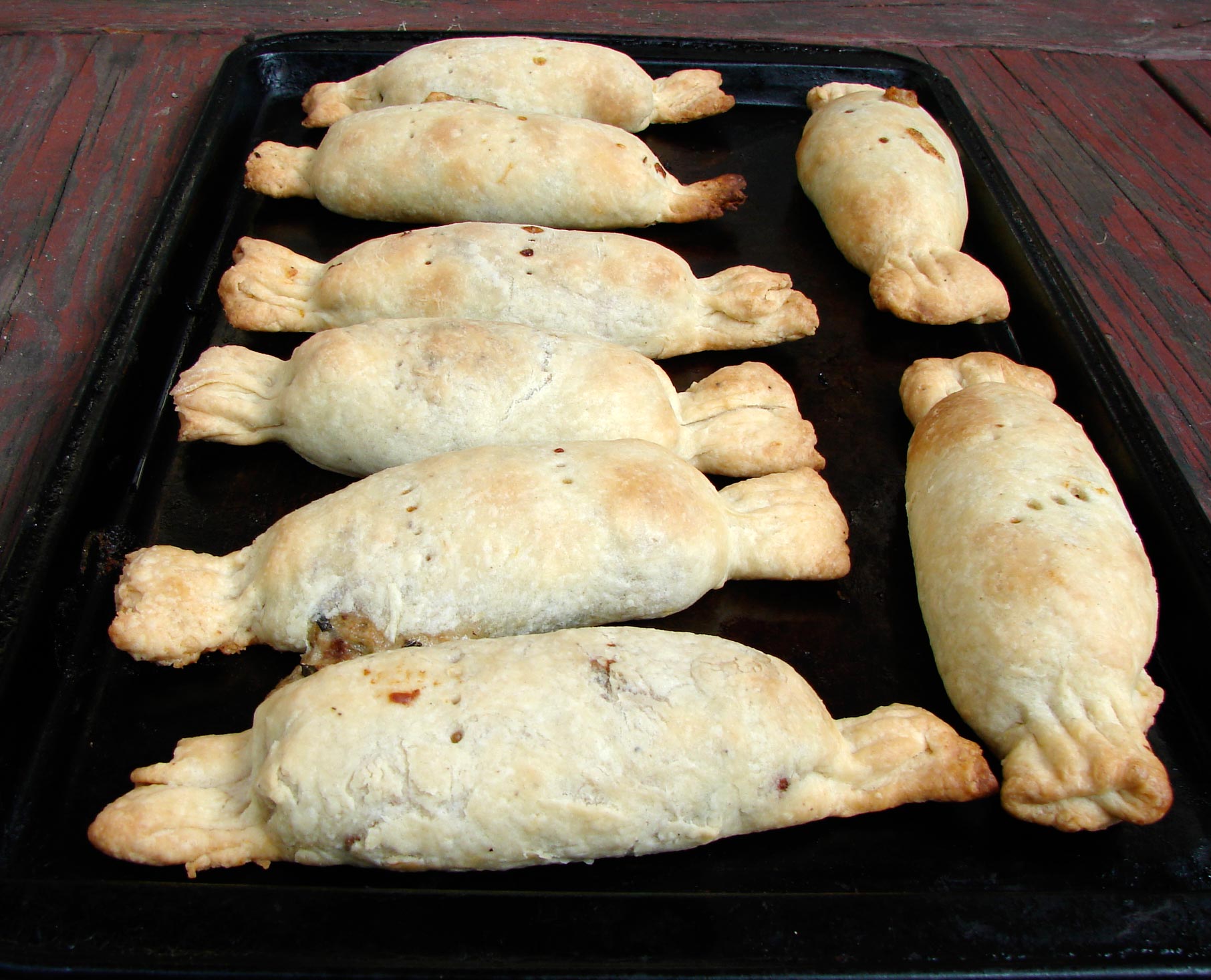
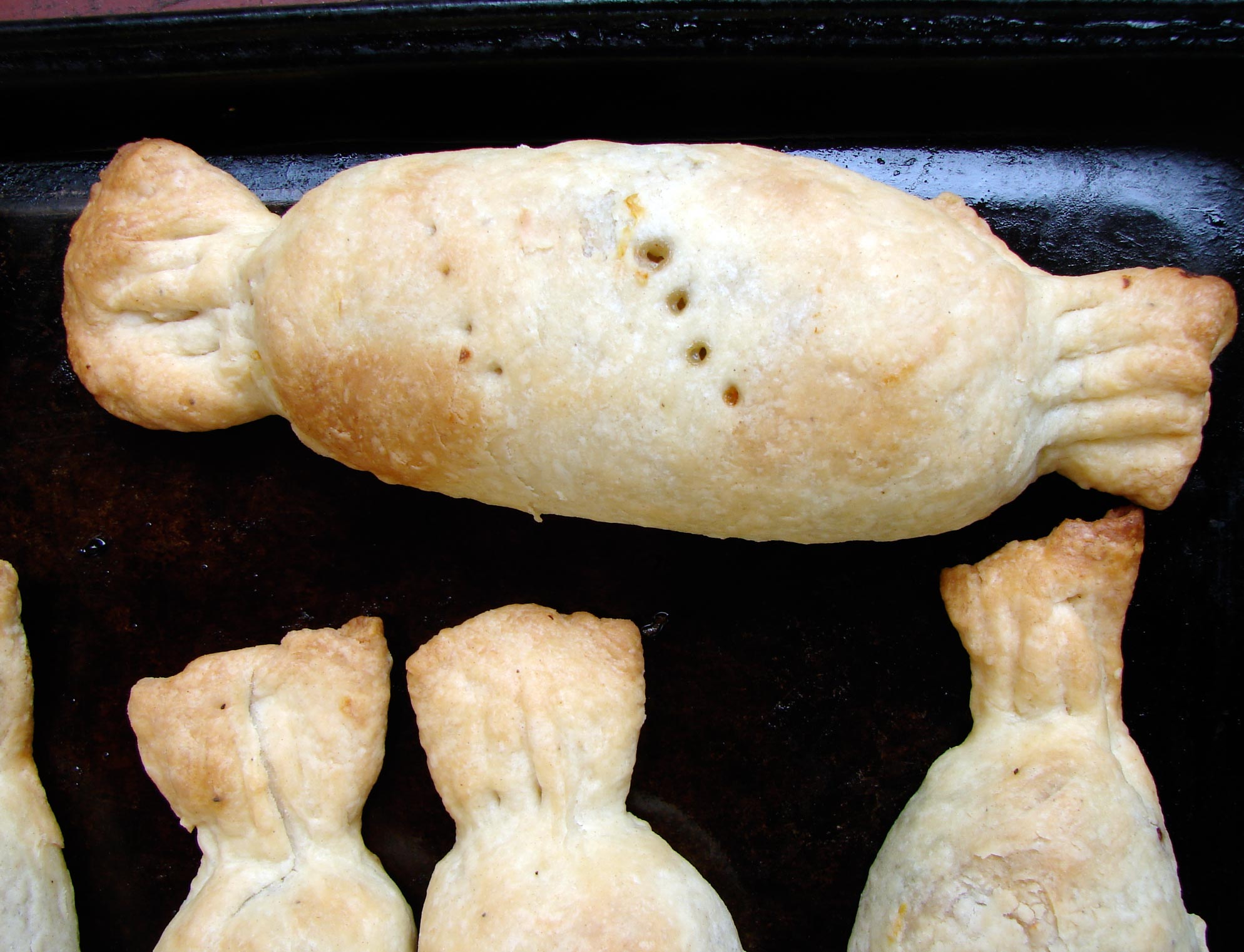
I have a lot of zucchini from my CSA, and I’ve been thinking for a while about combining it with raisins, walnuts, goat cheese, cinnamon and basil, in some sort of dish. I thought I’d try (segue!) rolling it into a pastry, because a crispy layer would be so pleasant with the soft zucchini and goat cheese. I put a bit of lemon zest in the pastry dough, for piquancy. And I wanted to have a couple of sauces to dip the pastries in, so I decided to shape the pastry like little christmas crackers, so that when you broke it in half, you have two little tabs to hold onto, while you dip, and then you have a nice, buttery-lemony crispy bite to end with. I think it turned out well! I’m going to make other stuffings for this shape of pastry, because it’s so much fun to eat with your hands and dip things! For dipping sauces I used two leftover from a takeout Indian meal (lazy, I know, but they’re so good you can’t just throw them out!) That’s the sweetish tamarind one, and the cilantro mint one. And then I made some good old-fashioned basil/pine nut/garlic/parmesan pesto. I mellowed it out a bit by adding a teaspoon of honey, and by roasting the garlic.

zucchini walnut pastry

Here’s James Brown’s Try Me, one of my favorite songs ever!

Continue reading

Fruit & coconut tart AND applesauce with balsamic, vanilla and black pepper

Ripe fruit tart

Well, I may as well go ahead and tell you, because soon it will be household news. I am, as industry sources have been leaking for months, at work on an epic poem on the subject of The Passing of Time and all of its Sickening Crimes. It will span volumes. It already has spaces slotted for it on the top of the New York Times best seller lists (fiction, non-fiction, how-to, and children’s), and I’ve booked some time on Oprah. It will be composed, in its entirety, in alternating dactylic tetrameter and anapestic hexameter. It will open with a chorus of anguished souls, and will rely heavily on deus ex machina, dramatic irony, and chiaroscuro. In one beautiful flight of fancy, entitled “Tempus Fugit? Indeed!” It will describe time personified as actual winged creatures, evolving from pteranodons to futuristic winged monkeys. In another section, entitled “Ripe,” the vista will open on a Russian farmer, who falls asleep in his fields on a warm day, and has a nightmarish vision of perfectly ripe fruit, just out of reach, rotting as he watches. Heavy, man! I don’t mean to get ahead of myself, but a rock opera is in the works, although it would be a breach of contract to describe the pop stars who are squabbling over the rights.

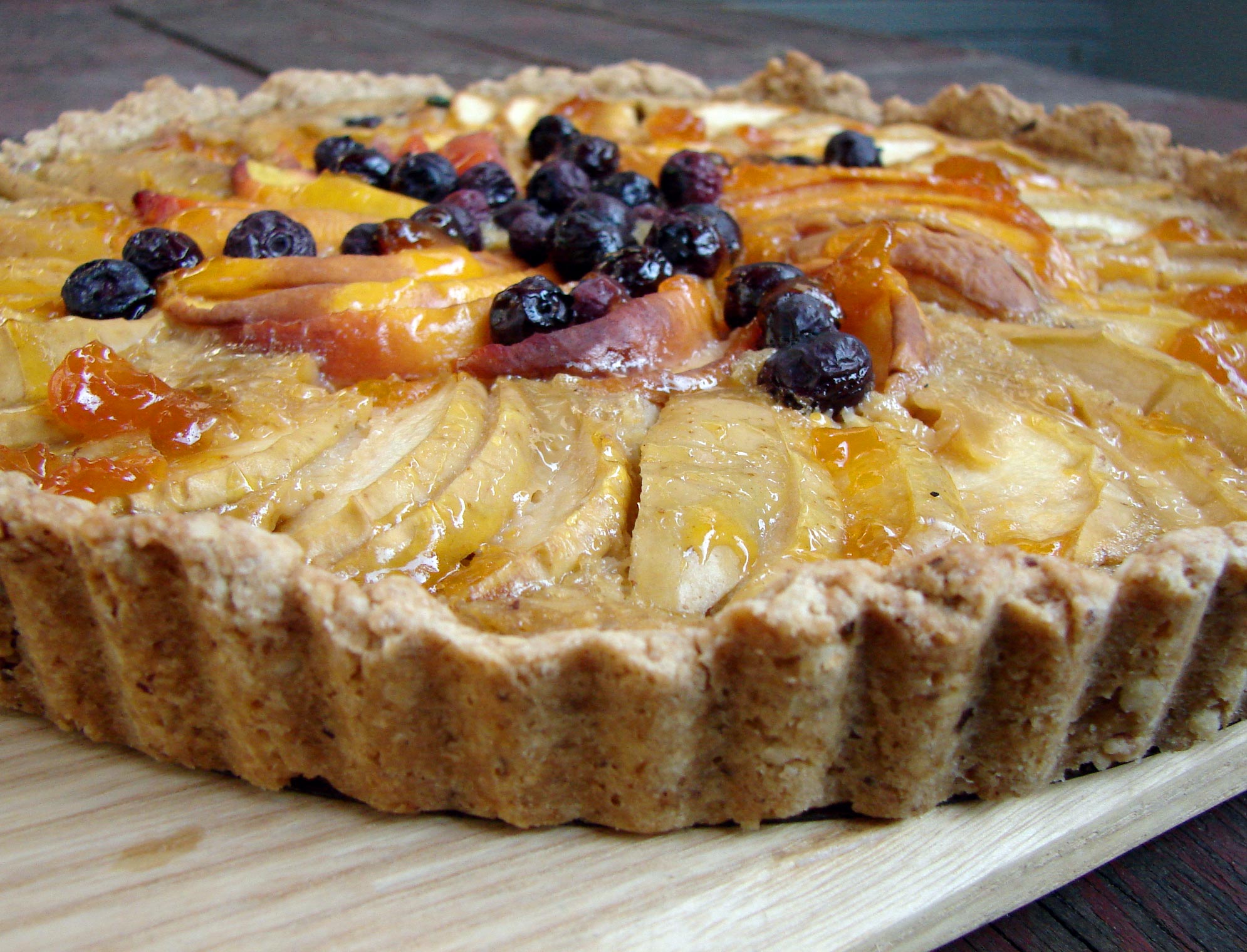
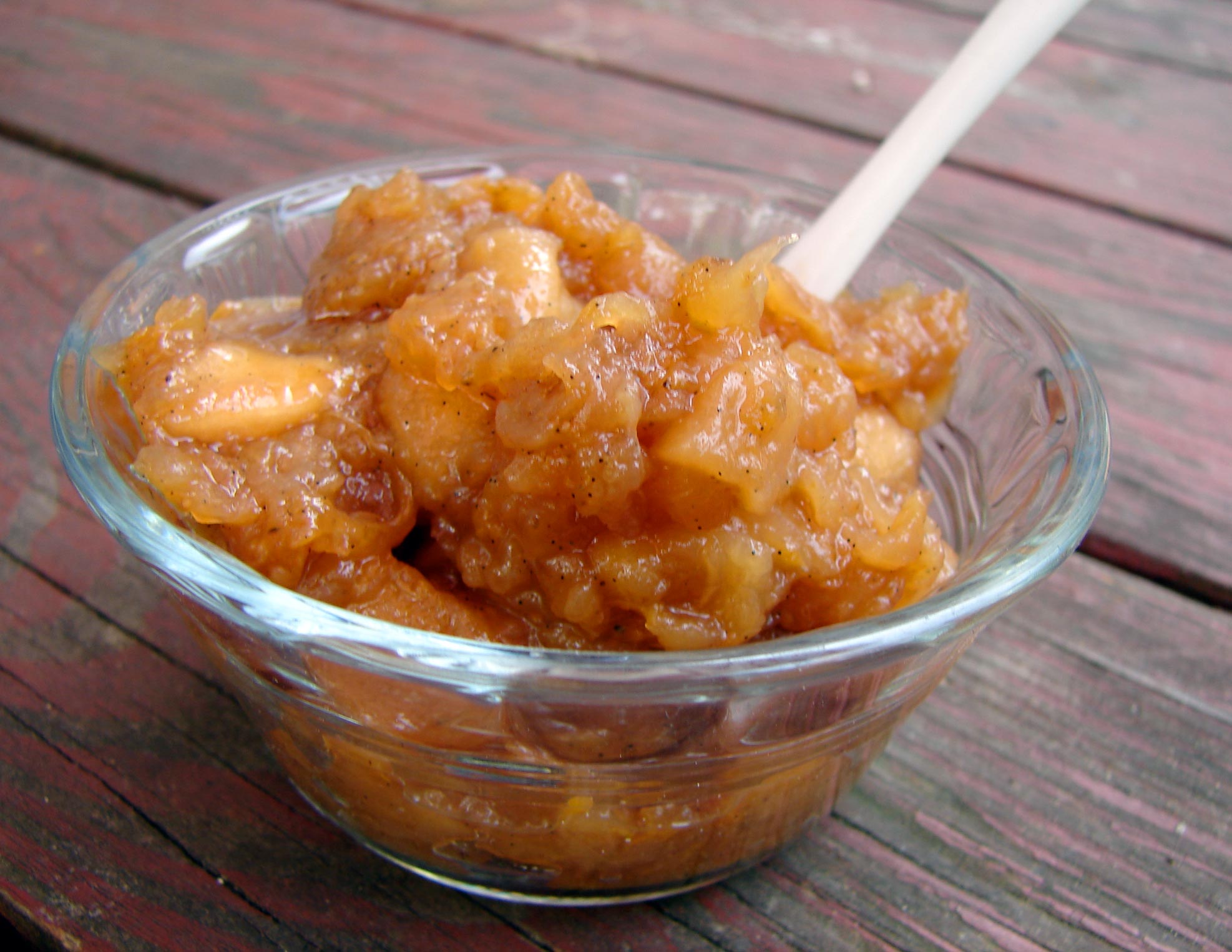
In all seriousness, I was thinking about fruit as I scrubbed the bathrooms today. (No connection!) The life of fruit and vegetables is like a little parable of time passing. In broad terms, because you can measure summer’s sometimes everlasting, sometimes fleeting progress by the cycle of ripening produce. Spring is small, sweet greens, wild ramps, fiddleheads and peas. All bright green and young and hopeful. Midsummer is plump and bursting with an overabundance of fat tomatoes and juicy zucchini. And fall is sharp and bitter and colorful. And in narrower terms, in the life of each fruit and vegetable, ripe and perfect for such a small moment of time, and then withered and decayed, rotting on the vine. Or on my counter. I feel like I’m doing a good job keeping up with the veg, this year. I go through the CSA box fairly easily from week to week. But I keep buying fruit, because I love it, and the boys love it, and I want them to love it. And it’s summer! If not now, when? Of course I keep buying apples, because I’m addicted to them, and then I complain that they’re grey, and David reminds me that apples probably aren’t in season anywhere in the world at this time of year! So I had a glut of apples and peaches. What to do? When in doubt, I make a tart. This is a light and lovely tart. It has a hazelnut crust, a light coconut custard layer, a layer of fruit, and then a slight glaze of apricot jam. With the rest of the apples and peaches, I made a crazy-tasty applesauce with vanilla, balsamic and black pepper. It’s deep and rich and complicated – a little salty a little sweet. Nice with vanilla ice cream!

Apple sauce with vanilla, balsamic and black pepper

Here’s Barbara Dane singing Woody Guthrie’s song Ramblin’. One of the most beautiful songs I know!

Sometimes the fruit gets rotten
And falls upon the ground,
There’s a hungry mouth for every peach
As I go a ramblin’ ’round boys,
As I go a ramblin’ ’round.

Continue reading

Quadruple vanilla ice cream with cherry-chocolate swirl

Quadruple vanilla ice cream

“And cherry jam? They have it here. You remember how you used to love cherry jam when you were little?”

“You remember that? Let me have jam, too. I still like it.”

Ivan called the waiter and ordered soup, jam, and tea.”

“I remember everything, Alyosha…”

Thus begins what must be one of the most remarkable conversations in literature. It goes on for pages. It goes on for chapters. It has acts like a play, movements like a symphony. And it all starts with the jam. I’m always moved by the intersection of food, memory, and comfort or kindness. The fact that it’s Ivan who remembers just kills me. He’s dark, doubting, cynical almost to the point of cruelty. You relate to him, certainly. He says the things you’re thinking (but more articulately!) or the things you try not to think because they’re too dark and hopeless. But you don’t love him – not until this moment. Everybody loves Alyosha, but I loved him more for still liking cherry jam, and for agreeing to order it. And because of the cherry jam we know that Ivan – cold, distant, disagreeable Ivan – loves Alyosha and always has. And for the first time, Alyosha know it too.

I like cherry jam, too. I like to bake it into cakes and cookies. And in this case, I put it in ice cream. I’m somewhat obsessed with vanilla. I literally dream about it. It’s not boring, or dull, or plain! It’s not white! For some time I’ve been dreaming of an intensely vanilla flavored ice cream. Really smooth and creamy and ridiculously vanilla-y. I got a few gift certificates for my birthday, to various places, and I bought vanilla powder, vanilla paste, and a vanilla bean. Oh yes! I decided to combine these with vanilla essence to make ice cream. If you don’t have any or all of these things, you could use extra vanilla essence. I also used brown sugar, because I didn’t want the ice cream to be white, and because I think the caramelly taste is nice with vanilla. I added a whole teaspoon of salt, to intensify the flavor. And, in honor of Alyosha, I melted some bittersweet chocolate with some cherry jam, and I drizzled it into the ice cream as it was freezing. It semi-hardened, creating lovely pockets of flavor and texture.

Here’s Drink Me with Song of the Ice Cream Truck.
Continue reading

Beet dogs

Beet dogs

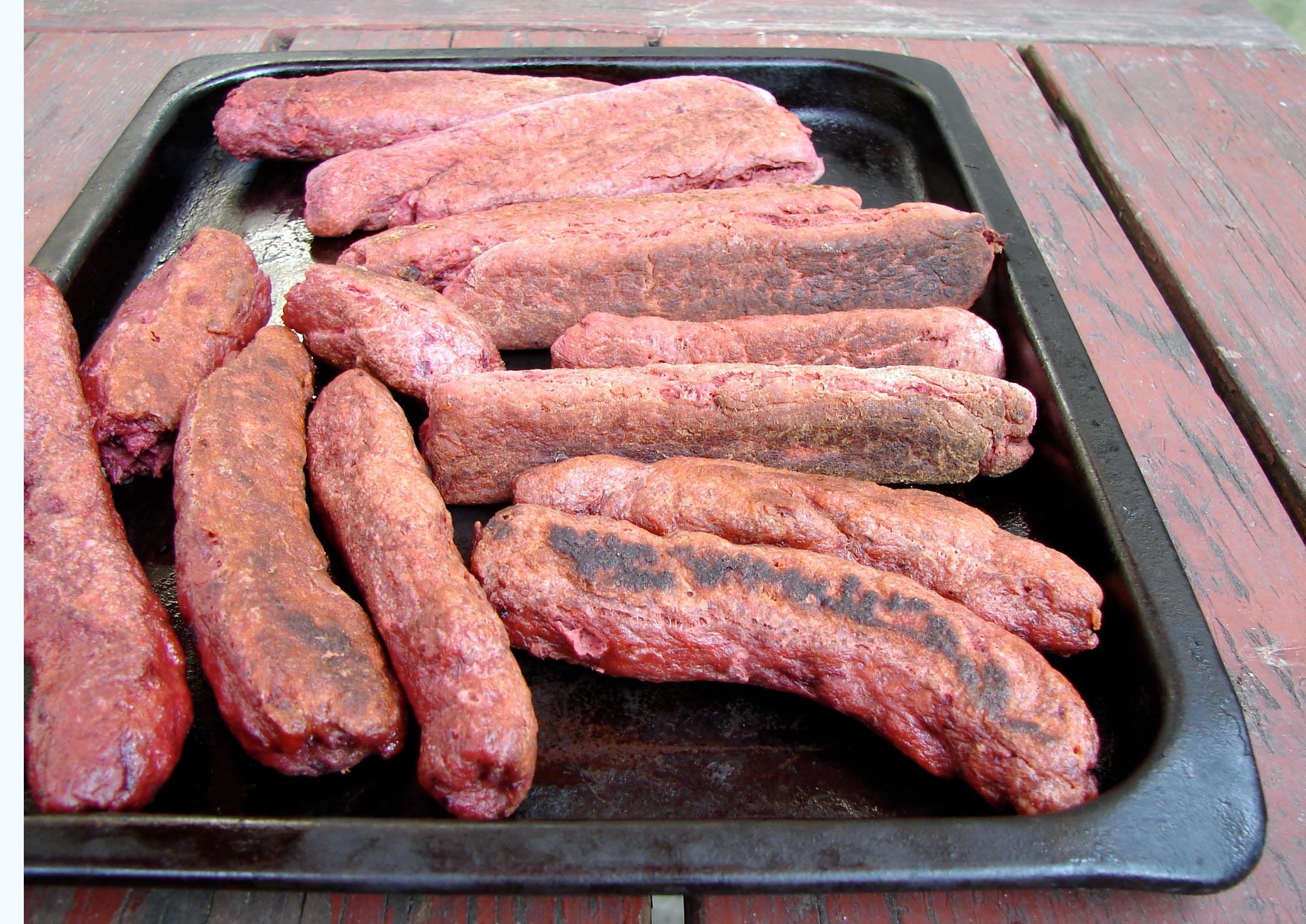
I love sleeping. I’m not very good at it – I never have been! I’ll wake up in the middle of the night and my brain will start buzzing, and I can’t quiet it down. It’s like the little people in my brain that have the middle-of-the night shift are working over time. I used to panic that if I didn’t get enough sleep I’d go crazy. I mean, there’s only so much of being with myself that I can take! I need a break, man! Of course, panicking about not being able to sleep is a rookie mistake; all the seasoned insomniacs know that it only makes things worse. Having children has put some sleepless fears to rest. I get along fine without much sleep. Yes I’ll be tired and blurry, but it won’t last forever. But a good night’s sleep, or even a good few-hours of sleep, is one of life’s greatest pleasures. I don’t consider this a lazy attitude, because with sleep comes dreams, and dreaming is one of the most active and creative activities that a mind can engage in. I love dreaming! Perhaps because I’m a filmmaker that hasn’t made a film in over a decade, I consider every dream like a short film – I’ve even have a dream that I make a film, and it’s always a perfect and beautiful film, which I lose when I wake up. David’s alarm goes off at 6, and I’ll sleep for another hour or so, and this is when you have all the best dreams – or at least you remember them best. Dreams about old clothes, dreams about flying, dreams about falling, dreams about houses that have unexpected rooms and passages, dreams about climbing trees, dreams about my dog, dreams about people I’ve never met, dreams of swimming, dreams of drowning, dreams about water, dreams about glass, dreams about darkness, dreams about school, and about schools with unexpected rooms and corridors. And lately, of course, dreams about food. This recipe came to me in a dream. And part of me, upon waking, thought, you’re not really going to try that, are you? And another part of me thought, why the hell not? These are a sort of version of vegetarian hot dogs. They’re made with beets, pinto beans, garlic, smoked paprika, a pinch of nutmeg, and a pinch of allspice. They have some flour and eggs in them. They’re very simple and easy to make. They look funny and a bit embarrassing while you’re making them, so if you have boys in your house I suggest you banish them from the kitchen, unless you’d like to hear rude jokes and titters. The jokes stopped when they tasted these, though! Everybody was dubious, but everybody loved them. We all ate more than we planned on. Isaac sat with his chair tilted back, one beet dog in each hand, talking and gesturing, and ate every single bite. (Being allowed to eat them with their hands was part of the appeal!) Malcolm declared them better than store-bought not-dogs. I tried them two ways. First, I just fried them in butter (which is the way I make not dogs.) Second, in a flash of inspiration, I had the idea to boil them first, like gnocchi (which they resemble in some ways!) and then fry them in butter. I thought these came out better. Less dry, with a nice sort of chewy texture. They really are unlike anything I’ve ever eaten, but in a good way. Try them! Why the hell not! They’re very easy to make. I think that the boiled ones would be grillable, too. I’ll try it and let you know!

Here’s Big Mama Thornton with Hound Dog
Continue reading

Chard and french lentil empanadas

Chard & french lentil empanada

“People talk of natural sympathies,” said Mr. Rochester. And we all know that he was just trying to seduce Jane Eyre, but he wasn’t wrong – people do talk of natural sympathies. Not just between people, but between colors, and musical notes as well. Certain things just look or sound pleasing when they’re combined. The boys have a book on the history of perspective in art, and I find it so fascinating! Artists through the ages have tried so hard to understand the world through mathematical rules – they understood it in order to draw it, and they understood it by drawing it. (Which is what little Isaac does, it seems – when something interests him he has to draw it, and he’s always pleased with what he draws) Apparently Paolo Uccello would stay awake at night after his wife had gone to bed, searching for vanishing points, and he’d say, “Oh, what a a sweet thing this perspective is!” And Piero della Fransesca believed in a perfect geometry underlying God’s creation. He saw everything as defined by measurements and numbers, which had mystical properties. Everything was carefully planned, in his art and in the world around him to be pleasantly harmonious. David, who is a painter, will point out how certain colors “hum” when they’re next to each other. Some even create a beat when placed in proximity – almost a flashing in your vision. My piano teacher, who was also a painter, used to say that each painting should have one “key note” color, which stood out from all the other, and didn’t harmonize with the rest of the picture. I think it’s interesting that the visual world is spoken of in musical terms, what with all the humming and the beats! I asked my mom, who is a professor of music history, if people believed certain chords together had magical powers. Oh yes! She said. People used to believe that you are what you listen to, and that you could be driven to certain actions – saintly or diabolical – according to what you heard. Octaves and fifths were pure and safe, but the tritone was the devil in music, and could cause terrible unrest. She said that if you took perfect fifths, and sang them perfectly in tune, by the time you got four octaves up, you’d be a half-step flat. People used to develop all sorts of tunings to solve the problem (well-tempered tuning) and now we use equal temperament tuning, in which we adjust by making everything equally out of tune. “In order to end up on pitch you have to compromise everything else,” Says my mother, “Just like in life.”

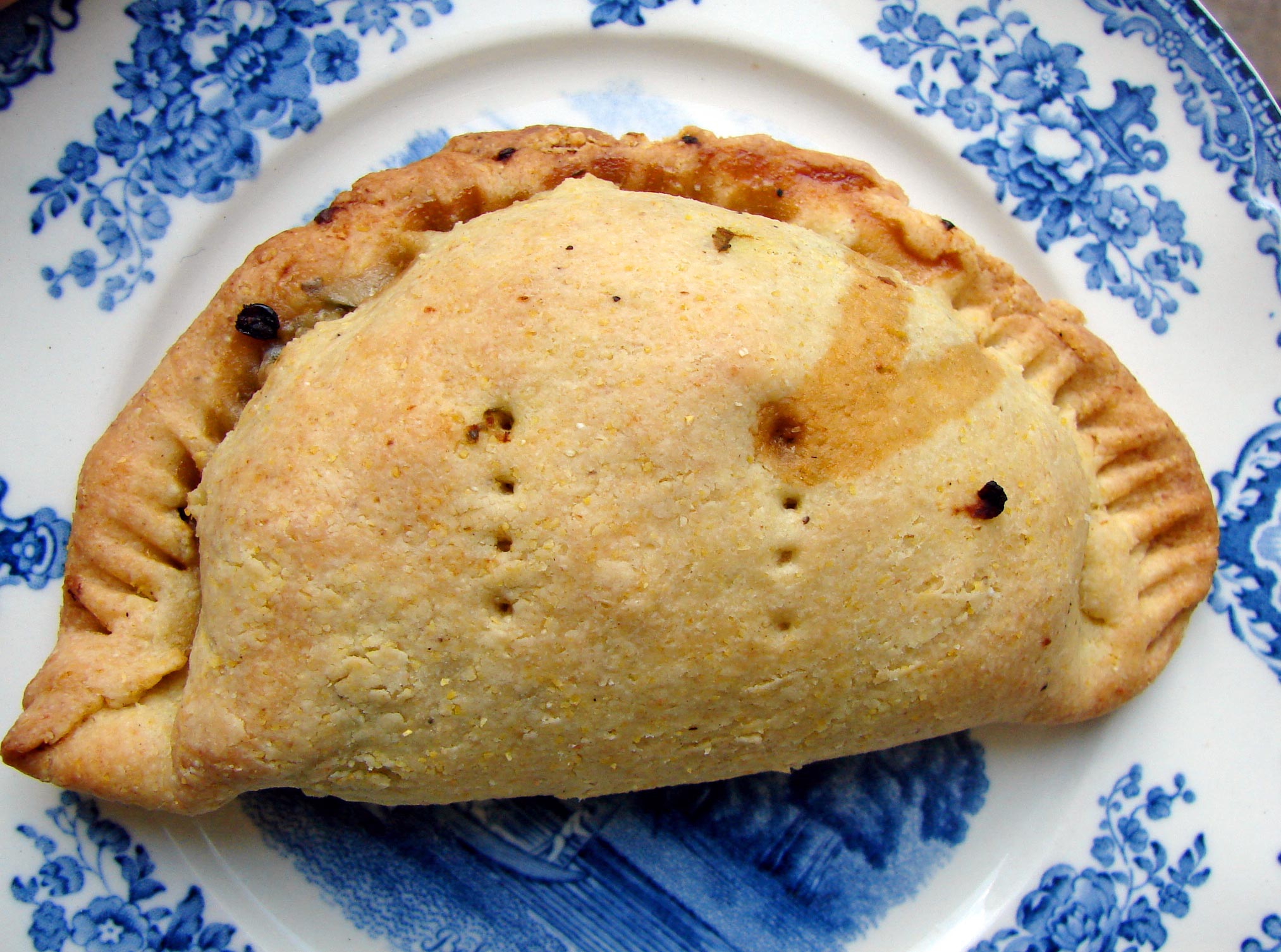
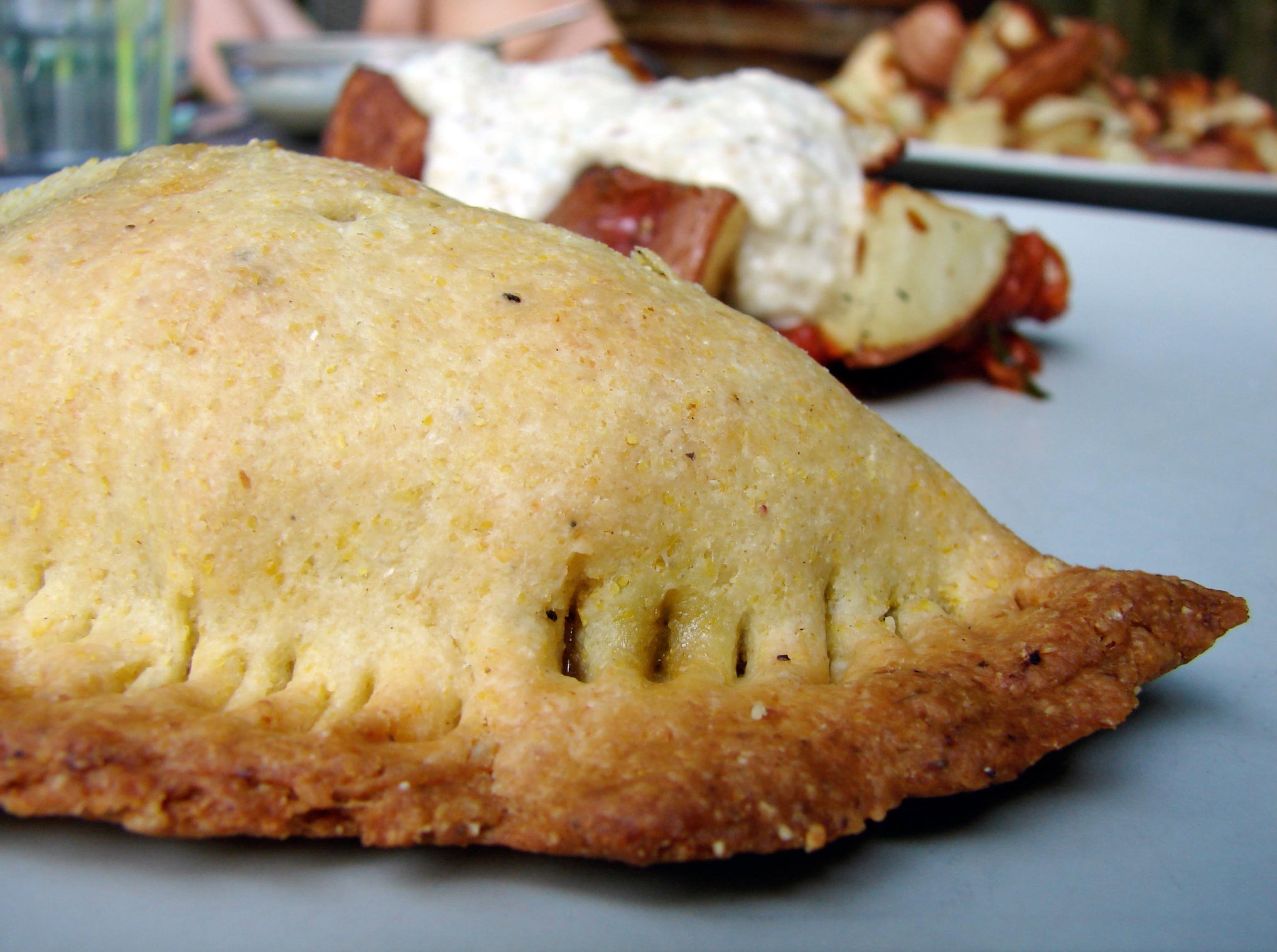
Well, I believe that there are certain flavors that go together perfectly, as well. When you taste them they just make sense, and they hum in your mouth. Frequently they grow together and ripen together, which almost makes you agree with Piero della Francesca’s assessment that there’s some divine pattern accounting for all of the harmonies in the world. Tomatoes and basil, for example. Perfect. And I like to think about my piano teacher’s idea of introducing one element of flavor that’s surprising and unexpected, and makes all of the other happily harmonizing flavors more exciting. Some flavors hum along together, some contrast pleasantly, to create a beat. Personally, I love chard and french lentils together. And I love chard and some sweet and tangy fruit. And I love them all together in a crispy crust. I really liked these empanadas! It’s one of my favorite meals I’ve made in a while. I combined chard, which had been sauteed with a bit of garlic and hot red pepper, with lentils, which had been cooked with nigella seeds and sage. I added some caramelized onions, for sweetness. And I added a spoonful of quince jam. I used queso blanco & mozzarella to make everything nice and melty, and bring it all together. I’d read that in argentina they make empanadas with quince paste and salty white cheese, and I guess this is my version of that. We ate these with my version of patatas bravas, which I’ll tell you about in a little while, and, I’m not saying it was a masterpiece, or anything, but it was very pleasing meal to have in out little green backyard on a cool summer evening.

Chard and lentil empanadas

Here’s Leonard Cohen with Hallelujah. Is he talking about a chord with divine and magical powers? I’m never sure. I like the word “hallelujah.”
Continue reading