Lapsang souchong spice cookies

Lapsang souchong spice cookies

We’ve slept in a tent in the backyard the last two nights. Consequently I feel exceedingly tired and dumb as a rock. Forgive my inability to string words together to form those coherent…what are they called? Oh yes, sentences. We had a nice time, though. Backyard camping! Most of the pleasures of camping, plus hot showers and coffee when you need it. The boys told “cloud stories” with burning sticks. We sat and talked into the darkness – the boys stayed up late, we went to bed early. We all lay in the tent and took turns reading Midnight is a Place by candlelight. This is one of my favorite books ever, and it’s perfect for camping because it’s by turn cold and wet and miserable and warm and cozy…so you really appreciate all the sheets and blankets the boys lugged down the stairs and arranged in a beautiful muddle. We could look up at the stars, and listen to the screech owls and the amazingly diverse and sweet chorus of bug chirpings. In the morning we ate scrambled eggs and toasted bread on our campfire. Malcolm played with a piece of bread as though it was play-doh, stuck it on a dirty stick and said, “This one’s for mommy!” David suggested that he give it to Isaac instead, and toasted two perfect pieces of bread. We went for a hike in the wilds of the other other side of the canal and pretended that we were miles from town. The boys did front flips in the tent all day long, and we all went down for a swim in the river to cool off. And our yard still has the lovely smell of our campfire. These cookies are a tribute to that smell, and to the fact that summer is quickly turning into autumn. Our town is full of fireplaces. When you walk home, some evenings in fall, your clothes smell of fireplace smoke. And I swear some people in town burn cinnamon sticks, because the smell is so sweet and spicy. My friend Diane very kindly gave me a tin of lapsang souchong tea. The scent is wonderful! I wanted to combine that with the spicy flavor of cinnamon, nutmeg, ginger, and allspice to create a smoky, spicy, sweet late summer cookie. They smelled remarkable, and I loved the taste – but you’d have to like lapsang souchong to enjoy these. I used two tablespoons of tea leaves, and I ground them in the coffee grinder. The boys loved them, but the smoky flavor was a little too strong for the adults, so I’d probably use 1 scant tablespoon next time, and that’s how I’m writing up the recipe!

Here’s 5 am in Amsterdam, by Michelle Shocked, from her Campfire Tapes, with the backup cricket-singers. I had some trouble sleeping in the tent, but it wasn’t so bad being surrounded by my family, staring up at the brightening sky.
Continue reading

French cake a week – gateau de savoie

Gateau de savoie

In which Claire, who doesn’t speak french, bakes her way through the cake section of a 1962 french cookbook.
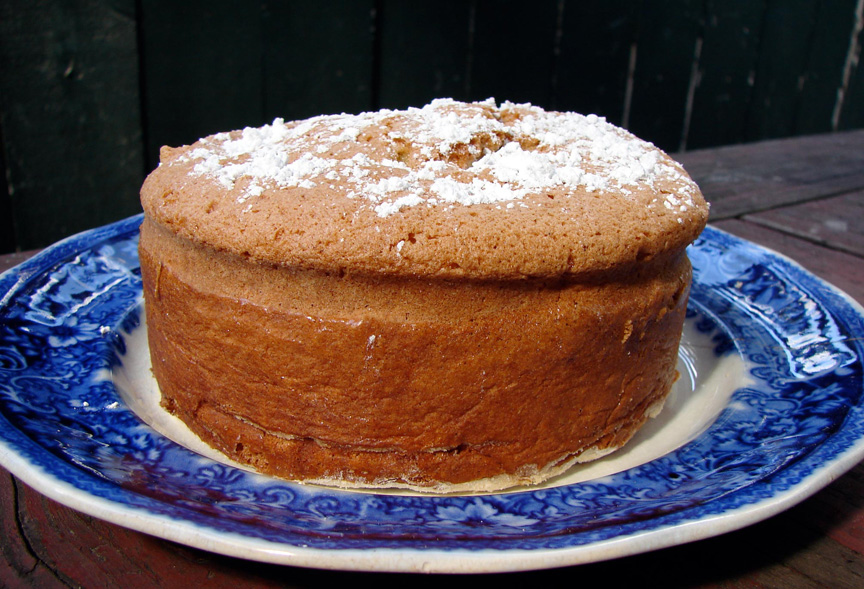
We’re keeping it simple again this week, in our french-cake-a-week division, with a lovely gateau de savoie. This cake is, in truth, remarkably similar to last week’s genoise. The ingredients are nearly identical. The difference is that the eggs are separated, in this cake, this cake has less butter, and the cake is baked in a deep dish. Last week, I went on and on (and on) about how a genoise is like my favorite movie, L’atalante. This week we’ll continue the tradition, because I’d like to tell you about Aki Kaurismaki’s Le Havre. (I promise not to ramble on about how the film is like a cake, but I have to tell you that one of the youTube comments on the trailer is “such a beautiful film, simple and deep,” which could be said exactly of a gateau de savoie, with one word switched.) L’atalante begins in the port town of Le Havre, and the town is (suprise!) the setting of Kaurismaki’s film. Le Havre tells the story of a former bohemian poet-turned-shoeshiner. He’s a man with a simple but pleasant life. But when his wife falls ill and he makes a new friend, his world is gently, subtly turned upside down. The characters are ordinary people; the lovers are older, they’re not glamorous; the story is slow and simple, but it tells of huge changes in the life of an old man and a young boy. The film is beautifully made, all sea-green and rusted red, with a style and grace reminiscent of much older films. Despite the perfectly professional technical quality of the film and the admirable attention to detail, it looks like they had fun making it – in some places it’s as though an old group of friends got together to shoot a movie. Similarly, though the film teeters on the edge of tragedy, and peers into some deep, dark places, it retains a lightness and a wry humor. I’d heard, once, that tragedy ends in death and comedy ends in marriage, and Le Havre ends with the salvation of a marriage. It’s a funny thing, but my reaction at the end of the film was that Kaurismaki was brave to end the movie the way that he did. I remember discussions, back in the days of endless talking, about the fact that comedies could never be weighty or substantial – they could never be great works of art. Only a tragedy could be considered high art; comedies are low, they’re light. I’ve always found that idea troubling. I think it’s actually more difficult to create something happy. It’s easy to be shocking, depressing, degrading. It’s the refuge of juvenile directors to make sad and disturbing films, and express scorn for anything joyful or pretty. And yet real life is a combination of joy and sorrow, of beauty and ugliness, and I admire anyone who can tell a story that shows this, with humor and taste, and just the right amount of sweetness.
Gateau de savoie

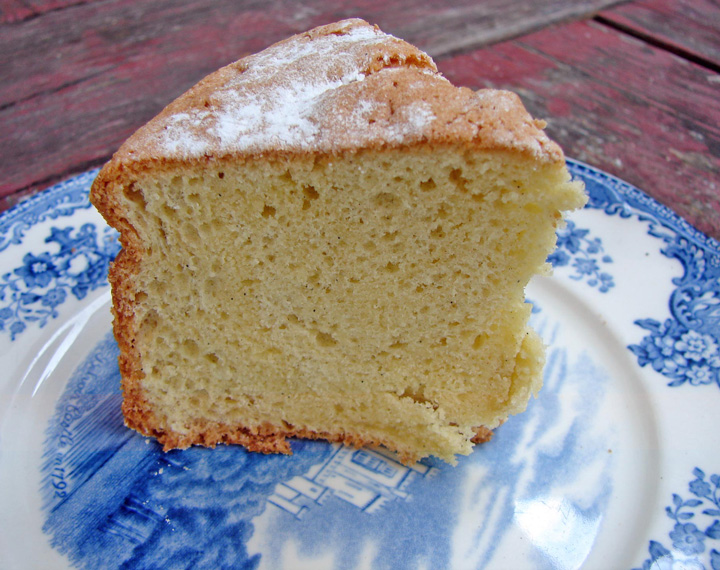
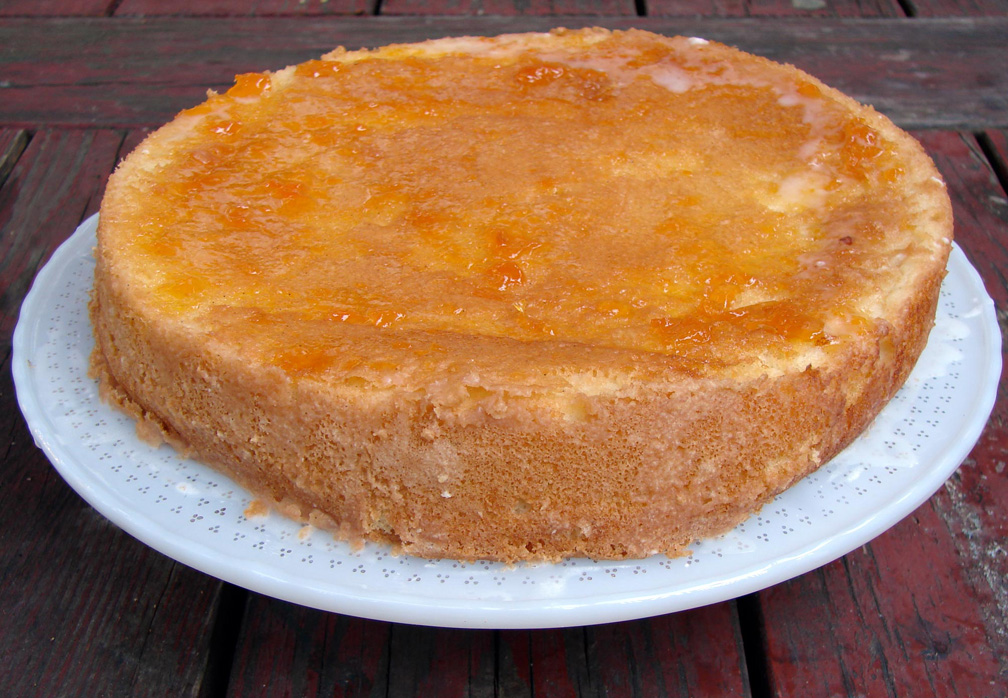
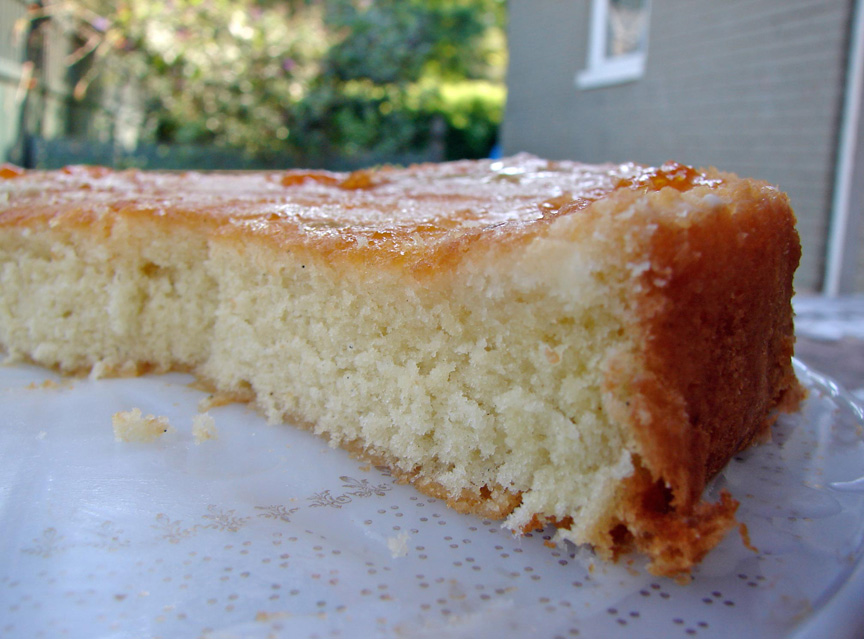
So, this cake is deep, and light, and subtly sweet. Because of its simplicity it makes a nice base for other flavors – for fruit and cream, or compotes, or liqueurs or syrups. The directions require you to bake it in “un moule profond.” That’s right, a baking dish deep and full of meaning. I don’t have a wide selection of cake pans, so I used a quart-sized souffle dish – about 6 inches wide and 3 inches deep. It worked perfectly! The recipe suggested that you make a ring of paper to help contain the batter, and I did, but it wasn’t really necessary. The recipe also stated that you could use the “parfum” of your choice, and suggested vanilla, fleur d’orange, lemon zest. I chose a bit of vanilla and a bit of rum, because that’s what I had. When I made the genoise I couldn’t resist adding a bit of salt, but I didn’t do that this time, instead I cheated by using salted butter! The cake has very little butter, though, which contributes to its lovely lightness. The recipe also says that you can substitute starch for half the flour. I assume they mean corn starch, but I didn’t have any, so I went for the all-flour option.

Here’s Mr McTell Got the Blues, by Blind Willie McTell, used to nice effect in Le Havre.
Continue reading

Zucchini, green pea, feta, & mint paté and zucchini with tarragon and hazelnuts

Zucchini green pea feta paté

It can be hard to stay cheerful when you’re a waitress. Many restaurant patrons are as needy and particular as toddlers, and they’re not always nice about making their needs known. I slip into horribly bitchy crankiness sometimes, as a mom and as a waitress, and it feels awful. On a good day, however, there’s a real joy in feeding people – even if it’s just the humble job of carrying their food to the table. People can be so endearing when they eat – the way they arrange their food before they put it in their mouth, the gestures they use to share with others at their table, even the particular care they use to get their order exactly correct can be as sweet as it is irksome. I like to see people eating together: some have so much to say they forget to eat, and others are either so comfortable together or so awkward they may not say one word through the meal. This weekend I worked with a very young woman, very quiet, very nice. An older couple came in and sat in her section. The man asked his wife what he wanted to drink – he’d forgotten. His wife knew (we all know! He gets the same thing every time.) The waitress came back to write up the order, and she said, “I love them!” Every little thing they said, the way that they knew each other so well they could finish each others’ sentences, all of it was making her so happy. I know what she means! I’d been feeling cranky about humans, that morning, but her love for this couple made humanity seem pretty wonderful. It reminded me of Alyosha, (still reading The Bros. K! Still reading) who says we should “…care for most people exactly as one would for children…” He’s trying, though he he doesn’t feel he’s altogether ready in himself. Sometimes he’s very impatient, and other times he doesn’t see things. I know what he means, too!

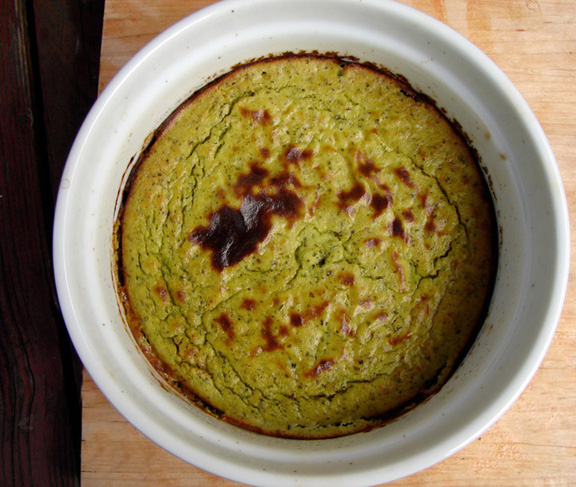
Well! We’re still getting tons of zucchini, and I’m trying to love that, too. Here are two ways to prepare it that both use herbs from our garden. One is simple, one a little more complicated. The paté being the latter, though it’s really not difficult to make. I’m calling it a paté because it’s nice on toast or crackers, but we ate it one night as a side dish, and it was good that way too. Feta, mint and peas seem like such a natural combination – so fresh and sweet and salty, all at the same time. This paté has some almonds in, which gives it a sort of country-paté texture. In the simpler dish, the zucchini is sautéed briskly in butter till it’s nicely browned but still has a bit of crunch. It’s mixed with garlic, tarragon and some toasted hazelnuts. A nice side dish!

Zucchini with tarragon and hazelnuts

Here’s King Oliver’s Creole Jazz Band with Workingman’s Blues

Continue reading

Grilled PB&J

Grilled peanut butter & jelly

Today’s a busy catching-up-day after working on the weekend, I didn’t sleep much last night, and my little one has strep (again), so I can’t ramble on and on as is my wont. You’re spared! I’ll just tell you a quick story I remembered while food shopping this morning. One day last winter I was trundling down the aisle of the supermarket with my shopping cart. It’s just a regular supermarket. Not one of those nice ones with mood lighting and gelato bars and shoppers in velvet yoga pants. Just a grey, dreary fluorescent hangar of a place. Everybody was in their own little get-the-shopping-done-and-get-on-with-the-day bubble, focussed on their shopping lists and looking for the lowest price. Everybody Plays the Fool by the Main Ingredient came on the store loudspeaker. It was as if the whole rhythm of the store changed. Everybody started singing along, under our breath. We all knew the words. We’ve all played the fool. Nobody really looked at each other, but you could tell everybody thought it was funny that we were all singing. And it seemed as though everybody suddenly moved in time to the music. I half expected everyone to break out in a choreographed dance number, the can-stackers and floor moppers stacking and mopping in time to the music, people sashaying from shelf to shelf and aisle to aisle. Of course that didn’t happen. But it was a nice moment – a memorable moment.

Here’s the simplest recipe ever. We eat a lot of peanut butter and jelly around here. David’s eaten a pb & j for lunch almost every day since I’ve met him. The boys take them to school in their lunch boxes. We had a morning of pouring rain, so I thought I’d warm it up a bit. My mom and dad used to make these for us when I was little. The salted butter adds such a lovely twist, and the outside gets toasty and crunchy, while the inside gets soft and gooey. I realize this is a sort of silly recipe to post, but some days you just need a sandwich like this!

Here’s Everybody Plays the Fool by The Main Ingredient.
Continue reading

Moroccan spiced chickpea, tomato and pepper stew & couscous, & semolina bread

Morrocan chickpea stew

Malcolm wanted to go to the river. Isaac didn’t. It’s not the first time this has happened. After another epic struggle, we persuaded Isaac to walk down with us. As we walked, Malcolm declared that he was an outdoors swimming animal, and Isaac was an indoors curl-up-in-a-nest-of-fur-and-feathers animal. We laughed, cause it’s funny and it’s sort of true. But I felt uneasy. We try very hard not to label the boys a certain way. Not to say… Malcolm is a man who does this, and Isaac is a man who does that; or Malcolm’s good at this, and Isaac’s good at that. Because when somebody decides that you are a certain way, you can get stuck. I find it interesting, and a little frightening, how readily people take to a certain description of themselves. The boys like being defined in certain ways. We all do…everything’s such a confusing muddle, and it makes it easier if you have a semi-solid notion of yourself from which to make sense of it all. As an example…Malcolm is the boy who will try any food, Isaac is the boy who refuses to taste a thing. This is a thing that’s been decided, and Isaac is almost proud of it. But it’s just not true! In fact, I’d go even farther to say that the idea that children like bland, pale foods, and we should start out feeding them tasteless things, and trick them into eating anything else, is also, just not true. We fed tiny Malcolm oatmeal and yogurt and bananas. Then, one day, on a whim, we gave him orzo with pesto on it. Who turned the lights on? Flavor! Strong, sharp flavor! (Tiny little pasta that squishes through your fingers and drives the dog crazy when you scatter it ont the floor!) I think all children like strong flavors – Isaac likes olives and goat cheese – he always has. They both love capers, which they call flavor dynamites. We just have to give them a chance to try these things! Tapenade baby food, anyone?

Isaac eats a chickpea

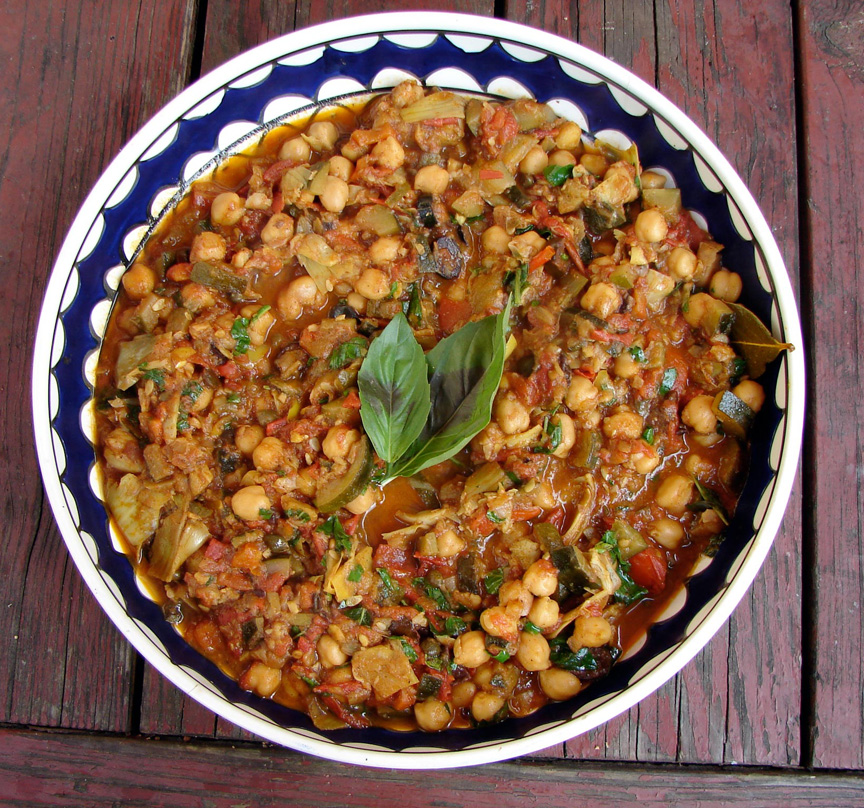
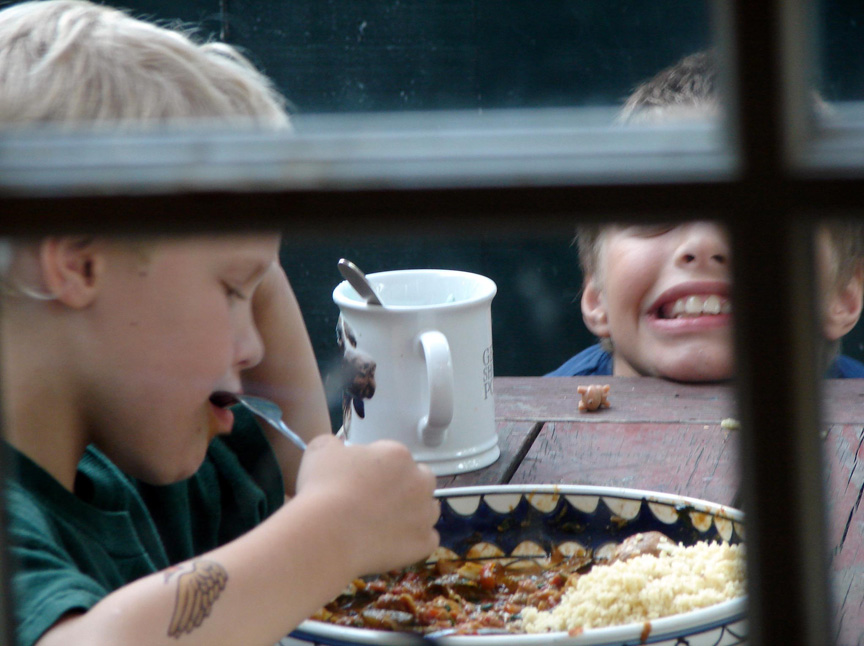
So when I made this Moroccan-spiced chickpea stew, Isaac refused to try it, because that’s what he does. Then I gave him a chickpea. He ate that, and helped himself to more. I gave him an olive. He ate that, and spooned a few more onto his plate. By the time the rest of us had left the table, I looked out the window and saw that he’d pulled the whole serving plate toward him, and was eating everything together, hungrily. So we’ll take Isaac swimming, and Malcolm will curl up on the couch with a good book.

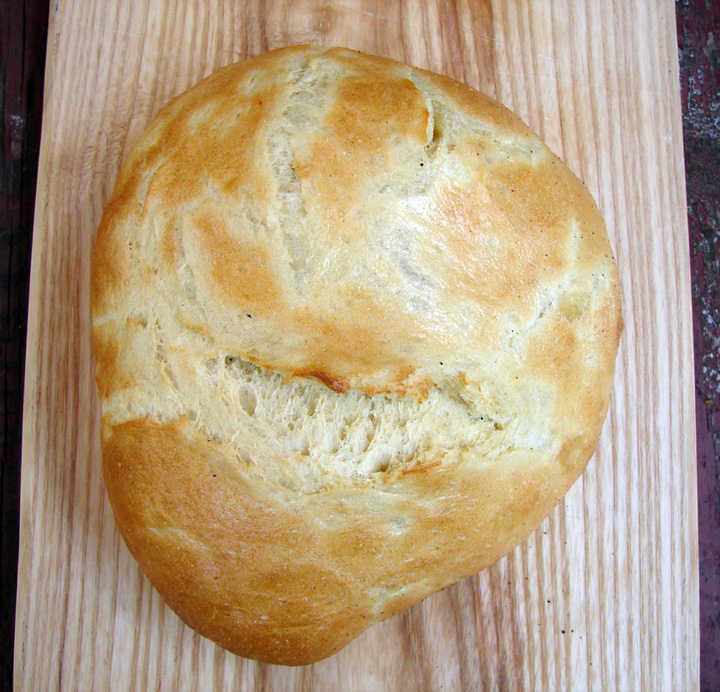
The stew was really tasty, and it’s a good way to use up all your tomatoes, zucchini, and peppers, if you’re sick and tired of ratatouille. It’s not authentically Moroccan-spiced, of course. It’s just that it’s a pleasing mixture of savory spices and herbs, and “sweet” spices and herbs. And the bread! Well, I’d been reading fascinating accounts of Moroccan flatbread, that generally contain semolina, and are folded into all sorts of beautiful fashions. I decided to play around with these ideas, but in one big loaf. It turned out very nice! With a lovely texture and flavor – crumbly, chewy, and satisfying. If you don’t feel like doing all the crazy folding, you could just shape it into a nice round, and leave it at that.

Here’s Peter Tosh’s beautiful I Am that I Am.

Continue reading

Chard and artichoke tart with a crispy eggplant crust

Eggplant-crusted chard tart

Here’s what I’ve been thinking about, in a very confused fashion, for the last half a day (and night!) We all know the myth of Icarus – his father, Daedalus, fashioned him a pair of wings made of wax and feathers. He warned him not to fly too close to the sun, but he was so giddy with the joy of flight, that he forgot his father’s words, flew too close to the sun, the wax melted, he continued happily flapping his arms, but without feathers he could no longer fly. He fell into the sea and drowned. And we all know the painting Landscape with the Fall of Icarus, attibuted to Bruegel. It’s a beautiful painting of a beautiful landscape, with people going about their business, unaware of Icarus’ fall, which is small and on the edge of the painting. And people have written poems about the painting. Auden’s Musée des Beaux-Arts, in which he describes how suffering “takes place/ While someone else is eating or opening a window or just walking dully along.” And William Carlos Williams wrote a poem by the same name as the painting, Landscape with the Fall of Icarus. So that’s the “evidence” and here are the questions… what does it all mean? Is Auden suggesting, as the word “dull” implies, that the ploughman and the angler are too coarse to take note of the tragedy of loftier men? Or is it that, simply, things go unnoticed. We’re so taken with our own lives and concerns that we don’t have the time or energy to commiserate with others? Is the original myth really a warning about excessive hubris? Or, was Icarus just enjoying the feeling of flight to such an extent that he forgot to be careful? People suffer all the time – ploughmen and anglers and painters and poets and master inventors. I suppose all the suffering is equally important (or unimportant) whether somebody paints a picture of it, or writes a poem or about it, or doesn’t notice it at all. The painting itself is so gorgeous, the people walking along with supposed dullness are so vibrantly portrayed. And, as the poets say, spring is in full glory, the sea is cool and pretty, the sun is hot and strong, and all of this will be true no matter what the fate of the men passing through the landscape. And then I can’t not think of Stephen Dedalus, with his suggestion that ‘The artist, like the God of the creation, remains within or behind or beyond or above his handiwork, invisible, refined out of existence, indifferent, paring his fingernails.’ Surely not, Joyce. Surely not! That quote has always bothered me. I’d love to have a meal with Pieter Bruegel, and Williams Carlos Williams, and WH Auden, and maybe even Ovid, and drink some wine and talk it all over.

Chard tart with crispy eggplant crust

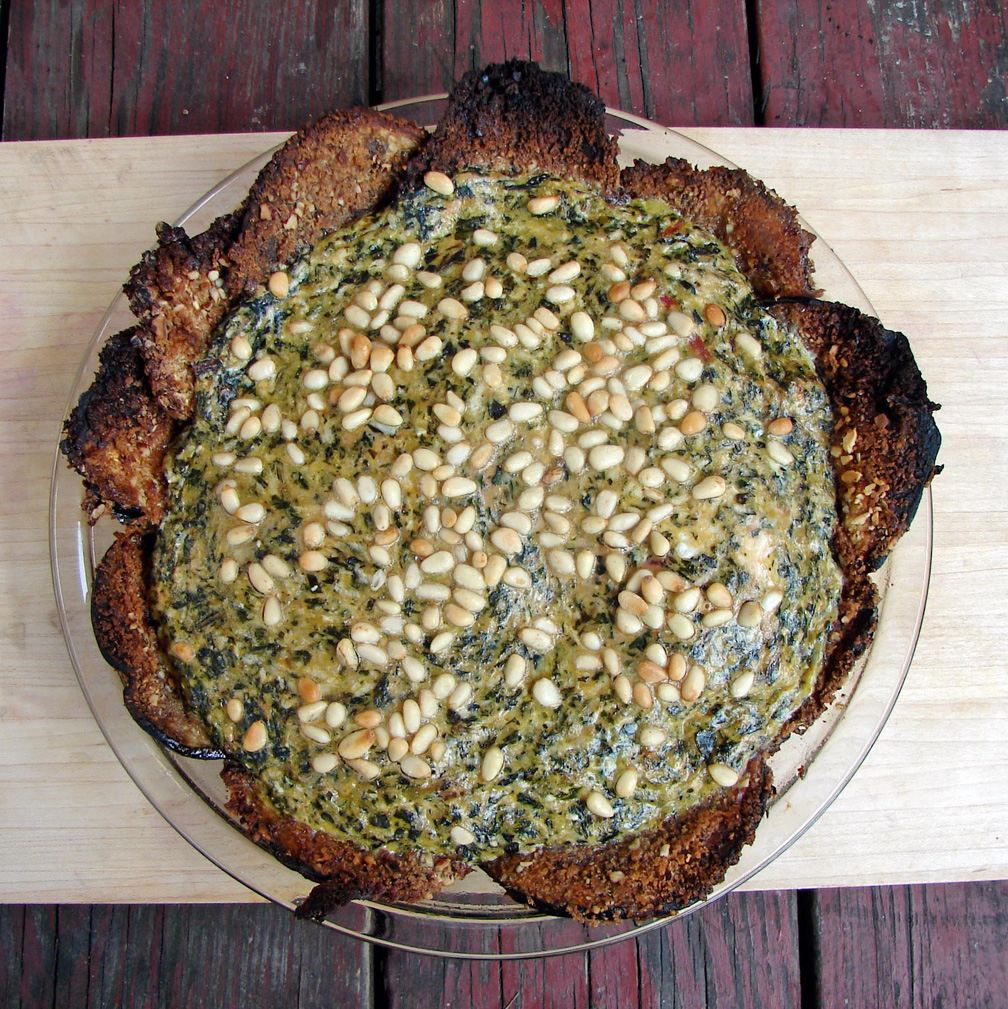
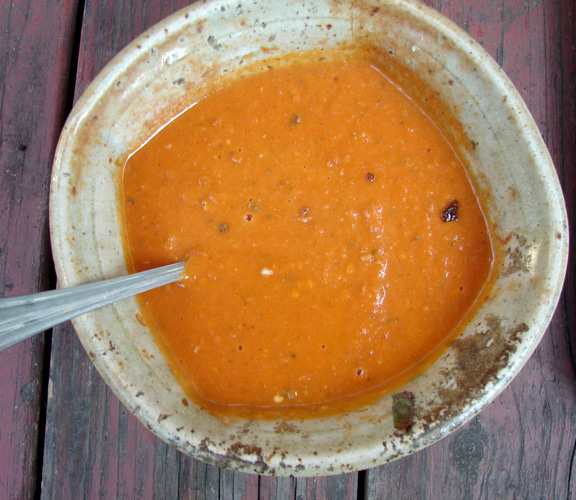
Maybe I’d make them this eggplant crusted chard and artichoke tart! I think it turned out quite pretty, and it certainly tasted good. The “crust” is made entirely of pieces of eggplant, dipped in egg, then dipped in pecans, breadcrumbs and a touch of flour, and then roasted in olive oil. I used a lot of bread crumbs and a small amount of flour, but if you used only pecans and gluten-free breadcrumbs, you’d have a gluten-free crust! The filling is soft and flavorful and savory, and the pine nuts add a nice toasty crunch on top. I served this with a smooth smoky, spicy, sweet sauce made with fresh tomatoes, green peppercorns, olives and raisins.

Tomato-raisin-olive sauce

Holy smoke! I forgot to post a song yesterday! Horrors. Here’s Alec Ounsworth with This is Not My Home (After Bruegel)
Continue reading

Sliced roasted potatoes

Sliced roasted potatoes

When I was in high school, my friend Brownyn and I discovered Tristan Tzara and the Dada manifesto. We were very taken with it! I suppose, to a pair of eccentric teenagers, there was comfort in the idea of tearing down all the rules and conventions and replacing them with something that seemed like meaningful nonsense or meaningless sense. I re-read the manifestos (there area a couple) the other day, and I like the parts of it that makes sense to me, which I suppose is the point of it. They say, “it is terribly simple, to launch a manifesto, you have to want: A, B, & C and fulminate against 1, 2, & 3.” I’m paraphrasing, and getting it all mixed up, but I’m sure they wouldn’t mind. It makes me want to write a manifesto! (The rusty little gears are whirring and whining!) If I were to write An Ordinary Manifesto, perfect simplicity would be a big part of it. I think there’s great beauty in simple things, if they’re well-seasoned, and this applies to food, and art, and life. Frequently I like the seasoning to be complex, but sometimes the seasoning should be simple as well. A little salt, a little pepper.

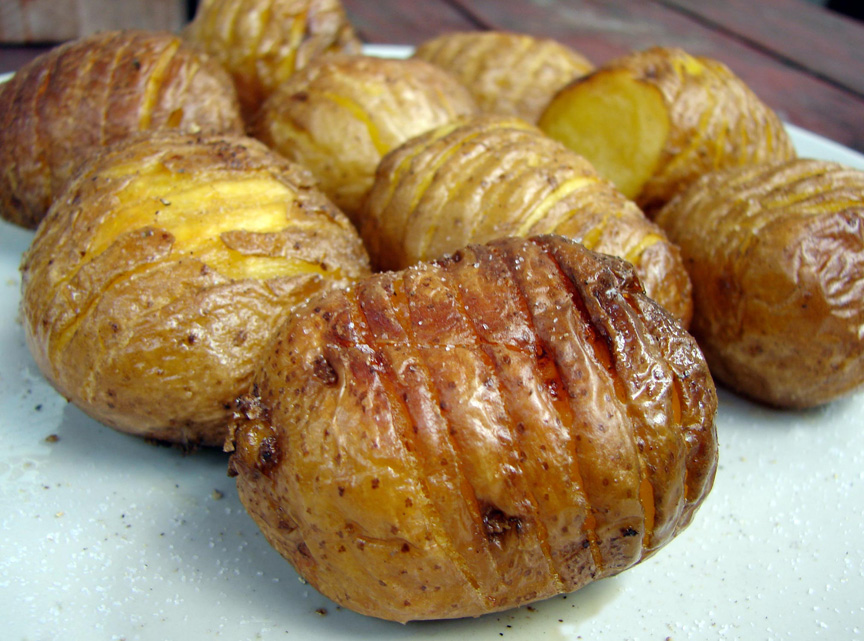
I think of potatoes as the ultimate blank canvas in food. They take so well to other flavors and textures. But they do have a flavor all their own, a lovely flavor. And each type of potato has its own distinctive flavor and texture. It’s easy to lose sight of that when you combine them with lots of other ingredients. Prepared simply, like this, with only olive oil, salt and pepper, their pleasing potato-y-ness glows through.

Here’s the Budos Band with Sing a Simple Song.
Continue reading

French cake a week – Genoise

Genoise

In which Claire, who doesn’t speak French, bakes her way through the cake section of a French cookbook from 1962.

We went back to basics, for this french-cake-a-week-cake, with a Genoise. And now I’m going to tell you all the ways that a genoise is like my favorite movie. To begin with, there’s the frenchness. My favorite movie is L’atalante, by Jean Vigo, which was shot in France in 1934. To go on with, a genoise is a very very simple cake. In its simplicity, the full subtle sweetness of the flavor shines through. I say, “sweetness,” but in truth I don’t mean sugary sweetness. The genoise is not the least bit cloying, it has a scant half cup of sugar (by my calculations). The method of making a genoise is (to me) unusual and completely delightful. It doesn’t involve leavening, rather you whisk whole eggs until they’re frothy and “ribbony,” and this is what gives the cake its lift and texture. I was childlike in my amazement! I’m sure I’ve seen video of people making this cake, but I’d never done it myself. I kept saying “this is fun! this is my idea of fun!” (David, passing through the kitchen at that moment, muttered, “poor kid,” and patted me on the head.) L’atalante, similarly, is sweet without being cloying. Aesthetically, it’s unusual, but the method makes so much sense as you watch it, that it feels nearly perfect. Visually and emotionally it’s the exact right combination of light and darkness. It has a real elegance, not from sophistication or stylishness, but from the deft, loving way that the shots are framed and the plot is revealed. It has a fine crumb. The characters are simple as well – they’re not a bit glamorous – but they’re beautiful in the way that kind people become beautiful when you know them well. Many stories end with a wedding, and tell you the dramatic story of the relationship leading up to it. L’atalante starts with a wedding, and tells you the story of the life of the newly-married couple in the weeks after. It’s as mundane, dreamy, messy, glowing, erotic, and bewildering as real human love. And it has Michel Simon, the slightly tart apricot jam on the top of the cake.

I’m not sure I made the cake exactly as it was meant to be made. As I’ve said, the instructions in my cookbook are slight, vague, and in a foreign language. But I think it came out precisely as it was supposed to. (I wouldn’t change anything about it!) I’ve read that the eggs are supposed to be whisked over a bain marie, but I didn’t see any indication of that in my recipe. I was conflicted about how to proceed. I decided to hold my very thick pottery bowl over the warm burner on which I’d melted the butter. This seemed like a good compromise! My eggs became perfectly frothy and mousse-like (…le mélange soit devenu mousseux.) Perhaps it’s because the day was so warm. If I tried this again in colder weather, I might arrange a bain marie. We shall see! I added a pinch of salt. Also, the instructions said to mix icing sugar with an eggwhite for the final glaze. I’m a coward about using raw eggs, so I combined icing sugar with a bit of milk, and drizzled this on the edges and down the sides. It adds a nice sort of crunchy crust to the otherwise soft, light yet dense cake. I believe the genoise is the base for many other fancier cakes, and I’ll certainly be making it again and trying out different fancifications.

Genoise

Here’s Le chalande qui passe sung by Lys Gauty. This song was an influence on the film, and at one point the title of the film was changed to Le chalande qui passe.

Continue reading

Gougere ring filled with tomatoes, basil and fresh mozzarella

Gougere ring

There’s this strange thing that happens sometimes – a poignant shifting of time and memory, that leaves you feeling an instant nostalgia. This happens a lot when you have children. You’ll watch them do something beautiful – they don’t even realize how beautiful – you’ll want to find your camera, but you know you can’t capture the moment, and in an instant it’s passed. It’s the past, and you think about yourself much older, remembering that moment. You’ll think about your children when they’re older, which is something you can’t know. It’s not unpleasant, not painful, exactly, but you very nearly regret the instant that you’re living in now, as it passes. It’s not the big events that people pose for and record, but the small, ordinary things your children say, their characteristic gestures, that you can’t be sure you’ll remember, because they’re so dear and familiar you almost forget to notice them. This time of year is ripe for these sea-shifting feelings. It’s pure summer – we’ve had such a spate of perfect summer days – but part of you misses all the summer days leading up to this one, and part of you anticipates autumn on its way.

I just learned that “poignant” meant, archaically, strong smelling or tasting, which seems sort of perfect, because taste and smell are such triggers for memory. If one vegetable was the embodiment of this ripe, sweet, late summer anxiety, surely it would be the tomato. You have almost more than you know what to do with, and they’re plump and perfect now. You want to can them and freeze them and save them to warm you in the middle of winter, but you know they won’t be the same! I feel the same way about basil – we have a garden-full. I made some pesto and froze it, but it’s not the same as picking up a ball the boys have kicked into the basil patch and being enveloped in basil-fragrance. Not surprisingly, these tastes are famously perfect together. I made a ring of gougeres – cheese-tinted choux pastry balls – as a crown for my tomatoes and basil. Gougeres are actually quite simple to make, and they’re very comforting and pleasing – soft and eggy. They deflate fairly quickly (at least mine did!) but they’re still plenty tasty. Served like this, they soaked up some of the lovely tomato & olive oil juices, which is one of my favorite parts of eating tomatoes!!

Here’s Ring of Fire by Johnny Cash.

Continue reading

Eggplant jalousie (and nut-roasted eggplant)

Eggplant jalousie

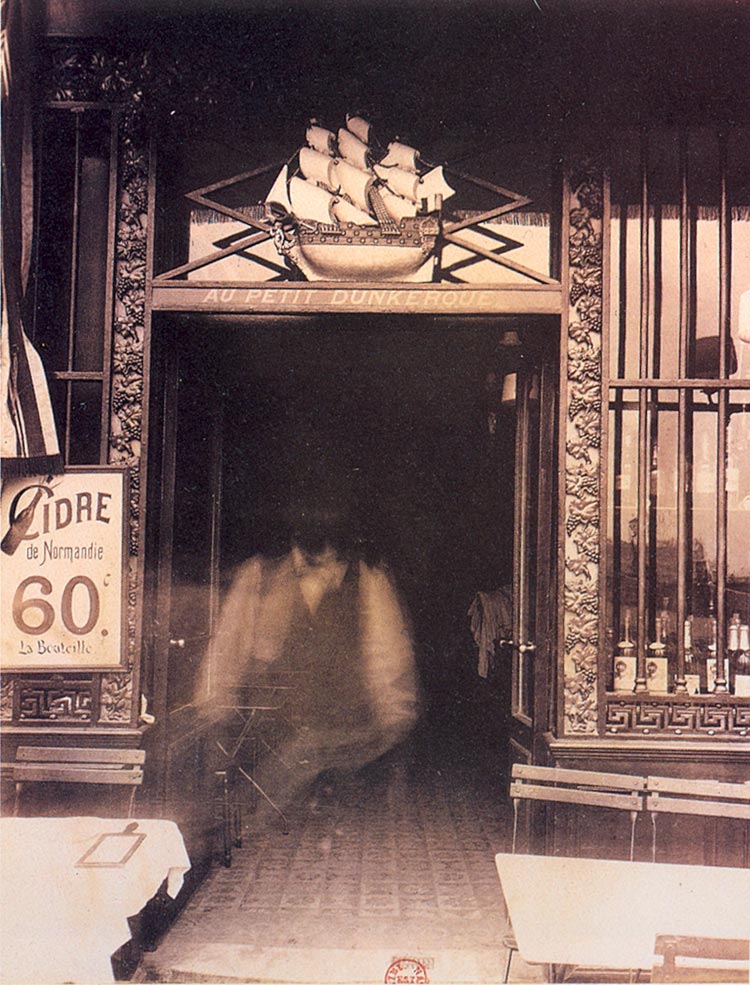
There are two quotes about photographer Eugene Atget that I particularly love. The first: After his death, the doctor asked his neighbors what he had died of. They replied, “He was an eccentric.” The second: “Atget never realized that he was Atget.” He never understood (or didn’t care to understand) the weighty place he occupied in the history of photography, or the influence he had on other photographers. He didn’t think of himself as an artist. He didn’t care for artistic movements and labels. He saw his job as utilitarian. He documented the world around him, and created photos of objects that painters could use as a resource. He lived from 1857 to 1927, and he documented the streets and homes of Paris. He photographed shops and alleys, he photographed staircases and parks and monuments and trees. His subjects were the ordinary, everyday haunts of Parisians: wig stores and litter-cluttered alleys, dingy rooms and the spaces in back of restaurants. His photographs are hauntingly beautiful. They’re beautifully focused and composed; beautifully light and dark. Because his purpose was to photograph a thing, or a place, the movements of the people in the space didn’t concern him. As a result people and animals become a ghostly blur – a transitory spirit biding time in the solid iron and stone buildings. I find Atget’s photos wonderfully cinematic and inspiring, and I could pore over them for hours, looking for the stories behind the facades.

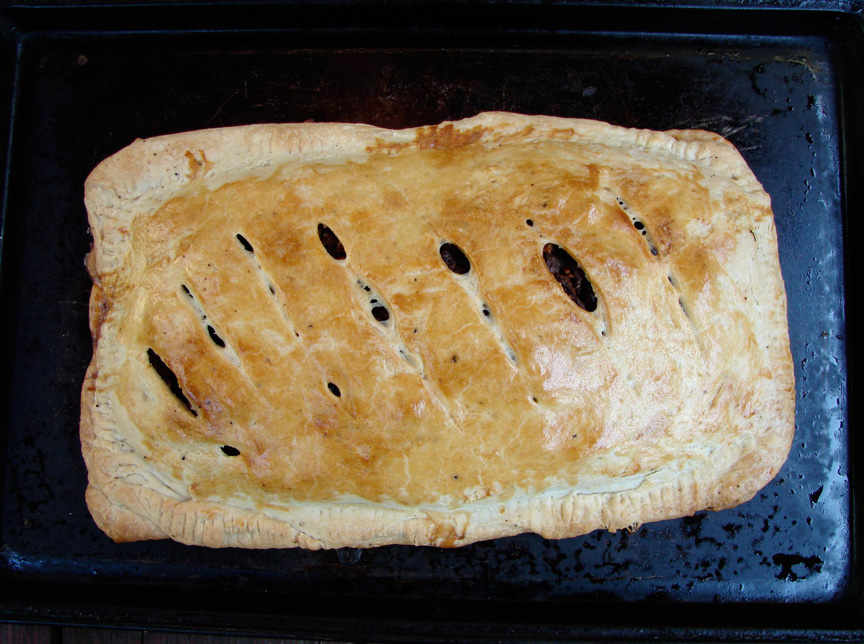
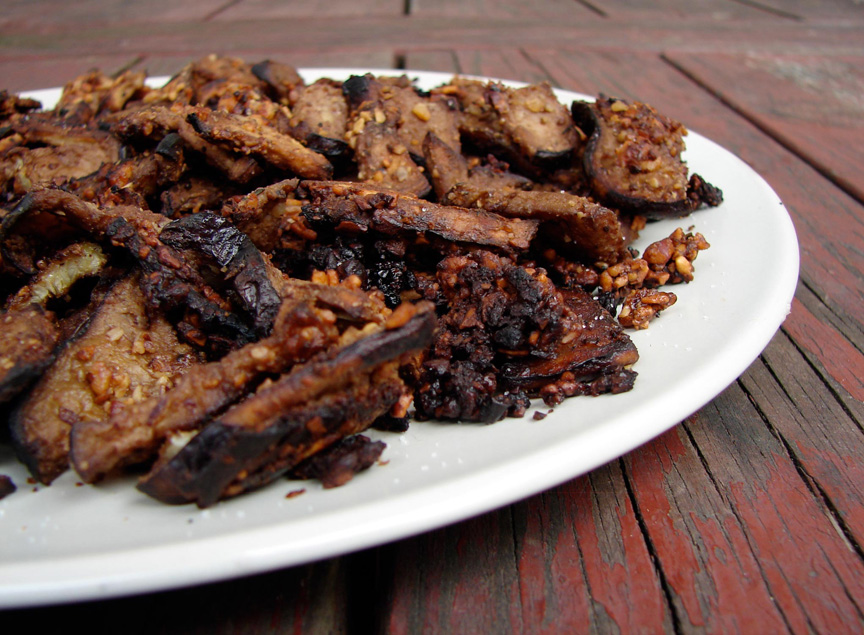
Similarly, you could glance at this eggplant jalousie and look deep into its slanted “windows” to find the lovely nutty-roasted eggplant. (Segue!) This version of eggplant is a slight variation on my eggplant anyone can love. I chopped it thinner and smaller, and rather than dip each piece in egg, I stirred the egg right in. And then I added a coating of chopped nuts. I used pecans, walnuts, hazelnuts and almonds. And then I roasted it in olive oil till lovely and crispy. The first night we ate this with grilled vegetables and a sauce made of capers and pine nuts. (Still perfecting that one, I’ll tell you about it later!) The next night, I made a rough puff pastry, and I stuffed it with these eggplants and with a smoked paprika, ricotta, fresh basil custard. It was delicious! Nutty, crispy, creamy, yum.

Nutty roasted eggplant

Here’s Nina Simone’s I Can’t See Nobody, because it’s killing me right now, and because it could describe Atget’s view of the buildings in his photos!

Continue reading