Strawberry chocolate hazelnut tart -or- failed macaron tart

failed-macaron-tartAndre Bazin once suggested that critics should only write about films they like, and I agree with him. I feel as though I wasted some time earlier in the week talking about aspects of films that I don’t enjoy, and, to borrow Dylan’s phrase, that don’t do no one no good. One of my goals as proprietress of The Ordinary is to share films and music and art that I’ve stumbled upon at some point in my life. I’d like to share things that are often overlooked because they’re small or not-well-hyped or outside the mainstream. I want to share them not just because they deserve to be known, or because their creators have earned praise and recognition, but because your life will be richer for knowing them. Or so I believe. In that spirit, I give you Little Fugitive. I spoke in grand and foolish terms about the death of independent cinema last week, so it’s fitting to talk now about the film that many people have described as the birth of American independent film. Little Fugitive was made in 1953 by novelist Raymond Abrashkin and photographers Morris Engel and Ruth Orkin. It was nominated for an Oscar for best writing, which is somewhat surprising, because the story, though full of drama, is somewhat sparse of plot. Seven-year-old Joey takes a practical joke a little too seriously and believes that he’s killed his older brother. He’s on the lam, and he flees to Coney Island, where he spends a few days eating hot dogs and cotton candy, sleeping under the boardwalk, and collecting the deposit money on glass bottles to pay for food. Richard Andrusco, who played Joey, was a non-professional, as were most of the other actors. Engel hid a camera inside his coat, and he filmed Coney Island, teeming with life. He filmed hundreds of people who had no idea they were on camera. His portrait is joyful and affectionate, he captures every small beautiful gesture. He shows the poetry of two people folding a towel, coming together and moving apart as if in some strange sweet dance, he shows the easy generosity of a boy carrying a younger child through a flooded street. The story is told with the spontaneity and humor of a child–he sees everything because few people notice him, and we’re afforded the same chance. He’s buoyant and resourceful, as most children are. He operates outside the rules of the bustling society around him, darting in and out of crowds, weaving through a sea of towels and sunbathers. During the day this is mostly exhilarating and fun–he’s getting away with something. But as evening falls we feel his wistfulness and loneliness. We’re not told about it, we’re not hammered over the head with it, but we feel it in the off-kilter shots, in shots of him still in the center of a whirl of families, in the lights of the amusement park separated from him by a sea of forbidding darkness, and in the way he falls as the parachute falls, floating slowly down to the dark earth.

In this scene of a sudden summer storm, everybody runs for shelter, and we see Joey by himself, in a desert of lonely empty beachfront, searching for bottles.

The film is so visually beautiful and yet so simple and unplanned–more about observation than manipulation, more about noticing and capturing the beauty of the every day than creating a pretty scene with an expensive budget. The movement of the crowds, the small dramas, the lights and shadows of the boardwalk, the boy’s little triumphs and failures are so beautifully captured and so captivating. Francois Truffaut credits The Little Fugitive with the birth of the French New Wave, “Our New Wave would never have come into being if it hadn’t been for the young American Morris Engel, who showed us the way to independent production with his fine movie The Little Fugitive.” I wish the Americans had noticed this film half as much! I wish it had been like a little pin full of simplicity and honesty to prick the bloated studio system, and let out all of that hot air.

Strawberry hazelnut tart

Strawberry hazelnut tart

The filmmakers of Little Fugitive worked with the materials they had, and that’s what we do here at The Ordinary as well. I had a lot of leftover egg whites from a job I did last week. I tried to make them into hazelnut macarons. All went well, they fluffed up nicely and piped up nicely. But they were soft and sticky when they were done. And they all stuck to the tray. So I scraped them off, mixed them with some butter, liqueur and brown sugar, and made them into a topping for this tart with strawberries and chocolate. Delicious! They crisped up nicely as topping, and added a wonderful crunch to the juicy fruit and the flaky crust. You could use almond macarons, or meringues and chopped hazelnuts. You could probably even combine eggwhites, sugar, coarsely ground hazelnuts and a bit of butter, and it would work just as well.

Here’s One Too Many Mornings by Bob Dylan, because it’s been on my mind, and it seems like such a perfect song right now.

Continue reading

Beet and kidney (bean) pies

Beet and kidney bean pie

Beet and kidney bean pie

It’s take your child to work day. The boys are at the shop with David, hopefully not routering their arms or circular sawing their fingers. Take your child to work day. It’s a little odd, when you stop to think about it, which for better or for worse I’ve just done. It seems to imply a certain neatness and regularity to the world that just doesn’t exist, as I see the world. Does every parent have a safe, child-friendly job? Does every parent have bosses and co-workers that will put up with an infestation of restless children? Does every parent have a job they can work at productively whilst entertaining a bored and or curious tyke? Does every parent have a job during school hours? Maybe they’re chefs or professors or rock stars or stage actors, and they work at night. Does every parent have a job at all? 399919_10200595609406883_2047603223_nI’ve just read that the day was invented by Gloria Steinem as Take Your Daughter to Work Day, and was intended to give girls a sense of possibility and purpose. This makes it seem even odder to me, almost as if it was subversively designed to illustrate the messiness of the world. How many children are bundled off to work with their fathers, because their mothers don’t work during the week because they’re home with children. Maybe they work at night or on the weekend so that they can be there to pick up their children after school. Maybe they have a job but its the kind of job many women have at some point in their lives–cooking or cleaning or caring for someone else’s children, and, strangely, this isn’t the kind of job you’d like to share with your own child. Maybe, like many women, you’re not treated with respect at your job, you’re not treated as an equal. A lot of things have changed, a lot of things have not. Of course, all of this stopping-to-think-about-it has included some thoughts on my own life, my own work, my own ideas of success or failure and how they don’t quite fit into those of the rest of the world. Any thing you do is considered work if somebody pays you to do it. And the more they pay you, the more successful you are at your job. I’ve been doing a bit of pastry cheffing, and yesterday I made a cake for a restaurant. If the boys had stayed home and helped me with that, they would have been at work with me (and we would have had fun!). Today, I don’t have any commissions for cake, so if the boys stayed home from school and baked a cake with me, we’d be goofing off (and we’d still have fun!). If I sit around writing or cooking or conspiring to make a movie, I’m a shiftless slacker who should go out and get a real job (I know, I know…). If somebody pays me to do those things, I’m a person who has followed my dreams to find success (although I probably still can’t afford health insurance.) Everything is a little different looked at through the prism of parenthood. What seems brave and valuable when you’re a single person with only yourself to care for, seems irresponsible once you have children. We have our own small business. We work seven days a week, one way or another, and the truth is that the boys spend all weekend every weekend at work with David, watching him watch the store while I wait tables. This is life as they know it. We don’t have days off or weekends or paid vacations, and we still can’t afford health insurance. And all summer when they knock about the house with me, cleaning and cooking and keeping themselves happy and creative, waiting impatiently while I finish writing some dumb thing so we can go to the creek, they’re at work with me, whether they know it or not. It’s messy, it doesn’t fit into any tidy pattern of employment, but I think they’re okay with it. I think they’re proud of us, and have a sense of possibility and purpose. I think they wouldn’t have it any other way.

Beet and kidney bean pie

Beet and kidney bean pie

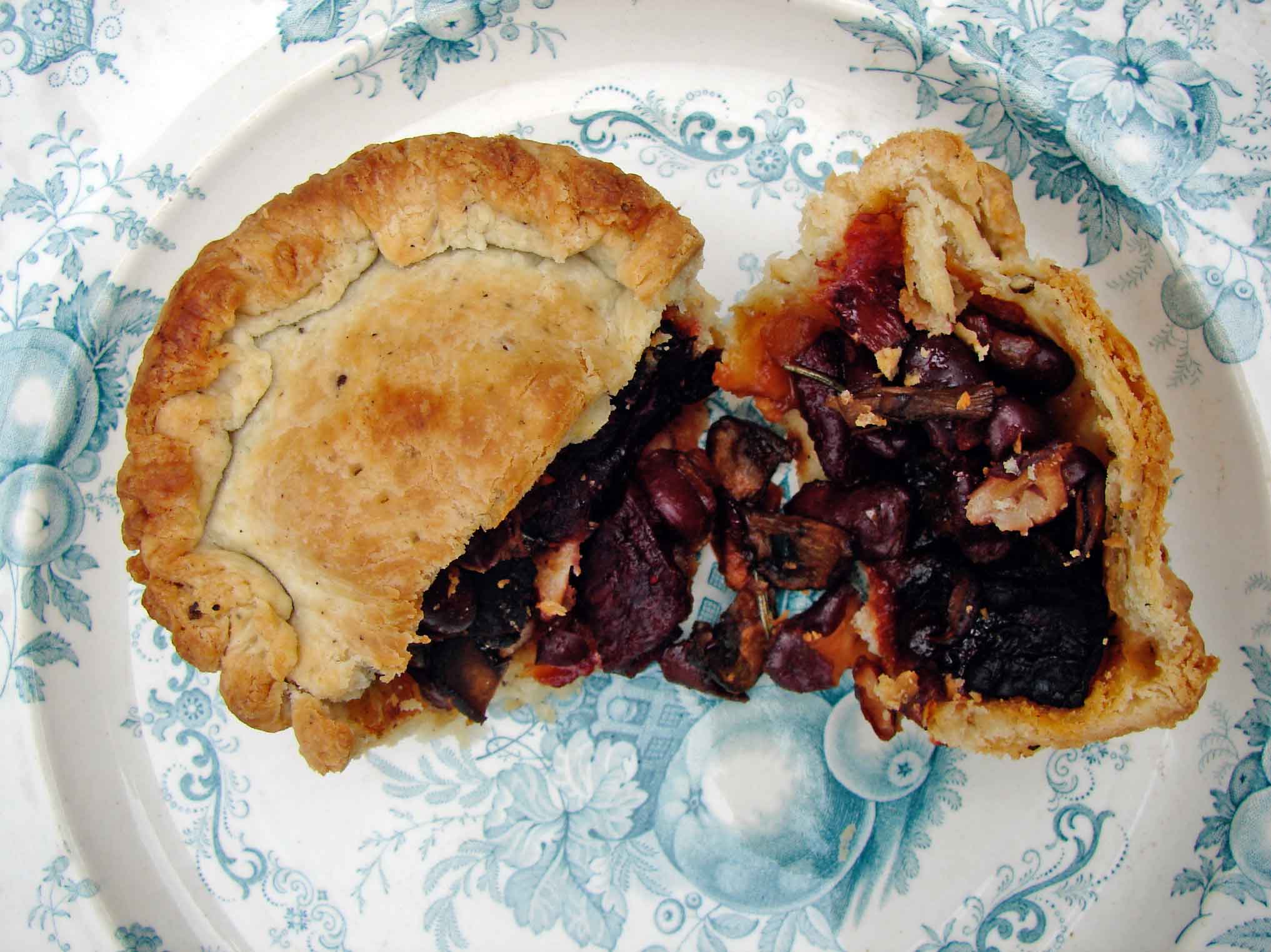
Beet and kidney bean pie! It’s ruddy! This was inspired, of course, by beef and kidney pie, or steak and kidney pie. It does have a certain meaty quality to it. It’s roasted beets and mushrooms combined with kidney beans in a saucy sauce of tamari, sage, rosemary, thyme and allspice. If you use vegetable shortening instead of butter in the crust, this would be vegan.

Here’s King Oliver’s Creole Jazz Band with Workingman’s Blues.

Continue reading

Spinach, chickpea and tarragon galette with a pecan crust

Spinach chickpea and tarragon tart

Spinach chickpea and tarragon tart

I had a discussion about film this weekend with some kids at work. They mentioned Tarantino, and, of course, being the bitter old lady that I am, I launched into a diatribe about how much I despise his films. (They love me at work! I’m a bright ray of sunshine!) The kids I was talking to probably thought I was some lame older person who just didn’t get it, man. That’s the whole point of cool films like Tarantino’s, they piss off the humorless missish squares and the easily offended. Well! Obviously I couldn’t leave it at that, so I calmly explained that I’d made a few films myself, and I’d had a lot of respect and hope for the American independent film movement, when I was the same age as these kids, and that Tarantino SINGLE HANDEDLY KILLED IT DEAD!! And that although I haven’t actually seen any of his films since Pulp Fiction, I HATE THEM ALL!! And I quietly assured them that my films weren’t failures due to any flaws that they (obviously) don’t have, but that it was, in fact, ALL QUENTIN TARANTINO’S FAULT!! Well, not just his fault, there are a couple of other people I blame, too. The kids said, “Well, his films are very violent.” And I replied serenely, “IT’S NOT THE VIOLENCE I OBJECT TO!! IT’S THE CLEVER SOULLESS INSINCERITY!! It’s the violence for no reason other than to shock. And we eat it up!” I’ve been thinking about it a lot, since, wandering through the week in the heavy fog of news of shocking violence. I keep returning to the same place, the place I always come back to. It’s so easy to shock. It’s so easy to make people sad or scared. Combine this with a little cleverness, an exploitative knowledge of some cool films other people have made and a good soundtrack, and you’ve got a hit. Obviously this doesn’t just apply to American independent film. It applies to all art, it applies to life. Acts of shocking violence get attention in a way that acts of kindness and generosity rarely do. We have odd values, here in the USA. We pay more attention to petty dramas and insipid squabbles than to anything with complicated depth of emotion. It’s not just Tarantino or independent film, it’s everything–our news, our (sur)reality shows, our politics. It’s difficult to create something that’s quiet and thoughtful and beautiful. It’s difficult to bare your soul, it’s difficult to make something sincere. It’s difficult to make a film about violence as violence actually is–messy and anguished and disjointed. Without honesty, soul, and love, a film isn’t worth watching, a song isn’t worth listening to, life isn’t worth living. This is my diatribe and I’m sticking to it!

I like a rustic galette in the springtime. It’s a nice transition between the solid, nutty, beany double-crusted pies of winter and the light vegetabley open tarts of summer. You’ve got your greens and your fresh herbs, but they’re sheltered from the cool spring breezes by a touch of crust. A light jacket of crust, a shawl, maybe. This particular crust was nice and crunchy with pecans. And I flavored the filling of spinach and chickpeas with tarragon and fenugreek, because I wanted to do something different. THey’re nice together–they both have mysterious flavors, a little sweet, a little bitter. Don’t use too much fenugreek or it will take over the flavor. A pinch will do it.

Here’s I Know it’s Over, by The Smiths. It’s so easy to laugh, It’s so easy to hate, It takes guts to be gentle and kind.
Continue reading

Roasted chickpeas, potatoes and tomatoes

Roasted chickpeas, potatoes and tomatoes with sage and rosemary

Roasted chickpeas, potatoes and tomatoes with sage and rosemary

Thoreau famously warned us to “beware of all enterprises that require new clothes.” As I was going about my chores this morning, thinking my confused thoughts, I came up with my own version. “Beware of any enterprise that requires you to stifle your sense of compassion.” Beware of any occupation that requires you to think of other lives as less valuable than your own life. Beware of any undertaking that requires you to treat people in a way you wouldn’t treat the people you most love. Beware of any job that forces you to think of people as enemies. If you’re being trained that the suffering of strangers is less tragic than the suffering of your friends, quit your training. Beware of anybody that asks you to respond to any situation with only anger and fear. Beware of anybody that tells you love, pity, and empathy are signs of weakness. Beware of any goal that requires cruelty or thoughtlessness to achieve. Beware of anyone that asks you to act without understanding.

    It is the job of thinking people not to be on the side of the executioners. – Albert Camus

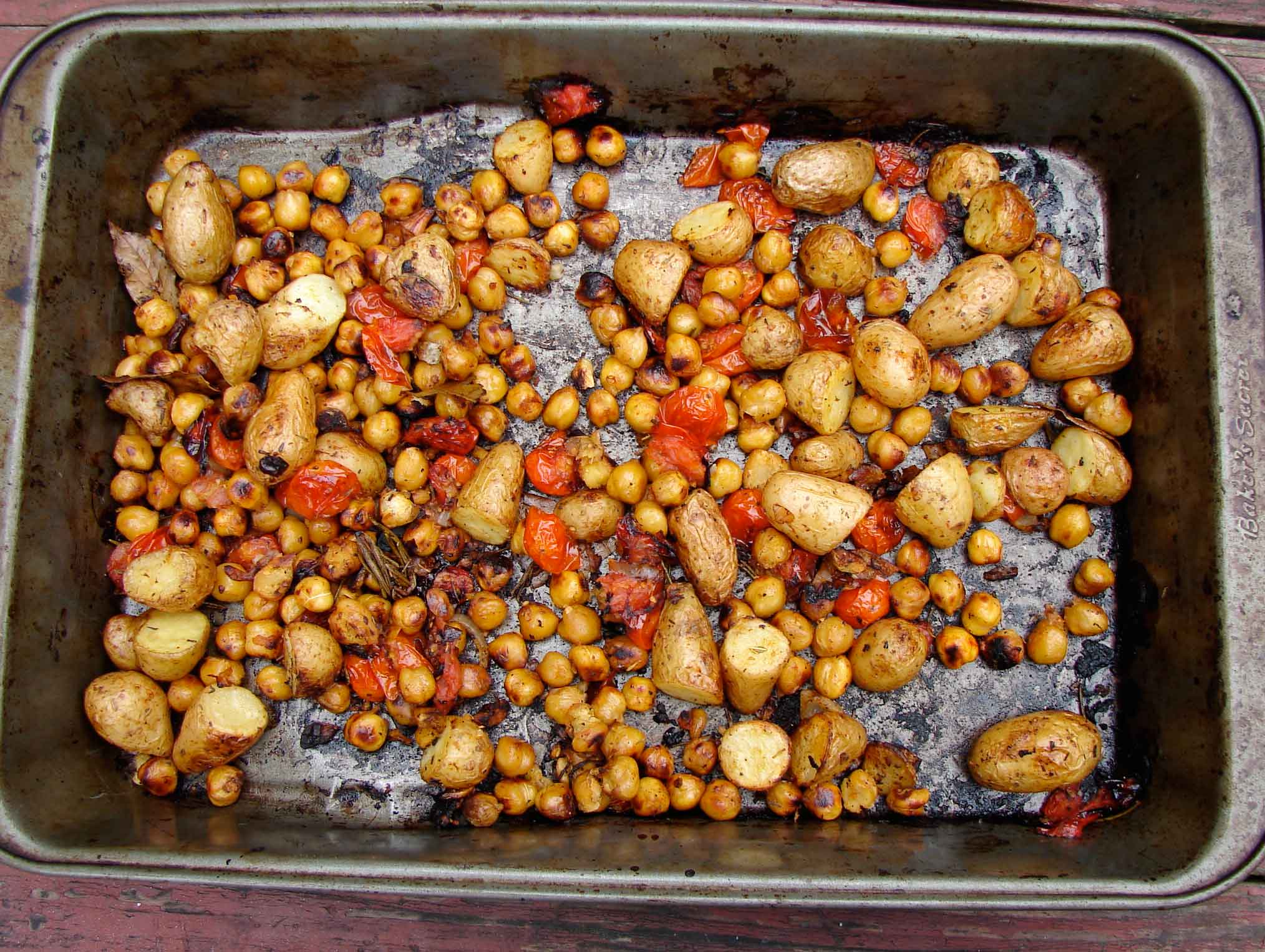
So! Tiny new potatoes, chickpeas and tomatoes, all tossed together with shallots, garlic and olive oil. Seasoned with rosemary and sage, and roasted till crispy and caramelized. Delicious! This smells so good while you’re cooking it. I like potatoes and tomatoes together, for some reason it seems very summery and harvesty to me. We’re not there yet, obviously, so this is like a wish or a preview. This would be nice in summer with chopped ripe tomatoes, but for the time being I used little sweet grape tomatoes. They became almost like sundried tomatoes. Rich and flavorful. The first time we ate this, it was crispy and firm. The second time, I added some white wine at the end, used it to scrape up all the nice caramelly bits, covered it, and cooked it till everything was tender. It was very nice both ways! We ate it on a bed of baby spinach and arugula. Lovely.

Here’s Compassion, by Nina Simone.

Continue reading

Broccoli rabe with apples, walnuts, honey and cheddar

broccoli rabe with walnuts and apples

broccoli rabe with walnuts and apples

In French, the word “de” can mean “from” or “of.” This distinction, along with the ambiguity of the ellipsis, make the original title of Ousmane Sembene’s first feature film, La Noire De… enigmatic. It becomes a question–is Diouana the woman from Senegal, or is she the girl who belongs to her French employers? The film opens with a question as well, Diouna steps off a boat into a new world, and wonders, “Will someone be waiting for me?” a question that echoes in the loneliness she experiences throughout the film. There is someone to meet her at the dock, but he is coldly polite. He does not carry her bag or open the car door for her. She answers him with the same tone, saying no more than “Oui, Monsieur,” to his perfunctory inquiries. Sembene shot the film in 1965, in a short time on a very low budget, but he transformed the constraints of production and used his limitations to beautiful advantage. The film was shot without sound and post-synched, but the dialog between Diouana and her employers is so clipped and minimal that this doesn’t become a problem. She doesn’t have a voice in their presence. They scold her with increasing petulance and ferocity, but she goes silently about her chores. What we get instead is the rich, intelligent voice of her thoughts and her memories. We hear her hopes about starting this new life as a nanny, her anxieties as it becomes obvious she’s not a nanny but a maid of all work, and finally her disappointment and bitterness at being mislead and mistreated. This painful, voiceless isolation is at its worst when she receives a letter from her mother. Neither of them can read or write. Her mother had to hire a letter-writer, and Diouana relies on her employer to read the letter to her. He takes it upon himself to write back, taking down not her words, nothing close to her thoughts, just trite niceties about her situation that he wishes were true. The jarring space between his words and her reality, between her hopeful memories and her present situation, between her articulate imagination and her silent life is so great and dark that she falls into it and can’t find her way back out. The film is beautifully filmed–it is one of the most aesthetically thoughtful black-and-white films that I have ever seen. From Diouana’s graphically patterned hand-me-down dresses to the gleaming white tub and toilet she must scrub, every shot is so full of contrasts of light and shadow that it becomes more than metaphor, it becomes the whole world. This is a movie I want to read. Every image, every shot and movement seems full of shifting significant meaning that I want to notice and understand. I want Diouana to explain it to me. I want to hear her voice.

I love the music in La Noire De…, but I can’t track down the composer. Does anybody know who it is? My search led me to this beautiful song by Sory Kandia Kouyate, called Massane Cissé. So that is your song for today.

I’ve been craving greens like a crazy person! Something about seeing the world turn green all around me, and smelling the fresh sharp sweet smell of the ferns and undergrowth makes me want to cook and eat them! So I make lots of broccoli rabe, which has that bitter-sweet, strong-tender pleasantness. I combined it, here, with crunchy walnuts and tart-sweet pink lady apples. I cooked the apples with the garlic when we ate it, but I think they’d be better fresh and crispy and raw, so that’s how I’m telling you to do it!
Continue reading

Creamy vegan spinach & herb sauce

Creamy vegan spinach and herb sauce

Creamy vegan spinach and herb sauce

My favorite song at the moment is that of the white throated sparrow. It’s a simple little song consisting of four tones; apparently the second is a whole note lower than the first, and it ends a minor third below that. It sounds to some people as though the bird is saying “Po-or Jack Peabody Peabody Peabody.” And that is our clumsy, human way of describing this wild wistful little song. I asked Malcolm what it sounded like, and he said, “Sad but hopeful.” And that’s exactly how it sounds to me, too! It’s nostalgic and full of memories, but it sounds like spring and good thoughts for the future. I love the fact that birds have dialects and regional accents. Your knowledge of a white throated sparrow’s song will be different from mine if you live in a distant part of the country. I feel so lucky to have this particular song be my white throated sparrow-neighbor’s song. And a sparrow is such an ordinary little bird. If you saw sparrows in your garden you’d say, “Oh it’s just a bunch of sparrows,” and not even take the trouble to find out what kind of sparrow they are. They’re small and plump and drab and brown. But the white throated sparrow has dashing yellow spots on his head, and when he opens his mouth…glory! I love the fact that we can try to define the song according to our understanding, and describe the intervals between pitches and the rhythms of the notes, but in reality, the song contains subtleties beyond our human musical language. We can never pin down the specifics of melody or meter, just as we can never know what the bird is saying when he repeats his song over and over. And that mystery makes it even more beautiful. So this is the song stuck in my head, that I whistle over and over as I go through my day. This is my favorite song at the moment.

This week’s interactive playlist will be all of our favorite songs at this moment in time. I obviously need your help with this one, or it will just be a short list of songs that I like. Funnily enough, all of the songs I added to the list sound wistful to me. Must be springtime! I haven’t been listening to anything new lately. I’ve been playing some songs for the boys that I used to love, and I’ve had a few longtime favorites buzzing around in my head for one reason or another. What about you? What have you been listening to? Add your songs to the playlist, or leave a comment and I’ll add them myself.

This vegan sauce was very smooth and flavorful. I utilized two of my favorite creamy-vegan-sauce making tricks…cauliflower and almonds. They’re both quite mild flavors, but they blend up nicely. This sauce, as you can see, is lovely and GREEN!! It’s a good sauce for spring. I added grape tomatoes and capers, for a little juicy tangy kick, but you could use it as it is, or add any kind of vegetable or bean you like. White beans or chickpeas would be nice. We ate it over orchiette pasta. If you add less water, you’d have a nice purée as a side dish or base for a more substantial main meal. If you added more water or vegetable broth, you’d have a smooth velvety soup…a bisque.

Continue reading

Tacos with spicy black bean mince

Black bean mince tacos

Black bean mince tacos

Behind the school there’s a hill where the children play. Some will build forts, some will make a bridge over the slight ravine that leads to the hill or a dam for the creek that runs down the hill after a great rain, some will be content just to climb, and see how high they get, and look down on the world below them. In the winter the hill is bare and beautiful, with a ruddy light between the silvery sycamore trunks; in the summer it’s lush and green, and it’s harder to find your children behind the vines and brambles. When Malcolm was younger, he used to disappear over the top of the hill, and it made me so anxious. I like to joke that I can get up the hill, but I can’t get back down. Of course I could if I really needed to, but I’m not as nimble as these young mountain goats, with their fearlessness and their low centers of gravity. So I’d stand at the bottom and fret, and yell at poor Isaac if he ventured up the hill at all. It’s odd to think back to that time, now, because these days I don’t think twice about letting Malcolm go over the top of the hill. I still don’t know what it looks like up there, and for some reason that idea appeals to me. I like to think about Malcolm venturing to places I don’t go, and seeing what I can’t see. I like to think about his world growing and glowing in that way, rich and colorful in my imagination and his memory. When we go for walks, Malcolm’s always climbing and leaping and scampering to places I could but generally won’t go. On top of giant piles of rock or down a slippery river bank. It used to me taking pictures of him and these feats of derring-do. Lately he’s taken my phone with him, so that he can take a picture of the view from his angle, of the world as he sees it. The other day we walked along the abandoned train tracks to the south of town, and came to a train car bathed in ridiculously beautiful golden evening light. I took pictures from the outside, but Malcolm, of course, climbed in.
glowy train

glowy train

And then he asked for my phone and climbed the ladder to the odd-looking train car adjacent.
Malcolm-climbing

And he took a picture of what he saw there–the wild and beautiful evidence of kids decorating their own secret world, making their mark, claiming their space.

What Malcolm Saw

What Malcolm Saw

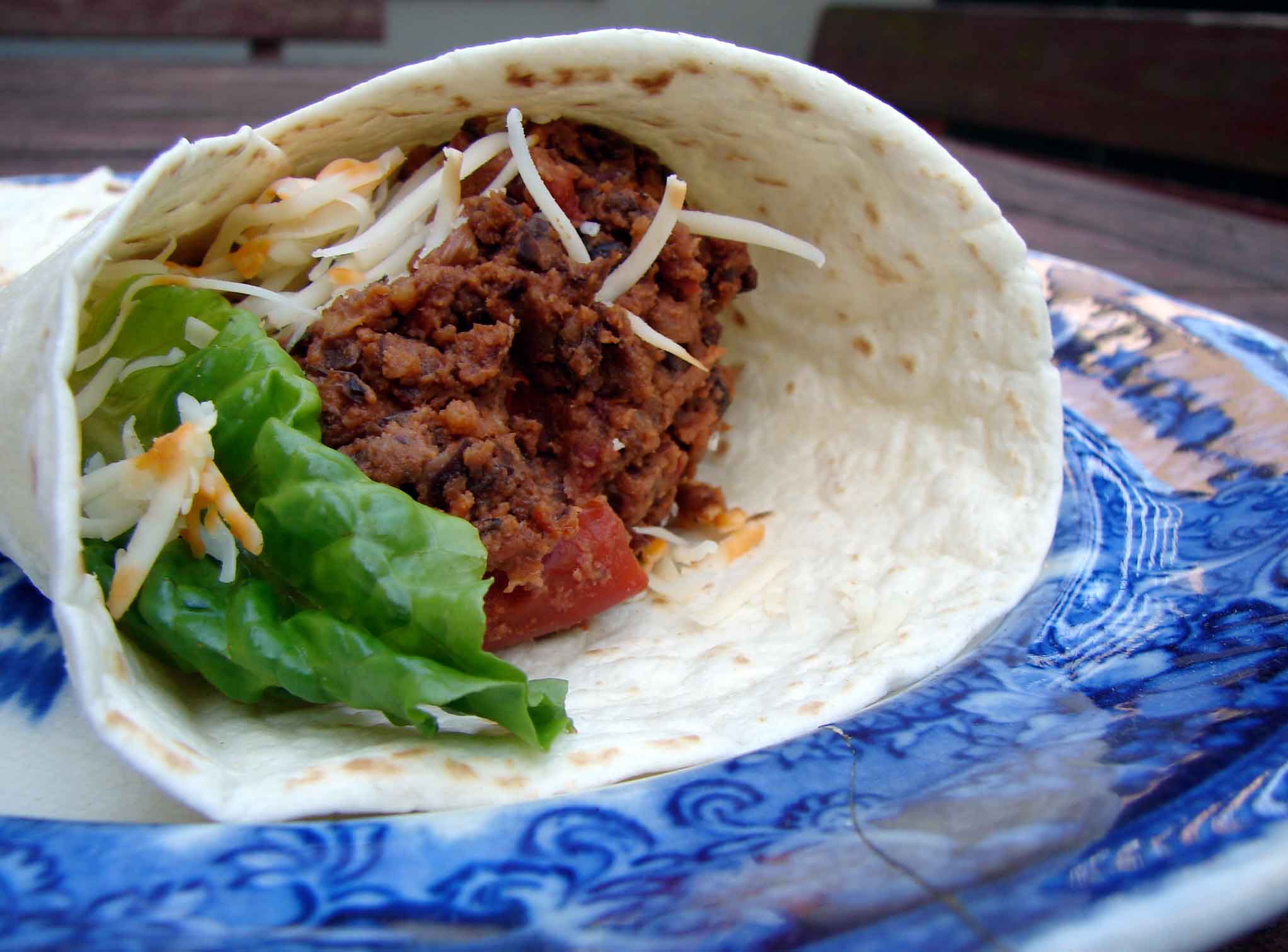
I’ve made black bean mince before, but I’d never used it in tacos. It makes so much sense! It’s almost like refried beans, but with more substance and texture and flavor. I added sage, oregano, cumin and smoked paprika, which made it very tasty. We ate it with basmati rice, warm tortillas, shredded lettuce, and grated sharp cheddar. It would be nice with avocado, salsa, cilantro, hot sauce…anything you like on a taco. It would also be good baked inside of enchiladas or burritos. Very easy, very quick, very cheap. I made mine with eggs, to give it more crumbly texture, but you could leave them out if you’re vegan and it will still taste good.

Here’s KRS One with Out for Fame.

Continue reading

Parsnip and semolina flatbreads

Parsnip rosemary flatbread

Parsnip rosemary flatbread

It’s been a heavy sort of a week. Everything feels a little more dangerous and uncertain than it generally does in our part of the world. It would be easy to fall into an anxious frame of mind, and hide under the covers all day. I’ve got all sorts of heavy thoughts in my head, because I’m that kind of person, and all sorts of serious things to talk about. But the thoughts that keep rising to the surface are much lighter, brighter thoughts. They’re about a cartoon. We have a fairly strict NO TV BEFORE SCHOOL policy in our house. But, like all our fairly strict policies, it’s made to be broken. Lately we’ve been watching one 11-minute episode of Adventure Time each morning, and I can’t tell you how much it’s grown on me! It’s the story of Jake the Dog and Finn the Human, they live together (without parental supervision!) in a giant rambling tree house. They go on adventures. They wander their strange world looking for evil to fight and people to save–they’re self-proclaimed heroes. The beautiful thing about them is that they’re like children–they’re like my children–they’re silly and they make dumb fart jokes, they don’t fully understand the adult world around them, but they wade through it anyway. They don’t fully understand their own emotions, but they try. They’re cheerful, they’re pranksters, they’re good friends, they’re up for anything. They seem fearless, and in many episodes it’s their fearlessness that saves them. Because in the cartoon, as in life, oftentimes the evildoers’ only real power is to cause fear and manipulate people based on their fear. But they’re not fearless. In my favorite episode, Finn confronts his fear of the ocean, using Jake’s five-step method (which includes rhyming couplets!). I’m scared of the ocean! It was bizarrely comforting to learn that Finn is too. And he never overcomes that fear, he learns to embrace it, because all heroes have a flaw. Finn and Jake live in the land of Ooo, which is a very strange place. But while all the strange situations feel so familiar, and the characters feel so human–flawed and morally complicated, petty and generous, brave and foolish. There’s a childlike logic to the show that makes it feel so perfect–that makes it comforting and inspiring in the way that talking to Malcolm and Isaac is comforting and inspiring. The way they look at the world is so rationally nonsensical and hopeful. I like to walk to school with Isaac humming the end credits theme song in my head. “We can wander through the forest and do so as we please.” That’s what we do! We wander through the forest together. And it’s a little easier to face a heavy scary world if you do so as heroes, looking for adventure, trying to be righteous, trying to muddle through.

These flatbreads contain some pureed parsnip, which makes them nice and soft and flavorful. And they have rosemary and semolina, which makes them even nicer and more flavorful. Malcolm loved them and asked if he could have one for his lunch the next day, but the dog ate the leftover flatbreads right off the table! Bad girl!!

Here’s the ending theme of Adventure Time.

Continue reading

Pizza with baby spinach, rosemary-roasted mushrooms and brie

Roasted mushroom, spinach and brie pizza

Roasted mushroom, spinach and brie pizza

I find it very beautiful and moving that people make connections–not just that we’re able to, but that we need to. We connect little bits of fact to make stories, because it helps us to understand and to share those little bits of fact. When an event occurs that’s hard for us to understand or explain, we find ways to connect ourselves to it, to make sense of it through our experiences. We do this almost without thinking, it’s our first reaction. And our second is to share those connections, to tell others about them, to talk and talk and try to understand. We’ll say, “I’ve lived in that place,” “I knew that person,” “I knew someone that knew that person.” We’ll make connections to other similar events that we’ve lived through, that we’ve survived. It’s tempting, in a less generous or a myopically hypocritical moment, to say, “We only talk about violence when it happens in a place where we love, to people like us!” Or even to shout, “It’s not about you!” But, of course, it is about you, whoever you may be. It’s about all of us. It’s our way to lend our strength to strangers we may never meet, to suffer with the sufferers and explain the inexplicable. It’s our way to give hope for a better time after a strange, sad time. It’s our way to connect ourselves not just to events but to people, our way to extend our sense of family, to create new bonds of responsibility and affection through compassion and empathy. It’s probably facile and foolish to say it, but it seems that if we could expand these connections to reach beyond similarities of geography or experience, if we could make a larger more universal connection–if we could sympathize with somebody not because we lived in the same place but because she, too, has a daughter, or is a daughter, or is human, or, simply, is alive–if we could do this then we would have fewer of these incomprehensible events to explain, and fewer people to mourn.

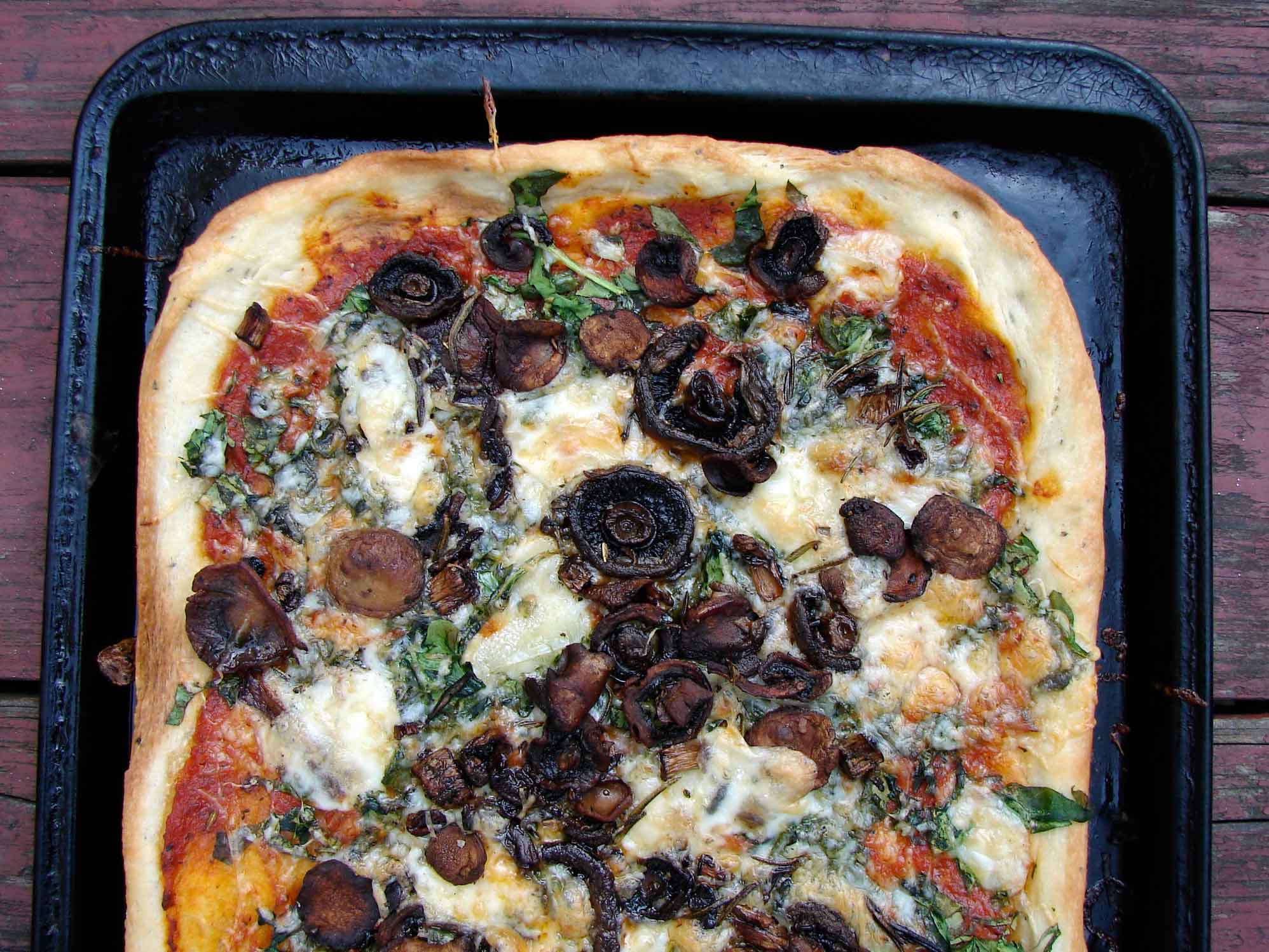
So this is what I’ve been thinking all morning, as I kneaded dough and rolled out dough and shaped quite a few tarts. Baking as comfort and therapy! Over the weekend we made some pizzas. I wanted to make something the boys liked to eat, that they’d actually look forward to, and pizza never fails. I made the dough before I went to work, and then when I came home we made all the toppings. The dough rose for quite a few hours, this way, but it turned out extra crispy! This makes two big cookie-tray-sized pizzas. I made one plain, with just sauce and cheese, and one fancy, with spinach and musrhooms and brie. I’ve given the toppings in amounts here to make two fancy pizzas, but do as you like! That’s the beauty of pizza!

Here’s Elmore James with It Hurts Me Too. One of the best songs ever ever ever.

Continue reading

Honey tamari bagels

Honey tamari bagels

Honey tamari bagels

I’m in a mood to submit things! I want to send out a million stories and queries and copies of my film or my screenplay, I want to send them to anybody I can think of! Maybe it’s the spring weather, making me feel as though I need to plant a lot of seeds, so that I can sit by and eagerly watch them rise up out of the ground! In my dreams I’ll have a whole garden of bright, unfurling green shoots, and who knows what they’ll become? Who knows? I want to be on tenterhooks every time I check my email or collect the real mail, because you never know what could happen! Somebody somewhere might like something. It’s not impossible. It happens to people sometimes. Not me, ever, but you never know! And they’ll be all, “well we want to pay you hundreds of dollars for this remarkable two-page story, and set you up with a lucrative contract for writing novels and cookbooks and making films–you’ll have complete artistic freedom, and you’ll really have no financial worries for the rest of your days.” And I’ll be all, “don’t insult me, man. It’s not about the money, it’s about the art, you can keep your contract.” Yeah. I was searching for places to submit things, this morning–you know, any random place accepting any kind of submission, and I came across the online version of a very hip literary magazine. And the funny thing about this online version of a very hip literary magazine was that all of the contributions were hip, ironic little pieces that disparaged ironic hipsters!! I don’t even know what that is. It would be self-loathing, if it involved that much passion, but it obviously didn’t, because it’s very hard to maintain a sarcastic tone if you’re feeling any actual emotion. I felt very curmudgeonly, reading this online literary magazine. I felt cranky about the fact that the word “ironic” is so overused that it no longer has much meaning. I felt cranky because what I was reading wasn’t satire, it could barely muster the energy to be sarcastic, it was just clever and snarky. And I felt a little sad because nothing beautiful can come from such insincerity and soullessness. It’s so easy to be negative and critical and cruel. It’s so easy to elicit a response to mockery and hatred. These are the kind of seeds that grow fast and hardy. They’re bright and colorful and hard to miss. They crowd out the more fragile, less impressively-blossomed plants. They have a funny smell, and they don’t last very long, but there will always be plenty more to take their place.

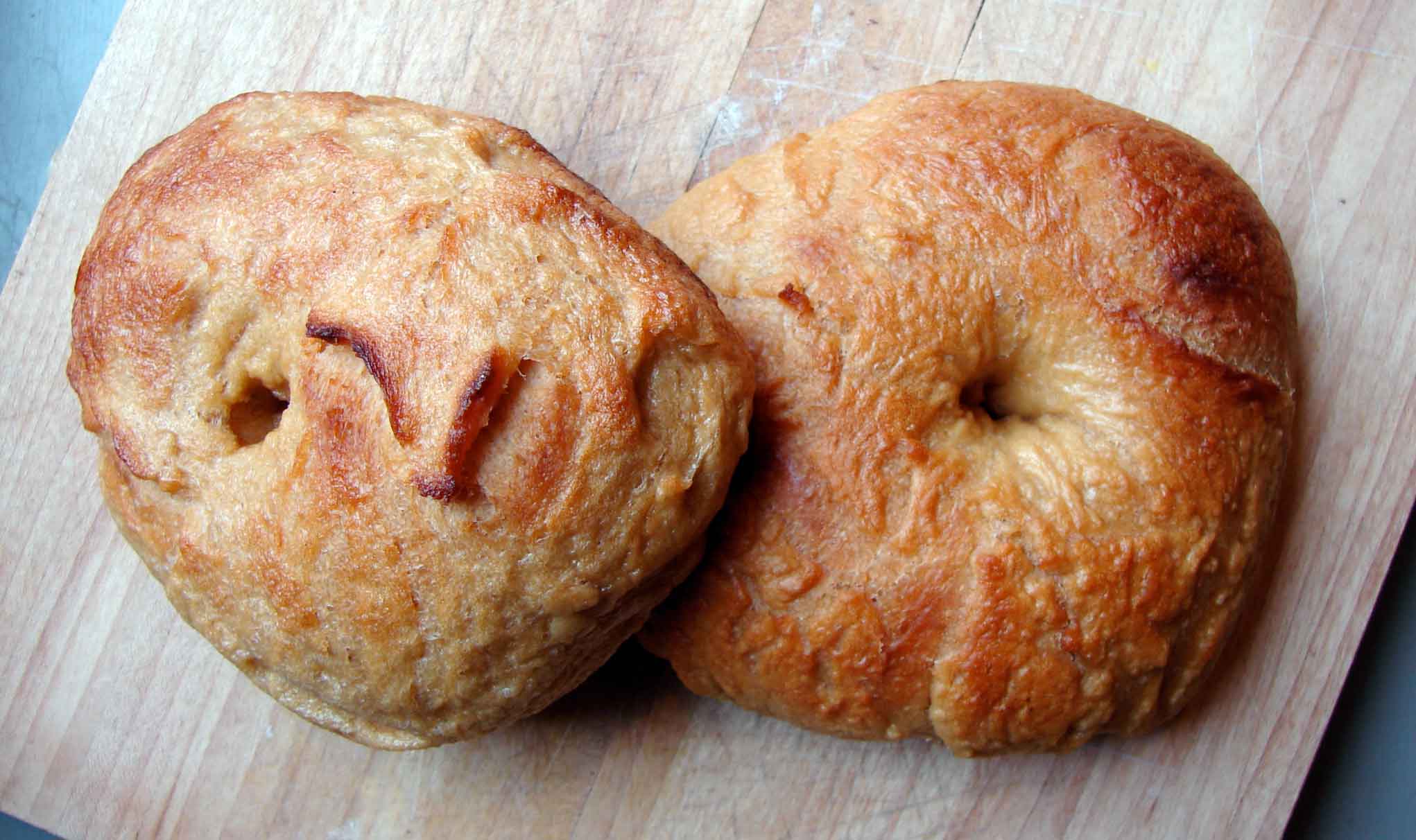
I said I’d been putting tamari and honey in everything lately, so of course, sooner or later it would be bagels. I thought these were really good. The flavor is very subtle, as I believe flavor should be in a bagel. But it’s a nice mix of savory and sweet. It’s umami, mama.

This is beautiful! It’s Sara and Maybelle Carter singing Sweet Fern.
Continue reading