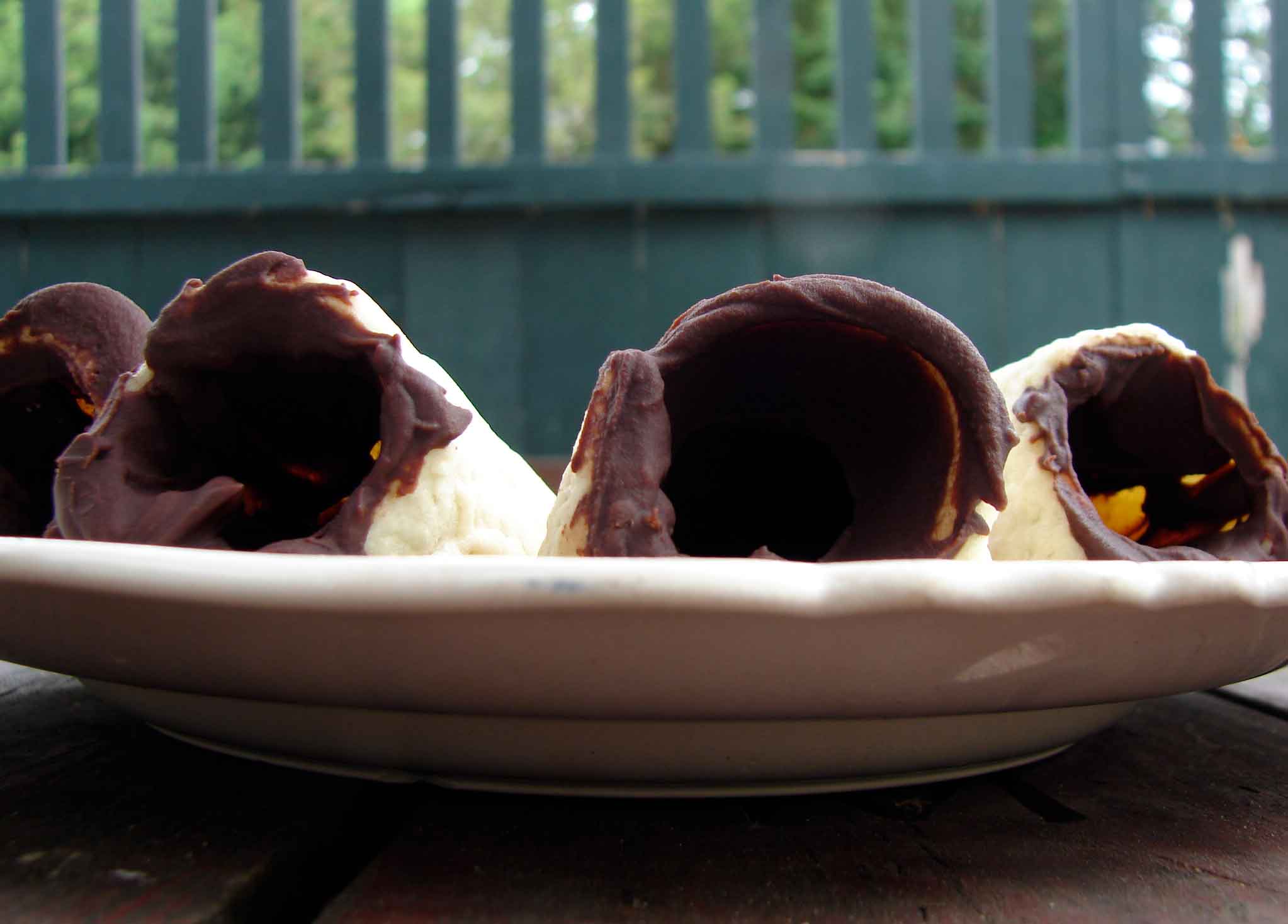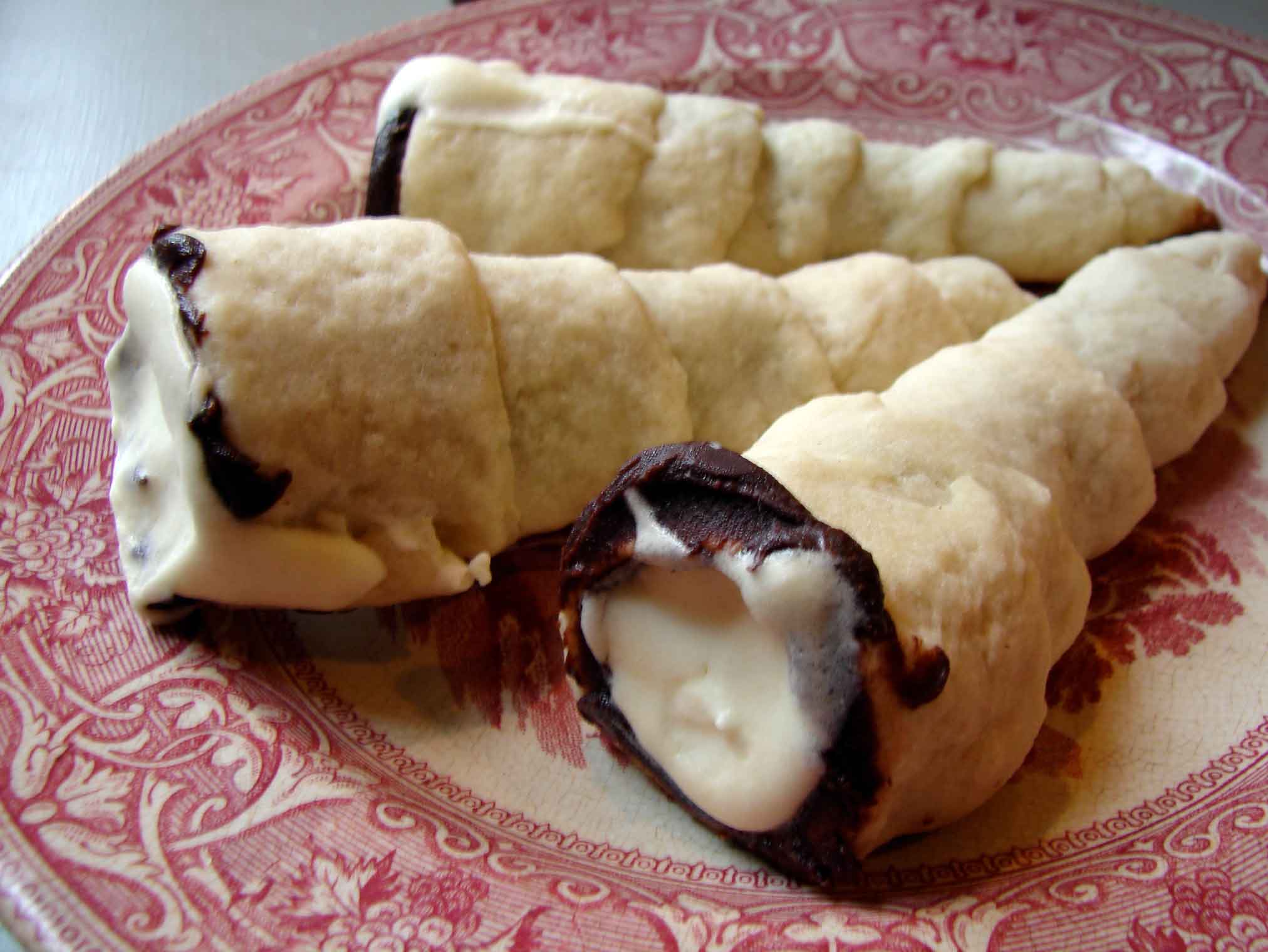
Chocolate-lined shortbread cones filled with almond pastry cream

Almond cone cookies with almond pastry cream
Almond cone cookies with almond pastry cream

My second feature was about a girl who needs glasses and (spoiler alert) she gets glasses. Yes, it’s an edge-of-your-seat thriller. I can’t imagine why it was never picked up for distribution! Of course it was about more than that. It was about the way girls are seen, about accepting the power to see. It was about the discomfort and joy of growing up. It was about eccentricity and art and sex and advertising and myth. Yeah. When I was dreaming it up, I spoke to the cinematographer about Godard’s Masculin Feminine, because I loved it, and I wanted my film to look like that and to feel like that. Godard’s film seemed so revolutionary, such a new way of looking at the characters and actors, so honest and self-aware. “Yeah,” said the cinematographer, “But Godard really just put the babes up on the screen.” And of course he was right. The women in Masculin Feminine are gorgeous and fairly stupid, as Godard relentlessly drills home in one uncomfortable interview after another. Of course, this is Godard, so it’s impossible to say if he sees the girls in a certain way, or he’s showing us that we do, or if it’s all the point of view of his conflicted and lovelorn hero. I’ve been thinking about Masculin Feminine so much lately. So much of our lives in America today reminds me of this oddly prescient film, made in Paris forty-seven years ago. The film tells the story of Paul, a moody would-be philosopher just out of the army, played by Jean-Pierre Leaud, and Madeleine, a model who wants to be a singer, played by model-turned-singer Chantal Goya. More than that, it’s about the culture of youth, the sincere, foolish, self-absorbed search for meaning and identity. Godard, who was thirty-five when the film was shot, approaches the subject as an outsider, a documentarian, at once fascinated, amused, and dismayed by all that he sees. The film shows a clash between passionate revolutionary spirit, actual world events, day-to-day realities and celebrity pop culture. The characters are famously described as the children of Marx and Coca Cola. The dialogue is a manic combination of poetry, pop songs and advertising slogans. The world is full of violence, from the first scene, everywhere the kids go random strangers around them are shot or stabbed (and I doubt 1960s Paris was like that, but if you read the news it often feels as though 21st century America is). The intertitles shoot onto the screen with the sound of gunshots, the very words are violent and powerful. And the film is full of words, and the words are muddled and beautiful. Paul is searching for some way to understand the world and his place in it, some way to describe it that he can hold onto, but he realizes as he speaks that this isn’t possible. The world is changing as he watches, he himself changes every moment, and though he’s an insufferably pretentious poser at times, there’s something endearing about his struggle. He decides that to be honest is to act as though time didn’t exist, and it’s strangely discombobulating to hear him say this in the context of a movie about youth and time passing, to think about Leaud, the actor, as we’ve seen him grow and age on film, to think about how little has changed–we’re still at war, we still reward shallowness over talent, we’re still constantly bombarded by a world for sale. Amidst all the chaos of words and gunshots and advertising jingles, Godard shows us quiet moments of connection and poetry, fleeting but hopeful. Godard has created an eccentric messy portrait of the world around him, it’s complicated, discouraging and ambiguous, but in capturing it he has made it beautiful.

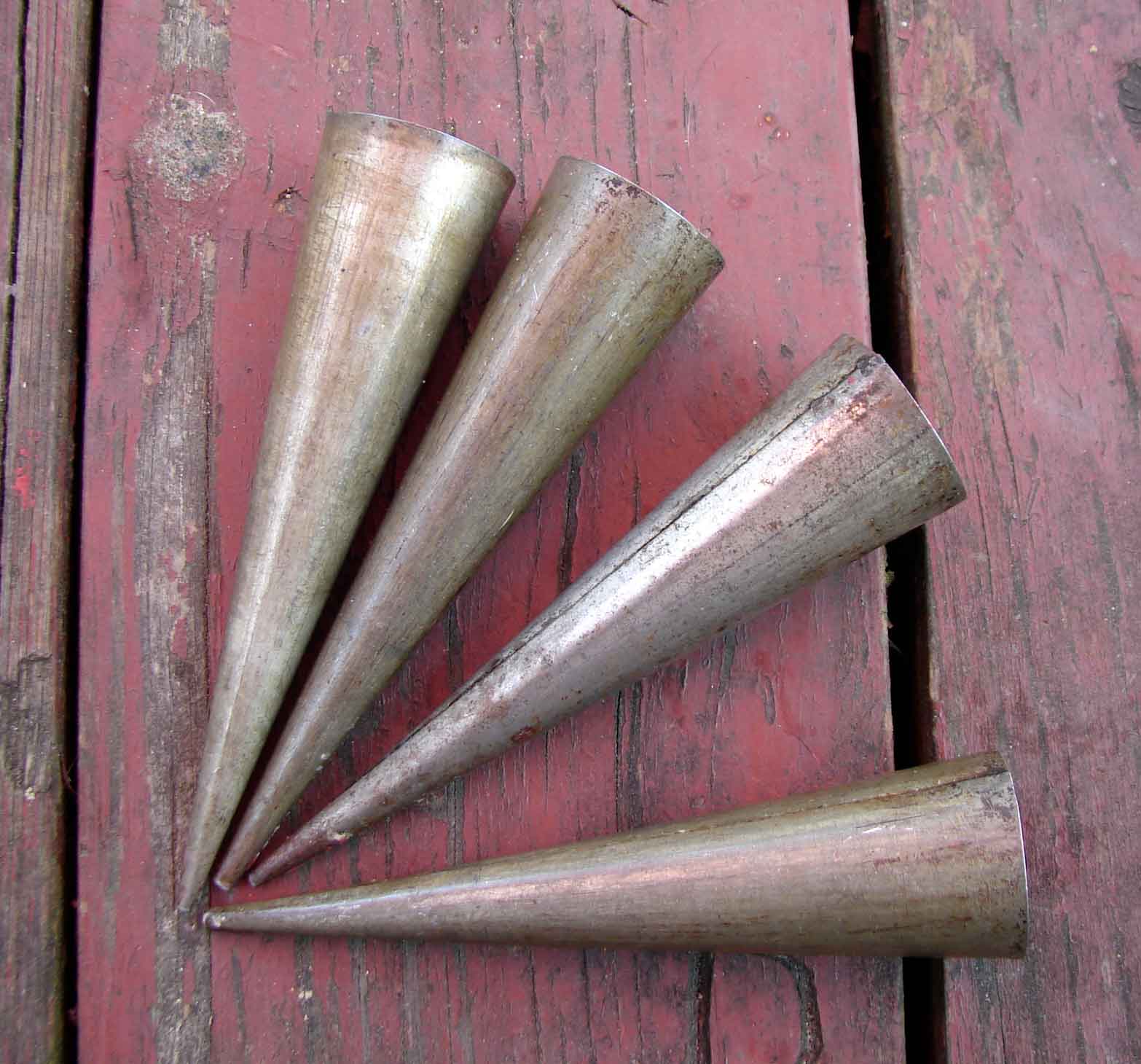
French cone cookie molds

French cone cookie molds

I mentioned last week that we met a nice French couple at the flea market, and that they had a veritable treasure trove of old French pots and pans and other cooking devices. Including these little metal cones. They’re not for bowling, as the boys surmised, but for making cone-shaped cookies. I couldn’t find a recipe, so I made one up! I made a sort of almond shortbread, and then I melted some chocolate and spread that inside and let it set. And then I made an almond pastry cream to fill the cones. These were really good! The pastry cream was a little thinner than I intended, but once chilled it firmed up quite nicely. If you don’t have little metal cones, you could make fan shaped cookies, dip them in chocolate, and serve them alongside the pastry cream.pastry-cones

Here’s Chantal Goya with Tu M’as Trop Menti
Continue reading

Red lentils and kidney beans with zucchini, spinach and rosemary

Red lentils, kidney beans and spinach

Red lentils, kidney beans and spinach

I forgot to buy dish soap at the grocery store, because that’s what I do. So I went to the little store down the block. They carry ultra joy. Well, what do you know? Money can buy happiness. And not very much money, either! It only costs a couple of dollars. I made a joke at the counter about how I was purchasing ultra joy, because it seemed like a funny idea to me. The woman at the register didn’t understand that I was joking, because in normal human conversation you can’t add LOLs and smiley faces. She said, “It works really good.” I thought, I hope so, because I’m feeling a little down and whybotherish. I wonder how that would work? Would you use the soap to wash away all of your doubts and sadnesses? Would happiness float to you in iridescent bubbles? Surely you wouldn’t have to drink it, because it might make you happy, but it would probably make you pretty sick, too. I suppose it would be dangerous if you could buy ultimate elation in a plastic squeeze bottle of lemon-scented liquid soap. It might make us all very lazy. Ultra joy is something you should have to work for, and it should be saved for rare and special occasions. They sell a non-ultra joy, too, as it happens, of the dish soap variety. This seems more reasonable, on a day-to-day basis. You can squeeze out small portion of relative contentment, or tired-but-cheerfulness, or it-could-be-worseness. Maybe it would be nice if something as quotidian as washing dishes held some magical power to make you feel joyous and light-hearted. I suppose it could, if we could muster the energy to enjoy the feeling of warm water and soapy bubbles, if we could understand how fortunate we are to have warm running water in the first place, or food to make our dishes dirty. Maybe the soap is meant as a subtle reminder of all that we should be grateful for. Wouldn’t that be an unusual marketing campaign? Well, I’ve just written a small essay on dish soap, so it’s probably time for me to get on with my day. After all, I’ve got laundry to fold, and the detergent promised me everlasting bliss.

Before I go, I’ll tell you about this dish of red lentils, kidney beans, zucchini and spinach. It’s a little like a dal, but with lots of rosemary instead of curry spices. It’s like a bright green potage, but the kidney beans add a nice texture. It’s simple to make, and doesn’t take much time. You could serve it over rice or pasta, or just with some good crusty bread. I topped mine with grated mozzarella, which melted right in.

Here’s Billy Bragg with The Busy Girl Buys Beauty
Continue reading

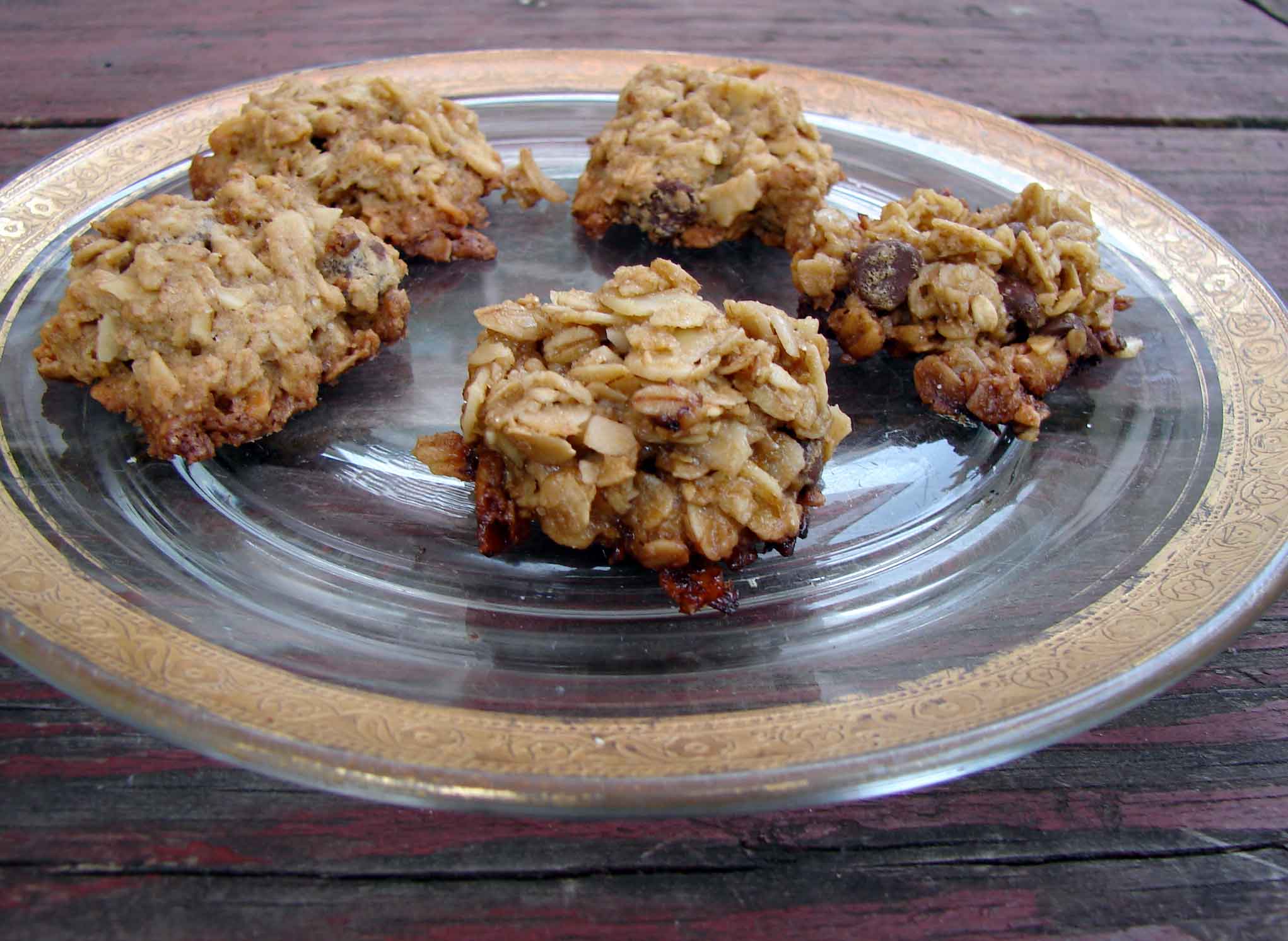
Oatmeal almond chocolate chip cookies

Oatmeal chocolate chip cookies
Oatmeal chocolate chip cookies

We bought a new CD by John Lee Hooker. From the first note, you think, yesssssss, and you want to walk around town listening to this music all the time. One of the songs on the album is Shake it Baby, in which he asks her to shake it for him one time. I wondered aloud what it means to shake it one time. Do you move your butt to one side, and that’s it? Isaac very seriously informed me that you shake your butt to once side, and back again. And that, friends, is how you shake it one time. I’ve started noticing a multitude of shake songs–it’s a very broad subject. You can shake it on the dance floor, or in the bedroom, you can shake from excitement, fear or sickness, you can shake like a polaroid picture, like milk, like a ship going out to sea, like a willow tree, like jello on a plate. So this week’s interactive playlist is shaking songs, with special points awarded for imaginative “shake like” similes. As ever, the playlist is interactive, so add what you’d like, or leave a note in the comments and I’ll try to remember to add them.

Oatmeal chocolate chip cookies

Oatmeal chocolate chip cookies

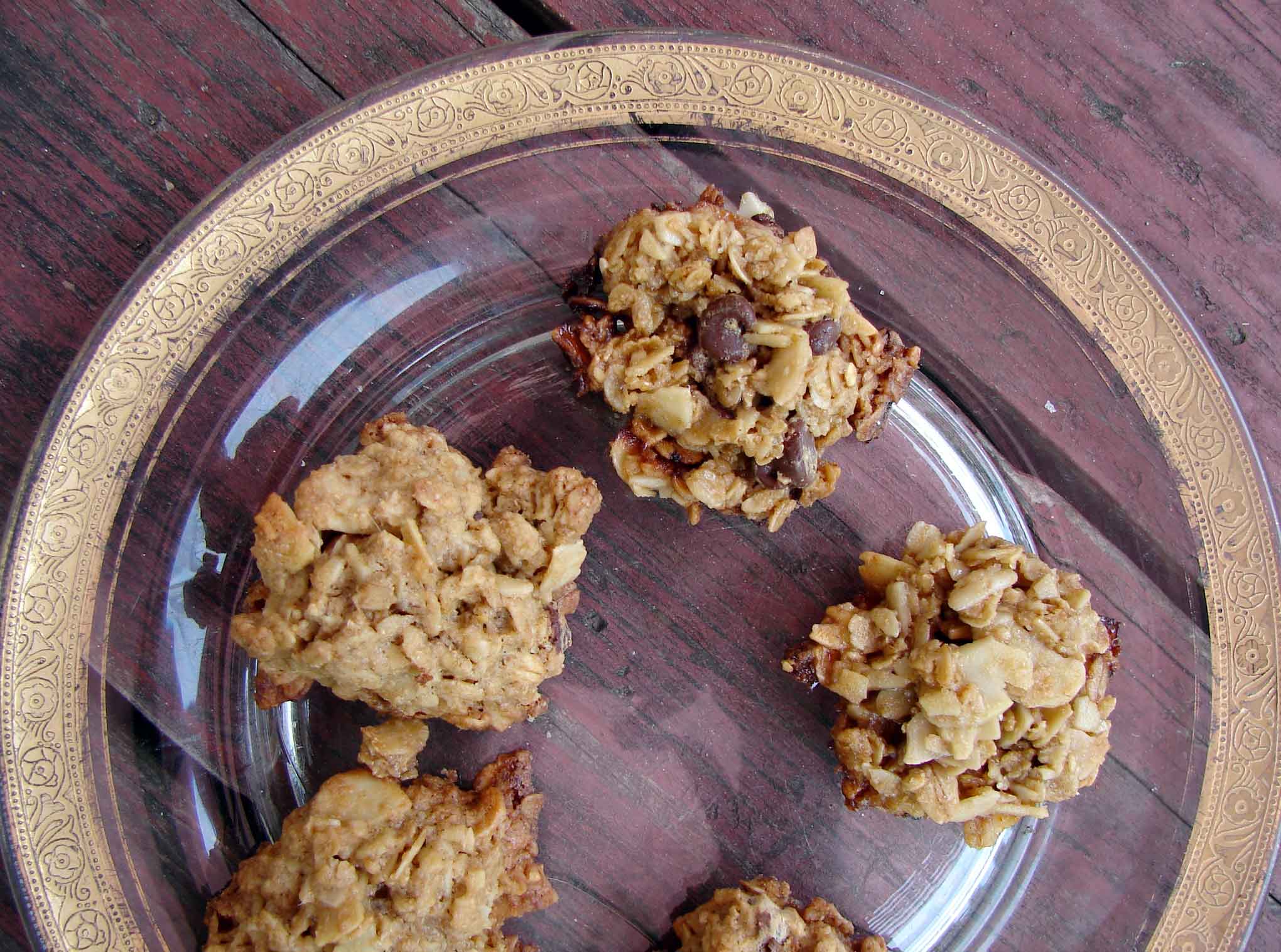
Oatmeal chocolate chip cookies are our natural anti-depressant here at The Ordinary. What’s one thing that could make them better? Almonds! And almond essence! It adds crunch and wonderful nuttiness. It probably makes them more healthy, too, but they’re cookies, so who cares?

Here’s your interactive shakey playlist.

Continue reading

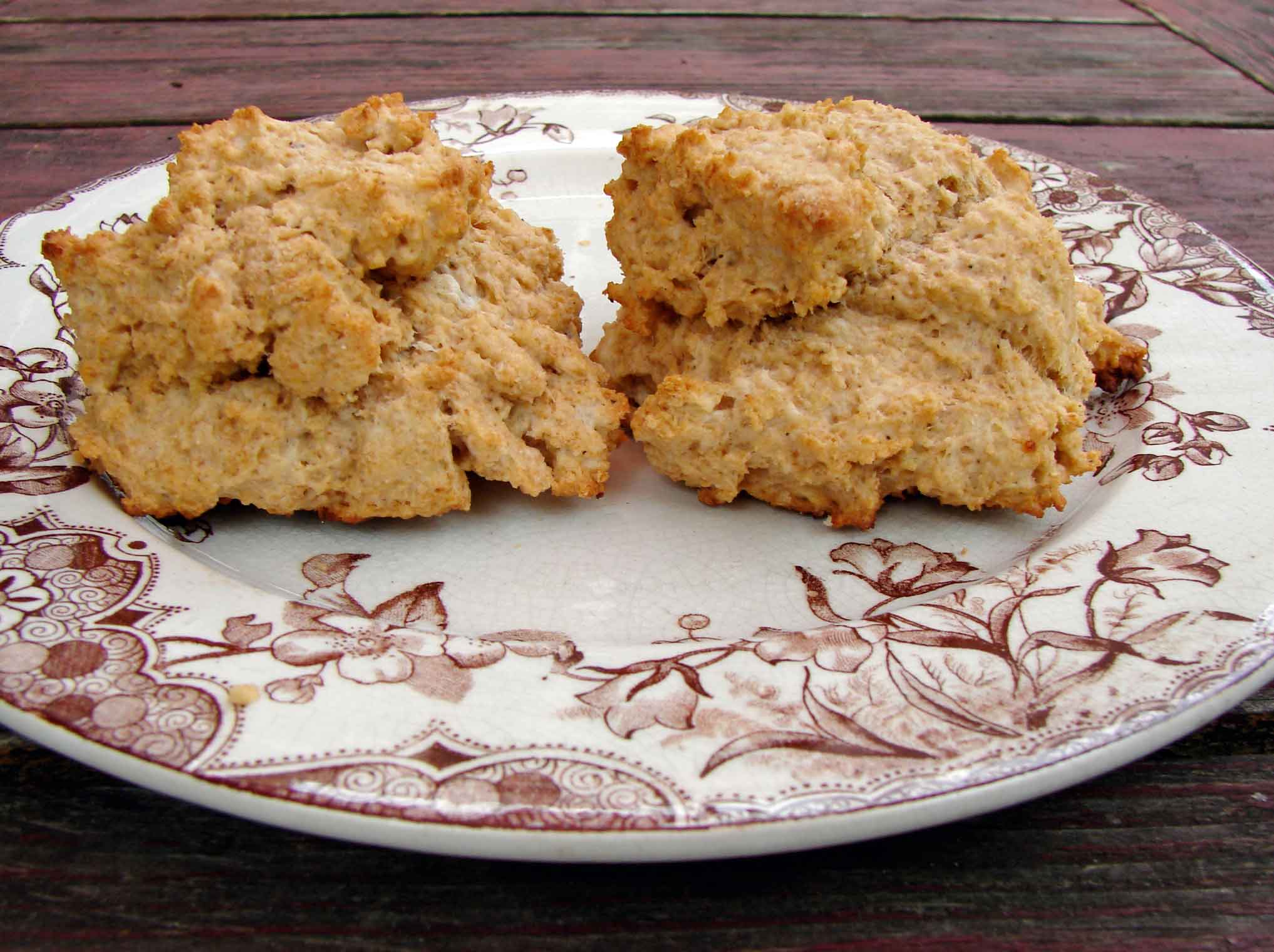
Whole wheat & cream cheese drop biscuits

Whole wheat & cream cheese drop biscuits

Whole wheat & cream cheese drop biscuits

Hey, kids! It’s Saturday storytelling time! As I’m sure you recall, this means that along with your daily recipe and song, you’ll get a story, too! Each week, everybody in our small salon of auteurs (well, generally me and one or two other people) writes a story based on a found photograph. If you’d like to write a story about it, and I hope you do, send me a copy and I’ll post it here, or send me a link if you have somewhere of your own to post it. Who are these boys? What are their lives like?
946803_10151625957199589_306027429_n

Isaac likes cream cheese, but nobody else in the family does. As a result, we don’t go through it very fast. I thought I’d better bake it into something before it all went downhill, so I made these whole wheat cream cheese biscuits. They were soft and tender on the inside, and very light and crispy on the outside. They had a nice whole wheat hearty nuttiness combined with a slight tang from the cream cheese. And they were easy as can be!!

Here’s Nina Simone playing Bye Bye Blackbird (thanks, mom!)

Continue reading

Kale and new potatoes with lemon and sage

kale and new potatoes with lemon and sage

kale and new potatoes with lemon and sage

Here at the Naive Political Philosophy department of The Ordinary, we’re alarmed and dismayed by a pervasive and corrosive trend that we’ve noticed. What is it? You ask. Well, (we answer) it’s nothing other than the very breakdown of all communication into cynical marketing speak–insipid at its best and genuinely pernicious at its worst. Everybody is trying to sell us something, and it’s getting us down! All forms of communication–real mail, e-mail, phone calls, visitors to our esteemed institution–it’s all somebody asking for money, with a product for sale. It’s almost gotten so we don’t trust a friendly gesture, any more, and isn’t that a terrible shame. Everything the boys bring home from school is asking them to sell something or buy something, they’re learning how to be little consumers, little salesmen. This isn’t a new problem, and it hasn’t crept up on us in secret, it’s been going on for decades, and it’s poured over our heads by the steaming bucketful, as if there was no shame in it at all, as if it was a system that makes sense. And it’s down to the very words we speak with. We read the OED, we’re not ashamed to admit it, and we’re saddened to see the trajectory of almost every word from something mysterious and meaningful to something lacking in meaning or confounding in meaning, used to make us want to buy something or to describe the way people buy things. Because it’s an art, a study, a science, a career, this method of persuading people to part with their money for something they don’t need, this way of appealing to people’s insecurities, of making them feel empty and insufficient, of making them feel ugly and inferior. It’s all part of a system that we defend with our lives, that we can’t question or change, because it’s been sold to us so neatly for so long. Well, here at The Ordinary, we think it’s not working, or it’s working so well that it’s impossible for anything of genuine substance to thrive. We want to live in a world where we can make something we love, something we think is good, and we can send it out in the world to share with others, who are making good things that they love, which we’ll share, too, and pass along to our friends. We want to live in a world where everything has value, and nothing has a price. We want to live in a world where we can look how we look, and think what we think, and age how we age, and nobody will try to tell us it’s all bad, and sell us something to fix it–as if the very passing of time, so natural and strange and beautiful, is something you could stop with anything as absurd and insignificant as money. When we communicate, we want to share thoughts and ideas and emotions, we don’t want to buy meds or printer paper or a new phone. And this is our highly-detailed, pragmatic and sensible plan for moving forward into the future.

kale & new potatoes with lemon and sage

kale & new potatoes with lemon and sage

I always think of kale and potatoes, and any combination of kale and potatoes, as being very wintery. Well, guess what? We joined a new CSA (that I’m very excited about!) and we got bundles of kale (very pretty kale, as it happens, I’ve never seen any quite like it), and wonderful handfuls of fresh herbs. And we bought some lovely new potatoes at the store. And we combined them in a light, fresh lemon, kale and white wine preparation. It was delicious! It tasted bright and green, like spring. David said it was the best kale he’s ever eaten. I added some sumac, for tanginess and nigella seeds, for a bit of subtle smokiness, but it would be just fine if you don’t use these.

Here’s Tom Waits with Step Right Up.

Continue reading

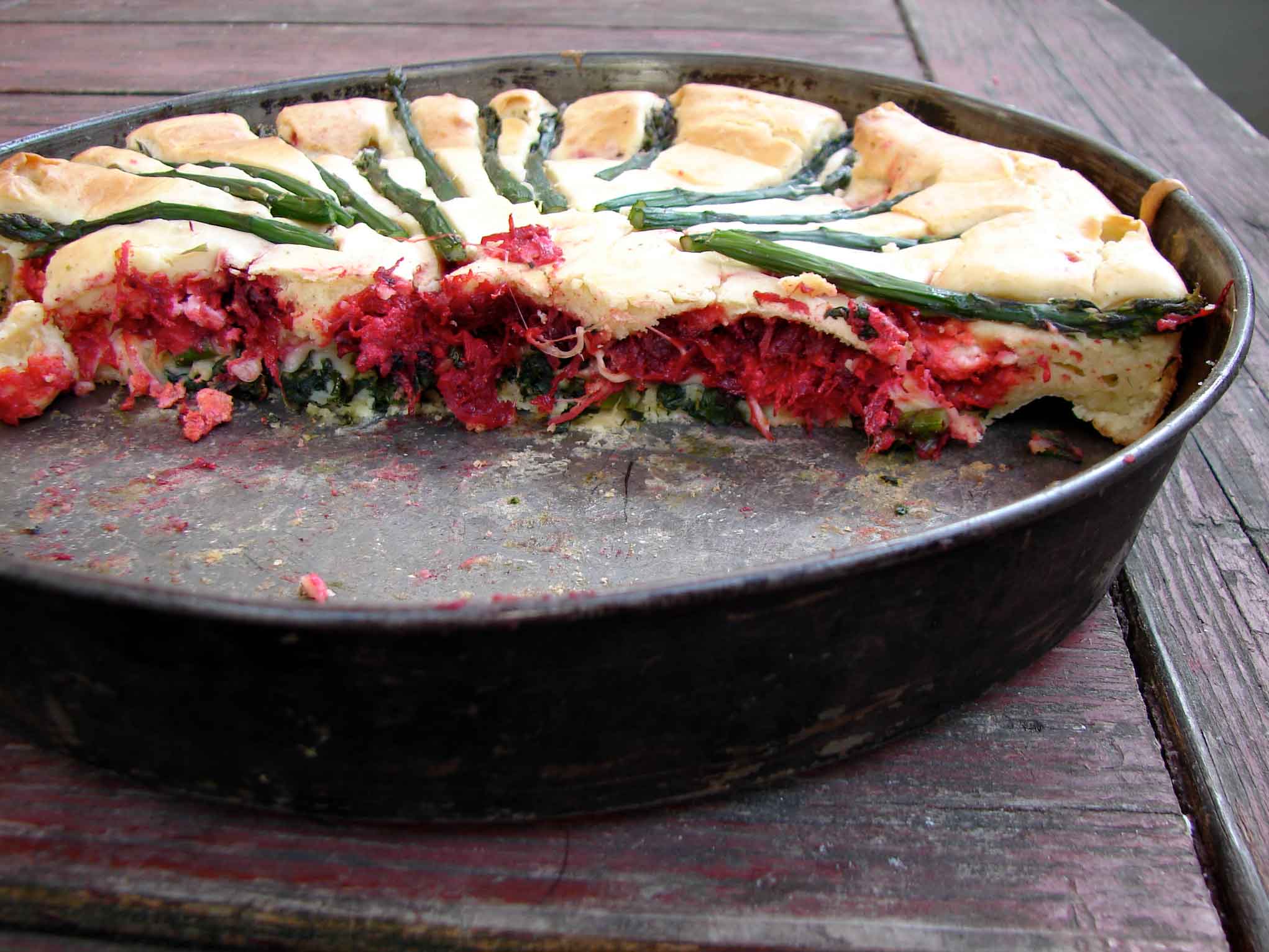
Savory almond cake with toasted beets, beet greens, goat cheese and asparagus

Savory almond cake with beets and asparagus
Savory almond cake with beets and asparagus

Last night we went to Isaac’s poetry cafe. I’ve got to start wearing dark glasses and a veil to these things, because I find them so moving that by the end I’m a puddle, despite my cynical and cantankerous nature. The kids are adorable, obviously, but it’s not this that gets me. It’s the raw, pure emotion–they’re all so animated and nervous and happy it just kills me. They’re not used to reading at all, let alone reading aloud. They stand at the front of the room, glance at their teacher, take a deep breath, and then they dive into the river of words–their words! They paddle through, head down, voice low and hushed, in a barely audible muddle, and then they’re done, they reached the other side, they’re elated, they nailed it. And it’s all so beautiful! Even when you can’t distinguish the words, the poems are full of rhythm and emotion. They’re about what they love and who they are, and these things are so clear and certain when you’re little–constantly changing and evolving, but not yet muddied and confused. They’re seven years old, so the poems are sincere in the best sense of the word. These kids aren’t trying to sell anything, or prove anything, at this age they’re not even worried about getting a good grade. They’re just telling you how they feel, and it’s so joyful and funny and even disarmingly profound in spots that you want to laugh and cry at the same time. Or at least I do. How long before the boys forbid me to attend events at their school? The whole class read a song about keeping a poem in your heart and a picture in your head, so you won’t be lonely, and this is such a perfectly Ordinary idea–this is what it’s all about! Not that you memorize a poem and walk around reciting it to yourself, but that everything is a poem or a picture, if you take the time to notice and collect it in your head in a way that you’ll remember it–with words or images or memories. My beloved OED defines a poem as “A piece of writing or an oral composition, … in which the expression of feelings, ideas, etc., is typically given intensity or flavour by distinctive diction, rhythm, imagery.” This is it exactly! Everything in your life can be given intensity and flavor, if you wake up and live. It sometimes seems that “they” are trying to make us slow and dull and stupid, so we’ll buy more that we don’t need. So I say, don’t watch the dumb shows, don’t eat the fast food, make your own meals, think your own thoughts, with passion and creativity! Nobody can take this away from you. In my visit to the OED, I also discovered the word “poeming,” as in composing or reciting poems, and I will tell you that the children in Isaac’s class were engaged in “Loud Tawkings and Poemings.” Yes they were. And so should we all be.

Savory almond cake with beets and asparagus

Savory almond cake with beets and asparagus

Yesterday at the flea market we met a French couple selling baking pans. I liked them so much, in an instant. They seemed so kind and friendly. We bought a half dozen pans of surprising proportions, and I’m excited to use them all. One was very large with straight sides about 1 1/2 inches high. I knew right away that I wanted to make a big savory cake in it. I’m fascinated by the idea of savory cakes, because I don’t think I’ve seen it anywhere, and I wonder why. We have savory pies and savory pancakes, but not savory cakes. I’ve experimented a bit, with a cake with chard and chickpea flour, and one with cornmeal and beets. This particular cake had ground almonds, and I made it like a savory version of a gateau basque, so it had two layers, combined on the edges, and containing a filling of toasted beets, mozzarella, goat cheese, beet greens and asparagus. And the asparagus tips are on top for decoration. I thought it was really delicious. Unexpected, with nice flavors and textures. Not too soft, not too dry. I was happy with the way it turned out! If you don’t happen to have a big French cake pan, you can use a regular cake pan or a small roasting pan.

Here’s Bob Marley with Wake Up and Live
Continue reading

Roasted grape tomato crostini, and penne with zucchini, spinach, olives, capers and almonds

Roasted grape tomato crostini

Roasted grape tomato crostini

A while back I was standing in the kitchen at work waiting for food to run, and I chatted with the food runner, who was standing in the same place with the same intent. For some reason, I mentioned to her that you’re not supposed to be sarcastic in front of children because it confuses them. She laughed and said, “your kids must be confused all the time.” Well! This gave me pause. I hadn’t spoken often with the runner or even said much in her presence. How could she know about the sarcasm? Had my inner-sarcasm somehow seeped through the cracks of my professional and friendly demeanor? Because I don’t think you’re supposed to be sarcastic in front of bosses or customers either–they get confused, too. I started to think about what it means to be sarcastic in front of your children. It’s true that my boys get confused when you say something they know isn’t true. When Isaac walks into a room, don’t say, “Well, who are you? I’ve never met you before,” because he hates it as much as if your words could actually negate his existence. (Although apparently he’s allowed to say, “Mom, my right arm is attached to my left hand and my left hand is attached to my right arm, and both my arms are put on backwards!” and I’m supposed to take this alarming information all in stride.) Honestly, children ask a lot of questions. Sometimes you don’t know the answer, sometimes it’s too complicated, and sometimes it’s too dull, and like Calvin’s dad, you find yourself presenting a different version of the world. So when they ask you why the subway is so much hotter than the street, you might find yourself answering, “because it’s closer to the fiery earth’s core,” instead of the actual answer–that it’s the cumulative temperature of all the pee that’s been peed there, which can’t cool and evaporate so far under ground, because this is obviously too scientific an explanation for little minds. But surely this is just using your imagination to present an alternative view of the world, and surely the world is always shifting and mutable anyway, so that there are no constant and correct answers. Obviously, if your child is uncomfortable you abandon the joke, but most of the time they recognize a good story, and if nothing else, they learn to become very skeptical of everything they’re told, and that can’t be a bad thing. I did a little research on the subject of sarcasm and children. Apparently, you’re not supposed to be sarcastic at all, in front of anybody, ever, because it’s cruel and dishonest. Well! (again) this gave me even more pause, because I love sarcastic humor, but I abhor cruelty and dishonesty. Sarcasm comes from the Greek meaning to tear or cut the flesh, and I realize this does sound cruel, but like anything else in life, it’s how you use it. You can use sarcasm to be snarky and bullyish and make people feel bad about themselves, certainly. But why would you? You can also use sarcasm to cope with an unpleasant situation, to make fun of yourself, to express something that you’re not allowed to come out and say. It’s a coping mechanism, and it’s a tool I’d like my children to posses. I always admire people that can disarm a tense or nasty confrontation with a joke. At its most effective, sarcasm can demonstrate the absurdity of a predicament and help you to change it or wade through it. And, far from being dishonest, sarcasm, like all humor, is a way to speak truths that otherwise couldn’t be spoken, that wouldn’t be accepted in any other form. With sarcasm and irony you can turn the world on its head, and sometimes that needs to happen. So I’m not going to teach my boys that sarcasm is bad, I’m going to teach them that pettiness and cruelty are bad, however they’re expressed. And when they each inevitably develop a sarcastic sense of humor (they’re sarcastic on their father’s and mother’s side, so it’s only a matter of time), I’ll be glad to step back from the world with them, have a chuckle at the absurdity of it all, and forge back into life better prepared to shape it the way we like it.

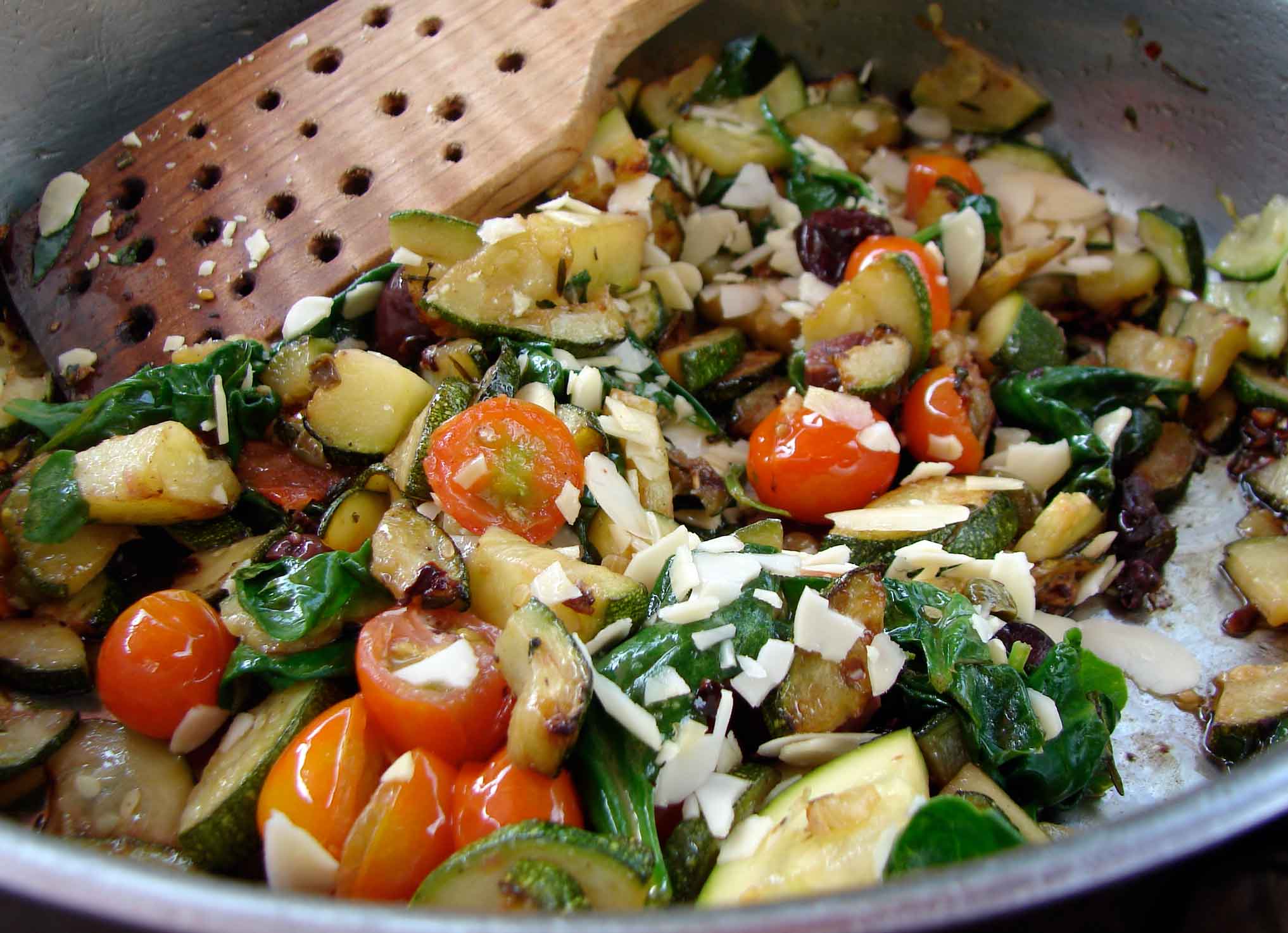
Zucchini and spinach with olives and almonds

Zucchini and spinach with olives and almonds

I’m combining these two recipes because we ate them together, but they’d each be fine on their own. They’re both super-simple, so this is a nice summer meal. I roasted some grape tomatoes with olive oil, balsamic and herbs (use fresh if you have them!) and piled this on little toasts spread with goat cheese. That’s it! A nice combination of flavors, though. And then I made a stir fry of zucchini with spinach, capers, olives, and topped the whole thing with almonds. The boys ate it with pasta as a sort of pasta primavera and I ate it over greens as a sort of warm salad. Good either way!

Here’s Jelly Roll Morton and his Red Hot Peppers with Hyena Stomp. Need a laugh? This has plenty.
Continue reading

Blackberry chocolate chip galette

blackberry and chocolate chip galette

blackberry and chocolate chip galette

On the back of my new copy of Aristotle’s The Nicomachean Ethics, it says “The supreme happiness, according to Aristotle, is to be found in a life of philosophical contemplation; but this is only possible for the few…” Well, I think it’s obvious that I don’t need to actually read the book to determine that I’m one of those few. I love just sitting around and thinking. I do it all the time! Seriously, you can frequently find me sitting on the couch with my dog and, you know, contemplating things. In fact, I think this makes Clio a philosopher, too, because she’s a contemplator. Oh yes, she’s almost always in an attitude of thoughtful contemplation, when she’s awake. All joking aside, I do actively enjoy thinking. I always have. This is why I’m never bored. This is why our recent 14-hour car trip, aside from the stress of driving and the achiness of my back, was no real hardship. I brought books to read and to write in, but mostly I just sat and thought, and that felt good. I tried to steer my thoughts a little bit, to head them away from things I didn’t want to think about, and head them in the direction of things I did want to think about. I tried to focus them on stories I hope to write or the movie I want to make. But I wasn’t too successful at any of this, and in the end I just let my mind wander where it would. But I think that’s fine, because most of the time my best ideas and my best writing–my brightest strings of words–come when I least expect it, when I’m concentrating on something else. I think it’s healthy and even productive to take some time, once-in-a-while, to let your mind meander–not to try to figure anything out or write anything down, just to let it go. I think it was good for my boys, too, to be away from television or video games, and just to sit and watch the world go by, and think their thoughts, and snooze, and wake to watch the world go by again. I feel very grateful to have my thoughts, I feel like they’re valuable. Sure it’s hard to be stuck in the same mind, all the time, and my thoughts drive me crazy sometimes, but they’re mine, and nobody can take them away from me. And everybody has this! Everybody has this gift of contemplation and reflection! All the time, whenever we need it. Everybody’s thoughts are valuable, if they’d only recognize that this is true, and nobody needs to be bored ever.

I believe this galette is what one would call a rustic fruit tart. Which mostly means that you don’t have to worry about getting the crust perfect. You just sort of fold it up on itself. And because the crust has hazelnuts and brown sugar in it, it’s like a big cookie, so you don’t have to worry about making it super-thin. Hazelnuts, chocolate and blackberries are lovely together–juicy, bitter-sweet and nutty. There’s a sort of baked custard that hold everything together in this. If it seeps out of the edges of your crust, don’t worry about it, just break these parts off before you serve the galette.

Here’s Tom Waits with Everything You Can Think.
Continue reading

Pistachio & arugula pizza

Pistachio and arugula pizza

Pistachio and arugula pizza

We were in the car for over 28 hours in the last three days, and we got home late last night. Today I feel as though I’d been hit over the head. I’m stupid-tired. I have a lot to do to catch up, of course, but this morning I spent some time sitting on the couch with Clio’s head on my lap, getting all weepy about Nina Simone singing I Wish I Knew How it Would Feel to be Free. I’m in love with this song! I’ve talked about it here at The Ordinary before (twice!), so I’m not going to go on and on telling you why I love it. I’m not going to tell you that the song was written by Billy Taylor for his daughter, that it became an anthem for the civil rights movement. I’m not going to share the fact that when Nina Simone sings it, it sounds to me as though it becomes about a sort of fundamental, elemental freedom. Freedom from anything that binds you by labeling you–freedom from race, nationality, faith–freedom almost from yourself. It’s about freedom to have a voice, and to trust your voice enough to be heard. It’s about the freedom to live with passion and creativity, the freedom to create what you need to create, to do the work you need to do. And to be free not just from the restrictions society puts on you according to the way that it labels you, but also from nagging self-doubts and fears. The song expresses a sort empathetic morality that really appeals to me, and which I’ve been thinking a lot about lately. I won’t tell you that I think the most beautiful part is that she knows! Nina knows how it feels to be free, you can feel it in her voice. And she says, “I sing because I know, I sing because I know.” I love that! Of course she knows and thank god she sings.

Here’s Billy Taylor playing the song.

Here’s Nina Simone’s version, with lyrics

Here’s a live performance by Nina Simone.

And here’s an absolutely remarkable extension of the song, also Nina Simone live.
pistachio and arugula pizza

pistachio and arugula pizza

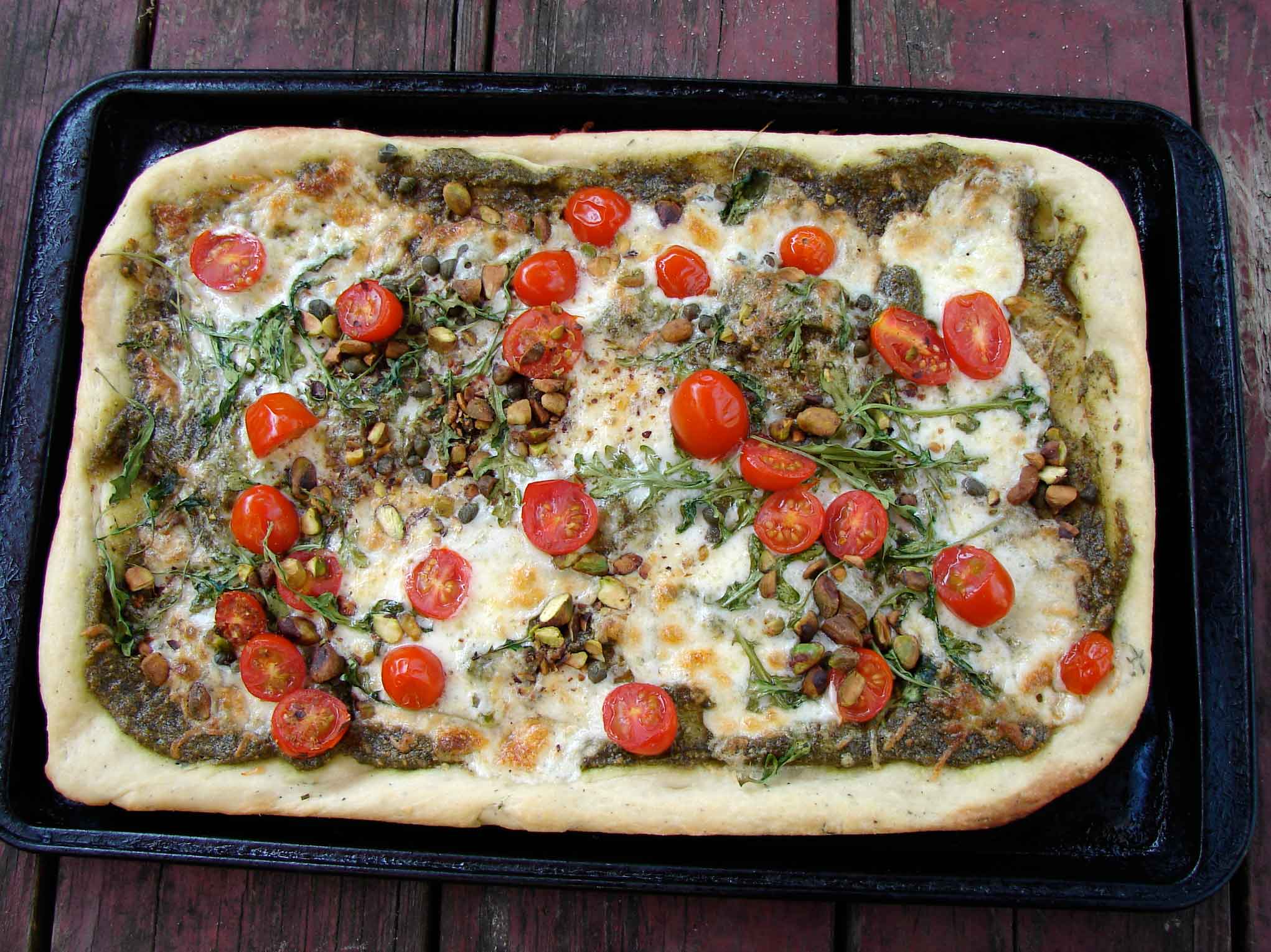
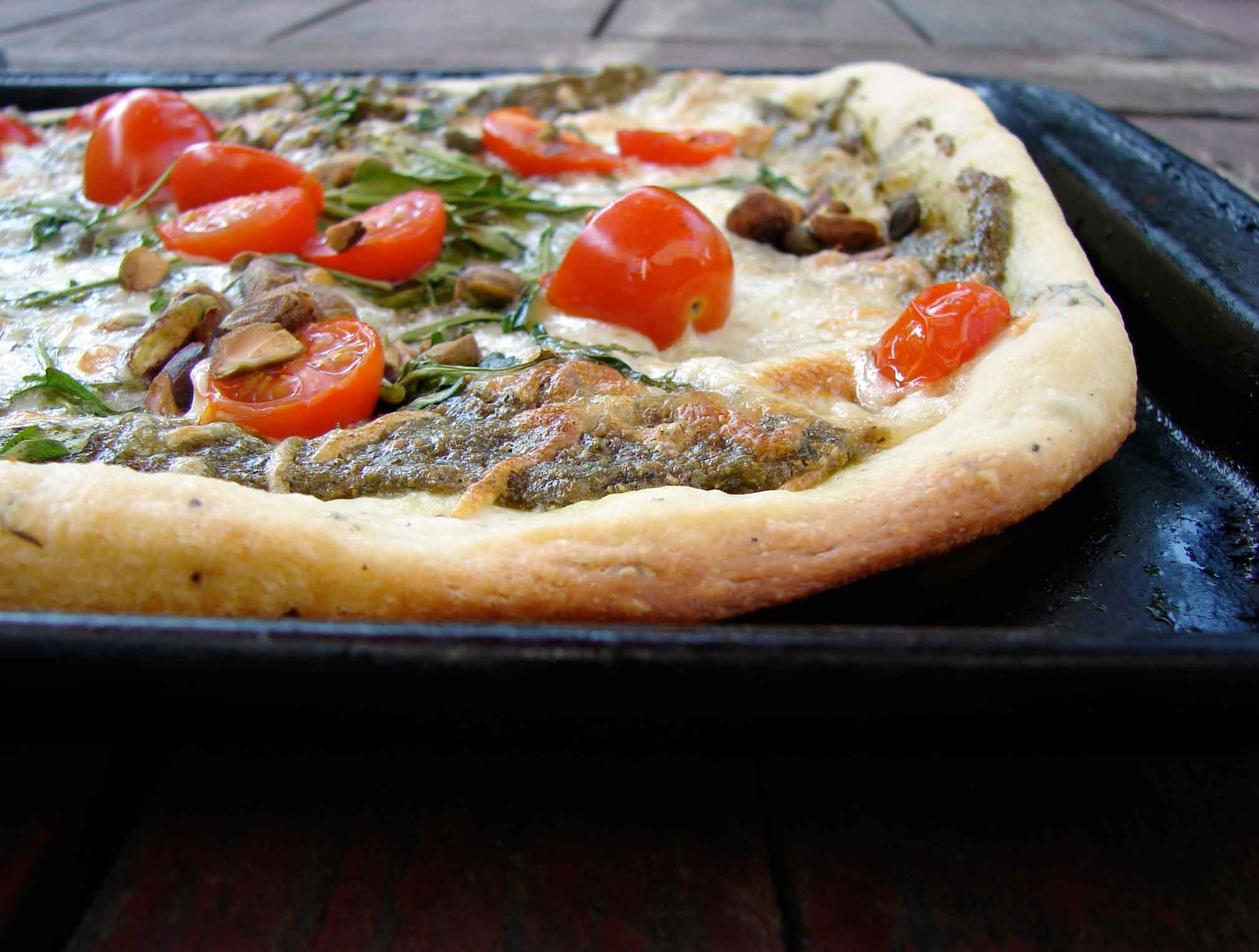
This pizza has arugula pistachio pesto on it, and it has arugula and pistachios! It also has capers, cherry tomatoes and an herbaceous crust. I thought it was deeeeelicious. This recipe is enough to make two large pizzas just like this. If you want the second pizza to have different sort of toppings, you can half the pesto recipe, or make the full amount and eat the pesto in any other way you’d like.

Continue reading

Whole wheat umami scrolls

umami scrolls

umami scrolls

I read yesterday that the Elizabethans categorized five types of wit. Aha! I thought: the self-deprecating aside, the broad bawdy tale, the absurd jest, the clever quip, and the knock knock joke. Of course, this isn’t what they meant at all. They defined five wits to correspond to the five senses. “The five wits were sometimes taken to be synonymous with the five senses, but were otherwise also known and regarded as the five inward wits, distinguishing them from the five senses, which were the five outward wits.” The five inward wits are common wit, imagination, fantasy, estimation (instinct) and memory. I’ve been reading some of Hobbes’ Leviathan, which dates from a similar time, and he explains how this works. When a person senses something physically, it makes waves inside of them as the wind makes waves on water. This decaying sense leaves an impression or an image, and this is the source of imagination or fancy. “And it is found in men, and many other living Creatures, aswell sleeping, as waking” This decaying sense, as it recedes, is called memory, and memory of many things is called experience. The imaginations of them that sleep are called dreams, and such imaginations that we don’t recognize as occurring during sleep, because the sleep is so quick, are called apparitions or visions. Imagination expressed in words or any other voluntary sign is Understanding, and “is common to man and Beast.” Predictably, I love this! I’m not very comfortable defining or deciding things, but I love to watch other people do it in an attempt to explain the strange workings of the world around them and inside of them. I love to think about how carefully Hobbes defined vagaries of sensations and emotions that seem impossible and indeterminate. Apparently, today, even scientists say that the notion that we only have five senses is outdated and limited. Of course we have more than five senses! We sense balance and movement, we sense warmth and cold, we sense time passing. If we close our eyes we know the position of our hand, even though it’s not being detected by any of the five traditional senses. And I identify other senses not defined by Hobbes or science (as far as I know), but possibly the most important of all. Emotional senses, maybe. Sense of empathy, sense of decency, sense of humor–which brings us back to the beginning, when sense and wit collided in all of their shades of meaning. Even in Shakespeare’s time, wit meant not just sense and intelligence, but humor as well–the ability to see the absurdity of all of this confusion of sensations. What complicated creatures we are, moving through the world, taking it into ourselves and making it part of our memory and dreams. And this is true of man and beast, as well sleeping as waking.

We used to break down the sense of taste into four categories: bitter, salty, sweet and sour. And then we identified a fifth! Umami is that flavor. It’s a pleasantly savory, meaty flavor. As a vegetarian, I love the challenge of trying to create an umami flavor whenever I can. These rolls are a companion to the chocolate-covered cake of yesterday’s post. They, too, were meant for a wine tasting of Australian shiraz(es?). They, too, are very loosely based on the recipes of The Guardian UK’s Australian baker, Dan Lepard. Apparently, in Australia, one can find cheese and vegemite scrolls, which are like savory cinnamon buns. So I made these with marmite, tamari, spinach and balsamic. I thought these would be nice with wine.

Here’s Common with The Sixth Sense.

Continue reading