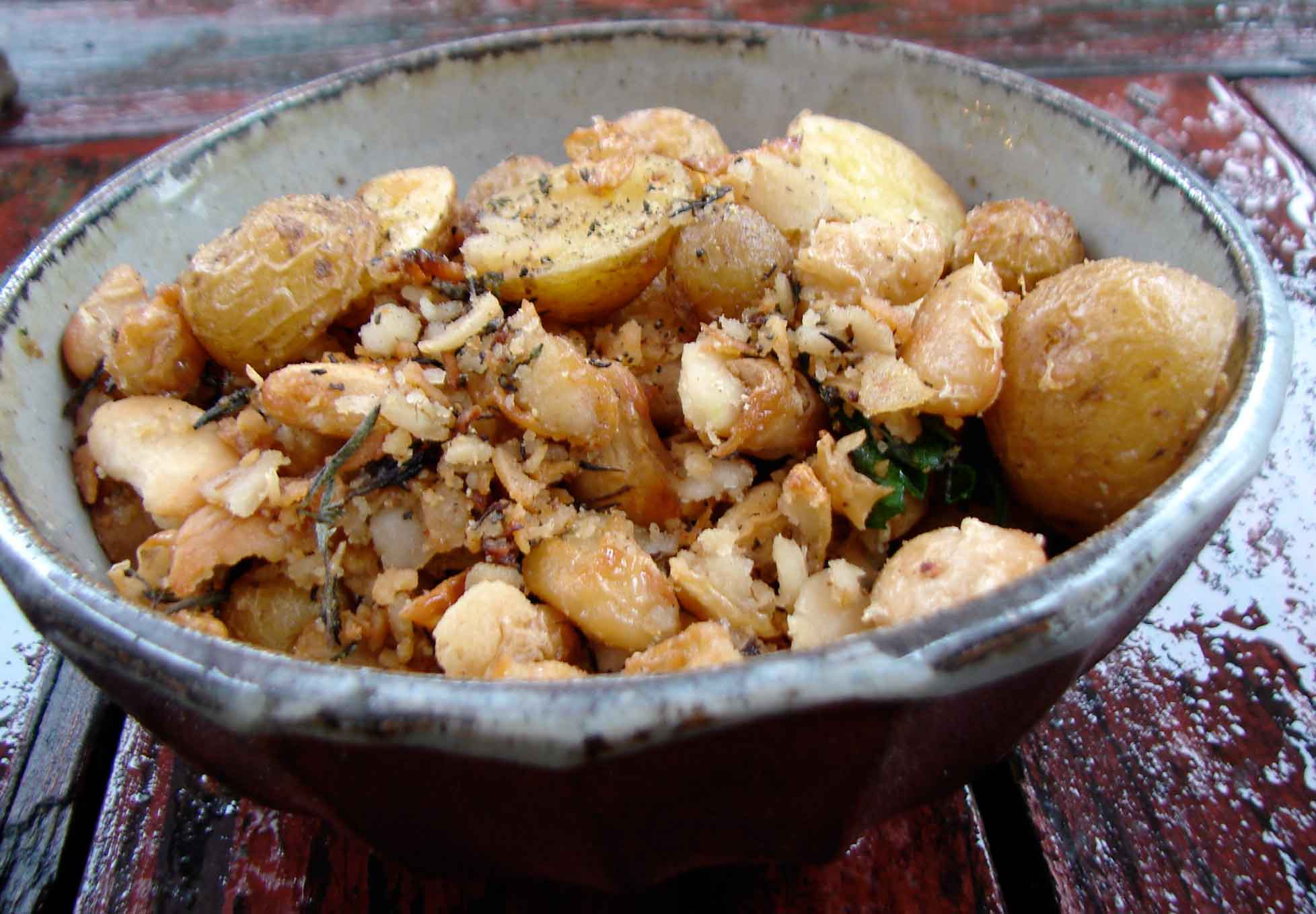
Roasted potatoes and butter beans with summer savory

Potatoes, butter beans and savory

Potatoes, butter beans and savory

I have the whole day to myself for the first time since…well, I can’t really remember the last time. “Oh! Miss Woodhouse, the comfort of being sometimes alone!” I had such big plans! I was going to get so much work done. I was going to start a novel, and make some progress on pre-production on this movie I’ve been talking about for half a decade. I was going to be creative and productive!

Six hours in, and I’m having such a strangely hard time focussing. I could blame it on the heat, because it is hellish hot, but in truth I think it’s the silence. It’s the complete and bewildering lack of distraction. Why isn’t anybody asking me for a snack, and then ten seconds later insisting on a drink to go with it? How can I possibly be expected to get any writing done if I can’t yell at anyone to stop yelling so that I can get some writing done–if I don’t have the deadline of a trip to the river to motivate me?

I’m actually a big fan of aloneness. I think it’s important to be alone some of the time, so that you can pursue the thoughts in your own head wherever they might lead you, so that you can try to figure out all of those things it’s impossible to figure out. It’s one of my tedious mantras that a person should have such a supply of inner resources that they’re happy alone with no distractions for long periods of time.

But, as in all things, I believe we need to find a balance. We need other people, and we need to be needed by them. It’s important to have an outlet and a reason for your wandering thoughts, so that you have something solid to tether them to. It’s important to have a sense of community, be it local or international. I’ve been thinking about this a lot, the last couple of days. If we know our neighbors, and understand them and care for them, then we’ll trust them as well. We won’t sit in paranoid solitude till we drive ourselves crazy with hate and rage. And we’ll understand why the actions of a few people acting out of hate and rage will be greeted by an ever-growing community of humans caring for strangers as if they were friends, with generosity, compassion and understanding.

Each week I’ve been picking handfuls of fresh herbs from the farm–rosemary, thyme, sage and more sage, oregano, mint, lavender, and summer savory. I generally throw everything together into one big mix of flavors, because this random wildness is part of what’s beautiful about this time of year. But summer savory is a flavor I don’t encounter very often. It’s not as nice dried, and it’s lovely and distinctive–a little lemony and, well, savory! So I decided to use it all on its own in this recipe, roasted simply with tiny potatoes from the farm and big butter beans that were almost as large as the potatoes. I roasted everything in olive oil, and then drizzled some truffle oil on top. If you don’t have truffle oil, you can leave this step out–it will still be very flavorful!

Here’s People Make the World Go Around by The Stylistics

Continue reading

Roasted beets, potatoes and white beans with herbs and lemon

Roasted beets, potatoes and white beans

Roasted beets, potatoes and white beans

Early on this sweltering June morning, the first real day of summer vacation, you could find my Malcolm in a shady room, watching Akira Kurosawa’s Hidden Fortress. We all watched it together, some time ago, and he liked it so much he asked me to get it again. (The film is best-known, probably, as the inspiration for George Lucas’ screenplay for Star Wars: A New Hope.)

I was on my way out the door, and I just stopped, and sat with Malcolm and watched it again. I’d forgotten how beautiful it is. The film is moving, on so many levels. In the very first scene, we see two peasants, backs to us, walking away. They’re highly animated, squabbling and quarreling, bickering about plans for a future they have absolutely no control over. And then a wounded samurai careens into the frame from a crazed angle, followed by men on horseback who stab him, repeatedly, in an oddly beautifully choreographed dance. (I apologize in advance for using the word “beautiful” hundreds of times.) The peasants are caught between warring clans, and they’re captured and forced to bury the dead and dig for gold. During an uprising they escape, and they find a bar of gold hidden in a log of wood. And then they meet Toshiro Mifune, and they spend the rest of the film walking; following him, running from him, racing back to him.

They’re traveling with hundreds of bars of hidden gold and a princess disguised as a mute peasant. They walk through ghostly bamboo forests, slanting rain, stands of bare trees in the fog, soldier’s spears and flags, they thread their way through one beautiful vertical arrangement after another. They enter the frame unexpectedly, from any side at any time, in stark contrast to the standard left to right movement we’ve come to expect from a hollywood film. They creep, muttering, in one direction and dash, screaming, back again in the other. And they walk in and out of stories.

Each time they stop a small tale unfolds, a small perfect interaction between them or the people they encounter. They start the film as fools, comic and ridiculous, but the thought of gold makes them nearly imbecilic; they can’t control themselves and they stumble and flail, and say things they aren’t supposed to say, and fall all over themselves trying to escape from their poor tangled fate. We laugh at them, but we empathize with them as well. They’re poorer than poor, and they’re caught in a violent struggle that holds no meaning for them, but could destroy their lives.

The princess (Misa Uehara) is also caught in this struggle. She, too, is bound by the history of her family to behave in a certain way. She’s pretending to be mute, but her expressions as she sees a world she’s never seen before–outside of the castle, with people who behave unpredictably because they don’t know who she is–her face as it lights up at the sight of ordinary people doing ordinary things, is wonderful to behold.

In the midst of all the death and violence, all the scheming and subterfuge, all the struggle to keep power and wealth, the travelers happen upon a fire ceremony. Everybody sings and dances as one, as they throw logs into a huge bonfire. Our friends are forced to throw all of their gold into the fire. The peasants are beside themselves with grief and worry, but the princess looks freed, transcendent, as she joins in the dance and sings the odd, dark, existential song. She recalls it later after they’ve been captured, and she sings it in a beautiful scene that places all of the beautiful and ridiculous drama of the movie, and of our lives, too, into a strange, somber, hopeful sort of perspective.

The life of a man
Burn it with the fire
The life of an insect
Throw it into the fire
Ponder and you’ll see
The world is dark
And this floating world is a dream.

I missed a few scenes because I was making the boys’ breakfast. When I returned, the princess sat in a wild tangled bower of bushes, smiling with a sort of happy wisdom, as at something she’d never seen or noticed before. I said, “Malcolm, why is she smiling.” He thought for a moment and said, “It’s the birds.”

This is a summery roasted vegetable dish. It combines new potatoes, beautiful red and golden beets, white beans, shallots, olives, capers, herbs and lemon for a bright roasty flavor. It would be nice with a sauce, like a pecan tarator sauce or a spicy tomato sauce. It makes a meal with some sort of grain–farro, millet, quinoa, rice and a salad, and it would make a nice side dish as well.

Here’s the main theme from Hidden Fortress. The soundtrack is spectacular.

Continue reading

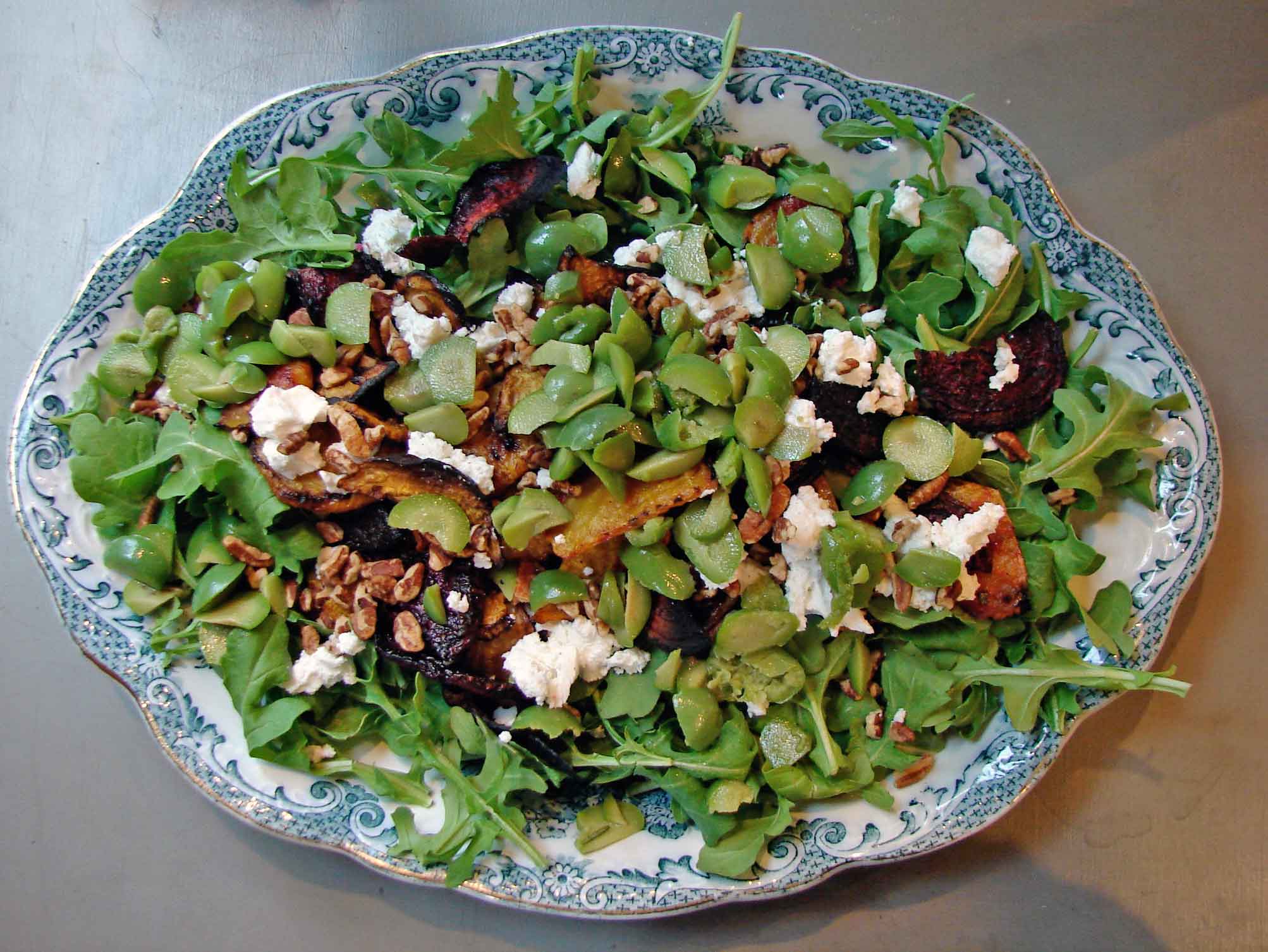
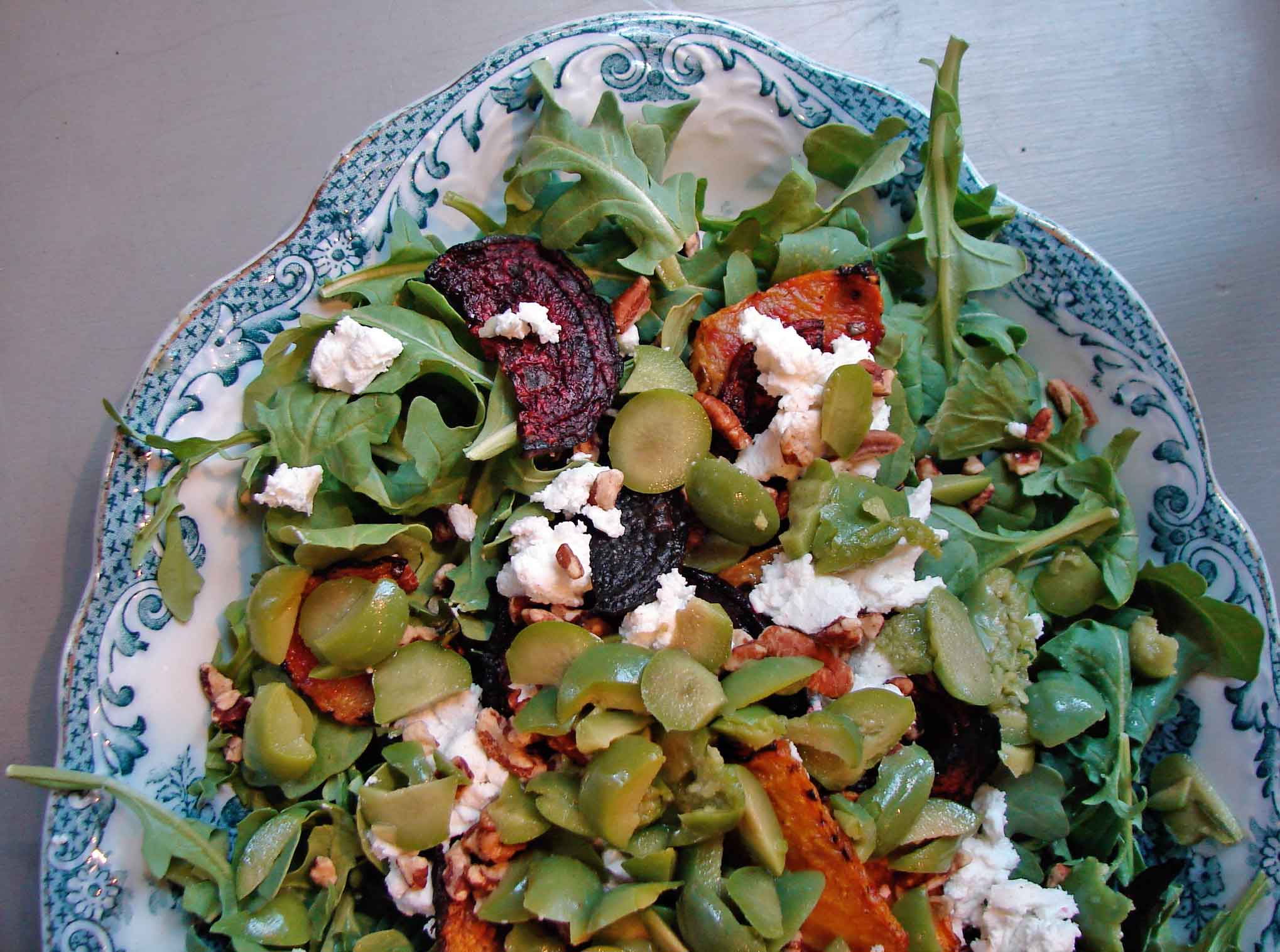
Roasted beet and arugula salad with farro and smoky pecan-rosemary sauce

Roasted beet and arugula salad

Roasted beet and arugula salad

When my brother and I were little, we had our own country. It was called Bouse, and it was top secret, so don’t tell anybody about it. Bouse was shaped like our dog, Tessie (her eye was a lake.) All of the animals in Bouse could talk, and they were all very friendly and happy–we had feasts and dances and plays. There were no people, no cars, no factories on Bouse, but in neighboring Karnland, there were only cars, or everybody was part car, I can’t remember, and they were enemies of Bousishians. All animals go to Bouse when they die, and some kind humans do as well.I speak lightly of Bouse, but it was incredibly important to me growing up, and in many ways remains so to this day. It was formed by who we were and what we believed, and it informed our beliefs and our behavior as well. Now my boys have a world of their own. It’s called World Tenn, and the world is made like a giant tennis racket with water inside, and everybody has shoes made out of tennis balls. My boys have different names there, and they have sisters and a baby brother and a dog who can fly. At first I was charmed by the stories, they’re delightful and inventive, but lately it’s starting to feel more serious for them, and I can’t account for how happy this makes me. Yesterday Malcolm and I took a walk after dinner. Malcolm is fun to ramble through the woods with, except that he always has to have a stick, and he always has to hit things with it. He smashes trees, he slices through weeds and tall grass. We’ve told him a million times not to, that it’s better to leave everything as you find it, that he might be destroying the homes of animals, birds, or insects. But he did it anyway. Yesterday he told me that he’s not going to do it anymore. “Why is that?” I asked. It turns out that it goes against the prevalent morality of World Tenn. The enemy of World Tenn is a king that hates mother nature and spends all of his time trying to destroy plants and animals. My boys have the job of protecting nature. Ack! It just kills me that they share a world forged in the fiery furnaces of their imagination and their affection for each other. And they’ve invented a moral code that they need to live up to. They’ve made their own political philosophy, their own religion, just like my brother and I did. Like all good religions it contains myths and far-fetched stories, it borrows from older tales and legends, it contains strife and violence, it reassures them with an afterlife, and it suggests a way to behave in harmony with the creatures of the actual world around them. There are portals into World Tenn–one is a beautiful winding path that branches off from the secret passage on the other side of the other side of the canal. This morning Malcolm told me that there’s one on the roof outside of his window, because a squirrel sat there for a long time, and didn’t seem scared of Malcolm watching him. Of course the real doors into their world are in their minds, and they can take that with them wherever they go. Whatever they do, they have the comfort and strength of their creativity, of their love for each other as brothers, of their lives as heroes, of a world all their own. And nobody can take that away from them.

Roasted beet and arugula salad

Roasted beet and arugula salad

When I made this sort of warm salad of arugula, roasted beets, farro, goat cheese and pecans, I kept the farro separate. I thought it might be the only part of the salad the boys would eat. Silly me! They gobbled down the beets, goat cheese and pecans, and didn’t have much interest in the farro! So you could serve this with the farro as a layer below the arugula, or you could mix it right in with the arugula if you liked. We ate this with tiny new potatoes, boiled and tossed with butter, salt and pepper, and I recommend this. It’s a serving suggestion!!

Here’s My World by the Rascals

Continue reading

Kale and new potatoes with lemon and sage

kale and new potatoes with lemon and sage

kale and new potatoes with lemon and sage

Here at the Naive Political Philosophy department of The Ordinary, we’re alarmed and dismayed by a pervasive and corrosive trend that we’ve noticed. What is it? You ask. Well, (we answer) it’s nothing other than the very breakdown of all communication into cynical marketing speak–insipid at its best and genuinely pernicious at its worst. Everybody is trying to sell us something, and it’s getting us down! All forms of communication–real mail, e-mail, phone calls, visitors to our esteemed institution–it’s all somebody asking for money, with a product for sale. It’s almost gotten so we don’t trust a friendly gesture, any more, and isn’t that a terrible shame. Everything the boys bring home from school is asking them to sell something or buy something, they’re learning how to be little consumers, little salesmen. This isn’t a new problem, and it hasn’t crept up on us in secret, it’s been going on for decades, and it’s poured over our heads by the steaming bucketful, as if there was no shame in it at all, as if it was a system that makes sense. And it’s down to the very words we speak with. We read the OED, we’re not ashamed to admit it, and we’re saddened to see the trajectory of almost every word from something mysterious and meaningful to something lacking in meaning or confounding in meaning, used to make us want to buy something or to describe the way people buy things. Because it’s an art, a study, a science, a career, this method of persuading people to part with their money for something they don’t need, this way of appealing to people’s insecurities, of making them feel empty and insufficient, of making them feel ugly and inferior. It’s all part of a system that we defend with our lives, that we can’t question or change, because it’s been sold to us so neatly for so long. Well, here at The Ordinary, we think it’s not working, or it’s working so well that it’s impossible for anything of genuine substance to thrive. We want to live in a world where we can make something we love, something we think is good, and we can send it out in the world to share with others, who are making good things that they love, which we’ll share, too, and pass along to our friends. We want to live in a world where everything has value, and nothing has a price. We want to live in a world where we can look how we look, and think what we think, and age how we age, and nobody will try to tell us it’s all bad, and sell us something to fix it–as if the very passing of time, so natural and strange and beautiful, is something you could stop with anything as absurd and insignificant as money. When we communicate, we want to share thoughts and ideas and emotions, we don’t want to buy meds or printer paper or a new phone. And this is our highly-detailed, pragmatic and sensible plan for moving forward into the future.

kale & new potatoes with lemon and sage

kale & new potatoes with lemon and sage

I always think of kale and potatoes, and any combination of kale and potatoes, as being very wintery. Well, guess what? We joined a new CSA (that I’m very excited about!) and we got bundles of kale (very pretty kale, as it happens, I’ve never seen any quite like it), and wonderful handfuls of fresh herbs. And we bought some lovely new potatoes at the store. And we combined them in a light, fresh lemon, kale and white wine preparation. It was delicious! It tasted bright and green, like spring. David said it was the best kale he’s ever eaten. I added some sumac, for tanginess and nigella seeds, for a bit of subtle smokiness, but it would be just fine if you don’t use these.

Here’s Tom Waits with Step Right Up.

Continue reading

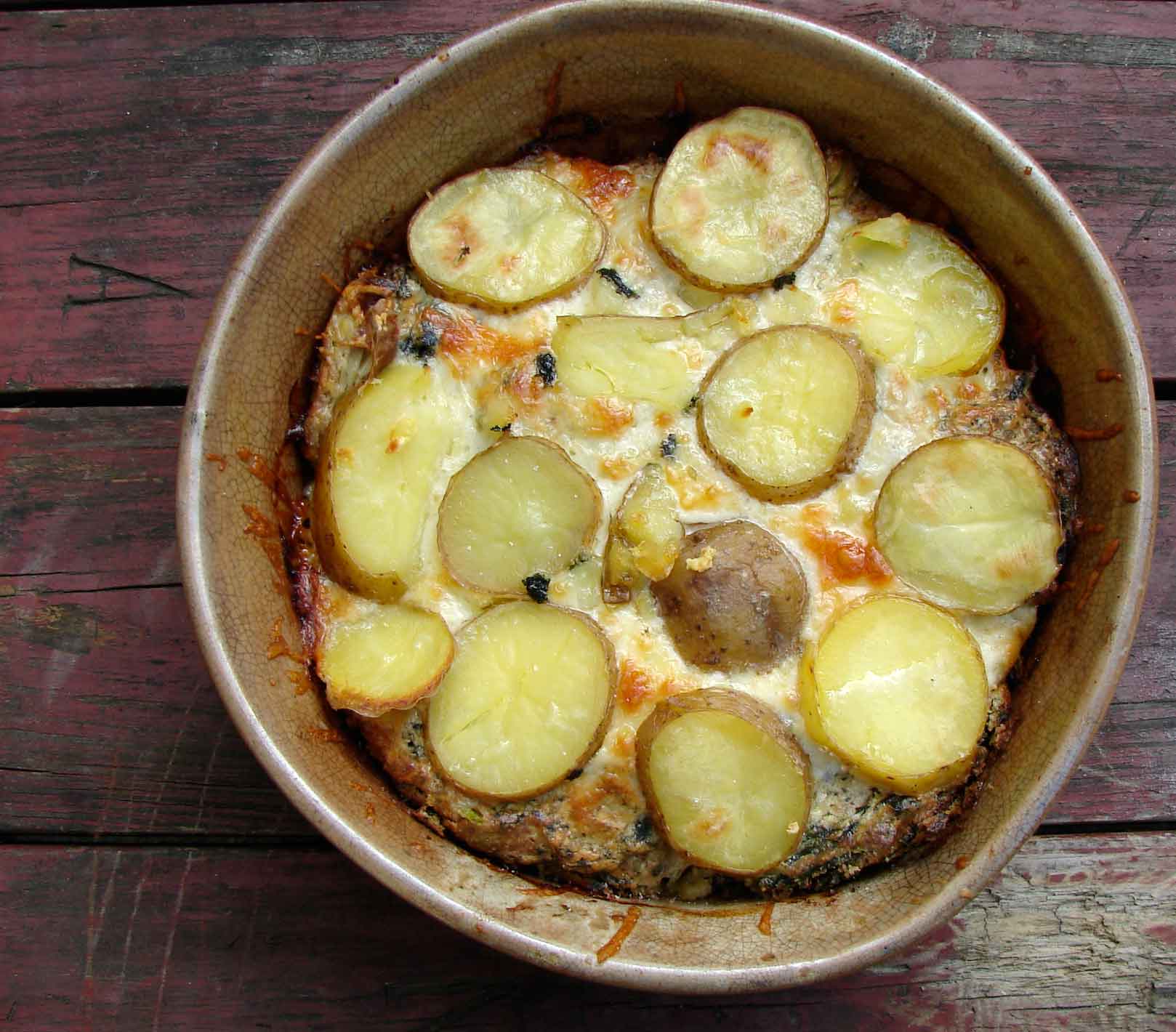
Thinly sliced potatoes baked with kale, artichoke hearts and pesto ricotta

Potatoes layered with kale, artichoke hearts and pesto ricotta.

Potatoes layered with kale, artichoke hearts and pesto ricotta.

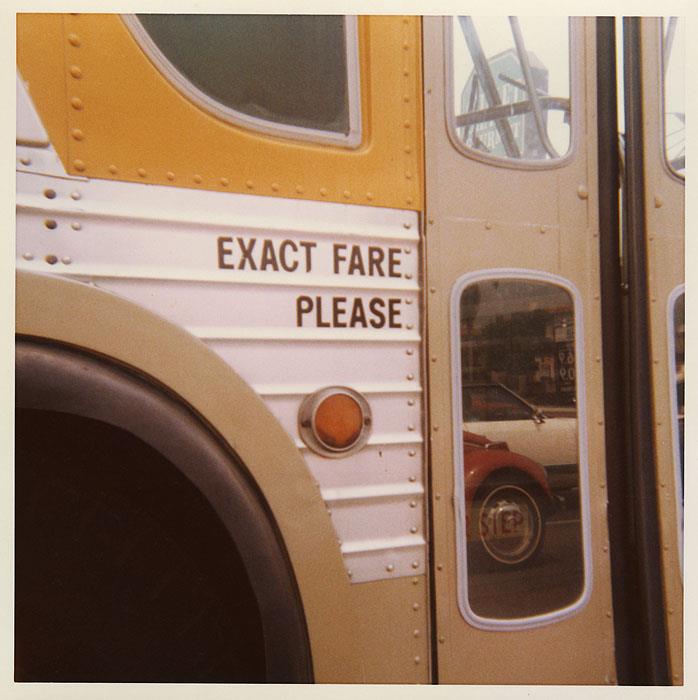
It’s that time again, everyone! It’s Saturday storytelling time. As you will no doubt recall, each Saturday we post a found photograph, a vernacular picture, and we write a story about it, and invite everyone else to write one, too. And then, in theory, we all read each others’ stories and offer wise editorial advice. Today’s picture is quite cryptic. There’s no human in this one, no subject, so you can imagine the characters however you’d like. And here it is… Send me your story and I’ll print it here, or send me a link to share, if you have somewhere of your own to post it.
482433_10151466397389589_2027213003_n

So, kale and artichoke hearts and tarragon pesto layered with sharp cheddar and thinly slice potatoes. A meal in a dish. I suppose it’s a little like lasagna with potatoes instead of pasta. It was very comforting and warm, but tarragon, artichoke hearts and sharp cheddar added some brightness. If you don’t have tarragon pesto, you can use regular old basil pesto, or you can just add some herbs as you like them to the ricotta.

Here’s Hey Hey by Big BIll Broonzy, my new favorite.

Continue reading

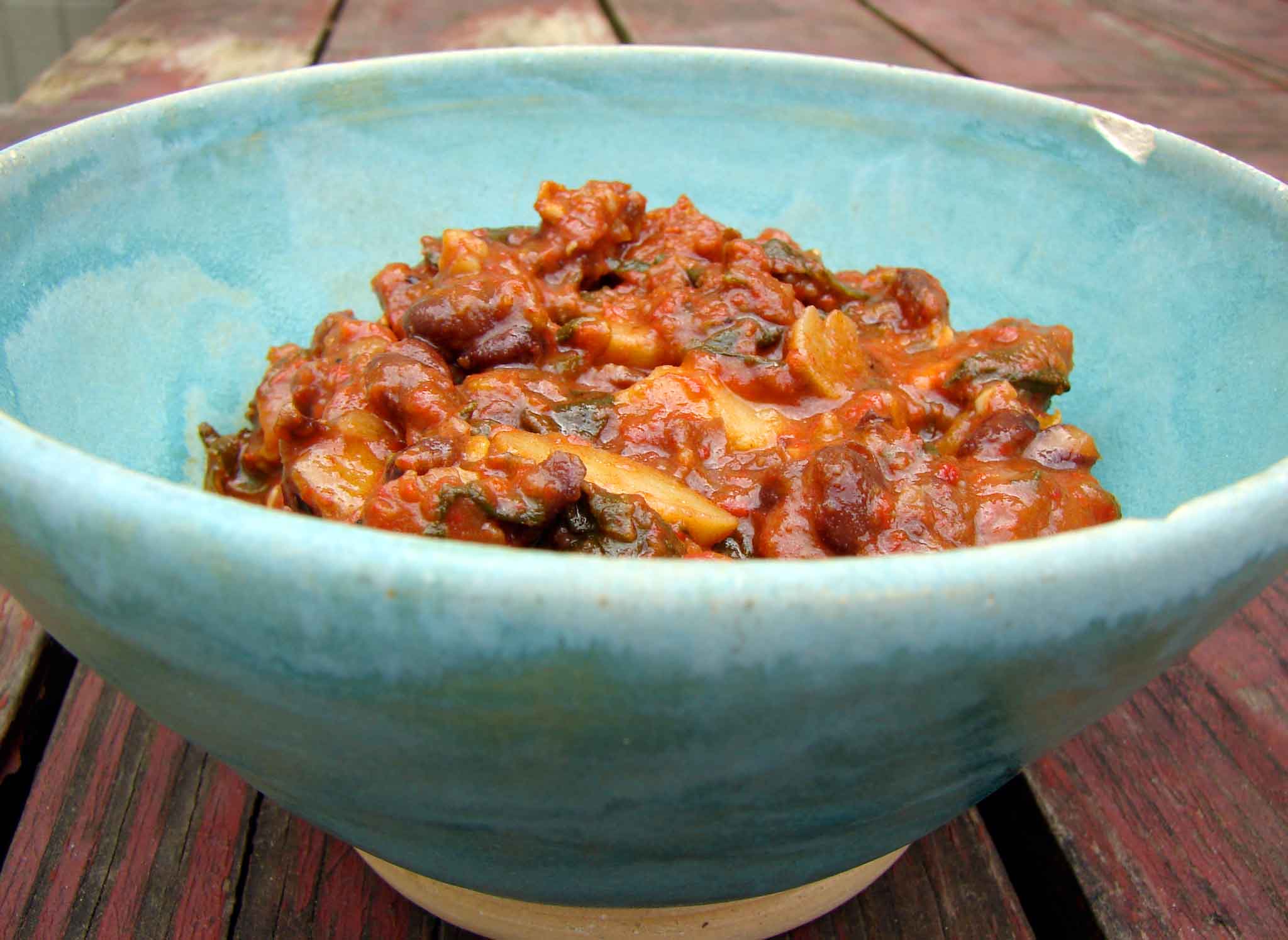
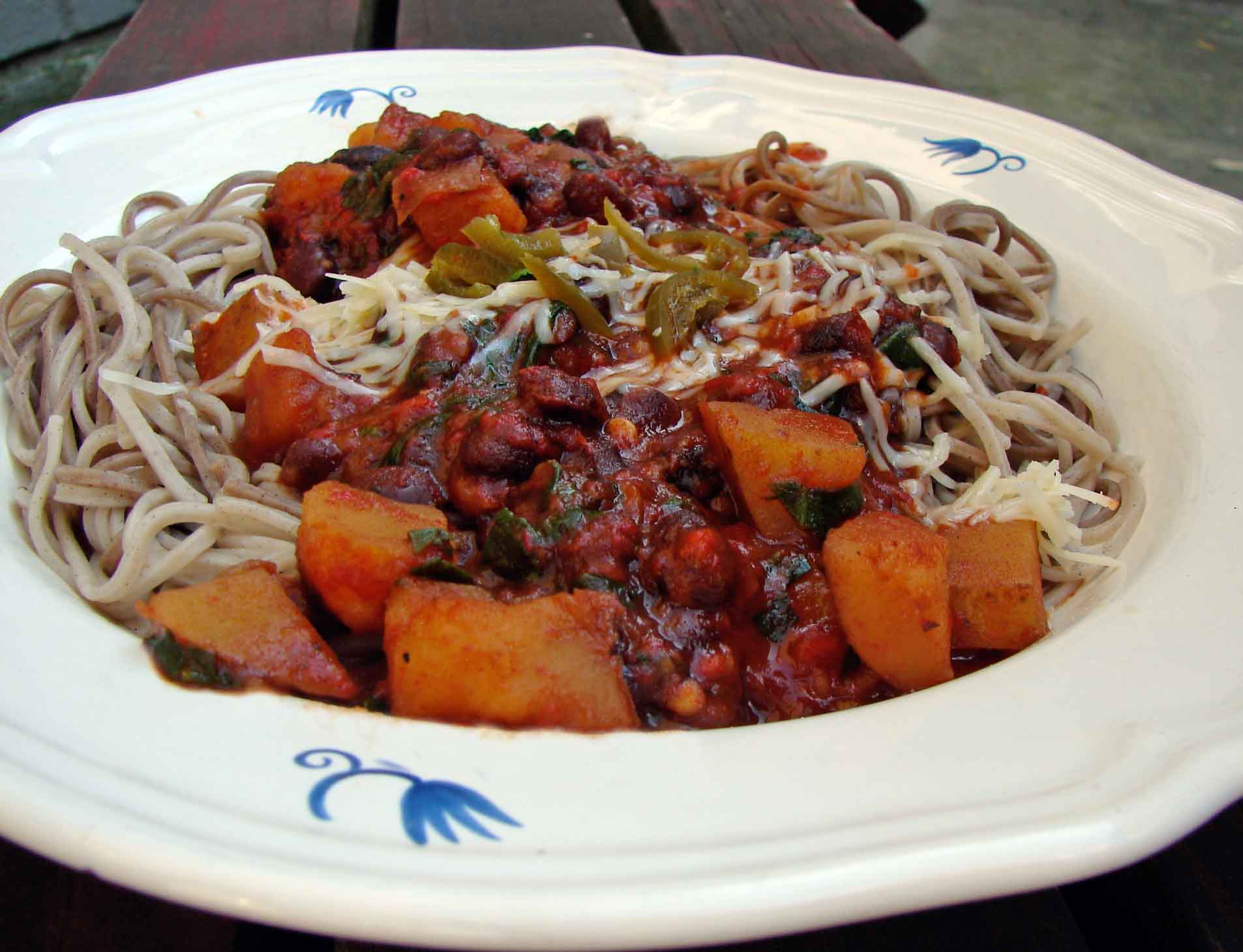
Soba noodles with potatoes, black beans and spinach in red pepper sauce

Roasted red pepper and black bean sauce

Roasted red pepper and black bean sauce

Each day on our way to school, Isaac and I pass a house that half-burned down a few years ago at Christmastime. Apparently it will be torn down before too long, but now it’s oddly beautiful with its charred, inside-out appearance. Many of its lovely architectural details remain intact, but now it feels as though you can catch a glimpse of its pretty bones. The last few times we’ve passed, a giant black vulture has peered down at us from the roof. I happen to think black vultures are remarkable birds–beautiful in their black-upon-black scruffiness. We have a lot in our area, and we’ll see them lined up with gothic gravity on abandoned barns and silos, or perching with unlikely balance on slim branches their weight should snap. They seem social, as they all stand together, long wings stretched in a wide arc to catch the sun. When we passed our local vulture today, my little modern-day Ben Franklin said that he likes turkey vultures better than eagles because eagles kill their prey, whereas vultures just take what’s already dead. They just clean up. So between Franklin and Isaac, we’ve established that bald eagles are thieves and murderers, whereas turkeys are brave, and turkey vultures mild and helpful. It’s funny that we saw the vulture just now, because my boys have spent the week scavenging. Not for carcasses of course (we’re vegetarian!) but for junk. It’s sparkle week in our town, which means that people put out their still-sometimes-useful garbage, and other people pick it up and take it home. It’s a nice idea, really, and many people I know have furnished their house this way, and in quite a stylie style, too. However, if you have two small pack rats, it can become dreadful. Isaac is sparkle-obsessed. He wants everyone else’s half-broken toys. He flies from garbage pile to garbage pile shouting “sparkle! sparkle!” Like some mad trash fairy. He roots through broken glass and dog crap, convinced that a treasure awaits if he only looks hard enough. Malcolm is an admirably efficient sparkler. He found a working door knob, a working watch, a perfect darth vader mask, and any number of small, intriguing objects. I suppose this bodes well for his chances of surviving in a post-apocalyptic landscape. He’ll build us a home of packaging foam and old dressers, and we’ll cook our food on abandoned grills and dismantled ovens. Personally, I’ve always been a little wary of used goods and thrift-store clothes. I can’t shake the idea that they take on the personality of the people that owned them. That they’re imbued with the sadness or happiness of the lives they were part of, and that they become spirits of their own as they pass from person to person. It’s silly, I know! I should saunter down the street, like Malcolm, hand in pocket, flannel shirt catching the breeze, coolly appraising each pile of reusables, happy to be part of the cycle of renewal that takes place each spring in our small town.

Soba noodles with roasted red pepper sauce, black beans, spinach and tomatoes.

Soba noodles with roasted red pepper sauce, black beans, spinach and tomatoes.

I seem to still be making warm and earthy meals, despite the fact that on paper it’s springtime. We’ve had a damp and chilly spring, and I haven’t found mounds of sweet peas, fiddleheads and ramps. Even the asparagus looks thick and woody, and costs a bundle for a bundle. So I’m still in the warm and saucy world of food. I think this would make a nice summer meal, though. It has the appealing color of a sun-drenched brick wall in summertime. It involves red pepper, which is summery, which I roasted under the broiler, but which would be even better grilled. Malcolm loves soba noodles. They’re made of buckwheat, and they have a nice nutty flavor. They go nicely with earthy potatoes and black beans, and I mixed them, in this instance with smoky peppers, smoked paprika and spicy red pepper flakes and jalapenos. You could eat this over rice with tortillas, or even on it’s own as a sort of chili.

Here’s Decemberists’ Sweet Clementine, because I borrowed a phrase for my essay today!

Continue reading

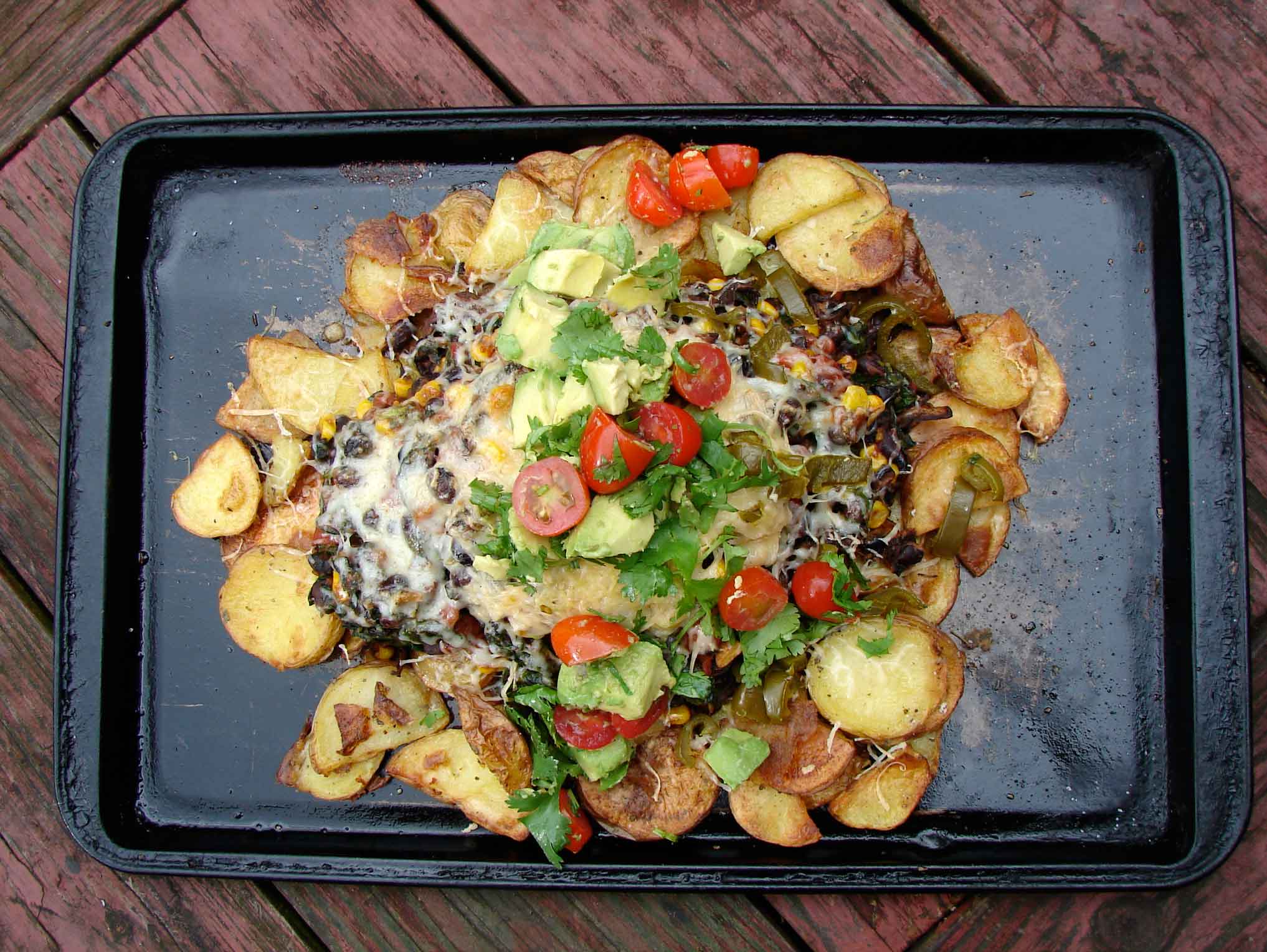
Thin crispy roasted potatoes piled with chipotle black beans, spinach, smoked gouda, jalapenoes, and guacamole

Thin crispy potatoes with black beans and guacamole

Thin crispy potatoes with black beans and guacamole

“Why is it okay to be scruffy when you’re real?” This is a question Isaac had to answer for class, and in solidarity with the lad, I’m going to try to answer it myself, here. I should start by saying that I haven’t read the book, so if it seems like I’m desperately flailing to sound relevant (to anything), that’s because I am. I would posit, however, that this is the nature of all communication after first grade, and thereby acceptable for the matter at hand. So. “Why is it okay to be scruffy when you’re real?” I believe that not only is it “okay” to be scruffy when you’re real, but that scruffiness is an indicator of reality. And not just an indicator of realness as opposed to imaginariness, but also of realness in contrast to fakeness. Real meaning “actual” as well as real meaning “genuine.” Anything that is too perfect or symmetrical seems plastic and artificial. Something may be perfect in your dreams or your imagination, but when you’re awake and viewing the real thing, you notice flaws and oddities. And these are the aspects that make you know that the object is yours, and these are the things that make the object beautiful in your eyes. Any slight imperfection makes an individual more interesting and appealing, makes it stand out from all others, makes it, in fact, individual. It is hard to love something that is exactly like every other such something in the world. It is hard to even recognize that it is yours. If every car in the world was the same, you might identify yours because of a scrape on the fender or a dent in the bumper. This scruffiness helps you to recognize that the car is yours, and the very state of being yours makes it more appealing than every more perfect car in the world. If every child in the world was identical in mind and body, you might feel a vague affection for all of them. But it’s the child you’ve nursed when they were ill, whose snotty nose you’ve wiped, whose strange thoughts you’ve listened to, that you love with a fierce passion. It’s the child whose dirty face and muddy fingernails you love, because it means they’ve had a good day playing in the yard or climbing trees. Because another definition of “real” is alive, animate, as in “a real boy.” And when you’re alive you’re subject to messiness, illness, and aging. But these things, as manifestations of life and liveliness, become poignant and beautiful. Scruffiness is a sign of change. It’s a sign of growing and living, of adventures and mishaps, of stories to tell. These are the things that make a creature interesting and alive. Mint-condition perfection can only be achieved through stasis and isolation, and few things in life are actually better for being static and alone. Scruffiness is okay when you’re real, because it is both symptom and source of a real love, such as can only be experienced by real people in real time. Scruffiness is vulnerability, it is showing yourself to another when your guard is down and your mask is off, and this rawness and openness is the only possible path to intimacy. Scruffiness is banal and day-to-day. It is tedious and unspecial, but when you share this ordinariness with someone, you become more real, your relationship becomes real. You delight in the habits that you share, and you slowly grow and change together, becoming more real and alive and wrinkled and eccentric and lovely with each passing year. By heaven, you’ll think your love more rare and real than any based on false illusions of perfection. And this is why it is more than okay to be scruffy when you’re real.
Thin crispy potatoes with chipotle black beans and guacamole

Thin crispy potatoes with chipotle black beans and guacamole

This was a yummy dinner!! I roasted some thinly sliced potatoes with sage and olive oil. Then I piled them high with roasted mushrooms, black beans, corn and spinach sauteed with chipotle puree, smoked gouda, sharp cheddar, pickled jalapenos and fresh, chunky guacamole made of avocado, tomato, cilantro and lime juice. Smoky, earthy, fresh, satisfying. It was fun to eat this! We ate it like nachos. The boys stuffed the black bean mixture in some soft tortillas.

Here’s Linton Kwesi Johnson with Reality Poem.

Continue reading

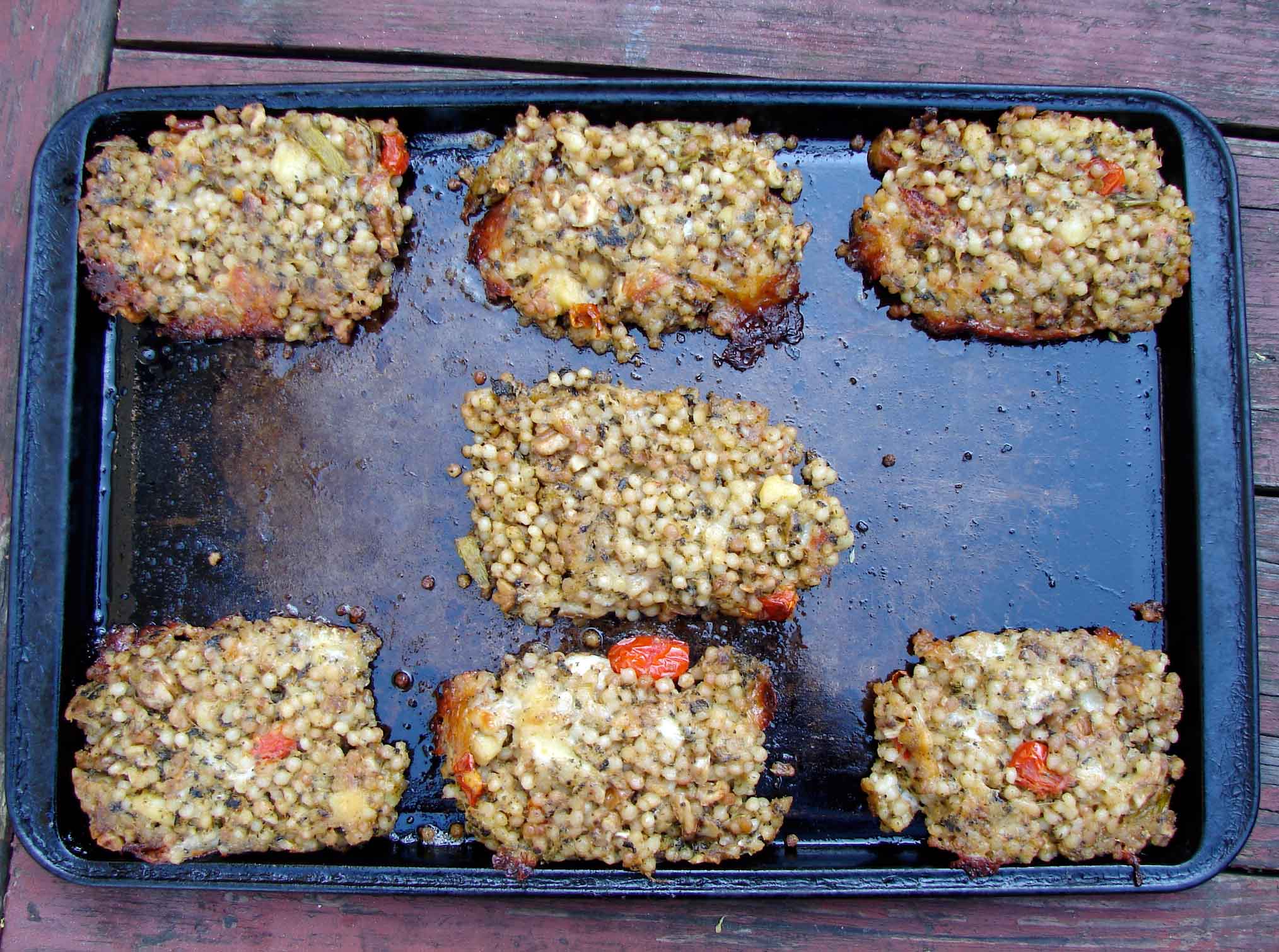
Couscous and kale croquettes

Couscous kale and potato croquettes

Couscous kale and potato croquettes

Hey, kids! It’s Saturday storytelling time! As I’m sure you recall, this means that along with your daily recipe and song, you’ll get a story, too! Each week, everybody in our small salon of auteurs (well, generally me and one or two other people) writes a story based on a found or vernacular photograph. This week’s photo is a doozy. What is she dreaming about? If you’d like to write a story about it, and I hope you do, send me a copy and I’ll post it here, or send me a link if you have somewhere of your own to post it.

THE PHOTO
546786_10151345376679589_1870895765_n

My story, which you can find after the jump, turned out inexplicably sad. It’s a sort of loose retelling of a myth, painted over with grim economic reality.

Kale & couscous croquettes

Kale & couscous croquettes

I made these croquettes out of leftover pearled couscous and leftover kale and potatoes, but I’ve given you directions to make it from scratch. You could make it with leftover mashed potatoes and sauteed spinach or chard as well. They were quite tasty – delicate and crispy outside and soft within. Even the boys liked them.

Here’s Tom Waits with Come On Up To the House, because I borrowed a line from it for my story.

Continue reading

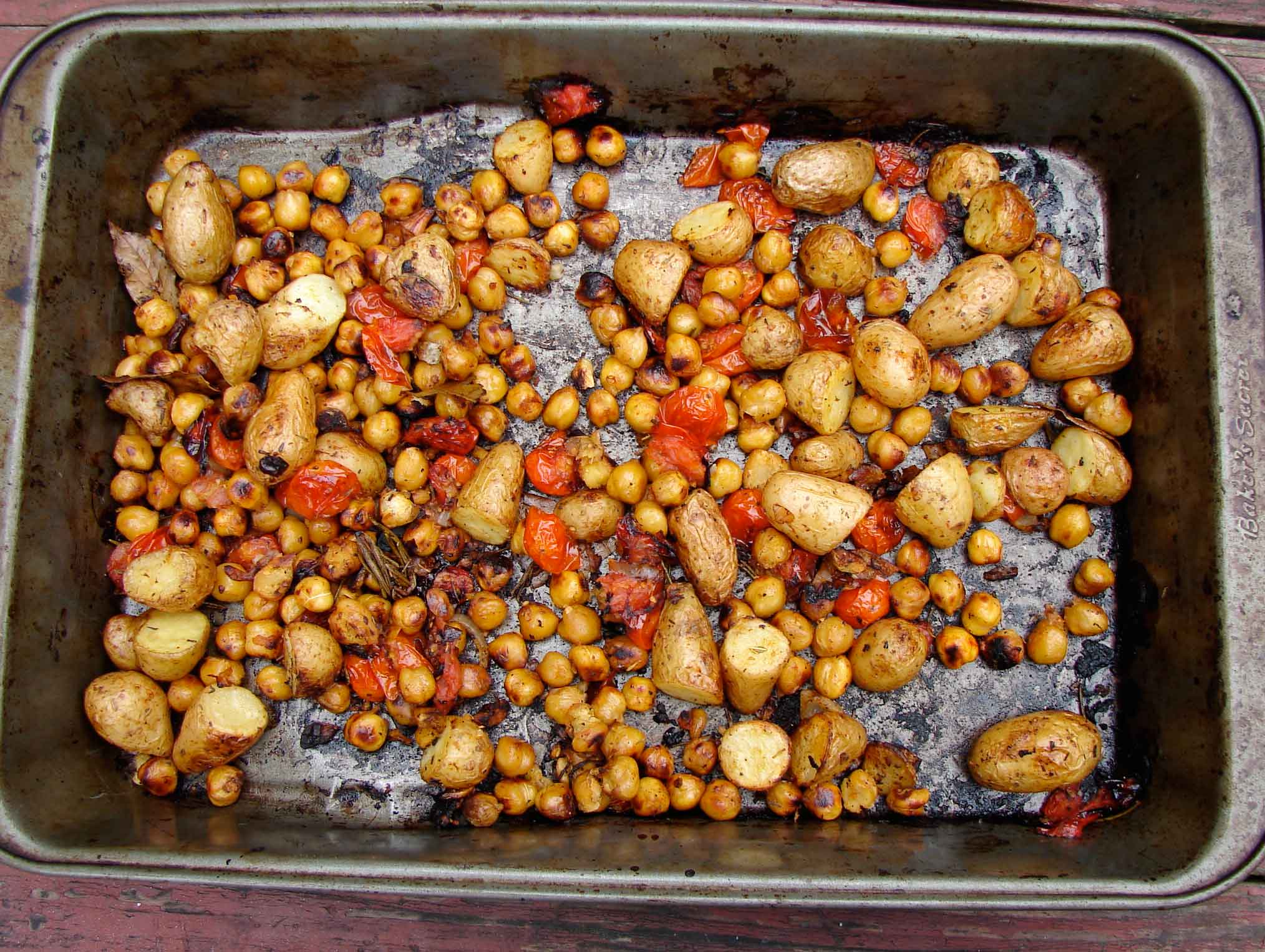
Roasted chickpeas, potatoes and tomatoes

Roasted chickpeas, potatoes and tomatoes with sage and rosemary

Roasted chickpeas, potatoes and tomatoes with sage and rosemary

Thoreau famously warned us to “beware of all enterprises that require new clothes.” As I was going about my chores this morning, thinking my confused thoughts, I came up with my own version. “Beware of any enterprise that requires you to stifle your sense of compassion.” Beware of any occupation that requires you to think of other lives as less valuable than your own life. Beware of any undertaking that requires you to treat people in a way you wouldn’t treat the people you most love. Beware of any job that forces you to think of people as enemies. If you’re being trained that the suffering of strangers is less tragic than the suffering of your friends, quit your training. Beware of anybody that asks you to respond to any situation with only anger and fear. Beware of anybody that tells you love, pity, and empathy are signs of weakness. Beware of any goal that requires cruelty or thoughtlessness to achieve. Beware of anyone that asks you to act without understanding.

    It is the job of thinking people not to be on the side of the executioners. – Albert Camus

So! Tiny new potatoes, chickpeas and tomatoes, all tossed together with shallots, garlic and olive oil. Seasoned with rosemary and sage, and roasted till crispy and caramelized. Delicious! This smells so good while you’re cooking it. I like potatoes and tomatoes together, for some reason it seems very summery and harvesty to me. We’re not there yet, obviously, so this is like a wish or a preview. This would be nice in summer with chopped ripe tomatoes, but for the time being I used little sweet grape tomatoes. They became almost like sundried tomatoes. Rich and flavorful. The first time we ate this, it was crispy and firm. The second time, I added some white wine at the end, used it to scrape up all the nice caramelly bits, covered it, and cooked it till everything was tender. It was very nice both ways! We ate it on a bed of baby spinach and arugula. Lovely.

Here’s Compassion, by Nina Simone.

Continue reading

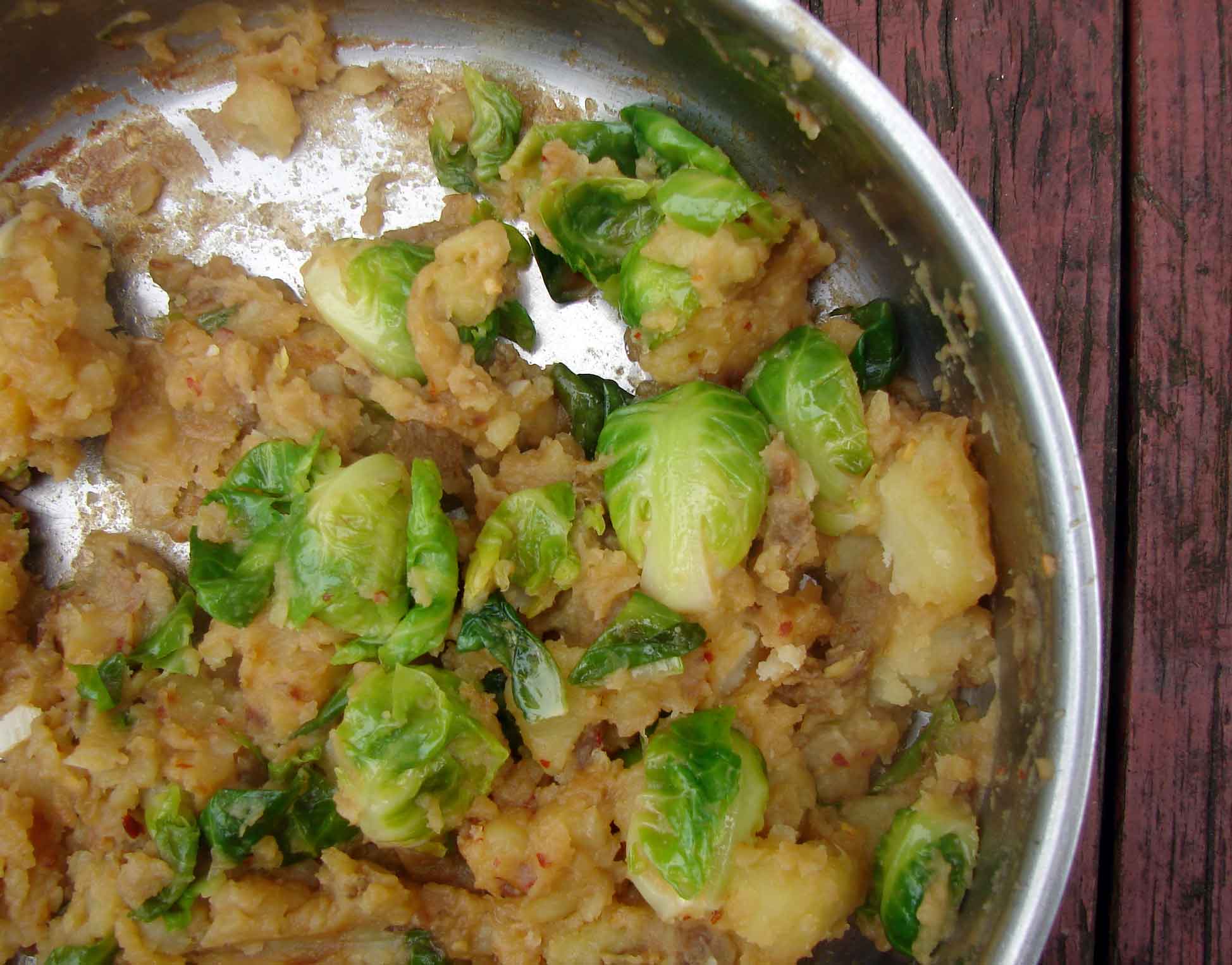
Brussels sprouts and potatoes with tamari and honey

Brussels sprouts and potatoes with tamari and honey

Brussels sprouts and potatoes with tamari and honey

I dialed the number but I didn’t expect anyone to answer the phone. Somebody answered the phone. I instantly forgot the name of the person who gave me the number.
“Hello! Um. This is Claire. Your, um, I’m sorry, your…partner? maybe? told me to call this number. I’m friends with Jen! Um, I’m not sure how to pronounce her last name? Um…”
“I’m sorry,” Said a kind voice at the other end of the line, “I think there’s something wrong with my phone, you sound like an incoherent fool.”
“No, no, that’s me!”
“And how can I help you?”
“Well, I’m not sure, I was told to call you by two different people, so I did. I, um, made some food for Jen, once and she said it was ‘yummy’ and she said you were opening a restaurant, and I’ve never cooked in a restaurant, but I’ve worked in lots of restaurants, and I’m not sure what you’re looking for…”
“Did you want to be a line cook?”
“God, no, I’ve seen what that job does to people! They go in pleasant enough, but they emerge twisted and bitter, likely to lose their tempers at the slightest…”
“Did you want to wait tables?”
“Well, I’m a waitress now, and after four years in the same place I’ve got things pretty much exactly as I like them…I’ve trained all the nice people to request that I wait on them…”
“I’m sorry, what exactly do you want?”
“Well, I want to write for the Guardian UK, but they won’t let me. I want to be the next Andre Bazin, you know? And I really really wish that somebody would pay me to write novels and make movies, but obviously that’s not going to happen. I’ve always wanted to be referred to as ‘my esteemed colleague,’ so that would be a good thing. It would be nice if somebody paid me to make meals and write about it on my blog. Oh yeah, I have a food blog, which is pretty exciting, because I’m fairly sure I’m the only person in the country that thought of that bright idea….”
“Did you want to talk to our executive chef and arrange a time to meet?”
“Talk to another human being on the phone?!? I’m sure you didn’t notice, but I’m not at my sharpest on the phone. I’m not so good at telephone conversations, and I’m fairly certain talking to another person at this point would do me in.”
“Why don’t you come in tomorrow when we’re all here.”

Nailed it! I hope you were taking notes, kids, because that is how you call somebody up to ask for a job! After all of my awkward rambling, I actually have an interview today, which is sort of hopeful, because the woman I spoke to must be the kindest, most patient person on the planet. I’m nervous! I was up all night being nervous! Mostly because I don’t have any idea what I want to do, but I can imagine dire complications with any scenario I come up with! Oh yes, the full worry-Claire treatment. I’m excited to learn about a new restaurant, though. It’s always nice to meet new people. I suppose the worst that can happen is that I waste a little bit of their time.

Everything I’m cooking lately seems to have tamari and honey in it! I must be addressing some sort of tamari-honey deficiency. Actually, it’s a magic combination that makes my boys eat vegetables, and I’ve been wielding it a lot lately. This dish is no exception. The potatoes are soft and comforting, the sprouts bright and crispy, and everything was quite nice together. I added some red pepper flakes for heat, some balsamic for acid, and of course we have honey for sweet and tamari for…is that umami? I’m never quite sure. This was a very simple dish, and the boys did like it.

Here’s The Clash with Career Opportunities. I have to say, I’ve always thought that making tea for the BBC doesn’t sound like such a bad job.
Continue reading