Summer squash “jam” with olives and pine nuts

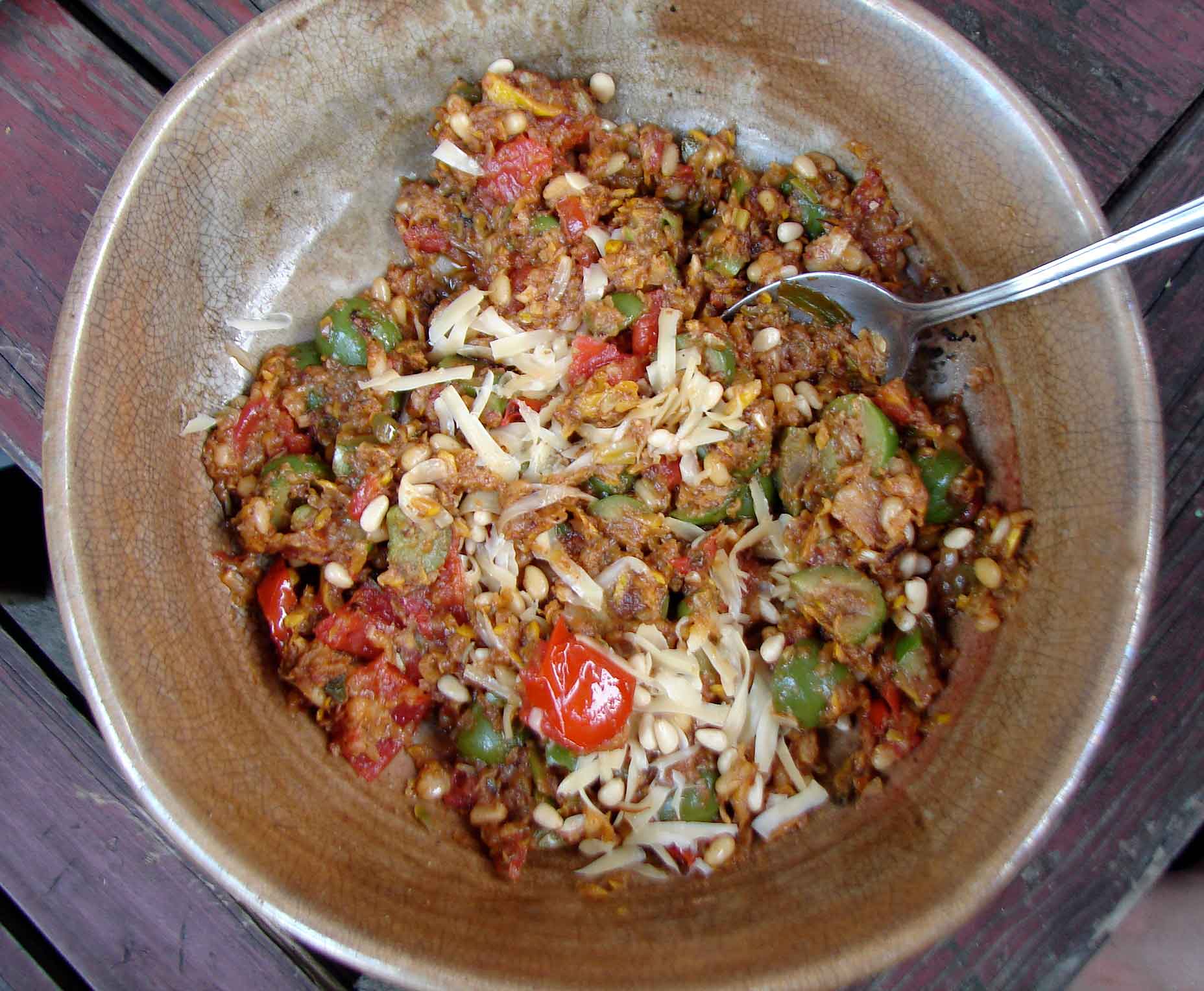
summer squash jam with olives and pine nuts.

summer squash jam with olives and pine nuts.

Well alright! Wh’apen? Hey ya! Gabba gabba hey! I’m not sure what you’d call these sayings…catch phrases, maybe? But they’re all the titles to some very good songs, and they’re the subject of this week’s playlist. The rules are quite flexible, but what we’re looking for is some collection of words that stands on it’s own in a conversation or greeting, that’s more than just the title of a song. Here’s the start of the playlist. I’m sure there are a million more, but I’m late for work!

This is a good dish for people who are looking for something different to do with summer squash. It’s not just sliced and sautéed, it’s grated first, and then cooked for a while with scallions and fresh herbs, so that it turns soft and saucy, almost like a jam. Then olives and tomatoes and pine nuts are added for a bit of texture and a kick of flavor. This would be nice on the side like a condiment, almost, but I think it’s best on toasts or crackers or spread on crusty bread.

Here’s that playlist again.

Continue reading

Chard and white beans with raisins, walnuts and smoked gouda

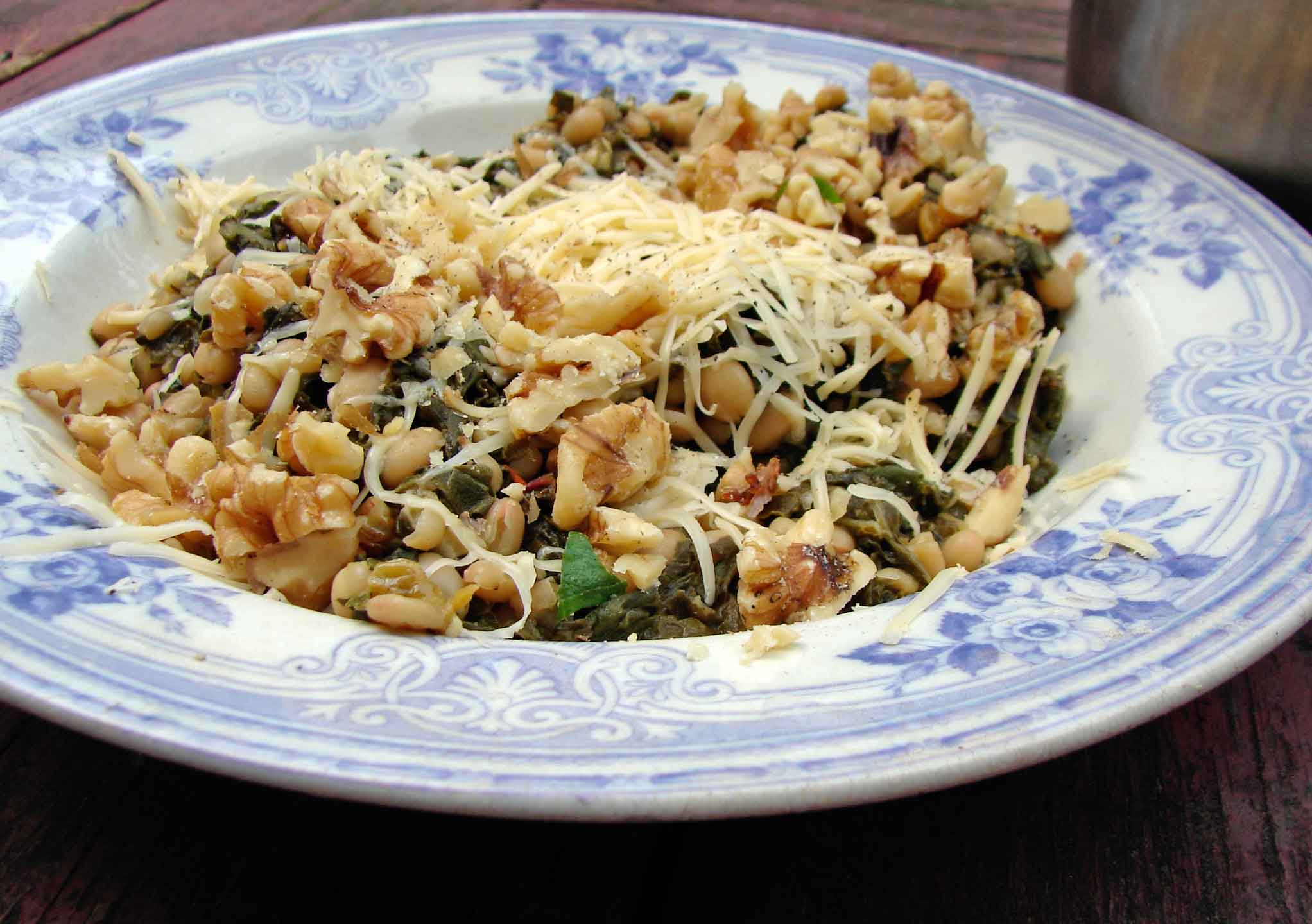
Chard and white beans with walnuts and smoked gouda

Chard and white beans with walnuts and smoked gouda

If you’re following along at home, you’ll recall that yesterday found us, here at The Ordinary, seeking some solace from our busy thoughts in the form of quiet film scenes. David mentioned a film we’d watched last week, Le gamin au vélo, and I thought “ah, yes, of course.” I was going to add a scene from the movie to yesterday’s post, but in watching the scene, I realized that this was one I want to go on an on about, so that’s where we find ourselves today. The film is by the Dardenne brothers of Belgium, renowned for making emotionally and stylistically bleak and austere films, most notably La Promesse in 1996. They almost never use non-diegetic music–they don’t have a soundtrack. The sounds of the film are those that people make going about their day, and these sounds become oddly compelling as we become immersed in the rhythms of the character’s lives, as we learn their routine and become alert for any small change in the patterns. All of their films are quiet, they’re a succession of silent moments. And that’s why this scene is disarmingly beautiful. We’re given music! We’re given, specifically, a small, moving swell of music, like a warm gentle wave; a few notes from the second movement of Beethoven’s Emperor piano concerto. And then we return to the quiet world of this ridiculously beautiful expressive boy, to the sound of his breath, and of his madly pedaling feet. Throughout the film, in certain scenes, this music washes over us, just a few notes, and then recedes. You feel that you need to hear the rest, you want the notes to resolve themselves. You want the boy’s life to resolve itself, you want him to care for himself, you want him to let somebody take care of him. The Dardenne brothers’ films, though beautiful, are often hard for me to watch. The very honesty and rawness that makes them wonderful makes them painful. Their characters are battered by life, conflicted and rejected, and they spend a lot of time alone. We’re compelled to watch them in their solitude, drowning in the silence of their own company, facing rotten choices and making regrettable decisions. They raise all sorts of questions for me, as a film viewer, and as somebody that hopes to one day call herself a filmmaker again. You could make a film this revelatory of human nature as it actually is–you could, and you probably should, but why would you? Why watch something so depressing? The older I get, I find I have less tolerance for unrelentingly grim movies. When I was younger I could watch anything, but now that I have children, I just can’t–particularly if the movie involves kids the age of my boys, as this film does. I don’t need a happy ending. I don’t want to watch sickeningly sweet saccharine feel-good movies, but I do need some small hopeful sign. So I will admit to you that when we watched this film, we stopped halfway through, and I read about how the film ended, and only then did we watch the rest. But we did watch the rest. Because in being entirely honest about human nature, you have to include moments of warmth and generosity and connection, and that’s what this film does, quietly, slowly, without melodrama or judgement. The few notes of Beethoven that we hear throughout the film are full of sweet sadness, the music veers between hope and despair, light and darkness, but it’s so beautiful that we need to follow it to the end, which they finally allow us to do during the credits. And that is why you watch a movie like this one.
Chard and white beans with walnuts, raisins and smoked gouda

Chard and white beans with walnuts, raisins and smoked gouda

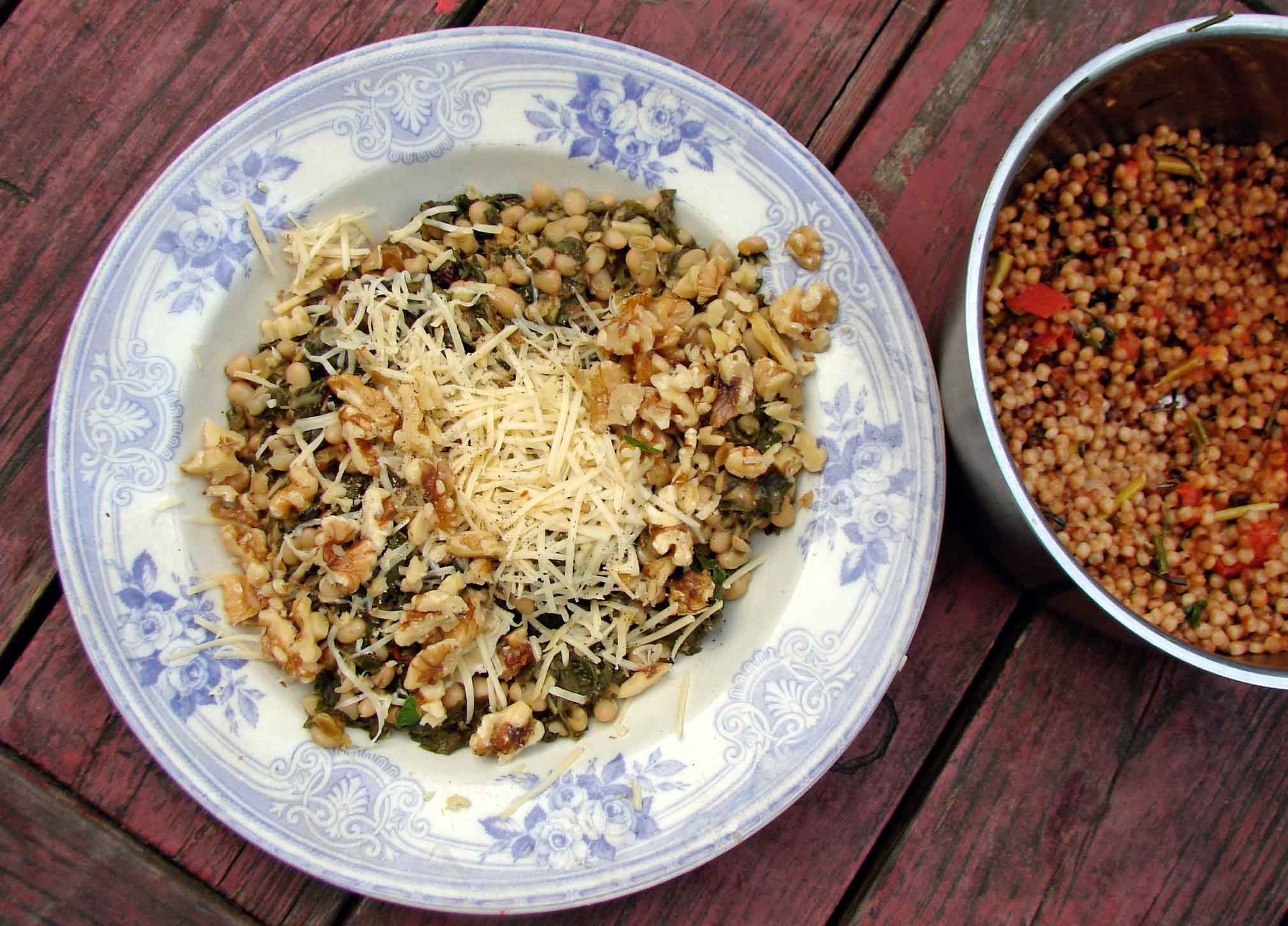
Greens are my favorite! This time of year is the best! We’re getting greens by the armful from our CSA–chard, kale, spinach, broccoli rabe. I love to come up with new ways to prepare greens, and this one turned out really good. It’s a twist on the old chard/raisin/pine nut combination that I love so much. This one adds white beans and smoked gouda, for extra substance and flavor. We ate this with whole wheat pearled couscous, which I prepared “according to the package instructions,” except that I cooked the couscous in olive oil and herbs at first. You could eat it with pasta, rice, millet, farro, a big bed of lettuces, or as a vegetable side dish. You could eat it in a box, you could eat it with a fox.

Here’s the second movement of Beethoven’s Emperor piano concerto.

Continue reading

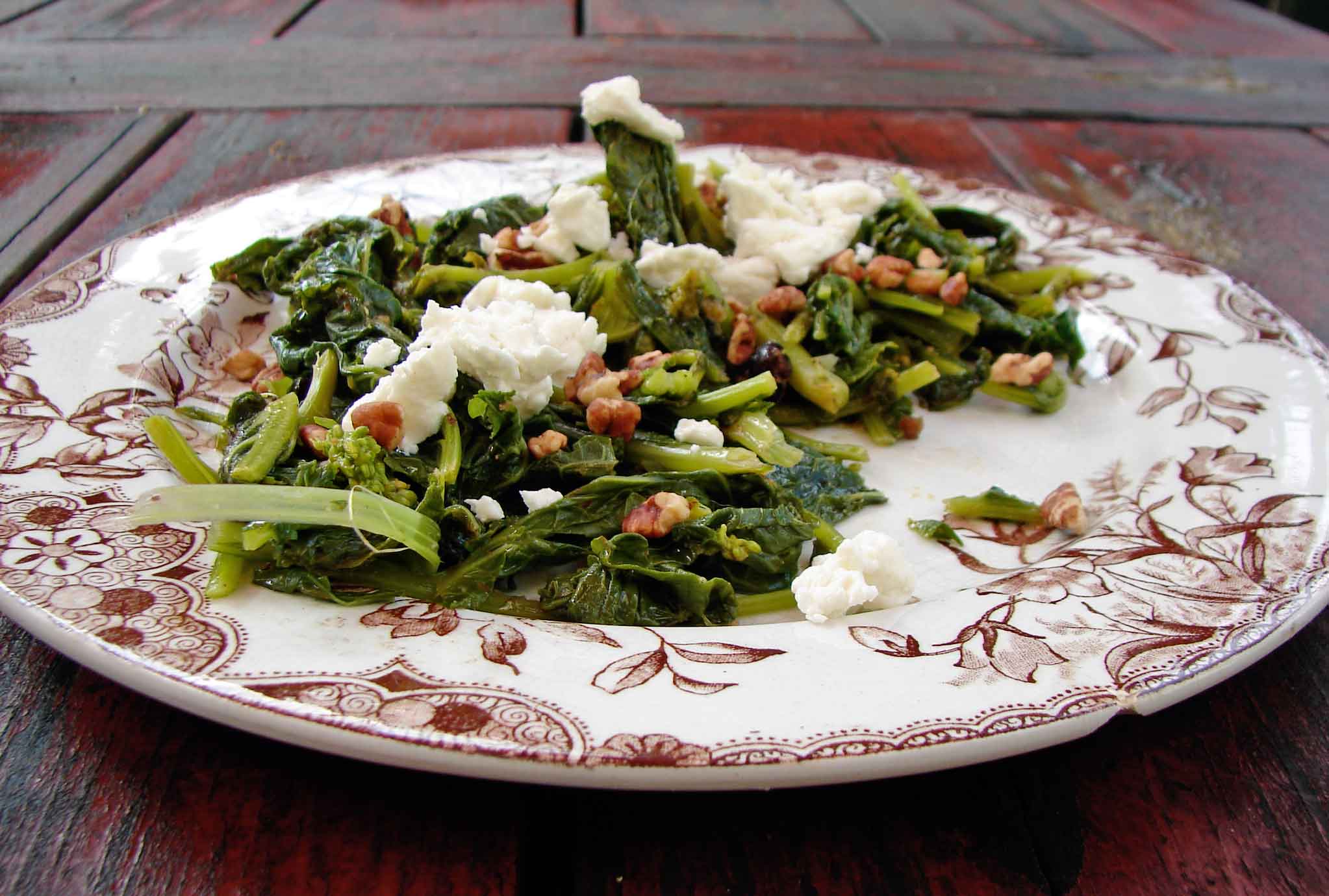
Broccoli rabe with lemons, pecans and french feta

broccoli rabe, pecans and french feta

broccoli rabe, pecans and french feta

Here at The Ordinary, everybody is in a tizzy. It’s the last week of school! There’s so much to remember and sign, and turn in, and bring home, and so many places to be at certain times and letters to write and cookies to bake and presents to procure. When I say everybody, I mainly mean me, because all the other little Ordinarians are taking it all in stride, as they take most things. I feel a little anxious, I tell you! It’s a feeling of the end of something drifting into the beginning of something else; the clash of memory and anticipation. I’d like to approach summer like Finn dealt with his fear of the ocean…just hit myself over the head and let myself sink peacefully into it, till I lie in a gently undulating bed of underwater plants. Barring that, I’ve been trying to think of quiet scenes from movies. I keep talking about how I love quiet scenes–either quiet scenes from quiet movies, or unexpectedly quiet scenes in noisy movies. I’ll try to remember a few now. Can you think of any?

Whisky, from Uruguay is an entirely quiet and beautiful movie. I’ll probably go on and on about it someday, but for the time being, here’s a small clip.

The ridiculously beautiful end of 400 Blows.

Of course, the moment in Bande a Part in which Godard demonstrates the meaning of room tone.

And Ozu’s “pillow shots,” I’ve linked to this before, but they really are beautiful.

Well, that’s all I can think of for the moment, because I’m surrounded by CHAOS! of the excited small boy variety. I’m sure I’ll think of more in the middle of the night when I can’t sleep, and I’ll tell you all about them some other time.

Broccoli rabe, pecans, and french feta

Broccoli rabe, pecans, and french feta

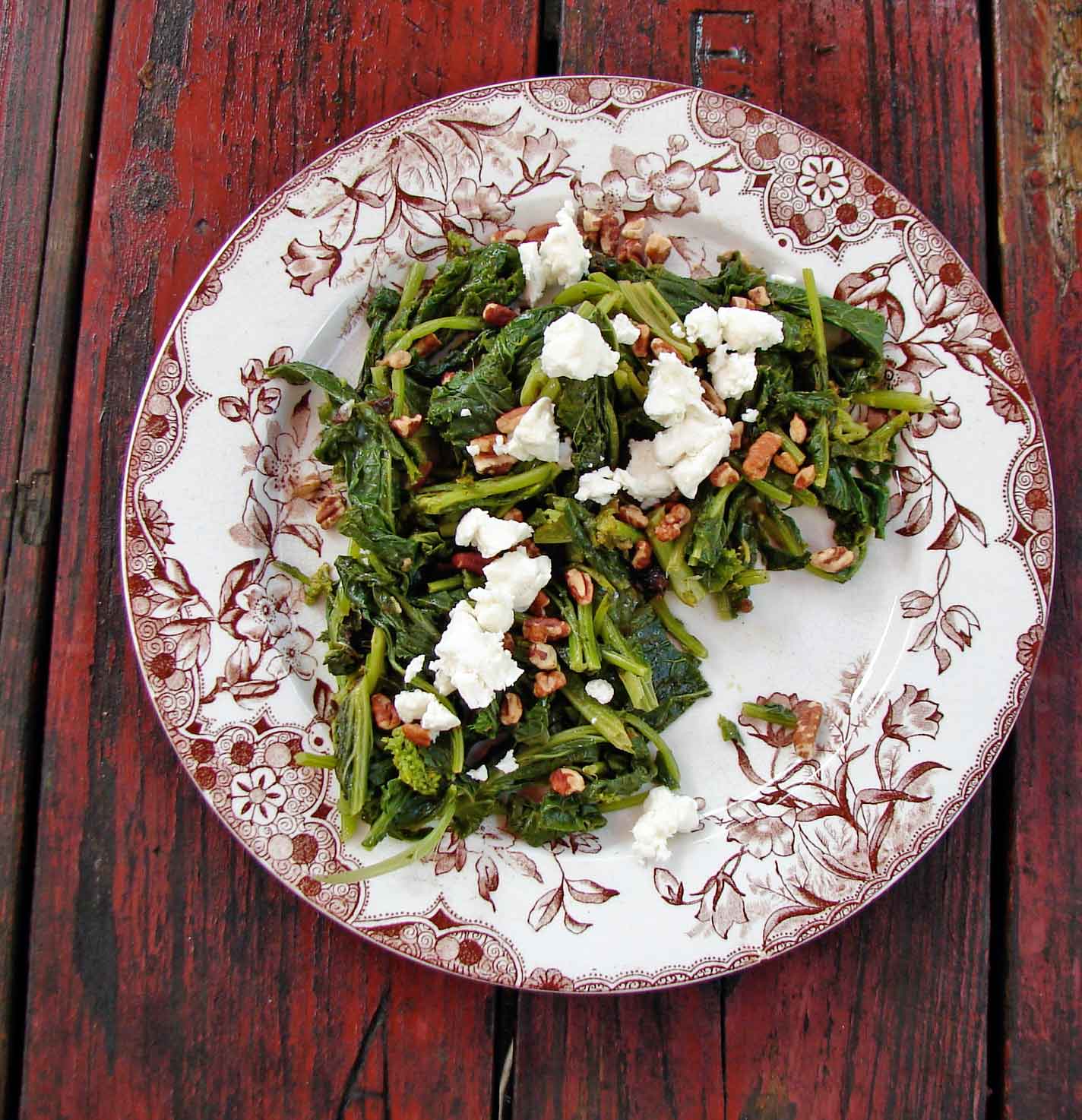
This dish is simple! We got some broccoli rabe from our new CSA, and it’s the best broccoli rabe I’ve ever had! Just the right edge of bitterness. I also treated myself to some French feta from the local market. I wanted the flavors to be strong and clean, so I didn’t even add garlic or shallots. Just greens, herbs, lemon, feta, and pecans for a bit of crunch. If you can’t find French feta, (which is a little creamier and milder than Greek feta), Greek feta would work fine as well.

Here’s Nina Simone with Sounds of Silence.

Continue reading

Kale and new potatoes with lemon and sage

kale and new potatoes with lemon and sage

kale and new potatoes with lemon and sage

Here at the Naive Political Philosophy department of The Ordinary, we’re alarmed and dismayed by a pervasive and corrosive trend that we’ve noticed. What is it? You ask. Well, (we answer) it’s nothing other than the very breakdown of all communication into cynical marketing speak–insipid at its best and genuinely pernicious at its worst. Everybody is trying to sell us something, and it’s getting us down! All forms of communication–real mail, e-mail, phone calls, visitors to our esteemed institution–it’s all somebody asking for money, with a product for sale. It’s almost gotten so we don’t trust a friendly gesture, any more, and isn’t that a terrible shame. Everything the boys bring home from school is asking them to sell something or buy something, they’re learning how to be little consumers, little salesmen. This isn’t a new problem, and it hasn’t crept up on us in secret, it’s been going on for decades, and it’s poured over our heads by the steaming bucketful, as if there was no shame in it at all, as if it was a system that makes sense. And it’s down to the very words we speak with. We read the OED, we’re not ashamed to admit it, and we’re saddened to see the trajectory of almost every word from something mysterious and meaningful to something lacking in meaning or confounding in meaning, used to make us want to buy something or to describe the way people buy things. Because it’s an art, a study, a science, a career, this method of persuading people to part with their money for something they don’t need, this way of appealing to people’s insecurities, of making them feel empty and insufficient, of making them feel ugly and inferior. It’s all part of a system that we defend with our lives, that we can’t question or change, because it’s been sold to us so neatly for so long. Well, here at The Ordinary, we think it’s not working, or it’s working so well that it’s impossible for anything of genuine substance to thrive. We want to live in a world where we can make something we love, something we think is good, and we can send it out in the world to share with others, who are making good things that they love, which we’ll share, too, and pass along to our friends. We want to live in a world where everything has value, and nothing has a price. We want to live in a world where we can look how we look, and think what we think, and age how we age, and nobody will try to tell us it’s all bad, and sell us something to fix it–as if the very passing of time, so natural and strange and beautiful, is something you could stop with anything as absurd and insignificant as money. When we communicate, we want to share thoughts and ideas and emotions, we don’t want to buy meds or printer paper or a new phone. And this is our highly-detailed, pragmatic and sensible plan for moving forward into the future.

kale & new potatoes with lemon and sage

kale & new potatoes with lemon and sage

I always think of kale and potatoes, and any combination of kale and potatoes, as being very wintery. Well, guess what? We joined a new CSA (that I’m very excited about!) and we got bundles of kale (very pretty kale, as it happens, I’ve never seen any quite like it), and wonderful handfuls of fresh herbs. And we bought some lovely new potatoes at the store. And we combined them in a light, fresh lemon, kale and white wine preparation. It was delicious! It tasted bright and green, like spring. David said it was the best kale he’s ever eaten. I added some sumac, for tanginess and nigella seeds, for a bit of subtle smokiness, but it would be just fine if you don’t use these.

Here’s Tom Waits with Step Right Up.

Continue reading

Thinly sliced potatoes baked with kale, artichoke hearts and pesto ricotta

Potatoes layered with kale, artichoke hearts and pesto ricotta.

Potatoes layered with kale, artichoke hearts and pesto ricotta.

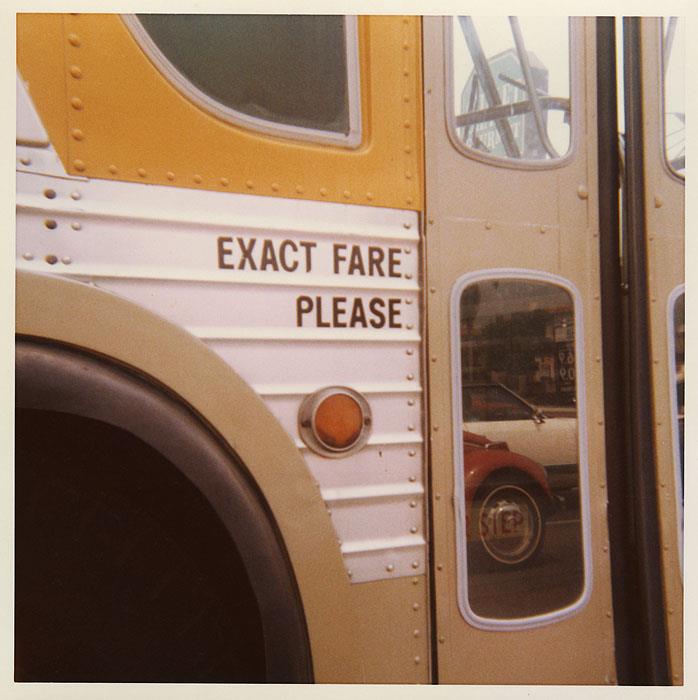
It’s that time again, everyone! It’s Saturday storytelling time. As you will no doubt recall, each Saturday we post a found photograph, a vernacular picture, and we write a story about it, and invite everyone else to write one, too. And then, in theory, we all read each others’ stories and offer wise editorial advice. Today’s picture is quite cryptic. There’s no human in this one, no subject, so you can imagine the characters however you’d like. And here it is… Send me your story and I’ll print it here, or send me a link to share, if you have somewhere of your own to post it.
482433_10151466397389589_2027213003_n

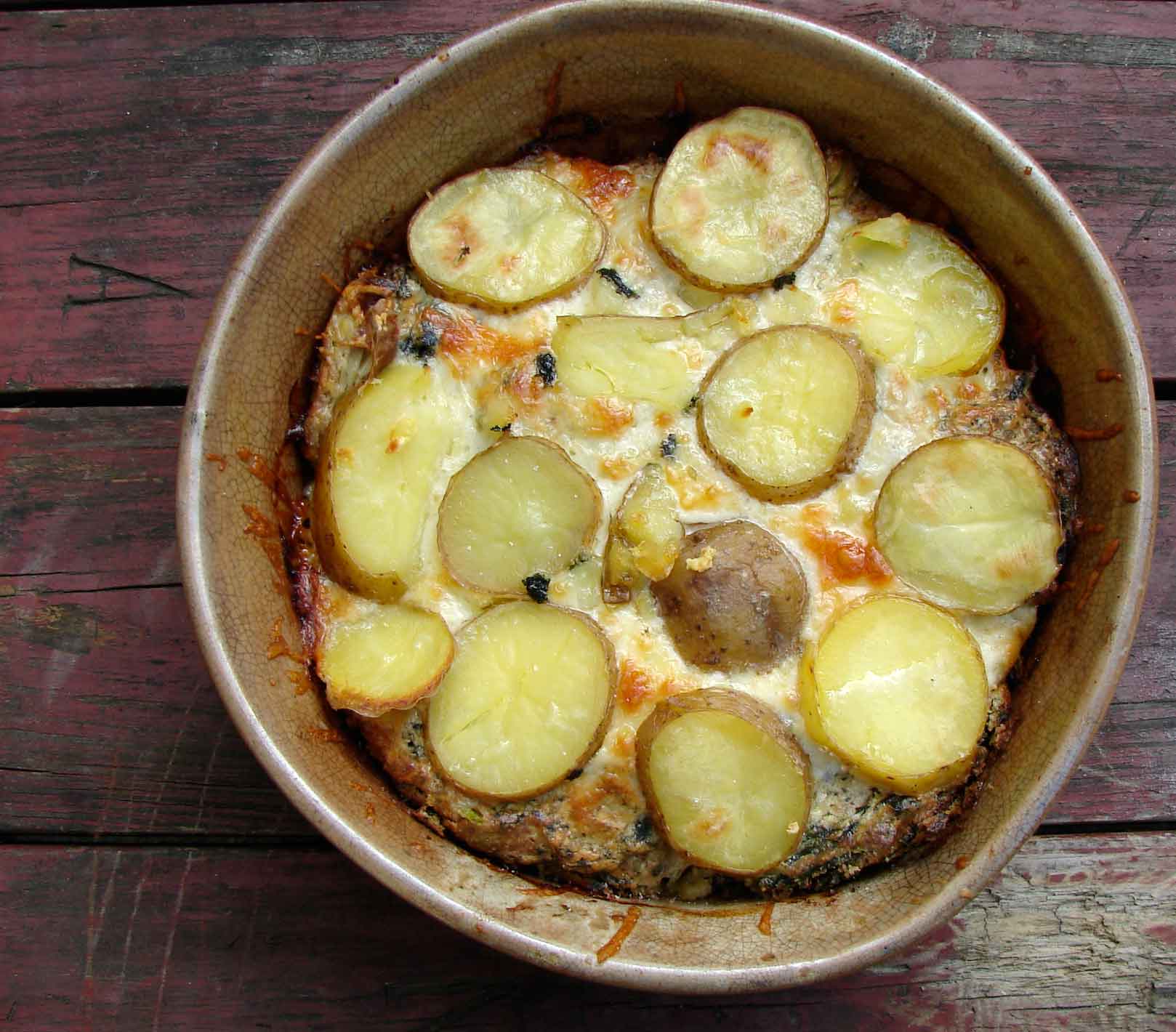
So, kale and artichoke hearts and tarragon pesto layered with sharp cheddar and thinly slice potatoes. A meal in a dish. I suppose it’s a little like lasagna with potatoes instead of pasta. It was very comforting and warm, but tarragon, artichoke hearts and sharp cheddar added some brightness. If you don’t have tarragon pesto, you can use regular old basil pesto, or you can just add some herbs as you like them to the ricotta.

Here’s Hey Hey by Big BIll Broonzy, my new favorite.

Continue reading

Collards with artichoke hearts, olives and capers

Collards with artichoke hearts, olives and capers

Collards with artichoke hearts, olives and capers

Isaac carried his new superhero to school today. He’s made of bright pink pipe cleaners (the superhero, not Isaac.) His name is eel man. Isaac started telling me a story about how eel man made a giant ball of electricity and threw it in the ocean and then… “Is eel man a good guy or a bad guy?” I asked. Turns out he’s both. “Ah,” I said, “So he’s morally complicated.” Yeah. He’s good when he thinks it would be fun to be good. Well, we got back to the story, but it had changed a little. I could hear the little wheels whirring in Isaac’s head. “Wait, I’m talking to mom, and she’s actually listening to me.” Suddenly eel man’s exploits seemed a little too dangerous for all of the innocent bystanders who might be bobbing in the waves of eel man’s ocean. In the new ending, eel man cuts the nets of fishermen to free the fish. Which proves how well Isaac knows me, but is also morally complicated, if you think about it too much, because now what will happen to the poor fisherman and his imaginary starving family? Everything is morally complicated if you think about it too much! And I think that’s a good thing. I think it’s good to think about it too much, and try to find some sort of balance that helps you navigate waters made choppy by giant balls of electricity. I’ve been reading my new biography of Jean Vigo. His father took the nomme de guerre Miguel Almereyda, and anagram for “there’s the shit.” He had a hard life, he had plenty of reasons to be angry at the world. His family abandoned him, and as a teenager he found himself sick, alone and starving. He was imprisoned several times as a boy…once for “borrowing” money to pay rent, and once for attempting to blow up a pissoir, although he was so worried about hurting innocent people that he bungled the whole effort. He was sent to prison none-the-less, where he was kept in solitary confinement and semi-darkness and abused by sadistic warders. He found comfort and friendship amongst the anarchists, communists, socialists and syndicalists, and he found an outlet for his passionate anger at society. It’s so strange to read about this world, so morally complicated as to be contradictory–so appealing and flawed, so concerned with organizing and yet so chaotic. We meet violently angry pacifists, militant anti-militarists. They started a newspaper and words were their weapons. Their ideals changed subtly all the time as the world about them changed, and they spoke with complete certainty and passion about each changing belief. Their words were so effective that they were received with fear and distrust as if they had been actual weapons. Almereyda found himself in and out of prison, sentenced again and again for articles that questioned the system, that encouraged strikes by workers and soldiers. Everything fell apart with WWI. Everything changed in ways that were beyond Almereyda’s control. But it seems that he and his friends still struggled to make sense of it, they continued to write about it, they tried to ensure that the changes that came with the war were good for the people, for the workers, for the poor. And many years later, his son Jean would make films that celebrated revolution and anarchy, but glowed with love for all people and reverence for all life, and these would be feared and banned, too. But they would live on as a testament to the power of word and image, to the revolutionary power of art. It’s a funny old world.

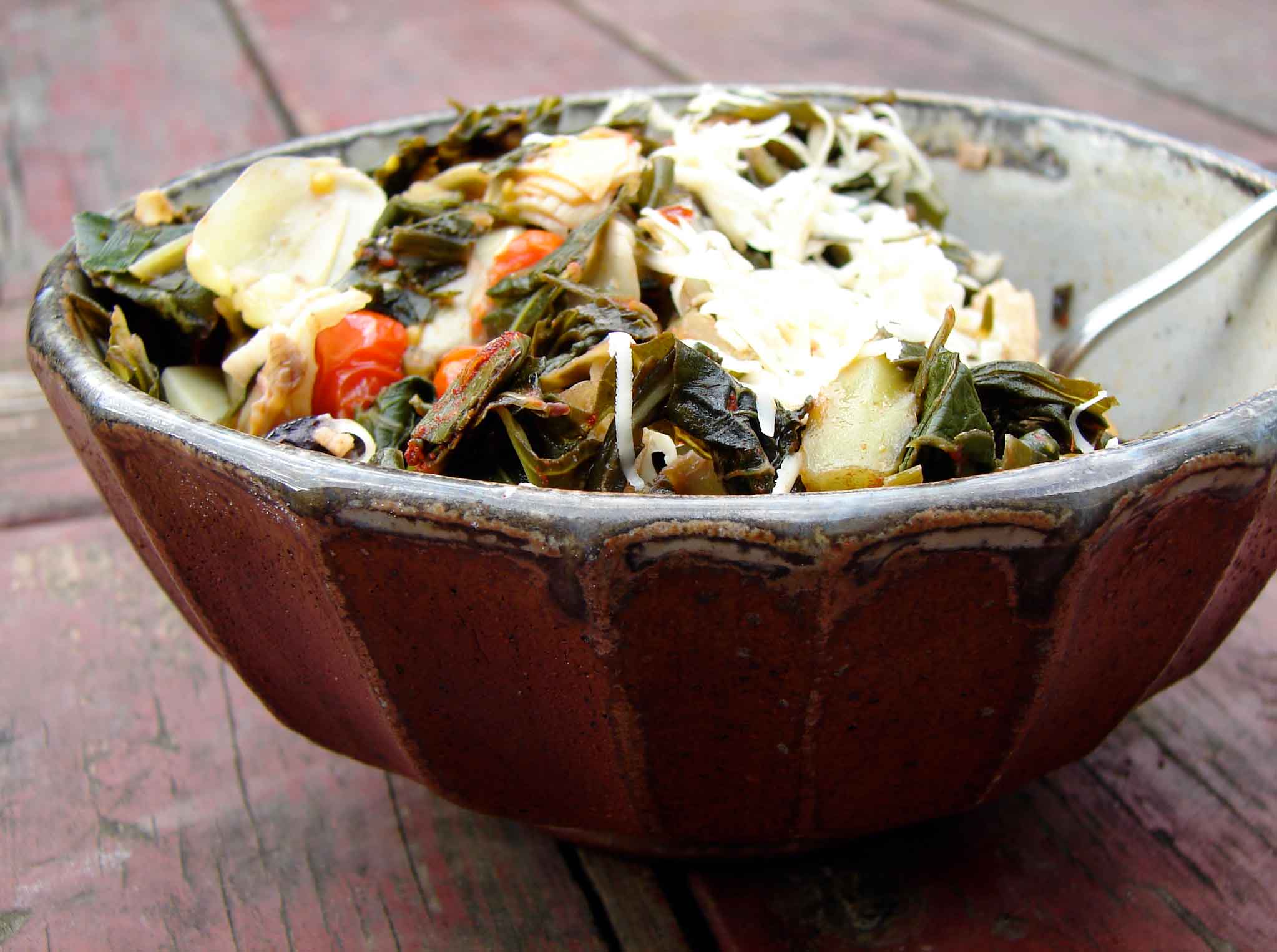
Well, I’ve said it before and I’ll say it again, I love collards! I’ve never treated them quite like this, but I thought it was delicious. Collards have a textural assertiveness that went perfectly with the bright sharp flavors of capers and olives. This was very simple to put together. If you added some beans to the dish (white would be nice!) and served it with rice or pasta, you’d have a quick meal.

Here’s Rebel Waltz from The Clash
Continue reading

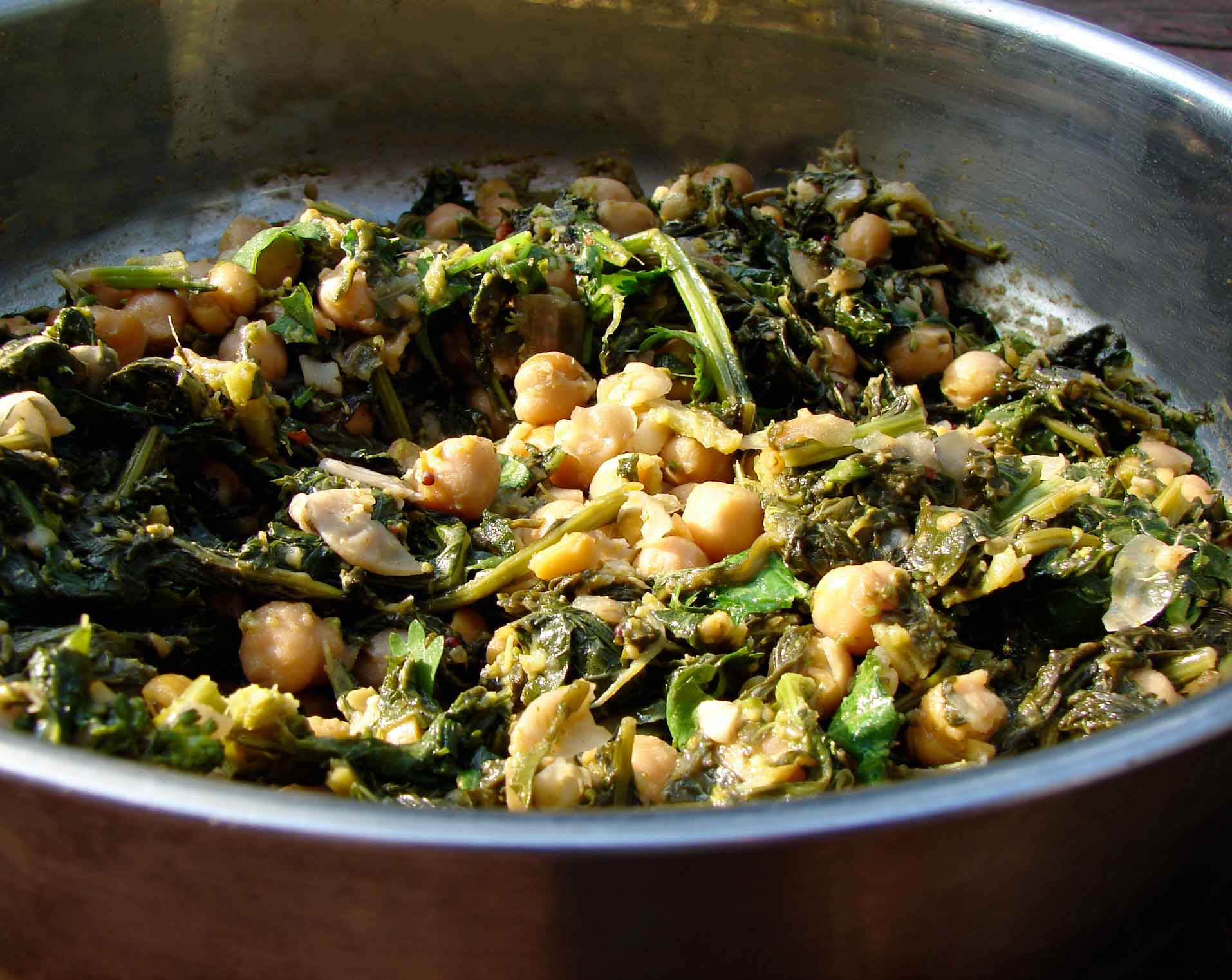
Curry-spiced chickpeas and broccoli rabe

Curried broccoli rabe and chickpeas

Curried broccoli rabe and chickpeas

When I was little I believed that there was something in the earth–in the trees and water and grass and dirt; call it spirit (for lack of a better word) or magic (for lack of a better word). Obviously, the animals can hear it and understand it–you can see that in their eyes and their quiet, graceful movements. But I believed that humans, in all their arrogance, didn’t acknowledge that it was there, or were frightened of it, and so they became unable to sense it. And then we bound it up and strangled it, with roads and buildings, and made it sick with chemicals and garbage. Yeah. I was a weird kid. David came across this quote, and of course I love it to pieces…

    One of the deepest and strangest of all human moods is the mood which will suddenly strike us perhaps in a garden at night, or deep in sloping meadows, the feeling that every flower and leaf has just uttered something stupendously direct and important, and that we have by a prodigy of imbecility not heard or understood it. There is a certain poetic value, and that a genuine one, in this sense of having missed the full meaning of things. There is beauty, not only in wisdom, but in this dazed and dramatic ignorance.

    – G.K. Chesterton, Robert Browning, 1903

(He found it on a website called Futility Closet) First of all, I love the phrase “prodigy of imbecility,” and I plan to incorporate it into my day-to-day dialogue, post-haste! Secondly, I’m obviously not the only weird kid in the room! I too, think there is beauty in dazed ignorance, and I find great cheer in that idea. Sometimes we comprehend something best when we don’t focus on it, when we see it glancingly from one side, when it flies off with a rustle of bright feathers into the shifting leaves. The less we can capture and hold something, the more beautiful it is. The more something grows and changes and decays, the more beautiful it is. And the more beautiful something is, the less we can imitate it or make a replica of it, because in freezing it we destroy it. I was reading about Yasujiro Ozu, a while back, and I came across the phrase mono no aware, coined by 18th century Japanese scholar Motoori Norinaga. According to my feeble understanding of the concept, this is a sort of sighing recognition of the transient beauty of all things–an idea that everything is more beautiful at the beginning and the ending, as it grows and as it decays, as it changes. And this understanding extends to all things that live and die, however inconsequential they seem. They have beauty worth noticing–they’re made beautiful because they’re noticed. And this feeling, this poignance, washes gently over a person, almost without their effort…it’s the feeling itself that is beautiful and important, but it can’t be studied or captured in words. Whereas in Western art, we try to define aesthetics, and seek symmetry or embellishment, and try to capture beauty in marble or oils, according to mano no aware (as I understand it) the beauty is in sensing imperfection, irregularity or decay, in feeling the sweetness and the sadness of it. Surely this is “one of the deepest and strangest of human moods.” This is the graceful, ever-changing, incomprehensible voice of the garden at night and the sloping meadows, which we love because we can never fathom it, we can only soak it in with dazed ignorance.

I love broccoli rabe, with its tenderness, and its bitterness, and its strong pleasant flavor. I’m the only one in my family that craves it. David will enjoy it from time to time, and the boys won’t go near it, so I feel like it’s the most indulgent thing that I cook. I make it because I want to eat it. This particular preparation was a sort of compromise. The boys do like curried chickpeas, so I served this with basmati rice, and picked out the chickpeas for them, and saved all the tender greens for myself!!

Here’s REM with Gardening at Night.

Continue reading

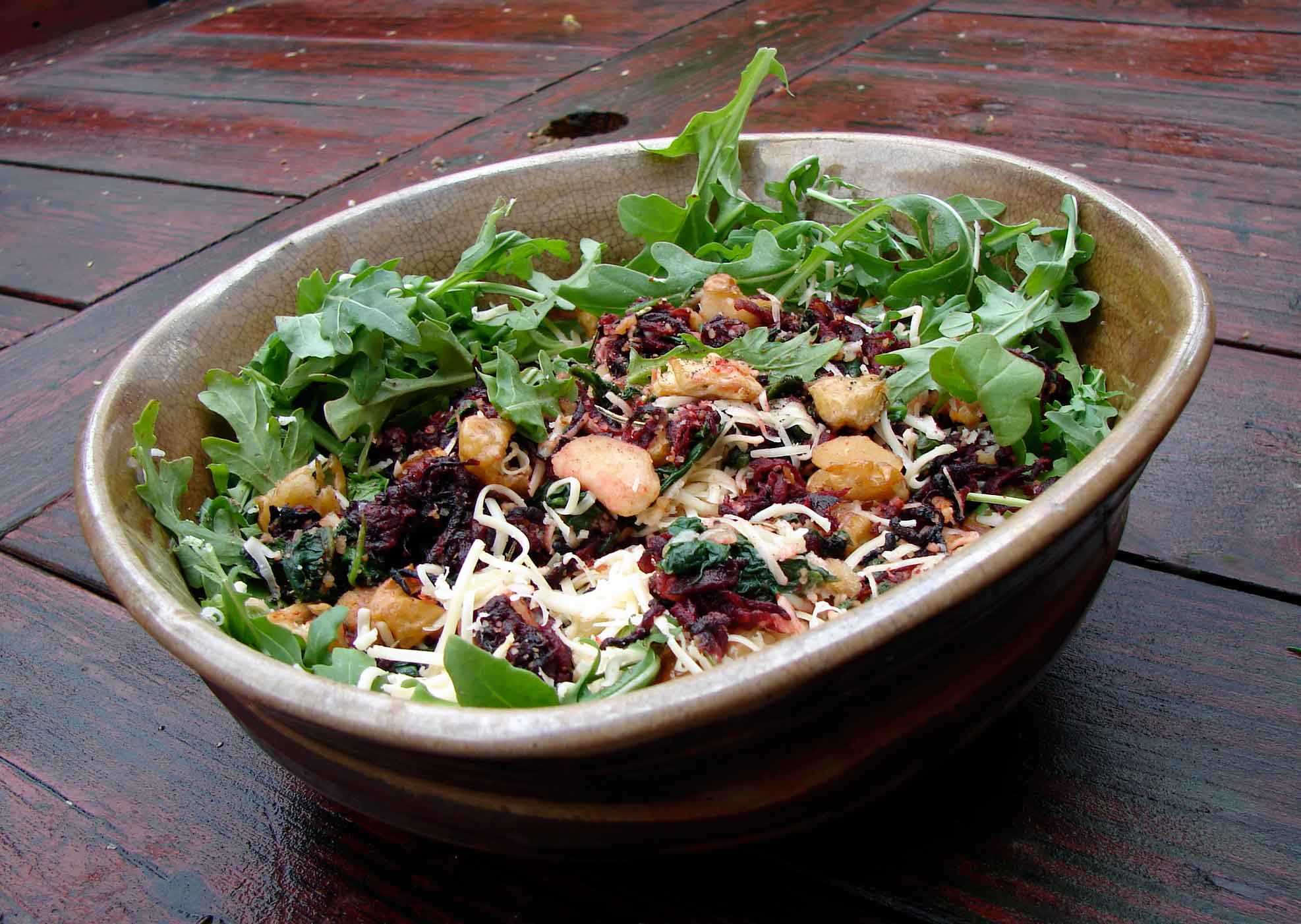
Roasted beet and butterbean salad with spinach, arugula and smoked gouda

beet-and-butterbeanWhen I was younger–shall we say early twenties?–I wrote a screenplay about a man who wouldn’t leave his front porch. He’d travelled the world, and then something happened, but I don’t remember what, or maybe nothing happened–I’ve always been a big fan of the anti-drama–and he sat in a rocker on his front porch and refused to leave. His mother fussed over him and consulted various experts to aid in his cure. She talked to ministers and doctors and wise neighbors. He chatted with the mailman and with small children that ran by the house. We worry about him, because he’s not behaving like everyone else, he’s not normal. But he seems okay. He’s a little confused, but he’s pleasant and cheerful. He’s alright. It turns out he’s trying to rid himself of fear and desire, based on some combination of ideas gleaned from several philosophies that I barely understood at the time and understand even less well now, all these many years later, seen through a haze of crumbling memory. I still think about this from time to time. Would I want to rid myself of fear and desire, assuming I had the strength to do so (I don’t)? In all honesty, I don’t think I would. Desire, like hunger, is such a part of being alive. Wanting keeps you wishing and hoping and trying. And fear is so closely connected with imagination and creativity and dreams. The idea seemed good at the time, I suppose. I was confused, myself, and so full of wants and worries. But in thinking about losing myself, I was doing the opposite, I was completely self-conscious and self-centered. We all look at the world through our own eyes, through the prism of our own fears and desires. As Hobbes so delightfully says…

    …for the similitude of the thoughts and passions of one man, to the thoughts and passions of another, whosoever looketh into himself and considereth what he doth when he does think, opine, reason, hope, fear, etc., and upon what grounds; he shall thereby read and know what are the thoughts and passions of all other men upon the like occasions. I say the similitude of passions, which are the same in all men,- desire, fear, hope, etc.; not the similitude of the objects of the passions, which are the things desired, feared, hoped, etc.: for these the constitution individual, and particular education, do so vary, and they are so easy to be kept from our knowledge, that the characters of man’s heart, blotted and confounded as they are with dissembling, lying, counterfeiting, and erroneous doctrines, are legible only to him that searcheth hearts.

“Only to him that searcheth hearts”!!! I love that! Where was I? Ah, yes. I’ve been remembering my juvenile struggle with all of these muddled ideas lately because of all the memes! The memes and soundbites and super-designed quotes and quips and words of wisdom. It feels, sometimes, as though we’re taking little pieces of these philosophies that we don’t understand, and spinning them around to become something entirely new. Like all good twenty-first century Americans, we’re stripping them of their original meaning and making them all about making us feel better about ourselves. So that they’re no longer about losing ourselves, but about loving ourselves. We don’t have to rid ourselves of anything, cause we’re okay! Reduce a philosophy to a few pithy phrases, superimpose it over a rainbow or some flowers, and its meaning is distilled–it’s all about me! I know, I know, I sound hypocritical and hypercritical. But it seems as though if we’re going to appropriate ideas we should at least read enough of them to be confused by them, to let the words get us into a muddle, to struggle to understand something of the original wisdom, and not just swallow it down like some sugary pill that makes us feel better with no side effects. We should have more respect for the words than to make them into social-media-ready memes. That’s what kittens are for!

Springtime with its damp fragrant earth and unfurling ferns always makes me crave beets. So I bought a big bunch. My favorite method of cooking beets is one that Malcolm invented…grated, tossed with olive oil and herbs and roasted. So that’s what I did here. And I roasted some buttery butterbeans in butter. And I sauteed some spinach with garlic, and I mixed all of these things together, stirred in a little black truffle butter, added some ripe avocado, piled it into a nest of fresh wild arugula, and grated smoked gouda on top. Delicious! A warm, hearty salad with such lovely melty, smoky, sweet and buttery flavors.

Here’s Tom Waits with Just Another Sucker on the Vine, just because I love it.

Continue reading

Broccoli rabe with apples, walnuts, honey and cheddar

broccoli rabe with walnuts and apples

broccoli rabe with walnuts and apples

In French, the word “de” can mean “from” or “of.” This distinction, along with the ambiguity of the ellipsis, make the original title of Ousmane Sembene’s first feature film, La Noire De… enigmatic. It becomes a question–is Diouana the woman from Senegal, or is she the girl who belongs to her French employers? The film opens with a question as well, Diouna steps off a boat into a new world, and wonders, “Will someone be waiting for me?” a question that echoes in the loneliness she experiences throughout the film. There is someone to meet her at the dock, but he is coldly polite. He does not carry her bag or open the car door for her. She answers him with the same tone, saying no more than “Oui, Monsieur,” to his perfunctory inquiries. Sembene shot the film in 1965, in a short time on a very low budget, but he transformed the constraints of production and used his limitations to beautiful advantage. The film was shot without sound and post-synched, but the dialog between Diouana and her employers is so clipped and minimal that this doesn’t become a problem. She doesn’t have a voice in their presence. They scold her with increasing petulance and ferocity, but she goes silently about her chores. What we get instead is the rich, intelligent voice of her thoughts and her memories. We hear her hopes about starting this new life as a nanny, her anxieties as it becomes obvious she’s not a nanny but a maid of all work, and finally her disappointment and bitterness at being mislead and mistreated. This painful, voiceless isolation is at its worst when she receives a letter from her mother. Neither of them can read or write. Her mother had to hire a letter-writer, and Diouana relies on her employer to read the letter to her. He takes it upon himself to write back, taking down not her words, nothing close to her thoughts, just trite niceties about her situation that he wishes were true. The jarring space between his words and her reality, between her hopeful memories and her present situation, between her articulate imagination and her silent life is so great and dark that she falls into it and can’t find her way back out. The film is beautifully filmed–it is one of the most aesthetically thoughtful black-and-white films that I have ever seen. From Diouana’s graphically patterned hand-me-down dresses to the gleaming white tub and toilet she must scrub, every shot is so full of contrasts of light and shadow that it becomes more than metaphor, it becomes the whole world. This is a movie I want to read. Every image, every shot and movement seems full of shifting significant meaning that I want to notice and understand. I want Diouana to explain it to me. I want to hear her voice.

I love the music in La Noire De…, but I can’t track down the composer. Does anybody know who it is? My search led me to this beautiful song by Sory Kandia Kouyate, called Massane Cissé. So that is your song for today.

I’ve been craving greens like a crazy person! Something about seeing the world turn green all around me, and smelling the fresh sharp sweet smell of the ferns and undergrowth makes me want to cook and eat them! So I make lots of broccoli rabe, which has that bitter-sweet, strong-tender pleasantness. I combined it, here, with crunchy walnuts and tart-sweet pink lady apples. I cooked the apples with the garlic when we ate it, but I think they’d be better fresh and crispy and raw, so that’s how I’m telling you to do it!
Continue reading

Creamy vegan spinach & herb sauce

Creamy vegan spinach and herb sauce

Creamy vegan spinach and herb sauce

My favorite song at the moment is that of the white throated sparrow. It’s a simple little song consisting of four tones; apparently the second is a whole note lower than the first, and it ends a minor third below that. It sounds to some people as though the bird is saying “Po-or Jack Peabody Peabody Peabody.” And that is our clumsy, human way of describing this wild wistful little song. I asked Malcolm what it sounded like, and he said, “Sad but hopeful.” And that’s exactly how it sounds to me, too! It’s nostalgic and full of memories, but it sounds like spring and good thoughts for the future. I love the fact that birds have dialects and regional accents. Your knowledge of a white throated sparrow’s song will be different from mine if you live in a distant part of the country. I feel so lucky to have this particular song be my white throated sparrow-neighbor’s song. And a sparrow is such an ordinary little bird. If you saw sparrows in your garden you’d say, “Oh it’s just a bunch of sparrows,” and not even take the trouble to find out what kind of sparrow they are. They’re small and plump and drab and brown. But the white throated sparrow has dashing yellow spots on his head, and when he opens his mouth…glory! I love the fact that we can try to define the song according to our understanding, and describe the intervals between pitches and the rhythms of the notes, but in reality, the song contains subtleties beyond our human musical language. We can never pin down the specifics of melody or meter, just as we can never know what the bird is saying when he repeats his song over and over. And that mystery makes it even more beautiful. So this is the song stuck in my head, that I whistle over and over as I go through my day. This is my favorite song at the moment.

This week’s interactive playlist will be all of our favorite songs at this moment in time. I obviously need your help with this one, or it will just be a short list of songs that I like. Funnily enough, all of the songs I added to the list sound wistful to me. Must be springtime! I haven’t been listening to anything new lately. I’ve been playing some songs for the boys that I used to love, and I’ve had a few longtime favorites buzzing around in my head for one reason or another. What about you? What have you been listening to? Add your songs to the playlist, or leave a comment and I’ll add them myself.

This vegan sauce was very smooth and flavorful. I utilized two of my favorite creamy-vegan-sauce making tricks…cauliflower and almonds. They’re both quite mild flavors, but they blend up nicely. This sauce, as you can see, is lovely and GREEN!! It’s a good sauce for spring. I added grape tomatoes and capers, for a little juicy tangy kick, but you could use it as it is, or add any kind of vegetable or bean you like. White beans or chickpeas would be nice. We ate it over orchiette pasta. If you add less water, you’d have a nice purée as a side dish or base for a more substantial main meal. If you added more water or vegetable broth, you’d have a smooth velvety soup…a bisque.

Continue reading