Roasted butternut white bean soup

Butternut and white bean soup

Butternut and white bean soup

In Kurisawa’s Ikiru, he describes a childhood memory, “Once when I was a child, I almost drowned. It’s just like that feeling. Darkness everywhere, and nothing for me to hold onto, no matter how hard I try.” This reminded me of Sleepy John Estes’ song Floating Bridge. It’s a beautiful, dream-like song, with repeated fragments of memory like waves washing over him – he nearly drowned, he was hid underneath the water five minutes, and when they dragged him out and laid him on a bed all he could hear was muddy water going round his head. And he’ll never forget the memory of people on the floating bridge, screaming and crying. It’s so powerful! So today’s Sunday collaborative playlist is on the subject of childhood memories. It could be of a person, or a food, or a song, or a definitive moment, any childhood memory will do.

And this soup is a bit like a wintery memory of summer. The squash is roasted, which makes the flavor rich and smoky, and the herbs – rosemary, sage, thyme, and tarragon – make it taste like a spring garden. The cauliflower and white beans make the soup lovely and velvety. I thought of this soup as Provencal, for some reason! The herbs, I guess!

Here’s your interactive playlist on childhood memories. Feel free to add anything you like!
Continue reading

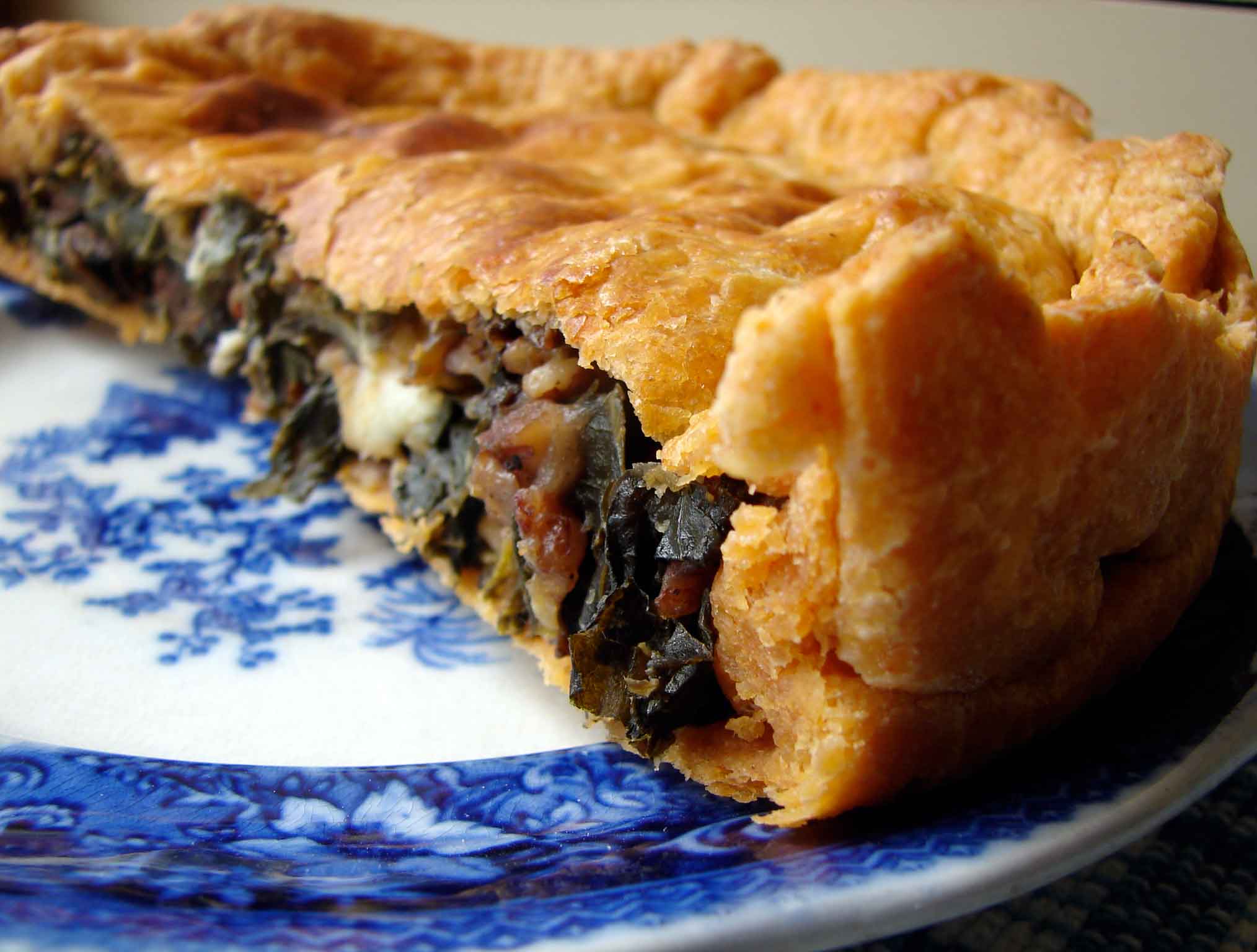
Collards, roasted mushroom and pecan pie with a spicy smoky crust

Collard pecan pie

Collard pecan pie

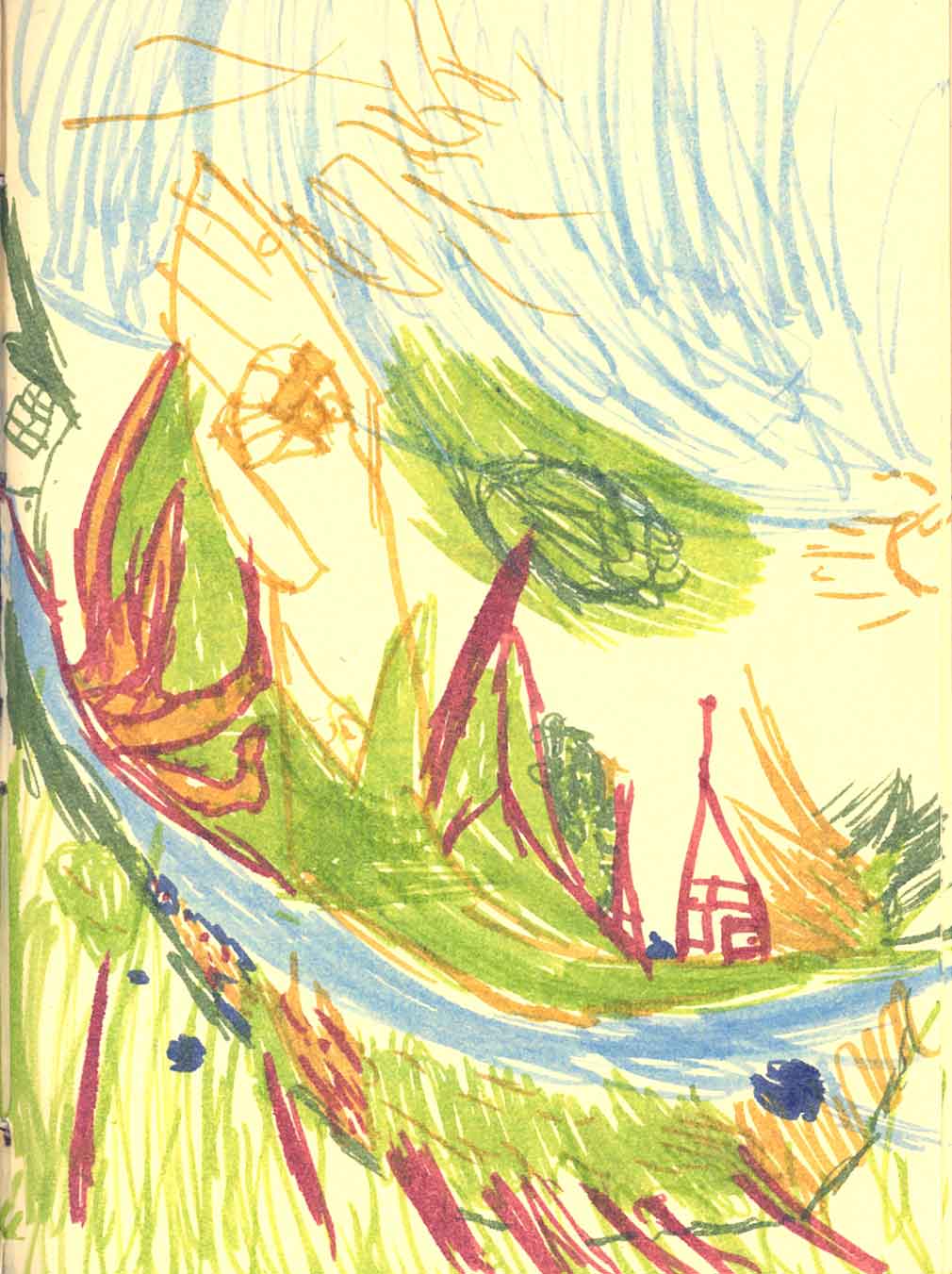
Malcolm came home from school yesterday and lay on the couch and wept. I asked him if something upsetting had happened, and he said, no, he was just tired, and he really wanted some pineapple. We’d bought a pineapple on Monday, and I kept telling him it wasn’t ripe, because, honestly, I can never tell! The last time we bought one I prudently waited until it was moldy and disintegrating, just to be sure. So I gave him a dish of pineapple, and I got myself a glass of wine, and he got a blanket, and we cuddled on the couch and watched a dumb show about Merlin. And then snow began to fall, thick and fast – the prettiest snow I’ve ever seen. It sparkled! It looked like crystals falling from the sky and forming an improbably light, even blanket on the ground. And when David came home we went out to dinner. We almost never go out to dinner, just the four of us, maybe twice a year. It’s so nice when we do! I felt so happy being with my family, in our little booth, eating delicious and unexpected food. We always bring a blank book when we go out – the same book each time, and we all take turns drawing in it. We have quite a collection of crazy pictures, and each small sketch transports us back to the good meal we had and the good talks we had. Last night we talked about the things that might have been worrying Malcolm. We talked about a game his whole class plays, and he said that by the end everybody is mad at each other because they’re competing, and that doesn’t feel good. He leaned up against me. Both boys ate with good appetites, with glee, and Malcolm said, “I love food!” And, of course, I love that he loves food. We talked about all the places we’ll travel, when we’ve got the time and money. We talked about taking a plane somewhere with no plans, and just making it up as we go along. Finding a place to stay, finding a lovely restaurant, with little booths, where we can eat strange and wonderful food, and draw in our book, and talk. And then we drove home through a glittering white world to our old warm house. A good night!
Isaac's beautiful landscape from our restaurant book

Isaac’s beautiful landscape from our restaurant book

I love collard greens. I love their substantial texture, and their mildly assertive taste. I like to pair them with smoky crispy things. I thought of the crust in this as being almost like bacon – crunchy and smoky with smoked paprika. The pecans added a nice crunch, and the roasted mushrooms brought their lovely savory, meaty flavor.

Here’s Fox in the Snow by Belle and Sebastian.

Continue reading

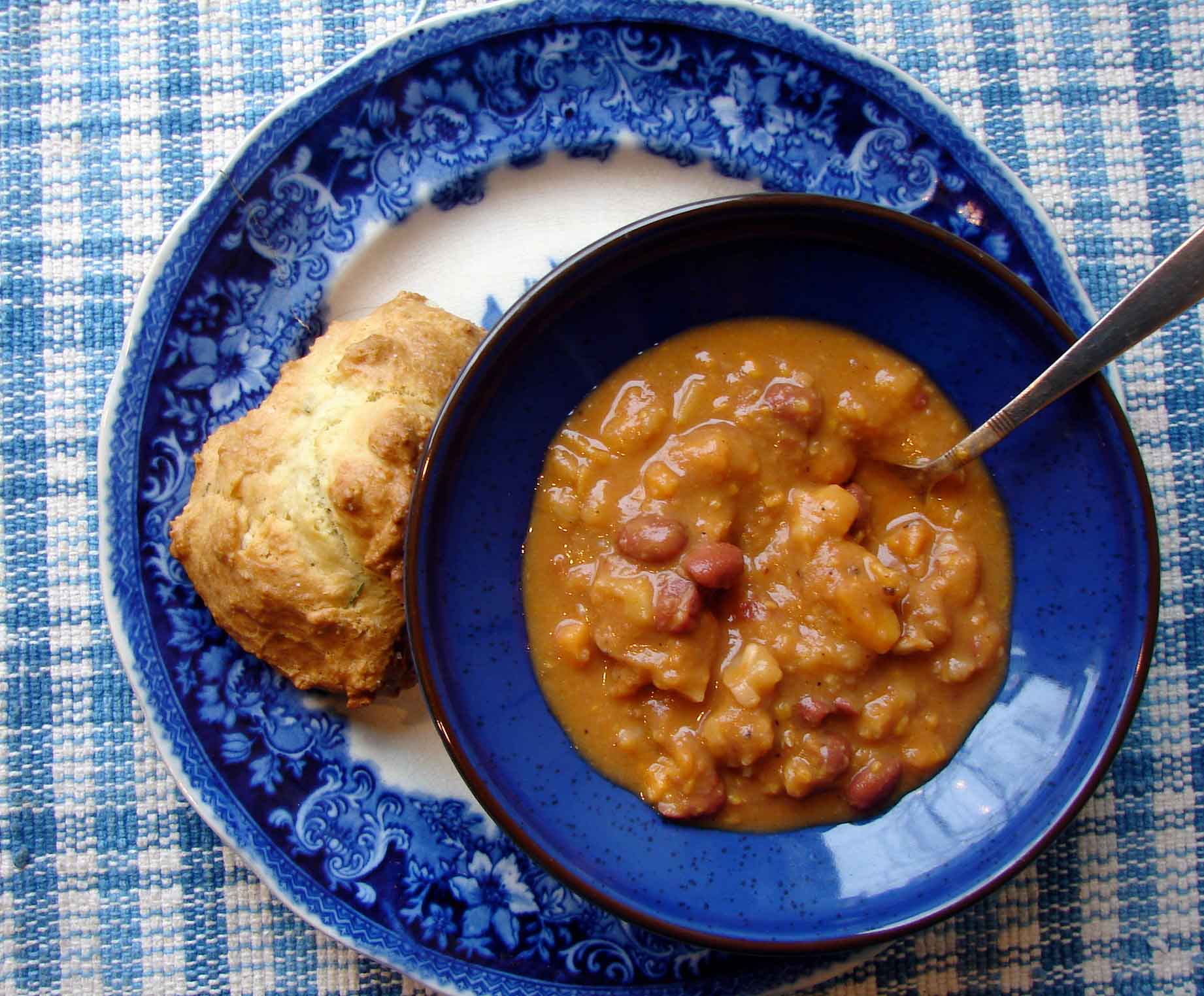
Red bean, sweet potato & hominy stew and Olive oil rosemary biscuits

Red bean & hominy stew

Red bean & hominy stew

Well, it’s been a day of catching up after working all weekend. A day of laundry and grocery shopping and trying to get the boys to clean their room. It’s been a day of thinking about Martin Luther King Jr, of driving on the grey wintery streets, listening to fragments of Barack Obama’s inauguration speech on the radio, moved to tears. Obama’s first election was fueled by hope, it was buoyant with hope. And despite snide comments about hopey changey stuff, despite the sort of fatigue and discouragement that four hard years of dealing with Bush’s financial crisis have brought upon us, at this moment I feel more hopeful than ever. It’s not a hope as bright and far-reaching as that of the first election – but it’s a stronger, fiercer hope, based in reality and hard work. I don’t agree with all of Obama’s decisions, I don’t love every action that he’s taken, but I feel so grateful to him for starting conversations about health care, gay rights, women’s rights, gun control, climate change. Of course we should talk about these things! It’s remarkable to me that in 2013 these are issues we still need to address, let alone issues that take extraordinary courage to address. I think it’s difficult to understand just how brave Obama is for speaking publicly and openly about gun control and gay marriage. Despite petty political squabbling, despite ignorance, hatred and fear, we are taking small steps in a good direction, towards a world that must be inevitable if people are as kind and thoughtful as they have the potential to be. Martin Luther King spoke of non-violence with these words, “In a real sense, Mahatma Gandhi embodied in his life certain universal principles that are inherent in the moral structure of the universe, and these principles are as inescapable as the law of gravitation.” I hope that this is true, with the deepest weightiest and yet most buoyant hope imaginable. Obama ended his speech with these words, “Let each of us now embrace, with solemn duty and awesome joy, what is our lasting birthright. With common effort and common purpose, with passion and dedication, let us answer the call of history, and carry into an uncertain future that precious light of freedom.” And that birthright is not a possession or privilege unique to Americans, but a natural or moral right possessed by everyone, the world over – to work for freedom from the darkness of fear, ignorance, and cruelty.

I felt a little silly posting a recipe today, (and doing laundry, and cleaning, and all other trivial chores). But, maybe that’s part of what it’s all about – about the freedom to get on with these things. These chores are trivial to me, but are luxuries for some people. To buy healthy, nourishing food for your family, to cook it up in a way that you feel good about. To have a safe, warm home to serve it in. Everybody deserves these things! In that spirit I present to you a recipe for a warm, comforting stew full of flavor. I bought pomegranate molasses for the first time, and I’m having fun playing with the sweet/tart continuum. I decided to pair it with a tiny bit of mustard, balsamic, sage, red pepper flakes and smoked paprika, to make a spicy, sweet, tart, smoky sauce. And the biscuits are incredibly easy to make, and very tasty, too. They’re butter-free, and the taste of olive oil in a baked good is always surprising and pleasant.

Well, there are quite a few songs I could choose for today’s post, but I’m going to give you Mos Def’s Fear Not of Men. It’s based, of course, on Fela’s Fear Not For Man, the lyrics of which go thus…

    Brothers and sisters
    The father of Pan-Africanism
    Dr. Kwame Nkrumah
    Says to all black people
    All over the world:
    “The secret of life is to have no fear”
    We all have to understand that

Mos Def’s song isn’t explicitly about Martin Luther King’s Day, but the lyrics have always resonated on this day of all days. He says, “A lot of things have changed, and a lot of things have not.” And there’s no doubt that this is true, for better or for worse. But the song is about courage in the face of danger, courage to work towards something that’s bigger than all of us. And it’s about a universal rhythm that beats through all of us, surely leading us inevitably in the same direction.

    All over the world hearts pound with the rhythm
    Fear not of men because men must die
    Mind over matter and soul before flesh
    Angels for the pain keep a record in time
    which is passin and runnin like a caravan freighter
    The world is overrun with the wealthy and the wicked
    But God is sufficient in disposin of affairs
    Gunmen and stockholders try to merit your fear
    But God is sufficient over plans they prepared.

Continue reading

Fennel & walnut croquettes

Fennel and walnut croquettes

Fennel and walnut croquettes

Olga Von Till was born in the 1890s. As a girl she lived in New Brunswick, New Jersey. She played piano for silent movies, providing a soundtrack for their voiceless antics. She was sent to Hungary to study with Bela Bartok, and became stranded there when World War I broke out. She made a living as a companion for wealthy, eccentric women. When she returned home she lived in New York City for a while, and she taught classical piano to Bill Evans, amongst many others. In the 80s she lived in a small town next to New Brunswick, and it was at that point that I met her – she was my piano teacher all through high school. She was an intimidating teacher, exacting and persistent. She heard the tone of each note, and she heard the silence between notes, which were as important as the notes themselves, and needed to be given their exact space, their exact weight. Ms. Von Till would hold your arm with her strong hands, feeling the muscles, and she’d put her hand under your hand, so that your fingers stretched to the piano keys from a seemingly impossible height, but with just the right force when they finally touched. She had a hard round belly that she’d prop a blank music-lined book on, and she’d write careful instructions for the week’s practice in strange and wonderful felt tip pens that I coveted, but never found in the real world. She had two pairs of glasses, one with round thick lenses and gold frames, and one with horn-rimmed frames and small blue flowers. Everything in her house was exactly as she wanted it, and she could tell you stories about choosing the fabric on the walls or the rugs on the floor. She had two steinway grands, and she talked about them as if they were living creatures – each had its own tone, its own voice. Her husband Sam played the violin, and he’d been a child prodigy, but his career had been disappointing. He heard music in his head, and would gesture passionately as he listened to it. I was a mediocre student, we all knew I would never amount to much as a pianist. But I loved to sit with Ms Von Till. After I left for college, I would visit her every time I came home. I’d bring her flowers every time, and I’d sit and listen to her stories. As she got older, she wouldn’t come down the stairs, and we’d sit upstairs in her study, side by side. She would tell stories of her remarkable life, sometimes the same stories over and over, but they were worth hearing again. She’d hold my arm, and feel the muscles, she’d support my hand with her strong hands. She could tell I hadn’t been playing piano. Sometimes we’d sit in silence, and then she’d look at me with a beaming smile through her thick round lenses. I didn’t talk much, she couldn’t have known much about me, but I felt that she loved me. I felt that she was a good friend, despite the more than seventy years between us. I still dream about her sometimes, about the world that she created with her music, her elegance, her strength, her stories, and her expectations.

Obviously I admired her very much! So this week’s Sunday interactive playlist will be about songs of admiration for other musicians. The tribute can be in the lyrics or in the tunes. I thought I had a lot of these stored up, but I’m struggling, so I need your help!

And these fennel croquettes – I wanted to have a combination of comforting and wintery and bright and fresh and summery. I used fresh thyme and fresh rosemary, and I made them light and crispy. But they also have bread crumbs and melty cheese to get you through the winter evening. We ate them with a simple tomato sauce, but you could eat them with any kind of sauce you like.

Here’s the interactive playlist as it stands so far. Feel free to add whatever you can think of!

Continue reading

Millet, red lentil, and sweet potato dal and pumpkin ricotta flatbreads

Millet dal and pumpkin flatbread

Millet dal and pumpkin flatbread

Yesterday around mid-morning, I spent ten minutes sitting on the couch in my pajamas, with Clio half-on/half-off my lap. I petted her velvety ears and watched people rush by in the rain. They seemed so busy and productive, and I could just imagine how the world smelled like rain to them, and how they felt icy drops trickling into their collars, and how their cars had that feverish chilled-but-warming feeling. And here I was, so toasty and still and unproductive. I felt like I was in a Basho poem. I thought of the quote from the Hagekure (and Ghost Dog!)

There is something to be learned from a rainstorm. When meeting with a sudden shower, you try not to get wet and run quickly along the road. By doing such things as passing under the eaves of houses, you still get wet. When you are resolved from the beginning, you will not be perplexed, though you will still get the same soaking. This understanding extends to all things.

I found that I didn’t feel quite so unproductive, because my mind was busy, and then I felt foolish for thinking that. Then I thought about writing about thinking about writing about sitting there. And then Clio said, “Man, you’re cramping my style. I’ve got some napping to be getting on with.” The mail came, but I didn’t bring it in because it’s only bills and advertisements. Then I went up to clean the bathroom, and thought about writing about that, but luckily for you I won’t do that. When I was little, I used to narrate my actions in my head in the third person. Not all the time, because that would be crazy! But often. “And then Claire sat on a bench in the middle of the room. She always got through with looking at paintings before everyone else. She did everything quickly. And now she sat and watched the people looking at the paintings…” And on an on it goes! I feel like I’ve been doing that again lately, because of The Ordinary. Not in third person now, so it’s slightly less eccentric. But when I cook, I’ll think about writing about it, and aboutexplaining how it’s done. And sometimes I’ll wake up in the middle of the night, and try to occupy my brain with whatever I might say on here the next day (explains a lot about the quality of the work, doesn’t it?) and I’ll find myself writing in my head. And, yes, this might seem crazy, but I think this is a good thing!!! I firmly believe that the more you write, the more you write. The more you think about writing, the more you’ll write, and hopefully it will become a habit. (This doesn’t guarantee good writing, mind you! It just makes it easier to get started.) I think this understanding extends to all things. The more you draw, the more you’ll draw. If you want to make movies, you should watch movies, talk about movies, take photographs, write movies, make shorts. The more you cook, the more you’ll think about cooking, and the more you’ll want to try new things and experiment with new ingredients, until you’ll get sick of it all and go out to dinner. If you want to make music, the more you listen to songs, and practice making music, and think about music, the more life will present itself to you as a song. Because even if writing and making movies and drawing aren’t important, which, arguably they’re not at all, I’d still like to go through life looking for things to write about (or sing about or draw pictures of.) Just as the actors that work with Jaques Tati started to see little comic pieces in everyday exchanges in the world around them, you’ll start to find that even small things are worth noticing and remembering and examining, which in some way makes life worth living.

And now I feel foolish for writing about writing, so let’s talk about this dal instead. It’s made with red lentils, millet and sweet potatoes, and it’s cooked for some time, which makes it dense and soft and porridgey. Red lentils are nice because they cook quickly, but if you cook them longer, as (I believe) Indian dals are cooked, they take on a whole different life. I added spinach and peas to pep things up and provide a little texture. And I used beautiful black cardamom pods, which are so smoky and sweet (but watch out for them when you eat the dal, you wouldn’t want to bite down on one!) I decided that cumin was too obvious in this dish, so I left it out in favor of other sweet and smoky spices, like cardamom, nigella seeds and smoked paprika. The flat breads were quick and easy to make – they have a little pumpkin puree and a little ricotta, which gives them a nice flavor and texture, and they were just crunchy enough to provide a pleasant contrast to the soft dal.

Here’s Station Showdown from the Yojimbo soundtrack, cause it’s all about the millet. Golly, this soundtrack is brilliant!

Continue reading

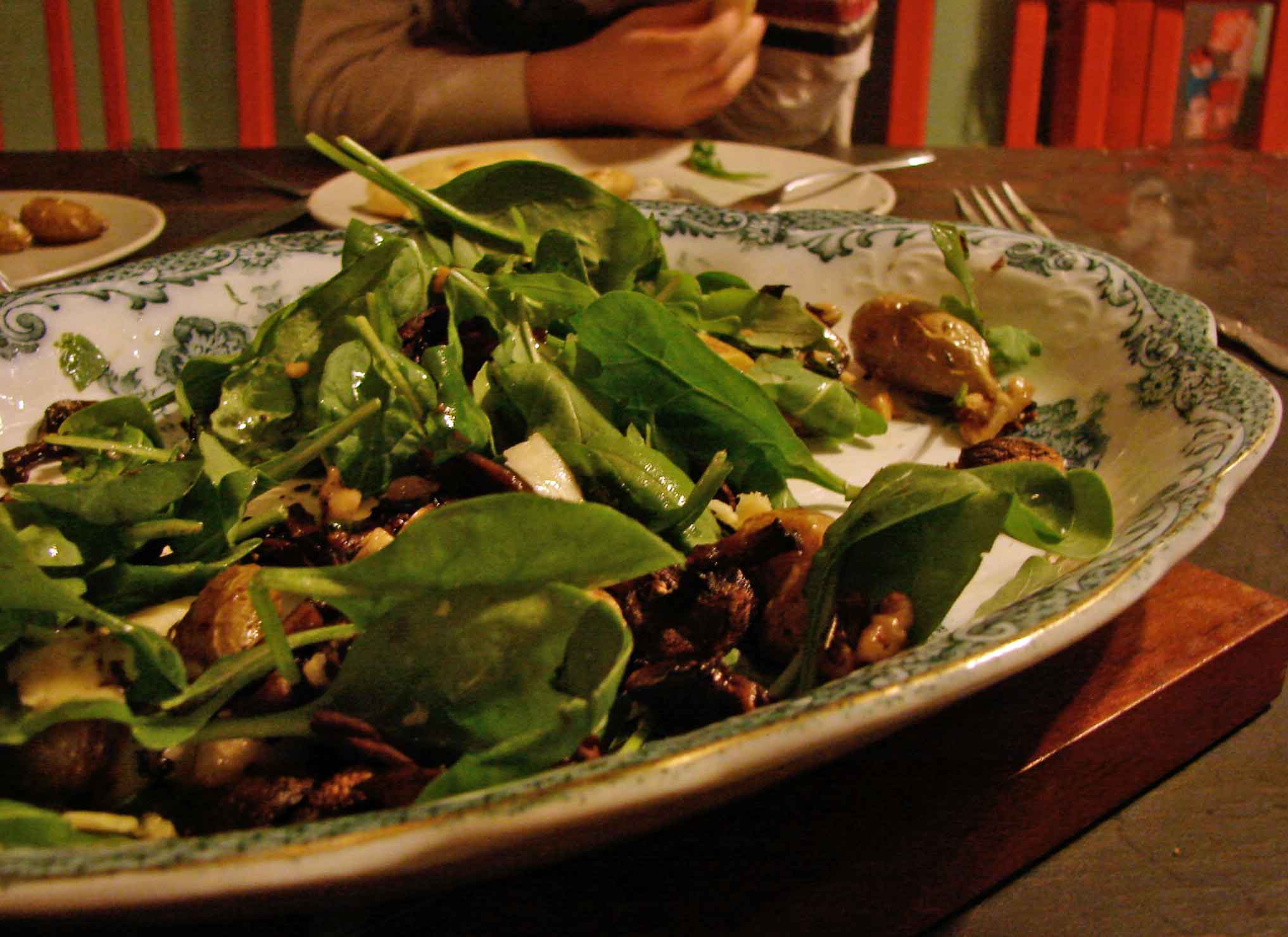
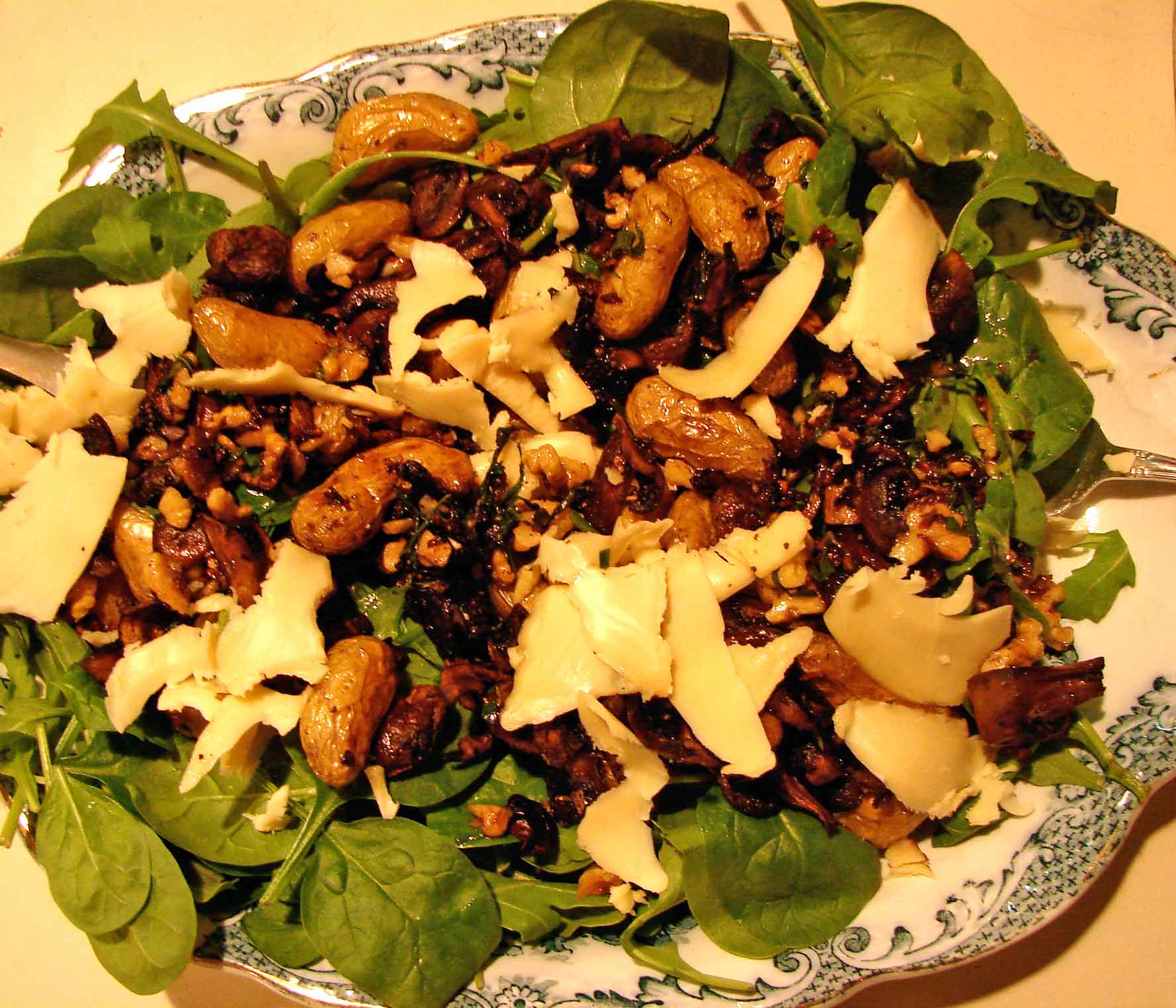
Warm salad with roasted mushrooms and tiny roasted potatoes and tarragon-white wine dressing

salad-isaacIsn’t it funny how big events seem to go so quickly in other people’s lives? They fly by in bright fleeting flashes of significant moments. You hear somebody is pregnant, and next you know they have a baby. None of the seemingly endless slow growth and change, the day-in-and-day-out joy and discomfort and bewilderment. To hear about somebody else’s trip abroad is planning, postcards, and stories when they get home; they’re back before you knew they were gone. They talk of going to college, you blink, and they have a degree and a job.

I suppose our memories of our own lives are like this as well. You never remember the hard work and the tedium, the work to raise each day above the tedious. You don’t remember the hours of sitting and waiting, between events, soaked in anticipation or recollection. When my boys were little I was sure I would remember every single moment, every gurgle and wave of the chubby little fist. Of course I don’t! They’re all mixed together in a sleep-deprived slurry of good intentions. I mostly remember the moments we photographed, which is why we take photographs, after all.

I love this quote about Rupert Brooke, “He was magnificently unprepared for the long littleness of life.” Not me! I’m ready! This is one test I’m completely prepared for! I love the littleness of each day, the petty pace of each tomorrow! Because, honestly, that pace is picking up, it’s not creeping any more, it’s flying, and I’m limping after it, trying to catch up. I want something big to work towards, of course, but thank god for the small things to look forward to each day. The cup of coffee, the making of a meal, the eating of a meal, reading with the boys, Malcolm’s happy walk, Clio’s sweet grabby paws, David putting his arm around me in the middle of the night, Isaac’s lovely silly songs, walks to school and home again, Clio leaping at us with frantic kisses every single time we walk in the door, inevitable spring, day after day, season after season, year after year.

I used to wish time away a lot when I was younger. I was so eager to get on to the next thing, and I’d wish away large chunks of days and weeks. I was thinking the other day that I don’t do that any more; there aren’t enough hours in the day for all of the foolish little things I want to get done. Where am I going with this? I don’t know!! Another incoherent ramble brought to your by your friends at The Ordinary. It’s a drizzly day, is all, and it’s January, and that’s the kind of mood I’m in!

mushroom-potato-saladWe’ve decided to eat mostly vegetables for a few weeks. I mean, we always eat mostly vegetables, because we’re vegetarians, but we’ve decided not to combine them with pastry and, you know, all that stuff, but to make them the stars of the show. So… soups and stews and warm salads like this one. This was delicious! So tasty that I couldn’t save any to photograph prettily the next day. It involves a bed of baby spinach and arugula topped with tiny roasted potatoes, crispy roasted mushrooms, crunchy walnuts, smoky smoked gouda, and a dressing of tarragon, shallots, garlic and white wine. Crunchy, soft, warm, cool, Yum!

Here’s Everyday by Yo La Tengo.
Continue reading

French cake a week – Gateau de pommes “A la Danoise” (and simple spice cookies)

french-apple-cakeIn which Claire, who doesn’t speak French, bakes her way through the cake section of a French cookbook from 1962.Yesterday we shared some poems and passages about windows. “But Claire,” I heard you saying, “You know what else is beautiful? Photographs of windows, and film scenes that involve windows!” “Of course!” I reply enthusiastically. “Two things I have long loved!!” It’s true, I do love photographs of windows. I find them so inviting and mysterious, so suggestive of the story of a person’s life, and yet a little melancholy and lonely at the same time. I’ve mentioned Eugene Atget before, in these virtual pages. Many of his photographs involve windows – store windows and tenement windows – windows with the ghost of a person in them, a whirl of light that represents movement, a row of grinning dummies. atget2012_cour41ruebroca_1912-webOr simply an emptiness or a shadow, a hollow that holds the secret movements of the people who live there. Jean Renoir, Atget’s compatriot, adds movement and depth to images of Parisian windows to create a poetry of light and shadow, a shifting frame within-a-frame that allows him to play with interior and exterior space. Renoir is famous for employing a large depth of field, so that objects in the background and middle ground are just as sharply focussed as those in the foreground, and frequently he’ll use a window to frame the action, so that two stories occur at once in the shot, distinct but related. In Grand Illusion, the soldiers’ exercises in the background create a source of mounting tension in contrast to the genial conversation inside of the window, and when the camera pulls back at the end of the scene, so that we’re outside the window looking in, it casts the men as characters in the story about to unfold. In Boudu Saved from Drowning, the parlor drama on the inside is contrasted (in a gorgeous tracking shot) with the world of the parisian streets outside the window, as observed through a telescope. And this passage from Le Crime de Monsieur Lange is beautifully busy with activity in and out of windows, dividing people even as it connects them, in a drama that illustrates the power of people working together. The murder scene, seen from across a street, entirely through windows and doorways, sets the frames of windows almost as the individual frames of the film itself, in a masterpiece of life and light and shadow – a sort of love letter to the pure joy of watching a story unfold. Beautiful.

Spice cookies

Spice cookies

French cakes seem to often involve crushed cookies and cream. You really can’t go wrong with crushed cookies and cream! This particular cake combines layers of a thick apple compote with layers of cookie crumbs and butter. I misread the recipe, or, I suppose, I mistranslated it. It said “biscottes,” but I read “biscuits.” A small amount of lazy research suggests that “biscottes” are actually melba toast. BUt it was too late! I’d already made some spice cookies to crumble for crumbs. And I think it was a happy mistake, because the spice cookies are perfect with the apples!! You could probably use digestives or graham crackers with equally pleasant results. These cookies are worth making just to eat, though, because they’re very tasty, and you only use 9 or 10 in the recipe. My finished cake wasn’t the prettiest, because I don’t have a means to pipe the cream in attractive patterns, but it tastes absolutely delicious, so who cares how it looks?apple-cake-french

Here’s Listz’s Totentanz from Rules of the Game.
Continue reading

White bean, turnip, and thyme stew and cheddar cornmeal biscuits

white-bean-turnip-stewAs you may recall, I’m reading The Brothers Karamzov, and I have been for some time. (It’s not that I don’t have time to read, but I feel a little guilty taking the time to read, which is sort of funny, because I was an English major, so once-upon-a-time, reading was my job.) Anyway, be that as it may, I’m slowly working my way through Bros. Karmazov, and I’d like to talk about Alyosha. I’ve been thinking about him a lot lately. He’s one of the most appealing characters in literature (to me), and I’ve been pondering this fact, and thinking about other characters of his type that I’ve also been drawn to over the years. Alyosha was named after Dostoyevsky’s own son, who died as a child, and I can’t help but think that the character is a sort of embodiment of the man Dostoyevsky might have hoped his son would become. He’s handsome, kind, good but not preachy, thoughtful, sympathetic. But I don’t find him cloyingly good, because, strangely, despite all of his ridiculously good qualities, he’s a very real and human character. He’s full of wonder, he’s often confused, his mood shifts from one sentence to the next, as we’ve all felt our own do. He’s part of the drama, obviously, he’s one of the brothers Karamzov, so he’s a major character, but he’s aside from the drama. Most of his struggles are internal – they’re philosophical or spiritual. He has faith, but he’s constantly questing and questioning, swayed by his cynical brothers, but very strong within himself. He reminds me of Gareth, from Once and Future King, who was one of my favorite characters when I was little. Like Alyosha, Gareth grows up in what we would today call a dysfunctional family. His father is at war, his mother rivals Alyosha’s father for evilness, and his brothers are caught up in the brutality around them. But Gareth is different. He has a sort of natural gentleness, “Gareth was a generous boy. He hated the idea of strength against weakness. It made his heart swell, as if he were going to suffocate.” In one scene, the four brothers attempt to catch a unicorn, but they kill it, and then, faced with the reality of butchering it, they’re sick, covered in sweat and blood and punctured intestines, and by the time they get the head home to their mother, there’s nothing left but a grisly, unrecognizable lump of flesh. This scene was so powerful to me when I first read it! And it made me love Gareth, who begged his brother not to kill the unicorn, and who lies crying in the heather once it’s killed, staring into the sky and imagining himself plummeting off the earth, and catching onto the clouds to stop his fall. And like Alyosha, as the story goes on, Gareth does not become as embroiled in the violent family turmoil. I love these characters, and I’m sure there are others (Kostya Levin from Anna Karenina comes to mind, but I’ve already talked about him!) Their stories become the most interesting, because they question not just the morality of the people around them, but the morality that drives the plot itself. In real life, I’m always impressed by people who can transcend their upbringing to question the world around them, and form their own values and ideals. It kills me that an author can create a character who stands in for himself (in these instances) in questioning the values of the world that he’s created. It’s brilliant, really, because it doesn’t feel like a moral judgement, coming from these characters, it feels like a difficult but natural peeling away of layers of accepted corruption and violence. In both cases, you can feel the force of the author’s affection for the character, and the depth of his sympathy for their confusion. Can you think of other characters like this? Atticus Finch, maybe? Or Herbert Pocket? Hamlet, even?

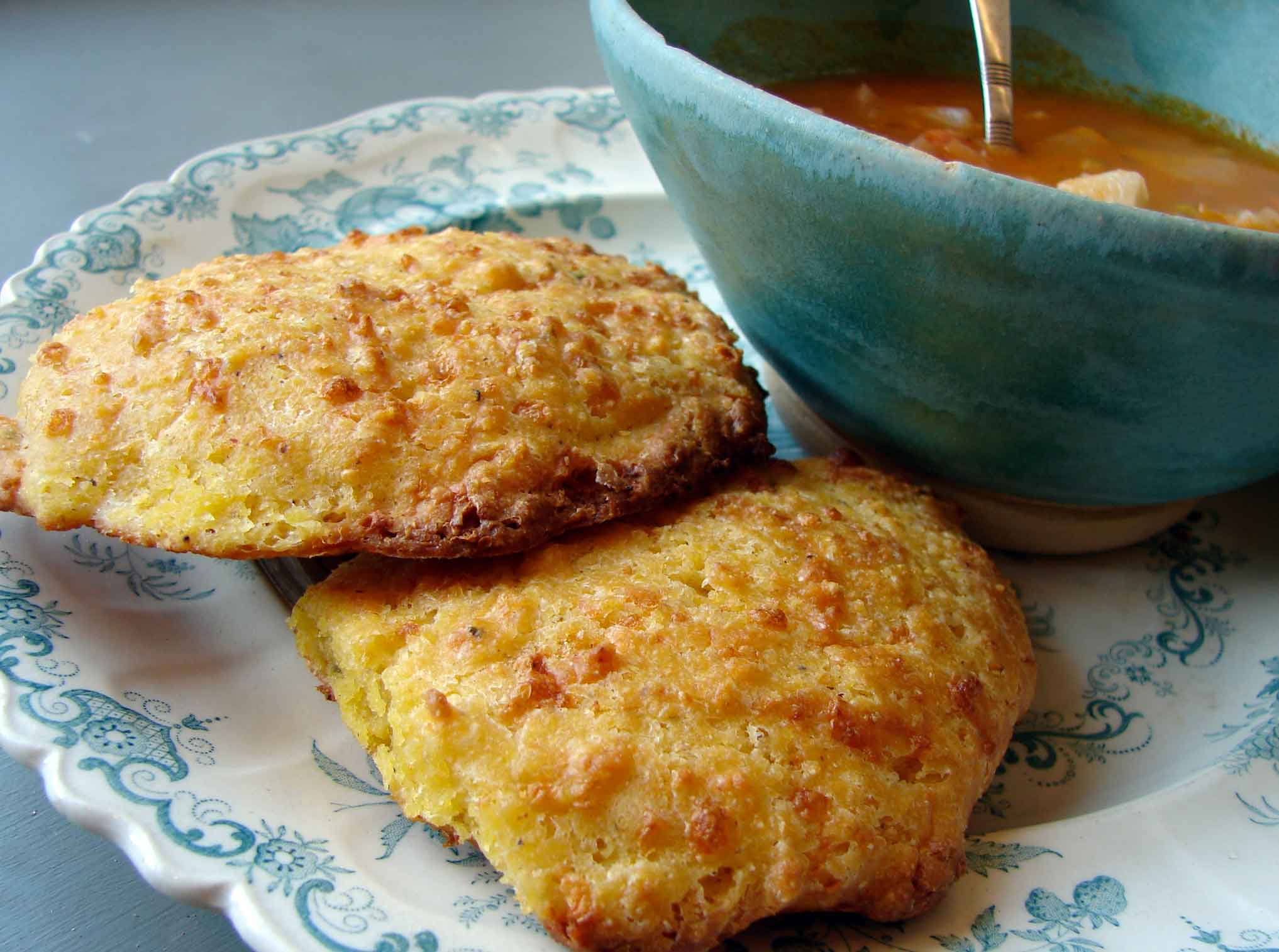
Sorry to go on and on as though this is some sort of addled, half-baked essay for a second-rate online literature course! I’ve just been thinking about it a lot lately. But I’ve been cooking, too, so let me tell you about this stew! It’s loosely based on an old recipe I found for French lamb stew, called Navarin, I believe. The original stew similarly contains turnips, potatoes, carrots and peas simmered in white wine and thyme. And I substituted white beans for lamb. I think it turned out very nice! Warm and sustaining, but not too heavy. And I made these cornmeal cheddar drop biscuits to go with it. They’re extremely quick and easy to make, and crispy outside, soft inside, and comforting.

Cornmeal cheddar biscuits

Cornmeal cheddar biscuits

Here’s Family Tree, by Belle and Sebastian
Continue reading

Ring-shaped pie with french lentils, chard, walnuts, and butternut squash

chard-french-lentil,-butterWe had a lovely snow on Christmas eve, light and soft, the kind that makes the whole world seem clean and quiet. Snow makes Clio crazy, it brings out one of the “four formes of canine madnesse, the frantic or crazed madnesse.” She leaps about the yard, and then races in with icy snow in her pink paw pads, and leaps off of the furniture with mad abandon. I watched her on Christmas eve, and thought of Steenbeck, our old dog, buried in the yard under Clio’s frenetic paws, sleeping beneath a blanket of silent snow. I felt a sudden sadness, but it was a comforting sadness, in some inexplicable way. And on New Year’s Day we went to a party at a friend’s house, up on the hill above our small city. We walked up, it being a clear, cold day, and it felt good to shake some of the holiday-induced torpor from my mind. The party was lovely, with many children instantly interacting, as they so delightfully do, making things, and sharing things, and giggling. And we drank some good red wine, and talked to friends from town and just out of town – some we see nearly every day, some we see once or twice a year. It felt social, and cheerful, and just right for a New Year’s day. We left at dusk, which still comes early though the days are getting longer, and we walked home through the big old cemetery that over-looks our town. The stones were centuries old, but the names were familiar – the names of families that still live in our community. We read the name of the man who built our house in the 1850s, the name of the man we bought our house from ten years ago, the names of the people that own businesses in town, of families that our children go to school with. My boys raced along the paths, pelting each other with snowballs and laughing. And we walked down into town back to our old house, sleepy from the wine but sober from my thoughts, and made a warm meal, and watched a Buster Keaton movie, cuddled on the couch. It sounds idiotic, but I’d been thinking the night before about all the people that have ever lived. All of the humans that have walked on this earth, and lived, and loved, and wanted, and worked. Some in good fortune and freedom and wealth; most, probably, in poverty and servitude. But all wanting the same things, surely: affection, friendship, some degree of comfort, a kind hand, a warm meal. And I thought about it again, up on the hill, covered in a blanket of melting snow…”falling faintly through the universe and faintly falling, like the descent of their last end, upon all the living and the dead.” I felt, again, that sort of comforting sadness, looking out on our beautiful town, on all of the houses lit up and ringing with laughter, with people crying, “happy new year!” Which brings us to my resolution, if I have one, and, I think I do, but in true Clairish style, it’s vague and muddled, so I hope you’ll forgive this ramble. I don’t make resolutions to lose weight, or be healthy, or give up bad habits. I’ve said before that I believe in finding a balance in everyday life, and that those things are built into the fabric of that balance, cycling continually day-to-day, working against each other. Everybody gains a bit of winter weight, but we’ll eat soup meagre for a week, run up and down the towpath with Clio a few times, and be fighting-fit come spring! To me, “resolve” doesn’t mean to give something up, but to come into focus, to become harmonious, to be solved, or healed. So I hope to bring things into focus and harmony in this new year, moment-to-moment and day-to-day. To notice everything, to recognize how vivid and poignant every moment is, how completely alive each person that I meet – how like me and how completely unique. I hope not to let fatigue, crankiness, or laziness cloud my senses or lessen my appreciation of time spent with my children and David; of strong flavors, good sounds, beautiful sights. Not to be crippled by the sense that time is passing, but to let that awareness help me to feel more keenly. Not to be distracted by our fast, cold, cluttered, cynical world from clarity, light and warmth.

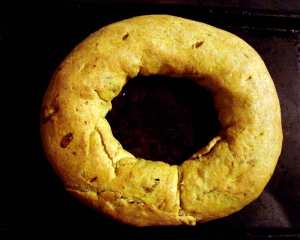
Well, this is my grand ambition for the new year, and this was the pie I made for New Year’s eve and New Year’s day. To eat leftovers on New Year’s day feels like striking out in the direction of frugality and good sense! I made the pie in a ring, because I’d read that ring-shaped foods are considered lucky. I made the crust rosy-golden with cornmeal and smoked paprika, because it seems like a fortuitous color. I filled it with lentils and greens, for luck, walnuts for crunch, and roasted butternut squash for flavor and sweetness, and capers for their flavor-dynamite explosion, so that our life will be sweet, flavorful, tangy, and substantial. Or, you know, whatever…who believes these old superstitions anyway?Ring-shaped pie Ring-shaped pie[/caption]
Here’s a whole album for you. It’s Jordi Savall playing Francois Couperin’s Pièces de Violes, we bought it for ourselves for Christmas, and it’s meltingly beautiful. Full of light and warmth and generosity, like a good life should be!
Continue reading

Spinach cakes with roasted mushrooms

Spinach cakes with roasted mushrooms

Spinach cakes with roasted mushrooms

I have to admit that I’m fairly superstitious. I always have been. I tell myself that I don’t believe all this foolish nonsense, but in my heart I know I do. I don’t like when a black cat crosses my path (or any color of cat, for that matter, they all seem a little too knowing). I think sometimes superstitions can be harmful, if you’re crippled by a belief that if you do (or don’t do) a certain thing something bad will happen. Or if you blame some unrelated action on your part to something bad that has happened. This is like some sort of insidious mental chain-letter, laced with guilt and a sort of all-powerful powerlessness that does no one no good. A few superstitions of this type are quite mild, and have become such a part of my daily life that I’ve found myself passing them on to my boys. No hats on the bed, no shoes on the table – surely these were begun because people didn’t want dirty shoes lying around where they ate. And some superstitions I actively like, the superstitions that say if you do something good, something good will happen. Often, it’s hard to tell why these superstitions came to be, but it’s fun to guess. And it’s fascinating to see how certain superstitions carry from country to country, with variations everywhere they travel. I love to read about superstitions connected with New Year’s Eve around the world. Twelve green grapes, lentils and greens, round foods, codfish and pigs. I love the fact that each of these comes with a small wish or hope for wealth, health, and happiness. We all want these things, on some level, it’s so human and universal, and it makes sense that we would express it with food, which is the way that we nurture one another, that we keep healthy, that we come together with our loved ones, which makes us happy. I love to think about the food we eat as the embodiment of our wishes and hopes, of the contrary reality that we’re in control of our destinies, but the future is a complete mystery – frighteningly and promisingly unknowable. So I’ve been baking and cooking round things all day, and lentils and greens, and crown-shaped golden foods. And having a lovely time of it. And I’ll present my recipes to you, along with small hopes and wishes for happiness, plenty, and health for you and yours. HAPPY NEW YEAR!!

Last night I made these roundish green spinach cakes. They’re like a combination of pancakes and spinach souffle – fluffy, comforting, savory, a bit cheesy. And combined them with large roasted mushrooms as well as a sauce of mushrooms, shallots and white wine. Everything is flavored with sage and rosemary, a combination I’ve been using non-stop lately, but it tastes like a wintery holiday to me, so I can’t stop myself.

Here’s Stevie Wonder with Superstition.

Are you superstitious? What superstitions do you believe in? Are there superstitions specifically related to your part of the world?

Continue reading