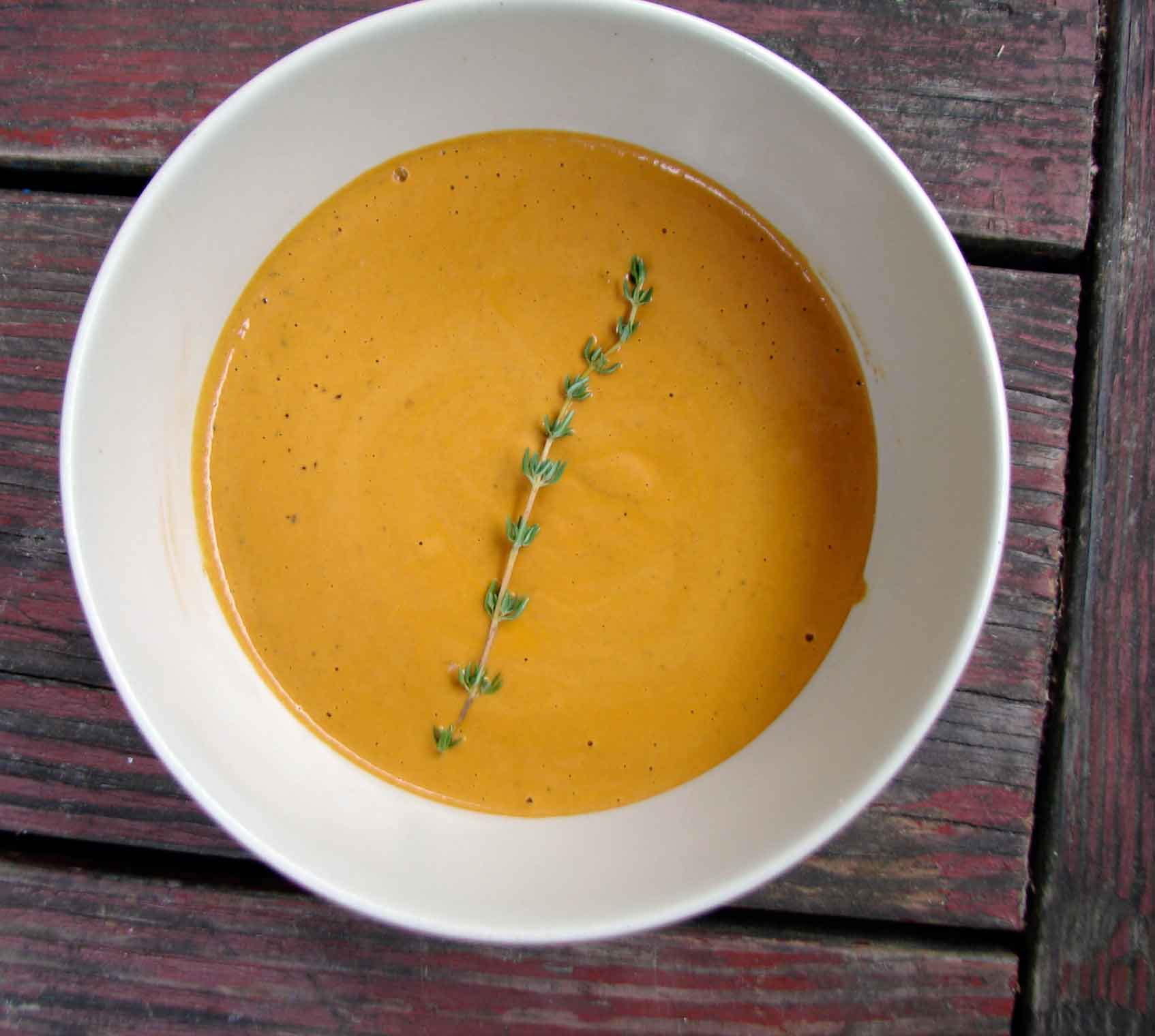
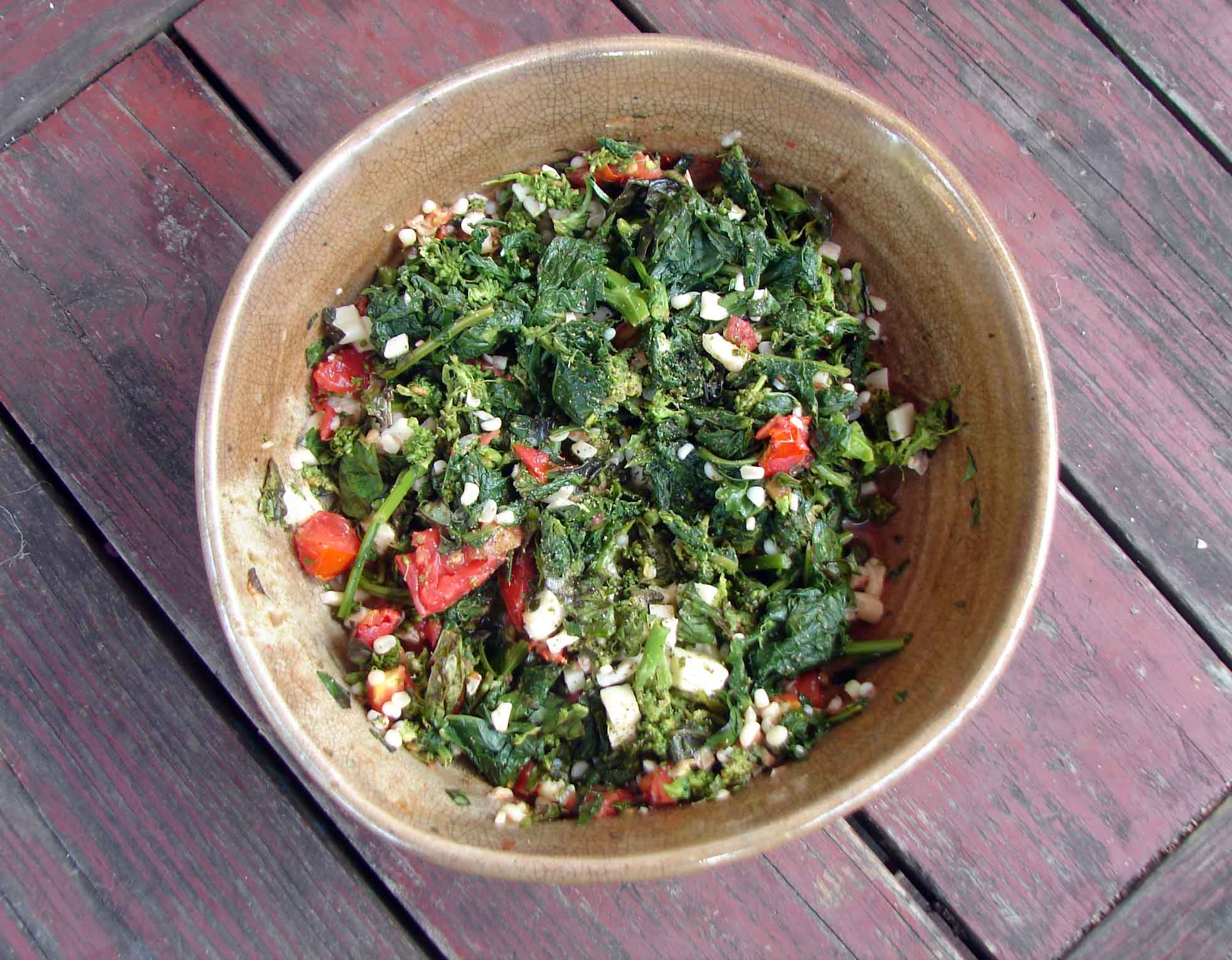
Broccoli rabe with butterbeans, tomatoes, and mozzarella

Broccoli rabe and butter beans
Broccoli rabe and butter beans

I apologize in advance for this. Earlier in the week I was unkind to poor Jack Kerouac, and now I feel another ungenerous rant come along. I do genuinely want The Ordinary to be full of things I love, not complaints about things I don’t like, but I’ve been talking in my head about this for a few days, so it has to come out. How has this happened? Jonathan Franzen has got me so upset. Last week he wrote a long whingey article in the Guardian (admittedly the place for long whingey articles.) What’s Wrong with the Modern World, though ostensibly about the essays of German satirist Karl Kraus, is really about Franzen himself. In a strange turn of events, the day the story came out, before I’d even seen it, I’d spent the morning talking to Franzen in my head about all of the ways I think he’s bad for American literature. I told him all the things I don’t like about his novels, how I find them insincere and soulless, smugly & coldly well-researched and clever. How he likes to know things about people–he fancies himself an expert–but how I’d turn the tables on him and say that I know him, I know men like him, prowling college student centers all over the country in their blazers, with their sad mix of arrogance and insecurity, trying to pick up women by twisting their words and bewildering them, and then saying, “I know you, baby.” And then along comes this article, and Franzen knows Karl Kraus, he relates to him, and he’ll explain him to us, because we’re probably not smart enough to unravel Kraus’ deliberately difficult prose. He tells us that Kraus said, “Psychoanalysis is that disease of the mind for which it believes itself to be the cure,” and then he goes on to psychoanalyze Kraus, to try to understand why he’s so angry. Franzen was angry himself, once, he tells us, and his anger made him cruel to old, poverty-stricken German women, but in a clever and poetic way that was significant for Franzen himself. And we suspect that this entire article is Franzen’s way of publicly stating, decades on, that when he didn’t have sex with “an unbelievably pretty girl in Munich,” it wasn’t a failure on his part but a decision. This is not anger! This is petulance, this is brattishness. And he tells us his anger subsided when he started to become successful as a writer, just as a spoiled child’s does when he finally gets his way. And now his anger is directed to the noise of the modern world, at people who tweet and leave inane comments on facebook and amazon. At the people who self-publish their novels and then brag about them on Amazon in the hopes that anyone will read them. But Franzen’s lengthy whinge in the Guardian ends thus, “The Kraus Project by Jonathan Franzen is published by Harper Collins on 1 October. To pre-order it…” He’s privileged, he doesn’t have to stoop to leaving flattering reviews of his own novel on lowly websites, and he can be disdainful of anybody that does, because he has the Guardian UK for his bragging platform. And, in truth, twitter, facebook, Amazon, I don’t love them, I agree that they’re noisy and distracting, but they’re easy to tune out. They’re easy to ignore. Franzen’s novels are more dangerous because they aren’t easy to ignore. I’ve wasted valuable hours of my life reading 1 1/2 of his novels, and I’ll never get that time back, I’ll never unread them. I read them because I had been told that they were good, that they were fine, they were literature, despite the fact that Oprah was suggesting them to housewives, to Franzen’s dismay. Franzen talks about how things are changing so fast that we have no sense of the past or the future any more. “If I’d been born in 1159, when the world was steadier, I might well have felt, at 53, that the next generation would share my values and appreciate the same things I appreciated; no apocalypse pending. … And so today, 53 years later, Kraus’s signal complaint – that the nexus of technology and media has made people relentlessly focused on the present and forgetful of the past – can’t help ringing true to me.” In 1159, few people made it to 53, and few people would have had any knowledge of the past, of the history of the world, or even their part of it. For them time passing was measured from meal to meal, from dark to dark, in the cycle of the seasons. They must have had dreams of the future, but those dreams would have been darkened by the inevitability of hunger and disease and war, by their own personal apocalypse. Franzen’s anger, in this pitch to sell his new book, lacks any real depth or substance or sense, just as his novels do for me. They lack soul, not in a religious sense, but in the sense of something warm and truthful, human and enduring. Franzen’s novels are painstakingly about his present, but they don’t possess a sense of memory, there’s no life inside, no quick, to persist when the dry words have crumbled to dust.

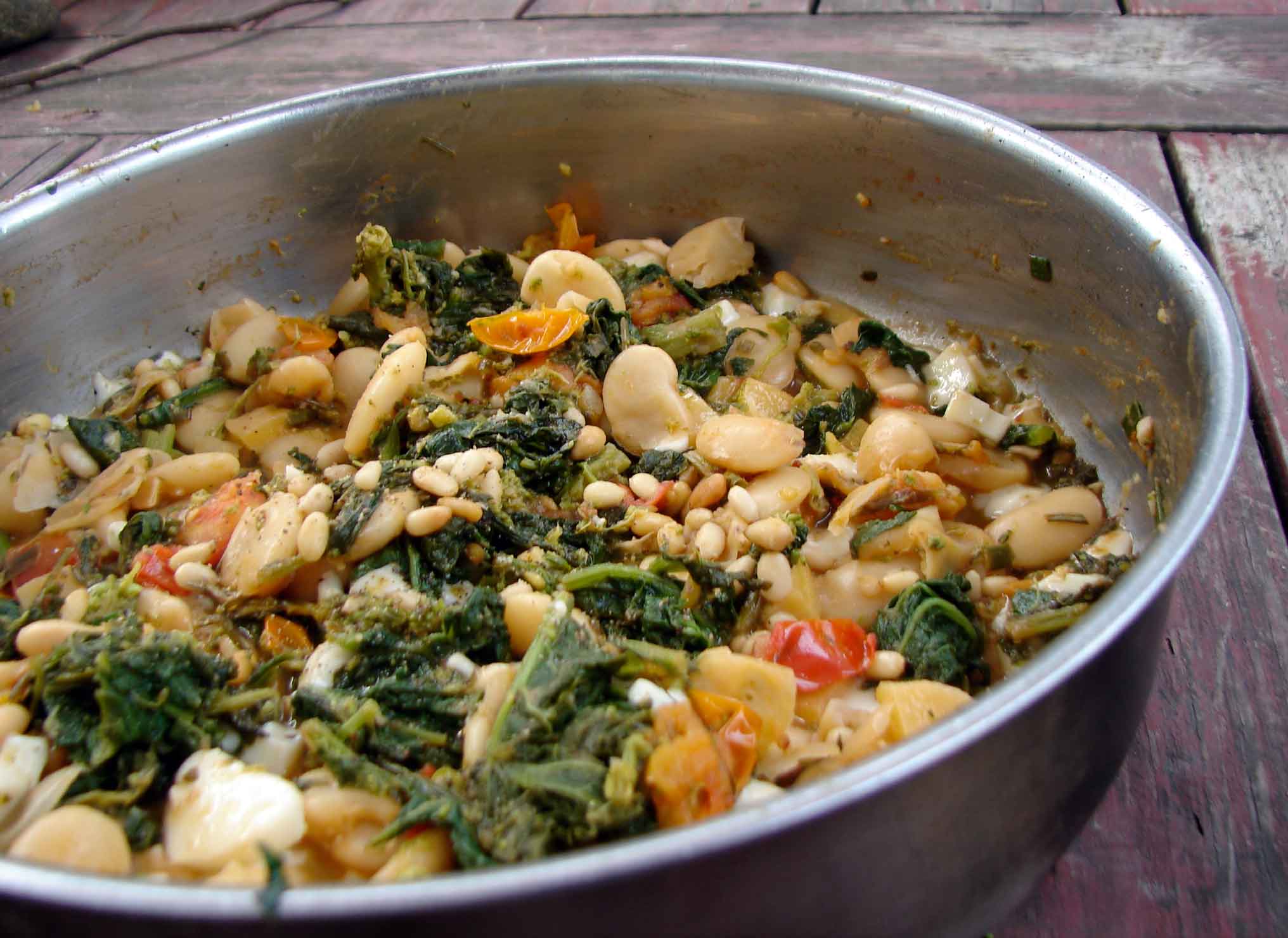
broccoli rabe and butterbeans

broccoli rabe and butterbeans

Bitter? Me? No, no, it’s broccoli rabe that’s bitter. But tender and delicious. Tender is the key word here, I wanted everything to be tender–the greens, the big juicy butterbeans, the little melting chunks of mozzarella, the cherry tomatoes fresh from the farm. The pine nuts add a little contrasting crunch, and that’s that!

Here’s Billie Holiday with Tenderly
Continue reading

Chickpea & artichoke stew; chickpea semolina dumplings; olive pine nut sauce

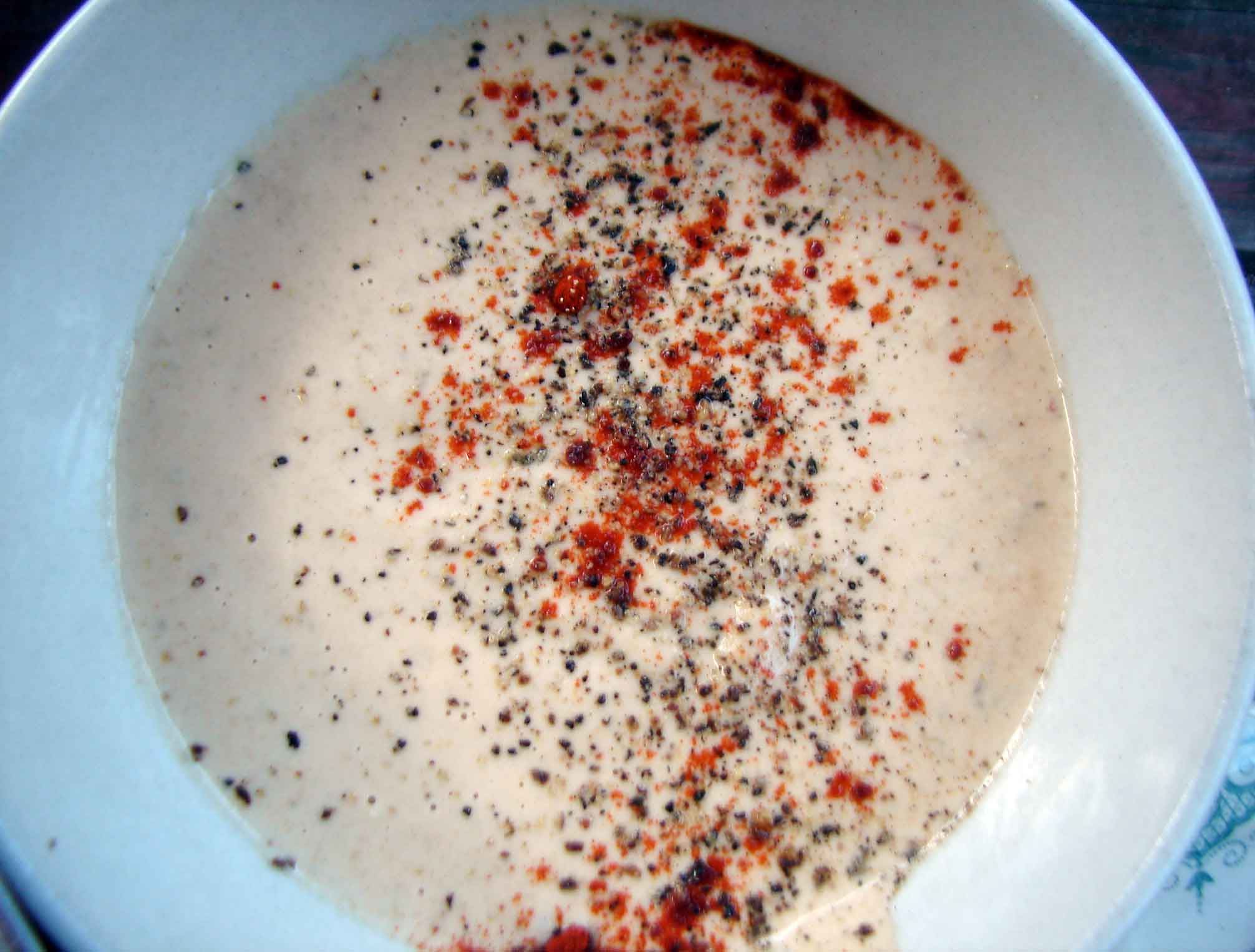
olive and pine nut sauce

olive and pine nut sauce

A few years ago I threw my back out. I was just helping our old dog to stand, and she weighed nothing, she was all bones and sunken skin. And yet, somehow, in trying to help her up I pulled something or other and I couldn’t move without pain for a few days. I couldn’t walk, sit, sneeze, laugh, sleep. I felt as old and infirm as our poor dog. A couple of years later I asked a doctor about my back, because it never seemed to get completely better. She said, “You have to strengthen your core! Strengthen your core.” I’ve been thinking about this phrase a lot lately, as I struggle to do one normal sit-up. I’ve been feeling a little lost and off-kilter. Partly because the boys are back in school, I suppose. And partly because I’ve been doing something for a long time, believing it was important–at least to me. And now I’m thinking about doing something else, which also seems very important but probably isn’t and now I’m all confused, and maybe nothing seems important, so why try to do anything at all? What does important mean, anyway? What does it mean to be important? Ack. In this scattered and bewildered state, I seem to need to strengthen my core. Not my core values or affections, because those are very unvaried, they’re constant. But the core beliefs that are hard to hold onto. Viz…it’s important to understand that you’re valuable to your children and your dog, even if you don’t feel all that good about yourself. It’s important not to let discouragement paralyze you, because time is flying. Don’t let yourself judge your work by what the world rewards with awards and praise and money (have you seen what the world awards with praise and money?) It’s probably good to take a pause and look at everything from the outside, but don’t let your doubts keep you from getting back into it, when the time is ripe, don’t feel foolish about working hard on something you know you’re good at. Don’t feel foolish about giving yourself meandering pep talks while you struggle to do sit-ups!! Strengthen your core! Strengthen your core!!

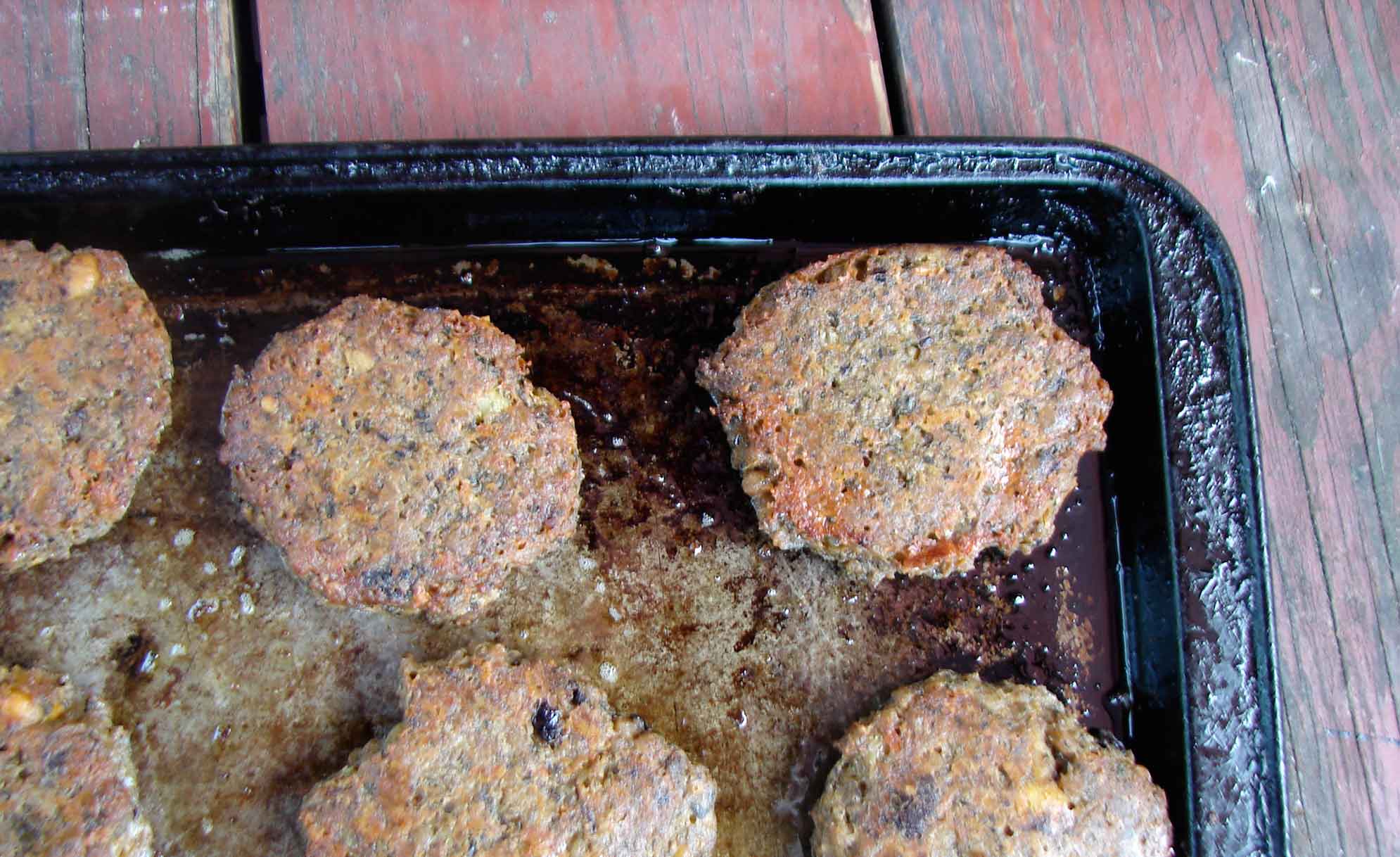
Chickpea and semolina flour dumplings
Chickpea and semolina flour dumplings

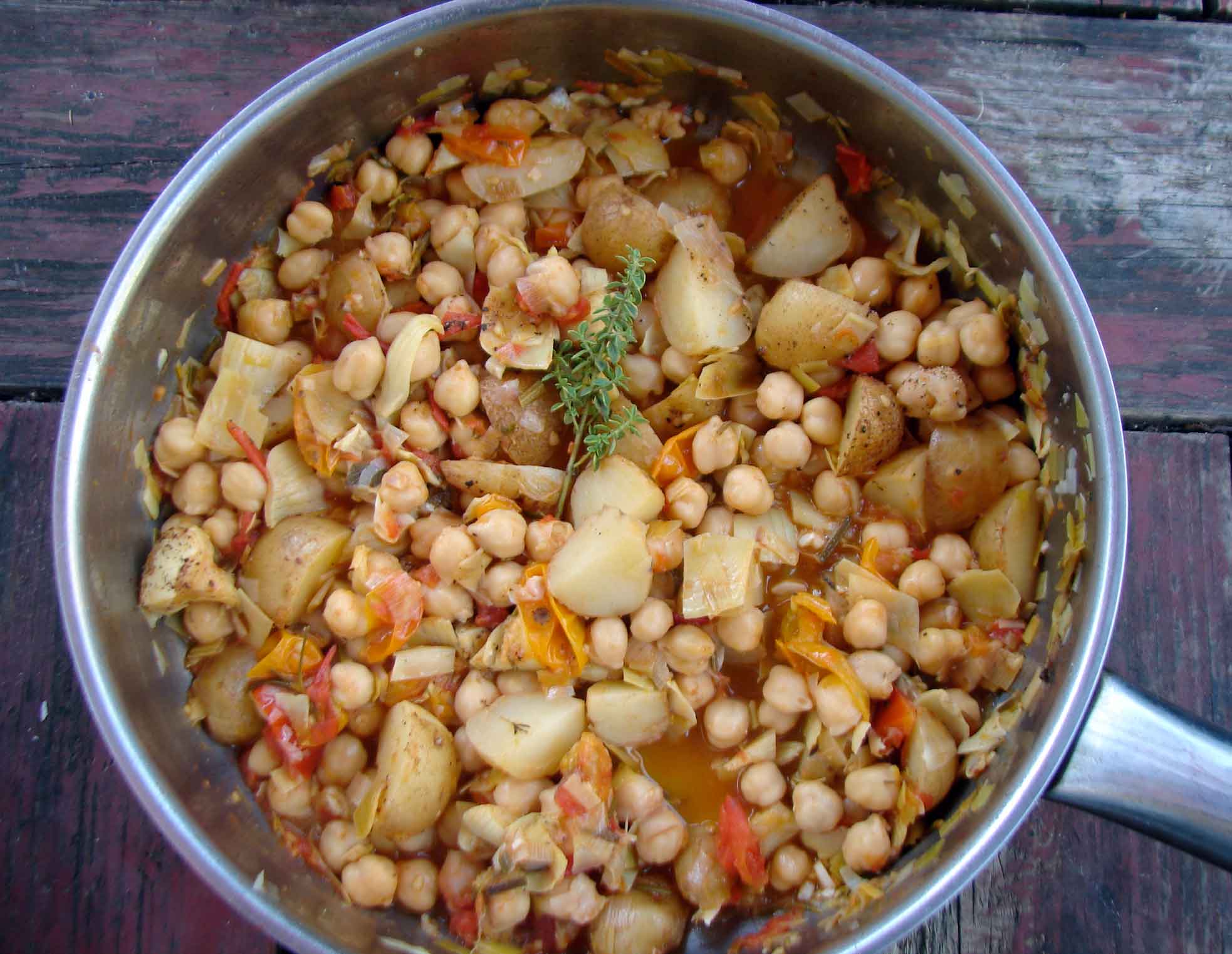
What we have here is a typical, Ordinary tripartite meal. A stewy sort of mix of vegetables, which becomes croquettes the next day, and a flavorful sauce to go with the croquettes. In this case, the stew has chickpeas, leeks, tomatoes, and artichokes. We ate it with plain couscous. The next day I combined the leftover stew and couscous with semolina flour (which is what couscous is made out of!), and some eggs to make the croquettes. And the sauce has olives, goat cheese, pine nuts, and a little maple syrup. The reason it’s this pretty color is that I made it with olive oil which I had steeped with annato seeds. You don’t need to do this…you can use regular olive oil.
Chickpea, potato, artichoke stew

Chickpea, potato, artichoke stew

And that’s that!

Here’s Hold On Be Strong by Outkast. Short and to the point!
Continue reading

Broccoli rabe with corn, tomatoes, basil, and mozzarella

Broccoli rabe with corn, tomatoes, basil and mozzarella
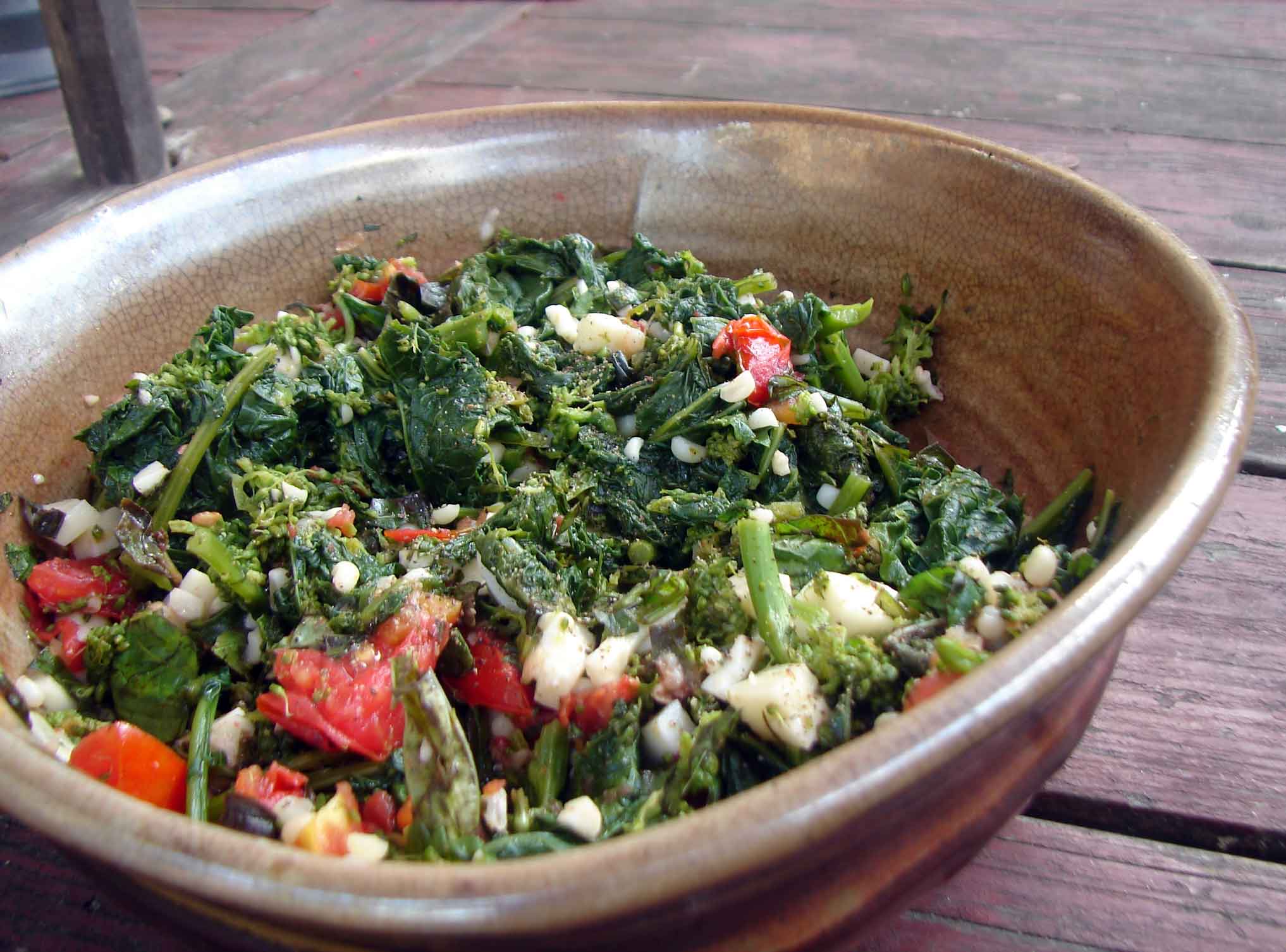
Broccoli rabe with corn, tomatoes, basil and mozzarella

Here’s my wish for labor day! I hope that everybody finds the work they need to do. I hope that everybody finds work that fulfills them creatively and keeps them lively and alive, and is financially rewarding enough that they have food to eat and a roof over their heads, that everybody is comfortable. I hope that everybody finds work that feels important, for themselves and the people and the world around them. I hope that everybody finds work that keeps them guessing from day-to-day, or that becomes pleasant as a routine–that they take some joy in rolling that boulder up the hill, in doing a good job. I hope we can all come together to help with the jobs that nobody wants to do, but which have to get done, that we can share them equally, and even find the value in them. I wish that the daily work of getting up and getting along and carrying on is light and bright and gratifying. And now I have to get to work, so I’ll quote Camus again, “Each atom of that stone, each mineral flake of that night-filled mountain, in itself, forms a world. The struggle itself toward the heights is enough to fill a man’s heart. One must imagine Sisyphus happy.” And I’ll post a link to today’s Sunday interactive playlist. It is, of course, about work! I posted a list last year, but it wasn’t interactive, so this year I invite all of my friends to add to it, or leave a comment with the song of your choice, and I’ll try to remember to add it myself.

Broccoli rabe, corn, basil, tomatoes and mozzarella
Broccoli rabe, corn, basil, tomatoes and mozzarella

I love broccoli rabe, but I always felt selfish making it, because I didn’t think anybody else in my family did. Imagine my surprise to find that they like it prepared this way!! We had some leftover corn on the cob, so I sliced off the kernels and combined them in a kind of quick fresh flavorful tomato-olive oil sauce. I combined this and the warm tender broccoli rabe with fresh broccoli and small pieces of mozzarella, which melted under the heat of the greens and tomatoes.

Continue reading

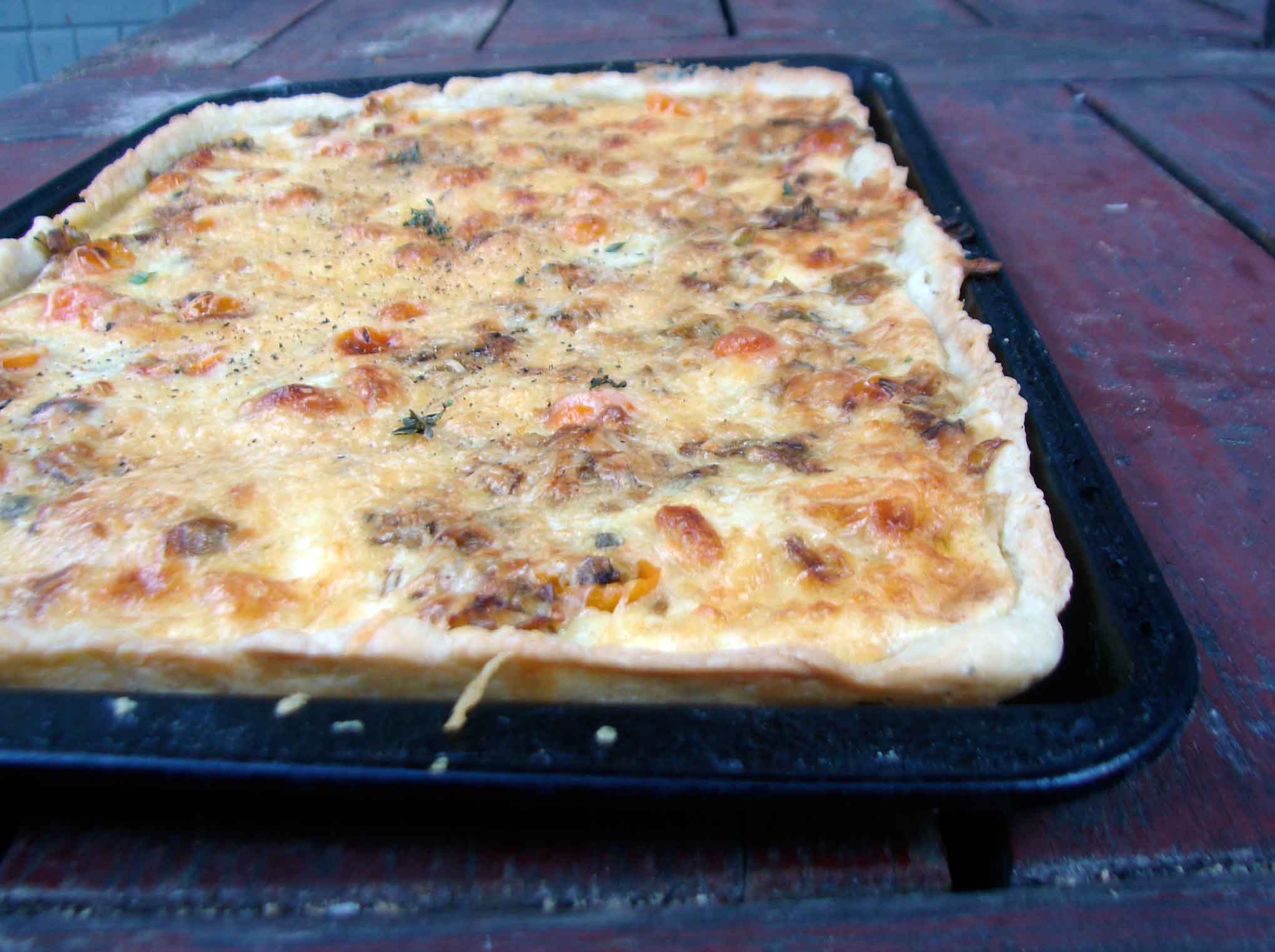
Leek and caper tart

Leek and caper tart

Leek and caper tart

Au Hazard Balthazar, an austere, scathingly honest film, feels beautifully simple and full of meaning at the same time. Much has been written about the possible meanings of the film, and in particular about its function as a religious parable. In this light, it does seem packed with symbolism: Balthazar has seven owners who could represent the seven deadly sins, the seven stations of the cross; he endures great suffering and is called a saint; the film is bathed in images of wine and bread, and in beautiful shots of hands. And yet aside from all of this, beneath all of this, Au Hazard Balthazar is the life story of a donkey. The film begins with a ringing of bells, and Balthazar as a foal, suckling from his mother on a beautiful hillside on a beautiful day. He’s given to some children as a pet, and they seem to love him. The next shot shows him many years later, as an adult, surrounded by a group of men who beat him brutally. And so the film goes, Balthazar passes from owner to owner, some are crueler and more abusive than others, but none of them are kind, none care about the donkey. The film is, in many ways, a study of human cruelty and indifference on every level. It’s a very depressing and pessimistic view of mankind. And yet there’s something transcendent and very nearly hopeful about the film–about the fact that somebody made an empathetic film about a donkey, about the chance to look at our world from a different perspective, and about the great beauty of the film itself. Ultimately, the bread and the wine don’t feel like religious imagery, to me, they feel very human, and they remind us that religion addresses our very human needs and frailties. And the beautiful disembodied shots of hands, which could be from paintings of saints, are living human hands, reaching to one another with kindness or cruelty or grace. At the end of the film, the wounded donkey is surrounded by sheep, they stream around him like a river, showing him the first real compassion and kindness that he’s experienced in the film. You feel such love for the donkey and for the sheep, who have found something that all the humans in the film have missed, when they clutter their lives with boredom and casual cruelty and self-imposed misery. I think as humans we tend to make everything hold meaning for us as humans, but what the sheep and the donkey know feels deeper than allegories and metaphors and stories humans need to tell ourselves, it feels fundamental and honest and beautiful, and the movie ends the way it began, with the ringing of warm bells.

I think my favorite thing we’ve gotten from the farm this summer is leeks. They’re supposed to be a peasant food, they’re supposed to be something that the characters in Au Hazard Balthazar might eat when they’re down on their luck. But they’re quite expensive around here! So it has been a treat to get thin, beautiful, sweet bundles of leeks from the farm. I decided to make a big flat tart with some of them…almost like a pizza with a pastry crust. I sauteed the leeks with thyme, capers and white wine, and then made a custard of eggs, milk, and two kinds of cheese. I suppose gruyere would be the ideal cheese to use here, but it’s beyond our budget at the moment, so I used a combination of sharp cheddar and mozzarella.

Here’s Ride Your Donkey by the Tennors.
Continue reading

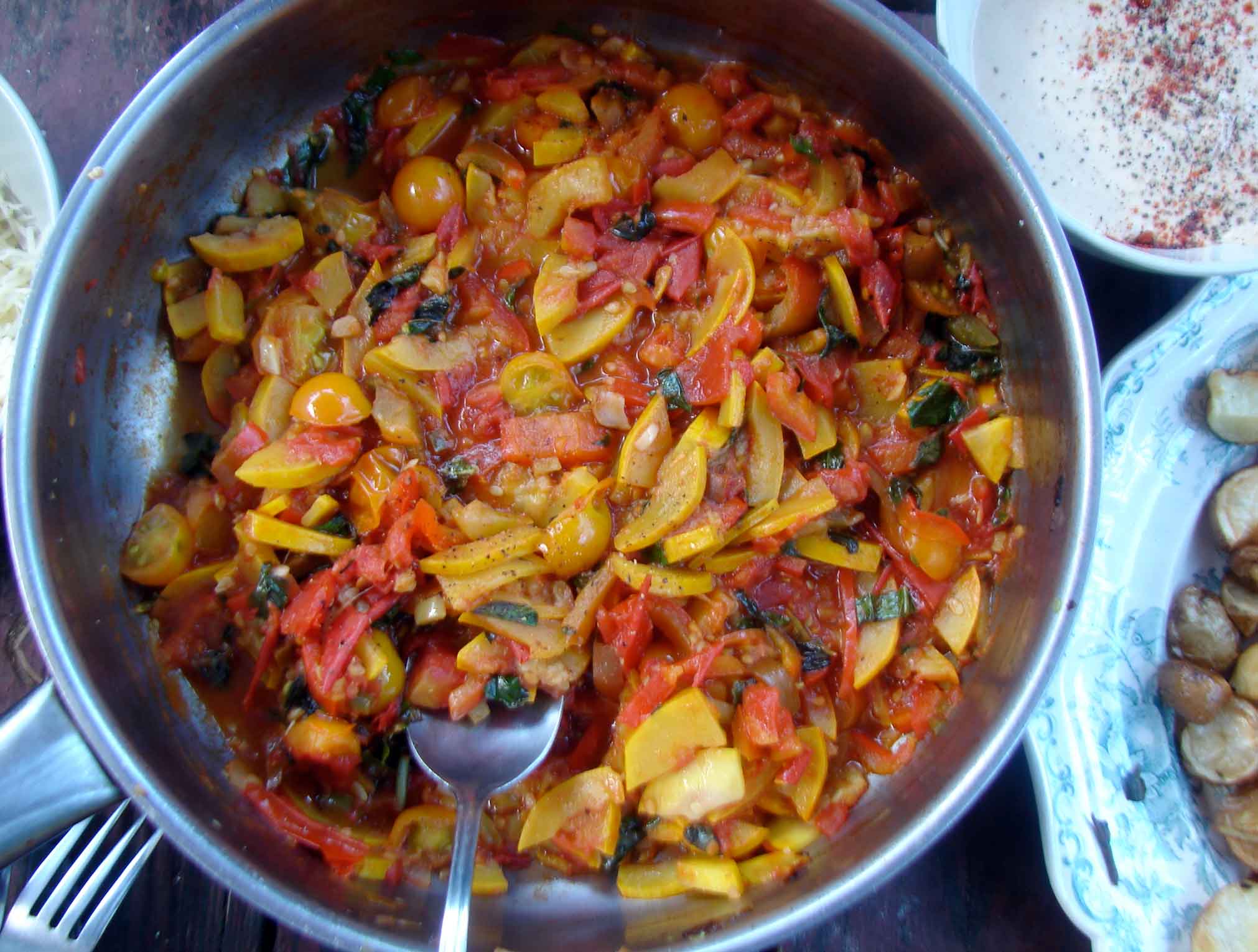
Crispy potatoes with peppers, tomatoes, and pine nut chipotle aioli

Tomatoes, yellow squash and peppers
Tomatoes, yellow squash and peppers
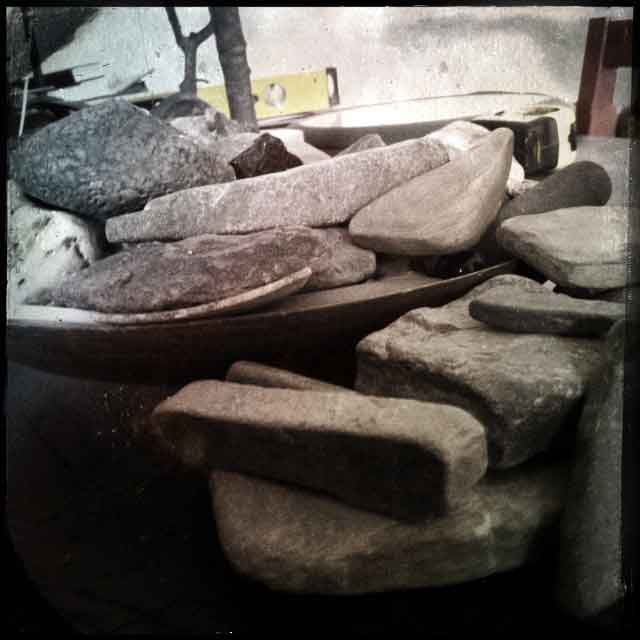
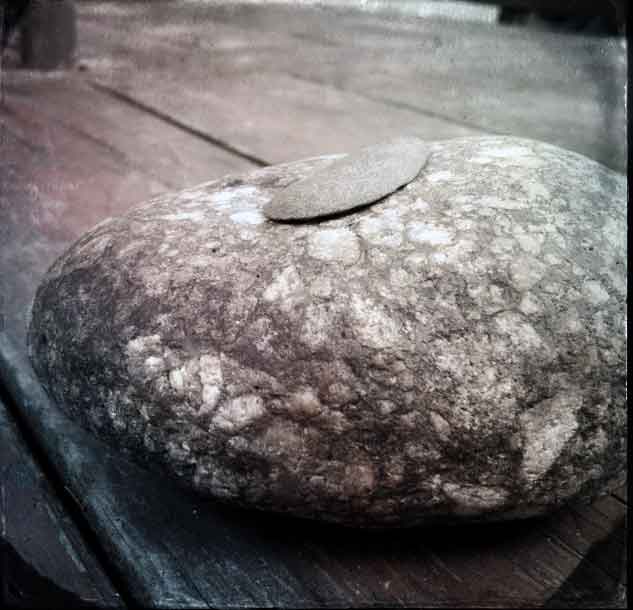
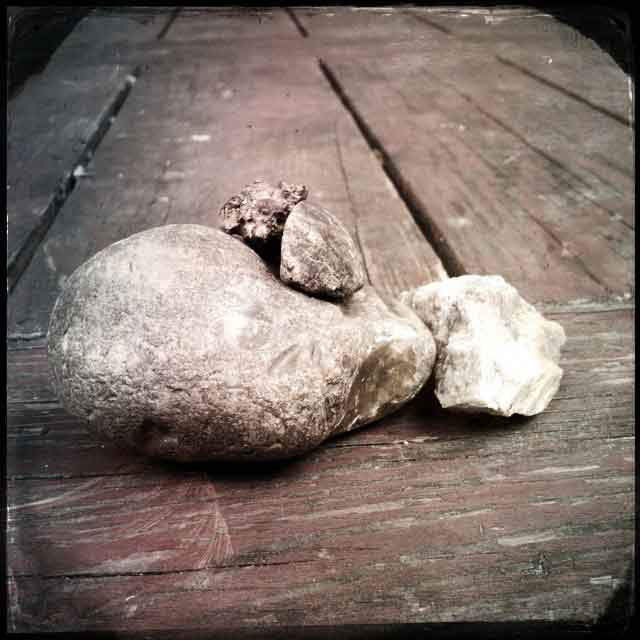
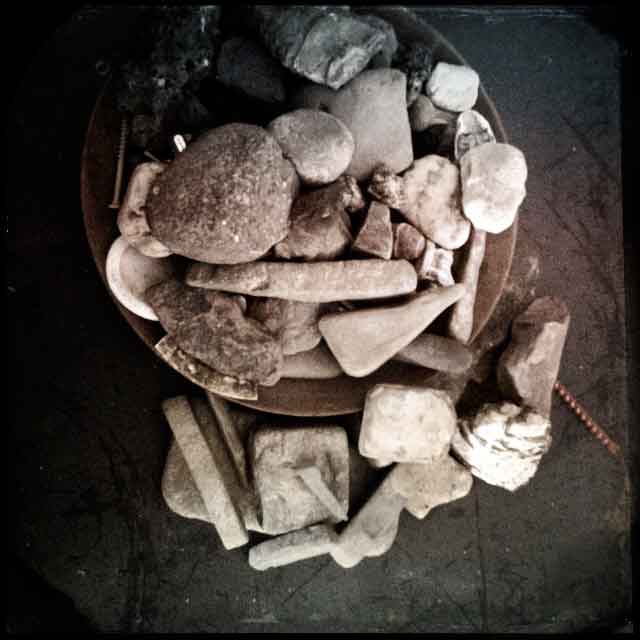
Every day lately, Malcolm has wanted nothing but to go to the river. The river! He wakes in the morning and thinks about walking down to the river, he wants to spend the long hot afternoon there, he wants to go back after dinner when the sinking sun makes a bright path on the darkening water. He and Clio splash in like some sort of mythical dolphin-otters, she bounds after sticks, and he dives for stones. When we walk home he’s bright and wet and barefoot, and he has an armful of rocks swaddled in his soaking shirt. Our house is full of stones! River stones, creek stones, pebbles from the seaside. Smooth black stones, dusky grey stones, pockmarked stones, and craggy striated rocks, stones that were slick and beautiful when wet, and now seem dusty and plain, but still worth keeping. We have a wooden bowl on our kitchen table spilling over with stones of every size. Our outside table is piled with stones, my desk has little heaps of small smooth pebbles, Malcolm’s desk is covered with a ruckus of rocks, and he’s got boxes heavy with many more of them. The washing machine is piled with stones from boys’ pockets. We all collect them, we all bring handfuls into the house. They seem full of meaning and life, with all their weighty calm; they’re so silent and still, but surely they hold old stories and myths and spirits inside of them. I love the cairns throughout our house, marking our paths, showing us where to go and where we’ve been, spelling our time here, commemorating our adventures; so hard to clean around, such a sweet testament to our collective madness.
stone

stones-3

stones-4

stones2

pine nut chipoptle aioli

pine nut chipoptle aioli

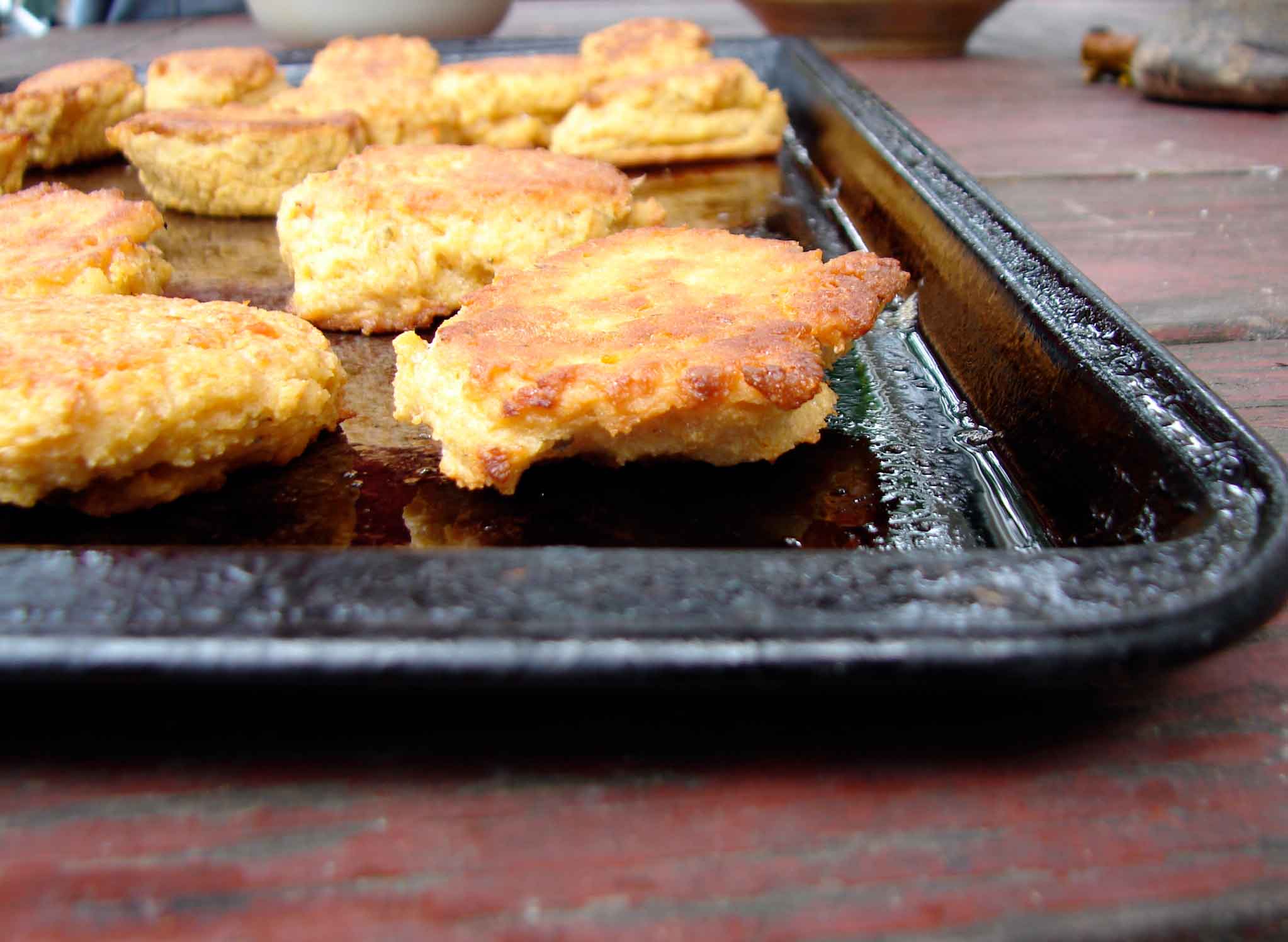
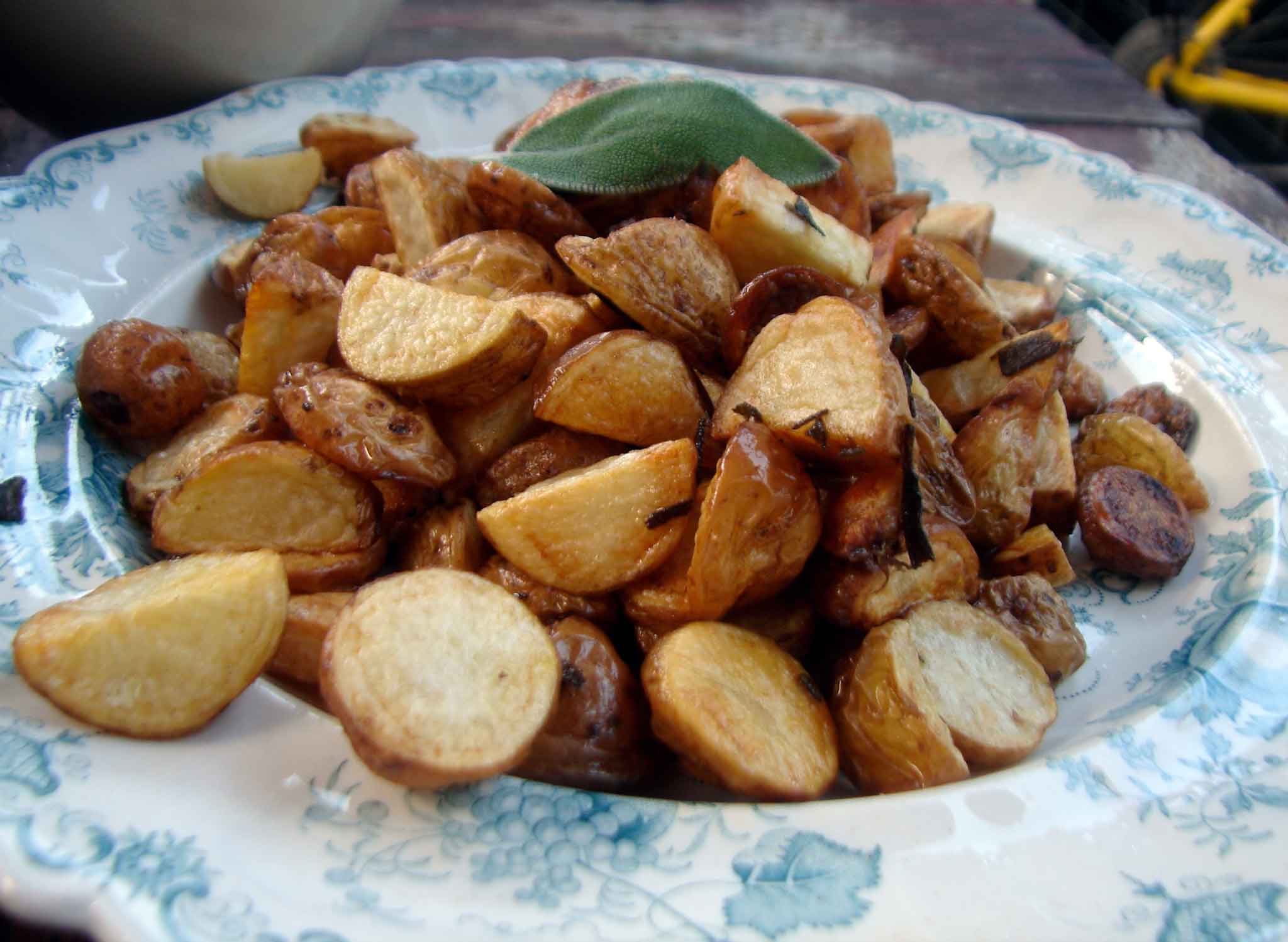
This meal is like a mound of stones! Well, if the potatoes were stones, and if they were covered by a fresh, juicy spicy sauce, and a smooth very tasty aioli on top! I was thinking of the tapas dish Patatas bravas when I made this. So it’s got crispy sage-roasted potatoes–I used the ones from the farm and they’re tiny, only about half an inch across. If you have larger ones, just cut them into smaller pieces. Atop this we piled tomatoes, sweet peppers, hot peppers and yellow squash–all from the farm. And my favorite part was the pine nut chipotle aioli. Simple but with a smoky haunting flavor. It would be good with any other kinds of roasted vegetables as well, I think.crispy-potatoes
Here’s Bill Evans with Milestones.

Continue reading

Leeks, potato & french lentils stew … and burgers

Leek and lentil burgers

Leek and lentil burgers

This morning Clio and I tried to go for a walk on the towpath. It had been raining for hours, and on one side the sky was as bright as day, but on the other, it was dark and purple-grey. I stood for a while uncertain about whether to go on or be safe and turn back. Across the canal a little green heron stared at us suspiciously, his tufty head the color of the weeds streaming beneath the muddy water. It felt good to just stand for a while, watching the heron, watching the clouds in the teeming sky, feeling the relief of cool winds and spatters of rain. Clio looked up at me with a sweet confused face, and then resigned herself to grazing on the long grass that grows against the stone wall. I’d been thinking about the story of Cupid and Psyche, which has always been one of my favorite myths. It’s a long, remarkable story, and it has a million meanings and interpretations, of course. But I was thinking about the part where Psyche, though perfectly happy, is persuaded to doubt whether she’s perfectly happy. She’s had a lot of strange and wonderful adventures, and she’ll have plenty more. Every time she’s tested she feels hopeless and wants to throw herself off of something or into something else, but everybody she meets seems to like her and wants to help her, even the bugs and the reeds. And eventually she goes back to the place she’d been happy all along. Aside from all of the other things “psyche” means, apparently it meant “life” in the sense of “breath,” formed from the verb ψύχω (psukhō, “to blow.”) Derived meanings included “spirit,” “soul,” “ghost,” and ultimately “self.” With a name like that it’s hard not to turn Psyche’s story into some sort of allegory for our own sense of well-being. It’s hard not to think of Psyche when you feel discouraged or disgruntled and, provoked by doubt, you step aside for a moment to look at your life as it actually is, at all of the skills that you have and the people who want to help you, or who need your help. Clio and I decided to play it safe and walk back home. She woke the boys, which is her favorite thing to do, and she’s spent the whole rainy day since running away from them when they try to pull her ears. The sky was bright for a while, we could have gone for our walk. And then it poured and thundered, and now it’s bright again, but the heavy clouds are rolling in, and that’s probably the way it will go all day.

Lentil leek and potato stew

Lentil leek and potato stew

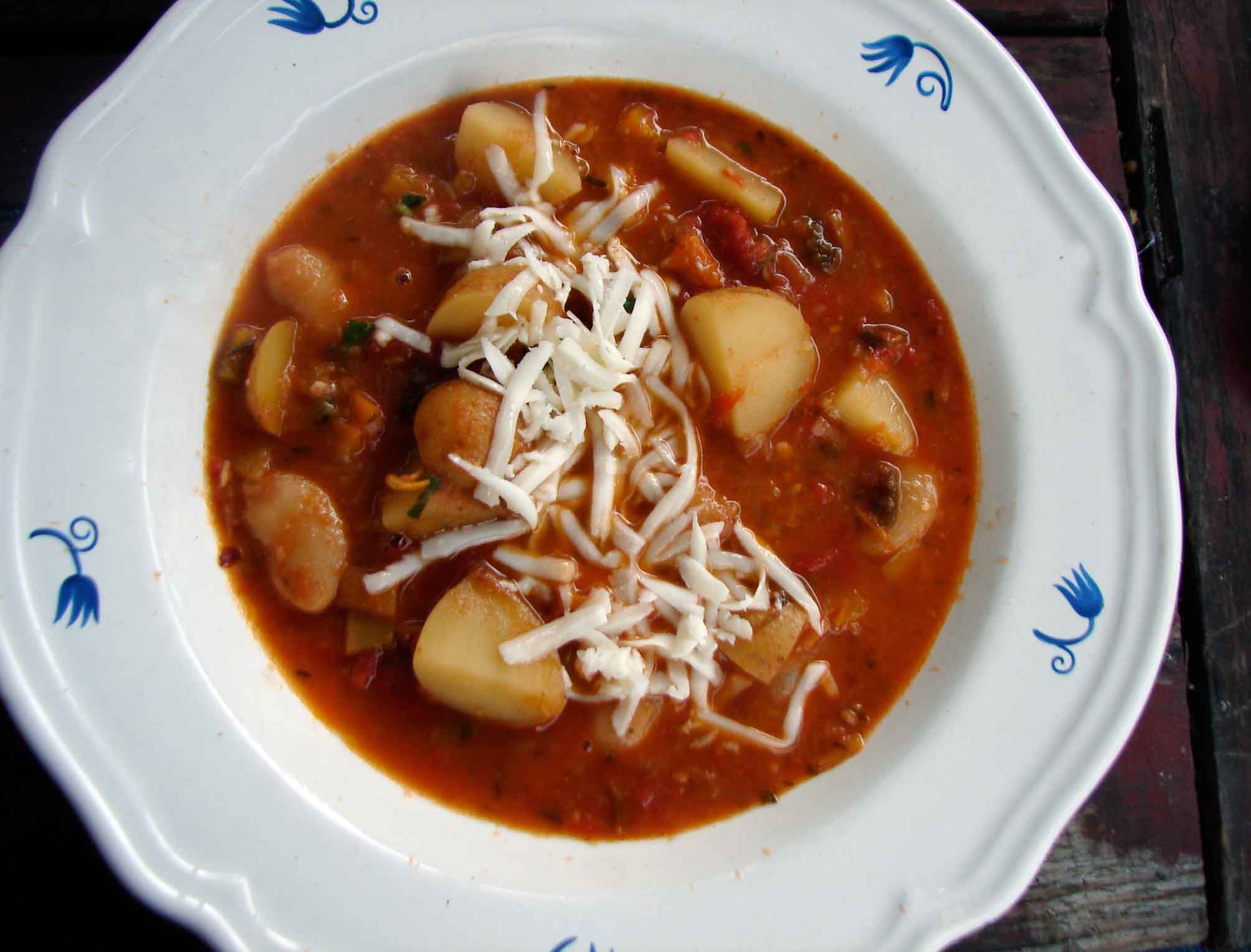
I always think of leeks and potatoes as sort of wintery, but we got them from the farm this week, so that makes them summery. This stew was amazingly tasty. We topped it with fresh chopped cherry tomatoes and fresh basil, which was a nice sweet contrast to the savory comforting stew. We turned the leftovers into burgers, and I made soft smoked-paprika buns for them.
smoked paprika buns

smoked paprika buns

Here’s Horace Andy with Rain from the Sky
Continue reading

Leek, potato & butterbean stew

Leek, potato and butterbean stew

Leek, potato and butterbean stew

    “His little treat, when he was nice and clean…was to leave his chest bare for a while. His pale skin, as white as that of an anaemic girl, was covered in tattoo marks scraped and scored by the coal, “cuttings,” as the miners call them; and he displayed them proudly, flexing his strong arms and broad chest, which gleamed like blue-veined marble. In summer, all the miners sat out on their doorsteps like this. Despite the day’s wet weather, he even went outside for a moment, to exchange ribald remarks with another bare-chested neighbor, on the other side of the gardens. Other men came out too. And the children, who had been playing on the pavements, looked up, and laughed with pleasure at the sight of all this tired flesh released from work and at last allowed to breathe in some fresh air.”

I’ve been reading Germinal by Emile Zola. I’ve never read anything by him before, and I’m so happy to have discovered him. It’s like Dickens with more sweat and pee and nakedness. Germinal is the tale of French miners in the late 19th century. They work more than five hundred meters below the earth, in cramped, dangerous, miserably hot, miserably cold, horribly dark and dangerously coal-dusty conditions for less than a living wage. They live crowded together into a cramped two-room house where they have no privacy and little peace. Their cupboards are literally bare, and their breakfast is hot water poured over yesterday’s coffee grounds. They’re all tired and anaemic and tubercular. And yet they’re very much alive, and full of humor and affection and desire. The story of their day-to-day life, the work the men and children do in the mines, the work the women do in their homes, is told in detail so rich and gripping you’ll find yourself hanging on every word, waiting impatiently to see what happens next. All of the characters are described with such warmth and generosity that I feel I’d like to know them, though I’d have trouble justifying the comfort in which I live, in which I expect to live.

Potato, tomato and leek stew

Potato, tomato and leek stew

When La Maheuse finally manages to beg and plead for some supplies, she makes a soup of potatoes, leeks and sorrel. We just got some leeks and potatoes from the farm! So, of course, I had to try to make a French coal miner’s stew. I added herbs and butterbeans and wine and red peppers tomatoes. I don’t have sorrel, so I used lemon juice to attain that lemony flavor. I thought it turned out very tasty! I made a big round loaf of bread to go with it, but you could always just buy a baguette.

Here’s Driver 8 by REM, because the passage I quoted above reminds me of the line, “The children look up all they see are sky blue bells ringing.”
Continue reading

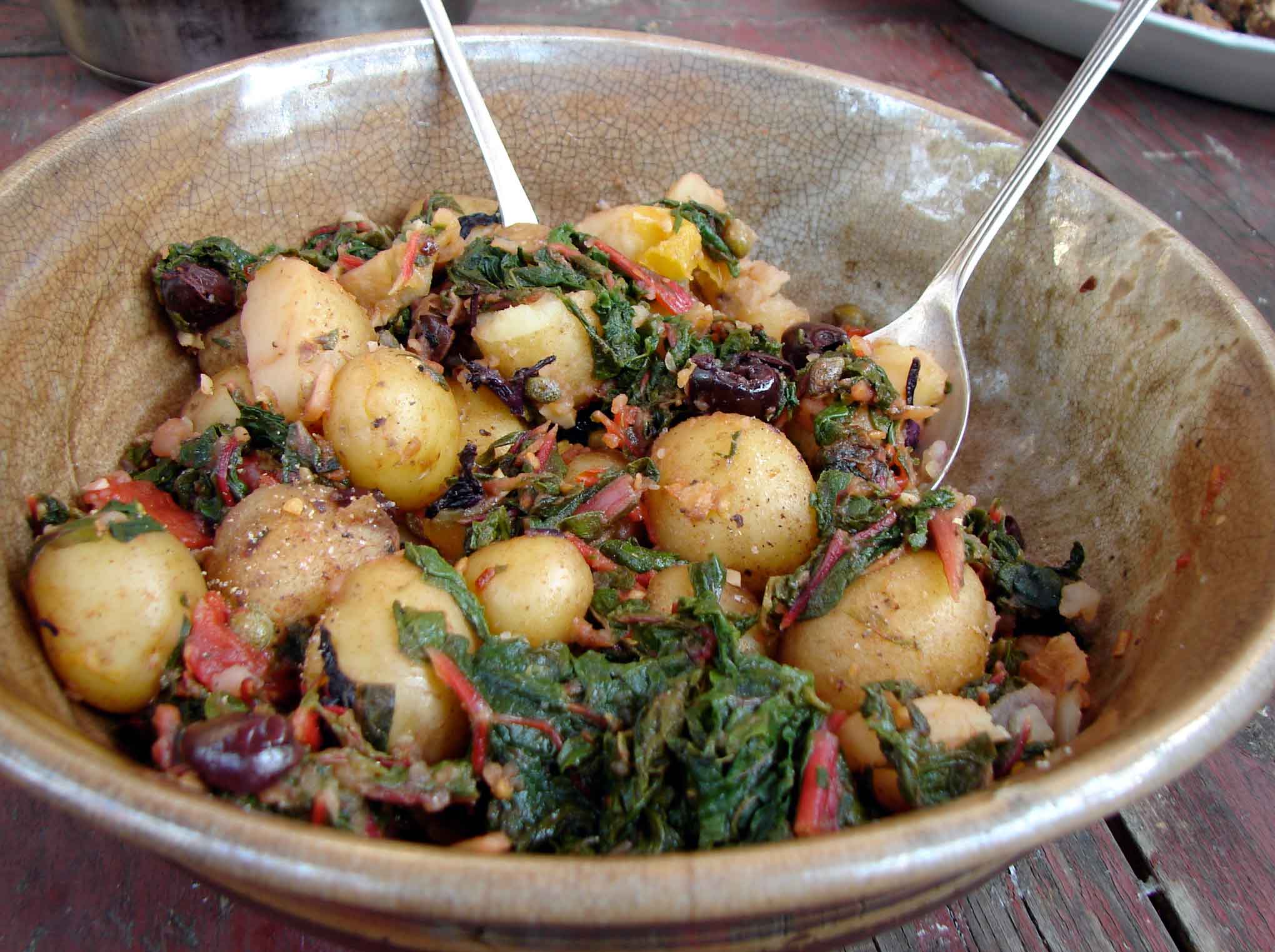
Chard, new potatoes, olives and capers; pesto-pearled couscous, and…croquettes!

Potatoes, chard, olives and capers

Potatoes, chard, olives and capers

Sir Lord Comic. I love everything I’ve heard by him, but that’s only five or six songs. I don’t know much about him, but here it is…he’s one of the first Jamaican deejays. In fact, his song Ska-ing West is considered the first deejay recording. He began his career as a dancer with the Admiral Dean Sound System. He’s got a wonderful rich, soave voice. He’s got a remarkable vocabulary. He’s funny and bright and talks so fast sometimes that I can’t understand what he’s saying. He’s got some combination of coolness and joyful warmth that makes his few songs completely contagious. On Dr. Feelgood he uses the phrase “musically glad,” which is an idea I love, and is exactly how you feel when you listen to Sir Lord Comic. A gold star to anyone who can tell me what he says right before he says “musically glad!” Here he is dancing…

chard, potato, couscous croquettes

chard, potato, couscous croquettes

I love potatoes and greens, and I love greens and olives, so this was a nice combination of both. It’s also got capers (or flavor dynamites) and fresh herbs and tomatoes from the farm. We ate it with whole wheat pearled couscous mixed with pesto and chickpeas. And, of course, the next night I made croquettes out of the leftovers. All good! All easy!

Here’s a list of all the Sir Lord Comic songs I’ve ever heard. If anybody knows of any more, or is better informed about his life and career, I’d be grateful to hear about it.
Continue reading

Red bean, potato and pine nut tacos…and croquettes

Red bean, potato, and pine nut croquettes

Red bean, potato, and pine nut croquettes

We woke up this morning to grey and stormy skies, torrential rains, thunder, flood warnings. Everything was dark and slaty as far as we could see; grey upon grey upon grey. I’ve always liked a day like this in the summer time, a day to stay inside, to read and write and eat chocolate. (Of course that was before the boys and the stir craziness and the cabin feverish daziness.) I’ve always seen a lot of beauty in a grey day, and this seems like a good time to finish my small series of discussions of kitchen sink films, by talking about Lonliness of the Long Distance Runner. It’s a beautiful film despite the relentless smoky greyness of the industrial landscape, despite the gloomy wintery bleakness. The film tells the story of Colin, a poor boy from Nottingham played with characteristic brilliance by Tom Courtenay. He doesn’t have a lot of options in life, he doesn’t have a lot of hope, and he takes advantage of an open window to pilfer a cash box. It’s the rain that gives him away, washing all of the money out of its hiding place in a drain pipe to collect around his feet while he’s being interrogated by a policeman. He finds himself in a boy’s reformatory, and his only relief from the drudgery and degradation is running. He runs to escape, but you feel as though he runs to figure things out, too. He finds the space to think, in the solitude, in the regular rhythm of his feet. He finds joy and solace, and he finds enough hope and self-respect to quietly take a stand against the repressive authorities and the brutally condescending public school boys he’s pitted against in a race. As he comes to understand his life and his place in the world while he runs, so do we, we share in his memories to see what brought him to this place, and we share a bleak sort of hopefulness for his future. He might be stuck in a place he doesn’t want to live, but at least he can live with himself and his decisions.

Red bean, potato, pine nut tacos

Red bean, potato, pine nut tacos

This is two two two meals in one! I made tacos with potatoes and green peppers and tomatoes from the farm, with some crispy diced tomatoes and pine nuts. They were somewhat smoky, with smoked paprika and chipotle puree. We ate them with warm tacos, basmati rice, grated cheese, and avocados mixed with cherry tomatoes. The next day I combined the leftover bean mixture with the leftover rice to make croquettes, which were almost better than the tacos themselves!

Here’s Belle and Sebastian’s The Loneliness of the Middle Distance Runner. One of my favorites!

Continue reading

Spicy tomato coconut sauce; smoky basil pesto; collard “fettuccine”

collard fettucine with two sauces

collard fettucine with two sauces

The Hagakure is a practical and spiritual guide to warfare written by a samurai in the beginning of the 18th century. The word “hagakure” literally means “hidden by leaves,” or “hidden leaves,” and I believe this is because the writings, though seemingly about a warrior code, are filled with hidden meanings that shift and grow as you read them, as something viewed through shifting leaves and shadows. I know about the Hagakure because extracts from it are beautifully read in Jim Jarmusch’s beautiful Ghost Dog. One of my favorites is this advice for understanding a rain storm, “There is something to be learned from a rainstorm. When meeting with a sudden shower, you try not to get wet and run quickly along the road. By doing such things as passing under the eaves of houses, you still get wet. When you are resolved from the beginning, you will not be perplexed, though you will still get the same soaking. This understanding extends to all things.” Every once in a while my boys will impart some wisdom they’ve gleaned from their travels, and it feels as though they should end it, “This understanding extends to all things.” Last night before bed and this morning on our towpath walk, I peppered them with questions, and I’ve compiled a short list of their advices.

    The Way of My Boys

    When walking through a forest, always think that a tick is biting you. In this way you will know when you have been bitten by a tick. This understanding applies to all things.

    If a bee stings you but you don’t know it, it will not hurt. This understanding extends to all things.

    When swimming in a pool, if you want to touch the bottom, go slowly so that you don’t hit your head. When swimming in murky water with a bed of sharp stones, go slowly so that you don’t scrape your knees. This understanding extends to all things.

    If you want to catch a firefly, don’t pinch it, hold your hand out and let it land, so that you don’t kill it. This is true of all things.

    If you miss a friend, play with things that you learned about with him. This understanding extends to all things.

    If you’re waiting on line and your legs get tired, think about something else and the pain will go away. This applies to all things.

    If you want something very badly but can’t have it, imagine that you have it, and that will be almost as good. This applies to all things.

    When eating a plum, take a big bite, pull out the pit at once, and you can have fun eating the rest. This understanding extends to all things.

Smoky pesto

Smoky pesto

I keep picking armfuls of basil each week, and I wanted to think of something different to add to pesto, so I asked Malcolm. He suggested smoked paprika, and then we decided to add smoked gouda as well, and to roast the garlic and toast the pine nuts. It turned out very good. It’s quite a subtle flavor, but nice. And I’ve been picking lots of tomatoes, too. I had some chunky sauce left over from the day before, and I decided to mix it with some cream of coconut and spices, and then add some fresh cherry tomatoes at the end.
tomato-coconut-sauce
Bright and spicy and a little sweet. And, finally, I’ve been thinking a while about cooking collards in long ribbons, and eating them as a person might eat pasta, with a sauce (or two!) on top. I thought it turned out very very tasty. Satisfying, like pasta, but with more flavor and texture. The boys just ate soba noodles, though, which is a perfectly acceptable substitute. collard-fettuccine

Here’s Flying Birds, from RZA’s remarkable soundtrack to Ghost Dog.

Continue reading