Pumpkinseed, green vegetable, and cheddar soup

pumpkinseed vegetable soup

pumpkinseed vegetable soup

I spent the morning cleaning. Let me tell you why that’s interesting. It’s not! It’s not interesting at all, to anyone! Cleaning is dull and tedious and repetitive, and it’s only satisfying if you’re good at it, which I’m not. You wouldn’t walk into my house and say, “This place looks great, Claire must have cleaned for hours this morning!” You’d more likely say, “Jesus, what a dump! How can they live in such squalor?” Cleaning is the most sisyphean of tasks, you clean, it gets messy again, you clean, it gets even messier. Especially if you have children or dogs. Honestly, I think cleaning a house with two little boys in it is the definition of insanity. They stand in the yard and throw dirt at things because it’s fun. They throw paint (and other substances) at the walls and the floor. Of course they do! Who wouldn’t? I’m a good mom for little boys, because I like dirt, as long as it’s good clean dirt. If they eat some soil in their lives, it can only be good for them, to take a bit of the earth into their bodies, right? But I don’t necessarily like dirt on my windowsills, and that’s what we had, in large quantities. I could have planted some seeds in there and they would have grown. Today I cleaned the windows and cleared out some cobwebs (literally–We share our home with many spiders). And that does feel good in springtime. To have a clear and unobstructed view of the world coming to life outside your windows. To remove some of the clutter that confuses your picture of the world. I don’t enjoy cleaning, but there are things I like about it. I like the fact that we all have to do it (or hire somebody to do it). There’s something comforting in that–cleaning connects us and it’s humbling and grounding for everyone. I like the clarity that it can bring, and the sense of renewal. My mind feels fuzzy and confused, sometimes, as though it is actually wrapped in spider webs, and cleaning my physical space can feel like opening a window in my brain, and blowing away some of that dust. Because cleaning is very good for freeing the mind. I have some of my best thoughts while sweeping the floor or scrubbing the tub, and if I get stuck on something I’m trying to write, cleaning is more than a way of procrastinating, it’s a way to keep thinking about something without consciously thinking about it. You shift the focus and alter the angle of the shot, and sometimes that’s exactly what you need. Sometimes when you clean you find a toy that you forgot you had, and you can stop and play with it for a while. And I like to think about spirits everywhere – angry pee spirits, mischievous dust spirits, the ghosts of little boy hand smudges, or phantom dog nose prints on glass–they all hold a little of the history or their happening. Even the clever spiders and their fantastical mysterious webs seem other-worldly at times. I feel that I make a deal with them when I clean. I’ll disturb them only so much, and then let them be. I’ll stir them up and make them dance around in a flurry, but I’ll understand that they’ll settle again, that they’re part of this house and have probably lived here longer than I have. So I spent the morning cleaning windows and clearing clutter, and my mind and my eyes are a little clearer, a little more ready for spring, and already the dust is softly settling around me once again.

This soup felt a little like spring cleaning the vegetable drawer. I had a lot of green vegetables and some were past the first blush of youth, because I wasn’t around much last week, so I decided to make them into a soup. I used broccoli, spinach, kale and cauliflower (not green, I know! But it doesn’t look ugly with green vegetables, and it makes such a smoooooth purée). YOu could use any vegetables you have on hand that you like together. First I toasted some pumpkinseeds, because I love their flavor, and they make the soup nice and creamy. And I finished it by melting in some cheddar, which added flavor and substantiality. I seasoned it with cumin, sage, oregano and cilantro, because I wanted it to go well with our leftover kale and black bean cornmeal cakes, but you could use any herbs and spices you like!

Here’s Van Morrison. He’s happy Cleaning Windows.
Continue reading

French lentil & barley stew with sage, rosemary and port wine

French lentil barley stew

French lentil barley stew

Beware of any post that starts, “Last night, I was trying to fall asleep and I started thinking about…” You’ve been warned! So, last night, I was trying to fall asleep and I started thinking about the Easterish theme of resurrection. And I’ve had Elizabeth Cotten in my head (delightfully) for a few days, so I started to think about blues musicians who recorded some tracks in the 20s and early 30s, and then weren’t heard from again until the sixties. Their careers were resurrected.

Of course their lives continued in those decades, and they worked and struggled to get by, and they wrote about working and struggling, they wrote about their lives. In particular, I was thinking about Mississippi John Hurt and Skip James. (And then I thought about how hard it is to write about something that you really love as much as I love the music of Mississippi John Hurt and Skip James. But here goes!) Mississippi John Hurt and Skip James were Delta blues musicians. They were both born around the turn of the last century in Mississippi. They both started playing very young, sneaking a chance to play guitar any time they could. They were both largely self-taught, and they both developed unique styles of playing, just as Elizabeth Cotten did. She, being left-handed, turned the guitar upside-down, plucking out the melody with her thumb. Skip James has his own special tuning, in melancholy D-minor. Mississippi John Hurt played the guitar the way he “thought it should sound.” And when you hear him play, you’ll agree, this is the way guitar should sound.

Their music and their lyrics are disarming–sophisticated and wild, perfectly, strangely, human and familiar, poetical, violent, at times, but always sung in the sweetest possible way. Mississippi John Hurt’s voice is gentle and comforting, Skip James’ high and haunting.

Hurt was born in Avalon Mississippi, and he was endearingly fond of his home town. He travelled to Washington and New York to record music in the late 20s, but he wasn’t happy there – he was homesick. They tracked him down, later in life, based on lyrics to his song Avalon Blues. “New York’s a good town but it’s not for mine. New York’s a good town but it’s not for mine.” He was given a chance to perform with a traveling show, but he declined, because he wanted to stay near to his home. Skip James travelled for jobs and work camps, but his lyrics are about the people back home.

I wonder what it must have been like for them to be in their 60s and suddenly discovered by New York City folksy hipsters. What it must have been like to travel, at that age, and perform at the Newport Folk Festival, and be revered by these kids whose lives must have been so different from their own. Supposedly, Hurt, whom everybody liked his whole life due to his pleasant nature, enjoyed the experience, and James, who “could be sunshine, or thunder and lightning depending on his whim of the moment,” hated the folkie scene, and wasn’t fond of some of the covers of his songs that became wildly popular. What a strange turn for their lives to have taken. Blues music is full of fables and mythical characters, tales of death and life and reinvention, tales of people with legendary powers. I like to think about the long and hard-earned lives of James and Hurt in this way.

Here’s a short playlist of some of my favorite Mississippi John Hurt and Skip James songs.

So, this meal is something like winter’s last hurrah. It’s warm and comforting and nourishing. It has barley and french lentils, spinach, potatoes and carrots. So it’s pretty much everything you need in one big pot. The sauce is rich and savory, with port wine, tamari, sage and rosemary. And we topped the whole thing off with some grated smoked gouda and sharp cheddar. This is one of those “serve-with-a-good-loaf-of-crusty-bread” meals.

Continue reading

Roasted rutabaga, corn and cheddar soup

Roasted rutabaga, cheddar and corn soup

Roasted rutabaga, cheddar and corn soup

Last week I posted a poem by Seamus Heaney, but I neglected to share the fact that it was only part I of the poem. There’s a part II, and here it is (with profound apologies for having split the poem up in this rude way)…

2. The Seed Cutters

They seem hundreds of years away. Brueghel,
You’ll know them if I can get them true.
They kneel under the hedge in a half-circle
Behind a windbreak wind is breaking through.
They are the seed cutters. The tuck and frill
Of leaf-sprout is on the seed potates
Buried under that straw. With time to kill,
They are taking their time. Each sharp knife goes
Lazily halving each root that falls apart
In the palm of the hand: a milky gleam,
And, at the centre, a dark watermark.
Oh, calendar customs! Under the broom
Yellowing over them, compose the frieze
With all of us there, our anonymities.

Beautiful! And it got me to thinking about Brueghel, and about the fact that poets love him. We’ve talked about his Landscape with the Fall of Icarus, and the fact that WH Auden and William Carlos Williams both wrote poems about the painting. And William Carlos Williams, patron poet of The Ordinary, has a whole collection of poems called Pictures from Brueghel. Why do the poets love him so much? Is it because he tells stories with his paintings? He shows so many characters, so much movement and beauty and drama, but the drama of everyday life that we can all relate to. Is this why the poets of The Ordinary love him? Because he renders with such skill and accuracy some universal truth of humanity that we can all understand – with so much beauty and so few words. They called him “the peasant Brueghel,” apparently, in his day. Not because he was a peasant, but because he painted peasants, and some say he dressed as a peasant so he could mingle with them – unnoticed but noticing everything. This was very rare, at the time, and it is only through his paintings that we understand as much as we do about the lives of poor people in his place and in his time. I wonder why he painted peasants. Was it patronizing? Was it, as Van Gogh has said about The Potato Eaters, to show how less-civilized people lived? Was it opportunistic? Was it because these were the people who were everywhere about him, who would model for him. Because peasants must have served as models for paintings of nobility, as well, and for paintings of Christ and Mary. We’ll never know! The peasants in Brueghel’s paintings are so richly painted that it feels to me as if he’s honoring them. Seeing what I want to see, no doubt, through the lenses of my 21st century Ordinary agenda, it feels as though Brueghel captures some timeless quality that connects us all. We’re all engaged in the struggle and the joy of living, of staying alive, and working and resting and dancing. Heaney’s seed cutters might “seem hundreds of years away,” because they’re closely connected to Brueghel’s resting corn harvesters, and they’re connected as well to people taking a break outside of their offices or shops, sitting in the sun, eating a sandwich. Williams, in describing Brueghel’s nativity, says,

    —it is a scene, authentic
    enough, to be witnessed frequently
    among the poor (I salute
    the man Brueghel who painted
    what he saw—
    many times no doubt
    among his own kids but not of course
    in this setting)

Brueghel and Williams are reminding us that Mary and Joseph were poor, and that this was just a moment in time to the people milling about – the soldiers, who couldn’t have understood why this moment would be significant.

    —the soldiers’ ragged clothes,
    mouths open,
    their knees and feet
    broken from thirty years of
    war, hard campaigns, their mouths
    watering for the feast which
    had been provided
    Peter Brueghel the artist saw it
    from the two sides: the
    imagination must be served—
    and he served
    dispassionately.

bruegel_kruisdraging_grt
We saw a beautiful film about Brueghel’s painting The Procession to Calvary, called The Mill and the Cross. It’s a gorgeous dream-like film, that fleshes out Brueghel’s characters in a mysteriously effective manner. It shows Brueghel creating the painting, and it connects the story of Christ to the suffering of Brueghel’s contemporaries at the hands of Spanish catholics. In the film, Brueghel explains that most paintings show God in the sky, parting the clouds and looking down with displeasure. But in his painting God is in a mill high on a strange mountain. God is a miller, grinding the bread of life and destiny. The bread that we all eat to nourish ourselves – soldiers and peasants and artists and Christ himself. We’re all connected by the struggle to stay alive.

Last night for dinner we ate this delicious soup and ate leftover mushroom pie and talked about Brueghel. It was a simple meal, but it was such a good conversation. I feel so lucky to have somebody with whom to puzzle these things out, and somebody who is comfortable, as I am, with not having answers. We’ll never know! This soup was good. I grated and roasted the rutabaga with some thyme (it smelled amazing cooking!) and then I added shallots, garlic, rosemary and some lentil-cooking water. I added sweet corn, for a touch of brightness, and melted in some sharp cheddar, which made the soup lovely and savory and satisfying. I puréed part, but left some as it was, because the grated rutabaga had such a nice texture.

Here is Alec Ounsworth with That is Not My Home (After Brueghel)

Continue reading

French lentil and farro soup with spinach

French lentil farro soup

French lentil farro soup

    • “He was standing by the edge of a small pool – no more than ten feet from side to side – in a wood. The trees grew close together and were so leafy that he could get no glimpse of the sky. All the light was green light that came through the leaves: but there must have been a very strong sun overhead, for this green daylight was bright and warm. It was the quietest wood you could possibly imagine. There were no birds, no insects, no animals, and no wind. You could almost feel the trees growing. The pool he had just got out of was not the only pool. There were dozens of others – a pool every few yards as far as his eyes could reach. You could almost feel the trees drinking up the water with their roots. This wood was very much alive. When he tried to describe it afterward Digory always said, “It was a rich place: as rich as plumcake.”

The strangest thing was that almost before he had looked about him, Digory had half forgotten how he had come there. …If anyone has asked his “Where did you come from?” he would probably have said, “Ive always been here.” That was what it felt like – as if one had always been in that place and never been bored although nothing had ever happened. As he said afterward, “It’s not the sort of place things happen. The trees go on growing, that’s all.”

This, of course, is a passage from The Magician’s Nephew, by CS Lewis. He’s describing “the wood between the worlds,” a strange, lazy, dreamy green-lit place. It’s a place I think about a lot. We used to love The Chronicles of Narnia when we were little, my brother and I. Who wouldn’t like to imagine a magical world you could escape to at any time, where you could (safely) go on adventures and talk to animals? Your dog could finally tell you what she’d been thinking about all this time! We had a world of our own, in which we were talking animals, and the world had a history, a geography, a morality all its own. I’d tell you all about it, but it’s top secret! This world was almost like a religion for us, and it shaped our outlook on life to a remarkable extent. I’ve been looking forward to sharing Narnia with the boys, but I’ve been reading through parts of the books lately, and I feel a little disappointed! I’d forgotten about that whole, “Buck up, old chap, and stop your blubbering or we’ll despise you for the rest of the book” mentality. One of my favorite books was always The Horse and His Boy. I love the idea of stories that take place between the major conflicts. My idea of a good book would be a story of life when Peter was high king in which absolutely nothing happened. No drama, no evildoers to overthrow, just a tale of what day-to-day was like in this happy golden time. Well, I went back and read a bit of Horse and His Boy. It’s the story of light-haired, light-skinned noble well-intentioned people from the north fighting against swarthy-skinned, dark-haired, backwards and mean-spirited people from the South. Ugh! It’s still a good story, but I feel a little queasy when I imagine Malcolm reading it. Maybe I’m crazy.

Anyway…I’ve always loved the idea of the wood between the worlds. So many times in my life I’ve felt like I’m there, I’m in this tranquil in-between place, trying to decide which pool to jump in next. Because each pool is a world, and you don’t know what you’ll find there, when you jump in. Here in the green wood, you’re safe, all you have to do is sit still, and your memories are vague and dreamlike, and you can almost feel yourself growing. You don’t have to act, or interact with anyone. But you can’t stay forever. As Polly says, “This place is too quiet. It’s so – so dreamy. You’re almost asleep. If we once give in to it we shall just lie down and drowse for ever and ever.” So you have to exert yourself and pick a pool (or a school, or a job, or a place to live …) You have to wake up and exert yourself and engage with your life, and let the wood between the worlds become your dream. Since the boys were born, I feel like I’m having an extended stay in the wood between the worlds. I can feel the boys growing, at the incessant imperceptible rate that people grow, but how it all happened, how they got to be the boys they are now, on their way to being the boys they will someday be, is a jumble of memories and expectations and anxieties, all swathed in a glowing green light – a hopeful light, a healthy growing light. Sometimes I rouse myself from my pleasant drowse and I think about jumping into one of the pools – I apply for a job, I contact people about shooting a film – but I never seem to do much more than get my ankles wet in the wrong pool before I’m lying on the soft green grass again, wondering how I got there, listening to the boys grow, watching them get ready to choose which pool to jump into. Some day, in the glowing green future. There’s no hurry, it’s very nice here.

Well, I’ve mentioned that we’re all feeling a bit under the weather, here at The Ordinary. So I wanted to make a rich, comforting soup that would have a bit of spiciness to cut through the lurgy. So I made this soup, with french lentils and farro, for sustenance, spinach for all-around wonderfulness, and cayenne, ginger, and lemon, for salubriousness. It was very good! We floated green toast in it, made from the colcannon bread, which was lovely. This is a very hearty, meal-in-itself soup, but it wasn’t heavy at all – it had a nice warm smoky broth, and the ginger and lemon helped to brighten it.

Here’s This is Your World by Sam and Dave. What a good song!

Continue reading

Parsnip, apple, carrot and red lentil soup

Parsnip apple carrot soup

Parsnip apple carrot soup

I’m still feeling a little dazed, dizzy and down from being sick the other day. (Or maybe just from being Claire, but we’ll blame it on the sickness.) Last week I was thinking a lot about discouragement and ambition and the connection between the two – being afraid to try, being cabined, cribbed, confined by saucy doubts and fears. I was thinking about failure and success, about why someone tries, and how they determine whether or not they’re successful. And then I got sick and felt completely empty – like the black holes that Isaac likes to talk about. And then I came back to life and the world seems, honestly, a little overwhelming. Too much information, too much useless chatter, so much strange bad news. I feel very earnestly and passionately confused, which is actually a good feeling, like recovering your appetite, it feels good to care, good to think, good to be in a muddle. And it’s a good excuse for the nonsensical ramble pouring forth before you. I want to clear my head of all the clutter and distraction, I want to fill it with good things, I want to create a … well, a sort of a sourdough starter of thoughts in my head, a little culture of thoughts, and feed the starter with fascinating thoughts that other people have thunk, and let those ferment until they make sense to me, and watch it grow and become wild and full and, ultimately, nourishing, in conjunction with other ingredients that I might pick from anywhere! I want to take this nagging empty, insignificant feeling and fill it up with some sort of light. I spent some time this morning reading Emerson’s essay on self-reliance, and so much of it resonated that I’ll tell you all about it. That’s right, I’m going to quote an essay that’s all about the importance of not quoting other people, of thinking for yourself and forming your own ideas. Emerson says, “A man should learn to detect and watch that gleam of light which flashes across his mind from within,” and I love the idea of this, as it speaks to me in my current mood – the idea that we should learn to ignore the judgments and values of others, their chatter about what is important and what is wise, and even what is good, to listen to the spark of light within ourselves, and to give life and value to that. “If they are honest and do well, presently their neat new pinfold will be too strait and low, will crack, will lean, will rot and vanish, and the immortal light, all young and joyful, million-orbed, million-colored, will beam over the universe as on the first morning.” You won’t worry about your abilities, or compare them to those of others, if you’re focussed honestly on the light within yourself – your own spirit, your own soul. “Nothing can bring you peace but yourself.” When David came home for lunch today, he said his idea of a good vacation would be to be Isaac and Malcolm for a while – to look forward to everything and feel good about your place in the world and about what you think and what you make and what you enjoy. As Emerson said, “The nonchalance of boys who are sure of a dinner, and would disdain as much as a lord to do or say aught to conciliate one, is the healthy attitude of human nature. A boy is in the parlour what the pit is in the playhouse; independent, irresponsible, looking out from his corner on such people and facts as pass by, he tries and sentences them on their merits, in the swift, summary way of boys, as good, bad, interesting, silly, eloquent, troublesome. He cumbers himself never about consequences, about interests: he gives an independent, genuine verdict.” I think its harder than he makes it sound, looking out from your corner and watching people and facts pass by, it’s a lot of work, but they have fun doing it, in their swift and summer-y way. Well, that’s it for now, folks, but you haven’t heard the last of this foolish train of thought! Be forewarned!

To quote Emerson one last time…”A foolish consistency is the hobgoblin of little minds.” Of course, Emerson was speaking of the foolish consistency of starting each and every meal with olive oil, shallots and garlic. Last night I made this soup, and I didn’t want it to taste like every other soup I have ever made, so I decided to leave our shallots and garlic altogether! Shocking, I know! I had some very great fears that it wouldn’t be flavorful. But it was extremely deliciously flavorful, and bright and comforting. Lovely and balanced and creamy. I used a larger ratio of carrots to parsnips and apples, but you could easily adjust that to your taste and to the contents of your larder, if you have such a thing!

Here’s Bob Marley with Wake up and Live. If ever a man ignored the wolf pack and let his own light shine, it was this man. Happy birthday, Bob!

    Life is one big road with lots of signs, yes!
    So when you riding through the ruts, don’t you complicate your mind:
    Flee from hate, mischief and jealousy!
    Don’t bury your thoughts; put your dream to reality, yeah!

Continue reading

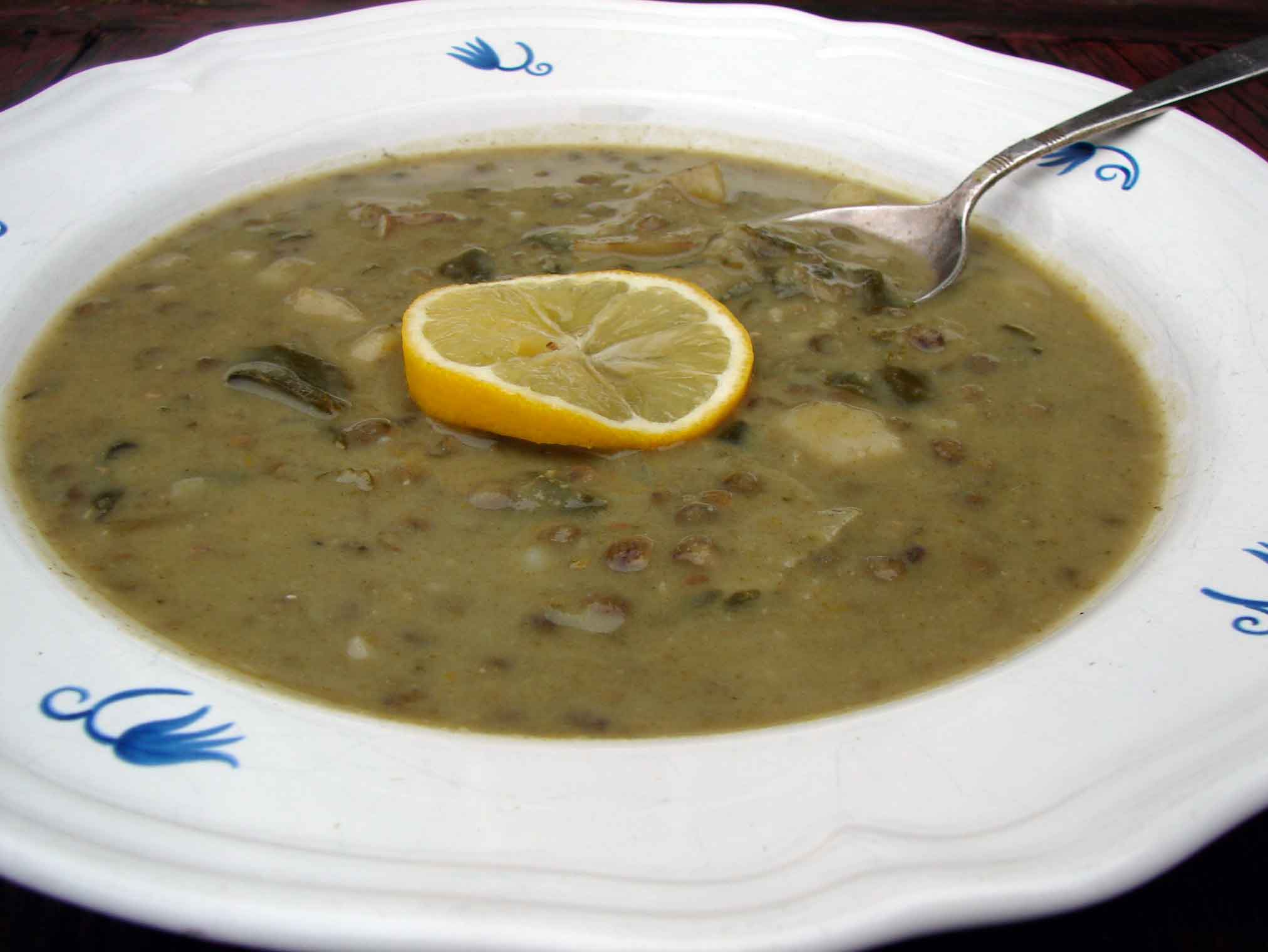
French lentil chard soup with meyer lemon and ginger

Chard, lentil and meyer lemon soup

Chard, lentil and meyer lemon soup

    There’s Nothing as Trustworthy as the Ordinary Mind of Ordinary Man.

So readeth a banner on the wall of Lonesome Rhodes. Lonesome himself is on the balcony, raving like a Tom Waits-voiced Tarzan about how the people listen to him, because the people love him, because he is the people and they are Lonesome. He’s playing to an empty house, his own empty penthouse, lonely and cavernous, wrapped in sinister shadows. But his friend Beanie is laying on the applause – loud and often – on a machine that he himself, Lonesome, invented – it applauds him and laughs with him and oohs and ahs at his wise sayings. He starts to sing that he’s ten thousand miles from home, but he breaks off. He’s breaking down.

What is this madness? A face in the Crowd, directed by Elia Kazan in 1957. What a remarkable, odd, oddly contemporary film! It tells the story of Lonesome Rhodes (Andy Griffith), a drifter picked up in a jail by an eager Sarah Lawrence graduate (and all that that implies) played by Patrica Neal. She records him for a radio show on the voice of the common people, called Face in the Crowd. He’s irreverent and folksy. He becomes a star, a personality, first in Arkansas, and then all over the whole country. In New York his show is sponsored by Vitajex, a placebo that he sells as a libido-enhancer (Big Lebowski-esque dream sequence!); the CEO of Vitajex introduces him to a man running for senator, a tepid, aristocratic person that Rhodes sells as a man of the people. The film’s themes are startlingly relevant today: the intersection of commerce, politics and entertainment; the cynicism of the entertainment industry about the intelligence of their audience “Those morons out there? Shucks, I could take chicken fertilizer and sell it to them as caviar. I could make them eat dog food and think it was steak. Sure, I got ’em like this… You know what the public’s like? A cage of Guinea Pigs. Good Night you stupid idiots. Good Night, you miserable slobs. They’re a lot of trained seals. I toss them a dead fish and they’ll flap their flippers.” In the beginning of the film, Rhodes is irreverent towards the company that endorses him and suspicious of any commercial enterprises. He appeals on the air for all of his listeners to help a woman whose house has burnt down. By the end he’s on TV, exchanging quips with his senator about the evils of social security, and thinking of his audience, the crowd, the ordinary people, only in terms of the money, votes, or adulation they can give him. He’s seduced by the idea that he could become one of the elite, that he could guide the thinking of the masses. He’s funded by the Koch brothers of the day, to tell people what to buy, and to vote for the guy who will keep them poor, suspicious, and under-educated. He’s an ordinary person, but some people are more ordinary than others. Of course his career crashes, his women leave him, and he’s back where he started, ten thousand miles from home, and he doesn’t know where to go.

I bought a bag of meyer lemons! Look for them in every single recipe I make for the next week or so! They’re so lovely – sweet, tart, a little piney. I was thinking about french lentils, as one does. I love them, but I always seem to cook them the same way. I decided to try something a little different, and give them a kick with meyer lemons and ginger. This soup was so delicious! Comforting with potatoes and lentils, but very lively, with not just a squeeze of lemon, but the juice of two whole lemons!! Oh yes.

Here’s A Face in the Crowd, sung by Andy Griffith (to the tune of Sitting on top of the World, by the Mississippi Sheiks.

Continue reading

Roasted butternut white bean soup

Butternut and white bean soup

Butternut and white bean soup

In Kurisawa’s Ikiru, he describes a childhood memory, “Once when I was a child, I almost drowned. It’s just like that feeling. Darkness everywhere, and nothing for me to hold onto, no matter how hard I try.” This reminded me of Sleepy John Estes’ song Floating Bridge. It’s a beautiful, dream-like song, with repeated fragments of memory like waves washing over him – he nearly drowned, he was hid underneath the water five minutes, and when they dragged him out and laid him on a bed all he could hear was muddy water going round his head. And he’ll never forget the memory of people on the floating bridge, screaming and crying. It’s so powerful! So today’s Sunday collaborative playlist is on the subject of childhood memories. It could be of a person, or a food, or a song, or a definitive moment, any childhood memory will do.

And this soup is a bit like a wintery memory of summer. The squash is roasted, which makes the flavor rich and smoky, and the herbs – rosemary, sage, thyme, and tarragon – make it taste like a spring garden. The cauliflower and white beans make the soup lovely and velvety. I thought of this soup as Provencal, for some reason! The herbs, I guess!

Here’s your interactive playlist on childhood memories. Feel free to add anything you like!
Continue reading

Spinach, apple, avocado bisque with ginger

Spinach apple soup

Spinach apple soup

It’s cold here! (Sigh, is she talking about the weather again?) Yes! Yes I am, but I’m not the only one! It’s news. The Guardian UK (online US edition) has a story on their front (virtual) page about how cold it is where I live! It has a slideshow of pictures of coldness! But I have to say that I’m okay with this little cold spell. Every winter we get one or two weeks of below-freezing weather, and I’m fine with that. Let me tell you why. First of all, I stay in bed from just after Christmas till late May, so it doesn’t really affect me at all. Second of all, as Jon Stewart said just this morning, it’s irrefutable proof that global warming is a hoax – the fact that it’s cold, today, where I live. And if you need further proof, it’s cold today where Jon Stewart lives and where I live! These are the facts! Actually, I do like a very cold spell in winter, as long as it’s shortish. It feels cleansing. The summer after a mild winter always feels extra swampy, with larger stranger insects, and more germs flying around. And extreme cold feels surreal and other worldly. It feels like a reminder that the world and everything in it is so much vaster than our human understanding, and so far beyond our control. These cold spells always remind me of Faulkner’s Wild Palms, in which Charlotte and Harry strive to escape conventional morality and propriety “They had used respectability on me and…it was harder to bear than money. So I am vulnerable in neither money nor respectability now and so They will have to find something else to force us to conform to the pattern of human life, which has now evolved to do without love – to conform, or die.” The city in winter “herds people inside walls,” so they take a job in a mine in Utah, in a winter so severely cold that their underwear freezes like iron ice and their breath freezes like fire in their lungs. The landscape is wild, the people they meet are wild, and “…now they had both become profoundly and ineradicably intimate with cold for the first time in their lives, a cold which left an ineffaceable and unforgettable mark somewhere on the spirit and memory…The cold in it was a dead cold. It was like aspic, almost solid to move through, the body reluctant as though, and with justice, more than to breathe, live, was too much to ask of it.” It’s elemental, and it has stripped them down till they’re raw and vulnerable, and seem to have only each other in the world. Which was what they wanted, but more than they bargained for. “Excuse me, mountains. Excuse me, snow. I think I’m going to freeze.”

Of course, it’s not that cold here, and (hopefully) the cold spell won’t last for long. But in the meantime, we’re eating a lot of soup!! This is a bright, flavorful smooth soup, with spinach, apples, avocado and lots of ginger and lemon. It’s the sort of soup you feel might stave off a cold, and it tickles nicely in the back of your throat. When I’m feeling poorly, I have a warm drink of honey, lemon, ginger and cayenne, and all of those ingredients are to be found herein! I used a combination of spinach and arugula, which added a peppery flavor.

Here’s Tom Waits with Cold Cold Ground. Beautiful! Frozen weather makes people act strangely, I tell you!

Continue reading

Summer-in-winter tomato arugula soup

tomato-arugula-soupHere at The Ordinary, we have an institute devoted entirely to the study of winter light. Though time is flying and the days are short, the season can feel very long. It is easy to succumb to feelings of sleepiness or downright discouragement, this time of year. But in our extensive field research, we have discovered a certain light that feels hopeful. We have, of course, taken samples, and we have them percolating in our underground laboratories, where they bubble and glow in test tubes and petri dishes, illuminating the gloom. We feel that we are approaching a breakthrough in our studies that will allow us to declare that this hopeful light is instrumental in helping us all make it through the winter months. You can keep your “golden hour,” and your “tropical sunsets” and your showy, “aurora borealis,” we’ve got a few minutes of clarity in a murky season, and we’ll take it, dammit! This light can occur at different intervals throughout the day, late in the morning, when the sun finally breaks through the dull grey blanket of clouds and washes the world with light. It might show up in early afternoon and lure you out of your house, cheering you with a brief moment of something very close to warmth. In late afternoon it’s the most fleeting, raising your spirits almost as they fall and follow the sun into dusky pink shadows. The light is cold and clear and slanting, like pale white gold, and you almost feel that if you watch it long enough you’ll see it grow warmer and stronger. It’s a memory and a promise. Attempts to bottle this light for use as a restorative tonic have proven fruitless, so you’ll have to take it as it comes, and rejoice in the fact that it comes more often, and longer, as the days creep by.

This soup is also like a memory. It’s got the flavors of summer – tomatoes and herbs and arugula, juicy, piquant, and warm. It will remind you of ripe rich tomatoes with basil and mozzarella, drizzled with olive oil and balsamic, that you ate every single day in August. But it’s made with wintery supplies such as you might amass if you were snowed in, living in a cabin on the edge of a mountain – a good can of diced tomatoes, some dried herbs, baby arugula from a bag, some frozen green peas. I made it with a mix of fresh and dried herbs…I had some fresh tarragon and rosemary, and I cut back the sad thyme plant in my garden and used the last of those fresh leaves, but I used dried oregano and sage. You can use any herbs you like or have growing in your windows. The soup is light and pleasant, and if you top it with a bit of grated mozzarella, it’s comforting and filling, as well.

Tomato arugula soup

Tomato arugula soup

Here’s A Summer Wasting from Belle and Sebastian

Summer in winter,
Winter in springtime,
You heard the birds sing:
Everything will be fine.

Continue reading

Kale and black beans in curried pumpkin sauce with pumpkinseed-arugula pesto

Kale, black bean and pumpkin stew

Kale, black bean and pumpkin stew

This meal reminds me of something I used to make back in my bachelorette days. Can of pumpkin purée, can of chickpeas, loads of broccoli. It was quick, easy, cheap and not very fattening at all. I

n those days, I used to walk around the city I lived in. I’d walk for hours, every day, no matter the weather, lost in thought. And as I walked I repeated the mantra, “mad as a hatter, thin as a dime, mad as a hatter, thin as a dime.”

This time of year, we always read a lot about diet tips and trends. I always want to yell out about my story, calling out like the over-eager kid in class. It’s not much of a story, really. At one point in my life I was really skinny, and I wasted a lot of time and energy thinking about getting skinnier. I wasted a lot of energy depriving myself of energy, really. I was obsessed with numbers on a scale, I felt good at losing weight – it was a skill I’d conquered, and one it was difficult to stop once I’d started. I felt as though I’d conquered hunger, as well. The longer you ignore it, the less frequently you feel it. For me it wasn’t about looking like Kate Moss, who hadn’t been invented yet, it was about a million other things. About being the most thin; about becoming less human, more ethereal, less heavy on the earth; about getting away with something; about worrying people; about scaring myself.

And the reason any of this is worth mentioning is that I’m not like that any more. I know that millions of women are, and some men, too, and I’d like to say that it’s possible to regain balance and perspective, to feel good about yourself. And, actually, to stop thinking about yourself so much, so that you’re free to think about other things. It helps to have help, of course, from parents and boyfriends and friends. But mostly you find the balance yourself, gradually, over days and weeks and years. You learn that the better you feel about yourself, the better you feel about yourself, and that being healthy feels better than being thin and having ulcers and stomach aches, and having your hands and feet turn blue when it’s cold, and getting dizzy if you walk too far. You learn that it feels good to be strong. You’ll allow yourself to take up some space on the earth. You learn that you can loosen the vice-like grip of your control on everything you eat and how often you exercise without really changing yourself all that much. You’ll learn that all of the control in the world can’t save you from things over which you will never have control – your body will change over time, and there’s nothing you can do about it.

But you’ll realize that we’re all in it together, all heading in the same direction, and pulled by the same gravity. (And then, maybe, you’ll have a couple of kids and your whole world will turn upside down forever!) You’ll learn about the pleasure of eating with other people, and eating like other people do. You’ll find a place that you’re comfortable with yourself, and you’ll see that everything goes in cycles – you’ll gain weight, you’ll lose weight, everything will even out. You’ll throw out your scales. You’ll develop some rules to live by, probably unconsciously, that will help you to maintain your balance through thick and thin. You’ll mostly stop comparing yourself to other people, because you’ll realize that everybody is built differently. You’ll stop comparing yourself to yourself years ago, because everybody changes. You’ll know that you”re ok, and most of the time you will feel ok. You won’t worry constantly about your food and your body: you’ll take pleasure in them. That’s what I want to say when I see all of these advice columns, on websites, and on the covers of magazines at the grocery store, and on the news – all trying to sell themselves by making you feel bad about yourself so that they can tell you how to feel good about yourself.

And, of course, you’ll keep making meals like this, because they’re cheap and tasty, and full of vitamins, and yes, just a bit because they’re not very fattening at all. Kale and beans and pumpkin!! Can you think of all the vitamins and protein in this one meal! I was hoping my boys would like it, and they did like the sauce and the beans, but the kale was a little bitter for them. I bought a bag of baby kale, and because it was so young, I didn’t boil it first, but it was a bit bitter, so next time I’d parboil it just for a few minutes. I’ve been thinking for a while about combining pumpkin flesh and pumpkinseeds in a meal! It just makes sense that they’d go together, and they do! The flesh is sweet and warm, and the seeds are smoky and cool, and they’re just perfect together.

Here’s Tom Waits Diamonds and Gold.

There’s a hole in the ladder
A fence we can climb
Mad as a hatter
You’re thin as a dime
Go out to the meadow
The hills are agreen
Sing me a rainbow
Steal me a dream

Continue reading