David described A Time For Burning as probably the quietest civil rights film we’ve seen. And indeed, the whole film shows people talking; quietly, earnestly, discussing issues. And yet it’s an amazingly compelling 56 minutes of film. The film, by Bill Jersey, was shot in Omaha, Nebraska in 1966, and as one of the characters explains, it’s about Lutherans talking to Lutherans. Seemingly such a small thing, a tiny step. But it turns out to be an insurmountable step to many. The film “explores the attempts of the minister of Augustana Lutheran Church in Omaha, Nebraska, to persuade his all-white congregation to reach out to ‘negro’ Lutherans in the city’s north side.” The pastor, Rev. L. William Youngdahl, is kind and thoughtful and well-meaning, and he loses his job over this issue. In the course of the film he encounters the remarkable Ernie Chambers, a barber who goes on to law school and then to become the longest-serving senator in the history of Nebraska. The conversations between Youngdahl and Chambers are bracing and passionate and necessary and uncomfortable. The conversations amongst the white parishioners are heartbreaking of the I-can’t-believe-anybody-ever-spoke-unashamedly-in-that-way-and-so-little-has-changed variety. The conversations amongst black teenagers (whose visit to the white church one Sunday caused the congregation to shrink) are lovely and hopeful and sharp. But the character I found the most moving–I don’t even know his name. He had glasses with thick lenses and thick frames, in a uniquely 1960s style. At first, listening to the reverend propose his plan, this man seemed myopic, doubtful and unsure. It would be easier, after all, to ignore the situation altogether. But over the course of the film we watch him change, incredibly change. He starts to question what it means to be human, what it means to be the person he is, in the time and place that he lives. He thinks about kindness, justice, history, his faith, his family, the future of mankind. He says he’s like a newborn, two weeks old, and the world is changing all around him. He thinks about the history of his country and the history of oppression. He recognizes how simple, how monumental this one small step would be, and he’s desperate to take it. He’s conscious of the way the country is changing all around him, in that moment, and he wants to be part of it. The saddest thing, watching nearly fifty years later, is how little has changed. This is a painfully relevant film, and everyone should watch it.
I wasn’t going to go on so long about it, because the characters speak for themselves, and there’s a documentary about the documentary that discusses it all much more intelligently than I could ever do.
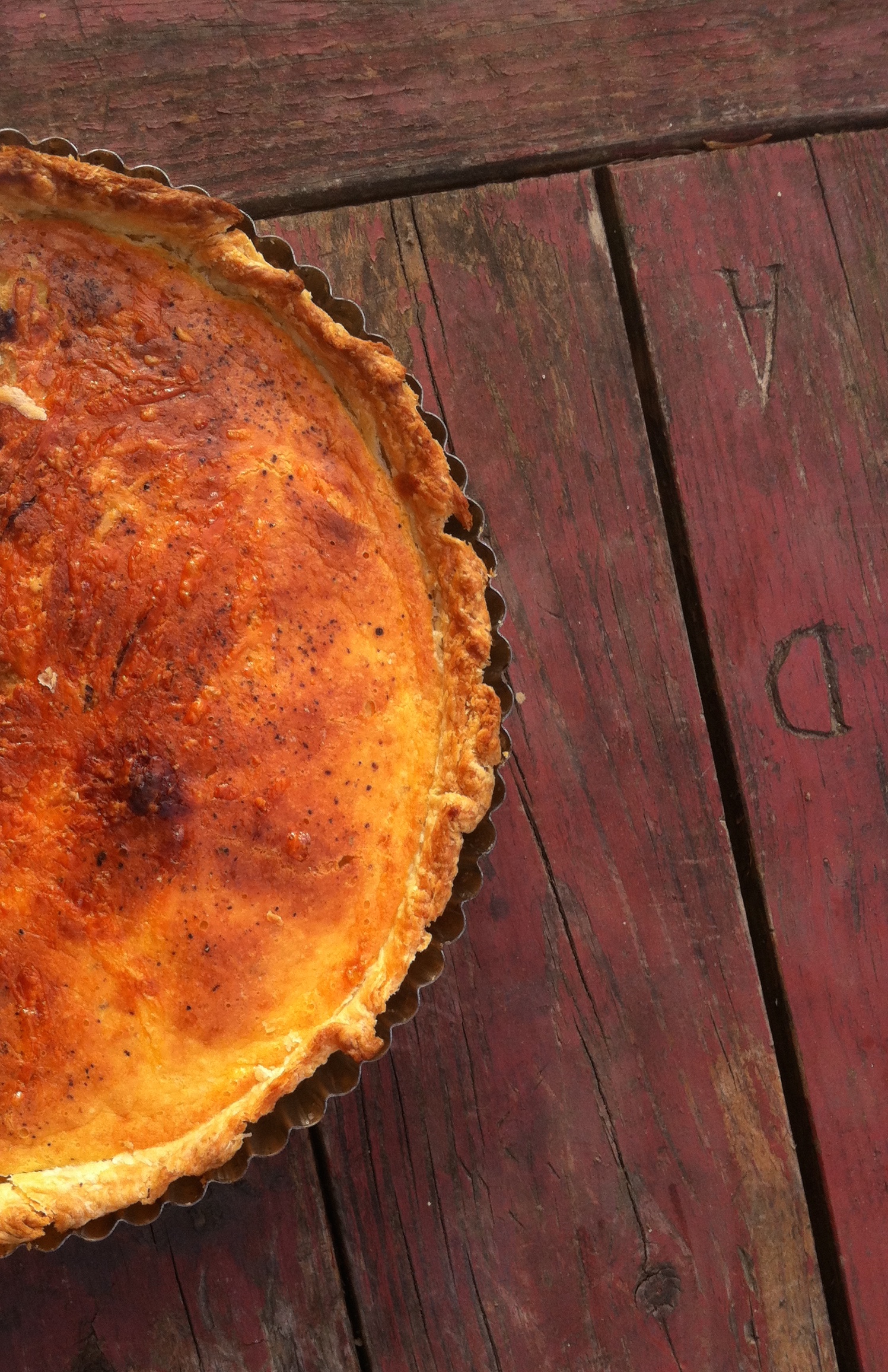
So! Someone gave me a little carton of Membrillo, which I love. And I bought a little bit of manchego, and I thought I’d turn them into a tart, because they just have to be together. It’s a super-simple tart, flavor-wise, and not hard to make.
Here’s Chambers Brothers and Barbrara Dane, from 1966, the year A Time For Burning was filmed, with You’ve Got to Reap What You Sow.
I love all the “real” myths. The ancient stories, as old as humanity, which resonate and repeat around the world, answering questions about the origins of everything: how did the world begin, how do we make our place in it, where did we come from, where are we going? They answer the earliest questions, questions of conception, birth, creation. In the grand scheme of things, America is a very young nation. We’re teenagers, maybe. Or maybe we’re at that age just past adolescence when our swagger starts to falter, and we try to relive our glory days and we regret the insouciance of our youth. Accordingly our own mythological figures, our superheroes, have more adolescent concerns. These are the stories we all know, as Americans, these are the tales of valor, the epic struggles, the characters with godly speed and strength, with more-the-human abilities. And they help us to address, as a nation, all of the anxieties in our teeming teenage brain. How do we explain the changes in our body, which we can neither understand nor control? And these changes bring about a strange new power, which we can neither understand nor control. And, as we all know, with great power comes great responsibility, and if there’s one thing teenagers hate, it’s responsibility. Superhero myths help us to work through anxieties about the source of our power–the science and technology that have changed our lives faster than we can compute. They helped to make us a super power, but they made us dangerous, too, and our morality didn’t always develop at an equivalent rate. The older myths tried to make sense of the justice or lack of it that people faced every day, and our superhero stories do this, too. When our authority figures mete out unfair punishments, just as in the earlier myths, super people and lesser gods try to trick the most powerful. Our superhero stories help us to understand evil, the dark side, and that it’s sometimes part of ourselves, confusing and strangely compelling. And they reflect a strangely American optimism: anything is possible, ordinary people are capable of great things. My boys have known the superhero stories almost sense they could talk. They seem to have learned them by osmosis. And as long as they could talk they’ve imagined powers for themselves, they’ve invented “guys,” who are capable of weird and wonderful things. They give them a history, an origin story, they draw them and sing songs about them, and they become them as they fly down the street, leaving all the worries of the real world behind.
I tried to put every green thing I could think of in this tart! So it’s got spinach and arugula and tarragon inside, and it’s got bright castelvetrano olives, asparagus and pistachio nuts on top. It was a nice combination…juicy and bright and nutty all at once.
Here’s MF DOOM’s Beef Rap, with the spiderman samples!
“You know how people mostly draw Yin and Yang as fish?”
“Um, I guess…”
“What if they drew them as wolves instead, packs of black and white wolves?”
“That’s a picture I’d like to see.”
“Of course the chances of it happening are almost zero. But there’s not a completely zero chance of anything.”
“So anything is possible?”
“Yes, everything is possible,” said Isaac trotting down the street and singing, “Yin and yang, sucker. Yin and yang, Sucker!”
I’m in concurrence with Isaac on this one. I believe anything is possible. I always have. I believe most things some of the time. I believe some things most of the time. I believe there are more things in heaven and earth than are dreamt of in our philosophy. I believe there is nothing either good or bad, but thinking makes it so. I believe in chance and coincidence and luck. I believe if I play a game of solitaire in the morning, whether I win or lose reflects how other things in my life might turn out. Not that it will change the outcome, but it will predict it, like the augers of ancient Rome. Do I really believe this? Naw, no, of course not. Mostly no. But not zero chance no. And the thing I mostly play for these days is my novel and my stories. Will they ever be published? Will anybody in a position of any power in any editorial department in the world like them at all? Will the next message I get be from somebody who likes my writing? No. No it won’t. It will be from somebody trying to sell me something. Somebody asking for money. I know that. There’s a 99.9% chance of that. And although I honestly believe that most people who get their work published are genuinely talented and deserving, and if something’s really good it will get seen (as they used to tell us at the independent film festivals), I believe for me, if anything gets published it will be sheer dumb luck that the right person sees it and likes it. Despite all of my considerable soul-crushing efforts to contact agents and publishers, it won’t be any of those. It will be some weird connection I didn’t even know I’d made. Like when I’d made my second film and I applied for all kinds of grants and submitted it to all kinds of people, but it was some guy that saw somebody else watching it on a monitor across a crowded room that ended up giving me a grant. And I was thinking that maybe I have a little bit of luck set aside for me on a certain day, and it could go towards stories or novels getting published, but maybe instead I win something stupid in a cereal box, or I get a coupon in the mail for something I don’t even want, and that’s my luck for the day. And then, maybe, I don’t even recognize all the luck I have every day, because it’s bigger than any petty thing I’m thinking about. Maybe I drive down a road at the exact time that flocks of blackbirds are forming and reforming in dizzy formations over my head. Maybe I go for a walk with Malcolm and he tells me “Yellow can be lemon or banana, and I’m cool with both of those.” And then he continues with a reasoned monologue on the merits of various candy flavors despite the fact that I’m laughing so hard I can hardly walk. Maybe that’s the lucky thing, having that chance to be with these crazy people who tell me these crazy things that make me bursting glad to be with them. And I know I know about all the lucky things so precious I can’t even talk and can barely even think rationally about. And of course I believe in fate, too, and meant-to-be, because there’s just as great a chance that this is true as anything else. And I’ll take it, I’m cool with both of those. Yin and yang, sucker, yin and yang.
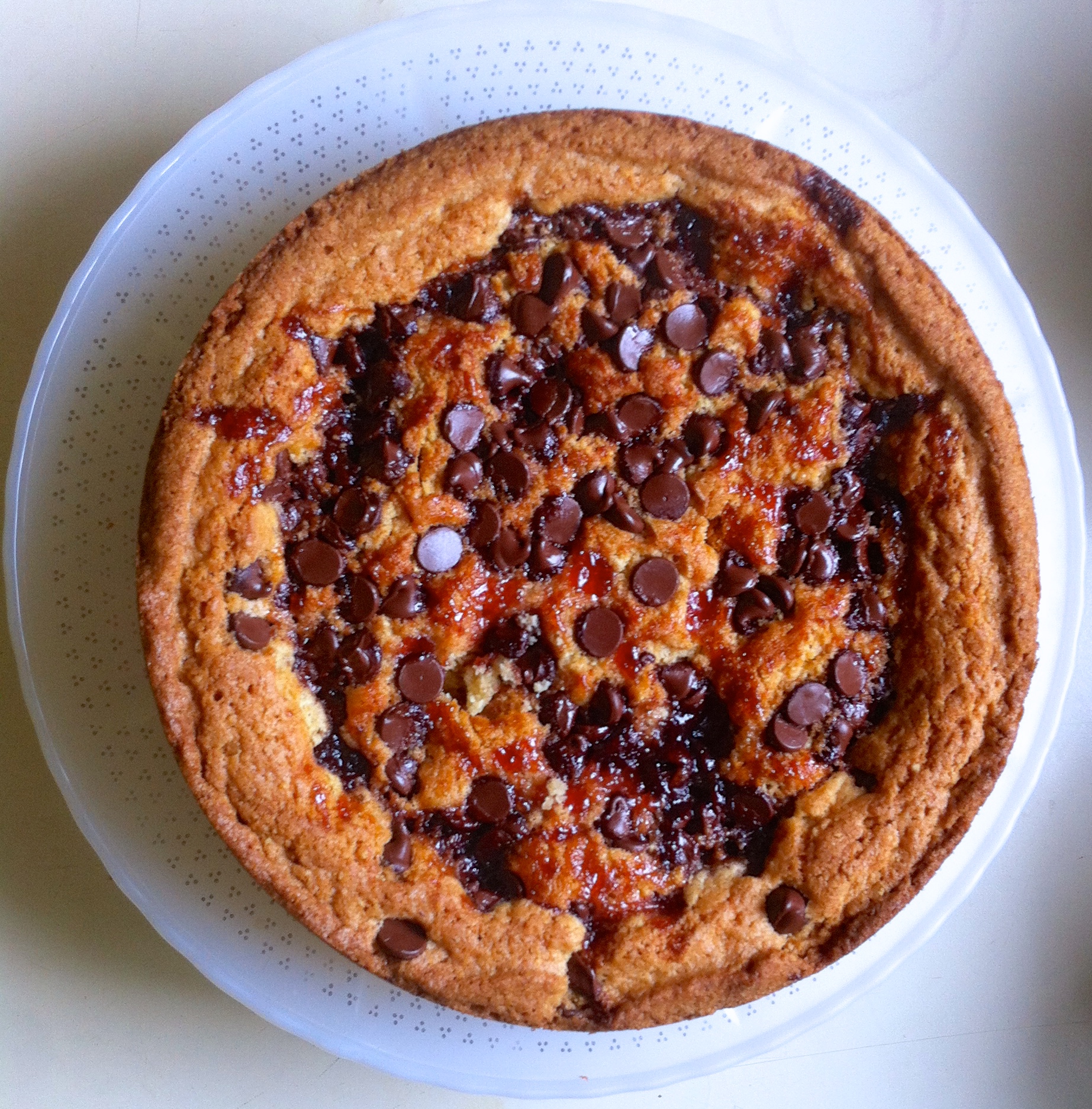
I’ve been making lots of cakes this winter, because it’s been that kind of winter. One after another. For a while I was making cakes with nuts and jam and chocolate. Because who wouldn’t want a cake with nuts and jam and chocolate?


 Out of the Ordinary